
 Русский (RU)
 Українська (UK)
 Türkçe (TR)
 Italiano (IT)
 Français (FR)
 Português (PT)
 中文 (中国) (ZH)
 Español (ES)
 日本語 (JA)
 ไทย (TH)
 Deutsch (DE)
 Ελληνικά (EL)
 Polski (PL)
 Bahasa Indonesia (ID)
 Nederlands (NL)
 العربية (AR)
 한국어 (KO)

If you’re a high school student interested in science, technology, engineering, or mathematics, learning doesn’t have to be limited by location. Online STEM programs for high school students offer a flexible way to explore these fields, build skills, and gain exposure to advanced concepts.
At online STEM programs, you can engage with complex ideas through virtual labs, coding projects, problem-solving sessions, and interactive lectures. Imagine collaborating with students from different countries, analyzing real-world data, or designing solutions to engineering challenges. These programs bring structured, university-style learning into an accessible digital format.
Even if you already enjoy STEM subjects in school, online programs allow you to dive deeper and move at a more focused pace. You’ll gain insight into how STEM disciplines are studied at the university level and how they apply to real-world research and innovation.
What are the online STEM programs for high school students?
Some online programs rely heavily on prerecorded content or offer limited interaction. That’s why thoughtful research is important. The most effective online STEM programs emphasize live instruction, hands-on projects, and meaningful engagement with instructors and peers.
Across universities and educational organizations, online STEM programs cover areas such as computer science, engineering, biology, physics, mathematics, and data science. Whether you’re exploring STEM for the first time or building advanced skills, these programs provide a structured way to grow academically.
You’ll learn from experienced instructors, take part in interactive sessions and collaborative projects, and connect with motivated peers from around the world. Along the way, you’ll strengthen problem-solving abilities, sharpen analytical thinking, and gain a clearer sense of what studying STEM at the university level is really like.
To help you get started, we’ve curated a list of 15 Online STEM Programs for High School Students. They’ve been selected for their academic quality, interactivity, and ability to prepare students for future study in science and technology.
15 Online STEM Programs for High School Students
1. Immerse Education’s Online Research Programme

Location: Fully remote
Cost: Varies; summer school scholarship available through their bursary programme
Application Deadline: Rolling admissions; multiple dates throughout the year
Program Dates: Flexible; multiple cohorts in a year
Eligibility: Students worldwide aged 13-18 (accredited options require age 14+)
The Online Research Program offers high school students the opportunity to conduct rigorous research with tutors from Oxford, Cambridge, and Ivy League universities. As one of the most academically intensive online STEM programs for high school students, it allows you to work closely with a tutor to explore a subject of your choice in depth and produce a full academic research paper. The program is offered in 1:1 and small group formats, with optional college credit available from universities in the US and the UK.
The virtual research program is offered in STEM subjects, including artificial intelligence, chemistry, biology, computer science, engineering, mathematics, physics, and more. At the end of the program, you’ll receive a written evaluation from your tutor, an opportunity to publish your research, and an invitation to present at the Immerse Online Symposium. You can find examples of papers Immerse students have worked on here. You can find more details about the application here.
Why it stands out: You’ll get access to 1:1 Oxbridge- or Ivy-style research supervision culminating in a publishable academic paper.
2. Stanford Pre-Collegiate Summer Institutes
Location: Online (US-based)
Cost: $3,200
Application Deadline: March 13th
Program Dates: June 15th – June 26th and July 6th – July 17th
Eligibility: Students worldwide in grades 8-11
This virtual program gives curious high schoolers a chance to spend two weeks zooming in on just one topic, such as Artificial Intelligence, Biomedical Engineering, or Chemical and Environmental Engineering. You may choose from a large catalog of STEM course options.
You’ll join live classes once a day, and work on group projects with students all over the world under the guidance of Stanford educators. Unlike a typical high school course, it’s fast-paced and seminar-style, focused on topics not taught in most high schools.
Why it stands out: Most high schoolers don’t get a single-subject college-level course in a specific topic. Stanford’s version of this experience is highly interactive, and it doesn’t require travel!
3. Columbia University Pre-College Online
Location: Online (US-based)
Cost: Approx. $2,800 – $4,000 per course
Application Deadline: April 2nd
Program Dates: Multiple sessions between June and July
Eligibility: Domestic and international students in grades 11-12
You can choose one-week or two-week sessions from a broad range of over 40 subject areas, all taught by expert instructors who lead discussions, projects, debates, and collaborative activities designed to mirror university-level learning. In addition to the courses, the program offers co-curricular activities like student life workshops and college success seminars that are designed to equip the skills necessary for further study. Sessions are held through a well-organized online platform from where you can get continuous assistance from facilitators, who are there to motivate you and maintain your contact with the group.
At the end, you are given a Certification of Participation from Columbia University along with a personalized evaluation, which can be a good addition to your college application. The experience prepares you to figure out your academic interests, sharpen your critical thinking and communication skills, and increase your self-confidence as far as higher education is concerned.
Why it stands out: Students receive a Columbia University transcript and certification of participation, so you’ll have proof that you can handle Ivy League academics.
4. CSIRO Virtual Work Experience
Location: Online (Australia-based)
Cost: Free
Application Deadline: Varies by project; typically 4 weeks before start date
Program Dates: Various 5-day sessions throughout the year
Eligibility: High school students in Years 10 and 11 in Australia
The Commonwealth Scientific and Industrial Research Organisation (CSIRO) provides virtual work experience programs that put you at the heart of Australian scientific research. You work in teams on a project under the guidance of CSIRO research scientists, and topics include computational biology, space astronomy, and robotics.
The program asks you to use independent research skills and the scientific method to investigate a problem and develop a solution that you will present. It is a good way to gain industry-relevant experience without needing to travel.
Why it stands out: It is a government-backed research experience in which students are directly mentored by professional scientists working on national-scale projects.
5. University of Toronto XR Development with Unity
Location: Online (Canada-based)
Cost: Varies by cohort (Approx. CAD $2,500 – $3,500)
Application Deadline: Rolling
Program Dates: Summer cohorts (2 weeks)
Eligibility: Students all around the world aged 13-18
This program teaches the technical skills required to build your own Extended Reality (XR) experiences with Unity, the world’s leading real-time 3D development platform.
You study C# coding and 3D design to build VR and AR applications, and since the curriculum is project-based, you complete the course with a portfolio of functioning VR/AR projects. It is a good way to gain industry-relevant experience without needing to travel.
Why it stands out: With support from Canada’s top university, it concentrates on the extremely specialized, cutting-edge skill set of VR/AR development.
6. Brown University Pre-College Online
Location: Online (US-based)
Cost: Approx. $3,500-$7,000 (depending on course length)
Application Deadline: Mid-May
Program Dates: June 15-24 (Multiple 2-, 3-, 4- and 6-week mostly asynchronous or blended sessions)
Eligibility: Students around the globe completing grades 9-12 (ages 14–18)
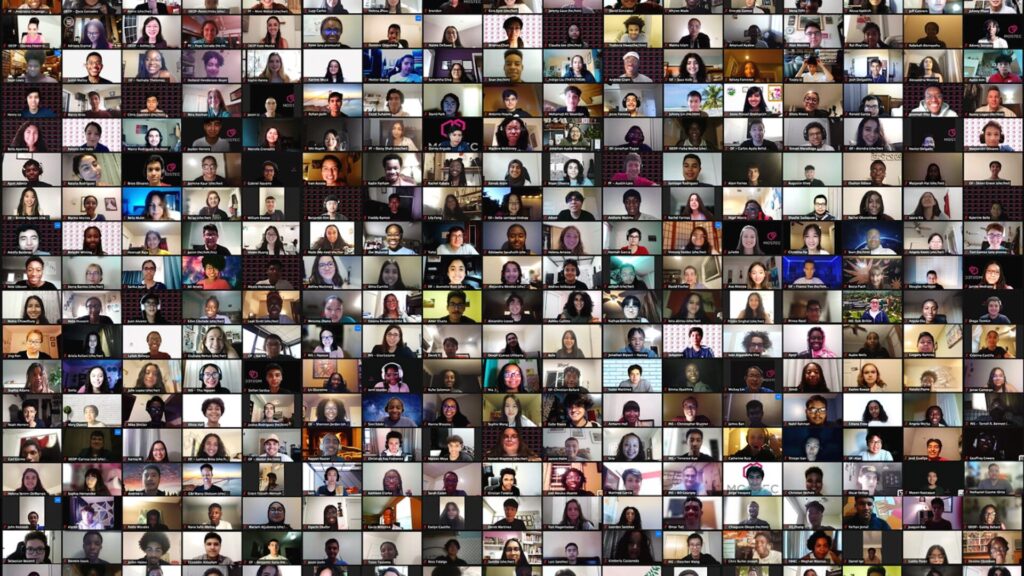
Brown University provides an asynchronous online learning environment while upholding the student-centered “Open Curriculum” approach the university is known for. You are able to choose from STEM courses, including “Cancer Biology” and “Renewable Energy Engineering,” and tackle coursework.
The program emphasizes writing, critical reading, and problem-solving, with regular feedback from instructors. It is for students looking for flexible scheduling options while still engaging in challenging academics.
Why it stands out: The asynchronous format allows maximum flexibility without sacrificing the depth and inquiry-based learning style of an Ivy League education.
7. MITES Semester (MIT Introduction to Technology, Engineering, and Science)
Location: Online
Cost: Free (Fully funded charity program)
Application Deadline: Application typically opens in November; due February 1st
Program Dates: June – December
Eligibility: High school juniors (11th grade) who are U.S. citizens or U.S. permanent residents
During the summer “STEM Immersion” phase, you complete two online STEM courses and participate in synchronous sessions, office hours, and community meetings, followed by a fall “College and Career Prep” phase with webinars, small-group meetings, and ongoing skill-building during the school year. Additionally, you’ll participate in networking events with STEM professionals and get assistance like essay critique, practice interviews, and admissions advice tailored to the senior-year application schedule.
Students meet regularly in small “clusters” with mentorship from a current undergraduate, and the summer coursework culminates in a Final Symposium where you present projects to the broader MIT community. Although the classes are demanding, students do not receive formal grades or college credit; instead, they receive qualitative final evaluations from instructors that can be used as supplemental context in applications.
Why it stands out: It’s a rare national, online MIT-affiliated program that runs across both summer and fall, pairing substantial STEM coursework with sustained mentorship and college/career preparation—and it is free of charge
8. Harvard Secondary School Program (Online)
Location: Online (US-based)
Cost: $4,180 (4-credits) or $8,160 (8-credits) + $75 application fee
Application Deadline: February 19th
Program Dates: June 20th – August 8th
Eligibility: Domestic and international students aged 16-18
Harvard’s Secondary School Program offers the chance to take real Harvard classes with college students and other pre-college students, earning college credit. The online program features an enormous course catalog of STEM subjects like chemistry, quantum physics, statistics, computations, technology, etc., taught by Harvard University professors, and you will earn transferable college credit.
This course demands a serious time commitment that requires you to manage time well to handle a full college course load, in addition to participating in discussions with classmates via video conferencing.
Why it stands out: Students earn actual Harvard college credit and study alongside matriculated university students, offering the most authentic simulation of college academics.
9. Cornell University Pre-College Studies Online
Location: Online (US-based)
Cost: Varies with course and credit
Application Deadline: Varies with course, but typically between April and June
Program Dates: Sessions in June – July during Summer, Winter
Eligibility: Rising/Current high school juniors & seniors, ages 15 to 19; international students are welcome to apply
Cornell University offers one of the largest selections of online courses for high school students, designed and led by Cornell faculty. STEM topics include introductory veterinary medicine, astronomy, and architecture.
The courses are college-level and for-credit, and you are expected to participate in the class in real time as well as complete substantial assignments outside of class. This program provides you with a transcript from an Ivy League university.
Why it stands out: The variety of courses is impressive, especially in specialized STEM subjects that are uncommon at the high school level, such as veterinary science and hospitality technology.
10. UC San Diego Research Scholars
Location: Online / Hybrid options available (US-based)
Cost: Varies with course
Application Deadline: Rolling
Program Dates: Flexible; Year-round and Summer cohorts
Eligibility: Domestic and international students in grades 9-12
The Research Scholars program gives you access to UCSD researchers for mentorship in research tracks, including Bioengineering, Life Sciences, and Marine Science. The online program organizes you to pursue research projects from home and usually ends with a poster presentation or research paper.
It is designed to immerse you in the scientific process, from hypothesis to data analysis, under professional guidance.
Why it stands out: Students are mentored 1-on-1 by professional researchers at a top university.
11. University of Pennsylvania Online Seminars
Location: Online (US-based)
Cost: $2,950
Application Deadline: Rolling
Program Dates: Session 1: July 13-24 • Session 2: July 20th – August 7th
Eligibility: Current 9th-11th grade students (international students welcome)
The University of Pennsylvania Online Seminars offer short, academically focused STEM and interdisciplinary seminars designed to engage high school students in advanced topics with faculty and seasoned instructors from a world-class research university. You’ll choose from themed sessions such as Genomics and Bioinformatics, Global Food Systems: History, Power, and Politics, American Sign Language and Deaf Culture, Developing the Leader Within, and Writing for Researchers, blending synchronous discussions with structured asynchronous work.
These seminars combine theoretical bases with practical applications to enable students to hone their analytical skills, scientific acumen, and communication skills through online interactions. Even if these do not provide formal credits to students from recognized academic institutions, course materials are designed to meet collegiate standards to delve deeper into various complex subjects that relate to fields like STEMM disciplines.
Why it stands out: Students tackle advanced, interdisciplinary topics in a small seminar format that mimics the real Ivy League classroom experience.
12. Johns Hopkins CTY Online
Location: Online (US-based)
Cost: Varies by course and length
Application Deadline: Rolling, with deadlines of January 5th and February 17th, depending on the course starting dates
Program Dates: Flexible (year-round, Session-based, and Individually Paced)
Eligibility: Gifted students around the world between the ages of 2-12 (Qualifying test scores often required)
The Center for Talented Youth (CTY) at Johns Hopkins is an internationally recognized gifted education program, and its online STEM courses go “above and beyond” the typical high school curriculum.
They cover topics ranging from Advanced Competitive Math to Advanced Topics in Physics: Special Relativity to Be the Doctor: Dilemmas, Diseases, and Diagnoses, etc. Courses can be session-based with classmates or individually paced.
Why it stands out: It is a distinguished, accredited curriculum designed especially for advanced students that provides options for acceleration not available in standard institutions.
13. Georgetown University Pre-College Online
Location: Online (US-based)
Cost: Approx. $1,895–$3,995
Application Deadline: Rolling (typically 1 week before start)
Program Dates: Multiple sessions year-round (1, 2, or 4 weeks)
Eligibility: Students all over the world aged 13 and up
Georgetown University has a user-friendly online program with offerings in the STEM field, with courses like Protecting our Digital Future – Cybersecurity, The Science of Cells and Innovation – Biology, etc., amongst others, based on your interests.
The program uses a learning management system in which you watch video lectures by Georgetown professors and complete assignments at your own pace as long as you meet weekly deadlines. Usually, a mentor provides feedback and answers questions about the course. These “Snapshot” courses are a convenient option for you if you are looking for a more casual introduction to medicine and science topics.
Why it stands out: The flexibility of the “snapshot” format allows you to explore subjects like medical surgery without the pressure of a full-semester commitment.
14. Rice University Pre-College Online

Location: Online (US-based)
Cost: $1,795 per course
Application Deadline: Rolling
Program Dates: Year-round sessions available
Eligibility: Students from any time zone aged 13+
The Rice University Precollege Program is a flexible, year-round online STEM and interdisciplinary pre-college experience that gives high school students a structured introduction to college-level study designed by Rice faculty. Each course focuses on a specific subject, such as Genome Engineering, Physiology, Aerospace Engineering, or The Business of Economics, blending dynamic video lessons, engaging multimedia content, and guided assignments that build conceptual understanding.
While working independently, you are guided by qualified mentors who offer advice and encouragement while you finish assignments and a final capstone project that showcases your learning.Upon successful completion of a course and its capstone, you will earn a Certificate of Completion from Rice University that can be included in academic portfolios or college applications.
Why it stands out: Utilizing Rice’s close proximity to the Texas Medical Center and the aerospace sector, it provides specialized courses in Genome Engineering and Space Studies.
15. Girls Who Code Virtual Summer Immersion
Location: Online (Global reach, US-based)
Cost: Free (Stipends available for eligible students)
Application Deadline: Mid-March
Program Dates: Multiple sessions offered
Eligibility: Girls and non-binary students worldwide in grades 9-11
This online course aims to reduce the gender gap in technology by teaching you the principles of web development, game design, and user experience. As you work on your own projects, you will enroll in online courses to learn coding languages like HTML, CSS, and JavaScript.
The program offers mentorship sessions with female professionals in the tech sector, in addition to technical skills. It fosters a community of support that motivates students to seek jobs in engineering and computer science.
Why it stands out: It is a free, mission-driven program that combines technical coding skills with powerful industry mentorship and community building for underrepresented groups.
From Digital Classrooms to Campus Life
Learning online builds habits that matter at university, from managing time independently to engaging actively with complex material without constant in-person supervision early on for success.
Virtual study also mirrors modern higher education, where lectures, collaboration, and research increasingly blend digital platforms with self-directed academic responsibility in today’s environments.
Through online STEM programs for high school students, learners gain early exposure to university-style expectations while building confidence in advanced scientific and technical thinking before degree study.
To prepare fully for the transition ahead, explore our University Preparation blogs for guidance on admissions, study skills, and navigating campus life with confidence.