



 Русский (RU)
 Українська (UK)
 Türkçe (TR)
 Italiano (IT)
 Français (FR)
 Português (PT)
 中文 (中国) (ZH)
 Español (ES)
 日本語 (JA)
 ไทย (TH)
 Deutsch (DE)
 Ελληνικά (EL)
 Polski (PL)
 Bahasa Indonesia (ID)
 Nederlands (NL)
 العربية (AR)
 한국어 (KO)
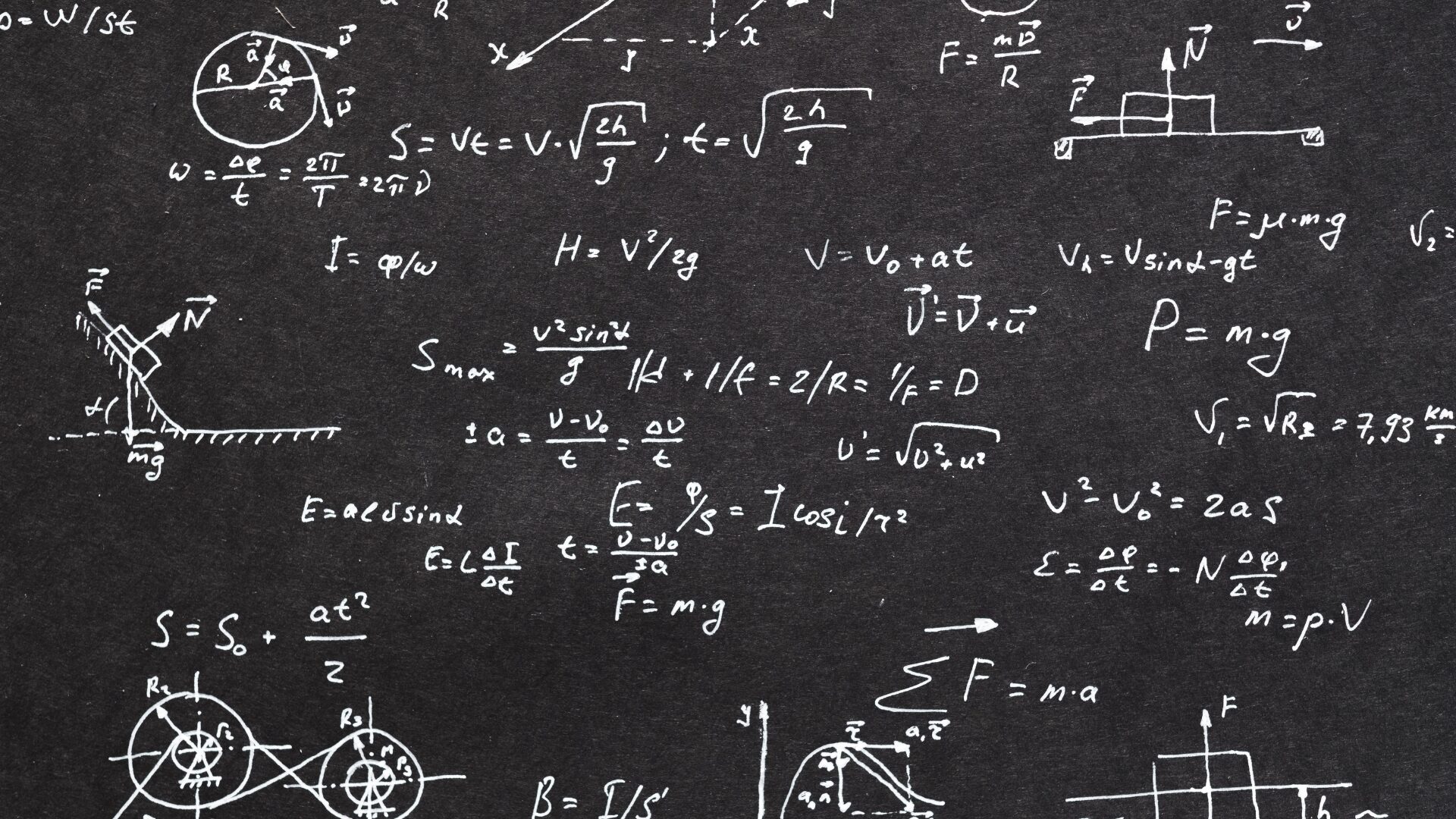
Often ranked as one of the top 10 hardest GCSE exams, with only 12% to 13% of entries being awarded a grade 9, many students wonder how to revise effectively for Physics without feeling overwhelmed.
The best approach is to start with your specification, target weak topics, and combine active recall, equation practice, and past-paper questions strategically for daily progress.
In this guide, we’ll explore how to master equations, strengthen math skills, revise required practicals, and use proven techniques effectively for top grades.
Let’s get right into it.
Understand the GCSE Physics Specification Before You Revise
Attempting to master GCSE Physics without knowing the specification is like trying to calculate landing coordinates without studying the trajectory. Without those precise boundary conditions, your hard work risks drifting off course rather than hitting the target for a top grade.
Here are the three different GCSE specifications available for physics.
AQA: Focus on Required Practicals and Units
AQA is the most common exam board for GCSE Physics (Specification 8463). Its assessment is split into two equal papers, each covering specific topics and practical skills.
Paper 1: Energy, Electricity, and Matter
- What’s assessed: Topics 1–4 (Energy; Electricity; Particle model of matter; and Atomic structure).
- Assessment Format: 1 hour 45 minutes; 100 marks; 50% of your GCSE.
- Question Types: A mix of multiple-choice, structured, closed short-answer, and open-response questions.
Paper 2: Forces, Waves, and Space
- What’s assessed: Topics 5–8 (Forces; Waves; Magnetism and electromagnetism; and Space physics).
- Important Note: Paper 2 often draws on your understanding of energy changes and conservation from Paper 1.
- Assessment Format: 1 hour 45 minutes; 100 marks; 50% of your GCSE.
- Question Types: Multiple-choice, structured, closed short-answer, and open-response questions.
The 10 Required Practicals
AQA explicitly requires you to complete 10 specific experiments (8 for Combined Science). You will be tested on these in the written exams, so you must know their methods, equipment, and variables.
The experiments are: Specific heat capacity, Thermal insulators (Triple only), Resistance, I-V characteristics, Density, Stretching a spring, Acceleration, Waves, Light (Triple only), and Infrared radiation.
Edexcel: Emphasis on Mathematical Application
The Edexcel specification (Physics 1PH0) is widely recognised for its heavy focus on mathematical reasoning and the application of physics to unfamiliar contexts. Like AQA, it is split into two papers, but the topic grouping is different.
Paper 1: Key Concepts and Macro-Physics
- What’s assessed: Overlaps with Topic 1 (Key Concepts) and covers Topics 2–7 (Motion and Forces; Conservation of Energy; Waves; Light and the Electromagnetic Spectrum; Radioactivity; and Astronomy).
- Assessment Format: 1 hour 45 minutes; 100 marks; 50% of your GCSE.
- Question Types: A combination of multiple-choice, short-answer, and extended open-response questions.
Paper 2: Energy, Electricity, and Particles
- What’s assessed: Overlaps with Topic 1 (Key Concepts) and covers Topics 8–15 (Energy: Forces Doing Work; Forces and their Effects; Electricity and Circuits; Static Electricity; Magnetism and the Motor Effect; Electromagnetic Induction; Particle Model; and Forces and Matter).
- Assessment Format: 1 hour 45 minutes; 100 marks; 50% of your GCSE.
- Question Types: Similar to Paper 1, with a strong focus on data analysis and multi-step calculations.
Core Practicals
Edexcel refers to its required experiments as Core Practicals. You are expected to have hands-on experience with these, as they form the basis for several exam questions.
The experiments include: Investigating force, mass, and acceleration, Measuring the speed of waves, Investigating refraction, Investigating the density of solids and liquids, Investigating the properties of water (specific heat capacity), and Investigating the extension of a spring.
OCR: Gateway vs. Twenty First Century Science
OCR offers two distinct pathways. You must confirm which one your school uses, as the question styles and topic groupings differ significantly.
- Option A: Gateway Science (Specification J249)
- Structure: Follows a traditional, concept-led route.
- Paper 1: Topics P1–P4 (Matter; Forces; Electricity; and Magnetism).
- Paper 2: Topics P5–P8 (Waves; Radioactivity; Energy; and Global Challenges).
- Option B: Twenty First Century Science (Specification J259)
- Structure: Uses a narrative-based approach. Unlike other boards, both papers test the entire specification (P1–P6).
- Topics: P1–P4 (Radiation and Waves; Sustainable Energy; Electric Circuits; and Explaining Motion) and P5–P6 (Radioactive Materials; and Matter – Models and Explanations).
- Paper 1 (Breadth): Tests all topics using shorter, varied questions to check your overall range.
- Paper 2 (Depth): Tests all topics using longer, complex questions to check your deep understanding.
The 8 Practical Activity Groups (PAGs)
OCR uses 8 PAGs where you complete activities across various themes such as Density, Springs, Motion, Waves, Light, Electricity, Magnetism, and Radioactivity.
The 7 Best GCSE Physics Revision Techniques (Ranked by Evidence)
Now that you know exactly what’s on your exam, you need a flight plan. Since Physics is one of the most challenging GCSEs, you must use the most effective revision techniques to master the complex formulas and practicals required.
With that said, here are the 7 most effective strategies to structure your revision and ensure active mastery of the specification.
1. Active Recall and Flashcards
Instead of passively reading your notes, hide them and try to write down everything you remember about a specific topic, such as Newton’s Second Law (F = ma) or the Motor Effect. Only check your textbook once you have exhausted your memory; this “struggle” to retrieve information is what actually strengthens your neural pathways.
For definitions, units, and symbols, use flashcards (physical cards or digital apps like Anki and Quizlet) to test yourself daily. In Physics, losing marks often comes down to forgetting a single unit, so consistent self-testing is how you should revise for every GCSE definition to build a strong defense.
2. Spaced Repetition
Physics is a “heavy” subject; if you study Circuits on Monday and don’t look at it again for a month, you’ll likely forget 80% of what you learned. To move information from your short-term to your long-term memory, you should use a “spaced” schedule:
- Step 1: Initial study session (45 minutes).
- Step 2: Quick review or flashcard session 24 hours later (15 minutes).
- Step 3: Practice exam questions 1 week later (20 minutes).
- Step 4: Final “maintenance” review 1 month later.
By hitting the information just as you are about to forget it, you learn how to revise for the long term and lock GCSE Physics concepts in permanently.
3. Blurting
Blurting is a high-intensity form of active recall. Start by reading a page of your revision guide or your class notes for a few minutes, then close the book. On a blank sheet of paper, write down every single thing you can remember about that topic. This includes definitions, formulas, and even small diagrams.
Once you have blurted everything out, open your notes and use a different colored pen to add in everything you missed.
This visual contrast shows you exactly what you already know and, more importantly, exactly where your knowledge gaps are. If you do this repeatedly, your missed list will get smaller every time.
4. Equation Manipulation Practice
Physics is often described as “applied math.” You should never enter an exam hoping the questions match the exact format of the formulas on your equation sheet. Practice rearranging equations so you can solve for any variable instantly.
For example, you should be able to take the formula for power (P = IV) and comfortably rewrite it as I = P/V or V = P/I.
A common mistake is trying to plug numbers into a formula before rearranging it. It is much cleaner and more reliable to rearrange the symbols first, then substitute your values. Mastering this skill saves you vital minutes and prevents simple calculation errors under exam pressure.
5. Topic Question Loops
Instead of doing random past papers, use topic question loops to master one area at a time. This involves taking a specific sub-topic like Density or Static Electricity and answering every available exam question on it from the last 10 years.
By seeing multiple versions of the same question, you start to recognise the patterns in how examiners word their queries. You move from knowing the fact to recognising the trap.
Once you can score 90% or higher on a specific loop, you close that loop and move to the next topic to ensure no part of the specification is left unpracticed.
6. Error Log Revision
An error log is your personal map of what not to do in the exam. Every time you lose a mark in a practice paper or a topic loop, do not just read the correct answer and move on. Record the mistake in a dedicated log.
Write down why you got it wrong. Common reasons include calculation errors, failing to convert units like grams to kilograms, or misunderstanding a specific keyword.
Review this log every Sunday. By focusing your GCSE Physics preparation on specific weaknesses, you discover how to revise for maximum impact to ensure you never make the same mistake twice.
7. Practice Exam Questions
This is the single most effective way to revise. Physics exams aren’t just about what you know; they are about how you apply that knowledge to unfamiliar scenarios.
Don’t wait until you “know everything” to start past papers. Use “topic-based” questions to practice specific areas like Resultant Forces or Specific Heat Capacity.
Focus particularly on multi-step calculations and the 6-mark “describe” or “explain” questions, as these require specific keywords that examiners look for in the mark schemes.
Physics
In-person
Dive deep into theoretical and experimental physics in...

Physics
In-person
Dive deep into theoretical and experimental physics in...
The Maths Skills You Need for GCSE Physics
Many marks in GCSE Physics come from calculations, graphs, and conversions. Focusing on the right maths skills makes questions easier and faster.
Here are some essential maths skills you should practise:
- Algebra and Equation Rearrangement – Solve for missing variables in formulas like F=ma or P=W/t.
- Units and Conversions – Convert between units, such as km/h → m/s or cm³ → m³, to keep calculations consistent.
- Percentages, Ratios, and Proportions – Calculate efficiency, energy splits, or speed ratios accurately.
- Graphs and Gradients – Draw, interpret, and calculate gradients for distance–time, velocity–time, or density graphs.
- Standard Form and Significant Figures – Express very large or small numbers correctly and round answers properly.
- Error Analysis and Estimation – Include measurement uncertainties and consider their effect on your results.
Practical tip: Combine maths practice with Physics questions to see how the GCSE examiners expect you to revise for complex calculations in real exam scenarios.
Join the Immerse Education 2025 Essay Competition
Follow the instructions to write and submit your best essay for a chance to be awarded a 100% scholarship.
Required Practicals: What Every Student Needs to Know
The Required Practicals (RPs) make up at least 15% of your total marks. Examiners aren’t just testing if you did them; they are testing if you understand the variables, uncertainties, and equipment choices.
With that said, here are some of the most common practicals you need to master to ensure you don’t drop easy marks:
- Specific Heat Capacity: Investigating the energy required to raise the temperature of 1kg blocks. You must mention using insulation to prevent thermal energy escape to the surroundings, which is the most common source of error.
- Thermal Insulation: Testing how different materials or thicknesses affect the rate of cooling. You must keep the starting temperature and volume of water the same to ensure a fair test.
- Resistance (Length of Wire): Investigating how the length of a wire affects resistance. You must use a low voltage and switch off the circuit between readings to prevent the wire from heating up, as temperature is a control variable.
- I-V Characteristics: Measuring the current and potential difference for a resistor, filament lamp, and diode. You must use a variable resistor to change the readings and be able to sketch the specific graph shapes for each component.
- Density of Regular and Irregular Objects: Finding the volume of objects to calculate density. For irregular shapes, you must describe using a Eureka can and filling it until water stops dripping from the spout before adding the object.
- Force and Extension (Hooke’s Law): Measuring the extension of a spring as weight is added. You must ensure the ruler is vertical and read at eye level to avoid parallax error.
- Acceleration (Newton’s Second Law): Using a trolley and light gates to see how force or mass affects acceleration. Light gates are preferred over stopwatches because they remove human reaction time, increasing accuracy.
- Waves in a Ripple Tank: Measuring wavelength by taking a photo of the shadows next to a ruler and frequency by counting waves passing a point in 10 seconds.
- Reflection and Refraction: Using a ray box to trace light through a glass block. You must use a thin ray of light for precision and mark the entry and exit points with sharp pencil dots.
- Radiation and Absorption: Using a Leslie Cube to compare infrared emission from different surfaces. You must keep the distance between the infrared detector and each surface the same for the results to be valid.
Conclusion
Mastering GCSE Physics is about consistent and strategic preparation to ensure you turn a daunting and complex subject into a series of winnable challenges.
Success comes from applying these techniques under pressure to ensure you know how to use every resource to revise for your final GCSE Physics exam.
You now have the roadmap for a Grade 9, and the final step involves surrounding yourself with the elite experts who can facilitate your ultimate success.
Ready to lock in that Grade 9? Our Physics Summer School provides the final elite examiner secrets needed to bridge the gap to your target.