

 Русский (RU)
 Українська (UK)
 Türkçe (TR)
 Italiano (IT)
 Français (FR)
 Português (PT)
 中文 (中国) (ZH)
 Español (ES)
 日本語 (JA)
 ไทย (TH)
 Deutsch (DE)
 Ελληνικά (EL)
 Polski (PL)
 Bahasa Indonesia (ID)
 Nederlands (NL)
 العربية (AR)
 한국어 (KO)

For high school students who enjoy mathematics, summer can be a chance to move beyond formulas and routine exercises. Math summer programs in Asia for high school students introduce more advanced ways of thinking, from proof-writing and competition problem solving to applied statistics, modelling, coding, and logical reasoning.
You might work through challenging problem sets, attend lectures by university faculty, collaborate on puzzles with peers, or use computational tools to analyse real-world data. These experiences help you build skills such as abstraction, persistence, analytical thinking, and mathematical communication.
They can also give you an early glimpse of university-level study. By learning on campus, working more independently, and meeting motivated peers, you begin to understand what studying maths at a top institution could feel like.
Why is Asia an ideal destination to enroll in math summer programs for high school students?
Asia is the global engine room for mathematics right now, combining a historical respect for the subject with some of the world’s most advanced technical infrastructure. The region is home to elite universities and research centers leading the charge in fields like AI, cryptography, and financial modeling, often situated right next to the massive tech hubs and financial districts where these formulas are put to work.
Choosing this region means seeing math drive the economy of the future in real time. Culturally, there’s a unique focus on grit and rigorous problem-solving that can fundamentally change how you approach a difficult proof. Plus, the opportunity to soak in such diverse, fast-paced environments while mastering complex variables offers a level of personal growth and perspective that a standard classroom elsewhere simply can’t match.
To help you with your search, we have listed below 15 math summer programs in Asia for high school students.
For adjacent opportunities, consider the online math program, summer programs in Japan, and summer programs in Singapore.
15 Math Summer Programs in Asia for High School Students
1. Singapore International Mathematics Olympiad Challenge (SIMOC)
Location: Singapore
Cost: Varies by division and package selected; performance-based scholarships are available
Acceptance rate/cohort size: Highly Selective; approximately 1,600–2,500 students
Dates: July 17-21
Application Deadline: May 15th
Eligibility: Students in grades 1 to 12 (Primary 1 to Junior College 2) who have secured a qualifying award in a prerequisite SIMCC competition within the same academic year; open to international students
The Singapore International Mathematics Olympiad Challenge (SIMOC) is a global mathematics competition that combines Olympiad-style problem solving with collaborative academic activities. It includes individual contests, team challenges, math puzzles, and interactive components that reward logic, speed, and strategic thinking.
You engage with advanced topics that strengthen proof-based reasoning, number sense, combinatorics, and non-routine problem solving. Because students travel from many countries to participate, the event also allows you to meet peers who are equally serious about mathematics. Participants typically receive certificates, medals, or awards based on performance, which can add depth to future academic portfolios.
Why it stands out: It blends Olympiad-level mathematics with international teamwork and competition, making it one of the most visible math enrichment experiences for students in Asia.
2. Immerse Education’s Tokyo Mathematics Summer School

Location: Tokyo
Cost: Varies; summer school scholarship available through our bursary programme
Acceptance rate/cohort size: Selective; an average of 7 participants per class
Dates: 2 weeks during the summer
Application Deadline: Multiple summer cohorts; rolling admissions
Eligibility: Students aged 13-18 currently enrolled in middle or high school; open to international students
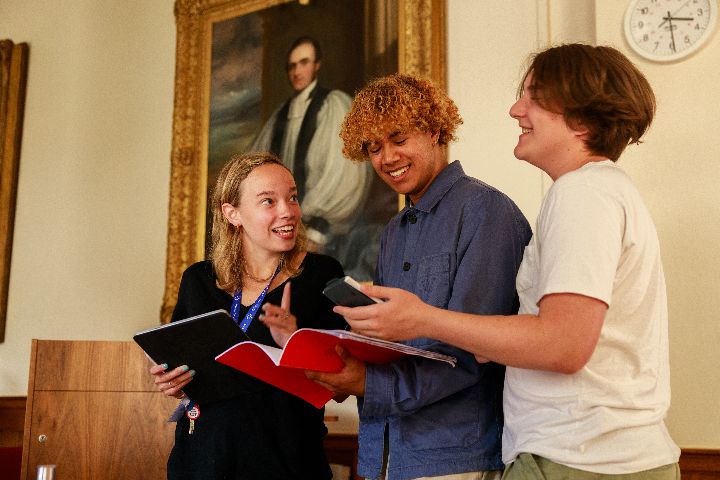
Immerse Education’s Math Summer Programme gives you the opportunity to study mathematics in a small-group setting modeled on university teaching. You explore topics such as proof-writing, advanced algebra, statistics, game theory, calculus, and problem-solving through seminars and guided workshops led by tutors from leading universities.
The program emphasizes how mathematicians think, structure arguments, and solve unfamiliar problems. You also complete an individual project, receive written feedback, and earn a certificate at the end of the program. If you attend in person, you live on or near campus and experience structured student life alongside peers from around the world. Apply now!
Why it stands out: It combines advanced mathematics teaching with small-group mentorship and a genuine university-life experience across multiple global campuses.
3. National University of Singapore (NUS) Summer Science Institute – Youth Summer Programmes
Location: National University of Singapore, Singapore
Cost: Singaporean & PR: SGD 2,725; ASEAN Students: SGD 3,978.50; International Students: SGD 5,450
Acceptance rate/cohort size: Selective; cohort size depends on the programme chosen
Dates: Typically 1-week residential blocks running between June and August
Application Deadline: Rolling admissions
Eligibility: High school and pre-university students aged 15 to 18 years old; fluent in English; open to international students
For students comparing math summer programs in Asia for high school students, the National University of Singapore Youth Summer Programmes offer a university-based route into quantitative study. Depending on the track offered each year, students may explore mathematics, data analytics, economics, coding, statistics, or broader STEM topics through lectures, workshops, and applied projects. You learn how mathematical ideas are used beyond textbooks, including in modelling, decision-making, and problem-solving.
Sessions are typically taught by university faculty or academic staff, helping you experience the pace and expectations of higher education. Studying on campus also gives you exposure to residence life, university facilities, and an international student community.
Why it stands out: It combines strong academic credibility with access to one of Asia’s top universities, allowing you to explore mathematics and quantitative fields in a real campus setting.
4. Indian Mathematical Olympiad Training Camp
Location: Chennai Mathematical Institute (CMI), Chennai (Homi Bhabha Centre for Science Education, 2026a)
Cost/Stipend: None
Acceptance rate/cohort size: Highly selective; approximately 65 students
Dates: May 6th – June 1st
Application Deadline: Determined by performance in the Indian National Mathematical Olympiad (INMO) held in January; registration for preliminary qualifying stages typically closes in early January
Eligibility: Holding citizenship of India or OCI status; studying in classes 8, 9, 10, 11, or 12; born on or after August 1st; residing and studying in India since at least October 30, 2023; not having completed or failed the Class 12 board examination before the start of the current academic year; qualifying through the merit list of the Indian National Mathematical Olympiad; not open to international students
At the IMOTC, you join a select group of elite high schoolers to train for the world’s most prestigious math competitions. You will dive deep into the four core pillars of geometry, number theory, combinatorics, and algebra. During the camp, you participate in intensive lectures, daily problem-solving sessions, peer discussions, and timed mock tests.
This program is unique because it serves as the final selection ground for the six-member Indian team headed to the International Mathematical Olympiad. By the end, you will have mastered rigorous proof-writing and developed the creative logic needed to solve complex, non-routine mathematical puzzles.
Why it stands out: It provides a rare immersion into high-level, creative mathematics, bringing together the country’s brightest young minds to learn from former Olympians and top researchers
5. Nanyang Technological University (NTU) Youth Summer Programme
Location: Nanyang Technological University, Singapore
Cost: Approximately S$1,100 – S$1,500 per run
Acceptance rate/cohort size: Selective; approximately 40-60 students per discipline/run
Dates: Run 1: June 22-26; Run 2: July 20-24
Application Deadline: Run 1: March 16th; Run 2: May 25th
Eligibility: High school and pre-university students; open to international applicants who meet academic and language requirements
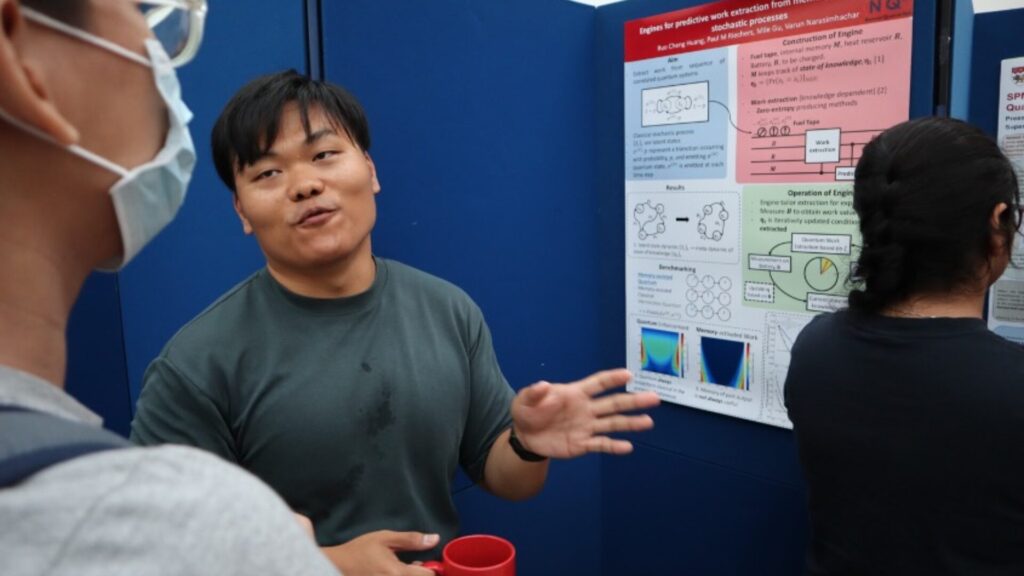
Nanyang Technological University’s Youth Summer Programme allows you to study quantitative and STEM-focused subjects in one of Asia’s leading technology universities. Depending on the year’s offerings, students may explore mathematics, engineering, coding, data science, artificial intelligence, or innovation through lectures, labs, and project-based workshops. You learn how mathematical thinking is applied to real systems, including modeling, analytics, and computational problem solving.
Sessions are typically taught by NTU faculty or university instructors, giving you exposure to the pace and expectations of higher education. It is especially useful if you want to explore how mathematics connects to engineering, technology, and future careers in fast-growing industries.
Why it stands out: It places you inside one of Asia’s strongest STEM universities, where mathematics is taught in connection with engineering, analytics, and emerging technologies.
6. University of Hong Kong (HKU) Summer Institute
Location: University of Hong Kong, Hong Kong
Cost/Stipend: Varies by course; accommodation may be available at an additional cost for eligible students aged 15 and above
Acceptance rate/cohort size: Selective; cohort size varies by course
Dates: June 15th – July 31st
Application Deadline: April 3rd for non-local students; May 31st for local students
Eligibility: Secondary school students, including S3-S6 / Year 11-13 / Grades 9-12 for many senior secondary courses; open to international students
The HKU Summer Institute allows you to study university-style courses on the University of Hong Kong campus. For students interested in math-related fields, relevant options may include data science, artificial intelligence, engineering, STEAM, physics, and quantitative problem-solving courses. You learn through faculty-led lectures, applied workshops, and project-based sessions that show how mathematical thinking connects to technology, research, and real-world systems.
Some courses are non-credit bearing, while others may offer HKU credits, so you should check the specific course page before applying. Since many HKU Summer Institute courses are open to non-local students, it can also give you exposure to an international peer group in Hong Kong.
Why it stands out: It offers access to HKU’s campus and faculty-led summer courses, helping you connect mathematics with applied fields such as data science, AI, engineering, and scientific research.
7. Chinese University of Hong Kong (CUHK) Summer Institute
Location: The Chinese University of Hong Kong, Sha Tin, Hong Kong
Cost: Tuition varies by course and programme type; early bird discount is available
Acceptance rate/cohort size: Selective; approximately 500-600 students
Dates: July 11-24
Application Deadline: Local students: Early Bird: April 24th; Regular May 8th | Non-local students: Early Bird: March 27th; Regular April 10th
Eligibility: Students applying to university in 2027 (Current Grade 11 / Year 12 / S5 students); minimum age 16; open to international students
The CUHK Summer Institute allows you to study academic subjects in a university setting at one of Hong Kong’s leading research institutions. For students interested in mathematics, suitable tracks often include data analytics, economics, coding, engineering, statistics, finance, and broader STEM pathways. Courses are usually taught through lectures, workshops, and project-based learning that emphasize applying quantitative reasoning to real problems.
You learn how mathematics supports decision-making, technology development, business strategy, and scientific inquiry rather than treating it only as classroom theory. Students also gain exposure to the CUHK campus environment, libraries, laboratories, and university expectations.
Why it stands out: It combines the academic depth of a major research university with flexible summer courses that show how mathematics connects to finance, data, science, and technology.
8. Asia International Mathematical Olympiad
Location: Hanoi, Ho Chi Minh City, and Hanoi, Vietnam
Cost/Stipend: None for preliminary online tests; 350,000 VND for regional rounds; 500,000 VND for national finals; international final registration fees apply to all qualifying participants
Acceptance rate/cohort size: Highly selective; tens of thousands of students nationwide
Dates: Preliminary rounds November to December; regional rounds March; national finals April; international final August 1-5
Application Deadline: Initial registration open September 26th – November 15th; national final confirmation: April 20th
Eligibility: Be a student currently enrolled in high school grades 10 through 12 in Vietnam; participate individually and voluntarily in the designated examination rounds; provide a valid student identification number and required registration documents; achieve a qualifying rank in the national rounds to advance to the international stage; not open to international students
The Asia International Mathematical Olympiad (AIMO) brings a competitive edge to the many math summer programs in Asia for high school students, offering a high-stakes platform to test your mathematical grit against top students from over a dozen countries. For high schoolers in the Senior Secondary division, the curriculum moves beyond standard schoolwork to cover advanced number theory, complex geometry, combinatorics, and sophisticated logical reasoning.
During the program, you will tackle open-ended non-routine problems, participate in international cultural exchange sessions, and even engage in the World Mathematical Games Open to solve interactive logic puzzles. By participating, you sharpen your critical thinking and strategic planning skills, learning to approach “impossible” questions with scientific precision.
Why it stands out: It combines a rigorous international competition with a collaborative cultural exchange, allowing you to benchmark your skills against a global field while building friendships with peers across borders.
9. Vigyan Pratibha
Location: Pan-India (Implemented locally within participating schools such as KVs, JNVs, and AECSs)
Cost: None
Acceptance rate/cohort size: Open enrollment; cohort size varies locally
Dates: Year-round
Application Deadline: No fixed deadline
Eligibility: Students in Classes 8, 9, and 10 enrolled in participating school networks (Kendriya Vidyalayas, Jawahar Navodaya Vidyalayas, Atomic Energy Central Schools, and select local schools); not open to international students
Vigyan Pratibha allows you to explore mathematics through inquiry-based units that go significantly beyond your standard high school textbooks. You will dive into primary topics including graph theory, Fibonacci sequences, spatial geometry, and mathematical modeling. During the program, you will model networks with graph coloring, investigate area patterns on dot grids, and use trigonometry to track the movement of shadows.
Its unique “learning circle” format encourages you to collaborate with peers, focusing on the process of discovery rather than rote memorization. Through these activities, you will sharpen vital skills like logical reasoning, data analysis, and pattern recognition. This hands-on approach helps you understand how mathematical concepts are actually built and applied in the real world.
Why it stands out: It replaces the pressure of competitive exams with a collaborative environment where you learn to think like a researcher by exploring open-ended mathematical problems.
10. HKUST Summer Institute

Location: Hong Kong University of Science and Technology, Clear Water Bay, Hong Kong
Cost: Tuition varies by programme and course selection; financial aid is available
Acceptance rate/cohort size: Highly Selective; limited cohort size
Dates: Multiple summer sessions are typically offered in June, July, and August
Application Deadline: May 31st
Eligibility: High school students in Grade 10-11 (or Year 11-12 / S4-S5); must usually be aged 16 or above for on-campus accommodation; open to international students
If you want math summer programs in Asia for high school students with a strong technology focus, the HKUST Summer Institute lets you study quantitative subjects at one of Asia’s leading science and technology universities. Depending on the course selected, you may explore mathematics, statistics, economics, coding, artificial intelligence, engineering, or data science through lectures, workshops, and project-based learning. You learn how mathematical reasoning is applied to real problems such as optimisation, analytics, financial modelling, and computation.
Sessions are taught by university faculty or academic instructors, helping you experience the pace and expectations of undergraduate study. Studying on the HKUST campus also gives you exposure to residence life, research facilities, and a globally diverse student environment overlooking Clear Water Bay.
Why it stands out: It combines strong quantitative academics with one of Asia’s most respected STEM campuses, allowing you to study mathematics in direct connection with engineering, analytics, and emerging technologies.
11. SIMIS Math Camp
Location: Shanghai, China
Cost: Ranges from RMB 10,000 to RMB 20,000, depending on scholarship tier. The base fee (RMB 10,000) covers accommodation and meals; scholarships are available
Acceptance rate/cohort size: Highly Competitive; approximately 100 students
Dates: July – August
Application Deadline: Late March
Eligibility: High school students with a strong mathematical background (calculus preferred), high academic performance, and proficiency in English; open to international students
Among the more proof-focused math summer programs in Asia for high school students, SIMIS Math Camp gives you space to work through advanced problem-solving sessions, proof-based topics, and collaborative exercises that develop logical reasoning and mathematical creativity. The camp encourages students to investigate patterns, construct arguments, and solve unfamiliar problems. Instruction is delivered in a small-group setting, allowing you to receive closer feedback from mentors and interact with peers who share strong quantitative interests.
Students also gain exposure to an international academic environment in Shanghai, one of Asia’s leading educational and technology hubs. It is especially valuable if you want deeper mathematical training while building confidence in proofs, competitions, and higher-level problem solving.
Why it stands out: It offers serious mathematics enrichment in Shanghai through small-group instruction focused on proofs, challenging problems, and creative mathematical thinking.
12. World Mathematics Invitational
Location: Chiba and Tokyo, Japan
Cost/Stipend: Preliminary registration fees: approximately 500 PHP to 19 GBP; the Final Round requires an all-inclusive package fee (approximately $400 to $1,500 USD depending on the country and flight inclusion)
Acceptance rate/cohort size: Highly Selective; approximately 2,000 students
Dates: July 10-14
Application Deadline: January 31st for the Preliminary Round; May 20th for the Final Round
Eligibility: Enrolled in kindergarten through grade 12 (senior high school); achieve a Gold or Silver award in the World Mathematics Invitational Preliminary Round; qualify as a Bronze awardee with distinction in specific regions like the Philippines; register via an official regional partner or organizing committee; possess a valid passport for international travel to Japan; open to international students
The World Mathematics Invitational is a global competition where you can test your skills against top high schoolers from across the world. You will tackle advanced topics like algebra, geometry, number theory, and combinatorics through local preliminaries and international final rounds. The program includes unique activities such as cultural tours, formal awards ceremonies, and a creative math presentation project.
A standout feature is the rotating host city, which brings you to a new global destination each summer. Participating helps you build sharp analytical logic and creative problem-solving skills that are essential for future STEM success.
Why it stands out: It bridges the gap between rigorous academic theory and real-world cultural exploration, ensuring you don’t just solve equations but also experience the global impact of mathematical thinking.
13. Sakura Science High School Program (Japan Science and Technology Agency)
Location: Various universities, laboratories, and research institutions across Japan
Cost: None
Acceptance rate/cohort size: Highly Selective; ~50-80 students per batch
Dates: Multiple short-term sessions held during the year, including summer opportunities, depending on the host schedule
Application Deadline: Varies by host institution and application cycle
Eligibility: High school students (Grades 10, 11, or 12), aged 15-18, with high academic standing in STEM and first-time visitors to Japan; open to international students
The Sakura Science High School Program is an international academic exchange initiative organized by the Japan Science and Technology Agency (JST). Selected students travel to Japan to visit universities, research institutes, and advanced laboratories while taking part in lectures, experiments, and collaborative STEM activities. Depending on the host institution, participants may engage with mathematics, data science, robotics, engineering, or broader scientific research themes.
You also interact with Japanese students and researchers, giving you insight into how science and mathematics are studied in one of Asia’s leading innovation ecosystems. Because the program is short and intensive, it offers a concentrated introduction to research culture and university life in Japan.
Why it stands out: It is a government-backed, fully funded program that gives students rare access to Japanese universities and research labs while learning alongside international peers.
14. Peking University Summer School International Pre-College
Location: Beijing, China
Cost/Stipend: Approximately 15,000-18,000 RMB for tuition and a 400 RMB application fee, with separate accommodation costs; limited merit-based scholarships available
Acceptance rate/cohort size: Highly selective; approximately 150 students
Dates: Session A: July 6-17, Session B: July 20-31, combined four-week session: July 6-31 annually
Application Deadline: Early bird: March 31st; regular: May 31st
Eligibility: Currently enrolled as a high school student or recent graduate; aged 16-18 years old; holding a non-Chinese passport with a valid visa; providing proof of English proficiency for non-native speakers; submitting a complete academic transcript and recommendation letter; maintaining good physical and mental health; open to international students
At the PKUSSI International Pre-College program, you will dive into an intensive academic environment that bridges the gap between high school and university mathematics. You will tackle advanced topics like calculus, probability, and number theory through lectures led by Peking University’s world-class faculty.
While you are there, you will participate in interactive seminars, work on collaborative research projects, and visit iconic landmarks like the Great Wall of China. This program helps you sharpen your analytical reasoning and problem-solving skills while teaching you how to work effectively with peers from all over the world.
Why it stands out: It grants high school students direct access to the faculty and resources of the highest-ranked mathematics school in China within a historic imperial campus setting.
15. Yonsei International Summer School Pre-College
Location: Seoul, South Korea
Cost/Stipend: 100,000 KRW application fee and tuition varies based on course load and early bird registration status
Acceptance rate/cohort size: Selective; approximately 1,500 students
Dates: 4-week session runs from June 29th – July 22nd, and 6-week session runs from June 29th – August 5th
Application Deadline: Early bird: March 12th; regular: May 7th
Eligibility: Currently enrolled in an accredited college or university, or applying as a high school senior who has been accepted to an accredited college or university; maintaining a minimum GPA of 2.0 on a 4.0 scale; demonstrating proficiency in English; open to international students
The Yonsei International Summer School Pre-College program allows you to experience university life in Seoul while advancing your math skills. You will dive into core topics like calculus and statistics, covering areas such as limits, derivatives, and data distribution. Your time will be filled with activities like Taekwondo classes, visits to the DMZ, and working through complex problem sets in small, international groups.
What makes this program unique is the chance to earn actual university credits from a top-tier institution while you are still in high school. You will walk away with sharpened analytical thinking and the academic independence required for your future college career.
Why it stands out: It provides an authentic preview of global collegiate life by mixing rigorous STEM education with an immersive look at South Korea’s cultural and technical evolution.
Read Further, Think Deeper, Solve Better
Mathematics rewards students who stay curious after the final problem set, especially when a difficult proof or puzzle opens a new way of thinking.
Across these 15 math summer programs in Asia for high school students, you may encounter Olympiad questions, modelling tasks, statistics, coding, or university-style lectures.
What matters next is how you keep that momentum alive through independent reading, careful practice, and problems that stretch your reasoning.
For your next challenge, turn to our Mathematics Top Books Guide and find titles that sharpen logic, deepen understanding, and keep your curiosity moving.