
 Русский (RU)
 Українська (UK)
 Türkçe (TR)
 Italiano (IT)
 Français (FR)
 Português (PT)
 中文 (中国) (ZH)
 Español (ES)
 日本語 (JA)
 ไทย (TH)
 Deutsch (DE)
 Ελληνικά (EL)
 Polski (PL)
 Bahasa Indonesia (ID)
 Nederlands (NL)
 العربية (AR)
 한국어 (KO)

Sophomore year is usually the point where high school starts feeling more serious. Freshman year is over, college conversations begin showing up more often, and you slowly start thinking about what you’re actually interested in beyond regular classes. Summer programs for high school sophomores can be especially useful at this stage because you still have enough flexibility to explore different fields before junior year becomes more intense.
A strong summer program at this stage is not really about “boosting” your resume as much as people online make it sound. It’s more about exposure. You get the chance to try subjects outside your school curriculum, work with students from different places, and experience what learning feels like in a more independent setting. You might spend your summer doing lab work, debating political issues, writing research papers, coding projects, business case studies, or creative portfolio work, depending on the program you choose.
How do you choose the right summer program as a sophomore?
The biggest mistake students make is choosing programs only based on prestige or selectivity without thinking about whether the subject genuinely interests them. Sophomore year is usually a better time for exploration than hyper-specialisation, so it helps to focus on programs that let you test your interests while still developing useful academic skills.
Some students may benefit more from academic programs connected to subjects they already enjoy, such as STEM, business, law, writing, or psychology. Others may prefer broader leadership, research, or interdisciplinary programs that expose them to multiple fields at once. The strongest programs usually involve some combination of hands-on learning, collaboration, discussion, or project-based work rather than passive lectures alone.
It’s also important to think practically about factors like cost, duration, online versus in-person learning, and how much structure you personally prefer. The right program can give you stronger skills, more confidence, and a clearer sense of what subjects you may want to explore more seriously later in high school.
To help you get started, we’ve curated a list of 15 summer programs for high school sophomores!
For more opportunities, consider summer internships for sophomores.
15 Summer Programs for High School Sophomores
1. Telluride Association Summer Seminar (TASS)
Location: Residential program, United States
Cost: Free
Program Dates: June 21st – July 25th
Deadline: December 3rd
Eligibility: Current high school sophomores and juniors; must be at least 15 at program start and no older than 17 by program end; U.S. and international students welcome; international students studying outside the U.S. without a U.S. passport must be current sophomores to apply
TASS is a five-week residential humanities program where you spend most of your day reading, writing, and discussing complex social and political ideas in small seminar-style classes. You apply either to TASS-CBS, which studies African and African-descended cultures through literature, history, and politics, or TASS-AOS, which examines systems of power and inequality across society.
Classes are discussion-heavy and writing-intensive, so you are constantly responding to texts, debating interpretations, and revising essays with faculty feedback. Outside class, students collectively manage parts of community life, including budgeting, activities, and conflict resolution. The residential setup feels unusually collaborative because students help shape the program environment together across the five weeks.
Why it stands out: The democratic governance structure is uncommon: you’re not just attending a program; you’re helping run one, which builds a different kind of skill than coursework alone can.
2. Immerse Education’s Pre-University Summer School
Location: Cambridge, London, Oxford, Singapore, Sydney, Tokyo, and Toronto
Cost: Varies; summer school scholarship available through our bursary programme
Application Deadline: Multiple summer cohorts; rolling admissions
Program Dates: 2 weeks during the summer
Eligibility: Students worldwide aged 13-18 currently enrolled in middle or high school
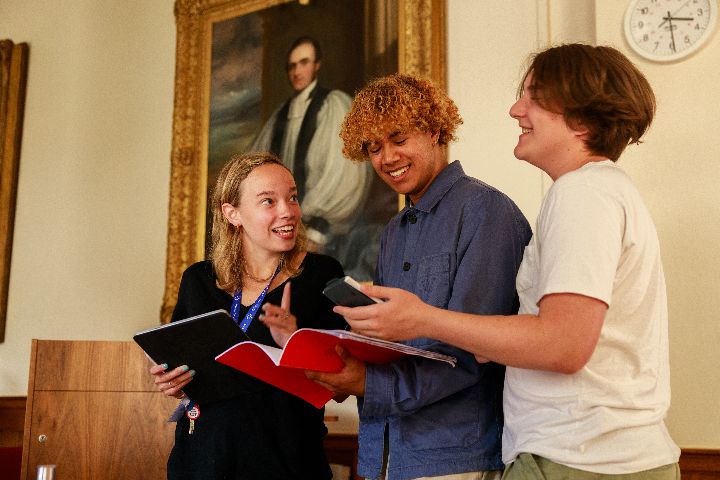
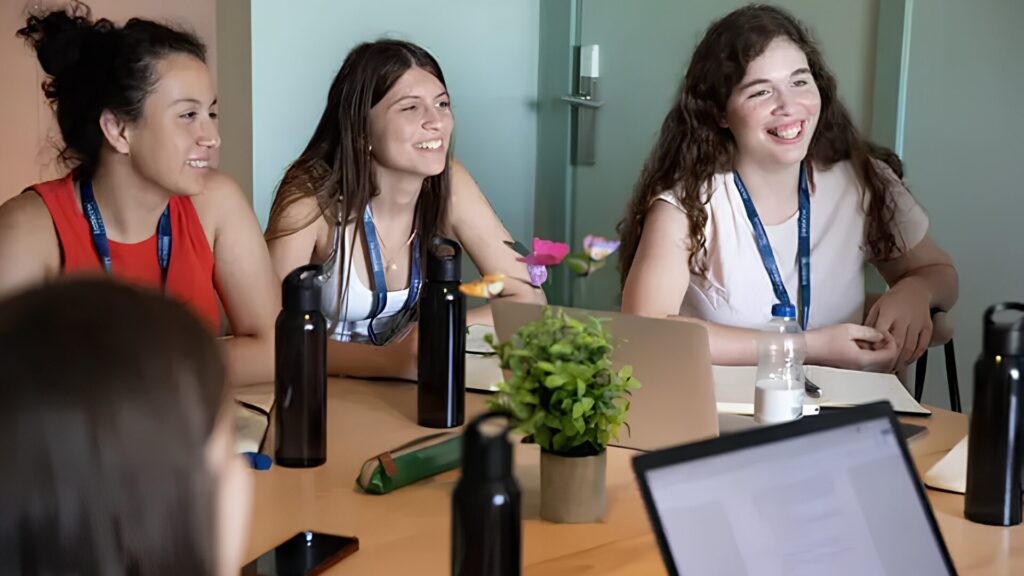
The Academic Insights Program lets high school students experience university life firsthand. You will live on campus and study in small groups of 7–10, learning from tutors from top universities like Oxford and Cambridge. Participants can explore over 20 subjects, including Architecture, AI, Business Management, Computer Science, Economics, Medicine, Philosophy, and more.
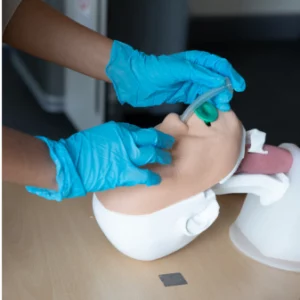
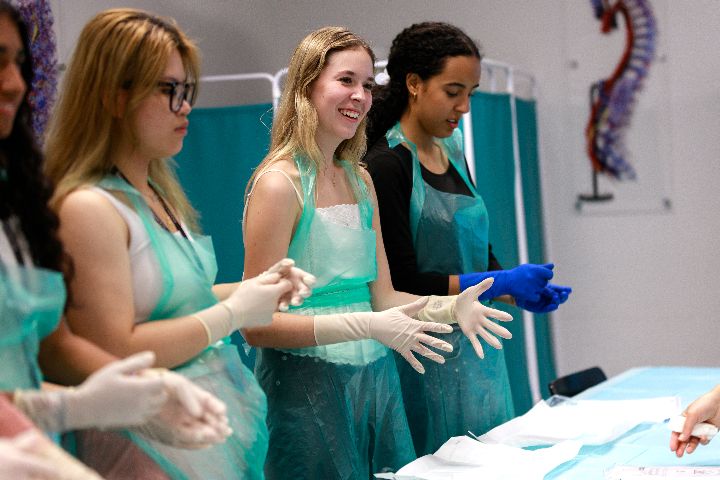
The courses are experiential and hands-on: you may find yourself conducting dissections in medicine, designing a robotic arm in engineering, participating in a moot court for law, or building creative writing portfolios and business case studies. By the end of the program, you’ll complete a personal project, receive written feedback, and receive a certificate of completion. You can find more details about the application here.
Why it stands out: You’ll study under expert academics, be guided daily by a university student mentor, complete a project you can show in future applications, and experience genuine university college life, with other campuses worldwide as alternatives.
3. JCamp
Location: Varies by year; Minneapolis, MN was the last location
Cost: Free
Program Dates: Six days during the summer
Deadline: Early to mid-January
Eligibility: Current high school sophomores and juniors; freshmen and current seniors are not eligible; international students are welcome to apply
JCamp is one of the more media-focused summer programs for high school sophomores, giving students six days to report, produce stories, and learn directly from working journalists and media professionals. During the week, you go on supervised reporting assignments, practice television anchoring, work on breaking-news style exercises, and contribute pieces to JCamp Live, the program’s real news platform.
The schedule also includes newsroom workshops, one-on-one editing feedback, guest speakers, and discussions about media ethics and representation in journalism. Because the work is tied to actual reporting and production deadlines, the atmosphere feels much closer to a functioning newsroom than a classroom workshop.
Why it stands out: You’re filing real stories on a live news site, alongside working journalists, at a national convention.
4. Girls Who Code’s Pathways Program
Location: Virtual
Cost: Free
Dates: 6-7 weeks, self-paced, year-round; can be completed during the summer
Deadline: April 10th
Eligibility: Current 9th-12th grade girls and non-binary students worldwide, including rising 9th graders, Girls Who Code Summer Programs alumnae, and graduating seniors
For students looking for flexible summer programs for high school sophomores, Girls Who Code Pathways offers a virtual coding format where you choose one technical track and complete projects over several weeks at your own pace. The available pathways include game design, artificial intelligence, cybersecurity, web development, and data science, so the projects shift depending on your selected area. Alongside the coursework, students join a Discord-based community where they attend workshops, connect with peers, and interact with engineers and tech professionals through panels and live events.
Since the program is spread over 6–7 weeks, the workload feels easier to balance with school or other summer activities than a full-time camp schedule. Most of the learning happens through building projects and solving practical coding tasks connected to your chosen field.
Why it stands out: Five distinct tracks mean you can choose based on what you’re curious about, and the Discord community keeps it from feeling like you’re just working through a course alone.
5. Economics for Leaders (EFL)
Location: Various college campuses across the United States
Cost: $2,800 residential; $900 virtual
Program Dates: Summer
Deadline: April 15th
Eligibility: Current high school sophomores and juniors around the world
Economics for Leaders is a week-long leadership and economics program run by the Foundation for Teaching Economics across different college campuses in the United States. During the program, you study concepts like incentives, trade-offs, markets, and decision-making while applying them to leadership situations and policy problems.
Much of the coursework revolves around simulations, case discussions, and group exercises where students work through practical scenarios involving limited resources and strategic choices. The admissions process also looks heavily at leadership potential and initiative, so the cohort tends to include students active in student government, debate, nonprofits, and school leadership roles.
Why it stands out: Most academic programs evaluate you primarily on grades and scores, EFL evaluates you on leadership potential and how you think about your future, which gives students with strong character a real shot.
6. Stanford University Mathematics Camp (SUMaC)
Location: Online and residential; Stanford University, California
Cost: $3,750 online or $8,950 residential; need-based financial aid available
Program Dates: Session One Online: June 15th – July 3rd | Session One Residential: June 21st – July 17th | Session Two Online: July 6th – July 24th
Deadline: February 2nd
Eligibility: Currently enrolled in grades 10-11; exceptional interest and ability in mathematics required; international students are eligible
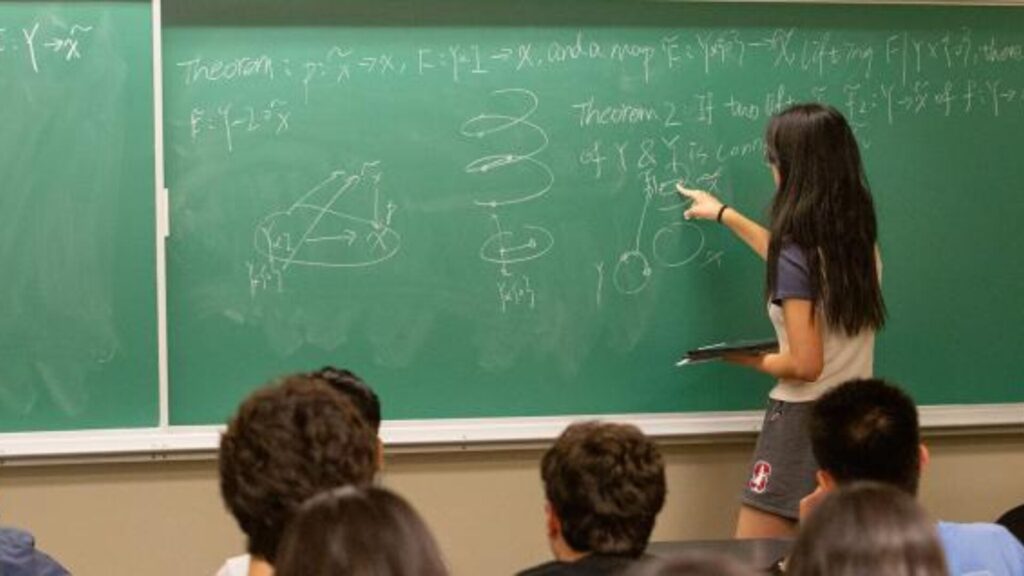
SUMaC is a selective mathematics program for students who already have a strong interest in advanced math and want exposure to topics usually taught much later in college. Depending on the course track, students explore abstract algebra, number theory, or algebraic topology through lectures, collaborative problem solving, and guided research-style work. The pace is intense, and Stanford compares the workload directly to college-level mathematics courses.
Most days involve long mathematical discussions and proof-based thinking rather than repetitive textbook exercises. Students also spend time working together on difficult problems outside formal class sessions, especially in the residential version of the program.
Why it stands out: SUMaC covers abstract algebra, number theory, and algebraic topology, which are subjects most students don’t encounter until college, and SUMaC treats them with full rigor.
7. Yale Young Global Scholars (YYGS)
Location: Yale University, New Haven, Connecticut
Cost: $7,000
Program Dates: Session I: June 21st – July 3rd | Session II: July 5th – July 17th | Session III: July 19th – July 31st
Deadline: January 7th
Eligibility: Current high school sophomores and juniors around the globe; must be between 16 and 18 years old by the first day of Session III; graduating in 2027 or 2028; first-time YYGS participants only; must be able to participate in a rigorous curriculum conducted in English
YYGS brings an international, discussion-based option to the many summer programs for high school sophomores, allowing you to choose one interdisciplinary track and spend two weeks discussing global issues alongside students from more than 150 countries. The available tracks include Innovations in Science & Technology, Politics, Law & Economics, and Solving Global Challenges, each built around seminars, lectures, and collaborative discussions.
The program relies heavily on conversation and perspective-sharing, so discussions often move beyond textbook answers into how political, scientific, or social issues are experienced in different parts of the world. You also attend lectures from Yale faculty and participate in simulations, breakout discussions, and collaborative projects during the session.
Why it stands out: The student body spans 150+ countries, which means the discussions in your track aren’t just academically rigorous; they’re genuinely shaped by different political, cultural, and lived experiences.
8. Notre Dame Summer Scholars
Location: University of Notre Dame, Notre Dame, Indiana
Cost: $5,200
Program Dates: Session I: June 6th – June 20th; Session II: June 27th – July 11st
Deadline: Typically mid-February
Eligibility: Current sophomores and juniors worldwide; must be at least 16 years old by August
Notre Dame Summer Scholars places you on Notre Dame’s campus for two weeks, where you take one focused college-level course taught in a small classroom setting. The courses cover a wide range of subjects, and the expectations feel close to an actual college class from the beginning. You manage assignments independently, work with classmates outside class hours, and keep up with readings and discussions throughout the session.
Some program tracks also allow students to earn one transferable college credit after completion. Outside academics, students spend time exploring campus traditions, residence hall life, and the social side of living at Notre Dame during the summer.
Why it stands out: You’ll earn one transferable college cred while taking a course taught by Notre Dame faculty.
9. Michigan Math and Science Scholars (MMSS)
Location: University of Michigan, Ann Arbor, Michigan
Cost: $1,400 tuition
Program Dates: Session 1: June 21st – July 3rd | Session 2: July 5th – July 17th | Session 3: July 19th – July 31st
Deadline: April
Eligibility: Rising sophomores, juniors, and seniors must have completed at least one year of high school and not yet graduated; international students are welcome to apply
MMSS introduces you to specialized math and science topics through courses taught directly by University of Michigan faculty and researchers. You choose one course per session, and the subjects change widely across areas like engineering, medicine, mathematics, climate science, and data analysis.
The classes focus heavily on applying ideas to real-world questions and current research topics, so students spend less time memorizing formulas and more time working through practical problems and case studies. Since many courses do not require advanced background knowledge, the program works well if you want to test out a field you have never formally studied before.
Why it stands out: Your instructor is a U of M Ph.D. faculty member, and most courses don’t require you to already know the subject, so you can explore something genuinely new without being held back.
10. Columbia Engineering SHAPE
Location: Columbia University, New York, New York
Cost: Commuter: $6,241 per session; Residential: $11,492 per session
Program Dates: Session 1: July 6th – July 24th; Session 2: July 27th – August 14th
Deadline: March 2nd
Eligibility: All current high school students are eligible for the commuter option; the residential option requires students to be 16 or older
SHAPE is Columbia Engineering’s summer program where you spend three weeks focused on one engineering or technology course while working inside Columbia’s labs and makerspaces. Course options include Robotics and Autonomous Driving, AI Builders, Biomedical Engineering, Sustainable Engineering, Data Science, and computer programming. Many courses involve physical project-building, so students regularly use Columbia’s Makerspace equipment, including 3D printers, laser cutters, and fabrication tools, to prototype designs and engineering ideas.
Alongside coursework, the schedule includes admissions workshops and sessions on communication and presentation skills. Residential students stay on Columbia’s campus in New York City during the program, while commuter options are also available.
Why it stands out: You get access to Columbia’s Makerspace to build actual prototypes, so the engineering is hands-on, not theoretical.
11. Stanford Pre-Collegiate Summer Institutes
Location: Virtual
Cost: $3,200 per course
Program Dates: Session One: June 15th – June 26th | Session Two: July 6th – July 17th
Deadline: March 13th
Eligibility: Currently enrolled in grades 8-11; must be older than 13 and younger than 19 during program dates; students may only attend one course per summer; many courses have specific grade-level restrictions; international students can apply
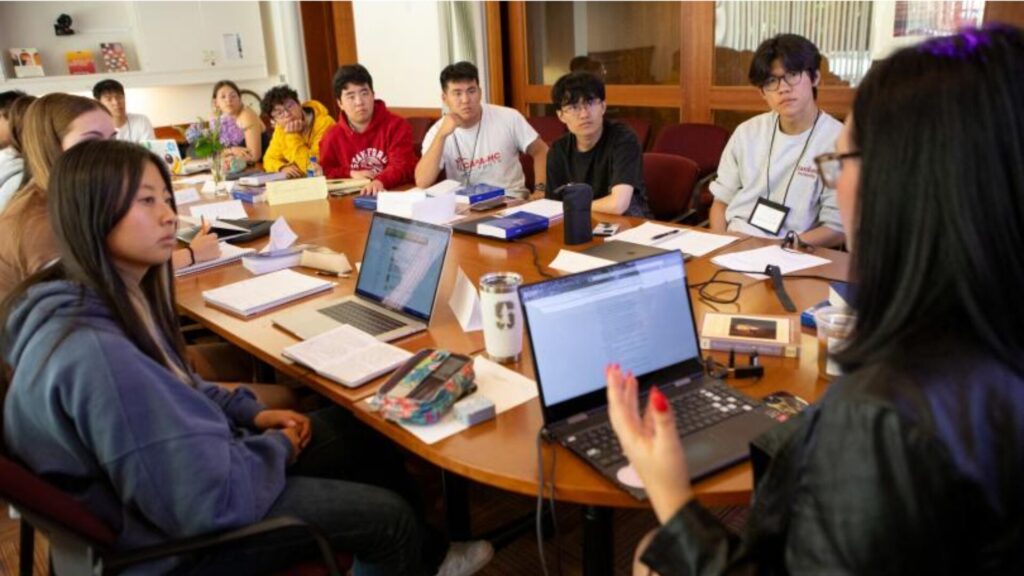
Stanford’s Pre-Collegiate Summer Institutes let you spend two weeks focused on one academic subject through live online classes and daily assignments. The course catalog is extremely broad, covering areas like philosophy, AI, biomedical engineering, climate science, business strategy, creative writing, and capital markets.
Classes meet live with cameras and microphones on, so the sessions function more like small seminars than recorded online modules. Since students take only one course during the program, the workload goes deeper into the topic instead of spreading across multiple subjects. The courses are non-credit and ungraded, which keeps the atmosphere more exploratory and discussion-focused.
Why it stands out: With over 75 courses across wildly different subject areas from capital markets to climate science to creative writing, this is one of the broadest catalogs available in a single high school summer program.
12. Cooper Union Summer STEM
Location: Cooper Union School of Engineering, New York
Cost: $3,150 for 3-week courses; $5,150 for 6-week courses
Program Dates: July 6th – August 13th | 3-week Session I: July 6th – July 23rd; 3-week Session II: July 27th – August 13th; 6-week: July 6th – August 13th
Deadline: Applications open December 11th, and the deadline is typically March
Eligibility: Students who have completed their 9th, 10th, or 11th grade year; current 8th graders are not eligible; open to students worldwide
Cooper Union Summer STEM gives high school students access to engineering and computer science courses modeled directly on Cooper Union’s undergraduate curriculum. Depending on the session length, you might study Arduino prototyping, app development, digital systems, water quality engineering, Python programming, or digital fabrication through intensive studio-style classes.
Some students also work on faculty or student research projects during the program. Since the curriculum pulls from first- and second-year undergraduate material, the pace feels significantly more advanced than most high school STEM camps. The program takes place in lower Manhattan, so students are working inside an actual engineering school environment throughout the summer.
Why it stands out: The curriculum is drawn from what Cooper Union undergraduates study in their first or second year, so you’re working at a genuine college level.
13. Duke Summer Session
Location: Duke University, Durham, North Carolina
Cost: $3,145 per course
Program Dates: June 29th – August 10th
Deadline: June 15th
Eligibility: Current 10th and 11th grade students; must be 16 years old by June 29th; international students are welcome to apply
Duke Summer Session allows high school students to enroll in actual Duke undergraduate courses alongside current university students. You choose one six-week course from approved summer offerings and complete the same assignments, exams, and coursework expected from Duke undergraduates in the class.
Courses can be taken online or in person, depending on availability and your location. Since this is Duke’s real summer academic session and not a separate pre-college simulation, students are graded using the same standards as enrolled college students. Credits earned through the course may also transfer to future colleges or universities after graduation.
Why it stands out: You’re enrolled in an actual Duke undergraduate course alongside real Duke students, graded on the same standards, not a pre-college simulation.
14. Penn Pre-College Residential Program
Location: University of Pennsylvania, Philadelphia, Pennsylvania
Cost: Varies by course
Program Dates: June 30th – August 8th
Deadline: May 1st
Eligibility: Current 10th and 11th grade students; international students welcome with a valid F-1 student visa
Penn’s Pre-College Residential Program places you inside actual University of Pennsylvania courses taught by Penn faculty, staff, and visiting scholars. You can choose between different academic structures, including single-course schedules, dual-course combinations, and lab science options with subjects like Biology and Physics. Available courses range across economics, psychology, philosophy, law, film history, medicine, and science, all taught at the same level and grading standards used for Penn undergraduates.
Since Penn students often sit in the same classes, the atmosphere feels much closer to a university academic environment than a separate high school summer program. Residential students also live on campus during the session while managing their own schedules and coursework.
Why it stands out: You’re sitting in an actual Penn classroom, graded on the same curve as Penn undergraduates, and earning credits that appear on an official University of Pennsylvania transcript.
15. Carleton College Summer Liberal Arts Institute (SLAI)
Location: Carleton College, Northfield, Minnesota
Cost: 3-week program: $5,300 domestic / $5,700 international; 1-week program: $1,500 domestic / $1,900 international; 2-week connected experience: $3,500 domestic / $3,900
Program Dates: 3-week: July 5-24; 1-week Session 1: July 12-17; 1-week Session 2: July 19-24
Deadline: Multiple rounds of admission
Eligibility: 3-week program: current high school sophomores and juniors; 1-week program: current high school freshmen, sophomores, and juniors; international students welcome
Carleton’s Summer Liberal Arts Institute focuses on discussion-based learning inside a small liberal arts college environment. You can choose either a three-week credit-bearing interdisciplinary course or a shorter exploratory experience without grades or credits. The longer option involves collaborative coursework, research, and a final presentation connected to one focused interdisciplinary topic.
Since Carleton is a liberal arts college, the classroom environment feels very discussion-heavy, with students regularly analyzing ideas across different subjects instead of staying inside one narrow discipline. Residential students also spend the summer living on Carleton’s campus and participating in community activities alongside classmates.
Why it stands out: SLAI is one of the few summer programs that gives you a liberal arts college experience; small campus, discussion-based classes, interdisciplinary courses, rather than a research university pre-college feel.
Turn Sophomore Summer Into a Stronger Start
Use the summer after sophomore year to sample harder subjects, meet motivated peers, and notice which topics actually hold your attention.
The 15 summer programs for high school sophomores featured here can give you early practice with research, projects, seminars, and independent learning.
That early practice can help you choose future classes, activities, and academic goals with more confidence instead of guessing later.
Want to build on that momentum? Check out our University Preparation blogs for application strategy, interview prep, subject planning, and supercurricular ideas.