
 Русский (RU)
 Українська (UK)
 Türkçe (TR)
 Italiano (IT)
 Français (FR)
 Português (PT)
 中文 (中国) (ZH)
 Español (ES)
 日本語 (JA)
 ไทย (TH)
 Deutsch (DE)
 Ελληνικά (EL)
 Polski (PL)
 Bahasa Indonesia (ID)
 Nederlands (NL)
 العربية (AR)
 한국어 (KO)

If you’re a high school student interested in technology, you’ve probably noticed how quickly software development and artificial intelligence are shaping the world around you. From everyday apps to recommendation systems, robotics, and generative AI tools, technology now influences nearly every industry. Software development & AI courses in Australia for high school students can give you a practical introduction to how these technologies actually work.
Imagine spending your summer building your own apps, learning Python, experimenting with machine learning models, or developing projects that solve real-world problems. Many of these programmes emphasise hands-on coding, collaborative projects, and creative problem-solving that reflect how technology is developed in professional environments.
How to choose the best software development & AI courses in Australia for High School Students?
For high school students, these courses can also help clarify future interests within computer science and emerging technologies. Some programs focus heavily on programming fundamentals and software engineering, while others introduce students to AI ethics, automation, cybersecurity, data science, or robotics. Along the way, students develop technical abilities alongside valuable skills in logic, communication, and analytical thinking.
Of course, not all technology courses offer the same level of depth or engagement. Some rely mainly on passive instruction, while others emphasise project-based learning. Choosing the right program can make a major difference in both your confidence and long-term interest in the field.
Across Australia, students can now access exceptional opportunities in software development, artificial intelligence, machine learning, and related STEM disciplines. Whether you’re completely new to coding or already building your own projects, these programs can help you strengthen your technical foundation while exploring one of the fastest-growing fields in the world.
To help you find the right fit, we’ve compiled a list of 15 Software Development & AI Courses in Australia for High School Students. They’ve been selected for their practical learning experiences, academic quality, and exposure to emerging technologies.
For adjacent options, consider the online AI program and summer programs in Australia.
15 Software Development & AI Courses in Australia for High School Students
1. Immerse’s Sydney Software Development & AI Summer School
Location: Sydney, Australia
Cost: Varies; summer school scholarship available through our bursary programme
Dates: 2 weeks during the summer
Application Deadline: Multiple summer cohorts with rolling admissions
Eligibility: High school students aged 15-18; open to international students
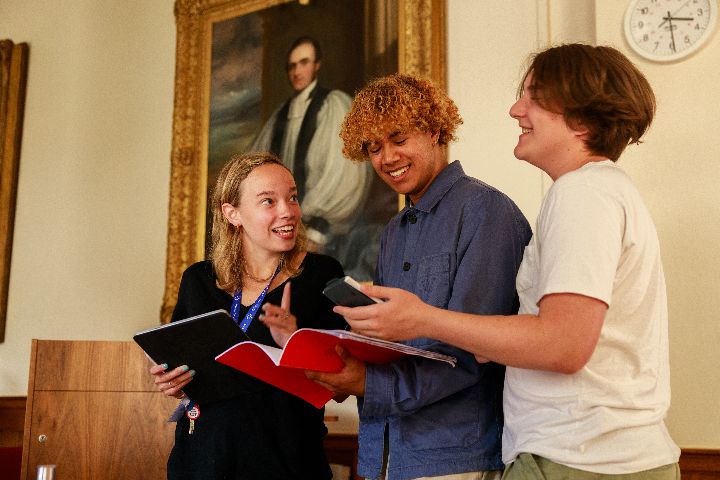
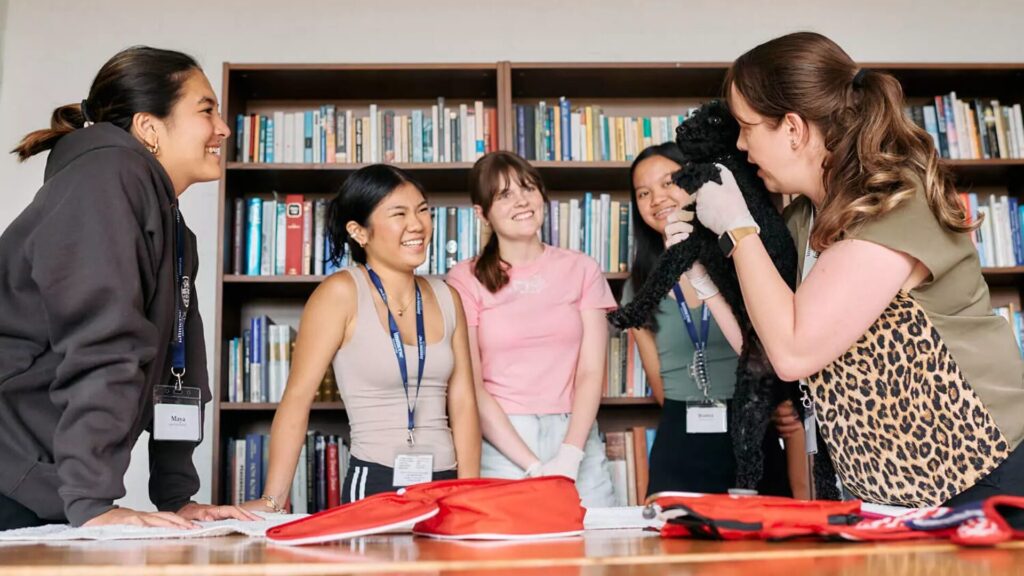
This program provides high school students with a comprehensive introduction to software engineering and artificial intelligence. You live and study at St. Paul’s College at the University of Sydney to experience an authentic collegiate environment. The curriculum covers core computer science concepts, machine learning algorithms, and practical coding skills. Students collaborate on real-world challenges and develop intelligent algorithms under the guidance of expert tutors.
The course includes interactive workshops, personal research projects, and one-on-one tutoring sessions. You can submit your application right here!
Why it stands out: You live on a historic university campus while learning to develop intelligent algorithms and autonomous systems from academic and industry experts.
2. NYSF Year 12 Program
Location: Australian National University, Canberra, and University of Queensland, Brisbane; two separate sessions
Cost: AUD $3,180 plus a non-refundable $70 application fee; scholarships available for those experiencing financial hardship
Dates: Session 1: January 6-14 at ANU, Canberra; Session 2: January 13-21 at University of Queensland
Application Deadline: June 24th
Eligibility: Australian citizens, residents, or full-time students in an Australian high school currently in Year 11; open to international students by special request
The National Youth Science Forum Year 12 Program gives students who are about to start Year 12 a broader understanding of study and career options in STEM.
You are immersed in science and technology, participating in tours of research facilities, learning about cutting-edge research, engaging with industry partners, learning about university and STEM career pathways, mixing with like-minded students from all over Australia, and participating in social and team-building activities. This program helps you build a clearer understanding of your future university options while developing valuable professional connections within the scientific community.
Why it stands out: It is a rare nine-day residential program simultaneously running at two world-class Australian universities, designed entirely around peer community and delivered largely by NYSF alumni, giving students an insider, student-eye view of STEM career pathways.
3. Curtin University – Curtin Rising Scholar Program (RSP)
Location: Perth, Australia; Curtin University or online
Cost/Stipend: None
Acceptance rate/cohort size: Highly selective; small cohort of high-ability students
Dates: Semester-based schedule; March 16th on-campus day and June 30th orientation
Application Deadline: April 24th for Semester 1
Eligibility: High-achievers in Year 10, 11, or 12; must attend an approved RSP partner school, demonstrate a strong A grade average, and be nominated by the school; international student eligibility depends on partner school enrollment
In this program, you engage in a rigorous academic program that integrates tertiary-level software development coursework into your high school schedule. You study first-year university units such as Fundamentals of Programming and Introduction to Software Engineering, gaining practical exposure to computational problem-solving. Through these courses, you complete software projects, utilise modern programming languages, and learn how to manage complex technical workloads independently.
You interact directly with university lecturers and utilise university-level platforms to develop essential digital skills and project management techniques. Ultimately, you secure a solid foundation in software engineering principles and earn credit toward a future university degree.
Why it stands out: It allows gifted high school students to earn official university credit in foundational computer science and engineering disciplines for free before graduating.
4. Girls’ Programming Network (GPN)
Location: Multiple cities across Australia, including Sydney, Melbourne, Brisbane, Perth, Canberra, Adelaide, and Burnie; new nodes being established
Cost: None
Dates: Once per school term; approximately 4 events per year per node
Application Deadline: Rolling registration prior to each term’s workshop
Eligibility: Female and gender diverse high school students in Years 7-12; no prior programming experience required; open to international students
For students looking for accessible software development & AI courses in Australia for high school students, the Girls’ Programming Network runs free, full-day programming workshops each school term, hosted by local technologists and teachers across Australia. At a GPN workshop, participants learn to build projects, play games, solve computational puzzles, and hang out with volunteer mentors.
All events are run by volunteer tutors with a wide range of experiences, from university students and IT professionals to teachers and coding hobbyists, united by a passion for helping the next generation of programmers. Beyond technical skills, you will gain practical exposure to university life and discover pathways into STEM fields while participating in screen-free games and community-building activities.
Why it stands out: A grassroots, community-run program that has won multiple awards (including the 2022 AWSA Best Program for Young Women in Security and 2023 Most Innovative Educator).
5. University of Newcastle High Performing Students Program (HPSP) – Object-Oriented Programming
Location: Newcastle (Callaghan), Central Coast (Ourimbah), or Online
Cost: $450
Acceptance rate/cohort size: Highly selective academic entry; size determined by individual course enrollment capacity
Dates: February 9th – May 29th
Application Deadline: Typically January
Eligibility: High school age at the time of application; must demonstrate high performance in education and dedication to studies; must hold Australian or New Zealand citizenship, Australian permanent residency, or an Australian permanent humanitarian visa; not open to international students
As a high school student in this academic program, you gain foundational exposure to software development by analysing problems and implementing solutions using an object-oriented programming language. You explore essential computer science concepts, including data abstraction, top-down program development, and object-oriented analysis and design.
Your coursework emphasises hands-on programming and rigorous testing strategies, allowing you to systematically evaluate functional software architectures. By mastering these programming fundamentals and system design practices, you build the core technical competencies necessary for future work in artificial intelligence and modern software engineering.
Why it stands out: It officially enrols high school students as university members, providing face-to-face instruction in foundational programming that counts as direct credit toward bachelor’s degrees in computer science or software engineering.
6. Monash University – Monash Engineering Girls (MEG)
Location: Clayton and Caulfield campuses, Melbourne, Australia
Cost/Stipend: None
Acceptance rate/cohort size: Competitive
Dates: April 14th – October 22nd
Application Deadline: Rolling admissions for membership
Eligibility: Female or non-binary students; enrolled in years 9 through 12; residing in Australia; open to international students residing in Australia
In this program, you engage with diverse engineering disciplines through a series of immersive workshops and industry networking events held at Monash University. You explore technical fields such as software development and artificial intelligence by attending hands-on sessions led by academic researchers and industry professionals.
You work with various digital tools to solve practical problems, ranging from coding algorithmic solutions to exploring the ethical implementation of AI systems. The program emphasises professional development through mentorship opportunities and site visits to major technology firms within the Melbourne area.
Why it stands out: It offers a multi-year membership pathway that provides high school students with consistent access to university laboratories and professional engineering mentors.
7. Curtin University – Girls + Engineering Tomorrow (GET) Network (Year 11-12)
Location: Curtin University, Perth, Australia
Cost/Stipend: None
Acceptance rate/cohort size: Selective
Dates: May 2nd – September 12th
Application Deadline: April 5th
Eligibility: Girls and non-binary students in Years 11 and 12, studying prerequisite mathematics; open to international students
The Girls+ Engineering Tomorrow (GET) Network is a 10-session academic program designed to introduce you to the engineering profession through practical engagement. Hosted at Curtin University, you participate in interactive STEM workshops that explore various disciplines, including pathways in mechatronics and computer systems.
During the weekend sessions, you receive dedicated mathematics tutoring to strengthen the quantitative skills necessary for advanced technical coursework. You also connect with industry role models and university mentors to learn about real-world applications of digital and physical infrastructure.
Why it stands out: It combines hands-on engineering exploration with specialised mathematics tutoring and direct mentorship from industry professionals.
8. START QUT (STEM Intensive)
Location: Brisbane, QLD; QUT Gardens Point Campus, on campus
Cost: Free; tuition and study materials covered by QUT; regional bursaries of $1,000 available; First Nations students may receive accommodation and meals via the Oodgeroo Unit
Dates: Orientation: January 7th; Program: January 11-22
Application Deadline: October 31st
Eligibility: Queensland Year 11 students entering Year 12 in the following year on an ATAR or IB pathway; B or higher for English and B average across other subjects; open to Queensland-based international students
In this program, you enrol in a single first-year university STEM unit, choosing from subjects spanning science, information technology, and engineering, and attend the same lectures, tutorials, lab experiments, and assessments as enrolled QUT students. The experience kicks off with a face-to-face orientation where students meet their peers and academic team, progresses through intensive daily sessions led by QUT academics and supported by undergraduate student mentors, and concludes with a program showcase where students present their work to family and staff.
Completing the program can yield tangible academic benefits: up to one selection rank adjustment added to a student’s ATAR, up to 4 QCE credit points, and potential advanced standing (credit) toward a future QUT degree.
Why it stands out: It is one of the very few programs where high school students sit genuine first-year university assessments alongside enrolled undergraduates, not a simulation, and can walk away with credit toward a degree before finishing Year 12.
9. The University of Melbourne – Girl Power in Engineering and IT
Location: University of Melbourne, Parkville, VIC; residential camp + work experience
Cost: None
Dates: July 5-8
Application Deadline: April 12th
Eligibility: Year 9 female and non-binary students enrolled in Victorian schools; not open to international students
Girl Power in Engineering and IT is a multi-year program beginning in Year 9, designed to inspire female students about the exciting possibilities of Engineering and IT. You explore engineering and IT through hands-on activities, facility tours, and peer networking.
In the second stage (Year 10), selected students complete a week of work experience with the Faculty of Engineering and Information Technology, choosing either an engineering or IT stream. The final stage facilitates mentoring opportunities between Year 11 and 12 students and University of Melbourne engineering and IT students.
Why it stands out: It is a rare three-stage pipeline program spanning Year 9 through Year 12 that combines residential camp, real work experience, and sustained mentoring, designed to keep young women engaged with engineering and IT all the way through their final school years.
10. The University of Queensland – Enhanced Studies Program (ESP) – Introduction to Software Engineering

Location: St Lucia, Australia or External
Cost/Stipend: None
Acceptance rate/cohort size: Competitive
Dates: February 23rd – June 20th
Application Deadline: October 31st
Eligibility: High-achieving students entering Year 12; currently studying at a Queensland or Northern New South Wales high school; minimum B average in relevant subjects; not open to international students
In this program, you enrol in a formal first-year university course to build a professional foundation in software engineering while completing high school. Throughout the term, you master Python programming by solving complex computational problems and designing functional software applications.
Your practical work focuses on object-oriented programming, algorithm development, and graphical user interface creation using industry-standard libraries. You gain hands-on experience with debugging tools and software testing methodologies while working alongside undergraduate students in a university environment.
Why it stands out: It provides high school students with an authentic university experience by integrating them directly into a standard undergraduate software engineering course, with the tuition fees fully waived.
11. Australian National University ANU Extension – Creative Computing
Location: ANU Campus, Canberra
Cost/Stipend: None
Acceptance rate/cohort size: Selective
Dates: February 2nd – November 20th
Application Deadline: September 5th
Eligibility: Enrolled in Year 11 at an Australian Capital Territory or surrounding New South Wales secondary school; must be recommended by a school principal and successfully complete a selection test; not open to international students
In this course, you design and implement interactive digital systems using programming languages like p5.js and Python. You manage technical workflows by using professional tools such as Git for version control and participating in structured peer code reviews. Your projects focus on the development of generative algorithms and responsive software that explores the boundary between human input and machine intelligence.
By working in university laboratories, you gain practical experience with software architecture and algorithmic thinking while earning credit toward a future degree. This environment provides a direct pathway into advanced computational studies through hands-on technical challenges.
Why it stands out: It allows high school students to function as university researchers by applying professional software engineering workflows to the creation of complex, generative digital systems.
12. SciX@UNSW School Extension Program
Location: UNSW Sydney, Kensington Campus, NSW; on-site
Cost: $745
Dates: January 19-23
Application Deadline: Late October
Eligibility: Students entering Year 11 or 12; open to international students
In this program, you join a UNSW research group and conduct an independent research project, ideal for HSC Extension Science or IB independent projects. Each project is overseen by a member of academic research staff and taught by UNSW PhD students who act as mentors. The program begins with online pre-work from November, continues through the January Summer School, and includes virtual follow-up mentoring sessions through to May.
Project areas span astronomy (Python-based data analysis), quantum computers (using IBM’s real quantum hardware), marine biodiversity (fieldwork at rock pools), cognitive science, materials science, medicinal chemistry, battery science, bioinformatics, and more, all developed by UNSW researchers.
Why it stands out: It allows you to conduct actual independent scientific research under the mentorship of PhD candidates using real university equipment and datasets, producing genuine research outputs that can directly support an HSC Science Extension project.
13. Adelaide Robotics and Computer Science Academy (ARCSA)
Location: 30 Rutland Avenue, Lockleys SA 5032; Adelaide, South Australia
Cost: AUD $27.50 – $30 per session; paid per term; $10 optional laptop rental
Dates: Year-round; students can enrol at any time during the year
Application Deadline: Rolling basis
Eligibility: Ages 7-18; Python proficiency test required for advanced AIR track; international eligibility status unverified
Adelaide Robotics and Computer Science Academy (ARCSA) is a STEM Education Centre offering structured pathways from beginner to university-level studies. The foundational Robotics Course introduces logical thinking and robot behaviour using a Carnegie Mellon University-licensed curriculum.
The flagship Artificial Intelligence and Robotics (AIR) course alternates between Advanced Robotics (using ROS 2, the industry standard for modern robotics) and AI, delivered in partnership with The Construct Robotics Institute in Barcelona. The curriculum covers Computer Vision, PyTorch, Keras, YOLO, Machine Learning, Deep Learning, Reinforcement Learning, ROS 2, Linux, Python/C++, Navigation, SLAM, and more. You can book a free trial session here.
Why it stands out: ARCSA is unique in Australia for its AIR program’s use of ROS 2, the same robotics middleware used in university research labs and industry worldwide, taught to secondary school students, providing a genuine university-level robotics education rather than simplified educational versions of the tools.
14. Monash Tech School Programs
Location: Monash University Clayton Campus, VIC; on-site and online
Cost: None
Dates: Multiple dates throughout the year; aligned with Victorian school terms
Application Deadline: Rolling admissions; school-led booking
Eligibility: Students enrolled in partner schools in the City of Monash or Victorian government secondary schools; not open to international students
Monash Tech School delivers more than 100 on-site and online program offerings each year, using innovative high-tech equipment in a purpose-built facility at Monash University featuring a fully functional maker space and laboratory.
Core programs are immersive, year-level-targeted half-day experiences, including Superhumans (Year 7, materials science for bionics and wearables), like Superproblems (Year 10, entrepreneurship and design thinking), Superminds (VCE, expert-led masterclasses linked to VCE study designs), and others spanning cybersecurity, space science, food science, imaging technologies, robotics, and urban planning. Superskills online modules simulate real-world STEM design processes for government secondary schools statewide.
Why it stands out: It offers structured, year-level-specific STEM programs using equipment and spaces that would otherwise only be accessible to university students, at no cost to partner schools or students.
15. Deakin Accelerate Program
Location: Deakin University campuses in Melbourne, Burwood, Geelong Waterfront, Geelong Waurn Ponds, and Warrnambool; or fully online
Cost: None
Dates: Trimester 1: March-June; Trimester 2: July-October
Application Deadline: Not specified
Eligibility: Students completing Year 12 in the following year who meet the prerequisite VCE subject requirements and have achieved an average of at least 65% across Year 11 subjects; open to international students completing VCE
Deakin Accelerate is a VCE extension program that allows high-achieving Year 12 students to enrol in one actual first-year Deakin University subject per trimester, attending the same classes and completing the same assessments as enrolled undergraduate students.
If you are interested in software development, AI, or data science, you can choose from subjects directly feeding into Deakin’s degrees in Artificial Intelligence, Computer Science, Software Engineering, Information Technology, and Data Science. Completing the program boosts ATAR through Deakin’s subject adjustment scheme, and the credit earned can shorten and reduce the cost of a future Deakin degree.
Why it stands out: Deakin Accelerate allows students to earn actual, credit-bearing university units in AI, software engineering, or data science while still in Year 12, completely free.
Learn the Tools Shaping Tomorrow’s Education
AI and software are changing how you solve problems, design projects, and understand the systems behind modern learning.
The 15 software development & AI courses in Australia for high school students featured here can help you build coding, robotics, data, and machine learning skills.
They also show how technology can support smarter feedback, personalised learning, ethical decision-making, and more creative classroom experiences.
For more future-facing education ideas, check out our Educational Innovation blogs for edtech updates, teaching strategies, career guidance, and emerging learning trends.