


 Русский (RU)
 Українська (UK)
 Türkçe (TR)
 Italiano (IT)
 Français (FR)
 Português (PT)
 中文 (中国) (ZH)
 Español (ES)
 日本語 (JA)
 ไทย (TH)
 Deutsch (DE)
 Ελληνικά (EL)
 Polski (PL)
 Bahasa Indonesia (ID)
 Nederlands (NL)
 العربية (AR)
 한국어 (KO)

When you’re preparing for med school, it’s natural to wonder how many clinical hours you need before your application feels genuinely competitive.
The short answer? Aim for 150 to 300 clinical hours if you want to be competitive. The slightly more nuanced take? The admissions teams care more about what you learned from patient-facing experience than the number alone. The slightly more nuanced take? The admissions teams care more about what you learned from patient-facing experience than the number alone. We’ll also share tips on how to reflect on your experiences in a way that convinces admissions teams that you have learned something invaluable from them.
In this guide, we’ll discuss clinical hours, shadowing, non-clinical volunteering, and which medical experiences usually count towards a competitive application.
Let’s make your hours count.
How Many Clinical Hours for Med School is “Enough”?
Most successful applicants aim beyond the bare minimum, because clinical hours should show that you understand patient care. They should also show that you can handle healthcare settings and have reflected seriously on medicine as your path.
Below, we’ll discuss what counts as a minimum, what makes your hours competitive, and why the quality of your experience matters most.
The Thresholds: Minimums vs. Competitive Averages
There is no universal clinical hours requirement for med school. However, admissions teams still expect enough experience to show that you have explored medicine beyond books, lectures, and personal interest.
A useful way to think about your target is in three levels:
- 50 to 100 clinical hours: A basic minimum for many applicants, especially when those hours involve direct patient exposure in a hospital, clinic, care home, hospice, or community health setting.
- 150 to 300 clinical hours: This range is more competitive because it shows you have spent consistent time around patients, healthcare teams, and the daily realities of care.
- 300+ clinical hours: Best for applicants who can show sustained commitment through meaningful roles, such as volunteering in a free clinic, working as an EMT, CNA, medical assistant, or taking on another patient-facing position.
Quality vs. Quantity: The Quality Matrix
300+ hours does not automatically mean you are a stronger applicant if those hours were passive, repetitive, or disconnected from real patient care.
For example, 100 hours as a medical assistant, EMT, CNA, phlebotomist, or hospice volunteer can give you stronger material to reflect on. That is often more valuable than 300 hours spent restocking supplies or watching from the corner of a clinic.
Here’s a simple way to judge the quality of your experience:
- High-value clinical experience: You speak with patients, support care tasks, take vitals, help with mobility, assist clinical staff, or observe decision-making closely enough to understand patient needs.
- Moderate-value clinical experience: You are in a healthcare setting and see patient care happening, but your role is mostly observational, such as shadowing a physician or scribing during consultations.
- Low-value clinical experience: You are in a hospital or clinic, but your tasks are mainly administrative, such as filing papers, answering phones, organising stock, or working at a reception desk.
What Medical Experiences Count as Clinical?
When you’re working out how many clinical hours for med school you need, it helps to understand which medical experiences actually count. Medical experiences can range from hands-on patient care to observational clinical exposure. This includes roles such as EMT work, CNA shifts, phlebotomy, hospice volunteering, physician shadowing, hospital volunteering, and clinical research with patient contact.
Our guide to clinical experience for med school explains this in more detail, including patient-facing roles, volunteering, shadowing, and how to reflect on what you learn.
With that said, here are the most common experiences that count as clinical, the grey areas to think carefully about, and the roles that usually do not strengthen your application as much.
The “Smell the Patients” Rule
A medical experience usually counts as clinical when it brings you close enough to patients to understand their needs. This could include seeing their symptoms, emotions, care journey, or interactions with healthcare staff in a real clinical setting.
From there, most healthcare experiences fall into two main categories. Direct patient care involves interacting with patients or supporting their care, while administrative hospital work helps the setting run without much direct patient contact.
Here’s the difference between direct patient care and administrative hospital work:
| Direct Patient Care | Administrative Hospital Work |
| You interact with patients face to face. | You support hospital or clinic operations. |
| You see how patients describe symptoms, concerns, or discomfort. | You may work in a medical setting without seeing patient care directly. |
| You can reflect on patient needs, communication, bedside manner, and care decisions. | You can reflect on organisation, teamwork, and systems, but not usually patient care. |
| This usually counts as clinical experience. | This is usually better described as non-clinical experience. |
Tier 1: Direct Patient Care Roles (The Gold Standard)
Direct patient care roles are the gold standard for clinical experience. They place you close to patients, symptoms, emotions, and the daily realities of healthcare.
Here are some of the strongest direct patient care roles to consider:
- Certified Nursing Assistant: CNAs often help patients with washing, dressing, eating, mobility, vital signs, and comfort, which can give you sustained exposure to bedside care.
- EMT: EMT work can show that you understand urgent care, pressure, quick decision-making, patient reassurance, and teamwork during unpredictable situations.
- Phlebotomist: Builds technical skill through direct patient contact, consent, reassurance, and safety, especially with needle-anxious patients during blood draws.
- Medical Assistant: Medical assistants may take vitals, prepare patients for appointments, update basic medical histories, support physicians, and explain simple next steps to patients.
- Hospice Volunteer: Hospice work can be powerful because it exposes you to comfort-focused care, family communication, emotional support, and the human side of serious illness.
- Free Clinic Volunteer: Free clinics can help you understand access to care, community health, patient intake, and how healthcare teams support people who may face financial or social barriers.
Tier 2: Clinical Exposure and Scribing
Clinical exposure and scribing can still count as valuable medical experience, even if you are not the person delivering hands-on care.
That is why scribing is sometimes debated. You may not touch patients or provide care directly, but most schools still view it as clinical exposure because you are present during real patient encounters.
- Medical scribe: Scribing helps you follow consultations closely, understand clinical reasoning, and see how doctors communicate with patients in real time.
- Physician shadowing: Shadowing helps you understand a doctor’s daily routine, including consultations, ward rounds, patient questions, team discussions, and the pace of different specialties.
- Clinical research with patient contact: This can count when you speak with patients, take consent, collect health information, support study visits, or observe how research connects to patient care.
- Hospital volunteering with patient interaction: This may count if you escort patients, deliver comfort items, support ward staff, help with patient flow, or spend time speaking with patients.
- Care home volunteering: This can be useful when you interact with residents, support activities, observe mobility needs, or learn how long-term care teams protect dignity and comfort.
What Doesn’t Count? Avoiding the “Grey Areas”
Not every role in a hospital, clinic, or research setting counts as clinical experience. This is especially true if you are not interacting with patients or learning directly from patient care.
These experiences can still be useful, but they should usually be listed as non-clinical volunteering, employment, research, or leadership instead of clinical hours.
- Hospital gift shop volunteering: This shows service and reliability, but it usually does not count as clinical because you are helping visitors or customers rather than engaging with patients or care teams.
- Reception desk work: Scheduling appointments, answering phones, checking forms, or greeting visitors can teach professionalism, but it is usually administrative unless you also support patient intake or care flow.
- Bench research: Lab-based research involving cells, samples, data, or experiments can strengthen your academic profile, but it is not clinical unless you work directly with patients or clinical participants.
- Stocking supplies: Restocking gloves, gowns, equipment, or patient rooms may support healthcare staff, but it gives limited insight into patient care unless paired with meaningful ward interaction.
- Purely virtual shadowing: Virtual shadowing can help you explore specialties, but it usually carries less weight than in-person exposure because you are not seeing the full clinical environment.
- Fundraising for a medical charity: Shows service and initiative, but usually counts as non-clinical without direct patient or community care.
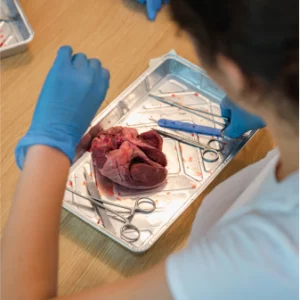
Medicine
In-person
Explore cutting-edge medical science in Cambridge, home to...
Medicine
In-person
Explore Medicine in Tokyo and build skills necessary...
How Many Shadowing Hours for Medical School are Necessary?
Shadowing gives you a clearer view of what doctors actually do each day. You may observe them speaking with patients, reviewing symptoms, making decisions, explaining treatment options, and working with wider healthcare teams.
Here’s how many shadowing hours for medical school you should usually aim for, and how to make those hours meaningful rather than purely observational.
The 80-Hour Benchmark: Analysing AAMC Data
Aim for around 80 shadowing hours, but treat this as a planning benchmark, not a rule. Top schools such as Harvard Medical School and UChicago Pritzker do not publish one required number.
Admissions teams look for informed reflection, breadth, and evidence that you understand medicine beyond the classroom. A balanced split might include primary care, a hospital specialty, emergency care, and a community clinic. This gives you exposure to different patient populations, care settings, and medical decision-making styles.
Breadth vs. Depth in Shadowing
Shadowing is strongest when it shows both range and commitment. Try to observe more than one type of doctor instead of spending every hour in a single setting.
For example, shadowing a primary care doctor can show you long-term patient relationships, prevention, and unclear symptoms. Shadowing a surgeon can show you teamwork, precision, decision-making, and the intensity of procedural care.
A balanced shadowing plan could look like this:
- Primary care: 15 to 25 hours observing consultations, follow-ups, preventative care, and patient communication.
- Hospital medicine: 15 to 25 hours observing ward rounds, handovers, referrals, and collaboration between healthcare teams.
- Surgical or procedural specialty: 10 to 20 hours observing pre-op conversations, operating room teamwork, and post-op care.
- Community clinic or free clinic: 10 to 20 hours observing how doctors support patients who may face financial, language, transport, or access barriers.
Virtual Shadowing: Does it Still Hold Weight Post-Pandemic?
Yes, virtual shadowing can still help, especially when it includes live physician Q&As, patient-case discussions, or specialty panels. However, it should support, not replace, in-person exposure.
Pair it with clinical volunteering, shadowing, or patient-facing work. This helps admissions teams see that you understand real healthcare environments, not only online observation.
Join the Immerse Education 2025 Essay Competition
Follow the instructions to write and submit your best essay for a chance to be awarded a 100% scholarship.
How Many Non-Clinical Volunteer Hours for Med School?
While clinical experience shows that you understand patient care, non-clinical volunteering proves that your service mindset reaches beyond hospitals and patient-facing roles. It shows admissions teams that you can support people without expecting clinical exposure, status, or direct career benefit.
Aim for 100 to 300 hours if possible, ideally through consistent weekly service rather than a short burst before applying.
Strong options include food banks, where you learn reliability and community need. Tutoring can help you practise patience and clear communication, while crisis text lines develop calm listening under pressure. Shelters or refugee organisations can also strengthen cultural awareness and show your commitment to supporting people in different circumstances.
Choose one or two roles you can sustain. Then reflect on what they taught you about inequality, trust, dignity, and serving people whose lives may look very different from yours. This helps strengthen the service pillar of your application.
How Many Volunteer Hours for Medical School?
Clinical volunteering and community service should work together, not compete with each other.
Hospice volunteering, free clinic support, patient transport, and care home roles can show that you understand illness, communication, and patient dignity. Food banks, tutoring, shelters, and crisis lines show that your commitment to service continues outside medical settings.
A balanced plan might include 150 to 300 clinical hours and 100 to 300 non-clinical volunteer hours. However, consistency matters more than collecting hours quickly.
Two hours a week for a year gives you around 100 hours and shows commitment, reliability, and growth. A 50-hour summer burst can seem more like ticking a requirement box than showing sincere, sustained work experience.
Strategic Planning: Building Your Hours Timeline
Once you know how many clinical hours you need for med school, the next step is planning when to complete them. Building clinical, shadowing, and volunteer hours is easier when you spread them across your pre-med journey. This is stronger than trying to collect everything in the final months before you apply.
Here’s how you can plan your hours around classes, exams, summers, and possible gap years without letting experience come at the expense of your GPA or MCAT preparation.
The “Gap Year” Strategy: To Take One or Not?
A gap year can help if your clinical hours, volunteering, shadowing, GPA, or MCAT score need strengthening. However, it should have a clear purpose before you apply.
Full-time medical assisting, EMT work, patient-facing research, hospice volunteering, or regular free clinic shifts may build 1,000+ hours over time. Alongside that, add two to four hours of weekly non-clinical service, shadow a new specialty, and protect time for MCAT preparation or secondary essays.
If your experience is already consistent, reflective, and strong enough to explain why medicine is the right path for you, a gap year may not be necessary. Use the year to grow, not pause.
Balancing Clinical Hours with Academic Excellence
Clinical hours should support your application, not weaken your GPA or MCAT preparation. During term time, aim for four to six clinical hours weekly, plus two hours of service if manageable.
Save heavier roles, such as EMT shifts, medical assisting, hospice volunteering, or free clinic work, for summers or lighter terms. If grades slip, reduce hours and protect academic performance first. Meaningful sustained experience matters more than exhaustion or overload.
How to Document and Reflect on Your Hours
Your activity descriptions should show what you contributed, what you noticed, and how the experience shaped your understanding of medicine, not just list tasks like “helped patients” or “shadowed doctor”.
For AMCAS or UCAS-style entries, use specific detail. Name the setting, explain your role, mention the people you supported, and connect the experience to qualities such as empathy, communication, teamwork, resilience, cultural awareness, and ethical judgement.
Instead of writing, “Volunteered at a hospice and helped patients,” you could write, “Supported hospice patients through conversation, comfort tasks, and family-facing support, which helped me understand dignity, communication, and emotional presence in end-of-life care.”
Strong reflections link your hours to core physician competencies. Show how each experience helped you practise listening, problem-solving, responsibility, service, collaboration, or compassion in a real setting.
Let’s go back to our tier 2 experiences to see how even roles that don’t involve direct patient care can be transformative for a young medic’s understanding.
Remember: These takeaways only work for an admissions panel if they feel like your voice. When writing yours, make sure you can point to a specific patient, conversation, or moment that actually triggered that realisation for you.
| Role | Sample insights |
| Medical scribe | “…which helped me understand the anatomy of clinical reasoning, the precision required in documentation, and how to maintain focus during complex diagnostic consultations.” “…which helped me understand how physicians manage diagnostic uncertainty, communicate medical complexity simply, and build trust in high-pressure environments.” |
| Physician shadowing | “…which helped me understand the realities of a doctor’s daily routine, the pace of different specialties, and the collaborative nature of multidisciplinary teamwork.” “…which helped me understand how doctors adapt their bedside manner across diverse patient populations to address sensitive concerns with empathy.” |
| Clinical research with patient contact | “…which helped me understand the ethical foundations of patient advocacy, the responsibilities of informed consent, and how clinical data translates directly into bedside care.” “…which helped me understand the balance between rigorous scientific inquiry, patient comfort, and the human side of clinical trials.” |
| Hospital volunteering with patient interaction | “…which helped me understand how non-clinical support, active listening, and a reassuring presence can significantly reduce a patient’s vulnerability and anxiety.” “…which helped me understand the operational realities of a busy ward, the importance of patient flow, and how small comfort items impact a patient’s hospital experience.” |
| Care home volunteering | “…which helped me understand the preservation of dignity, the complexities of geriatric care, and the emotional presence required in long-term support.” “…which helped me understand how to navigate advanced cognitive decline, manage mobility limitations, and respect resident autonomy in a community living setting.” |
Looking Ahead: Preparing for the Realities of Medicine
Clinical, shadowing and volunteer hours are early preparation for medicine, not just application evidence. In hospice, you may learn how families process serious illness and why calm language matters.
In free clinics, you may see how cost, transport or language barriers affect care. Emergency shadowing can show how doctors prioritise information when time is limited.
These experiences make rotations less unfamiliar because you have already seen handovers, consent conversations, intake forms and team decisions. For next steps, use our guide on how to get clinical experience for med school.
For further early exposure, explore our medicine summer school programmes, where you can experience first-hand how medicine works across two weeks of academic sessions, practical learning and expert guidance in 9 global locations from New York to Tokyo.
Conclusion
Your hours should tell a story, not just fill a spreadsheet. Admissions teams want to see that you understand patients, service, responsibility, and the realities of medicine.
When deciding how many clinical hours for med school are enough, focus on steady patient-facing experience, honest reflection, and meaningful roles that help you grow.
Balance clinical work with shadowing and non-clinical volunteering, then protect your GPA and MCAT preparation so your application feels strong, focused, and sustainable.
Ready to explore medicine earlier? Discover our Medicine Summer School and experience first-hand how academic medicine works across two weeks in nine global locations worldwide.