

 Русский (RU)
 Українська (UK)
 Türkçe (TR)
 Italiano (IT)
 Français (FR)
 Português (PT)
 中文 (中国) (ZH)
 Español (ES)
 日本語 (JA)
 ไทย (TH)
 Deutsch (DE)
 Ελληνικά (EL)
 Polski (PL)
 Bahasa Indonesia (ID)
 Nederlands (NL)
 العربية (AR)
 한국어 (KO)
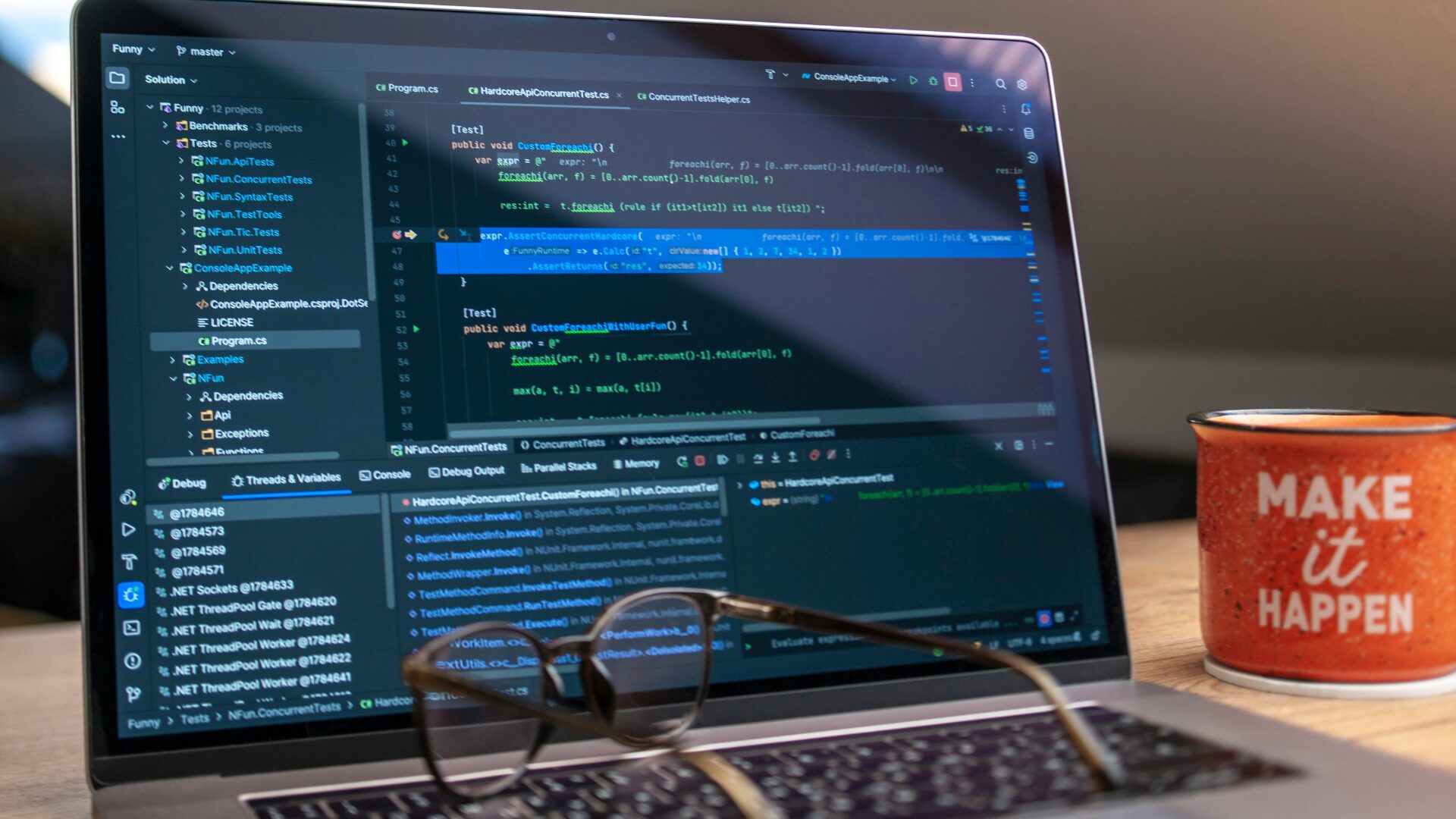
Programming is a valuable skill for students interested in computer science, engineering, data science, artificial intelligence, and other technology-focused fields. Online programming programs allow high school students to learn coding in a structured setting while gaining exposure to concepts that are often taught at the university level.
Online programming programs give high school students an opportunity to explore these skills in a structured environment. Depending on the program, you might learn languages such as Python, Java, or JavaScript while working with tools and technologies used by professional developers.
Many programs also introduce concepts like algorithms, data structures, web development, software engineering, artificial intelligence, and machine learning through hands-on projects and coding exercises. These experiences help students move beyond introductory coding tutorials and gain a deeper understanding of computer science.
What can you learn in an online programming program?
Online programming programs often combine lectures, coding assignments, collaborative projects, and mentor feedback. Students may build websites, create applications, analyze datasets, or develop software solutions while learning industry-standard workflows and best practices.
One of the biggest advantages of online learning is accessibility. You can participate from anywhere while still interacting with instructors and peers who share similar interests. Some programs also mirror the pace and expectations of university-level computer science courses, providing exposure to more advanced academic content.
Whether you’re considering computer science as a future major or simply want to strengthen your technical skills, an online programming program can provide valuable practical experience. To help you get started, we’ve curated a list of 15 Online Programming Programs for High School Students.
For adjacent opportunities, consider the online AI program.
Key Takeaways
- Costs range from free, as with Kode with Klossy and Microsoft’s Data Structures and Algorithms course, to $5,554 for Brown University’s AI, Data Science, and Machine Learning Program.
- Several free, self-paced courses are available year-round, including Microsoft’s Data Structures and Algorithms course and Harvard’s MLOps for Scaling TinyML.
- Program length ranges from a five-day intensive, as with the Harvard Computer Society AI Bootcamp, to a full semester-equivalent commitment, as with Johns Hopkins’ Coding and Creating With Arduino course.
- Several programs are restricted to US students, including BWSI’s Serious Games Development course and the Stanford AIMI Summer Research Internship, while most others are open internationally.
- Kode with Klossy stands out as a free, fully funded option specifically for young women and gender-expansive teens interested in coding.
- Most fully online programs from US universities, including Stanford and Brown, welcome international students, in contrast to many in-person programs that restrict eligibility by residency.
- Immerse Education’s Coding Online Research Programme is one of the few options offering 1:1 Oxbridge or Ivy League style mentorship, open to students worldwide aged 13 to 18, culminating in a full academic research paper.
15 Online Programming Programs for High School Students
1. Immerse Education’s Online Coding Summer School

Location: Fully remote
Cost/Stipend: Varies; summer school scholarship available through our bursary programme
Acceptance rate/cohort size: Selective; 1:1 learning
Dates: Flexible; multiple cohorts in a year.
Application Deadline: Rolling admissions; multiple dates throughout the year
Eligibility: Students aged 13-18 (accredited options require age 14+); open to international students
The Online Research Programme allows you to explore coding through an independent, university-style research project guided by a personal tutor from Oxford, Cambridge, or an Ivy League university. On the coding and computer science pathways, you’ll investigate areas such as programming languages, algorithms, data structures, software development, or applied computing, developing analytical and problem-solving skills used in real technical fields. You may also choose to explore encryption and cybersecurity topics, examining how cryptographic techniques protect digital information and how security principles are applied in modern systems.
Delivered through one-to-one or small-group tutoring, the programme mirrors undergraduate research and is available across more than 20 subjects. Depending on the pathway, you can earn recognised college or UCAS credits. By the end, you’ll complete a full academic research paper, receive detailed written feedback, and have the opportunity to publish your work or present it at the Immerse Online Symposium.
Why it stands out: You’ll get access to 1:1 Oxbridge- or Ivy-style research supervision culminating in a publishable academic paper.
2. Stanford AI4ALL (Online)
Location: Online
Cost/Stipend: $4,120
Acceptance rate/cohort size: Competitive admissions
Dates: June 15-26
Application Deadline: February 6th
Eligibility: Students currently in grade 9; aged 14-16; international student eligibility not specified
Stanford AI4ALL is a two-week online program hosted by the Stanford Institute that introduces high school students to the foundations of artificial intelligence. You explore core AI fields such as computer vision, natural language processing, robotics, and medical AI through hands-on projects, technical workshops, and collaborative research activities.
The program combines lectures and demonstrations on machine learning concepts with discussions about ethical issues, including bias, fairness, and the societal impact of AI systems. You’ll also engage with researchers, mentors, and industry professionals to better understand both the technical and real-world applications of AI.
Why it stands out: Combines hands-on AI research projects with mentorship from Stanford-affiliated researchers while emphasizing ethical and human-centered approaches to artificial intelligence.
3. Kode with Klossy Summer Camps
Location: Online
Cost/Stipend: None
Acceptance rate/cohort size: Selective
Dates: Various 2-week sessions from June to August
Application Deadline: Not specified
Eligibility: Young women and gender expansive teens, aged 13-18; international student eligibility not specified
Kode With Klossy Summer Camps is a free, two-week coding program designed for young women and gender-expansive teens to explore computer science through hands-on, project-based learning. You can choose from tracks such as web development, mobile app development, data science, or artificial intelligence and machine learning, learning tools and languages including HTML, CSS, JavaScript, Python, SQL, Swift, and Xcode.
Through daily coding exercises and collaborative projects, you’ll build practical skills by creating websites, mobile apps, machine learning models, data visualizations, and other real-world applications. The program emphasizes learning by doing, with students working toward a final project that showcases their technical knowledge and creativity. Alongside coding instruction, you’ll join a supportive community of peers, instructors, and mentors while gaining exposure to opportunities in technology.
Why it stands out: Offers a beginner-friendly, fully funded coding experience that combines technical skill-building with a strong community focused on increasing representation in technology.
4. BWSI Serious Games Development with Artificial Intelligence
Location: Virtual
Cost/Stipend: Free for families earning under $2,00,000; $2,400 tuition for others
Acceptance rate/cohort size: Highly selective
Dates: July 6th – August 1st or 2nd
Application Deadline: March 30th
Eligibility: U.S.-based high school students in grade level no higher than a junior
BWSI’s Serious Games Development with Artificial Intelligence is a month-long program that combines machine learning, game design, and systems modeling to explore complex real-world challenges through interactive simulations. You’ll build and analyze game-based frameworks in Python, applying concepts from AI, data analysis, experimental design, and software development to topics such as public health, autonomous systems, and policy decision-making.
The curriculum covers areas including AI for gaming, ethics in AI, backend development, user interface design, human factors, data visualization, and Agile software practices. You’ll also work collaboratively on professional-style development teams, contributing to both game back-end systems and self-designed extensions while learning industry-standard coding and project management workflows.
Why it stands out: Combines AI, software engineering, and game-based simulation to tackle real-world policy and technology challenges in a highly interdisciplinary setting.
5. Stanford Pre-Collegiate: Introduction to C++
Location: Virtual
Cost/Stipend: $3,200 (financial aid available)
Acceptance rate/cohort size: Selective
Dates: Session 1: June 15-26, Session 2: July 6-17
Application Deadline: March 13th
Eligibility: Students in grades 8-11; international student eligibility not specified
Stanford Pre-Collegiate Introduction to C++ is a beginner-friendly course that teaches the foundations of programming through one of the most widely used languages in computer science. You’ll learn core concepts, including variables, data types, control flow, functions, arrays, recursion, file input/output, abstract data types, and fundamental algorithms such as searching and sorting.
The course emphasizes algorithmic thinking and problem-solving through programming exercises that mirror real-world computational challenges. Along the way, you’ll gain insight into how code interacts with compilers and computer hardware, building a deeper understanding of how software systems work. Designed for students with little or no prior experience, the course provides a strong foundation for future study in computer science and software development.
Why it stands out: Focuses on both programming fundamentals and algorithmic problem-solving, giving students a strong foundation in computational thinking through C++.
6. Stanford AIMI Summer Research Internship
Location: Virtual
Cost/Stipend: $2,400 + $45 application fee (financial aid available)
Acceptance rate/cohort size: 50 students each session
Dates: Session A: June 15-26, Session B: July 6-17
Application Deadline: February 21st
Eligibility: U.S. high school students aged 14+ by program start
The Stanford AIMI Summer Research Internship is a two-week virtual program that introduces students to artificial intelligence and machine learning through hands-on research in healthcare and medicine. You’ll learn core machine learning concepts while working primarily in Python, building and evaluating AI models using real medical datasets under the guidance of Stanford researchers and student mentors. The program combines technical lectures on topics such as medical imaging AI, model evaluation, clinical applications, and responsible AI with small-group research projects and collaborative coding sessions.
You’ll gain practical experience framing research questions, analyzing data, and developing research outputs while engaging with experts from academia, healthcare, industry, and government. The program concludes with a team-based research project and a Certificate of Completion, providing exposure to both the technical and real-world applications of AI in medicine.
Why it stands out: Offers direct mentorship from Stanford researchers and emphasizes hands-on AI research using real healthcare datasets rather than purely theoretical learning.
7. Johns Hopkins Coding and Creating With Arduino
Location: Virtual
Cost/Stipend: $1,924 (additional fee may apply)
Acceptance rate/cohort size: Not specified
Dates: September 8th – November 24th
Application Deadline: August 11th
Eligibility: Students in grades 7-11; open to international students
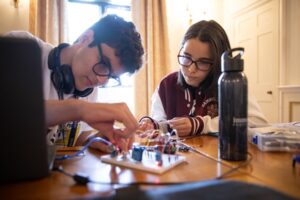
Johns Hopkins’ Coding and Creating With Arduino introduces students to physical computing through the design and programming of interactive electronic devices using Arduino microcontrollers. You’ll learn how hardware and software work together while building projects that read sensor data, respond to motion or proximity, and control outputs such as lights and other actuators.
Using tools like Arduino boards, breadboards, sensors, and actuator kits, students explore existing prototypes, modify code, and adapt designs to meet specific engineering challenges. The course combines programming, electronics, and problem-solving as you develop automated systems and gain experience with digital prototyping.
Why it stands out: Combines programming with hands-on electronics, allowing students to create real interactive devices that bridge software and hardware engineering.
8. Syracuse University Introduction of Computer Programing (Python)
Location: Online
Cost/Stipend: Credits: $3,165, Noncredit: $1,995
Acceptance rate/cohort size: Competitive admissions
Dates: July 6-23
Application Deadline: May 1st
Eligibility: Rising high school junior or senior; Recent graduates can also apply; International students can also apply
Syracuse University’s Introduction to Computer Programming provides a comprehensive foundation in programming through the Python language. You’ll learn core computing concepts, including variables, data types, functions, objects, classes, conditionals, iteration, input/output, parameter passing, and scope, while also developing skills in testing, debugging, and defensive programming using exceptions.
Through programming labs and hands-on exercises, you’ll practice translating real-world problems into working programs, writing reusable code modules, and understanding existing code written by others. The course emphasizes both practical Python skills and broader programming principles that can be applied across different languages and computing environments. Students who successfully complete the course receive a Certificate of Completion and may request a Syracuse University noncredit transcript.
Why it stands out: Goes beyond basic Python syntax by teaching formal program design, debugging, testing, and software development practices commonly used in university-level computer science courses.
9. Stanford Pre-Collegiate: Introduction to Java Programming
Location: Virtual
Cost/Stipend: $3,200 (financial aid available)
Acceptance rate/cohort size: Selective
Dates: June 15-26
Application Deadline: March 13th
Eligibility: Students in grades 8-11; open to international students
Stanford Pre-Collegiate Studies’ Introduction to Java Programming is a foundational computer science course that teaches programming through the principles of object-oriented design. You’ll learn core topics including Java syntax, data types, control structures, classes, methods, arrays, recursion, file input/output, abstract data types, and fundamental algorithms such as searching and sorting.
The curriculum emphasizes algorithmic thinking and efficient problem-solving through daily programming assignments and real-world coding challenges. You’ll also explore more advanced concepts such as graphical user interfaces while gaining experience designing, implementing, and debugging programs.
Why it stands out: Combines programming fundamentals with object-oriented design and algorithmic problem-solving, providing a strong introduction to computer science through Java.
10. Brown University AI, Data Science, and Machine Learning Program
Location: Virtual
Cost/Stipend: $5,554
Acceptance rate/cohort size: Not specified
Dates: June 22nd – July 17th
Application Deadline: May 15th
Eligibility: High school students aged 14-18 years; open to international students
Brown University’s AI, Data Science, and Machine Learning Program introduces students to the core techniques used in modern data science and artificial intelligence, with an emphasis on practical applications and industry-relevant skills. You’ll learn how to explore, analyze, and visualize data, apply diagnostic analytics, and build predictive models using statistical and machine learning methods.
The curriculum also covers emerging topics such as text analytics, recommender systems, deep learning, and computer vision while examining how these technologies are applied across industries, including healthcare, hospitality, sports, and business. A major focus of the program is understanding the complete machine learning pipeline, including data architecture, model development, and the ethical challenges associated with AI systems. Through hands-on projects and analytical exercises, you’ll gain a strong foundation for further study in data science, artificial intelligence, and machine learning.
Why it stands out: Combines technical machine learning training with data-driven business applications and discussions of AI ethics, providing a broad introduction to the field.
11. BCA The Code Behind AI – Machine Learning
Location: Online
Cost/Stipend: $1,099
Acceptance rate/cohort size: Limited Spots
Dates: July 22-24
Application Deadline: Rolling
Eligibility: Students aged 12-18; international student eligibility not specified
BCA’s The Code Behind AI – Machine Learning is a hands-on course that teaches students how to build, evaluate, and optimize machine learning models using real-world datasets. Working with Python and Scikit-learn, you’ll explore a range of supervised learning techniques, including Linear Regression, Logistic Regression, K-Nearest Neighbors, Decision Trees, Random Forests, XGBoost, and LightGBM. The curriculum covers key machine learning concepts such as overfitting, regularization, cross-validation, model evaluation metrics, hyperparameter tuning, and feature importance, helping you understand both how models work and how to improve their performance.
Throughout the course, you’ll apply these techniques to datasets of your choice, culminating in a portfolio-ready project that includes coding notebooks, data analysis, and predictive modeling. By the end of the program, you’ll gain practical experience building machine learning pipelines and using data to generate meaningful real-world insights.
Why it stands out: Emphasizes applied machine learning through substantial project work, allowing students to build and optimize multiple industry-standard models using their own datasets.
12. Harvard Computer Society AI Bootcamp
Location: Virtual
Cost/Stipend: Standard: $795, Final Priority: $995
Acceptance rate/cohort size: Not mentioned
Dates: Cohorts run each week from June 1st to 26th
Application Deadline: May 26th
Eligibility: High school students with strong mathematical skills and proficiency in Python; open to international students
The Harvard Computer Society AI Bootcamp is a five-day intensive virtual program that introduces high school students to modern artificial intelligence and machine learning through instruction from Harvard students and researchers. You choose between Introductory and Advanced tracks based on their coding, mathematics, and AI experience, allowing both beginners and more experienced learners to engage with appropriate material.
The curriculum covers topics such as generative AI, machine learning fundamentals, current AI research, and the methodologies used in developing modern AI systems. You’ll also work on a mini-project that applies concepts learned during the program, providing practical experience with AI tools and research-oriented thinking. Upon completion, you’ll receive a Certificate of Completion, with exceptional students eligible for additional honors and distinction awards.
Why it stands out: Offers exposure to cutting-edge AI research and generative AI topics while allowing students to build a research-focused project under the guidance of Harvard-affiliated instructors.
13. Data Structures and Algorithms by Microsoft
Location: Online
Cost/Stipend: Free to audit
Acceptance rate/cohort size: Open enrollment
Dates: Self-paced
Application Deadline: No deadline
Eligibility: Anyone can join; open to international students
Microsoft’s Data Structures and Algorithms course provides a practical introduction to the core concepts that power efficient software and back-end systems. You’ll learn how to analyze, implement, and optimize fundamental data structures such as arrays, linked lists, trees, and graphs, along with algorithms for searching, sorting, and traversal.
The curriculum emphasizes performance and scalability, teaching you how to evaluate algorithm efficiency and select appropriate solutions for real-world software engineering challenges. Through hands-on projects in .NET Core, students apply these concepts to tasks such as database query optimization, large-scale data processing, and back-end application development. By the end of the course, you’ll gain a strong foundation in algorithmic thinking and software optimization techniques that are essential for computer science and technical interviews.
Why it stands out: Combines theoretical algorithm analysis with hands-on implementation, showing how data structures and algorithms directly impact the performance and scalability of real-world software systems.
14. Harvard University MLOps for Scaling TinyML
Location: Online
Cost/Stipend: Free to audit
Acceptance rate/cohort size: Open enrollment
Dates: Self-paced
Application Deadline: No deadline
Eligibility: Anyone can join; open to international students
Harvard University’s MLOps for Scaling TinyML course explores how machine learning systems are deployed, monitored, and maintained in real-world environments, with a focus on resource-constrained devices such as smartphones, wearables, and smart home technologies. You’ll learn the principles of Machine Learning Operations (MLOps), including automating deployment pipelines, monitoring model performance, managing updates, and maintaining machine learning applications at scale.
The course also introduces advanced topics such as federated learning, neural architecture search, benchmarking, and production optimization, helping learners understand how machine learning models move from research prototypes to deployed products. Through case studies and real-world examples, you’ll examine the full lifecycle of TinyML systems and the operational challenges involved in managing them after deployment. The program emphasizes practical strategies for scaling machine learning applications while balancing performance, efficiency, and reliability.
Why it stands out: Focuses on the often-overlooked deployment side of AI, teaching how machine learning models are managed, updated, and scaled on real-world devices after development.
15. NextGen Bootcamp
Location: Virtual and in-person options
Cost/Stipend: Varies based on the course
Acceptance rate/cohort size: Small cohort
Dates: Various summer sessions
Application Deadline: Varies
Eligibility: High-school students from across the globe
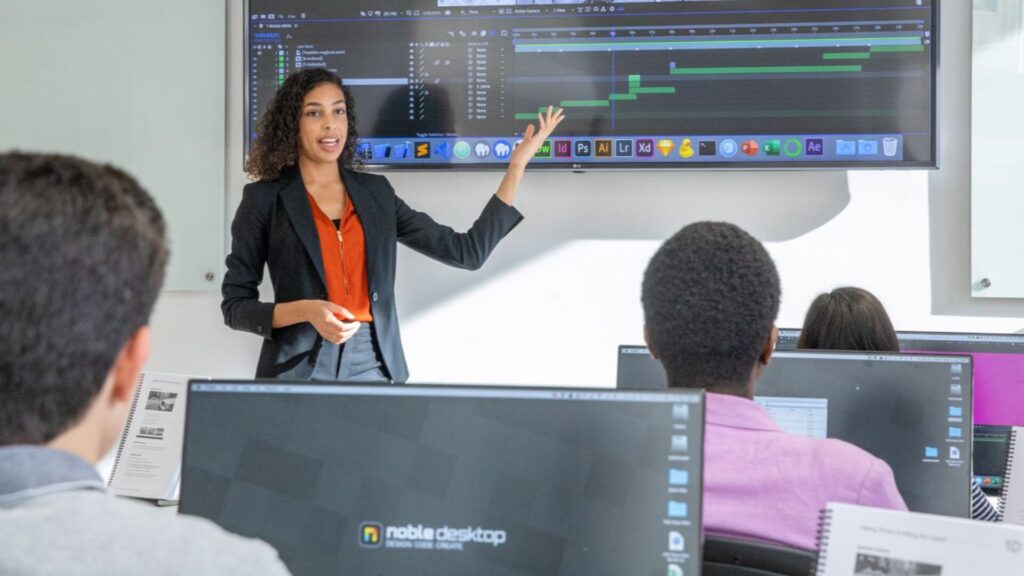
NextGen Bootcamp offers live, instructor-led coding courses designed to help high school students build practical programming skills through hands-on projects. You can choose from topics such as Python, Java, web design, and other computer science subjects, learning through interactive lessons and real-world coding exercises from the first day.
Small class sizes allow for individualized feedback and support, making the program accessible to both beginners and students looking to strengthen existing skills. The intensive summer format helps you quickly develop technical foundations while building projects that demonstrate your learning. By the end of the program, you’ll gain coding experience, problem-solving skills, and a clearer understanding of potential pathways in computer science and technology.
Why it stands out: Emphasizes small-group instruction and project-based learning, allowing students to build real coding projects while receiving personalized support from instructors.
Frequently Asked Questions: Online Programming Programs for High School Students
What is an online programming program for high school students?
An online programming program teaches high school students coding languages and computer science concepts through virtual lectures, coding assignments, and mentor feedback. Programs typically cover languages like Python, Java, or C++, along with topics like algorithms, data structures, and machine learning. Most run between five days and several weeks, with some self-paced options available year-round. Many conclude with a final project, certificate, or research paper.
Do I need prior coding experience to apply?
It depends on the program. Stanford’s Introduction to C++ and Introduction to Java Programming courses are both designed for beginners with little or no prior experience, while the Harvard Computer Society AI Bootcamp expects existing proficiency in Python. Immerse Education’s Coding Online Research Programme is built to accommodate a range of skill levels through individualized 1:1 tutoring.
How much do online programming programs cost?
Costs range from free to $5,554 for Brown University’s AI, Data Science, and Machine Learning Program. Free options include Kode with Klossy and Microsoft’s self-paced Data Structures and Algorithms course. Immerse Education’s Coding Online Research Programme varies by program type, with costs depending on the chosen pathway.
Can international students attend these programs?
Yes, most online programming programs welcome international students, including Syracuse University’s Introduction to Computer Programming course and the Harvard Computer Society AI Bootcamp. A few, including BWSI’s Serious Games Development course and the Stanford AIMI Summer Research Internship, are restricted to US-based students. Immerse Education’s Coding Online Research Programme is open to students worldwide aged 13 to 18.
What age do I need to be to apply?
Age requirements vary by program, generally falling between 12 and 18. BCA’s The Code Behind AI course accepts students as young as 12, while Stanford’s pre-collegiate courses generally target students in grades 8 to 11. Immerse Education’s Coding Online Research Programme accepts students aged 13 to 18, with accredited options requiring a minimum age of 14.
Will I complete a real project during the program?
Yes, nearly every program on this list includes a hands-on final project. BCA’s The Code Behind AI course has students build a portfolio-ready machine learning project using their own dataset, and the Harvard Computer Society AI Bootcamp includes a mini-project applying AI concepts learned during the course. Immerse Education’s Coding Online Research Programme goes further, having students complete a full academic research paper with the option to present at the Immerse Online Symposium.
How do these programs help with college applications?
Completing an online programming program demonstrates technical initiative and exposure to university-level computer science concepts. Syracuse University’s course offers a noncredit transcript, while Immerse Education’s Coding Online Research Programme can lead to a publishable research paper and recognized college or UCAS credits depending on the pathway. Both give students concrete material to discuss in personal statements and interviews.
Build Programming Skills, Explore Tech Futures
Programming can start as a practical skill, but it often becomes a way to solve problems, build ideas, and understand technology better.
The 15 online programming programs for high school students listed here show routes through Python, Java, AI, data science, Arduino, and software development.
Some programmes focus on beginner coding, while others offer research papers, college credit, mentorship, final projects, or exposure to real technical workflows.
Ready to see where coding could take you? Browse our Career Exploration blogs for tech pathways, role guides, and future-focused next steps that can help you choose with clarity and confidence.