
 Русский (RU)
 Українська (UK)
 Türkçe (TR)
 Italiano (IT)
 Français (FR)
 Português (PT)
 中文 (中国) (ZH)
 Español (ES)
 日本語 (JA)
 ไทย (TH)
 Deutsch (DE)
 Ελληνικά (EL)
 Polski (PL)
 Bahasa Indonesia (ID)
 Nederlands (NL)
 العربية (AR)
 한국어 (KO)

If you’re a high school student who enjoys writing, asking questions, or staying informed about current events, journalism opportunities for high school students can help you explore the field in a practical way. Whether you’re interested in reporting breaking news, producing documentaries, covering sports, writing feature stories, or investigating issues that matter to your community, journalism is about uncovering information, telling compelling stories, and helping people better understand the world around them.
These opportunities give you the chance to develop practical skills through real-world experiences that go beyond the classroom. You might spend your summer interviewing professionals, writing articles for a student publication, producing podcasts, learning multimedia storytelling, or receiving feedback from experienced journalists and editors.
Journalism programmes can also introduce you to the many career paths within media. Some focus on newspaper and magazine writing, while others explore broadcast journalism, digital media, investigative reporting, photojournalism, documentary filmmaking, or data journalism.
How do you choose the most suitable journalism opportunity?
Of course, not all journalism opportunities offer the same level of mentorship or hands-on experience. Some focus mainly on classroom instruction, while others encourage students to publish their work, report on real events, collaborate in newsrooms, and receive guidance from professional journalists. Finding the right opportunity can make a significant difference in both your confidence and your understanding of the field.
Whether you’re considering a future career in journalism or simply want to become a stronger writer, researcher, and communicator, these experiences can help you build practical skills while exploring one of the world’s most influential professions.
To help you find the best options, we’ve compiled a list of 15 Journalism Opportunities for High School Students. They’ve been selected for their hands-on learning experiences, strong mentorship, and opportunities to develop professional reporting and storytelling skills.
For more opportunities, consider the online writing program.
Key Takeaways
- Costs range from free, as with AAJA JCamp and the NYU Urban Journalism Workshop, to $7,695 for The School of The New York Times’ residential NYC Summer Academy.
- Several free programs are highly selective, including AAJA JCamp, which selects around 30 students annually from hundreds of applicants.
- Program length ranges from a single six-day residential session, as with AAJA JCamp, to a seven-week paid internship, as with the Los Angeles Times High School Insider Summer Internship.
- Several programs result in published work, including the Princeton Summer Journalism Program’s Princeton Summer Journal and the Los Angeles Times’ High School Insider platform.
- The Dow Jones News Fund High School Workshops stand out for prioritizing students who face barriers to pursuing journalism careers, with funding support reducing costs across its national network.
- Most US-based, residency-restricted programs, including the NYU Urban Journalism Workshop and Princeton Summer Journalism Program, are not open internationally, while several others, including Medill-Northwestern and AAJA JCamp, do welcome international applicants.
- Immerse Education’s Media & Journalism Summer Internship is one of the few options open to students worldwide aged 15 to 18, combining reporting and media ethics instruction with small class sizes and 1:1 tutoring.
15 Journalism Opportunities for High School Students
1. Medill-Northwestern Journalism Institute
Location: Evanston, on the campus of Northwestern University
Cost/Stipend: $5,000
Acceptance rate/cohort size: Cohort size: Up to 84 students; In 2024, the program received approximately 230 applications for 84 spots, corresponding to an acceptance rate of roughly 36-37%
Dates: June 29th – July 25th
Application Deadline: March 6th
Eligibility: Open to rising high school seniors; Applicants should demonstrate a strong academic record and substantial journalism experience (such as newspaper, digital journalism, television, audio, or yearbook); International students are welcome
The Medill-Northwestern Journalism Institute, commonly known as “Medill Cherubs,” is a selective residential summer journalism program for rising high school seniors. You’ll learn from professional journalists and university faculty while developing practical skills in reporting, writing, editing, digital storytelling, photojournalism, audio, and video production. Over four intensive weeks, you’ll complete numerous writing assignments, attend more than 50 classes, workshops, and lectures, and participate in field trips to Chicago.
Each of you is paired with an instructor who provides individualized mentorship and feedback throughout the program. Although the program does not award college credit, you’ll graduate with a substantial journalism portfolio, valuable professional connections, and experience working alongside aspiring journalists from around the world.
Why it stands out: It stands out for its selective admissions, intensive hands-on journalism training by professional mentors, and the opportunity to build a strong portfolio while living on Northwestern’s campus.
2. Immerse Education’s Media & Journalism Summer School

Location: University College London, London, UK
Cost: Varies; summer school scholarship available through our bursary programme
Acceptance rate/cohort size: Selective; an average of 7 participants per class
Dates: 2 weeks during the summer
Application Deadline: Rolling admissions
Eligibility: High school students worldwide aged 15-18
As one of the globally accessible journalism opportunities for high school students, Immerse Education’s Media & Journalism Summer School lets you explore careers in major global industry hubs. The Media and Journalism Summer track introduces you to journalism through a mix of structured learning and hands-on work in a global media setting. Across two weeks, you engage with topics like reporting, media ethics, and digital storytelling while working on practical projects. Sessions are led by journalists and academics who bring real industry insight into the classroom.
You take part in workshops, group discussions, and a personal project that lets you develop your own voice. The small class size means you receive consistent feedback and guidance. By the end, you build both confidence and a clearer understanding of how modern media operates. You can find more details about the application here.
Why it stands out: You’ll gain direct industry exposure, build a professional network, and receive a certificate you can include in your college applications and work profile.
3. AAJA JCamp
Location: Hosted annually at a U.S. university campus (location varies each year)
Cost/Stipend: Free. There is no application fee or tuition, and all domestic airfare, lodging, and meals are covered by AAJA
Acceptance rate/cohort size: Approximately 30 students are selected each year from hundreds of applicants, making the program highly selective
Dates: A 6-day summer residential journalism training camp (dates vary annually)
Application Deadline: Applications typically open in early November and close in early to mid-January
Eligibility: Open to current high school sophomores and juniors in the United States. Students of all backgrounds are encouraged to apply; applicants do not need to be Asian American or AAJA members
AAJA JCamp is a fully funded national journalism program designed to develop the next generation of diverse media leaders. During the six-day residential experience, you’ll participate in interactive workshops, hands-on reporting assignments, newsroom simulations, field trips, and mentorship from veteran journalists and leading media executives. You’ll produce multimedia news packages for JCamp Live while strengthening their reporting, storytelling, leadership, and cross-cultural communication skills.
The program emphasizes ethical journalism and the importance of diversity in media coverage, creating a collaborative environment where you’ll learn from peers with varied backgrounds. Since its founding in 2001, nearly 900 students have graduated from JCamp, with many alumni going on to study journalism and work at leading news organizations such as The New York Times, CNN, NBC News, and Politico.
Why it stands out: It stands out for being a fully funded, highly selective journalism program that provides intensive hands-on newsroom experience and mentorship from leading media professionals while emphasizing diversity and leadership.
4. Los Angeles Times High School Insider Summer Internship
Location: Southern California (hosted by the Los Angeles Times)
Cost/Stipend: Paid internship. Participants receive compensation through the program
Acceptance rate/cohort size: Selective
Dates: A 7-week summer internship (typically held during the summer; exact dates vary annually)
Application Deadline: Varies by year. Applications for the current year’s internship will open soon. Check the website for further information.
Eligibility: Open to high school students from across Southern California with an interest in journalism and storytelling
The Los Angeles Times High School Insider Summer Internship is a paid, immersive journalism experience that introduces high school students to the day-to-day work of professional reporters and multimedia journalists. Over seven weeks, you’ll cover breaking news, produce feature stories, and experiment with video and podcast storytelling while receiving mentorship from Los Angeles Times journalists.
Your work is published on the High School Insider platform, giving you professional bylines and a public portfolio. Supported by the Jack and Denny Smith Memorial Fund for Literacy, the program emphasizes reporting fundamentals, multimedia skills, and exposure to a professional newsroom environment. It is an excellent opportunity for aspiring journalists to gain hands-on experience and develop industry-ready storytelling skills.
Why it stands out: It stands out for offering a paid, newsroom-style internship where high school students work alongside Los Angeles Times journalists and publish professional multimedia stories.
5. NYU Urban Journalism Workshop
Location: New York University, New York City, NY
Cost/Stipend: Free for admitted students. The program does not charge tuition
Acceptance rate/cohort size: Selective
Dates: July 12-18
Application Deadline: March 18th
Eligibility: Open to high school students who are at least 16 years old and live and attend high school in the New York City metropolitan area (New York, New Jersey, or Connecticut). The program welcomes students of all backgrounds
The NYU Urban Journalism Workshop is a free, week-long residential journalism program designed to equip high school students in the tri-state area with essential reporting and multimedia storytelling skills. You’ll receive hands-on instruction from NYU faculty and professional journalists while producing original stories for the program’s publication, The Spectrum.
You’ll also visit leading New York City newsrooms, interact with top journalists, and gain insight into the college admissions process through sessions with NYU admissions counselors. Living in NYU residence halls during the program provides an immersive college experience alongside intensive journalism training. Now in its 40th year, the workshop has produced alumni who work at major newspapers, magazines, online publications, and television and radio organizations.
Why it stands out: It stands out for offering a free, immersive residential experience where students receive hands-on journalism training from NYU faculty, publish multimedia stories, and visit leading New York City newsrooms.
6. Princeton Summer Journalism Program (PSJP)
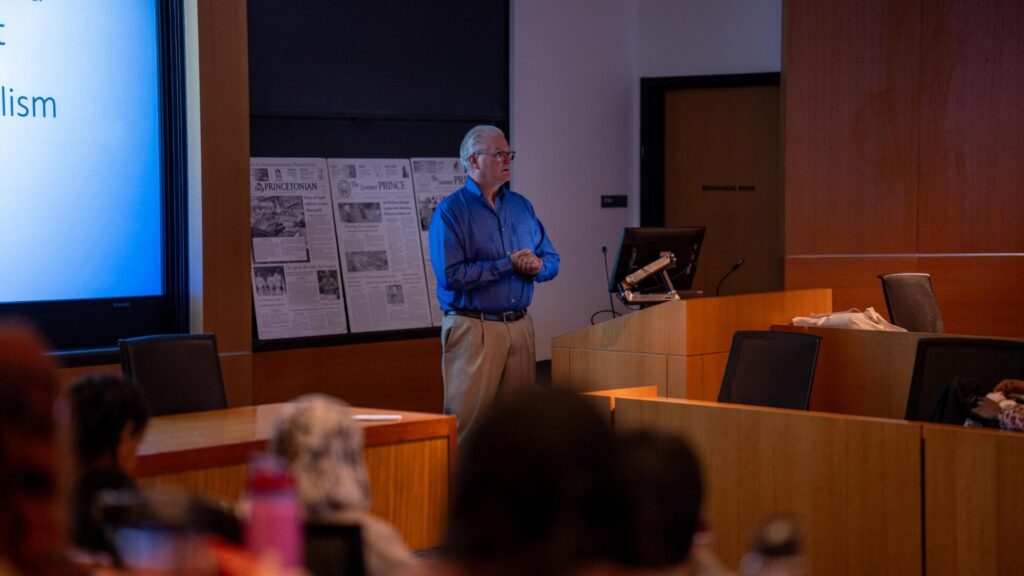
Location: Princeton University, Princeton, New Jersey (hybrid program with virtual workshops and an on-campus residential experience)
Cost/Stipend: Free. The program covers all costs for the residential institute, including transportation, housing, meals, and equipment for assignments
Acceptance rate/cohort size: Selective
Dates: A multi-week hybrid program beginning with virtual workshops in late June and culminating in a 10-day residential experience on Princeton’s campus from late July through early August
Application Deadline: Applications open in November and close in January.
Eligibility: Open to U.S.-based high school juniors with a minimum unweighted GPA of 3.5/4.0, a demonstrated interest in journalism, and limited-income backgrounds. Applicants must meet at least one socioeconomic criterion (such as family income ≤$65,000, eligibility for free/reduced-price lunch, or an SAT/ACT fee waiver), with priority given to first-generation college students
The Princeton Summer Journalism Program is one of the most selective journalism opportunities for high school students, combining year-long college preparation with journalism training for talented, low-income high school juniors interested in media and storytelling. You’ll tour major news organizations such as The New York Times, HuffPost, and Bloomberg, cover professional sports and local news events, produce digital content, conduct investigative reporting, and collaborate to publish The Princeton Summer Journal.
Beyond journalism instruction, the program provides individualized college advising, seminars on the admissions process, and one-on-one support from personal college advisors. By combining immersive reporting experiences with comprehensive college preparation, PSJP equips students with both professional skills and pathways to higher education.
Why it stands out: It stands out for being a fully funded, highly selective program that combines immersive journalism training at Princeton with personalized college advising and publication of students’ original reporting.
7. Boston University Summer Journalism Academy

Location: Boston University, Boston, Massachusetts (on-campus) or virtual (learn-from-home option)
Cost/Stipend: Program fee required (Current year fees to be announced). No stipend
Acceptance rate/cohort size: Selective
Dates: Held during the summer; Current year applications open in December
Application Deadline: Applications for the current year program open in December; deadline to be announced
Eligibility: On-Campus: High school students around the world who are rising juniors, rising seniors, or current seniors with journalism experience; Learn-from-Home: High school students ages 14-18 of all experience levels
The Boston University Summer Journalism Academy is a hands-on pre-college program that allows high school students to develop reporting, writing, and multimedia storytelling skills through either a residential or virtual format. Taught entirely by working journalists, the curriculum emphasizes practical learning by pairing instruction with real reporting assignments that mirror the daily work of professional newsrooms.
You’ll gain experience in interviewing, researching, and producing journalistic stories while learning the fundamentals of ethical and effective reporting. The academy also introduces you to investigative journalism techniques, including document research and Freedom of Information Act (FOIA) requests. By combining professional mentorship with experiential learning, the program helps aspiring journalists strengthen their portfolios and prepare for college-level journalism studies.
Why it stands out: It stands out for its hands-on, newsroom-style curriculum taught by working journalists, giving students real reporting experience through professional assignments and mentorship.
8. University of Georgia Grady College Summer Media Academy – Multimedia Journalism
Location: University of Georgia, Athens, Georgia
Cost/Stipend: Day Camp: $530; Residential Camp: $1,255; Limited need-based financial aid available
Acceptance rate/cohort size: Maximum of 20 participants per camp week (rolling admissions)
Dates: June 8-12 (Multimedia Journalism). Other journalism-related camps are offered on additional June dates
Application Deadline: Rolling admissions until capacity is reached
Eligibility: Open to students ages 13-17 at the start of camp; international student eligibility not specified
The University of Georgia Grady College Summer Media Academy is a week-long, in-person journalism program that introduces you to multimedia reporting and digital storytelling. You’ll develop practical skills in interviewing, reporting, writing, editing, and producing news content while working alongside professional journalists and experienced instructors.
The curriculum emphasizes visual journalism and social media storytelling, allowing you to explore modern methods of news production. Throughout the week, you’ll collaborate with your instructor to create a news website and build a portfolio of original work. With small class sizes and project-based learning, the academy provides an immersive introduction to journalism and multimedia communication in a collegiate setting.
Why it stands out: It stands out for its small cohort, hands-on multimedia journalism training, and the opportunity to produce a professional news website under the guidance of experienced journalists.
9. Columbia Scholastic Press Association (CSPA) Summer Journalism Workshop
Location: Columbia University, New York City, New York (in-person residential/commuter) or virtual
Cost/Stipend: Residential: $3,000 per week; Commuter: $1,700 per week; Virtual: $1,100 per week; Additional University activities fee of $100 per week for in-person participants; two-week residents pay an additional $300 for weekend housing and supervision. No stipend
Acceptance rate/cohort size: Selective
Dates: In-Person Week 1: June 21-26; In-Person Week 2: June 28th – July 3rd; Virtual Sessions: July 6-10, July 13-17, and July 20-24
Application Deadline: Residential/Commuter: June 5th (extended); Virtual: June 30th
Eligibility: Open to secondary school students from U.S. and international schools following an American curriculum. Residential participants must be at least 15 years old and turn 16 by December 31 of the attendance year; the commuter option is open to students entering grades 9-12
The CSPA Summer Journalism Workshop is an annual journalism training program hosted by Columbia University that offers both in-person and virtual learning opportunities for aspiring student journalists. You’ll choose from specialized tracks such as news reporting and writing, editorial leadership, broadcast journalism, digital media, and design while learning from experienced journalism educators and industry professionals. In-person students benefit from additional experiences, including media visits, access to Columbia’s campus facilities, co-curricular activities, and a Broadway show.
Through workshops, reporting exercises, and collaborative projects, you’ll strengthen your writing, editing, leadership, and multimedia storytelling skills in a collegiate environment. Organized by the Columbia Scholastic Press Association, the program builds both practical journalism experience and connections with a community of student journalists from around the world.
Why it stands out: It stands out for offering specialized journalism tracks at Columbia University with both in-person and virtual options, complemented by media visits and hands-on instruction from experienced journalism professionals.
10. The School of The New York Times – NYC Summer Academy
Location: New York City, New York (residential and day program options)
Cost/Stipend: Day Program: $6,195 per two-week course; Residential Program: $7,695 per two-week course; Limited need-based scholarships and payment plans are available. No stipend
Acceptance rate/cohort size: Classes average approximately 22 students
Dates: Four two-week terms in Summer: Term 1: June 7-19; Term 2: June 21st – July 3rd; Term 3: July 5-17; Term 4: July 19-31
Application Deadline: Applications are reviewed on a rolling basis; students are encouraged to apply early to maximize placement in their preferred course
Eligibility: Open to rising high school students (grades 10-12) and graduating seniors who are 15-18 years old by the first day of the program; international student eligibility not specified
The School of The New York Times NYC Summer Academy is a pre-college journalism and media program that combines rigorous academic instruction with immersive experiences across New York City. You’ll choose from specialized courses in areas such as reporting and writing, editorial leadership, photojournalism, narrative writing, politics, culture, business, sports, and multimedia storytelling. Courses are taught by experienced journalists, editors, academics, and media professionals, with small class sizes that emphasize individualized mentorship and hands-on learning.
You’ll conduct interviews, report stories, create multimedia projects, and complete a culminating final project while engaging with guest speakers from The New York Times and other leading media organizations. Residential students also experience college life in Manhattan and participate in curated cultural outings, making the city itself an extension of the classroom
Why it stands out: It stands out for combining small, discussion-based classes taught by New York Times journalists and media professionals with immersive reporting experiences across New York City.
11. The Stanford Daily Pre-Collegiate Summer Workshops
Location: Virtual (all-remote)
Cost/Stipend: Tuition-based program with a $30 application fee (credited toward tuition if admitted). Full and partial need-based financial aid is available. No stipend
Acceptance rate/cohort size: Selective
Dates: June 22nd – August 14th
Application Deadline: June 15th
Eligibility: Open to high school students of all skill levels. The program welcomes beginners as well as students with prior journalism, technology, or multimedia experience; international student eligibility is not specified
For students comparing virtual journalism opportunities for high school students, The Stanford Daily Pre-Collegiate Summer Workshops offer an immersive, all-remote way to explore journalism, technology, and multimedia storytelling through real-world projects and individualized mentorship. In the Journalism Workshop, you’ll learn reporting, interviewing, feature writing, opinion writing, investigative journalism, and multimedia skills while completing authentic reporting assignments and building a portfolio of original work.
The program also offers Tech and Multimedia tracks, where you’ll explore web development, data visualization, podcasting, video production, and digital storytelling. Outstanding participants may have the opportunity to publish their work on The Stanford Daily website, providing valuable real-world journalism experience and a strong portfolio for future academic and professional pursuits.
Why it stands out: It stands out for offering personalized mentorship from Stanford Daily editors, a real newsroom-style reporting experience, and the opportunity to publish work on a major student news platform.
12. Project Write Now Teen Internship Program
Location: Virtual training with select internships conducted in person in Monmouth County, New Jersey; Editorial Assistant internship may be completed virtually
Cost/Stipend: Unpaid
Acceptance rate/cohort size: Highly limited cohorts: Teaching Assistant: 8 participants; Editorial Assistant: 10 participants; The Interview Project: 8 participants
Dates: Summer internship program following mandatory one- or two-day virtual training sessions in July
Application Deadline: Applications typically open in February
Eligibility: Open to students ages 15-18. No prior experience is required. Some internships require participants to live locally in Monmouth County, New Jersey, for in-person activities
The Project Write Now Teen Internship Program provides high school students with hands-on experience in education, publishing, and journalism through specialized internship tracks. You can serve as a Teaching Assistant, an Editorial Assistant, or join The Interview Project, where they learn journalism fundamentals such as interviewing, identifying compelling details, and crafting narrative profiles inspired by Humans of New York.
Editorial interns contribute marketing content, website articles, and the organization’s youth literary magazine, Bridge Ink, while participating in editorial meetings and community-building initiatives. The program combines professional training with practical projects that produce published work and meaningful service to the community. By emphasizing storytelling, collaboration, and real-world publishing experience, the internship helps students build strong portfolios while earning valuable community service hours.
Why it stands out: It stands out for offering small, hands-on internships where students gain real publishing and journalism experience by creating content and producing stories for a youth literary magazine.
13. EnergyMag Virtual Internship Program
Location: Remote (virtual)
Cost/Stipend: Unpaid
Acceptance rate/cohort size: Selective
Dates: Vary
Application Deadline: Rolling applications, subject to internship availability
Eligibility: Open to all high school sophomores, juniors, and seniors with a GPA above 3.25 and at least one honors science or honors English course (exceptions may be made). Applicants must submit an application explaining their interest and complete a Skype or voice interview; additional writing samples or academic records may be requested
The EnergyMag Virtual Internship Program provides high school students with hands-on experience researching and analyzing topics related to renewable energy and energy storage. Working remotely under the guidance of a dedicated mentor, you’ll investigate companies, technologies, or market trends by conducting independent research, interviewing experts, synthesizing information, and preparing professional analytical reports.
Successful reports are edited and published on the EnergyMag website with the student’s name attached, allowing you to build a public portfolio of work. Throughout the internship, you’ll develop valuable skills in scientific and business research, professional communication, critical analysis, and technical writing while gaining exposure to the rapidly evolving clean energy sector. The program is designed to help motivated students acquire practical experience that strengthens future academic and career opportunities.
Why it stands out: It stands out for offering mentor-guided research in renewable energy that culminates in a published analytical report, giving high school students real-world research and writing experience.
14. Dow Jones News Fund High School Workshops
Location: Multiple host institutions across the United States (varies by workshop)
Cost/Stipend: Many workshops are supported by the Dow Jones News Fund and partner organizations, helping reduce or cover costs for participants. Funding varies by program
Acceptance rate/cohort size: Varies by individual workshop and host institution; not publicly disclosed
Dates: Summer programs (dates vary by workshop)
Application Deadline: Varies depending on the specific workshop and host institution
Eligibility: Designed for local high school students, particularly those who face barriers to pursuing careers in journalism. Specific eligibility requirements vary by workshop
The Dow Jones News Fund High School Workshops stand out among the many journalism opportunities for high school students as a nationwide network of summer programs that introduce you to reporting, writing, photography, video production, and digital storytelling through hands-on learning experiences. Supported in large part by the Robert Wood Johnson Foundation, many workshops emphasize health and wellness reporting while helping you develop practical multimedia journalism skills.
Hosted by partner institutions across the country, these programs expose you to college campuses, collaborative newsroom environments, and professional journalistic practices. Since 1968, the News Fund has helped more than 12,000 high school students explore journalism careers through experiential learning and publication opportunities. The workshops aim to strengthen critical thinking, communication, and teamwork while encouraging students from diverse backgrounds to pursue careers in media.
Why it stands out: It stands out for its nationwide network of hands-on journalism workshops that expand access to the field for underrepresented high school students through immersive multimedia reporting experiences.
15. National Student Leadership Conference (NSLC) – Journalism & Broadcasting
Location: Columbia University campus, New York City, New York (hosted by NSLC; not affiliated with Columbia University)
Cost/Stipend: $4,495 (residential tuition). Scholarships are available, and flexible payment plans are offered. No stipend
Acceptance rate/cohort size: Selective
Dates: Two 9-day sessions in Summer: July 8-16; July 20-28
Application Deadline: Rolling admissions until programs reach capacity; Summer 2026 sessions are over 90% full
Eligibility: Open to high school students interested in journalism, broadcasting, and media careers; international student eligibility not specified
The NSLC Journalism & Broadcasting program is a nine-day residential experience designed to introduce you to the fundamentals of modern journalism and broadcast media. Through newsroom and broadcast production simulations, you’ll work collaboratively to investigate stories, conduct interviews, write scripts, fact-check information, and produce on-air segments that mirror the workflow of a professional media organization. You’ll also interact with industry professionals through guest speaker sessions and gain behind-the-scenes perspectives during educational trips and tours.
In addition to journalism training, the program incorporates NSLC’s leadership curriculum, which emphasizes communication, resilience, empathy, and teamwork. By combining experiential learning with college-style residential living, the program provides you with both practical media skills and a preview of university life.
Why it stands out: It stands out for its immersive newsroom simulations, industry guest speakers, and leadership training that allow students to experience journalism in a college-style residential setting.
Frequently Asked Questions: Journalism Opportunities for High School Students
What is a journalism opportunity for high school students?
A journalism opportunity gives high school students hands-on experience in reporting, writing, and multimedia storytelling, often through a structured program or paid internship. Most programs pair students with professional journalists or faculty mentors and culminate in published work or a final portfolio. Programs run from six days to several weeks. Many include newsroom visits, mentorship, and direct publication opportunities.
Do I need prior journalism experience to apply?
It depends on the program. The Medill-Northwestern Journalism Institute expects applicants to demonstrate substantial journalism experience, while the Boston University Summer Journalism Academy’s Learn-from-Home option welcomes students of all experience levels. Immerse Education’s Media & Journalism Summer Internship is similarly built to introduce reporting and media ethics concepts from the ground up.
How much do journalism programs cost?
Costs range from free to $7,695 for The School of The New York Times’ residential program. Free options include AAJA JCamp and the NYU Urban Journalism Workshop, both highly selective. Immerse Education’s Media & Journalism Summer Internship offers bursary support that can help reduce costs for eligible students.
Can international students apply to these programs?
Eligibility varies considerably. Programs like the NYU Urban Journalism Workshop and Princeton Summer Journalism Program are restricted to students in specific US regions or with US-based eligibility criteria. Medill-Northwestern and AAJA JCamp both explicitly welcome international students. Immerse Education’s Media & Journalism Summer Internship is open to students worldwide aged 15 to 18.
Will my work actually get published?
Yes, several programs result in real publication. The Princeton Summer Journalism Program publishes student work in The Princeton Summer Journal, and the Los Angeles Times High School Insider Summer Internship has students publish bylined stories on a public platform. Immerse Education’s Media & Journalism Summer Internship focuses more on building a personal project and developing a student’s own voice rather than formal publication.
Are journalism programs for high school students paid?
Some are paid, though many are unpaid or tuition-based. The Los Angeles Times High School Insider Summer Internship is a paid opportunity, while AAJA JCamp and the NYU Urban Journalism Workshop are free to attend but unpaid. Several university-run programs, including Medill-Northwestern and The School of The New York Times, charge tuition rather than offering compensation.
How do these programs help with college applications?
Completing a journalism program demonstrates strong writing and research skills along with real-world reporting experience. Programs like AAJA JCamp have students produce multimedia news packages, giving them concrete published work to reference. Immerse Education’s Media & Journalism Summer Internship provides a certificate of completion and direct industry exposure, both useful talking points for college applications and interviews.
Build Your Voice, Discover Career Paths
Journalism helps you ask sharper questions, listen closely, write with purpose, and understand how stories shape public conversations.
The 15 journalism opportunities for high school students listed here show routes through reporting, editing, multimedia storytelling, broadcasting, and investigative journalism.
By publishing work, building portfolios, receiving feedback, and learning from media professionals, you can start connecting your strengths to future careers.
Ready to explore where your voice could take you? Read our Career Exploration blogs for role guides, pathway ideas, and next steps.