


 Русский (RU)
 Українська (UK)
 Türkçe (TR)
 Italiano (IT)
 Français (FR)
 Português (PT)
 中文 (中国) (ZH)
 Español (ES)
 日本語 (JA)
 ไทย (TH)
 Deutsch (DE)
 Ελληνικά (EL)
 Polski (PL)
 Bahasa Indonesia (ID)
 Nederlands (NL)
 العربية (AR)
 한국어 (KO)

Economics influences everyday life through prices, government policies, global trade, and financial markets. Economics programs in the UK for high school students can help you understand how societies allocate resources, respond to challenges, and make decisions beyond what you learn in the classroom.
Whether your interests lie in microeconomics, macroeconomics, finance, public policy, international development, or data-driven decision-making, these opportunities can strengthen your analytical and critical-thinking skills. Through lectures, discussions, case studies, simulations, and research projects, you can explore how economic theories apply to real-world issues.
What kinds of economics programs are available for high school students in the UK?
With so many options available, finding the right program can feel overwhelming. Some programs focus on economic theory and policy, while others explore finance, business strategy, international markets, data science, or economic development. Choosing a program that aligns with your interests can help you gain meaningful experience and make the most of your learning opportunity.
Many universities, educational organisations, and research institutions across the UK offer specialised economics programs for high school students. These experiences allow you to learn from experts, engage with like-minded peers, experience university-level academics, and gain insight into potential careers in economics, finance, business, and public policy.
To help you get started, we’ve curated a list of 15 economics programs in the UK for high school students.
For related opportunities, consider the online economics program.
Key Takeaways
- Costs range from free, as with Oxford’s UNIQ Economics and Management programme and several Sutton Trust summer schools, to $9,599 for Wharton Global Youth’s two-week Cambridge-based programs.
- Several free programs are restricted to UK state school students, including the Sutton Trust tracks at Southampton and Durham, and LSE’s Pathways to Banking and Finance.
- FitzEd Summer School at Cambridge is notably restricted to international students, since UK-based students are not eligible to apply.
- Program length ranges from three days, as with University of Bath’s Discover Bath, to an 18-month commitment, as with LSE’s Pathways to Banking and Finance.
- Several programs offer transferable college credit or UCAS points, including LSE’s EC101 Introductory Microeconomics course and Immerse Education’s Economics Summer School.
- Some programs provide direct university admissions benefits, including Durham University’s Sutton Trust Summer School, which offers a guaranteed alternative offer with reduced grade requirements.
- Immerse Education’s Economics Summer School is one of the few options open to students worldwide aged 13 to 18, combining seminars on market behavior and policy with optional UCAS points for UK university applications.
15 Economics Programs in the UK for High School Students
1. Imperial College London’s Sutton Trust Summer School: Economics, Finance and Data Science Course
Location: Imperial College London’s South Kensington Campus, London
Cost: None
Acceptance rate/cohort size: Highly competitive; ~224 places across all summer subjects
Dates: July 14-17
Application Deadline: March 5th
Eligibility: Year 12 students in England or Wales or Year 13 in Northern Ireland or S5 in Scotland attending state-funded schools or colleges (non-fee paying) in the UK who are under 18 years old at the start of the program; specific requirements vary by course; not open to international students
Imperial College London’s Sutton Trust Summer School stands out among the many economics programs in the UK for high school students by offering a four-day residential learning experience. You’ll engage in hands-on activities, participate in workshops, and explore the connections between finance, economics, and data-driven decision-making through real-world case studies.
You’ll develop analytical knowledge and skills, explore the complex financial landscapes, and learn to make data-driven policy decisions. If you’re interested in learning about global economic challenges and pursuing a career as an economist or data scientist, the program could be a good option.
Why it stands out: You will explore the intersection of economics, finance, and data science through hands-on projects and real-world case studies while developing analytical and data-driven decision-making skills.
2. Immerse Education’s Economics Summer School
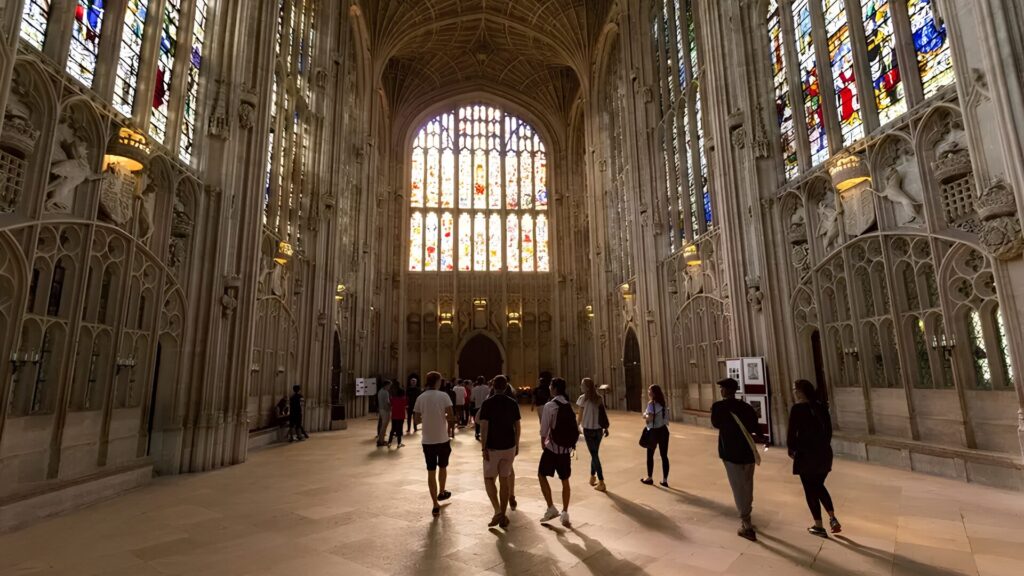
Location: London, Oxford, and Cambridge
Cost/Stipend: Varies; summer school scholarship available through our bursary programme
Acceptance rate/cohort size: Selective; an average of 7 participants per class
Dates: 2 weeks during the summer
Application Deadline: Multiple summer cohorts with rolling admissions
Eligibility: Students from all around the world aged 13-18 who are currently enrolled in middle or high school
Immerse Education’s Economics Summer School gives you a focused, two-week immersion into economic theory and real-world applications, taught by expert tutors associated with top universities and academic institutions. The program aims to deepen your understanding of fundamental economic principles, global markets, and policy-making. Across lively seminars, workshops, and discussions, you’ll explore core concepts such as market behaviour, inflation, trade, inequality, fiscal and monetary policy, and how these forces shape global economies.
Beyond the classroom, excursions and cultural activities help you connect lessons to the world around you, while living and studying alongside peers from around the globe adds an international perspective. Completion earns you a certificate of achievement and, in some cases, optional UCAS points if you’re looking toward UK university applications. You can find more details about the application here.
Why it stands out: It blends concentrated academic development with an immersive international summer experience, helping you deepen your economics knowledge while engaging with peers in diverse cities worldwide.
3. University of Oxford – UNIQ – Economics and Management
Location: Oxford, United Kingdom (one-week residential held in an Oxford college)
Cost: None
Acceptance rate/cohort size: Selective; roughly 44-60 students
Dates: June 29th – July 3rd
Application Deadline: January 13th
Eligibility: Year 12 students in England or Wales, Year 13 students in Northern Ireland, or S5 students in Scotland who are in the first year of further education; studying at a UK and Islands state school or college, or home educated; settled UK or Islands residents expecting home fee status; under 18 at the time of the residential, normally 16 or 17; a minimum of six GCSEs or National 5s with one or more at grade 7/A or above; studying Maths to A-level or equivalent; not open to international students
As one of the free economics programs in the UK for high school students, this one-week Oxford residential explores how economists analyse markets, pricing, banking reform, and economic crises. Teaching is delivered jointly by the Department for Economics and the Saïd Business School through lectures, seminars, tutorials, and interactive exercises that reflect undergraduate study.
You weigh questions like whether economists can forecast crashes and how resources can be allocated more sustainably, building the analytical and critical-reasoning skills central to studying economics. Alongside the academic programme, you stay in an Oxford college, attend an end-of-week mini conference, and receive sustained support toward a competitive Oxford application.
Why it stands out: It is Oxford’s free flagship access programme for UK state-school students, covering all travel, accommodation, meals, and tuition while pairing genuine Department of Economics and Saïd Business School teaching with sustained guidance on applying to Oxford.
4. King’s College London Pre-University Summer School
Location: King’s College London, London
Cost: £3,195 (1 week) to £9,375 (3 weeks); housing: £3,965 to £11,685; + £65 application fee
Acceptance rate/cohort size: Competitive; approximately 1,500+ students across all summer programs
Dates: July 6-10; July 13-17; July 20-24; July 27-31
Application Deadline: April 10th
Eligibility: Students ages 16-17 who are about to begin their final three high school years; open to international students
King’s College London Pre-University Summer School offers week-long courses to high school students. You’ll attend lectures, participate in interactive group discussions, and simulation games, engage in Q&A sessions, and listen to guest speakers.
The program offers multiple sessions covering different subjects, including accounting and finance, business management, and many other STEM and humanities-focused options. You’ll get to explore the City of London through trips, participate in extracurricular activities, and gain knowledge from experienced faculty at King’s College.
Why it stands out: You will experience university-style learning through lectures, simulations, discussions, and guest speaker sessions while exploring an economics-focused course and life at a leading university.
5. London School of Economics (LSE) – Pathways to Banking and Finance: Years 12-13
Location: London, UK
Cost: None
Acceptance rate/cohort size: Highly competitive; small cohort sizes
Dates: 18-month programme from December of Year 12 to April of Year 13
Application Deadline: October 20th
Eligibility: Students attending a UK state-funded school or college who are currently in Year 12, live within a 90-minute commute of LSE, study A-level Mathematics or IBDP Higher Level Mathematics, and meet specific GCSE grade requirements and widening participation criteria; not open to international students
Among the longer running economics programs in the UK for high school students, this 18-month LSE programme provides comprehensive exposure to economics and the wider financial sector. You’ll attend university-style lectures led by academics from the Economics and Accounting departments while developing practical skills in budgeting, financial analysis, and professional networking.
You also participate in a work experience placement at a leading London finance firm, such as Deutsche Bank, where you shadow industry experts, analyze day-to-day project workflows, and tackle group presentations. Through specialized workshops and mentoring from current LSE finance students, you build essential employability skills, master negotiation techniques, and prepare for competitive undergraduate study.
Why it stands out: It provides participants who complete the program and apply to LSE with extra consideration and potential eligibility for a contextual university offer.
6. Université Paris Dauphine – PSL’s Pre-Uni Camps
Location: Université Paris Dauphine – PSL’s London campus, Pentonville, London
Cost: £220; financial aid is available
Acceptance rate/cohort size: Competitive; 40 students per camp
Dates: Summer: July 7-9; Autumn: October 28-30
Application Deadline: Rolling basis
Eligibility: Years 11-13 students, gap year students, and students entering the last two years of IB/finishing any other high school diploma who are 16-19 years old; open to international students
Université Paris Dauphine–PSL’s Pre-Uni Camps offers a three-day learning experience to high school students. The program allows you to explore your interest in Economics through two Pre-University camps.
You’ll attend lectures, participate in workshop activities, and gain knowledge about economics and management theories focused on microeconomy, macroeconomy, general management, history of management, accounting, and the economic areas of globalisation. The program will help you develop a business mindset along with a range of skills in public speaking, debate, teamwork, active listening, and presentation.
Why it stands out: You will explore economics and management through lectures, workshops, and discussions while developing analytical, communication, and teamwork skills in a university-style learning environment.
7. Wharton Global Youth Program – Strategy and International Management (Cambridge, UK)
Location: Cambridge, UK
Cost/Stipend: $9,599 + $100 non-refundable application fee; need-based financial aid available
Acceptance rate/cohort size: Selective; approximately 50-80 students
Dates: July 4-17
Application Deadline: March 18th
Eligibility: Current 9th – 11th grade students (rising sophomores, juniors, and seniors); minimum 3.3 unweighted GPA; open to international students
Wharton Global Youth Program – Strategy and International Management is a two-week program for high school students. The program offers real-world learning through cases that allow you to understand how industries grow, compete, and adapt in a global business environment. You’ll address challenges faced by companies around the world by learning and applying impactful frameworks in international management and strategy.
You’ll gain knowledge from faculty, alumni, and professionals at Wharton while interacting with peers during simulation exercises. The program concludes in a case competition where you’ll get to share your strategy with a panel of judges and receive valuable feedback.
Why it stands out: You will explore global business strategy through real-world case studies, simulations, and team-based challenges while learning how organisations compete, adapt, and grow in international markets.
8. University of Warwick – Pre-University Summer School – A Taste of Business, Economics, and Finance

Location: University of Warwick campus, Coventry, United Kingdom
Cost: £5,250 programme fee + £50 non-refundable application fee
Acceptance rate/cohort size: First-come, first-served; cohort size not specified
Dates: July 14-24
Application Deadline: May 31st
Eligibility: Students aged 16-17 who are considering applying or have already applied to university; a good level of English language and comprehension is assessed through the application; open to international students
In this program, you spend 10 days on Warwick’s campus exploring economics beyond the school curriculum and learning to think like an economist across 29 hours of lectures, seminars, and skills workshops. You work through core tools of game theory, applying ideas such as dominance between strategies and Nash equilibrium to worked examples, and examine behavioural economics, macroeconomics, microeconomics, and the allocation of scarce resources.
You also study financial economics, including the time value of money, banking, and how capital budgeting and investment decisions are made. Alongside the academic modules, you attend guest lectures from industry and Warwick alumni speakers and join cultural trips to Oxford and Warwick Castle. You finish with a University of Warwick Certificate of Attendance.
Why it stands out: It delivers degree-level economics teaching from faculty at a Russell Group university, paired with a residential campus experience and a recognised Warwick Certificate of Attendance.
9. LSE Summer School Program’s – EC101 Introductory Microeconomics
Location: London School of Economics and Political Science, London
Cost: Varies. More information here; scholarships are available
Acceptance rate/cohort size: Selective; typically 20 students per class
Dates: Session 1: June 22nd – July 10th; Session 3: August 3-21
Application Deadline: Rolling basis
Eligibility: High school students with fundamental knowledge in math and a B+ grade or 3.3 GPA (preferably); open to international students
LSE Summer School Program’s Introductory Microeconomics Course offers an undergraduate-level learning experience to high school students. You’ll attend lectures, participate in class exercises, and explore the fundamental theories in microeconomics.
You’ll gain knowledge from experienced faculty, and understand how microeconomics is applied to solve real-world problems while also playing an important role in economic policies. By the end of the program, you’ll receive a certificate of attendance along with the opportunity to earn college credits by working on optional assessments.
Why it stands out: You will explore the foundations of microeconomics through university-level lectures and class activities while learning how economic theory is applied to real-world decision-making and policy.
10. Wharton Global Youth – Cambridge, UK: Public Finance and Society
Location: Cambridge, UK
Cost: $9,599 + $100 non-refundable application fee; need-based scholarships are available
Acceptance rate/cohort size: Selective; small cohort sizes
Dates: July 18-31
Application Deadline: March 18th
Eligibility: Rising high school sophomores, juniors, and seniors; open to international students
Wharton Global Youth – Cambridge, UK: Public Finance and Society is a two-week program for high school students. The program will allow you to explore a range of concepts in microeconomics, such as public goods, supply and demand, and externalities.
You’ll gain knowledge about the important role played by the government in different markets, analyse and assess policy decisions in various countries, all while engaging in small group discussions with your peers. During the course of the program, you’ll also engage in hands-on activities, including case studies, simulations, and learn to apply game theory models in understanding strategic decisions.
Why it stands out: You will explore the role of economics in public policy through case studies, simulations, and discussions while developing an understanding of microeconomic concepts, government decision-making, and strategic thinking.
11. FitzEd Summer School – Business Economics & Elements of Mathematical Economics
Location: Fitzwilliam College, University of Cambridge, UK
Cost: £7,450; bursaries are available
Acceptance rate/cohort size: Selective; 15 participants per course
Dates: Programme 1: July 12-25; Programme 2: July 26th – August 8th
Application Deadline: Rolling basis
Eligibility: International students aged 16-18; must have Grade A or above in a related subject (or relevant competition success) and meet language requirements (IELTS 6.5, TOEFL 90, or Grade A in English); students based in the UK are not eligible
This program by the University of Cambridge allows you to explore two courses, including the Elements of Mathematical Economics and Business Economics. You’ll be taught by current academics at the University of Cambridge, and attend around 40 tuition hours covering lectures and group-supervision sessions.
The program allows you to work on an independent research project, and in the end, you share your work through a presentation and essay. Along with academic learning, you’ll also experience social events and cultural site visits in the city.
Why it stands out: You will explore business and mathematical economics through university-style teaching while conducting independent research and developing analytical and communication skills.
12. Discover Bath
Location: University of Bath, Bath, England
Cost: Free
Dates: August 10-12 (the economics session is held on these dates)
Application Deadline: Typically closes in the winter months
Eligibility: Year 12 or equivalent students who are academically able to study their chosen subject at Bath and meet the university’s widening participation criteria
For those students who have plans to study at the University of Bath, this summer program lets you experience what a first-year undergrad being there is like. This means, similar to the freshman students in the university, you would take part in academic sessions like lectures, seminars, and workshops while simultaneously being involved in some social activities. Given that you already have a rough idea of the subject you would like to major in, which is economics, the program can also be useful for you to get a taste of studying that particular subject at the university.
However, you should keep in mind that to study economics at Discover Bath, you must meet certain additional requirements. These include being enrolled in at least three A-level subjects, out of which one is math, and you should have the chance of meeting the entry requirements for one of the economics courses at Bath.
Why it stands out: The program provides you with certain skills that are considered crucial in your university life, with some examples being research skills, independent study, and teamwork.
13. University of Southampton – Sutton Trust Summer School – Economics
Location: Southampton, UK
Cost: None
Acceptance rate/cohort size: Selective; cohort size not specified
Dates: July 7-10
Application Deadline: March 5th
Eligibility: Students attending a state-funded, non-fee-paying school or college who are studying in Year 12 in England or Wales, Year 13 in Northern Ireland, or S5 in Scotland; must study qualifications relevant to economics and meet at least one widening participation criterion; not open to international students
In this academic program, you experience life as an undergraduate economics student during a four-day residential stay at the University of Southampton. You attend subject-specific taster sessions led by university academics and researchers, where you explore foundational economic concepts and teaching methods. Throughout the program, you engage with current university students who offer firsthand insights into studying economics at the higher education level.
You also participate in activities designed to develop your academic and transferable skills while receiving guidance on the university application process. By living in student halls and exploring the main campus, you gain a practical understanding of both the academic and social dimensions of university life.
Why it stands out: It provides eligible students with a fully funded, immersive campus experience supplemented by long-term university application support through the Sutton Trust Online platform.
14. LSE Summer School Program – EC104: The Wealth (and Poverty) of Nations: Global Economic Development Past and Present
Location: London School of Economics and Political Science, London
Cost/Stipend: Varies. More information here; scholarships are available
Acceptance rate/cohort size: Selective; typically 20 students
Dates: August 3-21
Application Deadline: Rolling basis
Eligibility: High school students with an offer of a place at a university, preferably with a grade of around B+ (GPA 3.3); open to international students
LSE Summer School Program: The Wealth (and Poverty) of Nations will help you develop an understanding of economic and social structures. You’ll explore the relationship between national and international economies in terms of their growth and development.
The program covers a range of topics, including the Industrial Revolution, the Great Depression, long-run economic development, knowledge, technology, and more. Through the program, you’ll engage in undergraduate-level learning while having ten opportunities to earn college credits. By the end, you will develop quantitative reasoning skills and understand concepts related to important historical, society-shaping events.
Why it stands out: You will explore how economies grow and develop through university-level study of economic history, global development, and the factors that shape wealth and poverty across nations.
15. Durham University Sutton Trust Summer School – Economics and Finance
Location: Durham, UK
Cost: None
Acceptance rate/cohort size: Highly competitive; cohort size not specified
Dates: July 27-31
Application Deadline: March 5th
Eligibility: Students who attend, and have always attended, a UK state-funded, non-fee-paying school or college; currently studying in Year 12 in England or Wales, Year 13 in Northern Ireland, or S5 in Scotland; must meet specific GCSE grade requirements and widening participation criteria; not open to international students
In this residential academic program, you gain a detailed understanding of complex disciplines like behavioral economics, economic growth, and financial policy. You engage directly with the research focus of the Durham University Department of Economics and Finance by attending rigorous academic seminars led by current lecturers.
Throughout the week, you complete an assessed project in your chosen subject area, applying economic theories to real-world scenarios while developing critical analytical skills. You also network extensively with PhD students and academics to explore topics such as economic development in China. Additionally, you receive targeted university application support, equipping you with the confidence and practical knowledge needed to navigate the UCAS process.
Why it stands out: It provides successful participants who apply to Durham University with a guaranteed alternative offer that reduces the UCAS grade requirements for their chosen degree.
Frequently Asked Questions: Economics Programs in the UK for High School Students
What is an economics program for high school students?
An economics program introduces high school students to how markets, policy, and financial systems work before college, often through university-level lectures, case studies, and simulations. Programs cover topics like microeconomics, macroeconomics, game theory, and behavioural economics, typically hosted at UK universities including LSE, Oxford, and Cambridge. Most run between three days and several weeks. Many conclude with a presentation, certificate, or assessed project.
Do I need to attend a UK state school to apply?
It depends on the program. Free access programmes like the Sutton Trust tracks at Southampton and Durham, along with Oxford’s UNIQ Economics and Management programme, are specifically restricted to UK state school students. Paid programs, including Wharton Global Youth’s Cambridge-based courses and Immerse Education’s Economics Summer School, are open to students from anywhere in the world.
How much do economics programs in the UK cost?
Costs range from free to $9,599 for Wharton Global Youth’s two-week programs. Free options are typically UK state school access initiatives, including UNIQ and several Sutton Trust tracks. Immerse Education’s Economics Summer School offers bursary support that can help reduce costs for eligible students.
Can international students attend these programs?
Yes, several programs welcome international students, including Wharton Global Youth’s courses, King’s College London’s Pre-University Summer School, and Immerse Education’s Economics Summer School. Most free, UK government-supported access programmes, including UNIQ and the various Sutton Trust tracks, are restricted to UK state school students. FitzEd Summer School at Cambridge takes the opposite approach, accepting only international students.
What age do I need to be to apply?
Age requirements vary by program, generally falling between 13 and 18. Immerse Education’s Economics Summer School accepts students aged 13 to 18 from anywhere in the world, while most UK access programmes and Wharton Global Youth’s courses target students aged 15 to 17.
Will these programs help with university admissions?
Some programs offer direct admissions benefits. Durham University’s Sutton Trust Summer School provides a guaranteed alternative offer with reduced grade requirements, and LSE’s Pathways to Banking and Finance gives extra consideration to students who complete the 18-month program and apply to LSE. Immerse Education’s Economics Summer School doesn’t offer formal admissions benefits but provides a certificate of achievement and optional UCAS points for UK applications.
What’s the difference between free UK access programmes and paid international ones?
Free UK access programmes, such as the various Sutton Trust tracks and Oxford’s UNIQ programme, are designed specifically for UK state school students and often include direct admissions guidance or contextual offers. Paid international programs, including Wharton Global Youth’s courses and Immerse Education’s Economics Summer School, are open to students worldwide and tend to focus more broadly on economic theory and global markets rather than admissions support for a single UK university.
Use Summer Learning to Prepare for University
Summer learning can do more than fill your calendar; it can sharpen your thinking, test your interests, and prepare you for university expectations with confidence.
These 15 economics programs in the UK for high school students offer academic challenge, practical insight, and valuable exposure to university-style teaching, discussion, and independent study skills.
Use each experience to strengthen subject knowledge, improve analytical reasoning, and gather examples that can support personal statements, interviews, and future course choices with clarity.
Ready to turn summer economics learning into a stronger application? Read our University Preparation blogs for practical advice on courses, applications, interviews, and student life today.