
 Русский (RU)
 Українська (UK)
 Türkçe (TR)
 Italiano (IT)
 Français (FR)
 Português (PT)
 中文 (中国) (ZH)
 Español (ES)
 日本語 (JA)
 ไทย (TH)
 Deutsch (DE)
 Ελληνικά (EL)
 Polski (PL)
 Bahasa Indonesia (ID)
 Nederlands (NL)
 العربية (AR)
 한국어 (KO)

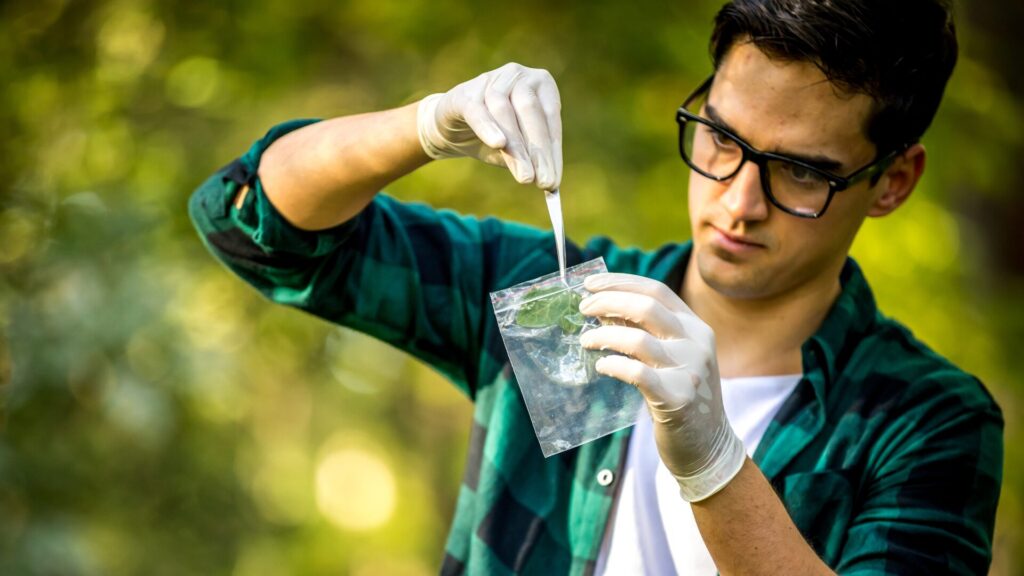
As a high school student drawn to medicine, biology, or patient care, you have probably wondered what a career in health looks like once you step past the textbook. Health internships for high school students answer that directly, placing you inside hospitals, research labs, and clinical teams where the work happens.
Picture yourself running assays beside a graduate mentor, sitting in on lab meetings where new findings get debated, or shadowing the coordinators who keep a clinical trial moving. Along the way, you pick up the tools of the field, from data analysis to scientific writing, and you meet the physicians, scientists, and peers who can shape where you go next.
Health internships can serve as a foundation for your academic journey, giving you a direct feel for what the subject looks like at the professional level in an affordable, structured setting.
What health internships are available for high school students?
Health internships for high school students generally fall into three exciting buckets: clinical shadowing, biomedical research, and community health. If you want to experience the fast-paced rhythm of a real hospital, many local medical centers offer teen volunteer programs where you can shadow doctors, interact with patients, and help keep the units running smoothly.
On the other hand, if you are drawn to the science behind the cures, competitive programs at universities and major institutes, like Stanford’s summer research programs or the NIH Summer Internship, put you directly in the lab to run hands-on experiments and analyze data alongside experienced mentors.
Lastly, public health internships focus heavily on education and outreach, which is perfect if you are passionate about health equity and community wellness.
Here are 15 health internships for high school students to help you get started.
For related options, consider the summer medicine program and the summer biology program.
Key Takeaways
- Stipends vary considerably, from no stipend at programs like In2scienceUK’s In2STEM Programme to $7,200 at MD Anderson Cancer Center’s 10-week program.
- Most US-based research internships, including SIMR at Stanford and the NIH’s Summer Internship Program, are restricted to US citizens or permanent residents.
- Acceptance rates are highly competitive at flagship programs: Memorial Sloan Kettering’s Summer Student Program accepts only about 2% of applicants.
- Program length ranges from one to two weeks, as with In2scienceUK’s In2STEM Programme, to 15 weeks, as with SickKids Summer Research Program in Toronto.
- Several programs are designed specifically for students new to research, including Fred Hutch’s SHIP, which deliberately recruits students without extensive prior research exposure.
- SickKids Summer Research Program and Rockefeller University’s SSRP are two of the few options open to international students, with SickKids based in Toronto and offering minimum wage plus vacation pay.
- Immerse Education’s Medicine Summer Internship is one of the few options open to students worldwide aged 15 to 18, combining hands-on medical simulations with 1:1 career coaching and bursary support across multiple global cities.
15 Health Internships for High School Students
1. Stanford Institutes of Medicine Summer Research Program (SIMR)
Location: Stanford University School of Medicine, Stanford, CA
Cost/Stipend: $50 application fee applies; waivers are available / Very limited number of need-based stipends are available
Acceptance rate/cohort size: Highly selective; approximately 50-60 students
Dates: June 8th – July 30th
Application Deadline: February 21st
Eligibility: Current juniors and seniors who are 16 or older by the start date, attend high school in the U.S., and are U.S. citizens or permanent residents; not open to international students
SIMR places you in a Stanford laboratory to work on a medically oriented research project alongside faculty, postdoctoral fellows, and graduate researchers. You choose from institutes spanning areas such as immunology, neurobiology, cancer biology, cardiovascular science, and bioengineering.
As one of the most established health internships for high school students at a medical school, it is built around a single mentored project. You leave with a piece of research you understand end-to-end rather than a survey of unrelated topics. You also take part in lectures and discussions that connect daily bench work to the wider practice of medicine.
Why it stands out: You’ll join a working Stanford Medicine lab as a contributing member of the research team, not an observer.
2. Immerse Education’s Medicine Summer School
Location: London, New York, Cambridge, Sydney, and Singapore
Cost: Varies; summer school scholarship available through our bursary programme
Application Deadline: Multiple summer cohorts with rolling admissions
Program Dates: 2 weeks during the summer
Eligibility: High school students across the globe aged 15-18
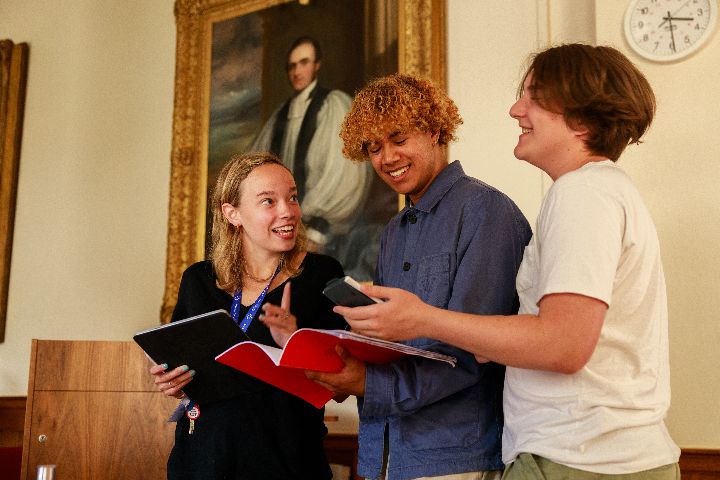
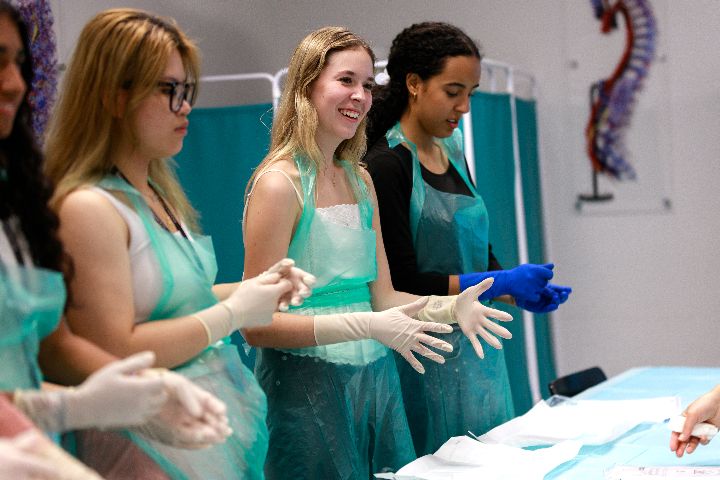
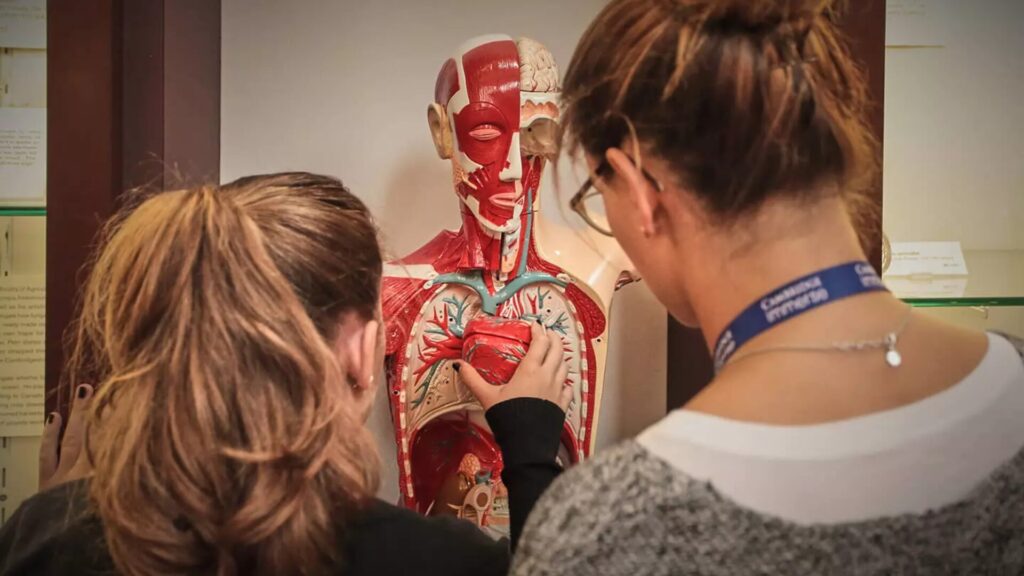
Immerse’s Medicine Career Insights Program lets high school students explore careers in major global industry hubs. You’ll participate in hands-on medical simulations, attend engaging classes, and participate in critical discussions. You’ll receive guidance from experienced medical professionals and gain both clinical and critical thinking skills. You’ll not only gain theoretical knowledge about a medical career but also understand the development of treatment plans.
Participants engage in project-based learning with established companies, attend interactive workshops, and visit offices, factories, and headquarters. The program also includes in-person weekly 1:1 career coaching sessions and sessions where you will receive personalized feedback on your resume and overall profile. You’ll also present your findings to industry experts at the end of the program. At the conclusion of the program, you’ll receive a certificate. You can find more details about the application here!
Why it stands out: You’ll explore university-level concepts in fields like medicine and psychology, giving you early exposure to the academic pathways behind real careers.
3. NIH Summer Internship Program (SIP)
Location: National Institutes of Health, Bethesda, MD
Stipend: $2,530 (pre-graduation); $2,840 (post-graduation)
Acceptance rate/cohort size: Highly competitive; part of roughly 1,000-1,200 total SIP interns annually
Dates: 8 weeks full-time during the summer (typically mid-May through August)
Application Deadline: Mid-February
Eligibility: U.S. citizens or permanent residents; high school juniors or seniors; 17-year-olds must live within 40 miles of a campus; not open to international students
At NIH, you join a research group in the Intramural Research Program and work full-time under a principal investigator on a biomedical, behavioral, or clinical project. You can pursue interests ranging from genetics and immunology to bioinformatics and public health, depending on the lab that takes you on. Rather than a central placement, you reach out to investigators directly and match with one whose work fits your goals.
You also gain access to NIH’s professional development sessions, a summer poster day, and a graduate and professional school fair, so you see the full arc of a research career. Few health internships for high school students offer this depth of biomedical resources.
Why it stands out: You’ll choose your own mentor by contacting investigators directly, which gives you a say in the exact research you spend the summer on.
4. Rockefeller University Summer Science Research Program (SSRP)
Location: The Rockefeller University, New York, NY
Stipend: A transit card is provided, and need-based stipends may be awarded
Acceptance rate/cohort size: Highly selective; 32 students each summer
Dates: June 22nd – August 6th
Application Deadline: January 2nd
Eligibility: Current high school juniors and seniors who are 16 or older at the start; open to international students
The program is built around team science rather than solo bench work. Each team mirrors a working laboratory, with a lead and several scientist-mentors supporting eight to ten students. Over the seven weeks, you learn techniques, choose a research question, gather and analyze data, and present a poster at a closing symposium.
The team structure means you experience how a lab collaborates, dividing questions and troubleshooting together, rather than working in isolation. Elective courses, guest lectures, and workshops add context to the daily research.
Why it stands out: It focuses on independent research, mentorship from eminent researchers, and a final poster presentation, providing you with valuable experience for STEM applications.
5. Fred Hutch Summer High School Internship Program (SHIP)
Location: Fred Hutchinson Cancer Center, Seattle, WA
Stipend: Paid, amount not specified
Acceptance rate/cohort size: Competitive; ~24 students
Dates: June 22nd – August 14th
Application Deadline: March 13th
Eligibility: Students entering their senior year who are 16 or older by the start and live in the greater Seattle area; not open to international students
SHIP is a full-time health internship that introduces you to biomedical research and the people who do it. You are matched with a mentor and contribute to an active project while learning foundational lab and analytical skills. The program deliberately recruits students who have not had extensive research exposure, so the structure assumes you are starting.
Because it targets newcomers, SHIP builds in the scaffolding and mentorship that many competitive programs expect you to already have. You finish the summer with research experience and a clearer sense of whether a science or health career fits you.
Why it stands out: You’ll be supported as a first-time researcher, since the program is built specifically for students new to the lab.
6. Memorial Sloan Kettering Summer Student Program
Location: Memorial Sloan Kettering Cancer Center, New York, NY
Stipend: $1,200
Acceptance rate/cohort size: 2% acceptance rate; approximately 20-30 students
Dates: June 29th – August 21st
Application Deadline: February 6th
Eligibility: Current high school juniors who are 14 or older by June; hold a 3.5 science GPA; are authorised to work in the U.S.; live within 25 miles of the Manhattan campus; not open to international students
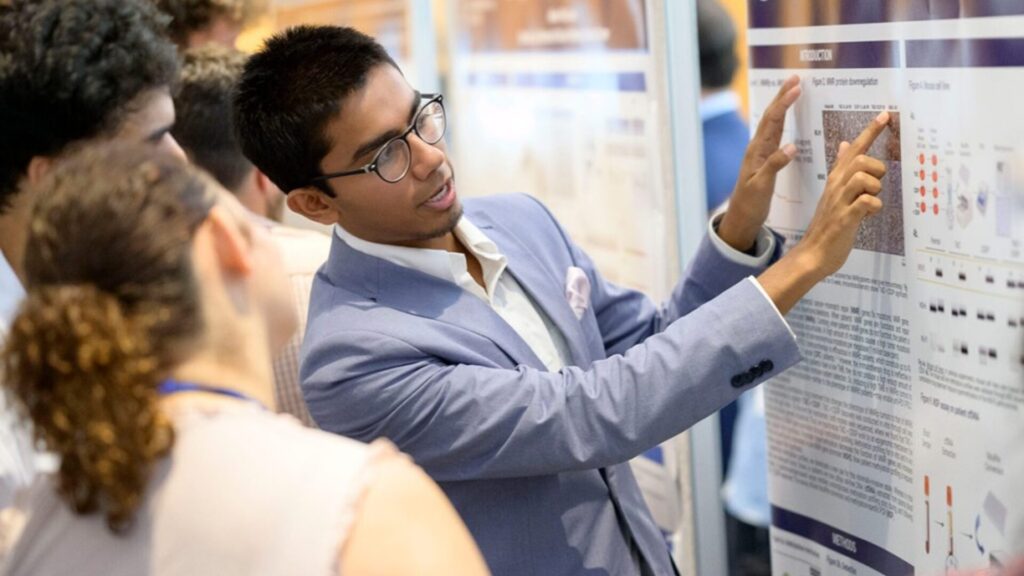
This program gives you a lab-based internship in a biomedical or computational research group at one of the world’s leading cancer centers. You pair with a mentor who helps you build technical skills and complete a self-directed project that feeds the lab’s larger objectives.
Research areas include cancer biology, immunology, structural biology, pharmacology, and computational genomics. Through lab meetings and program sessions, you also see how translational medicine moves discoveries from the bench toward patient care. Professional development events hosted across the institution round out the clinical and scientific picture.
Why it stands out: You’ll run a self-directed project that supports your lab’s active research agenda, contributing to ongoing cancer science.
7. UCSF Summer Student Research Program (SSRP)
Location: University of California, San Francisco, CA
Stipend: $3,000
Acceptance rate/cohort size: Competitive; cohort size not specified
Dates: June 15th – July 31st
Application Deadline: February
Eligibility: Students in grades 10-12; with at least one completed year in math and biology, 16 or older by June 1st; 3.0 GPA; U.S. citizens or permanent residents; not open to international students
This health internship places high school and college students into Bay Area labs and clinics to work on active biomedical research. You can choose among three tracks: laboratory research on biological mechanisms, clinical research involving people or patient data, and community or public health research focused on populations.
A mentor guides your project across the seven weeks, and a lecture series connects your work to broader questions in medicine. The clinical and community-health tracks let you study health where it intersects with patients and neighborhoods, not only at the bench. You present your findings at a closing symposium alongside the rest of the cohort.
Why it stands out: You’ll pick between bench, clinical, and public-health research, so you can test the specific corner of health that interests you.
8. City of Hope Eugene and Ruth Roberts Summer Student Academy
Location: City of Hope, Duarte, CA
Stipend: $4,500
Acceptance rate/cohort size: Highly selective; ~70 students
Dates: June 1st – August 7th
Application Deadline: March 12th
Eligibility: High school students who are 16 or older before the start and are U.S. citizens or permanent residents; not open to international students
The Eugene and Roberts Summer Student Academy embeds you in a biomedical research team at a major cancer and diabetes research center. You work full-time on a project in areas such as molecular biology, immunology, or translational cancer research, supervised by City of Hope scientists.
The curriculum pairs hands-on laboratory work with structured training in how to present scientific findings. Seminars explain how discoveries move from the lab toward new therapies. You close the summer by presenting your project to the research community.
Why it stands out: You’ll train at a center known for translating laboratory findings into cancer and diabetes treatments.
9. UCSF – High School Intern Program (HIP)
Location: University of California, San Francisco (UCSF); in-person at UCSF research labs in San Francisco, California
Stipend: $4,500
Acceptance rate/cohort size: Selective; approximately 25 interns
Dates: June 8th – July 31st
Application Deadline: February 8th
Eligibility: Current high school juniors (rising seniors) at the time of application; enrolled in an SFUSD high school or San Francisco public charter school; not open to international students
In this program, you spend eight weeks conducting original biomedical research at UC San Francisco, paired with a scientist mentor who guides you through an authentic health-science project in fields such as neuroscience, immunology, cancer, infectious disease, molecular biology, or stem cell research. Working about 35 hours per week, you learn foundational laboratory skills, carry out experiments, interpret data, and develop your findings into a final research presentation.
You also strengthen science communication skills and build a professional network through interactions with UCSF scientists and a cohort of 25 interns. Beyond the lab, you receive individual college counseling, resume and personal-statement writing workshops, a family financial-aid evening, and a daylong college tour.
Why it stands out: It pairs you with UCSF scientist mentors for paid, authentic biomedical research, selecting for curiosity and motivation rather than grades, and combining lab work with college counseling alongside a track record of 99% of alumni enrolling in a two- or four-year college.
10. George Mason Aspiring Scientists Summer Internship Program (ASSIP)
Location: George Mason University, Fairfax, VA
Stipend: $1,299 + $25 application fee; tuition fee that can be waived for financial need / No stipend
Acceptance rate/cohort size: Highly competitive; approximately 290-300 interns across various labs and disciplines
Dates: June 18th – August 12th
Application Deadline: February 15th
Eligibility: High school and college students; wet-lab placements require age 16 by mid-June, while remote and computer-lab placements require age 15; not open to international students
This health internship matches you one-on-one with a faculty researcher at George Mason or a partner institution to work on a hypothesis-driven project. Health-related fields on offer include medicine, neuroscience, bioengineering, genomics, and proteomics, alongside other sciences. You use research-grade equipment, develop scientific writing, and explore science careers through discussion forums.
The program ends with a poster session where you present your work. Strong projects have led to student names appearing on published papers and presentations at scientific conferences. Remote, hybrid, and in-person tracks make the program reachable from anywhere.
Why it stands out: You’ll contribute to posters, conference presentations, and co-authored publications, which is rare at the high-school level.
11. The Wistar Institute – High School Program in Biomedical Research
Location: The Wistar Institute, Philadelphia, PA
Stipend: $1,500
Acceptance rate/cohort size: Selective; 15 students
Dates: July 6-30; a select number of participants may continue for an additional three weeks (August 3-21) of individually mentored cancer research
Application Deadline: March 20th
Eligibility: Students at least 16 years of age by the programme start date; completed at least one high school science course; not open to international students
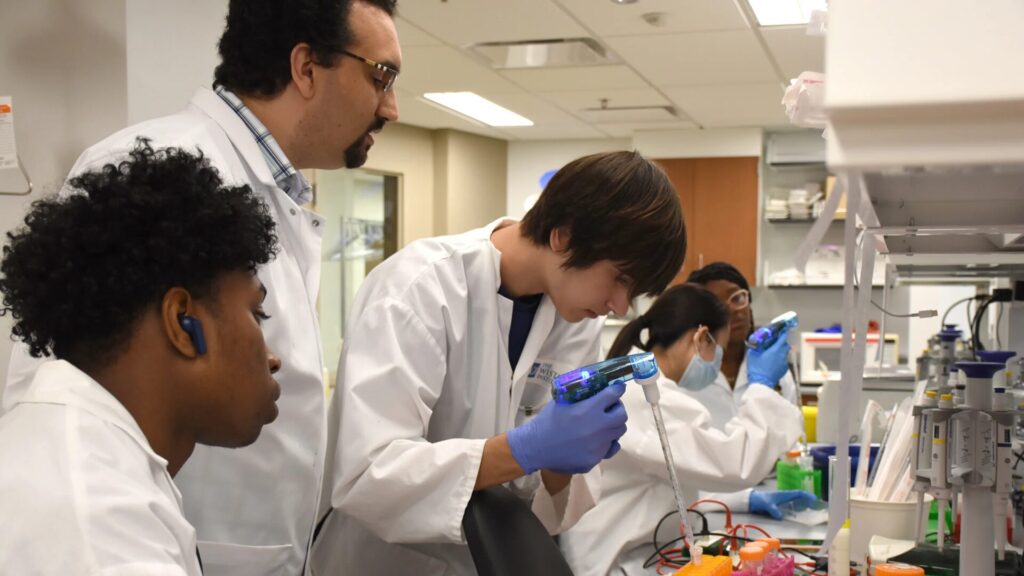
In this program, you spend four weeks immersed in The Wistar Institute’s state-of-the-science Training Lab, learning foundational biomedical laboratory techniques while contributing to active research projects connected to cancer biology, immunology, vaccine development, and infectious disease. You practice hands-on bench skills, learn to read and interpret scientific literature, explore multiple health-science careers through mentorship from Wistar scientists and staff, and present your findings to the cohort at the program’s close.
Working Monday through Thursday alongside practicing researchers, you build practical lab competencies and scientific communication skills directly relevant to a biomedical career. Select participants may extend into three additional weeks of individually mentored cancer research in a Wistar lab.
Why it stands out: It pairs authentic, mentored bench work at the nation’s oldest independent biomedical research institute, making advanced health-science experience accessible to Philadelphia high school students with no prior research background.
12. SickKids Summer Research (SSuRe) Program
Location: The Hospital for Sick Children, Toronto, Canada
Stipend: Minimum hourly wage + 6% vacation pay
Acceptance rate/cohort size: Highly competitive; large cohort sizes
Dates: May – mid-August (15 weeks)
Application Deadline: March 16th
Eligibility: Students in their final year of high school who will enter an undergraduate programme the following fall; open to international students
SickKids is one of the largest pediatric research hospitals in the world, and this health internship places students with a Research Institute scientist on a defined project. You join weekly seminars led by hospital and institute scientists and attend a career night where you meet research staff from across the institute.
The placement ends with a Summer Student Symposium, where students present their projects, and selected work earns awards. You spend the summer inside an active pediatric research institute, working alongside scientists who study childhood diseases. The setting gives you a clear view of how hospital-based research operates.
Why it stands out: You’ll gain a foothold in Canadian hospital research as one of the few high school students among a mostly university-level cohort.
13. In2scienceUK In2STEM Programme
Location: Multiple host sites across the UK
Stipend: None
Acceptance rate/cohort size: Highly competitive; ~850 students annually
Dates: July 20th – August 21st, including in-person placement and online workshops
Application Deadline: April 5th
Eligibility: 16+ years old in Year 12 (or S5/S6); attending a non-fee-paying, state-maintained, non-selective school; studying at least one STEM A-Level, BTEC, or equivalent; and meeting at least one widening participation criterion (e.g., eligible for Free School Meals, first generation to attend university, or care experienced); not open to international students
This health internship is free and aimed at students from lower-income and underrepresented backgrounds. You spend one to two weeks with a host researcher, who may be in a biomedical, clinical, or public health laboratory, observing and contributing to their work. Live online workshops, competitions, and events run alongside the placement to build skills and confidence.
The program exists to widen access, so it is designed for students who would not otherwise have a route into a research environment. You leave with hands-on exposure and a clearer sense of health and science career paths.
Why it stands out: You’ll gain a hospital or laboratory placement specifically reserved for students underrepresented in science.
14. MD Anderson Cancer Center – MD Anderson Carl B. & Florence E. King Foundation High School Summer Program in Biomedical Sciences
Location: MD Anderson Cancer Center, Houston, Texas
Stipend: $7,200 stipend for the 10-week program; $6,480 for nine weeks
Acceptance rate/cohort size: Highly selective; up to 6 students each year
Dates: June 1st – August 7th
Application Deadline: January 14th
Eligibility: Current Texas high school seniors age 18 or older by the program start date; enrolled as a senior in a Texas public, private, charter, or home school during the spring semester prior; accepted into a college or university to begin the following fall, with preference for those pursuing an allied health discipline; U.S. citizens, permanent residents, or work-eligible visa holders; not open to international students
In this program, you join a small cohort of up to six Texas high school seniors working in MD Anderson laboratories, on a hands-on biomedical research project guided by a full-time faculty mentor. Working within one of the biomedical disciplines, you learn the core principles of scientific investigation while gaining firsthand exposure to allied health and cancer research career paths.
You supplement bench work with faculty seminars on varied research topics and strengthen scientific communication through abstract, poster, and elevator speech competitions. You close the experience by presenting your findings at a final presentation and celebration luncheon. The program is designed to build your awareness and confidence in allied health professions before college.
Why it stands out: It is a selective, paid 10-week placement that embeds Texas high school seniors directly in working laboratories at the nation’s leading cancer center under one-on-one mentorship from full-time MD Anderson faculty.
15. Baylor College of Medicine Saturday Morning Science Summer Research Program
Location: Baylor College of Medicine, Houston, TX
Stipend: Paid approximately the Texas minimum wage
Acceptance rate/cohort size: Competitive; select number of students
Dates: June 8th – July 31st
Application Deadline: April 17th
Eligibility: Students who are 18 or older by June 1st and hold a U.S. Social Security or Permanent Resident card; not open to international students
This health internship places you in the lab of a Baylor College of Medicine researcher to work on a project full-time. You become part of a research group’s daily work, attending its meetings and the seminars tied to your lab’s focus. Weekly “Lunch and Learn” sessions introduce different aspects of research.
At the end of the summer, you’ll present your findings at the SMS Summer Research Symposium, with possible chances to present again during the school year. One thing to note is that this program is limited to those who have previously taken part in Saturday Morning Science or an affiliated undergraduate program.
Why it stands out: You’ll pair lab work with professional-development sessions that show how experiments run and how research careers are built.
Frequently Asked Questions: Health Internships for High School Students
What is a health internship for high school students?
A health internship places high school students inside hospitals, research labs, or clinical teams to gain direct exposure to biomedical research or patient care. Most programs pair students with a faculty or scientist mentor for an independent or team-based research project. Programs typically run from one week to several months. Many conclude with a poster presentation, symposium, or final research showcase.
Do I need prior research experience to apply?
No, several programs are specifically designed for students new to research. Fred Hutch’s SHIP deliberately recruits students without extensive research exposure and builds in extra mentorship and training, and In2scienceUK’s In2STEM Programme is aimed at widening access for underrepresented students. Immerse Education’s Medicine Summer Internship similarly introduces clinical and critical thinking skills from the ground up through hands-on simulations.
Are health internships paid?
Many are paid, though amounts vary considerably. MD Anderson’s High School Summer Program offers a stipend of $7,200 for its 10-week program, while UCSF’s High School Intern Program and City of Hope’s Summer Student Academy both pay $4,500. Some programs, including In2scienceUK’s In2STEM Programme, are unpaid but free to attend.
Can international students apply to these programs?
Most US-based research internships, including SIMR at Stanford, the NIH’s Summer Internship Program, and Memorial Sloan Kettering’s Summer Student Program, require US citizenship or permanent residency. Rockefeller University’s SSRP and SickKids Summer Research Program in Toronto are both open to international students. Immerse Education’s Medicine Summer Internship is open to students worldwide aged 15 to 18.
What age do I need to be to apply?
Age requirements vary by program, generally falling between 14 and 18. Memorial Sloan Kettering’s Summer Student Program accepts students as young as 14, while most NIH and Stanford-affiliated programs require students to be at least 16. Immerse Education’s Medicine Summer Internship accepts students aged 15 to 18 from anywhere in the world.
How competitive are health internships for high school students?
Competition is intense at many flagship programs. Memorial Sloan Kettering’s Summer Student Program accepts only about 2% of applicants, and City of Hope’s Summer Student Academy admits roughly 70 students from a much larger applicant pool. Other programs, including SickKids Summer Research Program, don’t publish exact acceptance rates but note highly competitive cohorts.
How do these internships help with college applications?
Completing a health internship demonstrates genuine scientific curiosity and readiness for a professional research environment, both of which admissions officers value. Programs like George Mason’s ASSIP have led to student co-authorship on published papers and conference presentations, a rare credential at the high school level. Immerse Education’s Medicine Summer Internship provides 1:1 resume feedback and a certificate of completion, both useful talking points for interviews.
Go Beyond the Lab With Medical Insight
A laboratory can reveal how medicine works, but reflection helps you understand why that work matters to patients, families, and communities.
Across these 15 health internships for high school students in this guide, you can test your interests through research, clinical exposure, public health, and mentorship.
The strongest choice is not always the most prestigious; it is the one that challenges you, builds relevant skills, and brings your future goals into sharper focus.
Curious about the ideas shaping healthcare? Read our Medicine Top Books Guide to discover thought-provoking titles that deepen your knowledge and keep your medical ambitions moving forward.