
 Русский (RU)
 Українська (UK)
 Türkçe (TR)
 Italiano (IT)
 Français (FR)
 Português (PT)
 中文 (中国) (ZH)
 Español (ES)
 日本語 (JA)
 ไทย (TH)
 Deutsch (DE)
 Ελληνικά (EL)
 Polski (PL)
 Bahasa Indonesia (ID)
 Nederlands (NL)
 العربية (AR)
 한국어 (KO)

Starting high school is a major transition, and summer programs for rising 9th graders can make that shift a lot smoother. As you move into a new environment with higher academic expectations, more independence, and a wider range of opportunities, these programs give you a head start on building the skills and confidence you’ll need throughout high school and beyond.
Unlike traditional classroom learning, many of these programs encourage learning through projects, discussions, experiments, and hands-on activities. You might conduct research, solve real-world problems, or explore subjects like engineering, business, medicine, or the arts, all while working alongside students who share your curiosity. Along the way, you’ll develop valuable skills such as communication, teamwork, critical thinking, public speaking, and independent learning, skills that support your success both inside and outside the classroom.
How do you choose the right summer programs for rising 9th graders?
Summer programs can serve as a foundation for a high schooler’s college journey, giving them a taste of university life at a top institution in person. That said, summer programs can vary quite a bit in scope, difficulty, and curriculum. Some offer opportunities to choose from a range of subjects and explore your academic interests, while others zero in on a single field, offering hands-on exposure to ideas, concepts, and applications not yet covered in high school.
The right option for you is one that aligns with your goals and offers a mix of instruction and practical exploration. To help you choose, we’ve drawn up a list of 15 summer programs for rising 9th graders. They have been selected for their academic depth, hands-on learning opportunities, and strong reputations.
Key takeaways
- MIT’s You GO Girl! program is free, though it suggests a $100 materials donation, and is restricted to the greater Boston area with priority for girls entering 9th grade.
- Immerse Education’s Academic Insights Pathway spans six locations, including Oxford, Cambridge, and Boston, with small classes of seven to 10 students open to students worldwide aged 13 to 18.
- Carnegie Mellon’s Summer Engineering Experience is completely free for rising 8th and 9th graders, running one week in July with hands-on individual and group engineering projects.
- Brown University’s STEM for Rising 9th and 10th Graders costs $6,052 and is specifically designed for students ages 13 to 15, unlike most pre-college programs that target older high schoolers.
- Stanford’s Pre-Collegiate Summer Institutes for this age group cost $3,200 online, with small classes averaging around 16 students and financial aid available for both US and international students.
- Smith College’s Summer Science & Engineering Program admits over 100 students annually and costs $4,985 per two-week session, with courses in physical sciences, life sciences, and engineering.
- Georgetown’s Entrepreneurship Academy costs $5,075 for commuters or $6,465 with housing, giving rising 9th graders exposure to startup development alongside Georgetown faculty and industry professionals.
- Program costs for rising 9th grader programs range from free options like MIT’s You GO Girl! and Carnegie Mellon’s SEE to over $6,000 for Columbia University’s NYC Commuter Program and Brown’s STEM program.
15 Summer Programs for Rising 9th Graders
1. MIT Edgerton Center’s You GO Girl!
Location: Massachusetts Institute of Technology, Cambridge, MA, USA
Cost: No cost, but the program suggests a materials donation of $100
Acceptance rate/cohort size: Limited capacity; cohort size not publicly disclosed
Dates: August 4-7 | August 18-21
Application deadline: Registration opens in late spring and closes when capacity is reached
Eligibility: Rising 9th-grade students from the greater Boston area who can commute to the MIT campus; the program is primarily designed for girls, but all incoming 9th-graders can apply. International students are not eligible
MIT’s You Go Girl!, a four-day program, introduces rising 9th graders to engineering through hands-on design challenges and interactive workshops hosted by MIT’s Edgerton Center. You will work with MIT students, faculty, and volunteers to complete practical activities that demonstrate how biology, chemistry, engineering, and other STEM concepts are applied to solve real-world problems. The program encourages teamwork, creativity, and problem-solving while introducing different engineering disciplines in an accessible way.
Throughout the four days, you will also have the opportunity to explore MIT’s campus and interact with members of its science and engineering community. Although it is a four-day outreach program rather than a residential pre-college experience, it offers an early introduction to engineering in a university setting for students entering high school.
Why it stands out: It offers a free, hands-on introduction to science and engineering at MIT, helping you prepare for high school and explore your interests alongside mentors from one of the world’s leading universities.
2. Immerse Education’s Pre-University Summer School
Location: Cambridge, London, Oxford, Singapore, Sydney, Tokyo, and Toronto
Cost: Varies; summer school scholarship available through our bursary programme
Application Deadline: Multiple summer cohorts; rolling admissions
Program Dates: 2 weeks during the summer
Eligibility: Students across the globe aged 13-18 currently enrolled in middle or high school; open to international students
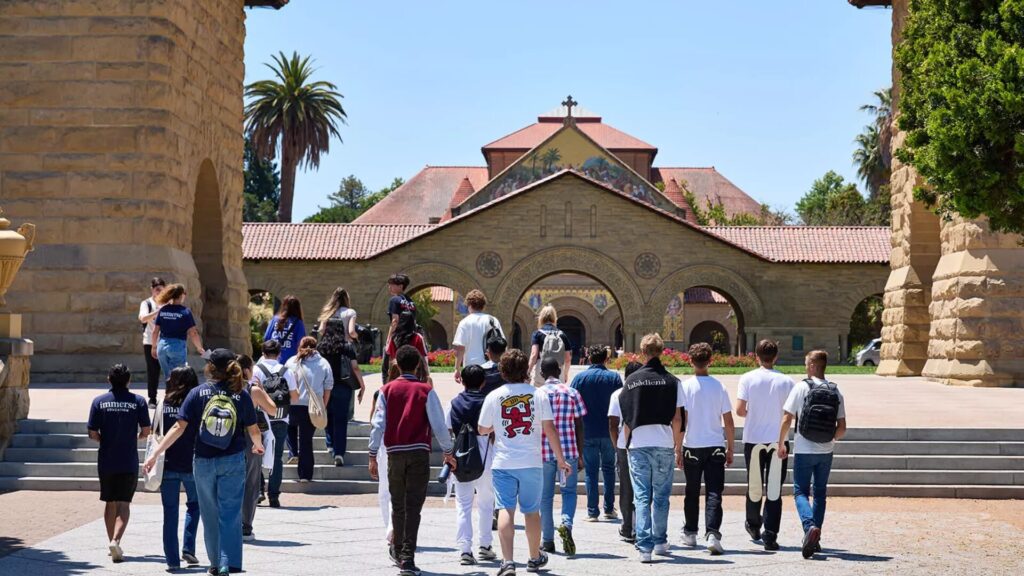
The Academic Insights Program lets high school students experience university life firsthand. You will live on campus and study in small groups of 7-10, and learn from tutors from eminent top universities like Oxford and Cambridge. You can explore a wide range of subjects, spanning over 20 options, including Architecture, AI, Business Management, Computer Science, Economics, Medicine, Philosophy, and more.
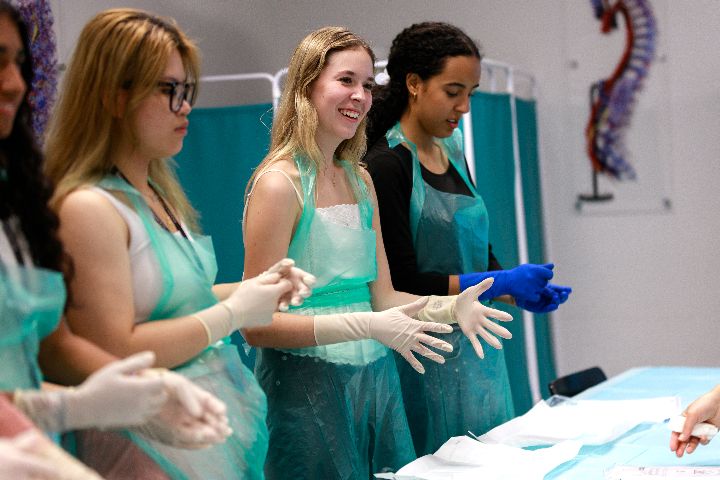
The courses are experiential and focus on hands-on learning. You may find yourself conducting dissections in medicine, designing a robotic arm in engineering, participating in a moot court for law, or building creative writing portfolios and business case studies. By the end of the program, you’ll complete a personal project, receive written feedback, and receive a certificate of completion. You can find more details about the application here.
Why it stands out: You’ll get an early start at university life and academics because the program includes an independent project, discussion-based classes, and living at a college campus.
3. Carnegie Mellon University’s Summer Engineering Experience (SEE)
Location: Carnegie Mellon University’s College of Engineering, Pittsburgh, PA, USA
Cost: Free
Acceptance rate/cohort size: Limited capacity; cohort size not publicly disclosed
Dates: July 13-17
Application deadline: March 23rd
Eligibility: Rising 8th- and 9th-grade students in the U.S.
Carnegie Mellon University’s SEE is a fully funded, week-long, engineering-focused learning experience for rising 8th- and 9th-graders. During the program, you will learn about design and various engineering disciplines through project work and education presentations. You will work on two projects using items readily available at home.
The first project requires you to work alongside a group of peers on solving a real problem. The second project requires individual work and the application of creative engineering design fundamentals. Both projects are designed to help you practice critical thinking and apply design concepts to solve challenges.
Why it stands out: It lets you learn about engineering design through project work focused on real-world problem-solving within a university environment at no cost.
4. Columbia University NYC Commuter Summer Program
Location: Columbia University, New York, NY, USA
Cost: $80 application fee + $6,381 (three weeks) | $2,883 (one week); need-based financial aid is available for select programs.
Acceptance rate/cohort size: Not specified; cohort size varies by program
Dates: June 22nd – August 7th (multiple one- and three-week sessions within this window)
Application deadline: TBA for the next cycle
Eligibility: Students entering grades 9-12 and recent high school graduates; open to international students who meet the English-language requirements
Columbia University offers a range of pre-college opportunities in the summer. The NYC Commuter program lets you explore college-level subjects through academic courses, workshops, and experiential learning on Columbia’s campus. You can choose from courses across STEM, business, humanities, writing, medicine, engineering, and the arts, depending on your academic interests.
All courses are taught by Columbia instructors and emphasize discussion, collaborative projects, and applied learning that reflect the university’s academic environment. On campus, you will participate in various activities while learning alongside peers from around the world. The experience can help you explore potential majors, develop university-level study habits, and gain a clearer understanding of college life before applying to university.
Why it stands out: It offers a broad selection of subject-specific programs, allowing you to experience Columbia’s academic environment while exploring future fields of study in a residential university setting.
5. Brown University’s STEM for Rising 9th and 10th Graders
Location: Brown University, Providence, RI, USA
Cost: $6,052; need-based financial aid available
Acceptance rate/cohort size: Selective; cohort size varies by course
Dates: July 12-24
Application deadline: May 15th
Eligibility: Students, ages 13 to 15, completing grades 8 or 9; open to U.S. and international students
Brown’s STEM for Rising 9th and 10th Graders gives you the opportunity to explore college-level STEM through hands-on, non-credit courses taught on Brown’s campus. You can choose from subjects such as engineering, computer science, biomedical science, environmental science, and applied mathematics, depending on the summer course offerings.
You will explore your chosen field through laboratory activities, collaborative projects, and problem-solving exercises that encourage you to apply scientific concepts in real-world contexts. Outside the classroom, you will participate in residential activities, connect with students from around the world, and experience daily life at Brown University. The program is designed specifically for students entering high school, providing an early introduction to university academics before beginning grades 9 or 10.
Why it stands out: It is one of the few university summer programs created specifically for students entering grades 9 and 10, combining hands-on STEM learning with an authentic residential college experience.
6. Stanford University’s Pre-Collegiate Summer Institutes
Location: Online
Cost: $3,200; need-based financial aid is available for eligible U.S. and international students
Acceptance rate/cohort size: Selective; small classes with ~16 students on average
Dates: June 15-26 | July 6-17
Application deadline: March 13th
Eligibility: Students in grades 8-11 (typically ages 13-19); open to international students
Stanford Pre-Collegiate Summer Institutes let you study a single subject in depth through an intensive, college-level course conducted entirely online. You can choose from tracks across computer science, engineering, business, mathematics, humanities, social sciences, and the arts, depending on the annual course offerings. Classes are discussion-based and project-oriented, encouraging you to engage with advanced concepts while collaborating with academically motivated peers from around the world.
Outside the virtual classroom, you will work on projects, assignments, and course-specific homework with support from Stanford staff. Although the courses do not award college credit, they are designed to challenge you beyond the high school curriculum and introduce you to Stanford’s academic environment.
Why it stands out: Through small, discussion-based classes and project work, you will explore a subject in depth alongside a global cohort of students while also learning about university expectations.
7. University of Connecticut School of Computing’s AI Summer Camp
Location: University of Connecticut, Storrs, CT, USA
Cost: $250; financial aid available
Acceptance rate/cohort size: Up to 30 students
Dates: July 27-31
Application deadline: July 1st; applications may be accepted after the deadline based on space
Eligibility: Students entering grades 9-12; international student eligibility not specified
The UConn AI Summer Camp introduces you to artificial intelligence through hands-on workshops, coding activities, and interactive demonstrations led by UConn faculty and researchers. You will explore foundational AI concepts, including machine learning, computer vision, and robotics, while working on practical projects that demonstrate how AI is applied in real-world settings.
The program also includes laboratory visits and discussions on AI research and careers, providing early exposure to university-level computing. Throughout the week, you’ll collaborate with other students while developing technical and problem-solving skills in a supportive learning environment. As the camp is hosted on UConn’s campus, it offers an accessible introduction to university environments and advanced academic exploration before you begin high school.
Why it stands out: It provides hands-on exposure to artificial intelligence through university-led workshops, research facilities, and project-based learning designed specifically for incoming and current high school students.
8. Northwestern University Center for Talent Development (CTD) Academic Summer Camps
Location: Northwestern University, Evanston, IL, USA
Cost: $1,005 – $6,105, based on program length and type; financial aid available
Acceptance rate/cohort size: Not specified
Dates: June 28th – August 7th (multiple three- and one-week sessions within this window)
Application deadline: One week before each session begins
Eligibility: Students entering grades 6-12; applicants’ performance must align with the academic qualification tiers specified on the program site, based on standardized test scores, grades, or teacher recommendations. International students with English language proficiency are eligible. Some courses may have additional prerequisites
CTD offers middle and high school students a range of academic summer camps with both day and residential options on Northwestern’s Evanston campus. You can choose from enrichment courses that let you explore interdisciplinary topics or fast-paced accelerated courses that cover one to two semesters’ worth of material in three weeks. Classes are led by teachers and content experts and may come with college credit.
You will work on projects such as developing community action plans, designing original apps, or writing portfolios, depending on the track you choose. If you choose a residential camp, you will live in Northwestern’s dorms, engage in weekend activities including museum visits and Chicago excursions, and receive structured in-person study support.
Why it stands out: You get to explore a field of your choice through advanced academic sessions led by Northwestern University instructors, with the option of earning college credit!
9. Smith College Summer Science & Engineering Program
Location: Smith College, Northampton, MA, USA
Cost: $4,985 per two-week session + $50 application fee; limited need-based aid available
Acceptance rate/cohort size: 100+ students/year
Dates: July 4-17 | July 19th – August 1st
Application deadline: May 1st or until full; March 1st for international students
Eligibility: Students entering grades 9-12; open to international students
Smith College’s Summer Science & Engineering program lets rising 9th to 12th graders take lab-based courses in the physical sciences, life sciences, and engineering under the guidance of faculty. You can choose from a range of research- or project-focused courses and spend two to four weeks running experiments, collecting data, and presenting findings.
Undergraduate students will provide support throughout each course, offering you a close look at college-level research. You will also learn to build designs, formulate hypotheses, plan and run experiments and surveys, and collect and analyze data, gaining hands-on research exposure during the program.
Why it stands out: It lets you explore STEM through hands-on project work within a college environment under the guidance of faculty.
10. Georgetown University’s Entrepreneurship Academy (Georgetown University)

Location: Georgetown University, Washington, D.C., USA
Cost: $5,075 (commuter tuition) | $6,465 (tuition with housing and meals) + $50 application fee (non-refundable); scholarships available
Acceptance rate/cohort size: Not publicly disclosed
Dates: June 7-19
Application deadline: January 31st (early-bird deadline); May 15th (final deadline)
Eligibility: Students entering grades 9-12 with a GPA of 2.0 or higher; open to international students who meet the program requirements
The Entrepreneurship Academy at Georgetown gives you the opportunity to explore the fundamentals of entrepreneurship through college-level coursework, workshops, and team-based projects. You will study topics such as business model development, customer discovery, market research, financial planning, and entrepreneurial leadership while working with Georgetown faculty and industry professionals.
Throughout the program, you will collaborate with other students to develop a startup idea, refine it through feedback, and present your final business pitch. Residential participants also experience campus life by living at Georgetown and taking part in organized student activities outside the classroom. The program provides an introduction to university-level business education while helping you evaluate whether entrepreneurship or business is a good fit for your future studies.
Why it stands out: It offers exposure to practical startup development and Georgetown’s business-focused learning environment, giving you insights to turn an idea into a business concept while living on campus.
11. The College of New Jersey’s iSTEM Summer Academy
Location: The College of New Jersey, Ewing, NJ, USA
Cost: $625/week
Acceptance rate/cohort size: Not publicly disclosed
Dates: Week 1: July 6-10 | Week 2: July 13-17
Application deadline: TBA
Eligibility: Rising 8th to 12th graders; international student eligibility not specified
The iSTEM Summer Academy at TCNJ allows middle and high schoolers to spend one or two weeks exploring product design, robotics, and engineering through hands-on activities. In the MakerCraft track, you will learn to use MATLAB, CAD software, and Simulink to design and program a wearable product.
This experience is designed to introduce you to real applications of coding, electronics, 3D printing, and laser cutting. The iSTEM Automation and Robotics track lets you program microcontroller-based devices to help a robot perform various tasks. In the process, you will also learn to design automated circuits and build prototypes with rapid prototyping technology.
Why it stands out: You get to dive into advanced engineering and tech applications through real-world prototype-focused and technology projects over one or two weeks.
12. Arizona State University’s School of Computing and Augmented Intelligence Summer Camps
Location: Arizona State University (ASU), Tempe, AZ, USA
Cost: $1,000 (Game and AI camp) | $900 (robotics camps)
Acceptance rate/cohort size: Not publicly disclosed
Dates: Two weeks in the summer; dates vary by camp
Application deadline: Rolling
Eligibility: Students in grades 7-12 (grade-wise eligibility varies by camp); the camp is typically limited to U.S. students, but you can contact the ASU program team to verify international student eligibility
These ASU camps let you spend about two weeks learning about programming/coding, robotics, AI, and game design. Depending on the camp you choose, you will gain hands-on experience in 3D animation, game development, programming, and game mechanics. You will also work with AI tools to generate music, sound effects, and 2D images for your game project.
You will receive assistance and support from ASU faculty and student assistants. At the end of the camp, you will finish developing your own original projects, which can be robotic devices or games, and present your results to peers and the camp instructor.
Why it stands out: You will explore emerging tech fields through project work, gain exposure to advanced tools and technologies, and access opportunities to connect with faculty in a university setting.
13. University of Wisconsin-Madison’s Summer Transitional Enrichment Program (STEP)
Location: University of Wisconsin-Madison, Madison, WI, USA
Cost: $1,500/session + $75 non-refundable application fee; scholarships available for Wisconsin residents
Acceptance rate/cohort size: Not publicly disclosed
Dates: June 14-19 | June 21-26
Application deadline: May 1st
Eligibility: Students completing grades 6th to 8th (rising 7th to 9th graders); open to international students
STEP at the University of Wisconsin-Madison is a week-long residential program that lets you enroll in accelerated courses to prepare for high school and beyond. You will get to explore a field of interest through hands-on learning experiences and access opportunities to build and refine your critical thinking, problem-solving, and creativity.
You will work on projects to apply the concepts you learn during the week. The schedule also includes group activities and social programming to help you network with peers and get a taste of life on a university campus.
Why it stands out: You will try academic subjects in a hands-on residential learning environment while building creativity, independence, and problem-solving skills over the course of a week.
14. UC Berkeley and The Lawrence Hall of Science Teen Research Programs
Location: UC Berkeley Campus, Berkeley, CA, USA
Cost: Varies by session; typically starting at $1,550 + optional residential fee; financial aid is available.
Acceptance rate/cohort size: Not publicly disclosed
Dates: Multiple week-long sessions between June and July
Application deadline: Rolling; applications typically close on Sunday during the week before the program/residential package begins
Eligibility: Students entering grades 7 to 9 (international student eligibility not specified)
The Lawrence Hall of Science at UC Berkeley offers a range of research-focused programs to middle school students across STEM fields, including tracks in biomedical engineering, AI/machine learning, animal behavior, and body systems and biomedical innovations. UC Berkeley departments and faculty design all sessions, and graduate students and postdoctoral researchers conducting active university-level science typically lead the instruction.
You will spend a week exploring UC Berkeley’s labs, conducting hands-on investigations using scientific tools, and connecting with STEM professionals. You can choose from residential and commuter options, depending on your preferences. At the end of the program, you will receive a certificate of completion from UC Berkeley.
Why it stands out: You get to explore interdisciplinary STEM fields through laboratory experiences, discussions, and research work on a university campus.
15. Georgetown University’s Law Academy
Location: Georgetown University, Washington, D.C., USA
Cost: $3,095 (commuter) | $3,725 (residential) + $50 non-refundable application fee; scholarships available
Acceptance rate/cohort size: Not publicly disclosed
Dates: June 21-27 | July 12-18 | July 26th – August 1st
Application deadline: January 31st (early-bird deadline); May 15th (final deadline)
Eligibility: Students entering grades 9-12 with a GPA of 2.0 or higher; open to international students who meet the program requirements
The Law Academy gives you the opportunity to explore the foundations of legal studies through college-level lectures, case studies, and interactive classroom activities. You will examine topics such as constitutional law, criminal justice, civil rights, and legal reasoning while learning from Georgetown Law faculty, legal practitioners, and guest speakers. The program includes mock legal exercises, discussions, and collaborative activities that introduce you to the analytical thinking and communication skills used in the legal profession.
Residential participants also experience campus life by living at Georgetown and engaging with students from different backgrounds. By the end of the program, you will have a clearer understanding of legal education and whether studying law aligns with your future academic interests.
Why it stands out: It combines classroom-based legal instruction with practical case analysis and a residential university experience, giving you a preview of what it’s like to study law at Georgetown.
Frequently asked questions: Summer programs for rising 9th graders
Are summer programs for rising 9th graders open to international students?
Eligibility varies by program. MIT’s You GO Girl! and Carnegie Mellon’s SEE both restrict eligibility to US students in specific regions. However, Brown University’s STEM program, Stanford’s Pre-Collegiate Summer Institutes, and Smith College’s Summer Science & Engineering Program are all explicitly open to international students. Immerse Education’s Academic Insights Pathway is also open globally to students aged 13 to 18 across six locations.
How much do summer programs for rising 9th graders cost?
Costs range from completely free to over $6,000. Free options include MIT’s You GO Girl! and Carnegie Mellon’s SEE, while mid-range programs like the University of Connecticut’s AI Summer Camp cost $250. On the higher end, Columbia University’s NYC Commuter Program costs up to $6,381 for three weeks, and Brown’s STEM program costs $6,052. Financial aid is available for several programs, so cost alone shouldn’t rule out an option that otherwise fits your interests.
Are there programs specifically designed for students this young, or are most geared toward older high schoolers?
A handful of programs are specifically built for rising 9th graders rather than repurposed from older high school offerings. Brown University’s STEM for Rising 9th and 10th Graders and the University of Wisconsin-Madison’s Summer Transitional Enrichment Program both target this exact age range intentionally. Others, like Immerse Education’s Academic Insights Pathway, set a broader age range starting at 13, making them accessible without being exclusively designed for incoming freshmen.
What subjects can a rising 9th grader explore in a summer program?
Subject offerings span engineering, business, law, and interdisciplinary STEM. MIT’s You GO Girl! and Carnegie Mellon’s SEE focus specifically on engineering design challenges, while Georgetown’s Entrepreneurship Academy and Law Academy introduce business and legal reasoning respectively. Immerse Education’s Academic Insights Pathway offers the broadest range, covering subjects from AI to architecture to medicine, useful if you’re not yet sure which direction interests you most.
How selective are summer programs for rising 9th graders?
Selectivity varies considerably. Brown University’s STEM program and Smith College’s Summer Science & Engineering Program are described as selective, admitting cohorts based on academic fit. Other programs, like the University of Connecticut’s AI Summer Camp or the College of New Jersey’s iSTEM Summer Academy, don’t publicly disclose acceptance rates and tend to operate on more open enrollment. Regardless of selectivity, meeting age and grade-level requirements precisely matters, since many of these programs are narrowly targeted at students in a specific one- or two-year age band.
Is Immerse Education a good option for a rising 9th grader exploring future interests?
Immerse Education’s Academic Insights Pathway is a strong choice for this age group, since it’s specifically designed for students aged 13 to 18 across six global locations, including Oxford, Cambridge, and Boston. You’ll study in small groups of seven to 10 students, working on hands-on projects like designing a robotic arm in engineering or participating in a moot court for law. You’ll complete an independent project, receive written feedback, and earn a certificate of completion, giving you an early, low-pressure way to explore possible academic directions well before you need to commit to a major.
Ready to Build on This Summer’s Experience?
Choosing among these summer programs for rising 9th graders gives you an early, low-pressure introduction to university-level learning and independence.
Once high school begins, you can carry that early exposure into stronger study habits and a clearer sense of your academic interests.
The confidence, skills, and connections you built this summer become a real foundation for the years of high school still ahead.
Keep building on what you started this summer by exploring our University Preparation blogs for guidance on your next steps.