

 Русский (RU)
 Українська (UK)
 Türkçe (TR)
 Italiano (IT)
 Français (FR)
 Português (PT)
 中文 (中国) (ZH)
 Español (ES)
 日本語 (JA)
 ไทย (TH)
 Deutsch (DE)
 Ελληνικά (EL)
 Polski (PL)
 Bahasa Indonesia (ID)
 Nederlands (NL)
 العربية (AR)
 한국어 (KO)

If you’re interested in law, politics, history, or public policy, law summer schools for high school students are among the best ways to find out what studying law actually feels like before applying to college. Law is less about memorizing legal rules and more about interpreting evidence, constructing arguments, and examining how legal systems shape the world around us. These programmes let you experience that style of learning while you’re still in high school.
Imagine discussing landmark court cases in a seminar. You might argue a mock trial, debate constitutional questions, negotiate legal disputes, or explore human rights, international law, and criminal justice. Instead of only reading about the law, you’ll apply legal reasoning to real situations.
Just as importantly, a law summer school helps you understand whether the subject genuinely suits you. By experiencing university-style seminars and legal analysis firsthand, you’ll gain a much clearer picture of what studying law involves long before you submit your college applications.
What kind of law summer school options are available to high school students?
Law summer schools vary considerably in both their academic focus and teaching style. Some provide a broad introduction to legal systems and legal reasoning, while others concentrate on specific areas such as constitutional law, international law, criminal justice, business law, or human rights. Depending on the program, you may spend most of your time in seminars, case discussions, moot courts, negotiation exercises, or independent research projects.
As you compare programs, look beyond the institution’s name and pay close attention to the curriculum. Programs that include small-group teaching, practical simulations, faculty interaction, and opportunities to analyze real legal cases often provide a much richer introduction to university-level law than those built primarily around lectures.
To help you find the right fit, we’ve put together a list of 15 law summer schools for high school students!
For related options, consider the online law program.
Key takeaways
- King’s College London’s Pre-University Summer School offers a Law module with a £65 application fee plus variable tuition, open to students aged 16 to 17 worldwide.
- Immerse Education’s Law Summer School takes place across Oxford, Cambridge, and London, with an average of seven participants per class, open to students aged 13 to 18 from all nationalities.
- The UCL Laws Summer School through the Sutton Trust is completely free, covering tuition, accommodation, travel, and meals, but restricted to Year 12 state school students in England and Wales.
- The Oxford Scholars Programme’s Law & Justice Summer School costs £6,499 and admits 100 global scholars, culminating in a full moot court simulation arguing a cross-border environmental case.
- The University of Glasgow Common Law Summer School is entirely free through the Sutton Trust and is built directly around Glasgow’s Common Law LLB curriculum.
- The University of Toronto’s Law Youth Summer Program costs approximately $1,175 CAD plus a $98 CAD registration fee and lets students choose modules ranging from one to five weeks in length.
- The Geneva School of Diplomacy Leadership Academy costs CHF 7,100 for the full two-week program and includes a multi-day Summit simulation for practicing negotiation and diplomacy.
- Program costs for law summer schools range from completely free options like the UCL Laws Summer School and University of Glasgow’s Common Law program to over £6,499 for the Oxford Scholars Programme.
15 Law Summer Schools for High School Students
1. King’s College London Pre-University Summer School: Law
Location: King’s College, London, England
Cost: Application fee of £65 plus the tuition, which varies depending on courses and type
Acceptance rate/cohort size: Competitive admissions
Dates: Session 1: July 6-10, Session 2: July 13-17, Session 3: July 20-24, Session 4: July 27-31 (No Law option on Session 2)
Application Deadline: April 27th (extended)
Eligibility: Students aged 16-17 years old; international students welcome
The King’s College London Pre-University Summer School gives high school students the chance to study university-level subjects while experiencing life on one of London’s leading campuses. You can choose from a wide range of one-week courses in areas such as law, business, medicine, psychology, politics, computer science, neuroscience, engineering, and media, with the option to combine multiple courses over two or three weeks.
Classes blend lectures with interactive seminars, group discussions, simulations, case studies, and guest speaker sessions, giving you a taste of how teaching works at university. Students who successfully complete their coursework receive a King’s College London Certificate of Completion, making it a strong introduction to studying at university in the UK.
Why it stands out: The central London location allows you to engage with the legal world beyond the classroom through excursions to institutions such as the Royal Courts of Justice and the Inns of Court.
2. Immerse Education’s Law Summer School
Location: Cambridge, Oxford, London, Singapore, Sydney, Tokyo, and Toronto
Cost: Varies; summer school scholarship available through our bursary programme
Application Deadline: Multiple cohorts with rolling admissions
Program Dates: 2 weeks during the summer
Eligibility: Students worldwide aged 13-18 currently enrolled in middle or high school
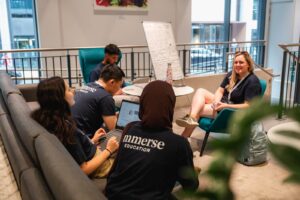
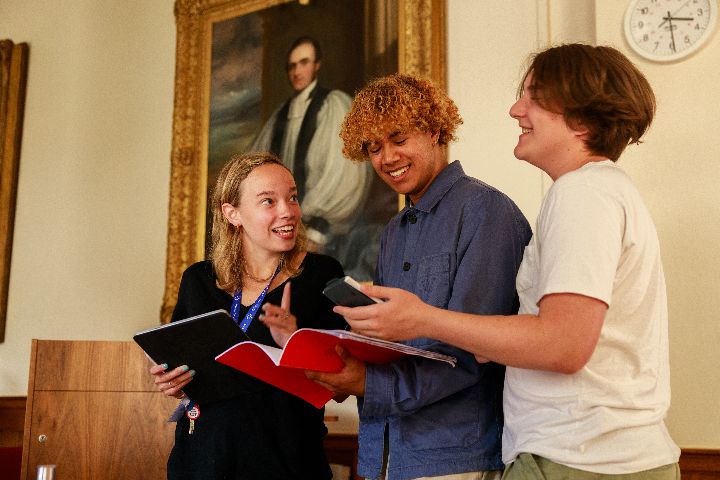
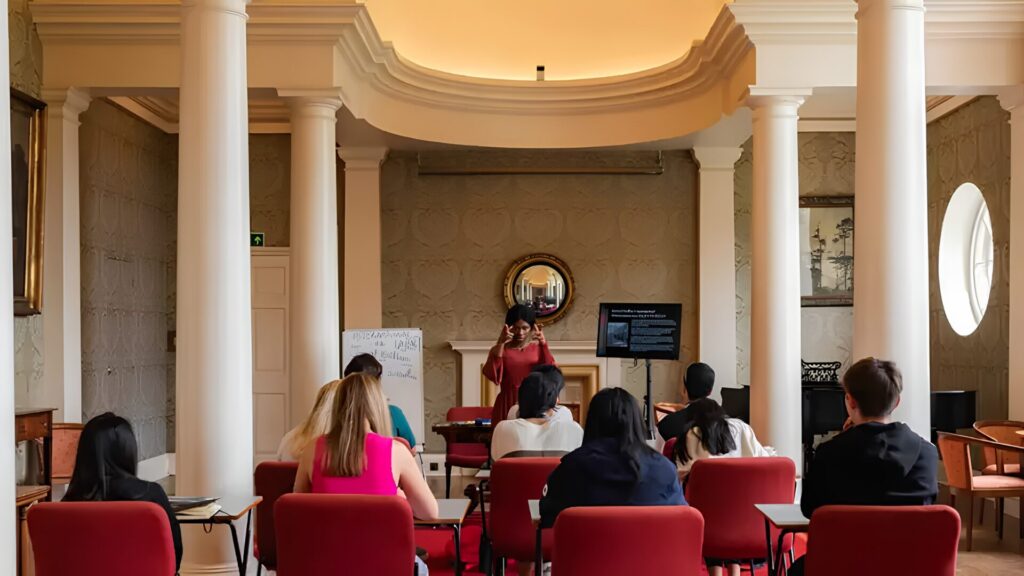
The Law Academic Insights Program provides school students with an opportunity to take undergraduate-level classes at universities around the world. Participants work with academics from universities like Oxford, Cambridge, and Harvard in classes of 4-10 students. They attend university-style lectures and 1:1 weekly sessions with their tutor. Through interactive seminars, case studies, and discussions intended to replicate the intellectual rigor of undergraduate law courses, you investigate fundamental topics of law, including contracts, criminal justice, human rights, and constitutional principles.
The program helps you develop the abilities necessary for success in legal and related academic fields by emphasizing analytical reasoning, persuasive communication, and disciplined arguments. By the end of the program, you will complete a personal project and receive written feedback and a certificate of completion. You can find more details about the application here.
Why it stands out: You’ll be taught by top faculty, work on an independent project, and live on campus, giving you a complete experience of future university life.
3. Innovate Summer Academy: Law and Global Justice
Location: University College London, UK
Cost: Varies based on program days and type. Check the exact cost here
Acceptance rate/cohort size: Not publicly specified
Dates: July 9-23, July 23rd – August 6th, August 6-20
Application Deadline: Rolling
Eligibility: Students aged 15-18 years; English level: CEFR level B2+; International students can apply
If you’re a high school student interested in law, human rights, and international affairs, you can consider the Innovate Summer Academy: Law and Global Justice, a two-week pre-university program hosted at UCL. You’ll explore legal principles, international human rights law, and the role of global governance in addressing contemporary challenges through interactive classes, debates, and mock trials.
The curriculum covers issues such as human rights violations, international conflicts, and ethical questions through a legal lens. You will attend guest lectures by legal professionals and human rights advocates and go on site visits to the Royal Courts of Justice.
Why it stands out: Beyond introducing legal fundamentals, the program connects law to real-world global issues through mock trials, guest talks, and visits to major legal institutions in London.
4. USC Pre-College: Legal Reasoning & Argumentation
Location: University of Southern California, Los Angeles, CA
Cost: Domestic – Residential: $11,570; Commuter: $8,130 | International students: $12,208 + $185 visa application fee + $350 SEVIS I-901 fee
Acceptance rate/cohort size: Selective. Specific cohort size not published
Dates: June 22nd – July 17th
Application Deadline: Domestic: May 8th; International: March 13th
Eligibility: Domestic: Students who have completed at least 9th grade by June 15th | International student eligibility can be found here
The USC Pre-College Legal Reasoning & Argumentation program introduces high school students to the ways lawyers analyze cases, construct arguments, and resolve legal questions. You’ll examine judicial opinions, learn the fundamentals of legal writing and oral advocacy, and explore how courts handle disputes when legal precedents conflict. You will attend classroom discussions on case analysis, legal reasoning, and the structure of the U.S. legal system.
The program also includes visits to federal appellate court proceedings, where you can observe real legal arguments. By the end of the course, you’ll have a portfolio of written legal work, including a predictive legal memorandum, that reflects your experience with legal analysis and argumentation.
Why it stands out: It combines courtroom observation with legal writing, helping you see how legal reasoning is applied both in class and in real judicial proceedings.
5. Wake Forest Law Institute
Location: Winston-Salem, NC – Wake Forest University Reynolda Campus
Cost: $3,500. Limited need-based scholarship funding available
Acceptance rate/cohort size: Not published
Dates: June 14-19, July 19-24
Application Deadline: The application opens on November 1st. Students accepted on a rolling basis until all programs are filled
Eligibility: Current 9th – 12th grade students. Open to international students
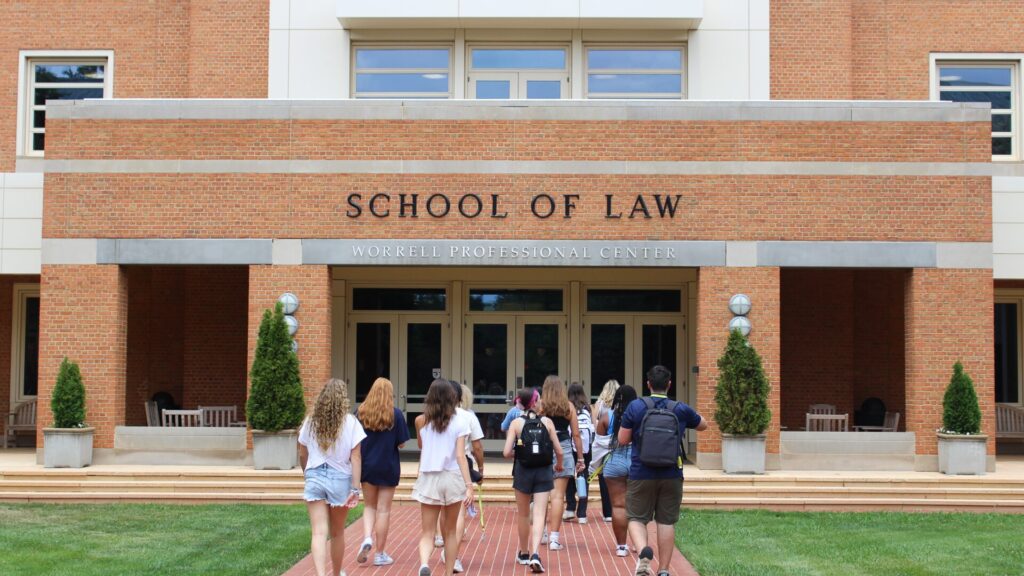
The Wake Forest Summer Immersion Law Institute is a week-long program that introduces high school students to different areas of legal practice through practical activities and discussions. You’ll explore civil and criminal litigation, family law, government law, lobbying, and transactional law, and examine how professionals approach real-world problems.
The program includes case study discussions, negotiation exercises, and opportunities to participate in a first-year law school class. You’ll also interact with law students, practicing attorneys, and guest speakers who share insights into both the profession and the realities of legal careers.
Why it stands out: It introduces you to multiple legal career paths through simulations, mentorship, and experiences modeled on law school coursework.
6. Harvard Secondary School Program
Location: Virtual or on-campus at Harvard University, Cambridge, MA
Cost: $4,180 – $15,735 + $75 application fee; financial aid available
Acceptance rate/cohort size: Selective
Dates: 4-Week: July 12th – August 8th | 7-Week: June 20th – August 8th
Application Deadline: Early Application & Priority Financial Aid Deadline: January 7th | Regular Application & Financial Aid Deadline: February 11th | Late Application Deadline: April 1st
Eligibility: Students graduating high school in the current or next two years | At least 16 years old by June 21st and under 19 years old as of July 31st; open to international students
Harvard’s Secondary School Program is suited for high school students ready to take on college-level coursework in law, justice, ethics, and public policy. You can choose from courses that examine topics such as intellectual property, business law, AI ethics, criminal justice, international law, human rights, and the laws governing war. The coursework is more demanding than a typical enrichment program, with regular readings, assignments, discussions, and assessments that mirror the expectations of a university classroom.
In law-focused classes, you may analyze legal documents, study case law, draft arguments, or explore how courts and institutions respond to complex social and political questions. Some courses also include mock trials, policy projects, oral presentations, or applied exercises that connect legal theory to real-world practice.
Why it stands out: This program lets you enroll in actual Harvard courses for college credit, making it a strong option if you want a more rigorous and sustained academic experience than a short introductory summer course.
7. IE University Pre-Law Summer Program
Location: Madrid, Spain
Cost: €5,900
Acceptance rate/cohort size: Not specified
Dates: July 5-17
Application Deadline: Not specified
Eligibility: High school students worldwide who are graduating in the next two years; must be under 18 at the start of the program
At the IE University Pre-Law Summer Program, for two weeks in the summer, you’ll be introduced to legal education that helps explore how law shapes society and addresses contemporary challenges. You’ll study core legal concepts, compare major legal systems, and examine how law intersects with technology, sustainability, and international cooperation through lectures, debates, and project-based learning.
A central theme of the program is social media and the law, with discussions on data privacy, youth protection, and disinformation. The experience concludes with a team project in which you design a legal or policy proposal and present your solution to IE Law School faculty.
Why it stands out: By centering its final project on social media regulation and digital rights, the program connects legal theory to questions that are shaping global policy debates today.
8. Bocconi Summer School: Global Law of Business and New Technologies Track
Location: Milan, Italy
Cost: €2,700 + €1,600 (for the residence for the whole period, 2 weeks)
Acceptance rate/cohort size: Not specified
Dates: July 6-17
Application Deadline: April 9th
Eligibility: Students in the third-to-last or second-to-last year of high school in Italy or abroad, who will have already turned 15 years old by the start of the program
The Bocconi Summer School for High School Students introduces you to university-level learning through interactive courses taught by faculty at one of Europe’s leading business schools. You can choose two different one-week labs from a wide selection of subjects, including economics, finance, entrepreneurship, strategy, marketing, law, politics, data science, artificial intelligence, and communication. Rather than relying only on lectures, classes use case studies, group discussions, business simulations, and projects based on real-world challenges.
You’ll also hear from guest speakers and industry professionals who share how the ideas covered in class apply to business and public policy. Throughout the program, you’ll work closely with students from around the world, giving the experience an international perspective both inside and outside the classroom.
Why it stands out: It focuses on one of the fastest-evolving areas of law, allowing you to explore how legal systems are adapting to emerging technologies and their impact on business.
9. UCL Laws Summer School (Sutton Trust)
Location: University College London, London, UK
Cost: Free (tuition, accommodation, travel, and meals all covered)
Dates: August 17-21
Acceptance rate/cohort size: Highly selective
Application Deadline: March 5th
Eligibility: Year 12 students from state schools in England and Wales (equivalent: S5 in Scotland, Year 13 in Northern Ireland)
The UCL Laws Sutton Trust Summer School is a free residential program that introduces Year 12 students in the UK to what studying law at university is actually like. Throughout the week, you’ll attend lectures, small-group seminars, and interactive workshops covering subjects such as criminal law, contract law, family law, public law, and employment law.
Beyond academic sessions, you’ll learn about the law school admissions process, legal careers, and the different routes into the legal profession. The program also takes learning outside the classroom through experiences such as visiting the UK Supreme Court and exploring UCL’s Integrated Legal Advice Clinic, giving you a firsthand look at how legal institutions and legal services operate.
Why it stands out: You will be introduced to university-level legal study and institutions such as the UK Supreme Court, giving students a firsthand look at both legal education and practice.
10. University of Toronto Youth Summer Program: Law
Location: Toronto, Canada
Cost: $1,175 CAD + $98 CAD registration fee (~$849 + $71)
Acceptance rate/cohort size: Not mentioned
Dates: Varies as per module between July 6th and August 21st
Application Deadline: Rolling basis
Eligibility: Students in grades 10-12; open to international students
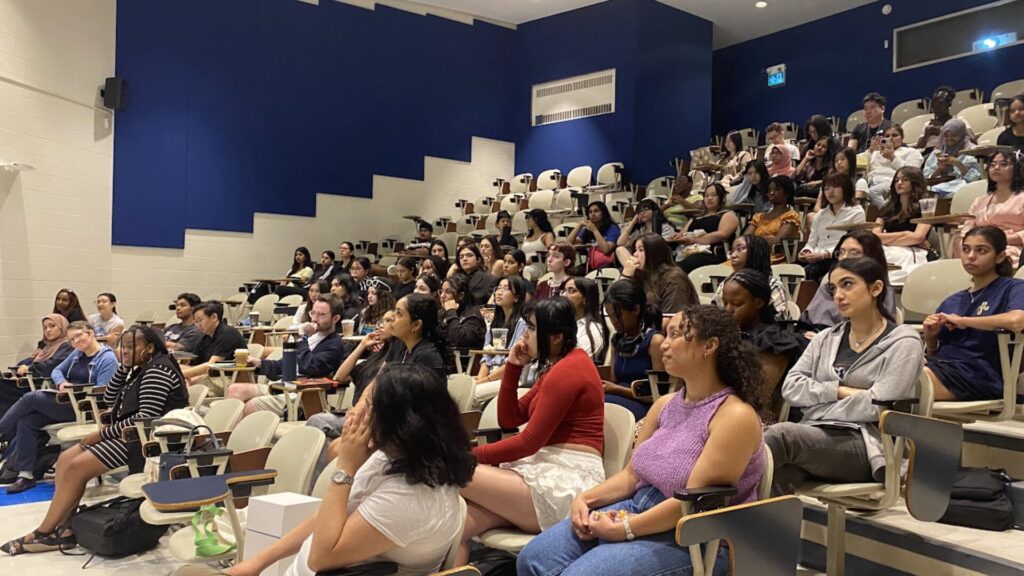
University of Toronto’s Law Youth Summer Program (Law YSP) is for high school students who want to explore legal study through university-level coursework and simulations. You can attend for one to five weeks and choose from specialized modules such as Corporate Law, Criminal Law, International Law, and Law, AI & Technology.
Depending on the module, you might negotiate business deals, prepare for a mock murder trial, debate international human rights issues, or examine legal questions around artificial intelligence and data privacy. You will participate in workshops, attend lectures, go on field trips, and engage in legal exercises led by professionals and University of Toronto law students.
Why it stands out: It allows you to dive into a specific legal field through simulations and specialized coursework, making it one of the more customizable law summer experiences available to high school students.
11. Sciences Po Paris Pre-College Programme
Location: Paris, France
Cost: 6,000 €
Acceptance rate/cohort size: Not mentioned
Dates: July 4-21
Application Deadline: April 1st – 23:59 Paris CET
Eligibility: Currently enrolled in secondary school and will remain enrolled in the Fall of the following year; must be under 18 at the time of the program; international students can apply
The Sciences Po Paris Pre-College Programme gives high school students the opportunity to study global issues through the lens of one of Europe’s leading social science universities. Over two and a half weeks, you’ll attend university-style classes taught by Sciences Po faculty and guest speakers, exploring topics in political science, international relations, economics, and other social sciences. Alongside the core curriculum, you’ll choose an elective that matches your interests. If you select International Law and Dispute Resolution, you’ll examine how international law is developed, how countries can be held accountable for legal violations, and how international courts and organizations help resolve conflicts between states.
Small-group discussions and case-based learning encourage you to analyze current global challenges from different perspectives rather than simply memorizing legal concepts. The programme concludes with academic coursework that reflects the discussion-based learning style used at Sciences Po, giving you a realistic introduction to university study in the social sciences.
Why it stands out: It places international law within a broader social science framework, helping you understand legal issues alongside the political, diplomatic, and institutional forces that shape them.
12. NSLC Law & Advocacy Youth Leadership Program
Location: Georgetown University, Washington, DC/ University of Michigan, Ann Arbor, MI
Cost: Varies based on location; check here
Acceptance rate/cohort size: Open enrollment
Dates: Varies based on location; check here
Application Deadline: Rolling deadlines
Eligibility: Students must be between the ages of 14 and 18 and have completed at least one year of high school. Students may attend NSLC through the summer following high school graduation; international students are welcome to apply
NSLC’s Law & Advocacy Program is a nine-day summer experience that introduces high school students to legal reasoning, courtroom procedure, and advocacy. You’ll step into the role of a trial attorney as you analyze evidence, question witnesses, and develop arguments for a simulated legal case.
Through workshops and debates, you’ll explore how constitutional principles, ethics, and legal analysis influence decision-making within the justice system. The program also features guest speakers from the legal field who share insights into their careers and professional experiences. Additionally, you’ll go on educational tours and field trips to observe how the legal profession operates in practice.
Why it stands out: It centers on a full trial simulation, helping you practice core advocacy skills while building and arguing a legal case from start to finish.
13. University of Glasgow Common Law Summer School (Sutton Trust)
Location: University of Glasgow, Glasgow, UK
Cost: Free (all costs covered by the Sutton Trust)
Acceptance rate/cohort size: Highly competitive
Dates: June 29th – July 3rd
Application Deadline: March 5th
Eligibility: Students in their penultimate year of secondary school from England, Wales, and Northern Ireland; must be from a state school
The University of Glasgow Common Law Summer School, delivered in partnership with the Sutton Trust, is a free residential program that introduces students to what studying law at university is really like. After an online welcome session, you’ll spend several days living on campus while attending academic classes based on Glasgow’s Common Law LLB curriculum. Rather than focusing only on legal theory, the program encourages you to think critically about legal issues through discussions and university-style learning.
You’ll also take part in an Academic Skills module that helps you develop the reading, writing, and analytical skills expected in higher education. Throughout the week, you’ll meet current Glasgow students who share their experiences of studying law and university life, giving you a clearer picture of what to expect after high school.
Why it stands out: Being built around the Common Law LLB pathway, the program helps you with a clear picture of the academic approach you would experience in a law degree.
14. ESADE Global Governance & Law Experience
Location: Barcelona, Spain
Cost: For Barcelona residents, Program fee: €3,200 + Activities and supervision: €1,427. For students from elsewhere in Spain or abroad, Total payment: €6,227
Acceptance rate/cohort size: Not specified
Dates: June 29th – July 17th
Application Deadline: May 15th
Eligibility: Pre-university students around the world; ages 15 to 17
Esade’s Global Governance & Law Experience is a summer program that introduces high school students to law, politics, international relations, and economics through an interdisciplinary lens. You’ll explore how these fields intersect and influence global decision-making through Esade’s university teaching approach.
You’ll participate in mock trials, case studies, and go on courthouse visits in small groups to understand real-world issues. The program also emphasizes public speaking, teamwork, and cross-cultural communication, since you’ll be studying alongside students from different countries and backgrounds.
Why it stands out: You will examine legal issues alongside politics, economics, and international relations, helping you understand how these disciplines interact in the real world.
15. Geneva School of Diplomacy Leadership Academy
Location: Geneva, Switzerland
Cost: CHF 7,100 (two-week full program). Application Fee: CHF 150
Acceptance rate/cohort size: Not specified
Dates: July 19-25 (one week); July 19th – August 2nd (full program)
Application Deadline: June 30th
Eligibility: Ages 16-18; international students are welcome to apply. For language requirements, check here
The Leadership Academy Geneva Edition is a one- or two-week summer program for high school students interested in diplomacy, international relations, and global leadership. You’ll examine human rights, international law, peace and conflict, and global governance through interactive classes, workshops, and visits to international organizations in Geneva.
A multi-day Summit simulation runs throughout the program, allowing you to practice negotiation, mediation, advocacy, and public speaking in realistic diplomatic scenarios. Students who attend the second week also explore emerging topics such as AI governance, migration, public health, and science diplomacy. The program concludes with a Certificate of Completion from the Geneva School of Diplomacy.
Why it stands out: It combines international law, diplomacy, and leadership training with direct exposure to Geneva’s global institutions and an extended summit simulation that runs across the program.
Frequently asked questions: Law summer schools for high school students
Are law summer schools open to international students?
Most law summer schools welcome international students, including King’s College London’s Pre-University Summer School, the Oxford Scholars Programme, and the University of Toronto’s Law Youth Summer Program. A few notable exceptions exist: the UCL Laws Summer School and the University of Glasgow Common Law Summer School are both restricted to UK state school students through the Sutton Trust. Immerse Education’s Law Summer School is also open globally to students aged 13 to 18.
How much do law summer schools cost?
Costs vary considerably by prestige and location. Free options include the UCL Laws Summer School and the University of Glasgow Common Law Summer School, both funded through the Sutton Trust. Mid-range programs like the University of Toronto’s Law Youth Summer Program cost around $1,175 CAD, while premium options like the Oxford Scholars Programme cost £6,499 and Sciences Po Paris costs €6,000. Financial aid is available for several programs, including Wake Forest’s Law Institute.
What is the difference between a general law program and a specialized international law track?
General law programs, like King’s College London’s Pre-University Summer School or Wake Forest’s Law Institute, introduce multiple areas of legal practice, including civil litigation, family law, and government law. Specialized international law tracks, like the Oxford Scholars Programme’s Law & Justice Summer School or the Innovate Summer Academy’s Law and Global Justice program, instead focus specifically on human rights, global governance, and cross-border disputes. If you’re specifically interested in international law or diplomacy, a specialized track offers deeper engagement with that subfield.
Do law summer schools include moot court or mock trial experience?
Many do, since hands-on advocacy is central to how these programs teach legal reasoning. The Oxford Scholars Programme concludes with a full moot court simulation, and the NSLC Law & Advocacy Youth Leadership Program centers entirely on a simulated trial where you act as the attorney. Other programs, like USC’s Legal Reasoning & Argumentation course, instead emphasize legal writing and observing real appellate proceedings rather than simulated advocacy.
How selective are law summer schools?
Selectivity ranges considerably. The UCL Laws Summer School and University of Glasgow Common Law Summer School are both highly competitive despite being free, since they’re funded specifically for UK widening-participation students. Other programs, like the University of Toronto’s Law Youth Summer Program or Bocconi’s Law track, have more open enrollment. Regardless of selectivity, meeting specific academic and background criteria, particularly for the Sutton Trust programs, matters significantly.
Is Immerse Education a good option for exploring law before college?
Immerse Education’s Law Summer School is a strong choice if you want structured exposure to constitutional law, criminal justice, and contract law without needing UK state school status or US residency. The two week program, spanning Oxford, Cambridge, and London, includes moot court exercises and case-based discussions taught by legal professionals, with an average of just seven participants per class. You’ll build advocacy, research, and analytical skills relevant to legal study, with financial aid available through the program’s bursary scheme.
Start Building Your Future in Law Today
Before choosing law as a degree, experience how legal thinking works beyond textbooks, from questioning evidence to weighing competing interpretations and consequences.
These 15 law summer schools for high school students provide that perspective through courtroom simulations, case analysis, debates, research, and direct academic guidance.
Rather than choosing by reputation alone, focus on the teaching style, legal topics, practical work, and level of support each programme offers.
Ready to turn curiosity into a stronger university plan? Explore our University Preparation blogs for practical advice on applications, personal statements, interviews, study skills, and choosing the right academic path with confidence today.