
 Русский (RU)
 Українська (UK)
 Türkçe (TR)
 Italiano (IT)
 Français (FR)
 Português (PT)
 中文 (中国) (ZH)
 Español (ES)
 日本語 (JA)
 ไทย (TH)
 Deutsch (DE)
 Ελληνικά (EL)
 Polski (PL)
 Bahasa Indonesia (ID)
 Nederlands (NL)
 العربية (AR)
 한국어 (KO)

If you are a high school student considering a future in biochemistry, a structured internship experience can be a solid next step. Internships let you explore biochemistry beyond the classroom, helping you dive into experiments, lab techniques, and collaborative research that demonstrate how professionals study living organisms at a molecular level and apply the knowledge to real-world challenges.
Internships in biochemistry place you in labs and professional scientific settings to test your interests in the field. Participating in these programs can significantly deepen your understanding of the subject while helping you develop advanced skills such as titration, spectroscopy, and organic synthesis. You may also familiarize yourself with lab safety and instrumentation, building a solid foundation for your academic journey. Through these hands-on experiences, you will gain insight into post-secondary academics and career paths available in the industry.
How do you choose the right biochemistry internships for high school students?
Biochemistry internships typically include research experiences, industrial, pharmaceutical, or manufacturing-focused STEM placements, or data analysis opportunities. Many of these programs are designed to ensure you get technical experience while exploring career options in science. The right option for you depends on your interests and experience.
The best opportunities typically combine real projects, mentorship from faculty or professionals, and peer collaboration, offering you hands-on exposure to real biochemistry workflows. To help you choose, we have put together a list of 15 biochemistry internships for high school students. I have focused on factors like the credibility of the host organization, opportunities to network, and the quality and extent of hands-on exposure to ensure you find a meaningful opportunity to explore biochemistry.
For additional opportunities, consider the online biology program and the online chemistry program.
Key takeaways
- ACS Project SEED pays a $4,000 stipend over eight to 10 weeks but restricts eligibility to students whose family income doesn’t exceed 300% of the Federal Poverty Guidelines.
- Immerse Education’s Career Insights Programme spans seven locations, including Cambridge, London, and Tokyo, with an average of seven students per class open to students worldwide aged 15 to 18.
- Memorial Sloan Kettering’s Summer Student Program has approximately a 2 percent acceptance rate, admitting around 20 students who must live within 25 miles of NYC with a minimum 3.5 GPA in science.
- Stony Brook’s Simons Summer Research Program has an acceptance rate below 5 percent and charges $2,450 in housing costs for residential students, though tuition itself is free.
- The Broad Summer Scholars Program pays a $3,600 stipend plus partial transportation reimbursement, but is restricted to Massachusetts residents who can commute to the Broad Institute.
- The Joint BioEnergy Institute’s iCLEM program pays a $3,000 stipend and specifically targets students from low-income households in Alameda, Contra Costa, or San Francisco County.
- ASSIP at George Mason University costs $25 to apply plus $1,299 in tuition for three course credits, though fee waivers are available for eligible students.
- Nearly every biochemistry internship in this list restricts eligibility to US citizens or specific regional residents, with Immerse Education’s Career Insights Programme standing out as the primary option open to international students.
15 Biochemistry Internships for High School Students
1. American Chemical Society Project SEED
Location: Multiple participating institutions across the U.S.
Stipend: $4,000
Acceptance rate/cohort size: Competitive
Dates: 8- to 10-week summer experience; dates vary by institution
Application deadline: April 6th
Eligibility: High school students in the U.S. who are under 18 and have completed at least one year of high school chemistry; applicants’ annual family income must not exceed 300% of the Federal Poverty Guidelines
ACS Project SEED is one of the biochemistry internships for high school students that connects participants with research experiences at universities, labs, and industrial research sites. During the programme, you will work with a scientist mentor on chemistry and biochemistry projects while gaining exposure to lab techniques, scientific problem-solving, and STEM career paths
In addition to research work, Project SEED also offers professional development opportunities through workshops, webinars, and college-prep sessions focused on science communication, career exploration, and lab readiness. You may also get to return to the program next year to continue engaging in biochemistry research.
Why it stands out: It lets you contribute to real biochemistry research, connect with scientists, and earn a stipend over the summer!
2. Immerse Education’s Chemistry Summer School
Location: Oxford, and Cambridge
Cost: Varies; summer school scholarship available through our bursary programme
Acceptance rate/Cohort size: Selective; an average of 7 participants per class
Application deadline: Multiple summer cohorts; rolling admissions
Dates: Two weeks during the summer
Eligibility: Students, ages 16-18; open to international students
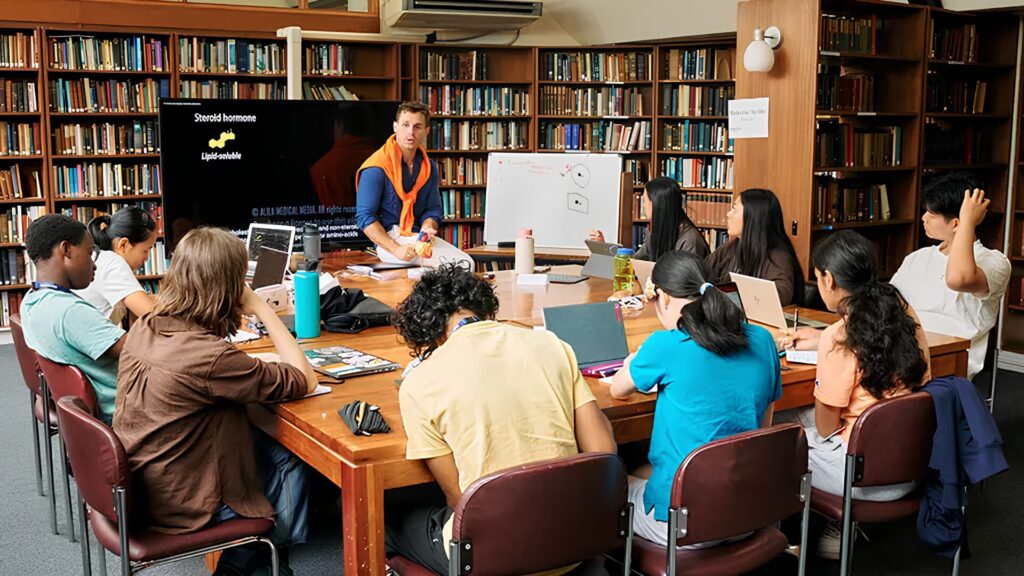
Immerse Education’s programs let high school students experience university life firsthand. You will live on campus and study in small groups of 7–10, learning from tutors from top universities like Oxford and Cambridge. In the chemistry track, you will study physical chemistry, organic chemistry, and biochemistry to build a solid foundation for college.
Through theoretical analysis, lab experiments, and group projects, you will develop scientific skills, analytical thinking, and problem-solving abilities essential for STEM education. By the end of the program, you will complete a personal project, get written feedback, and receive a certificate of completion. You can find more details about the application here.
Why it stands out: You will study under expert academics, work with a university student mentor, complete a project you can show in future applications, and experience real university college life .
3. Science and Engineering Apprenticeship Program (SEAP)
Location: Various labs across the U.S.
Stipend: $4,000 (new participants) or $4,500 (returning students)
Acceptance rate/cohort size: ~300 students/cohort
Dates: Eight weeks in the summer (dates vary by location); SEAP can run for up to 10 weeks in some cases
Application deadline: November 1st
Eligibility: High school students, ages 16 and up, who are U.S citizens and have completed at least grade 9
SEAP places high school students into professional research environments alongside Department of the Navy scientists and engineers to engage in lab work. Depending on your placement, you may explore areas such as biochemistry, synthetic biology, materials science, or computational research. You will spend time collecting and assessing information, documenting scientific findings, and contributing to active research projects.
Participation in lab meetings and seminars will help you learn about the research being planned or conducted in naval labs. The experience is designed to help you observe how professional research teams tackle real problems. You will also get to connect with and shadow researchers over the course of the program.
Why it stands out: You will explore the work of naval labs and contribute to ongoing research efforts while earning a stipend and building a professional network.
4. NIST’s Summer High School Internship Program (SHIP)
Location: National Institute of Standards and Technology (NIST) campuses in Boulder, CO, and Gaithersburg, MD, U.S.
Stipend: None
Acceptance rate: 4% (Boulder, CO) | 10.6% (Gaithersburg, MD)
Dates: June 22nd – August 7th
Application deadline: January 26th
Eligibility: U.S. citizens who are current high school juniors or seniors with a minimum 3.0 GPA, and living within 50 miles of either of the NIST campuses
Among the most selective biochemistry internships for high school students, SHIP places participants in research labs at the National Institute of Standards and Technology, a non-regulatory federal agency that conducts measurement science research. You will work on a defined project under the mentorship of a NIST scientist, applying techniques and methods relevant to the laboratory’s work. Placements span biochemistry, environmental science, materials science, chemistry, and engineering
Over seven weeks, you will learn how to collect and analyze scientific data, work with professional research instruments, and explore laboratory environments. At the end of SHIP, you will present your research work in the form of a poster.
Why it stands out: It offers hands-on research experience under the mentorship of leading scientists and the opportunity to explore state-of-the-art laboratories.
5. Memorial Sloan Kettering Summer Student Program (SSP)
Location: Memorial Sloan Kettering Cancer Center main campus, New York, NY
Cost/Stipend: No cost; $1,200 stipend
Acceptance rate/cohort size: ~20 students/year; ~2% acceptance rate
Dates: June 29th – August 21st
Application deadline: February 6th
Eligibility: High school juniors living within 25 miles of NYC with a minimum 3.5 GPA in science who are at least 14 years old; U.S. work authorization is required
SSP lets you develop a research project within a Memorial Sloan Kettering research lab under a mentor’s guidance in the biosciences, including chemistry and chemical biology. Your daily schedule will include lab meetings, collaboration with researchers, and exposure to real research workflows.
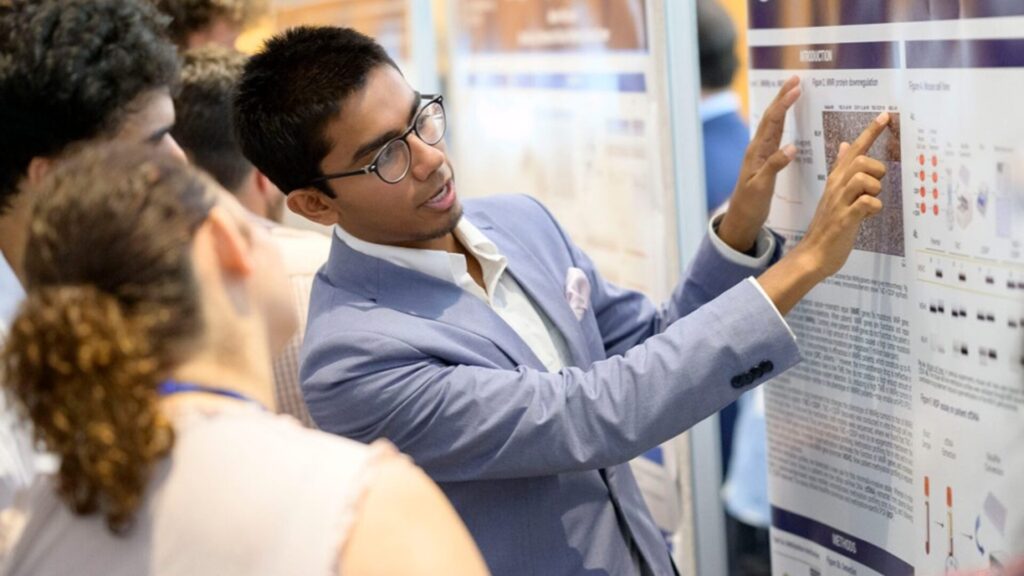
Beyond the lab, you will learn about translational medicine through workshops and sessions that focus on how discoveries move from research to patient care. The program ends with a closing event, where you will present your work in the form of a research poster.
Why it stands out: It lets you engage in hands-on research alongside cancer researchers within a lab environment and complete a project while earning a stipend.
6. Scripps Research High School Summer Internship Program
Location: Scripps Research Institute, La Jolla, CA, U.S.
Stipend: $5,040
Acceptance rate/cohort size: Not specified
Dates: June 22nd – August 7th
Application deadline: March 22nd
Eligibility: High school students with a GPA of 3.0 or higher who are at least 16 years of age and have completed one year of high school at one of the partner schools; applicants must be legally authorized to work in the U.S.
Hosted in collaboration with the REACH program, this internship introduces you to real issues in biomedical research through hands-on laboratory experience and mentorship, with a focus on increasing representation in the biological and chemical sciences. Before the internship begins, you will attend a virtual welcome meeting in May, followed by an unpaid, three-day pre-internship boot camp designed to prepare you for the research experience ahead. During the seven-week internship, you will conduct hands-on research full-time under the guidance of a scientist mentor in their lab.
Throughout the summer, you will also attend weekly professional development workshops and scientific seminars covering current research and career exploration. The program concludes with a campus-wide Summer Intern Symposium, where you will present your research findings alongside other student interns.
Why it stands out: It combines rigorous, hands-on laboratory research with a comprehensive training boot camp and culminates in a symposium, offering you a chance to contribute to and present real research.
7. Stony Brook University’s Simons Summer Research Program
Location: Stony Brook University, Stony Brook, NY
Cost/Stipend: No tuition, but $2,450 housing costs apply for residential students; a stipend is provided
Acceptance rate: <5%
Dates: June 29th – August 7th
Application deadline: February 5th
Eligibility: High school juniors, ages 16 and up, who are U.S. citizens/permanent residents
The Simons Summer Research Program is a selective program for high school students interested in contributing to research in science, math, or engineering. You will work alongside Stony Brook faculty mentors within research groups on real research projects in university laboratories. Placements span STEM areas, including biochemistry. The project work may involve lab work, running simulations, or analyzing datasets, depending on the focus area.
The schedule also includes lectures and workshops that will introduce you to broader STEM concepts and research techniques. Your work will conclude with the completion of a written abstract and a presentation at a research symposium.
Why it stands out: You will conduct biochemistry research on a university campus within an active research group, gaining a glimpse into the life of researchers and earning a stipend in the process.
8. Texas Tech University’s Anson L. Clark Scholars Program
Location: Texas Tech University, Lubbock, TX
Cost/Stipend: $25 application fee; $750 stipend
Acceptance rate/cohort size: Selective; 12 students/year
Dates: June 21st – August 6th
Application deadline: February 16th
Eligibility: High school juniors and seniors (students graduating from high school in the program year or the next) who are at least 17 by the start date and are U.S. citizens/permanent residents
The Anson L. Clark Scholars Program is a seven-week residential research experience hosted by Texas Tech University. You will work with a faculty mentor and spend the summer conducting independent research in a field of interest. You can highlight your preference for a biochemistry-focused research placement within the broader chemistry area typically offered by the program.
You will have access to close mentorship throughout the program. The program includes field trips, weekly seminars, and organized activities that place individual research projects in a broader scholarly context. Your experience will end with a submission of a research report.
Why it stands out: You will join a small cohort of peers and experienced faculty mentors to engage in real research on a university campus.
9. Broad Summer Scholars Program (BSSP)
Location: Broad Institute, Cambridge, MA, U.S.
Stipend: $3,600 + partial transportation reimbursement available
Acceptance rate/cohort size: Selective
Dates: June 29th – August 7th
Application deadline: January 21st
Eligibility: Rising high school seniors attending school in Massachusetts who will be able to commute to the Broad Institute; applicants must have earned a B or better grade in science, and should have U.S. citizenship/work authorization/permanent residency
BSSP is a six-week biomedical research opportunity for high school students. You will work closely with a scientist, contributing to a real project in areas such as chemical biology, genomics, biochemistry, infectious diseases, or computational biology, while learning research-specific techniques.
Weekly check-ins with a tutor, training sessions, and guidance on developing a research poster will help you learn how to communicate scientific findings. Additionally, you will attend workshops, talks, and a college fair during the program. The program also provides opportunities such as group sessions and social events to connect with the rest of the cohort.
Why it stands out: It combines lab work with personalized mentorship, letting you explore the full research process and earn a stipend over six weeks.
10. Roswell Park Comprehensive Cancer Center Summer Research Experience in Cancer (SURE-CAN)
Location: Roswell Park, Buffalo, NY, U.S.
Cost/Stipend: Free + limited subsistence allowances available
Acceptance rate/cohort size: Not specified
Dates: June 26th – August 7th
Application deadline: Typically spring; TBA
Eligibility: High school juniors who are U.S. citizens or permanent residents, at least 15 years old by the start date, and residents enrolled in school districts in Niagara, Cattaraugus, Erie, or Chautauqua County, NY
SURE-CAN is a six-week research program at Roswell Park that lets you attend lectures, group discussions, and hands-on “dry” or “wet: lab research, learning the fundamentals of cancer biology, imaging, genomics, and emerging technologies like AI methods. You can indicate a preference for biochemistry-focused placement. You will also explore basic statistics and research ethics, along with how math, physics, and engineering integrate with biology to accelerate cancer research.
Beyond the core lab experience, you will attend seminars and professional development sessions on scientific communication and career paths in the health sciences. The program will conclude with a research symposium where you will present a formal scientific poster on your findings.
Why it stands out: It offers direct mentorship from faculty at an NCI-designated cancer center, providing access to specialized, cancer-focused research that’s rare for high school programs.
11. Joint BioEnergy Institute’s Summer Science Intensive: iCLEM
Location: Joint BioEnergy Institute (JBEI), Emeryville, CA, U.S.
Stipend: $3,000
Acceptance rate/cohort size: Not specified
Dates: Virtual prep week: June 8-12 + In-person research: June 20th – August 1st
Application deadline: TBA
Eligibility: High school sophomores or juniors who are at least 16 by June 15th, live in Alameda, Contra Costa, or San Francisco County, and are U.S. citizens or permanent residents; applicants must come from low-income households (thresholds vary by county, based on HUD’s definition of 80% or less of the area median income), have a GPA of at least 2.5, and have passed Algebra 1 and Biology
Through its iCLEM (Introductory College Level Experience in Microbiology) program, JBEI offers paid research intensives to local high schoolers interested in biotechnology, biochemistry, microbiology, and biomanufacturing. Following a mostly virtual prep week covering required trainings and orientations, you will spend six weeks working in JBEI’s labs in Emeryville, mentored by researchers and UC undergraduates on a hands-on research project. Over the course of the program, you will build foundational knowledge in biochemistry, microbiology, molecular biology, and synthetic biology.
The program will also offer sessions covering the college application process, including writing and revising a personal statement and learning about admissions and financial aid. You will additionally have opportunities to explore STEM careers through conversations with professionals and visits to local biotechnology and pharmaceutical companies, while also building your skills in communicating scientific research.
Why it stands out: It combines virtual and in-person laboratory experiences, letting you work on collaborative research projects within professional labs and earn a stipend for contributions.
12. Fred Hutch Summer High School Internship Program
Location: Fred Hutchinson Cancer Center, Seattle, WA, U.S.
Cost/Stipend: No fees; financial award provided
Acceptance rate/cohort size: Selective
Dates: June 22nd – August 14th
Application deadline: March 13th
Eligibility: High school students entering 12th grade who are at least 16 and residents of the Greater Seattle area
SHIP combines training with research, letting you explore lab and research fundamentals before stepping into a research internship. In the first two weeks, you will undergo training in core techniques such as PCR, pipetting, and sterile techniques, and learn key biological concepts. Then, you will join a research group, where you will work with a mentor on ongoing biomedical research projects, contributing to real lab activities.
You can indicate your preference for a biochemistry placement. The program will also run career-focused workshops, weekly seminars, and discussions on topics such as ethics and data science, giving you a broader view of scientific research. The summer program will wrap up with a presentation where you will share your research experiences with peers and mentors.
Why it stands out: You will work with scientists at a leading cancer research facility, developing advanced research skills and gaining exposure to techniques in biochemistry.
13. Stanford Institutes of Medicine Summer Research Program (SIMR)
Location: Stanford University, Stanford, CA
Cost/Stipend: No fees for students with family incomes under $80,000; $50 application fee for others (waivers available). Limited need-based stipends are available.
Acceptance rate/cohort size: Highly selective; ~50 students
Dates: June 8th – July 30th
Application deadline: February 21st
Eligibility: High school juniors and seniors, ages 16 and up, who are U.S. citizens/permanent residents; preference given to Bay Area students
SIMR stands out among the many biochemistry internships for high school students by allowing you to engage in biomedical investigations alongside scientists at Stanford University. Over eight weeks, you will work within a Stanford lab or institute under a dedicated mentor on a project in fields such as cancer biology, immunology, bioengineering, or neuroscience, allowing you to explore applications of biochemistry.
Your days will be split between research work and lectures, helping you connect your hands-on experiences with the broader scientific concepts. The experience will conclude with a poster presentation, offering you exposure to academic research communication.
Why it stands out: You will collaborate directly with Stanford faculty on biomedical research projects, gaining exposure to university-level research and science communication.
14. Aspiring Scientists Summer Internship Program (ASSIP) @ George Mason University
Location: Online/Hybrid or George Mason University, Fairfax, VA, U.S.
Cost: $25 application fee + $1,299 tuition for three course credits; fee waivers available
Acceptance rate/cohort size: Not publicly disclosed
Dates: June 18th – August 12th
Application deadline: February 15th
Eligibility: Students worldwide who are current high schoolers or undergraduate students, at least 15 years old for remote and computer lab internships or 16 years old for wet-lab internships
ASSIP immerses students in hands-on research collaboration with faculty researchers across STEM disciplines, including biochemistry. Over the course of eight weeks, you will work remotely or on campus on a project focused on inorganic solid-state chemistry, drug discovery, biomaterials, or nanomaterials, depending on your assigned mentor’s research focus.
You will engage in discussions with STEM professionals, exploring career paths in your field of interest. You will also sharpen your scientific writing and communication skills while contributing to significant projects that may lead to publications in scientific journals and presentations at professional conferences.
Why it stands out: You will collaborate directly with faculty researchers and work on a project that can lead to cited publications in reputable scientific journals and presentations at major conferences.
15. University of Chicago’s After School Matters STEM Lab Internship
Location: Pritzker School of Molecular Engineering at the University of Chicago, IL
Stipend: Paid
Acceptance rate/cohort size: Selective
Dates: Six weeks in the summer
Application deadline: TBA; applications open in March
Eligibility: Students, ages 16 and up, attending public high schools in Chicago
The After School Matters STEM Lab Internship at the University of Chicago is a six-week program that introduces students to university-level research. The experience begins with a one-week bootcamp focused on lab safety, research basics, and scientific reasoning. You will then spend 20 hours each week working in research labs associated with the Pritzker School of Molecular Engineering.
You can request a biochemistry research placement while applying. The program will also offer training in science communication and mentorship. At the end, you will present your work and receive support focused on college preparation.
Why it stands out: You will work with researchers and peers on real-world challenges through research within university labs.
Frequently asked questions: Biochemistry internships for high school students
Are biochemistry internships for high school students open to international students?
Almost none of the US-based biochemistry internships in this list are open to international students, since programs like SEAP, NIST’s SHIP, and Memorial Sloan Kettering’s SSP all require US citizenship or work authorization. Immerse Education’s Career Insights Programme is the clear exception, open to students worldwide aged 15 to 18. If you’re an international student hoping for biochemistry exposure, Immerse Education’s program is likely your strongest option among those listed here.
Do biochemistry internships pay a stipend?
Many do, and amounts vary considerably by program. Scripps Research pays $5,040, ACS Project SEED pays $4,000, and the Broad Summer Scholars Program pays $3,600. Some programs, like NIST’s SHIP, are unpaid but free to attend, since they’re structured around research access rather than paid employment. Always confirm a program’s stipend status directly, since paid and unpaid research opportunities are often mixed together in general searches.
How selective are biochemistry internships for high school students?
Selectivity ranges from extremely competitive to more accessible. Memorial Sloan Kettering’s SSP has approximately a 2 percent acceptance rate, and the Anson L. Clark Scholars Program admits just 12 students annually. Stony Brook’s Simons Summer Research Program has an acceptance rate below 5 percent as well. Regardless of selectivity, meeting specific eligibility details, like income thresholds or regional residency, matters just as much as the strength of your application.
Do you need prior lab experience for a biochemistry internship?
It depends on the program. Scripps Research’s internship includes a pre-internship boot camp specifically to prepare students without prior experience, and Fred Hutch’s SHIP begins with two weeks of foundational training in techniques like PCR and pipetting. Other programs, like the Anson L. Clark Scholars Program, expect you to work fairly independently once matched with a faculty mentor. Check each program’s eligibility section closely, since expectations range from beginner-friendly to fairly advanced.
What is the difference between a general biochemistry internship and a cancer-focused research program?
General biochemistry internships, like SEAP or NIST’s SHIP, place you in a lab working on projects across multiple scientific disciplines, with biochemistry as one possible focus area. Cancer-focused programs, like Memorial Sloan Kettering’s SSP or SURE-CAN at Roswell Park, instead center your research specifically around cancer biology, genomics, or oncology-related biochemistry. If you already know you’re interested in oncology, a cancer-focused program offers more targeted mentorship in that specific area.
Is Immerse Education a good option for exploring biochemistry before college?
Immerse Education’s Career Insights Programme is a strong choice if you want structured STEM career exposure without needing US citizenship or work authorization. The two week program includes project-based learning with established companies, interactive workshops, and site visits, alongside weekly 1:1 career coaching and personalized resume feedback. You’ll present your findings to industry experts at the end of the program and receive a certificate, giving you concrete material for future applications regardless of where you live.
From Biochemistry Interest to Academic Confidence
Step into a laboratory, follow a real research question, and discover whether biochemistry feels like the right academic path before fully committing to university study
The 15 biochemistry internships for high school students in this article turn curiosity into practical experience through experiments, mentorship, scientific communication, and direct exposure to professional research environments
Focus on programmes that offer meaningful responsibilities, supportive mentors, suitable eligibility requirements, and projects aligned with the scientific questions you genuinely want to explore further
Ready to strengthen your academic profile? Explore our University Preparation blogs for advice on applications, personal statements, subject choices, interviews, and confident university planning today