15 Medical Research Opportunities for High School Students
When you’re in high school, medicine can feel like a massive field. You might be fascinated by the discipline, but apprehensive about what it would look like outside of textbooks. Despite doing well in classes, you might wonder what medical work looks like in professional settings. Medical research internships for high school students can help you understand what working in medicine involves and decide whether it is truly the right path for you.
Imagine spending your summer in research labs, working alongside scientists and medical professionals. Picture analyzing samples, learning research techniques, or contributing to rapidly developing fields like genetics or neuroscience. Medical research internships allow you to go a step further from simply reading about discoveries to working in environments where those discoveries are made.
What kinds of medical research internships for high school students are available?
It’s true, these opportunities can feel intimidating or hard to access. Some internships offer limited responsibilities or don’t provide enough mentorship to be meaningful. That’s why it’s important to get the right guidance, so you can identify the programs that are best for you.
Across hospitals, universities, and research institutes, you can find internships that expose you to everything from basic lab skills to advanced research methods. You’ll gain insights into multiple medical fields, observe how teams collaborate on scientific questions, and learn directly from experts.
There are opportunities with differing levels of academic depth. So, irrespective of whether you’re a beginner or looking for more advanced work, there are programs that will suit your interests.
While you’ll need to commit once the internships start, we’ll make your task easier for now. To help you decide, we’ve curated a list of 15 Medical Research Internships for High School Students. They’ve been chosen for their mentorship, hands-on learning, and academic rigor.



15 Medical Research Internships For High School Students
1. Stanford Institutes of Medicine Summer Research (SIMR) Program
Location: Stanford School of Medicine, Stanford, CA
Cost: All students receive a minimum stipend of $500; students from underrepresented groups will receive at least $1,500
Dates: June 8th to July 30th
Application Deadline: February 21st
Eligibility: High school juniors and seniors at least 16 years old, who are U.S. citizens or permanent residents
At SIMR, you spend eight weeks working directly in a Stanford School of Medicine research lab, where you learn how biomedical scientists design experiments, analyze data, and translate findings into a clinical context. You work alongside graduate students and postdocs, giving you a close view of how research teams operate at a major academic medical centre.
Depending on your lab placement, you might explore stem cell biology, cancer genetics, immunology, neurobiology, or bioengineering approaches to medicine. You also attend weekly faculty talks and professional development sessions that introduce you to pathways in academic medicine and translational research. By participating in SIMR, you gain experience with real-world lab techniques and develop a clearer understanding of what long-term research training in medicine entails.
Why it stands out: Its deep connections to Silicon Valley make it easier to transition to interdisciplinary courses such as biomedical entrepreneurship or AI-driven health research.
2. Immerse Education’s Medicine Summer School
Location: Barnard College, Columbia University, New York
Cost: Varies; summer school scholarship available through our bursary programme
Application Deadline: Multiple summer cohorts with rolling admissions
Program Dates: 28th Jun – 11th Jul, 12th Jul – 25th Jul
Eligibility: High school students aged 15-18 from across the world
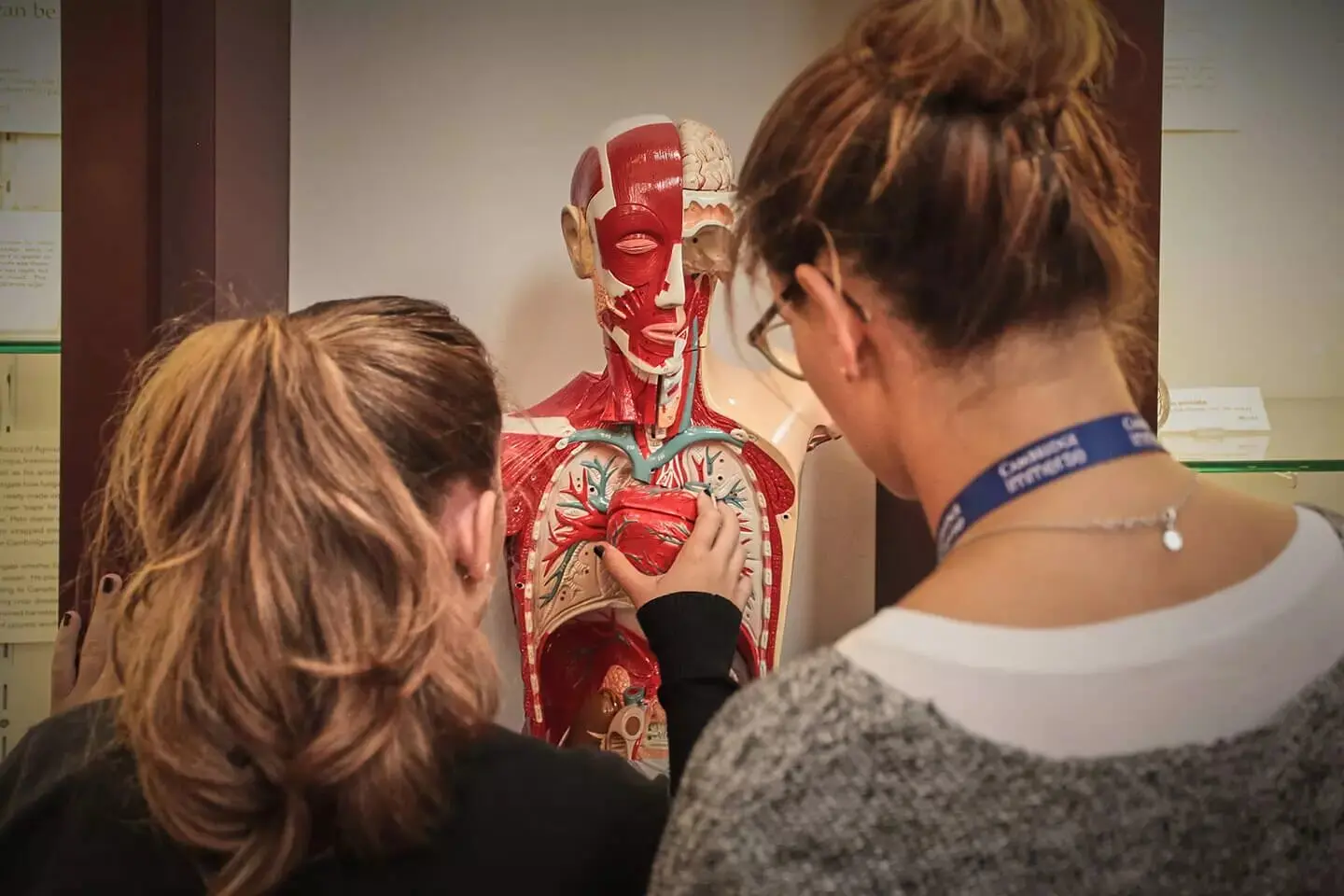
The Immerse Education Medicine Summer School in New York lets high school students explore the world of healthcare while living on campus at Barnard College, Columbia University. You will study in small groups of around 7–10 students and learn from experienced tutors through interactive workshops, case-based learning, and real-world simulations. You will be introduced to medical concepts like patient care, clinical reasoning, and ethical decision-making.
You may find yourself analyzing clinical case studies, visiting research facilities or hospitals, and developing your communication and critical thinking skills in settings that mirror real medical environments. By the end of the programme, you’ll complete a personal project, receive written feedback from your tutors, and earn a certificate of completion.
Why it stands out: It offers insight into clinical reasoning and biomedical research through expert-led seminars and case-based learning, helping you understand how medicine and healthcare operate in real-world settings.
3. Child Health Research Internship – Children’s Hospital Colorado
Location: Anschutz Medical Campus, Aurora, CO
Cost: None, $4,400 stipend
Dates: June 1st – July 31st
Application Deadline: February 1st
Eligibility: Colorado high school seniors over 18
In this program, you join research teams focused on pediatric health topics, including respiratory medicine, developmental science, oncology, and population health. You learn how clinicians and researchers design studies involving children and families, and you gain hands-on experience with basic lab techniques or data analysis, depending on your assigned project. Mentors guide you through scientific reading and help you understand how research findings shape clinical practice.
You also observe the collaborative process behind pediatric research, including ethics discussions and multidisciplinary team meetings. By participating, you develop a stronger sense of how clinical research operates in a hospital setting and how pediatric medicine differs from general biomedical research.
Why it stands out: It lets you observe how clinical research and pediatric care intersect, helping you understand how studies translate into patient outcomes.
4. Summer Internship Program – National Heart, Lung, and Blood Institute
Location: Bethesda, Maryland, and Framingham, MA
Cost: None. A stipend of $5,400 is paid in two installments
Dates: May-August
Application Deadline: February 19th
Eligibility: Open to U.S. high school students
As one of the most structured medical research internships for high school students, this programme places you in a National Institutes of Health (NIH) laboratory, where you contribute to investigations in cardiovascular, pulmonary, or blood-related biology. You work closely with scientists who introduce you to experimental design, molecular techniques, and data interpretation used in cutting-edge biomedical research.
Seminars and poster sessions help you practise communicating scientific ideas clearly and professionally. You also receive mentorship that explains graduate pathways and the structure of research careers within the NIH. Through daily lab activities, you gain familiarity with the pace and precision required in biomedical science and learn how large research institutes approach major health challenges.
Why it stands out: You’ll work alongside federally funded researchers, gaining firsthand experience with biomedical experiments and public-health–driven science.
5. Indiana University Simon Cancer Future Scientist Program
Location: IU School of Medicine’s downtown Indianapolis campus, IN
Cost: None
Dates: May 25th – July 31st
Application Deadline: February 28th
Eligibility: Open to High school juniors from Marion County public schools
This program places you within cancer research labs where you investigate cellular mechanisms, tumour biology, or translational approaches to treatment. You work with IU researchers who teach you fundamental techniques such as microscopy, cell culture, and molecular analysis. The program includes seminars on oncology, ethics, and career exploration that introduce you to the scientific and clinical dimensions of cancer research.
Your mentors guide you through interpreting scientific literature and understanding how individual experiments contribute to broader therapeutic goals. This experience helps you understand the depth of training required for careers in cancer research and biomedical science.
Why it stands out: You’ll learn how cancer research is conducted in modern labs, giving you insight into molecular biology, oncology, and data analysis.
6. UT Southwestern Medical Center – High School Student Internship
Location: Virtual
Cost: None
Dates: 2 weeks in June
Application Deadline: Early February
Eligibility: Rising 10th, 11th, and 12th-grade high school students
At UT Southwestern, you join a research team working in fields such as genetics, neuroscience, biochemistry, or clinical research. You gain hands-on experience with laboratory protocols while learning how large academic medical centres conduct basic and translational research. Daily interactions with scientists and trainees help you understand how experiments are planned, executed, and refined.
You also attend seminars that introduce you to medical careers and the academic environment of a major research institution. Through this internship, you develop practical research skills and a deeper appreciation for how scientific discoveries move toward clinical applications.
Why it stands out: It offers a window into mental-health careers, helping you understand how clinicians and researchers study behavior, diagnosis, and treatment.
7. Magee-Womens Research Institute: High School Summer Internship Program
Location: MWRI or Magee-Womens Hospital, Pittsburgh, PA
Cost: None, $1,800 stipend
Dates: June 15th – July 29th
Application Deadline: February 7th
Eligibility: Current high school sophomores or juniors; over 16 years old by program start; have primary residence in the local southwest Pennsylvania region (Counties: Greene, Fayette, Somerset, Westmoreland, Allegheny, Washington, Beaver, Lawrence, Mercer, Butler, Armstrong, Indiana, and Cambria)
Through this program, you get acquainted with studies primarily about female health, reproductive biology, and fetal development. You follow the steps of researchers, get involved in lab activities, and see how groups study the biological processes that influence maternal and infant health. Your understanding is deepened through seminars and discussions, where you learn how research outcomes inform clinical practices and public health measures.
By the end of the program, you will have developed a broader perspective on how biomedical research directly impacts patient care. You also gain experience with scientific reading and data interpretation while learning from mentors committed to advancing women’s health research.
Why it stands out: You’ll work on women’s health research projects, strengthening your understanding of fields like reproductive biology and maternal-fetal medicine.
8. Mayo Clinic’s Science Program for the Advancement of Research Knowledge (SPARK)
Location: Mayo Clinic, Jacksonville, FL
Cost: Free
Dates: June 2nd – December 3rd
Application Deadline: December 31st
Eligibility: High school juniors and seniors enrolled in Duval or St. Johns counties in Florida with a minimum 3.5 unweighted GPA
SPARK pairs you with a Mayo Clinic research mentor who guides you through a summer-long project in biomedical science. You gain experience with laboratory techniques, learn how to structure experiments, and participate in discussions about data analysis and scientific communication. Weekly educational sessions introduce you to healthcare pathways, from laboratory science to clinical practice.
You also prepare a research poster, giving you direct experience in presenting scientific work. This structure helps you understand the expectations of academic research and the level of detail required in professional scientific environments.
Why it stands out: It pairs you with leading researchers, allowing you to participate in authentic biomedical investigations rarely accessible to high school students.
9. Broad Summer Scholars Program (BSSP)
Location: Broad Institute of MIT and Harvard, Cambridge, MA
Cost: $3,600 stipend
Dates: June 29th – August 7th
Application Deadline: January 21st
Eligibility: Rising high school seniors attending schools in Massachusetts within commuting distance of the Broad Institute
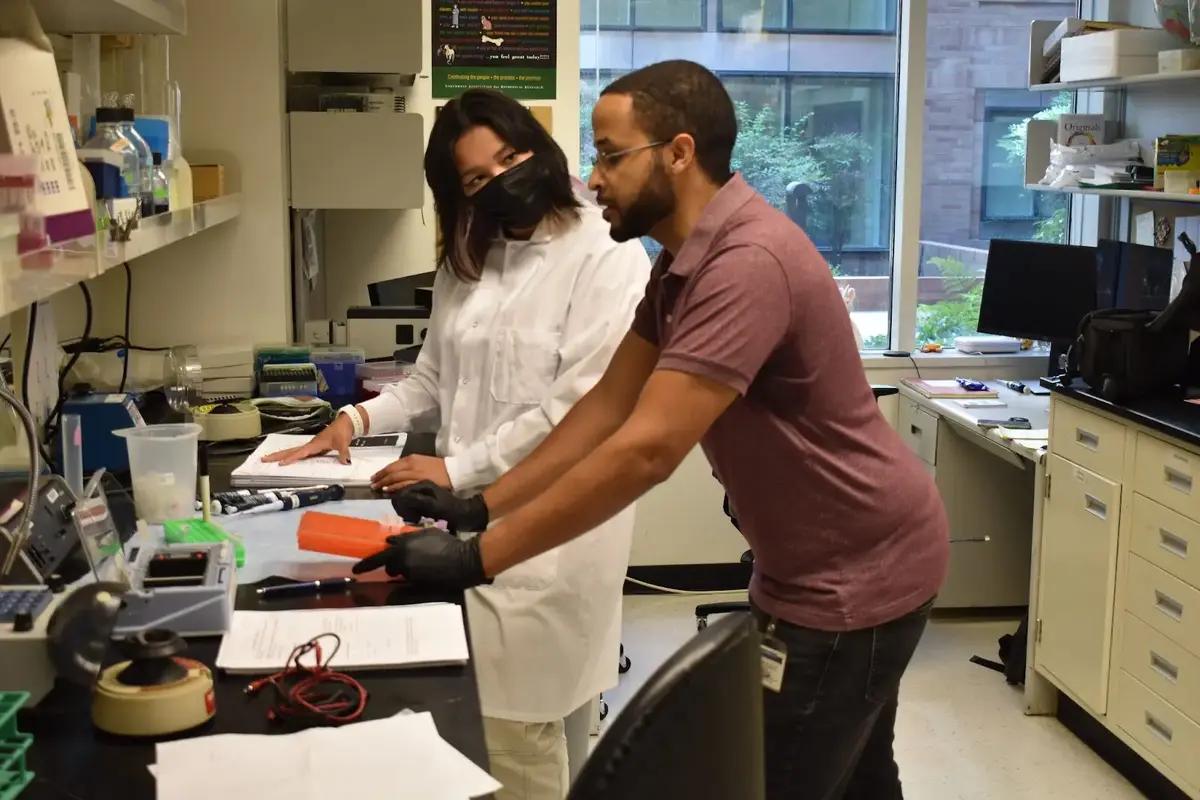
At the Broad Institute, you join a computational or experimental biology project within a genomics research environment. You’ll use high-throughput data, molecular tools, and computational methods to study complex biological systems. Coding skills, data interpretation, and research communication are some of the things that the workshops teach you, whereas mentors assist you with daily lab workflows.
Additionally, the program features talks from renowned scientists that introduce innovative strategies for human health and disease. Through these experiences, you gain insight into how large-scale biomedical research is conducted and how genomics influences modern medicine.
Why it stands out: You’ll join cutting-edge genomics projects, giving you access to computational tools, lab technologies, and mentorship from world-class scientists.
10. Fred Hutch Summer High School Internship Program
Location: Fred Hutchinson Cancer Center, Seattle, WA
Cost: Free; students will receive a stipend at the end of the program
Dates: June 22nd – August 14th
Application Deadline: March 13th
Eligibility: High school students living in the Greater Seattle area entering their senior year
This internship places you in a research group investigating cancer biology, immunotherapy, infectious disease, or computational biology. In addition to learning essential laboratory techniques, you get to see how interdisciplinary teams collaborate to solve large scientific problems. Every week, seminars are held which give you the opportunity to relate your experimental work to the wider topics of biomedical research, such as research ethics, patient benefits, and drug discovery.
Furthermore, you get guidance that is aimed at deepening your knowledge of scientific vocations and educational routes. By working in a leading research institute, you gain early exposure to rigorous experimental science and collaborative problem-solving.
Why it stands out: It immerses you in cancer and infectious disease research, helping you build technical skills while learning how large research centers operate.
11. Denver Health Medical Career Collaborative
Location: Denver Health and other Children’s Hospital Colorado locations
Cost: Stipend of $14.4/hour (minimum of Colorado Minimum Wage)
Dates: Must complete 100 – 120 hours in the summer
Application Deadline: March 5th
Eligibility: Current high school sophomores while applying; attending school in the Denver metro or Colorado Springs areas
MC² combines clinical exposure with project-based learning to help you understand how healthcare systems operate and how research supports decision-making in clinical settings. You take part in workshops, hands-on training modules, and professional development sessions, which are led by healthcare staff.
Based on your placement, you may have an opportunity to observe clinical workflows, get familiar with public health research, or become a contributor to departmental projects. Mentors assist you in understanding the various healthcare career options and the educational background required for them. By participating, you gain experience with both clinical and research-oriented tasks that help you determine whether medicine aligns with your goals.
Why it stands out: You’ll see how healthcare systems function across different departments, offering practical exposure to real hospital workflows.
12. High School Research Immersion Program at St. Jude Children’s Research Hospital
Location: St. Jude Children’s Research Hospital, Memphis, TN
Cost: $4,800 stipend
Dates: June 1st – July 25th
Application Deadline: January 31st
Eligibility: Current junior at a high school in the Memphis-Shelby County area and immediate surrounding counties in Tennessee, Mississippi, and Arkansas, aged 16 and having a cumulative high school GPA of at least 3.0
At St. Jude, you will be part of different teams investigating diseases related to children in the fields of cancer, infectious diseases, genetics, and translational science. You will collaborate with scientists who will guide you in the use of lab equipment, data collection, and interpretation of results. Moreover, educational seminars will acquaint you with the moral principles of research in the clinic and the challenges of studying childhood diseases.
You also gain experience reading scientific literature and understanding how experiments contribute to long-term therapeutic development. Through this program, you gain firsthand exposure to mission-driven research within a leading pediatric medical centre.
Why it stands out: It places you inside a top pediatric research hospital, giving you rare insight into translational science and how discoveries move toward treatments.
13. Montefiore Einstein High School Research Program in Cancer (BEYOND ALBERT)
Location: Albert Einstein College of Medicine / Montefiore Einstein Comprehensive Cancer Center, Bronx, NY
Cost: Free to apply and participate. Participants receive a stipend (e.g., $2,500), a MetroCard for transportation, and often a daily meal voucher
Dates: Full-time, 8-week summer session
Application Deadline: January 12th
Eligibility: High‑school students aged 16 or older, rising juniors or seniors, residing in the Bronx and attending a Bronx high school
The BEYOND ALBERT programme is one of the most immersive medical research internships for high school students, allowing you to join biomedical research labs and gain hands-on experience in cancer biology and related biomedical sciences. You’ll work alongside experienced researchers, participating in lab experiments, data collection, and collaborative projects under faculty mentorship. The program also provides professional development workshops, seminars, and mentorship sessions aimed at building scientific literacy, research skills, and long‑term academic planning.
On completion, you will receive a stipend, meal support, transport aid, and can earn college credits (through Lehman College Now Program) if eligible. You may additionally take part in an academic‑year component: weekly seminars and continued mentoring, further strengthening their preparation for biomedical studies.
Why it stands out: You could build a foundation for pre-med and biomedical research pathways because of the mentorship by Einstein faculty, and by creating research presentations.
14. Stanford Medical Youth Science Program
Location: Stanford Campus, Northern California, CA
Cost: None
Dates: June 22nd – July 26th
Application Deadline: March 17th
Eligibility: Open to low-income, first-generation high school juniors from Northern California
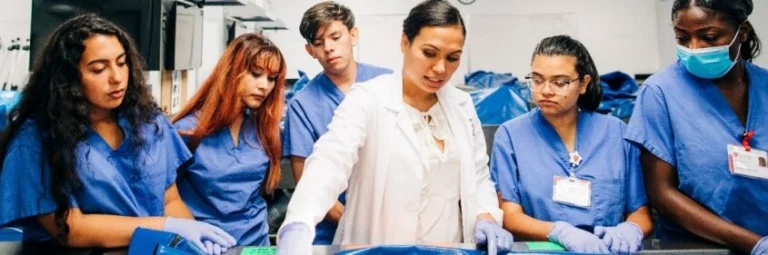
SMYSP offers an immersive academic and research experience for students interested in understanding health disparities, community-based research, and clinical science. You take part in hands-on health modules, shadow healthcare professionals, and explore research topics related to public health and medicine.
Faculty and peer mentors support you through workshops on scientific thinking, data analysis, and college preparation. You also complete a capstone project that introduces you to the structure of research inquiry and the challenges of addressing real-world medical issues. By the end of the program, you will have gained insight into how medicine, research, and community engagement intersect.
Why it stands out: It exposes you to both community health issues and medical research, providing a broader view of how medicine operates beyond the hospital.
15. Simons Summer Research Program
Location: Stony Brook University, Long Island, New York
Cost: None
Dates: June 29th – August 7th
Application Deadline: February 7th
Eligibility: Open to U.S. high school students
This program pairs you with faculty mentors at partner universities, where you contribute to research in biology, neuroscience, chemistry, or related fields. You participate in lab meetings, practise experimental techniques, and complete readings that help you understand the scientific foundations of your project.
The program emphasizes independent thinking and encourages you to develop and refine your own research questions. Ultimately, you present your work to peers and faculty, gaining valuable experience in formal scientific communication. Through this mentorship-based structure, you learn how academic research progresses from initial ideas to publishable results.
Why it stands out: Its labs are connected to national research centers, and you’ll contribute to cutting-edge computational and applied math projects.
Join the Immerse Education 2027 Essay Competition
Follow the instructions to write and submit your best essay for a chance to be awarded a 100% scholarship.
From Research to Medicine
Medical research internships for high school students give you early insight into how medicine works beyond textbooks, showing how scientific inquiry connects to patient care and clinical progress.
These experiences place you in labs, hospitals, and research teams, helping you test interests, understand expectations, and approach future study with greater confidence.
By working alongside researchers, you develop technical skills, critical thinking, and resilience while learning what long-term training in medicine truly requires.
To continue building your knowledge, our Medicine Top Books Guide offers carefully selected reading to support deeper understanding and thoughtful preparation for medical study at university and beyond.






Unlock Inspiring Opportunities with the Immerse Education Newsletter
Join our newsletter to stay ahead with exclusive updates, exciting programme highlights, and expert insights from the world of immersive education.
Learn how Immerse can transform your life
An in-depth overview of our university and career preparation programmes
Get a glimpse into the life of an Immerse participant
Find the right programme for you with sample timetables, location showcases, and more