


 Русский (RU)
 Українська (UK)
 Türkçe (TR)
 Italiano (IT)
 Français (FR)
 Português (PT)
 中文 (中国) (ZH)
 Español (ES)
 日本語 (JA)
 ไทย (TH)
 Deutsch (DE)
 Ελληνικά (EL)
 Polski (PL)
 Bahasa Indonesia (ID)
 Nederlands (NL)
 العربية (AR)
 한국어 (KO)

High school can feel like a constant cycle of classes, assignments, and exams, all pointing toward one big goal: college. But understanding what college is actually like can be hard from inside a classroom alone. That’s where pre-college programs for high school students come in.
Imagine spending part of your summer living on a university campus, attending real lectures, completing college-level assignments, and managing your time with a new level of independence. Pre-college programs for high school students aren’t just academic courses: they’re an early glimpse into university life, designed to help you transition from high school learning to college expectations.
Even if you already feel confident academically, these programs can shift your perspective. You experience what it means to engage deeply with a subject, participate in discussions with motivated peers, and learn directly from university faculty.
What kinds of pre-college programs for high school students are available?
It’s true that not all pre-college programs are created equal. Some can feel overly expensive, lightly academic, or disconnected from what college learning actually involves. That’s why understanding your options matters, so you can identify programs that offer real academic challenge and meaningful exposure.
Numerous universities and educational organizations offer pre-college programs in fields like STEM, business, medicine, humanities, social sciences, and the arts. Whether you’re exploring potential majors or strengthening an existing interest, these programs help you understand what studying a subject at the college level truly entails.
You’ll learn from experienced professors, complete independent or group projects, engage in college-style discussions, and build the confidence needed to succeed in more demanding academic environments.
Pre-college programs require commitment, but choosing the right one makes all the difference. To help you get started, we’ve come up with a list of 15 Pre-College Programs for High School Students. They’ve been picked for their academic rigor, campus immersion, and ability to prepare students for college success.
15 Pre-College Programs for High School Students
1. Pre-College at CCA
Location: California College of the Arts (CCA), San Francisco, CA
Cost/Stipend: Estimated to be $8,075 for residential participants and $5,615 for commuter students (need-based and merit-based scholarships available)
Acceptance rate/cohort size: The overall acceptance rate at CCA is 91%
Dates: July 6-31
Application Deadline: September 23rd – June 10th
Eligibility: Domestic and international high school students in grades 10 to 12
If you are considering enrolling in an art or design school after graduating from high school, the CCA Pre-College program may be the right option for you. While in this program, you will work on completing your portfolio that you can submit along with your future college applications.
Surrounded by industry experts who will teach you and like-minded artists and designers, this summer program will enhance your creativity. You will also have the opportunity to take one credit-bearing college course, which includes options like digital animation (3D), fashion design, communication design, and more.
Why it stands out: It offers immersive studio art and design experiences, helping you build portfolio strength and creative confidence.
2. Immerse Education’s Pre-College Summer School

Location: Boston, Cambridge, London, Oxford, Singapore, Sydney, Tokyo, and Toronto
Cost/Stipend: Varies; summer school scholarship available through our bursary programme
Acceptance rate/cohort size: Selective; Average of 7 participants per class
Dates: 2 weeks during the summer
Application Deadline: Multiple summer cohorts with rolling admissions
Eligibility: Students all over the world aged 13-18, currently enrolled in middle or high school
When you enroll in the Academic Insights Program, you will get to attend undergraduate-level courses at universities like Oxford, Cambridge, and Harvard. You can choose from a wide range of subjects, including architecture, artificial intelligence, business management, computer science, economics, medicine, philosophy, and more.
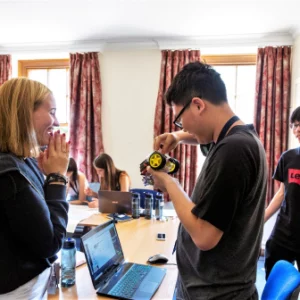
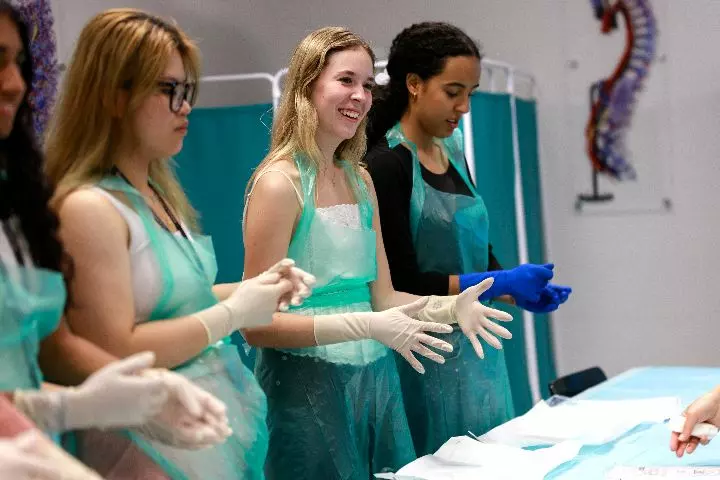
In addition to attending university-style lectures, your classes will also include practical experiences based on your course, like dissections in medicine, robotic arm building in engineering, or moot courts for law. You’ll also be scheduled for one-on-one sessions with your tutor once a week. By the end of the program, you will complete a personal project and receive written feedback and a certificate of completion. You can find more details about the application here.
Why it stands out: You’ll get an early start at university life and academics because the program includes an independent project, discussion-based classes, and living at a college campus.
3. Pre-College at Eckerd
Location: Eckerd College, St. Petersburg, FL
Cost/Stipend: Varies by course; limited need-based scholarships available
Acceptance rate/cohort size: Small classroom
Dates: June; exact dates vary by course
Application Deadline: Opens in early January
Eligibility: Rising 11th and 12th graders all over the world; some courses are open to rising 10th graders, too
This is a one-week residential program where you will experience college life, getting an inside look into the academics and campus life. Your schedule will include attending intensive college-level courses that are supplemented by hands-on projects, field trips, workshops, and guest lectures.
Your choice of courses includes AI, ethics and technology, animal studies, marine science, coastal & wildlife ecology, and sharks and rays. At this program, you will also meet students from different states, with Eckerd College seeing participants from nearly 30 states.
Why it stands out: It provides liberal-arts exploration in a coastal campus setting, helping you refine academic interests before college.
4. Pre-College Research Internship for Scholarship and Mentoring (PRISM)
Location: UAB School of Medicine, Birmingham, AL
Cost/Stipend: $1,000 stipend is provided after completion
Acceptance rate/cohort size: 5 students
Dates: June 8th – July 31st (tentatively)
Application Deadline: November 17th – January 19th
Eligibility: 11th graders who have a minimum GPA of 3.5 and are US citizens or permanent residents
Organized by the University of Alabama Medicine’s surgery department, PRISM is a pre-college program built for high school students who want to pursue careers in medicine, particularly surgery. You will work on research assignments under the supervision of surgeons while simultaneously understanding the important role research plays in surgery, patient care, and patient outcomes.
You are expected to showcase your research at the end of this eight-week program. Beyond working on your research project, your schedule will also include seminars, workshops, and clinical shadowing sessions.
Why it stands out: It places you in cutting-edge physics and engineering research environments, helping you gain hands-on experience with real experiments and advanced instrumentation.
5. USC Summer Programs
Location: University of Southern California, Los Angeles, CA
Cost/Stipend: An application fee of $85; program fee is estimated to be $11,570 for residential participants and $8,130 for commuting participants
Acceptance rate/cohort size: Highly selective
Dates: June 22nd – July 17th; it is mandatory to attend the first date of the program
Application Deadline: March 13th for international applicants and May 8th for domestic applicants
Eligibility: Students worldwide who have completed 9th grade and are pursuing a rigorous high school curriculum.
The University of Southern California offers high school students like you the opportunity to attend college-level classes in a subject of your choice. No matter where your interest lies, you will find something with options including pre-law, business, engineering, communication and journalism, pre-health and science, and others.
In addition to learning from USC professors while concentrating on one discipline for four weeks, you will also receive a USC transcript for completing the course. Please note that you need to check individual course pages to review the syllabus and determine if there are any additional requirements for the course. Most courses recommend that you bring a laptop.
Why it stands out: It lets you sample diverse university-level classes, helping you understand college expectations and academic breadth.
6. Stanford Pre-Collegiate Summer Institutes
Location: Online
Cost/Stipend: $3,200, and some courses will require you to purchase additional materials, which will cost a maximum of $100 and nothing more; financial need-based scholarships are available
Acceptance rate/cohort size: Approximately 16 students per class
Dates: June 15th – June 26th or July 6th – July 17th
Application Deadline: Opens mid-December
Eligibility: 8th to 11th graders; international students accepted
Covering topics that go beyond your high school syllabus, this pre-college program by Stanford allows you to immerse yourself in a single discipline through interactive course materials. The program offers online classes in more than 75 subjects, which include but are not limited to artificial intelligence, creative writing, engineering, mathematics, and philosophy.
These are synchronous and live classes, allowing you to participate in discussions and interact with high school students from all over the world. Stanford University does not give you grades or credits for completing the course.
Why it stands out: You’ll be exposed to Silicon Valley-style thinking, innovation, and entrepreneurship, helping you demonstrate those skills on future college applications.
7. Cornell Summer Residential Program

Location: Cornell University, Ithaca, NY
Cost/Stipend: Application fee of $75; program fee is calculated based on course credits and length of stay (check here)
Acceptance rate/cohort size: Generally over 70% for pre-college programs
Dates: June 22nd – July 12th, July 13th – August 2nd, or June 22nd – August 2nd
Application Deadline: May 9th
Eligibility: Rising 11th and 12th graders from all around the world aged 16 to 18
In the Cornell Summer Residential Program, you can choose to attend a three-week course or a six-week course. Taught by university professors, the courses have a rigorous schedule, as they aim to cover 15 weeks of syllabus in a short period. The pre-college program offers classes in a selection of subjects, including marketing, computer science, architecture, politics, medicine, and more.
You will gain transferable credits for completing the course. In addition to the academic part, the program also offers extracurricular activities and the college experience at Cornell. There are also college admissions workshops that give you tips to stand out in your college applications.
Why it stands out: It’s a certified R1 Research University, so you’ll have access to high-grade equipment and understand what research looks like at top universities.
8. Quinnipiac’s High School Summer Programs
Location: Quinnipiac University, Hamden, CT
Cost/Stipend: One-week programs cost $1,500 for commuting participants and $1,800 for residing participants; Two-week programs cost $2,600 for commuting participants and $3,600 for residing participants (Limited financial aid available)
Acceptance rate/cohort size: Maximum 30 participants
Dates: July; exact dates vary by course
Application Deadline: January 15th
Eligibility: High school students all around the globe
For high school students who would like to explore what it is like to study in college, Quinnipiac’s high school summer programs give you the opportunity to do so. While in these programs, you get to focus on your favorite subject and build a portfolio for it.
Some of the courses you can choose to study are Innovate with AI: Visual Imagery and Design, Forensic Sciences: Crime Scene Investigation, Pre-Med Preparation: Medical Microbiology, Modern Storytelling: Movie-Making, and more. You will also gain some soft skills, like communication, critical thinking, and confidence, that would be highly valued by future companies and universities.
Why it stands out: It gives you the chance to engage in hands-on learning across subjects, helping you explore future academic pathways.
9. Sotheby’s Summer Institute
Location: Sotheby’s Institute of Art, New York, NY
Cost/Stipend: $6,195 for commuting applicants and $7,695 for residing applicants; $50 non-refundable application fee; discounts and scholarships available
Acceptance rate/cohort size: Not publicly available
Dates: July 5-17 and July 19-31 (interested students can attend both terms)
Application Deadline: Opens in January
Eligibility: 10th to 12th graders and graduating seniors worldwide who will be at least 15 years old on the first day of the program
This two-week program is well-suited for you if you like studying art. It focuses on teaching you about art history and the global art market. The program includes an intensive academic curriculum with the option to study the following courses: Global Art History: Movements and Masterpieces, Art Business: Markets, Museums and Money, and Inside Luxury, Culture and Couture.
With the program happening in New York City, Sotheby’s takes advantage of the city’s cultural sites, taking you to museums, galleries, auction houses, artists’ studios, and more. You will also meet with art experts and get to discuss art with them. Sotheby’s aims to prepare you for art school by the end of the program.
Why it stands out: You’ll get access to galleries, auctions, curators, and collectors, providing help for future arts, humanities, or business applications.
10. Emory Pre-College Program
Location: Emory University, Atlanta, GA
Cost/Stipend: An application fee of $70; no application fee for students who apply on or before January 5th, and the program fee varies by length and format (Financial aid available for U.S. citizens and permanent residents)
Acceptance rate/cohort size: Varies by course
Dates: June 14-27 for session A, June 28th – July 11th for session B, and July 12-25 for session C
Application Deadline: May 1st
Eligibility: 10th and 11th graders around the world who are at least 15 years old and have a minimum GPA of 3.0
Emory University invites high school students to participate in its pre-college program, in which you can choose from more than a hundred courses. Some of the diverse list of courses offered at this program include International Perspectives of Mental Illness, Astrophysics: Data, Models, and Discovery, Biotechnology: Biology Remixed, Forensics: Violence and Crime in US Public Health, and more. You can find the full list here.
Regardless of the course you pick, you will study them on a university level and may be assigned additional textbooks for reference. All courses are non-credited, and you won’t earn any letter grades; your final report will only mention satisfactory or unsatisfactory.
Why it stands out: You’ll connect with professors who are renowned in their field and have access to Emory’s long-standing networks in healthcare, academics, and nonprofit domains.
11. Harvard Pre-College Summer School Program
Location: Harvard University, Cambridge, MA
Cost/Stipend: $6,100 and a non-refundable application fee of $75 (financial need-based scholarship available)
Acceptance rate/cohort size: 12-18 students per class
Dates: June 21st – July 2nd for session I, July 5th – 17th for session II, or July 19th – 31st for session III
Application Deadline: Opens December 1st, with multiple deadlines until April 1st
Eligibility: 12th graders worldwide who are at least 16 years old but will not turn 19 by the end of the program
Like other college programs, Harvard’s lets you sample its curriculum and experience studying there. The Ivy League institute offers nearly 30 courses across different disciplines, including law, literature, STEM, business, and more.
As a participant, you will take non-credit college-level classes, and they are quite rigorous, with students taking two to four hours of homework each day, depending on their course. You will receive a Harvard transcript stating if you met the requirements (AR) or did not meet the requirements (NM), and your instructor will also provide you with a written evaluation.
Why it stands out: It offers on-campus residence and faculty and undergraduate interactions, so you’ll get an idea about what academic and student life at a leading university involves.
12. Penn Pre-College Residential Program
Location: University of Pennsylvania, Philadelphia, PA
Cost/Stipend: The program fee is $9,100, the general fee is $466, and the tuition fee varies by course credit (the total fee is between $14,962 and $23,056) plus an application fee of $100
Acceptance rate/cohort size: Highly selective
Dates: June 30th – August 8th
Application Deadline: Opens December 1st
Eligibility: 10th and 11th-graders around the world with a minimum GPA of 3.5 who are at least 13 years old
If you are particularly interested in getting an insight into studying at an Ivy League institution, you can also consider this pre-college program by the University of Pennsylvania. Taught by the university’s faculty and visiting professors, you will sit in classes alongside other high school participants and undergraduates.
Your course options include Introduction to Biology A, Introduction to Media Studies, Law and Society, and more. Regardless of which credit-bearing undergraduate course you pick, you will be scheduled with classes two to five times a week. You will also be required to do homework and research work, and write examinations. Students who have completed the program can request a transcript from the university.
Why it stands out: It places you in authentic Ivy League classes and dorm life, helping you build academic maturity and clarity about future majors.
13. Georgetown University Precollege Online Program

Location: Online
Cost/Stipend: $3,995 for college credit courses | $1,895 for enrichment courses (Need-based scholarship available)
Acceptance rate/cohort size: Varies by course
Dates: Multi-length courses available throughout the year
Application Deadline: Applications are open year-round
Eligibility: High school students all around the world who are at least 13 years old
This online pre-college program offers courses across various disciplines, including marketing, biology, cybersecurity, and more, and it allows you to immerse yourself in a college syllabus. You can either choose to do the college credit courses or the enrichment courses. In the first, you will have nearly 130 hours of course material, while the latter has 20-30 hours of workload but does not provide college credits upon completion.
Your course materials will include recorded lectures by professors that you can watch anytime and anywhere, plus assignments that have to be completed by the end of the course. Depending on the availability of your time, you can do one or more courses.
Why it stands out: It offers structured courses and university exposure, helping you make informed decisions about college and career interests.
14. Columbia University College Edge: Summer
Location: Columbia University, New York, NY
Cost/Stipend: $2,574 per point (one course is typically 3 points); check the full fee breakdown on Columbia University’s College Edge Tuition and Fees page
Acceptance rate/cohort size: Highly selective
Dates: May 25th – July 3rd for Session A and July 6th – August 14th for Session B
Application Deadline: The general deadline is April 2nd
Eligibility: Domestic and international students who are in 11th or 12th grades with a minimum cumulative GPA of 3.3
Comparing other programs offered by Columbia University for high school students, College Edge is much more intense. You will attend college-level classes with undergraduates and other high school juniors and seniors while earning credits for them. Columbia University offers courses in mathematics, physics, history, statistics, psychology, and Germanic languages.
You can seek your academic advisor’s help to choose the right course for you. Given that each course has a rigorous syllabus, CU recommends that you spend three hours of your personal time studying for every one hour you are taught in class.
Why it stands out: You’ll be able to learn from Columbia faculty, interact with Columbia undergraduates, and gain college credit.
15. Course-Based Research Experiences (CRE)
Location: First two weeks and then the following three weeks are at Brown University, Providence, RI
Cost/Stipend: A non-refundable application fee of $80 plus $8,902 for commuting participants and $10,858 for residing participants (scholarships available)
Acceptance rate/cohort size: Highly selective
Dates: June 22nd – July 24th
Application Deadline: January 14th – May 8th
Eligibility: 10th to 12th graders worldwide from ages 16 to 18 by June 15th
In this hybrid program, you will spend the first two weeks reading the necessary materials and going through scientific literature to decide on your research question. Your research question must address a topic that has not yet been answered. At this point, you should also plan your research methodologies.
In the following three weeks, you will have access to Brown University’s laboratories and resources so that you can work on your experiments and hypothesis. Students can present their research at the CRE Symposium, which is conducted at the end of the program.
Why it stands out: It connects you with faculty-led research projects, helping you understand how scholarly inquiry works in real university settings.
Beyond School Thinking, Toward University
At some point, learning shifts from following instructions to asking better questions. That moment often arrives when you step into unfamiliar academic spaces.
You begin to manage your time differently, speak up in discussions, and realise that curiosity matters as much as correctness.
It’s through pre-college programs for high school students that this change becomes real, helping you experience university-level thinking, expectations, and independence before it truly counts.
If you’re ready to build on that momentum, our University Preparation blogs offer practical guidance, student perspectives, and next-step advice to help you move forward with confidence and clarity.