15 Summer Research Programs for High School Students

Summer is a fantastic time to unwind, have some fun, and step away from the day-to-day academic rigors. However, it can be so much more. Summer research opportunities for high school students make it possible to engage in real-world research, build on existing skills, and spark curiosity by exploring questions that genuinely interest you.
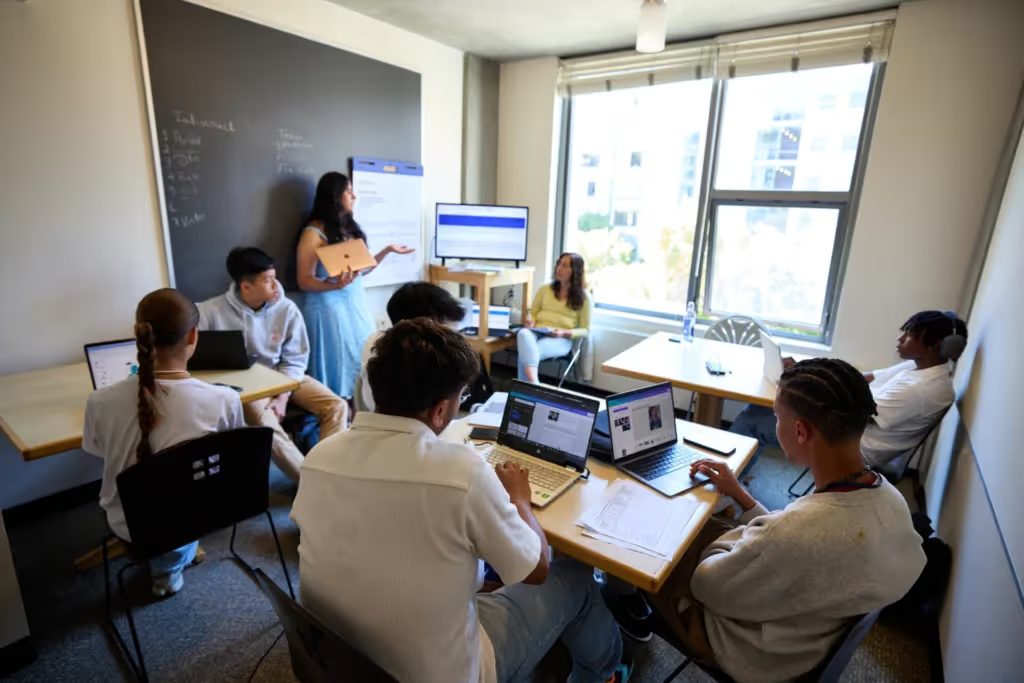
Imagine analyzing data alongside real scientists, joining experiments that address real-world problems, and sharing discoveries with curious, like-minded peers. Summer research programs aren’t just another extracurricular activity for college applications; they’re introductions into the very foundations of scientific inquiry. They blend the academic rigor found in classrooms with the experience of living at a college campus.
You may already have spent some time in a high school lab. You may even have a really strong background in STEM. But these programs still have value, insofar as they can push you further into shaping your academic future. Along the way, they’d provide the independence, mentorship, and experience to help you get there.
Be it universities, laboratories, or even STEM organizations, by far the best way to completely immerse yourself in the world of authentic research is through summer research programs.
What types of summer research opportunities are available for high school students?
Now, we know that sometimes, research programs can be really underwhelming. They tend to operate more like science camps, with very little time actually spent in a lab, with projects that only scratch the surface of your curiosity. All of this, for a very high price. But this is exactly why good information (from good research) is important: not all research opportunities are equal.
Renowned universities offer a wide selection of incredibly rigorous research opportunities in Biology, Chemistry, Computer Science, Engineering, Physics, and many more. Even if you’re just nursing a week-old interest from a YouTube video, or if you’re cultivating a deeply-held passion, research opportunities give you experiences that paint a meaningful picture of your future in academic research.
You’ll work with real researchers, working on novel projects while gaining practical experience with experimentation, scientific analysis, and scientific writing. In doing so, you’ll build up your confidence towards connecting with your peers and mentors to further your academic goals.
While these research programs require substantial effort, we’ll save you a great deal of time and work right now. To help you choose which program would be the best fit for you, we’ve compiled a list of 15 Summer Research Opportunities for High School Students. They’ve been picked for their academic rigor, quality mentorship, and hands-on activities.


15 Summer Research Opportunities for High School Students
1. Stanford Institutes of Medicine Summer Research Program (SIMR)
Location: Stanford University, Stanford, CA
Cost/Stipend: Application fee $50; participants get a stipend of at least $500
Acceptance rate/cohort size: Cohort size of around 50 students
Dates: June 8th – July 30th (tentative)
Application Deadline: February 21st
Eligibility: Students must be 16+ by program start, and must be living in & attending high school in the U.S. and be a U.S. citizen or permanent resident (green card).
If you’re a high-school student passionate about biomedical science, the Stanford Institutes of Medicine Summer Research Program (SIMR) offers one of the most intensive summer research opportunities for high school students through an eight-week research experience on the Stanford University campus. You’ll work closely with a mentor in a world-class lab on research areas such as immunology, neurobiology, bioengineering, or bioinformatics, and contribute to cutting-edge experiments and analysis. In addition to project work, you’ll attend lectures, lab safety training, seminars, and present findings at a poster session.
The program is tuition-free and includes a stipend, which helps make it accessible; housing and travel are your responsibility. Because the cohort is small and the selection highly competitive, participation signals serious research potential. If you’re ready to push your boundaries, immerse yourself in real science, and build strong credentials, SIMR is compelling. The upcoming summer’s application will be available from December 19.
Why it stands out: Its deep connections to Silicon Valley reflect how leading summer research opportunities for high school students often intersect with innovation and applied science.
2. Immerse Education’s Online Research Programme
Location: Online
Cost/Stipend: Varies; summer school scholarship available through their bursary programme.
Acceptance rate/cohort size: Selective; one-to-one tutoring
Dates: Year-round (multiple intakes)
Application Deadline: Rolling admissions
Eligibility: High school students from around the world aged 13–18 (accredited options available for ages 14+)
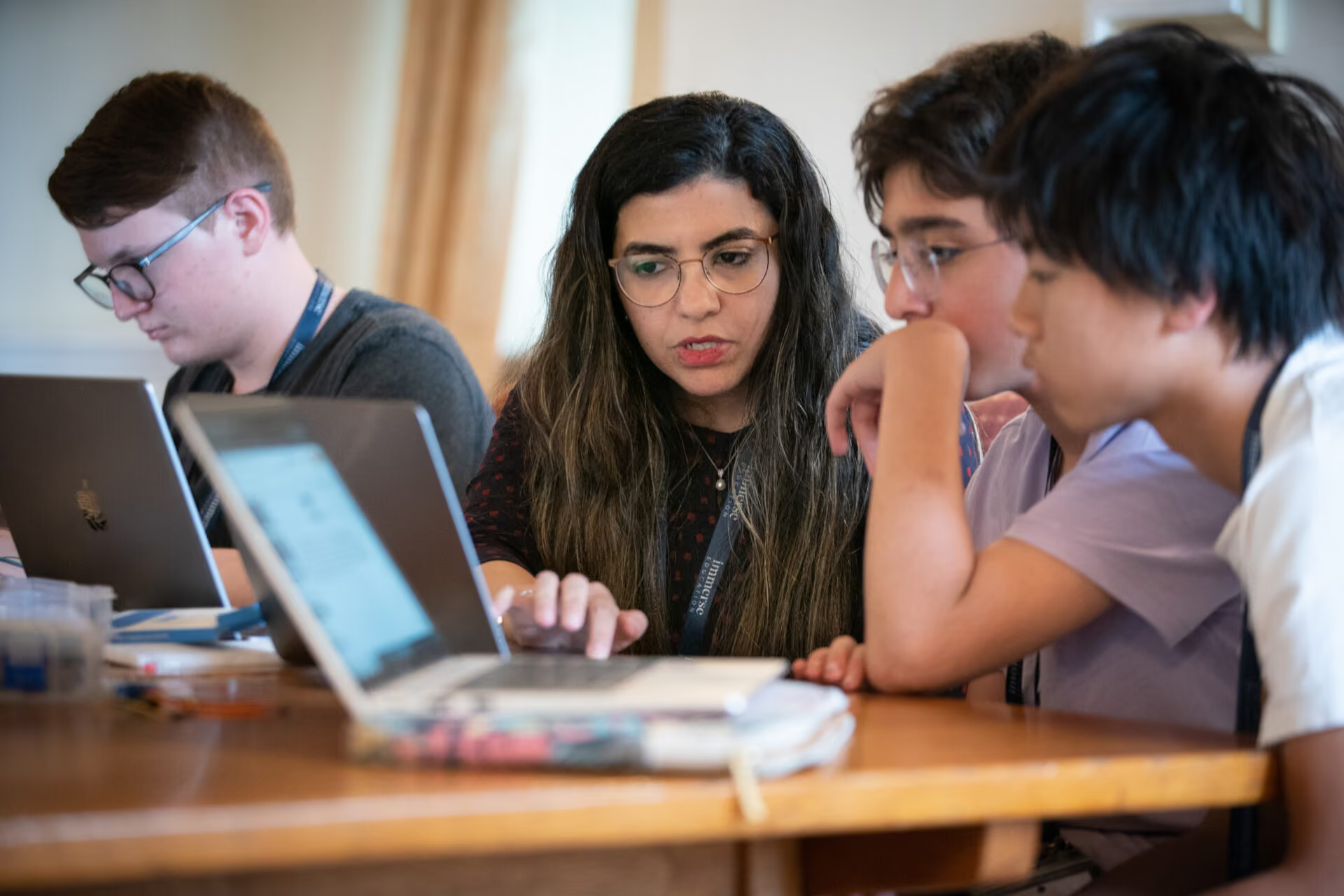
The Online Research Programme allows high school students to complete a genuine, university-level research project from anywhere in the world. Working one-to-one with an expert academic from Oxford, Cambridge, or an Ivy League university, participants develop an original research question in their chosen subject, such as Medicine, Computer Science, Economics, or Philosophy, spanning STEM, humanities, and social sciences. Students are guided through undergraduate-style research processes, including academic sourcing, critical evaluation, structured argumentation, and formal referencing.
The programme culminates in a full academic research paper assessed by a world-class tutor. Accredited pathways offer the opportunity to earn 8 UCAS points for UK applications or up to 3 US college credits, providing tangible academic recognition alongside deep research preparation.
Why it stands out: Immerse Education is the only UK fully accredited online research programme for high school students taught by Oxford or Cambridge experts, with the option to earn UCAS points.
3. Young Scholars Program (YSP) – Northeastern University
Location: Northeastern University, Boston, MA
Cost/Stipend: Free; might receive a stipend
Acceptance rate/cohort size: Highly selective
Dates: June 22nd – July 30th
Application Deadline: March 2nd
Eligibility: Students entering 12th grade in the fall following the program who are residents of Massachusetts
If you’re a high school student passionate about STEM, Northeastern’s Young Scholars Program offers an engaging research experience this summer. Over six consecutive weeks, you’ll work in active research labs within Northeastern’s Colleges of Engineering, Science, or Health Science. Under Northeastern faculty’s and graduate student mentors’ guidance, tackle practical problems like battery chemistry to algorithm design.
Beyond your lab work, you’ll engage in a seminar series on engineering disciplines, explore career paths at companies and national labs, and receive personalized college and career advice. Because the program is free and campus-based, it offers strong exposure to undergraduate-level research without any tuition burden. Applications for the upcoming summer will open on December 15. You may contact here to know more.
Why it stands out: Its R1 status would translate into you working in cutting-edge labs with access to real datasets, ongoing experiments, and graduate-level mentorship that is not typically available to high school students.
4. Research Mentorship Program at the University of California, Santa Barbara — Math Track
Location: University of California, Santa Barbara, CA
Cost/Stipend: Commuter $5,675, Residential $13,274. Need-based scholarships are available. Priority given to California residents
Acceptance rate/cohort size: around 80
Dates: June 15th – July 31st. Mandatory Preparation Webinar: May 28th / May 30th
Application Deadline: March 9th
Eligibility: High school students from around the world in the 10th or 11th grade (outstanding 9th graders accepted on a case-by-case basis) with a minimum 3.80 academic weighted GPA
The Research Mentorship Program runs over six weeks, allowing you to work full-time to develop an original research project. A UCSB faculty member, postdoc, or graduate student will guide you. Your research project can be in STEM, humanities, and social sciences, including domains such as data science, environmental policy, media studies, neuroscience, and public health.
You’ll be enrolled in two university-level courses offering eight college credits, one in formal research writing and the other in presentation techniques. By spending 35–40 hours each week in the lab, you’ll analyze data, write a paper, and present it publicly.
Why it stands out: You’ll get an idea of what undergraduate academics involve by writing a research paper and presenting it.
5. MITES Summer
Location: MIT campus, Cambridge, MA
Cost/Stipend: Free
Acceptance rate/cohort size: Highly competitive
Dates: 6 weeks during the summer
Application Deadline: February 1st
Eligibility: Applicants must be in 11th grade (high school juniors) and be U.S. citizens or permanent residents
Known as one of the most competitive summer research opportunities for high school students, the MITES Summer program places you on MIT’s campus for a six-week immersive STEM experience. You’ll take five rigorous courses across math, science, and humanities, while engaging in participative seminars and lab tours. Additionally, you’ll live in dormitories alongside classmates and attend evening events that mirror the college experience.
The selective nature of the program means you’ll be among highly motivated peers. This community experience aids both your academic and personal development. By the end of the program, you’ll gain insight into college-level expectations, research thinking, and future academic pathways. If that sounds interesting, you may apply to MITES.
Why it stands out: You’ll be joining a strong alumni community (90% in selective universities), which can help you make more informed academic choices and shape your academic future.
6. Simons Summer Research Program – Stony Brook University
Location: Stony Brook University campus, Stony Brook, NY
Cost/Stipend: No tuition fee; stipend available
Acceptance rate/cohort size: Highly competitive
Dates: June 29th – August 7th
Application Deadline: February 5th
Eligibility: Must be current 11th graders, at least 16 by programme start, and U.S. citizens or permanent residents
If you’re a high school student seeking high-level inquiry this summer, the Simons program offers a rigorous, meaningful research experience. You’ll join a research team led by distinguished faculty in fields such as mathematics, engineering, or life sciences, and work in a real university lab environment.
During the eight-week session, you’ll attend faculty research talks, join laboratory training workshops, and present your findings in poster format. This level of immersion deepens your subject knowledge. It also strengthens your readiness for college-level research and makes your profile stand out.
Why it stands out: Its labs are connected to national research centers, and you’ll contribute to cutting-edge computational and applied math projects.
7. Research Science Institute (RSI)
Location: MIT campus, Cambridge, MA
Cost/Stipend: Fully funded
Acceptance rate/cohort size: Approx. 100 students globally; very selective
Dates: Six-week residential session during the summer
Application Deadline: December 10th
Eligibility: Rising seniors (usually 11th grade). International students may apply, but participation depends on your country
The RSI program offers a six-week summer research immersion at MIT, beginning with an intensive introductory week of STEM coursework. You’ll collaborate closely with faculty and graduate mentors, produce original research, and conclude by presenting your findings. With international and U.S. students among a selective group, you’ll be working alongside top young researchers.
The experience can strengthen your future academic profile and college readiness. If you’re looking forward to propelling your STEM engagement and tackling practical research this summer, you may apply to RSI.
Why it stands out: You’ll work one-on-one with MIT academics to produce a detailed research paper, giving you an accurate picture of how undergraduate STEM research operates.
8. Anson L. Clark Scholars Program
Location: Texas Tech University campus, Lubbock, TX
Cost/Stipend: $25 application fee; $750 stipend upon program completion
Acceptance rate/cohort size: Highly competitive; 12 participants each summer
Dates: June 21st – August 6th
Application Deadline: February 16th
Eligibility: Students aged 17+ by program start and must be a U.S. citizen or permanent resident.
If you’re a high school student eager to push academic boundaries, the Anson L. Clark Scholars Program offers strong preparation. The Clark Scholars Program offers a focused, high-impact research experience at Texas Tech University. The program allows you to work collaboratively with distinguished faculty across a wide range of academic areas, from computer science and engineering to humanities and fine arts.
In the seven-week term, you’ll participate in research, attend weekly seminars, and engage in field-trips that enrich your academic exposure. You’ll live on campus, immerse yourself in the university environment, and join a tight cohort of twelve motivated peers. With the program’s structured format and applied research focus, you’ll sharpen your critical thinking, independent inquiry, and presentation skills. Research areas for the next summer will be posted in mid-December.
Why it stands out: It offers one-on-one mentorship with Texas Tech faculty, so you’ll be able to deepen your subject understanding and craft a better research project report.
9. NYU’s ARISE Program
Location: NYU Tandon campus, Brooklyn, NY
Cost/Stipend: No fee; students receive a stipend of $1,000 upon program completion
Acceptance rate/cohort size: Highly competitive; ~65 students are selected
Dates: June 1st – August 14th
Application Deadline: February 21st
Eligibility: Rising high-school juniors and seniors (grades 10–11); NYC residents
If you’re a high-school student based in New York City, ARISE gives you direct access to the laboratories of NYU Tandon, where you’ll contribute to research in engineering, life science, data science, and more. The first segment of the program builds your foundation in research skills through workshops on ethics, writing, and lab techniques, after which you join a lab placement for the majority of the session.
You’ll collaborate with a mentor, take part in meaningful projects, and present your findings to peers and academic communities. Designed for motivated students, this program refines scientific thinking, builds professional research skills, and strengthens credentials for future STEM study. If you’re looking forward to diving into authentic research this summer, ARISE can be your choice. The upcoming year’s applications will open soon.
Why it stands out: It involves placement at a cutting-edge engineering lab and doing a final research presentation, so you’ll get an idea of how academic research works.
10. Summer Academy for Math and Science (SAMS)
Location: Carnegie Mellon University, Pittsburgh, PA
Cost/Stipend: Free; fully funded (Travel is not funded)
Acceptance rate/cohort size: Not specified
Dates: June 20th – August 1st
Application Deadline: February 1st
Eligibility: At least 16 by programme start; rising seniors (11th grade at application); U.S. citizens or permanent residents only.
In SAMS, you’ll engage in advanced sessions on math, science, and engineering, work under faculty mentors on hands-on projects, and transition into higher-level thinking through seminars. You’ll live on campus, attend workshops, and prepare for college. The program concludes with you reflecting on your experience and presenting your work to peers and faculty members.
With a selective cohort and a strong focus on underrepresented students in STEM, the program invites you to deepen both your technical competence and your academic identity. This program can be a strong choice this summer if you want research experience and preparation for top STEM universities.
Why it stands out: You’ll be provided long-term mentoring that can help you craft more competitive applications for STEM & math undergraduate programs.
11. BEYOND ALBERT High School Research Program – Albert Einstein College of Medicine
Location: Albert Einstein College of Medicine, Bronx, NY
Cost/Stipend: Free; $2,500 stipend after completing the program
Acceptance rate/cohort size: Selective
Dates: Late June through August
Application Deadline: January 12th
Eligibility: You must be at least 16 years old by the program start date, live and attend high school in the Bronx, and be entering the 11th or 12th grade
Beyond Alert’s research program offers a rigorous, full-time, hands-on research program focused on biomedical science and cancer biology. Montefiore Einstein Comprehensive Cancer faculty, postdocs, and students will teach you through seminars and workshops. You will also learn more about biomedical research careers.
If you choose the after-school program, you can attend scientific talks and professional development workshops throughout the year. You will be developing an independent research presentation and presenting it to the faculty, demonstrating college-level engagement.
Why it stands out: You could build a foundation for pre-med and biomedical research pathways because of the mentorship by Einstein faculty, and by creating research presentations.
12. Laboratory Learning Program – Princeton University
Location: Princeton University, Princeton, NJ
Cost/Stipend: Tuition-free
Acceptance rate/cohort size: Highly selective
Dates: 5-6 weeks during the summer
Application Deadline: March 15th
Eligibility: High school students aged 16+ by June 15; attend a local NJ high school; U.S. citizen or permanent resident (in the U.S.)
Think of this opportunity as a chance to step into a top-tier university laboratory while still in high school, making it one of the most immersive summer research opportunities for high school students. Through the Laboratory Learning Program at Princeton, you’ll join a small cohort of motivated students and work alongside faculty researchers in cutting-edge labs in fields such as molecular biology, physics, engineering, or neuroscience.
You’ll conduct experiments, attend lab meetings, participate in research seminars, and engage in discussions that mirror real scientific practice. This opportunity may aid in improving your scientific thinking and make meaningful progress this summer. The next summer applications will open in February.
Why it stands out: You’ll receive considerable mentorship from Princeton academics and work on ongoing projects.
13. The Jackson Laboratory’s Summer Student Program (JAX)
Location: Bar Harbor, ME; Farmington, CT
Cost/Stipend: Stipend of approximately $7,000
Acceptance rate/cohort size: Highly competitive
Dates: Bar Harbor: May 30 – Aug 7, 2026. Farmington: May 30 – Aug 10, 2026.
Application Deadline: January 26th
Eligibility: Graduating US high school seniors
If you’re driven by curiosity in biological science, JAX’s Summer Student Program offers an immersive, original research experience this summer. You’ll join a lab team at one of two research campuses, engage in a mentored project exploring genetics, genomics, or bioinformatics, and participate in weekly seminars, journal clubs, and professional development workshops.
Outside the lab, you’ll live on-site, collaborate with peers from across the U.S., and build confidence in experimental design, data analysis, and scientific communication. The structure encourages you to think and work like a scientist, from generating hypotheses to presenting your findings. If interested, applications will open in November; you may check and apply.
Why it stands out: You’ll be working alongside scientists whose research shapes national standards and fuels international collaborations, and gain hands-on experience with techniques ordinarily reserved for undergraduates.
14. Aspiring Scientists Summer Internship Program (ASSIP)
Location: Fairfax and SciTech campuses, VA
Cost/Stipend: $25 non-refundable application fee and $1,299 tuition for accepted interns
Acceptance rate/cohort size: Highly competitive
Dates: June 18 – August 12, 2026
Application Deadline: February 15, 2026
Eligibility: High-school students from around the world aged at least 15 or 16 (depending on the course)
If you want to explore STEM research this summer, ASSIP offers one-on-one projects with faculty researchers and industry mentors. You’ll explore areas such as biochemistry, machine learning, environmental science, or robotics.
Over the eight-week summer term, you’ll join a research team, develop your hypothesis-driven study, and conclude your experience by presenting your findings at a professional-style symposium. The program allows you to sharpen your scientific writing, data analysis, and presentation skills.
Why it stands out: You’ll contribute to posters, conference presentations, and co-authored publications, which is rare at the high-school level.
15. The Rockefeller University’s Summer Science Research Program (SSRP)
Location: Rockefeller University campus, NYC, NY
Cost/Stipend: Tuition-free
Acceptance rate/cohort size: 32 students accepted each summer.
Dates: June 22nd – August 6th
Application Deadline: January 2nd
Eligibility: Current high school juniors or seniors who’ll be 16+ by programme start, including international students
At SSRP, you’ll be part of a dedicated research team at a leading biomedical institution in New York City, collaborating with scientists and trainee-mentors to investigate meaningful scientific questions. In the SSRP summer program, you’ll select a research question within your team’s theme and engage in lab work and data analysis over several weeks. At the end, you’ll prepare a poster presentation of your findings.
The week-by-week structure begins with core techniques, moves into independent exploration, and concludes with results synthesis and communication. You’ll be immersed in the habits of research, such as designing, experimenting, analyzing, and iterating, much like professional scientists do. If interested, you may apply here.
Why it stands out: It focuses on independent research, mentorship from eminent researchers, and a final poster presentation, providing you with valuable experience for STEM applications.
Join the Immerse Education 2027 Essay Competition
Follow the instructions to write and submit your best essay for a chance to be awarded a 100% scholarship.
From Summer Research to University Preparation
Your first real research experience often begins quietly. A confusing dataset. A failed experiment. A question that stays with you long after the day ends. Suddenly, learning feels personal and alive.
These summer research opportunities for high school students do far more than strengthen applications. They build confidence in thinking independently, managing uncertainty, and explaining complex ideas clearly.
Many students realise that university study works the same way. It rewards curiosity, initiative, and persistence more than memorisation.
If this excites you, exploring our University Preparation blogs can help you connect research interests to subject choices, applications, and future academic plans.






Unlock Inspiring Opportunities with the Immerse Education Newsletter
Join our newsletter to stay ahead with exclusive updates, exciting programme highlights, and expert insights from the world of immersive education.
Learn how Immerse can transform your life
An in-depth overview of our university and career preparation programmes
Get a glimpse into the life of an Immerse participant
Find the right programme for you with sample timetables, location showcases, and more