



 Русский (RU)
 Українська (UK)
 Türkçe (TR)
 Italiano (IT)
 Français (FR)
 Português (PT)
 中文 (中国) (ZH)
 Español (ES)
 日本語 (JA)
 ไทย (TH)
 Deutsch (DE)
 Ελληνικά (EL)
 Polski (PL)
 Bahasa Indonesia (ID)
 Nederlands (NL)
 العربية (AR)
 한국어 (KO)

You sit down to answer your maths homework and check the time. It’s 7:32, so you promise yourself you’ll start at 7:35. You open TikTok for a quick break, and before you realise it, it’s 9pm and you’re once again wondering: how do I stop procrastinating?!
You can stop procrastinating by understanding why you delay, breaking work into smaller steps, and building study routines that make starting feel easier.
Procrastination is rarely about laziness or lack of ambition. It often comes from feeling overwhelmed, distracted, or unsure where to begin.
This article explores why procrastination happens, practical ways to reduce it, and how structured learning environments help build strong study habits.
Understanding the Causes of Procrastination
Procrastination is extremely common among learners. Research suggests that around 70% of college students engage in procrastination, making it a shared academic challenge rather than a personal failing.
Some tasks trigger procrastination more than others. In one study, 46% of university students reported procrastinating on writing a term paper, compared with lower rates for reading or exam revision. This helps explain why certain types of work feel harder to start.
Procrastination is not caused by a single issue. It usually develops through a combination of emotional responses, learned behaviours, and environmental conditions. Below are some of the most common factors that contribute to procrastination.
Psychological factors
- Fear of failure or self-doubt makes starting feel emotionally risky.
- Anxiety or stress linked to performance creates avoidance.
- Low confidence in your ability increases hesitation.
Behavioural factors
- Putting tasks off provides short-term relief from discomfort.
- Waiting for motivation instead of starting reinforces delay.
- Perfectionism creates pressure that prevents action.
Environmental factors
- Constant notifications and digital distractions interrupt focus.
- Unstructured study time makes decisions harder.
- No clear routine increases reliance on willpower.
Understanding these mechanisms helps you recognise your own procrastination patterns, which is a key step in learning how to stop procrastinating effectively. Exploring motivation, cognition, and behaviour through case studies, experiments, and guided discussion, such as in our psychology summer school, can deepen self-awareness and support more intentional study habits.
Once you can identify why you procrastinate, you are better equipped to respond differently. Awareness creates choice, and choice is the foundation for building focused, consistent study routines.
7 Practical and Research-Supported Steps for Reducing Procrastination
Fixing procrastination starts with recognising that it is a problem worth addressing, and since you are reading this article, you are already taking that first step.
Below are seven practical techniques to reduce procrastination.
Step 1: Notice Why You Put Things Off
Seeing that you are already researching how to stop procrastinating, you have already completed step one. You have recognised that something is not working and decided to address it. Procrastination often protects your emotions, not your time, so the key is identifying what you are trying to avoid.
Common reasons people procrastinate include:
- Fear of failure or getting the answer wrong: You delay starting your art project because you want a perfect final grade.
- Feeling overwhelmed by the size of the task: A 2,000-word essay feels impossible, so you keep avoiding the document.
- Perfectionism and unrealistic standards: You rewrite the introduction repeatedly instead of moving on.
- Boredom or low interest in the task: The topic feels uninteresting, so scrolling on Instagram feels easier.
- Uncertainty about where or how to start: You read the assignment brief but cannot decide what to do first.
Once you recognise which pattern applies to you, taking a small, manageable step becomes much easier.
Step 2: Start With a Very Small Step
“Dream big. Start small. But most of all, start.” – Simon Sinek, leadership author
Once you understand why you procrastinate, the goal is not to fix everything at once. It is to make starting feel possible. Large tasks create resistance, but small actions lower the emotional barrier.
Instead of telling yourself to finish the whole assignment, choose a step that feels almost too easy. That might be opening the document, writing one sentence, or listing ideas for five minutes. Starting small reduces pressure and builds momentum.
Common examples include:
- Writing a rough outline instead of a full essay
- Solving one maths question, not the entire worksheet
- Reading one page instead of a whole chapter
- Setting a five-minute timer to begin
- Opening your notes without expecting progress
Step 3: Decide What You’ll Do Before You Study
You sit down to study with plenty of time, open your laptop, and pause. Your notes are ready, but you are unsure what to start with, so you drift into checking messages.
Procrastination often begins when there is no clear plan. Deciding what task you will work on, when you will start, and what you need beforehand removes that friction and supports a more reliable approach to how to stop procrastinating.
Step 4: Stop Aiming for Perfect – Focus on Getting Started
Many people believe perfectionism leads to better results, but it often causes delay.
For example, you might be working on an English literature essay and spend thirty minutes rewriting the opening sentence of your introduction. You want the quote analysis to sound intelligent, so you keep thinking instead of writing, and the page stays blank.
This pressure makes starting feel risky. Shifting your focus to progress helps break the cycle. Give yourself permission to write a rough paragraph analysing the quote, even if it feels weak. Once you start, ideas become clearer, and improving your work is far easier than trying to make it perfect from the beginning.
Step 5: Work in Short, Timed Sessions
Long study sessions often feel overwhelming, which makes procrastination more likely. Telling yourself you will work for hours can raise the pressure before you even begin.
Working in short, timed sessions lowers that barrier. Techniques like the Pomodoro method encourage you to study in focused intervals, often 20 to 25 minutes, followed by a short break.
Knowing there is a clear stopping point makes starting feel safer, and once you begin, it is often easier to keep going.
Step 6: Set Up Your Space to Help You Focus
Your environment plays a bigger role in procrastination than most people realise. Even with strong intentions, distractions in your surroundings can quietly reduce your ability to concentrate, which is why adjusting your study space is an important part of how to stop procrastinating.
Research on study environments shows that sound can directly affect performance. One study found a significant effect of sound on students working on a logical reasoning task, meaning background noise actively interfered with focus and thinking.
Specific steps you can take to support concentration include:
- Choose a quieter room or wear noise-reducing headphones.
- Put your phone in another room or face down, away from your desk.
- Close unnecessary tabs such as Instagram, Facebook, Reddit, or YouTube before you start.
When your environment removes friction, starting feels easier, and focus becomes much easier to sustain.
Step 7: Use Other People or Schedules to Stay Accountable
Motivation comes and goes, but accountability keeps you moving. When someone else expects you to show up, procrastination has less room to grow.
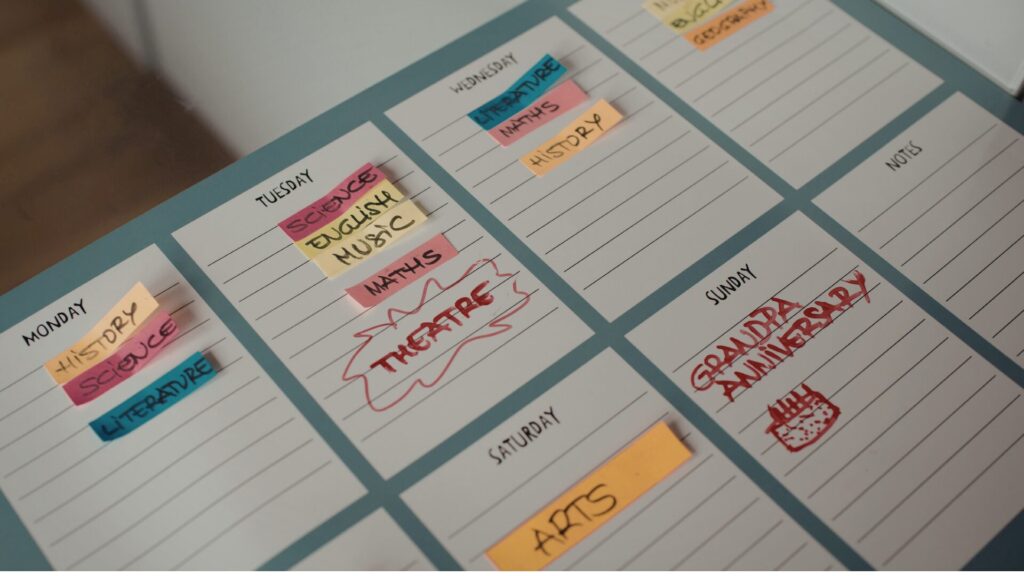
This can be as simple as studying with a friend, sharing deadlines with a tutor, or committing to a fixed study schedule. Knowing your effort is visible encourages follow-through. Over time, this external structure helps you build internal discipline, making consistent study habits easier to maintain even when motivation is low.
Psychology
In-person
Uncover the complexities of human behaviour in Cambridge,...

Psychology
Online
In their projects, participants will explore specific elements...

How Structured Learning Environments Improve Focus and Routine
Organised study environments make focus easier because they remove uncertainty. When schedules are predictable, academic expectations are clear, and progress is guided, you spend less energy deciding what to do and more energy doing it. This consistency helps routines form naturally, without relying on motivation alone.
Structure also reduces decision fatigue. Knowing when you will study, what you will work on, and how your time is organised lowers mental load. Over time, this supports self-regulation. Learners begin to manage their attention and effort more confidently because the environment reinforces disciplined behaviours. As routines settle, academic confidence grows, and tasks feel more manageable.
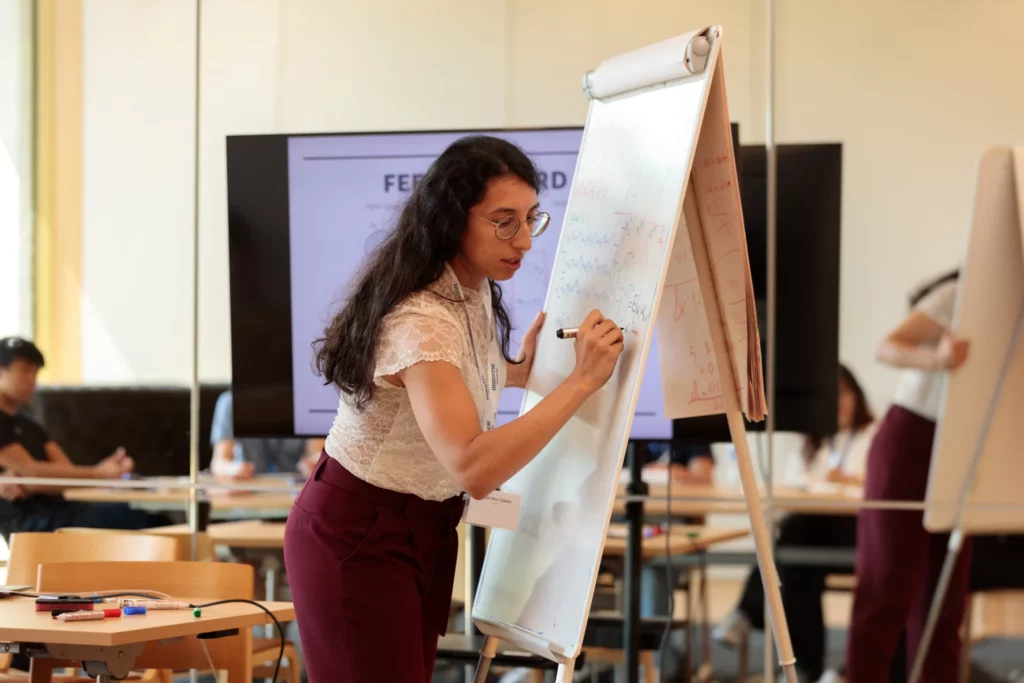
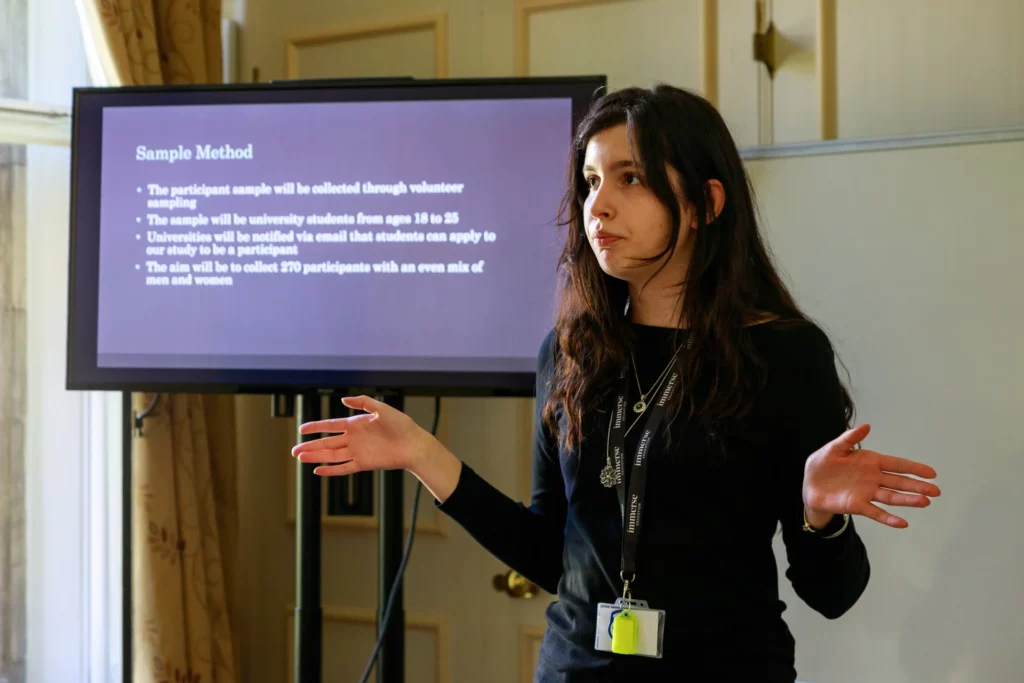
Immersive academic settings show this effect clearly. In environments such as our Cambridge summer school, participants follow structured timetables, study subjects in depth, and live within historic university colleges designed for academic focus.
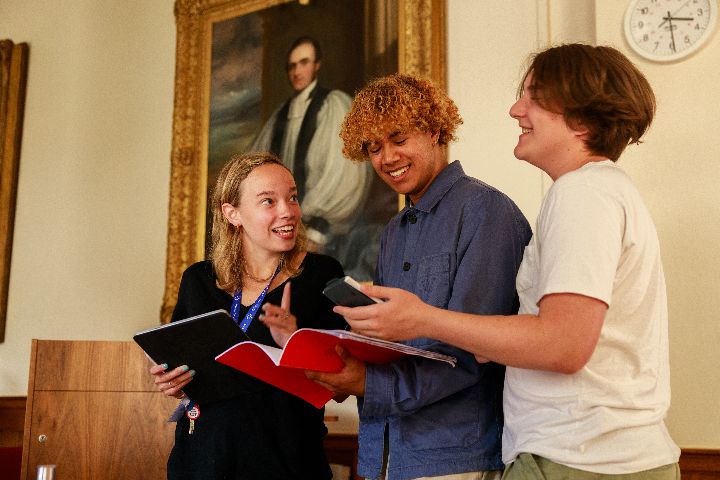
Students join peers from over 125 nationalities, creating a shared culture of ambition and accountability. Living and learning alongside motivated peers, supported by tutors and guided sessions, encourages disciplined study habits and helps learners internalise routines they can carry into future study.
Join the Immerse Education 2025 Essay Competition
Follow the instructions to write and submit your best essay for a chance to be awarded a 100% scholarship.

Immersive Academic Experiences as Catalysts for Productive Habits
Immersive academic experiences like summer schools help learners stay productive by making effort visible and shared. In collaborative learning environments, participation matters, which reduces disengagement and encourages consistent effort. Group discussions, shared tasks, and scheduled activities create natural accountability and make procrastination harder to maintain.
Tutor support strengthens this structure. Regular guidance, feedback, and clear expectations help learners manage time more effectively. Knowing when work will be reviewed encourages preparation, even when motivation dips. Structured activities, including guided study periods, provide protected time to focus.
Peers and mentors reinforce these habits. Working alongside motivated learners normalises effort and reduces avoidance. Seeing others persist builds confidence. Over time, shared routines help minimise procrastination and support long-term academic progress. These conditions encourage discipline beyond programmes.
Conclusion
Procrastination becomes easier to manage when you understand why it happens and respond with structure rather than pressure. Clear strategies and supportive routines create conditions where focus and consistency can grow.
Over time, learning how to stop procrastinating comes from recognising your triggers and applying practical techniques consistently. Small, intentional changes lead to sustainable academic improvement and greater confidence.
Productive habits do not form overnight. They develop through repeated practice, supportive environments, and increasing academic self-awareness.
If you are looking for a setting that supports this kind of growth, our Immerse Education programmes offer structured, inspiring academic experiences. Learning alongside motivated peers, guided by experienced tutors, can help you turn productive habits into lasting confidence and long-term academic progress.