

 Русский (RU)
 Українська (UK)
 Türkçe (TR)
 Italiano (IT)
 Français (FR)
 Português (PT)
 中文 (中国) (ZH)
 Español (ES)
 日本語 (JA)
 ไทย (TH)
 Deutsch (DE)
 Ελληνικά (EL)
 Polski (PL)
 Bahasa Indonesia (ID)
 Nederlands (NL)
 العربية (AR)
 한국어 (KO)

With nine centuries of academic tradition behind it, Oxford remains one of the most credible places in the world to spend a summer, which is exactly why finding the best programme here matters so much.
The best summer programme in Oxford is the one that matches your actual goals, not just the one with the most familiar name or the loudest marketing attached to it.
In this guide, we’ll discuss what genuinely separates a strong programme from an average one, why Oxford adds so much value to the experience, and how Immerse Education’s Oxford Summer School reflects these very standards.
Let’s get straight into exactly what that means.
Key Takeaways
- The best summer programme in Oxford matches a clear personal goal, whether that’s subject depth, a tangible academic outcome, or genuine access to Oxford’s academic life, rather than following one generic format.
- Oxford has been ranked the world’s number one university by Times Higher Education for a record tenth consecutive year, giving any summer programme here real academic credibility.
- Immerse Education’s Oxford Summer School is built around tutorial-style teaching in small classes with an average of seven participants, alongside mentors who have lived and studied in Oxford themselves.
- Students live and study inside historic Oxford University colleges, including St Edmund Hall, Balliol, and Oriel, each offering a distinct architectural and academic character.
- Compared with typical alternatives, Immerse Education stands out through smaller class sizes, genuine tutor credentials, and real Oxford college residences, rather than generic accommodation or lecture-style teaching.
- Sessions run for two weeks across six dates in 2026, with fees set at £7,495 for the residential option and £5,995 for the non-residential option.
Why Oxford Is a Great Place for a Summer Programme
Oxford has shaped some of the world’s most influential minds, from Stephen Hawking and Malala Yousafzai to generations of prime ministers, scientists, and Nobel laureates who once sat in its lecture halls.
Here’s a closer look at what makes that legacy, and the city itself, so compelling for students today.
- Ranked #1 globally for ten consecutive years: Oxford has topped the Times Higher Education World University Rankings every year since 2017, a level of sustained academic authority that few institutions anywhere can match. Times Higher Education has recognised Oxford as the number one global university for a record tenth year in a row.
- Founded in 1096, making it the oldest English-speaking university in the world. As a result, studying here means learning inside centuries of academic tradition rather than a modern imitation of it.
- Home to the Bodleian Library, one of the oldest and largest libraries in Europe, where students can see first-hand how centuries of research and scholarship have been preserved and passed on.
- Built on a tutorial teaching tradition of small-group discussion and debate, a method still used across Oxford today and one that shapes how a strong summer programme should be taught, not just where it happens to take place.
- A backdrop familiar from film and television: Oxford’s colleges and libraries have appeared on screen for decades, from the Harry Potter films to Inspector Morse, giving students the unusual experience of studying somewhere they may already recognise before they ever arrive.
Architecture
In-person
Oxford’s scholarly brilliance and breathtaking history will encourage...

English Literature
In-person
Hone advanced English Literature skills in Oxford

What Makes a Summer Programme in Oxford Genuinely “The Best”
With so many providers claiming to offer the best experience in a city as prestigious as Oxford, it helps to judge programmes against specific, checkable qualities rather than a marketing label.
Here’s what you should look for.
1. A Curriculum That Goes Beyond the School Syllabus
The strongest Oxford programmes teach content you won’t find in a GCSE or A-level classroom, from undergraduate-level case studies to research methods used in real university tutorials.
Look for a syllabus built specifically for university-style study, not a repackaged summer camp timetable. Also, check whether it results in a substantial personal project, such as a research essay, prototype, or case study, rather than just worksheets.
2. Tutors With Real Academic or Industry Credentials
Look past the university name attached to a programme and ask who is actually teaching each session. After all, a summer school’s reputation means little if its tutors lack real subject expertise.
The strongest programmes are led by tutors from world-leading universities who bring genuine research backgrounds, published academic work, or relevant professional experience into the classroom, letting them connect theory to real practice rather than reciting a fixed syllabus from memory.
3. Class Sizes Small Enough for Genuine Debate
Ask about average class size before enrolling, since a group of twenty or more leaves little room for individual feedback, questions, or genuine participation in seminar-style discussion.
A class of around seven or eight students allows a tutor to notice gaps in understanding and adapt teaching in real time, giving each student the focused attention that a lecture hall simply cannot replicate.
4. A Project or Outcome Worth Showing Universities
Beyond the experience itself, check what tangible outcome a programme actually provides. This matters because a summer without lasting proof of achievement is harder to reference in future university applications.
A detailed evaluation, a completed research project, or a tutor’s letter of recommendation gives genuine, checkable evidence of a student’s ability. This is something a generic certificate of attendance simply cannot offer on its own.
5. Genuine Access to Oxford’s Academic Life, Not Just Its Postcode
Being based in Oxford means little if a programme never actually uses the city. That’s why it’s worth checking whether students study inside real Oxford colleges, rather than a generic rented classroom nearby.
The strongest programmes go further still, pairing students with mentors who have actually lived and studied in Oxford themselves, the kind of guides who can point out the best café near your college or the quietest corner of the Bodleian, so students experience the city the way a real Oxford student would, not just as a visitor passing through.
Join the Immerse Education 2025 Essay Competition
Follow the instructions to write and submit your best essay for a chance to be awarded a 100% scholarship.
Why Immerse Education’s Oxford Summer School Stands Out
Now that you know exactly what to look for in a strong Oxford summer programme, from expert tutors to a genuinely age-appropriate support structure, it’s worth seeing how one specific programme measures up against those standards.
Here’s why Immerse Education’s Oxford Summer School stands out from the rest of the competition.
Expert Tutors With Real University-Level Teaching Experience
Our Oxford tutors bring genuine university-level teaching experience, designing a curriculum that moves well beyond the standard school syllabus through close reading, structured tutorial-style debate, and direct engagement with Oxford’s libraries and historic academic spaces.
Since launching in 2012, we’ve spent over a decade refining this syllabus. As a result, every academic session is led by someone who has actually taught at this level before, not simply someone reciting a fixed lesson plan.
Small-Group, Tutorial-Style Teaching Inspired by Oxford’s Own Tradition
Teaching at our Oxford summer school takes place in small groups inspired by Oxford’s own tutorial tradition, with an average of just seven participants per class.
As a result, students engage directly with complex ideas and ask questions in real time. They also receive focused, individualised feedback. This is something a large lecture hall simply cannot offer, no matter how experienced the tutor leading it happens to be.
Mentors Who Have Actually Lived and Studied in Oxford
Alongside expert tutors, students are supported by dedicated mentors, current or recent university students who have actually lived and studied in Oxford themselves and know the city’s ins and outs.
Mentors help students settle into college life and navigate Oxford day to day. They also help turn academic feedback into real progress. On top of that, they guide students toward the best spots to explore between academic sessions.
A Personal Project With Real Academic Weight
Every student completes a substantial Personal Project by the end of the programme. Depending on the subject studied, this may take the form of a research essay, prototype, blueprint, computer programme, or analytical case study.
This gives students genuine, checkable evidence of intellectual depth and independent thinking, the kind of tangible outcome a standard certificate of attendance simply cannot demonstrate on its own.
Living and Learning Inside Oxford University Colleges
Participants are based at historic Oxford University colleges, including St Edmund Hall, Balliol College, and Oriel College, living in the same surroundings as generations of Oxford students rather than a generic student residence nearby.
Each college has its own distinct history and architecture, giving students an authentic residential experience. Alongside this, separate accommodation is available for male and female students, with Wi-Fi provided throughout.
Excursions That Bring Oxford’s History and Culture to Life
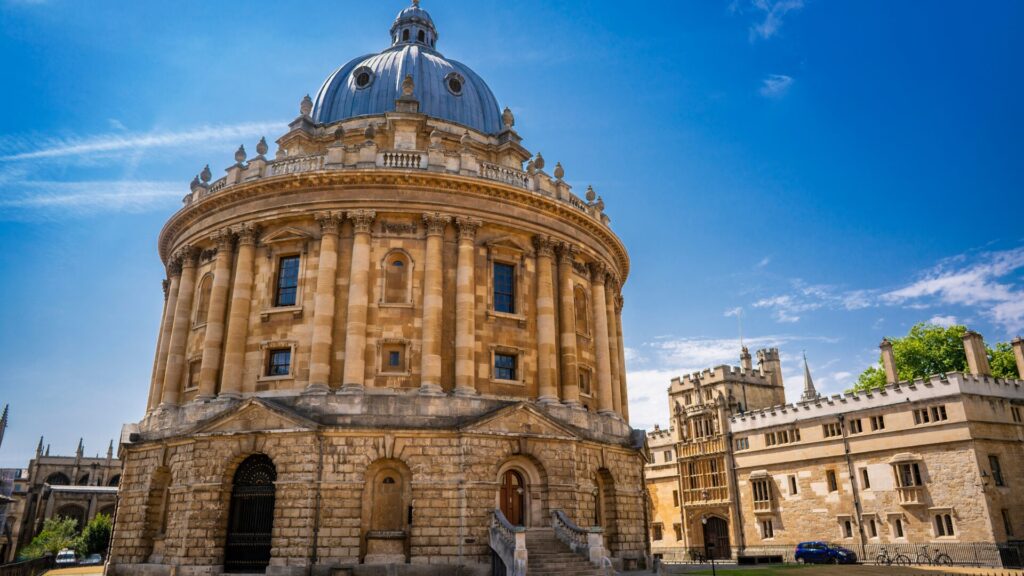
Beyond the classroom, students explore landmarks like the Radcliffe Camera and Bodleian Library, wander the Oxford Botanic Garden, one of the oldest in the UK, and go punting along the River Cherwell past the city’s historic colleges and gardens.
These excursions turn academic theory into something students can actually see and question in person. Along the way, students also build friendships with peers from around the world.
Scholarships and Bursaries That Widen Access
Our Essay Competition gives students the chance to win a full scholarship toward their Oxford programme by submitting an academic essay on a set topic. In turn, this opens the door to students who might otherwise struggle to afford a summer in Oxford.
Our Bursary Programme adds further support, providing need-based financial assistance that may cover up to 100% of tuition for our Oxford Summer School, depending on individual circumstances, giving every ambitious student a fair chance to attend a prestigious summer school regardless of their financial background.
Which Oxford College Will You Live and Study In?
Where you live during a summer programme shapes the experience just as much as what you study, since each Oxford college carries its own architecture, history, and daily rhythm that becomes part of student life for two weeks.
Here’s a closer look at the three Oxford colleges you could call home during our Oxford Summer School.
St Edmund Hall
Known affectionately as “Teddy Hall,” St Edmund Hall dates back to around 1226, making it one of Oxford’s oldest and most historic communities.
Its small, welcoming setting creates a genuinely close-knit environment right in the heart of the city. As a result, students get an intimate college experience rather than getting lost among Oxford’s larger, more sprawling institutions.
Balliol College
Known as one of Oxford’s most academically distinguished colleges, Balliol has produced five Nobel Laureates as students, more than any other Oxford college, alongside three British prime ministers and evolutionary biologist Richard Dawkins.
Students stay at the modern Master’s Field residence while dining at the historic Broad Street college. This combination brings contemporary comfort together with a legacy of genuine academic distinction.
Oriel College
Sitting at the centre of Oxford and overlooking Radcliffe Square, Oriel College is instantly recognisable for its honey-coloured stone quads, with the Front Quadrangle dating back to the 1620s.
Historic teaching spaces sit alongside the college’s living quarters. Together, they give students an authentic taste of collegiate life in one of the city’s most iconic architectural settings.
How Immerse Compares With Other Oxford Summer Programmes
Choosing between so many similarly worded providers becomes far easier once you compare them against specific, checkable details rather than general claims of being “the best” or “award-winning.”
Here’s how Immerse Education’s Oxford Summer School compares against typical alternatives.
| Comparison Area | Immerse Education | Other Providers |
| Teaching Style & Class Size | Tutorial-style small groups with an average of seven participants per class. | Often larger, lecture-style classes with limited room for individual feedback. |
| Tutor Background | Tutors with genuine university-level teaching and research experience. | Teaching quality and relevant experience can vary significantly between providers. |
| Residential Experience | Students live inside real Oxford University colleges, including St Edmund Hall, Balliol, and Oriel. | Often generic student accommodation with little connection to college life. |
| Tangible Outcomes | A substantial Personal Project alongside a detailed evaluation and possible tutor’s letter of recommendation. | Often limited to a general certificate of attendance. |
| Accessibility | Essay Competition scholarships and a Bursary Programme covering up to 100% of tuition. | Financial support is less commonly available or advertised. |
Is an Oxford Summer Programme Worth It?
Yes, an Oxford summer programme is a genuinely worthwhile investment. That said, it should offer real academic depth, tangible outcomes, and support built for teenagers, rather than simply a scaled-down university experience.
At Immerse Education, you gain undergraduate-level subject exposure through tutorial-style teaching. Alongside this, you’ll live inside historic Oxford colleges such as St Edmund Hall, Balliol, and Oriel. On top of that, you’ll complete a substantial Personal Project as genuine evidence of your ability.
Combined with expert tutors, mentors who know Oxford inside out, and scholarships that widen access, you walk away with real clarity on your academic interests, a stronger university application, and memories that last well beyond the summer.
FAQs
What Subjects Are Available at the Oxford Summer School?
We offer a wide range of subjects across two age groups at our Oxford Summer School. Students aged 13-15 can choose from Business Management, Computer Science, Creative Writing, Economics, Law, and Medicine.
Students aged 16-18 have access to a broader range, including Architecture, Artificial Intelligence, Biology, Chemistry, Criminology, Engineering, International Relations, Mathematics, Philosophy, Philosophy Politics & Economics, Physics, and Psychology, alongside the subjects offered at the younger age band.
When Do 2026 Oxford Summer School Sessions Run?
Our Oxford Summer School sessions in 2026 run across 3 two-week blocks between late June and mid-August: 5th July – 18th July, 19th July – 1st August, and 2nd August – 15th August.
Not every subject is available in every session, so we encourage students to confirm which dates match their chosen subject and age group. We’d also suggest booking early, since popular subjects and sessions can fill up well before the summer begins.
How Long Does the Oxford Summer School Programme Last?
Our Oxford Summer School runs for two weeks. This gives students enough time to build a genuine rapport with their tutors and mentors. They can work through a substantial curriculum and complete a meaningful Personal Project. At the same time, they still balance academic sessions with excursions and cultural activities across the city.
We’ve found two weeks keeps the experience focused and immersive, rather than spreading learning too thin over a longer stay.
How Much Does the Oxford Summer School Cost?
Our Oxford Summer School costs £7,495 for the residential option and £5,995 for the non-residential option. This covers the standard two-week Academic Insights programme in 2026.
These fees are consistent with several of our other locations, including Cambridge and Singapore. Since we review pricing annually, we’d recommend confirming current fees and any subject-specific variations directly on our website before enrolling.
What Is Included in the Programme Fee?
Our residential programme fee covers tuition, accommodation at an Oxford University college, meals, course materials, and extracurricular activities. This gives families a clear, all-inclusive cost without unexpected extras once the programme begins.
Our non-residential fee covers the same academic elements, including tuition, course materials, and extracurricular activities, but excludes accommodation and meals. This makes it a suitable option for students who already have accommodation arranged in Oxford for the programme’s duration.
Are There Any Scholarships Available for the Oxford Summer School?
Yes, we offer two main routes to financial support. Our Essay Competition awards winning applicants a full or partial scholarship toward their chosen programme, based on a submitted academic essay.
Our Bursary Programme provides need-based financial assistance that may cover up to 100% of tuition, depending on individual circumstances. Both routes are designed to make our Oxford Summer School accessible to talented students regardless of financial background.
Conclusion
Choosing the right programme comes down to matching your goals with genuine academic depth, expert tutors, and a setting built for ambitious learners.
The best summer programme in Oxford is one that turns curiosity into clarity, not just an impressive brochure or a recognisable name.
That’s exactly what our Oxford Summer School is built to deliver, combining tutorial-style teaching, historic college life, and a substantial Personal Project that gives you real proof of what you’ve achieved.
Ready to get a taste of what Oxford really feels like? Explore our Oxford Summer School today and start building the confidence, skills, and clarity your future deserves.