


 Русский (RU)
 Українська (UK)
 Türkçe (TR)
 Italiano (IT)
 Français (FR)
 Português (PT)
 中文 (中国) (ZH)
 Español (ES)
 日本語 (JA)
 ไทย (TH)
 Deutsch (DE)
 Ελληνικά (EL)
 Polski (PL)
 Bahasa Indonesia (ID)
 Nederlands (NL)
 العربية (AR)
 한국어 (KO)

Japan moves at two speeds at once. Neon-lit innovation sits beside centuries-old tradition, creating a learning environment that challenges how you see the world. Study abroad programmes in Japan place you inside this contrast, not on the sidelines.
You choose Japan to develop global competence through meaningful academic engagement and cultural immersion. These programmes combine structured learning with lived experience, not observation.
Through language learning, collaboration, and daily cultural interaction, you build confidence, adaptability, and cross-cultural awareness.
In this article, we cover everything you need to know about studying abroad in Japan, from academic structure to cultural immersion and specialist pathways.
Immersive Urban Learning Through Tokyo-Based Programmes
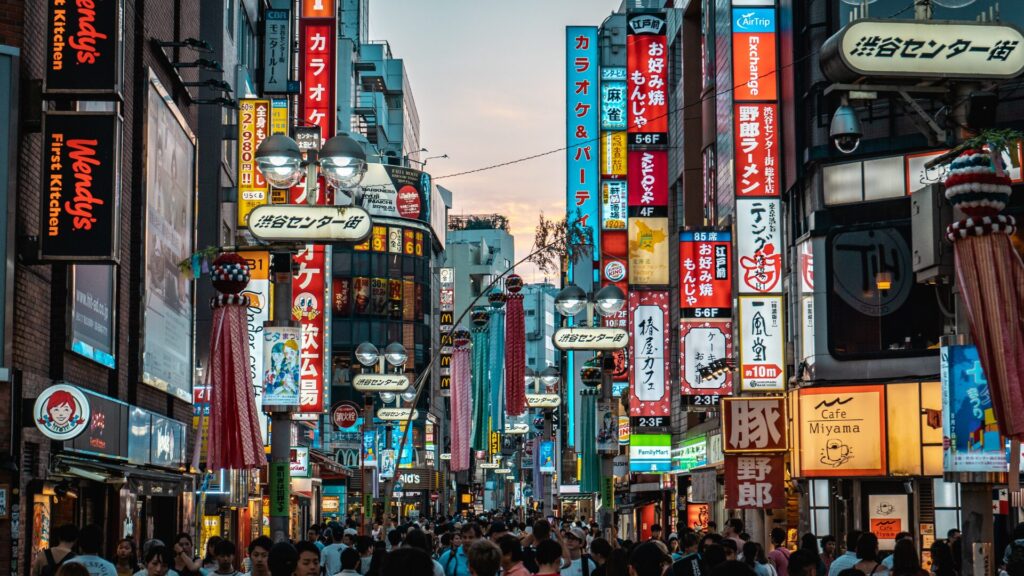
Joining a Tokyo summer school places you inside a city of vivid contrasts. Glass towers and glowing billboards frame narrow streets where wooden shopfronts and paper lanterns still line the way. Academic ideas unfold around you in a setting that feels constantly alive.
Hands-on learning happens in specific, memorable places. In Asakusa, you study cultural traditions beneath the tall red gates of Sensō-ji, with incense drifting through busy temple courtyards. In Shibuya, you observe crowded crossings and large digital screens as case studies in modern city life and urban design. Around Tokyo Bay, you explore clean waterfront areas while examining sustainability, transport, and environmental planning.
Academic sessions connect directly to these settings. Observation, movement, and reflection turn the city itself into a powerful learning resource.
Structure of Japan Study Abroad Programmes
Across the country, Japan offers several study abroad pathways designed around different academic goals and time commitments. These range from intensive language study to full university enrolment and short-term academic experiences.
Below are the main programme structures available to international participants.
1. Japanese Language Schools and Cultural Programmes
Japanese language schools offer intensive instruction focused on grammar, vocabulary, pronunciation, and kanji, often with four to five hours of daily classroom study. Many programmes align teaching with JLPT preparation and structured progression levels.
Cultural immersion is built through homestays, tea ceremonies, calligraphy workshops, local festivals, and guided community activities. Using Japanese beyond the classroom reinforces confidence, accuracy, and cultural awareness in real-world settings.
2. University Exchange Programmes
University exchange programmes are a common option within study abroad programmes in Japan, allowing you to study at a Japanese university for one semester or a full academic year while remaining enrolled at your home institution.
Courses may be taught in English or Japanese, depending on the host university and your language level. You typically join regular lectures, seminars, and group projects alongside local participants. Credits are often transferable, and support services help you adapt to academic expectations, assessment styles, and campus life in Japan.
3. University Degree Programmes
University degree programmes in Japan let you enrol for a full bachelor’s or master’s. English-taught options include the University of Tokyo’s PEAK undergraduate track and Keio University’s GIGA programme at Shonan Fujisawa, while Japanese language study often runs alongside your major. Expect lectures, seminars, research methods training, and a capstone or dissertation.
Universities provide academic advising, language modules, libraries, laboratories, and student societies to support integration into campus life in fields like engineering, international relations, business, or environmental studies, too.
4. Short-Term and Summer Programmes
Short-term and summer programmes usually run for two to eight weeks, mixing seminars with workshops and assessed outputs. Expect case studies, group presentations, a short research brief, and guided reflection tasks.
Excursions often include Meiji Jingu, Sensō-ji in Asakusa, the Edo-Tokyo Museum area, and neighbourhood fieldwork in Shibuya or Akihabara. Many programmes add cultural sessions like tea ceremony, calligraphy, or etiquette training. Introductory language classes cover survival Japanese for ordering food, asking directions, and using the Tokyo Metro with a Suica or PASMO card.
5. Vocational School Programmes (Senmon Gakkō)
Vocational school programmes focus on practical, career-oriented training in fields such as animation, game design, IT, fashion, hospitality, and culinary arts. You follow a hands-on timetable that mirrors professional working environments, with studio-based learning, technical workshops, and industry-standard equipment.
Many programmes include portfolio development, project-based assessment, and exposure to Japanese workplace culture. Instruction is often delivered in Japanese, making language development an essential part of daily study and professional preparation.
6. Internship Programmes
Internship programmes combine academic learning with supervised professional experience in Japan.
Placements are commonly available in technology, e-commerce, media, and innovation-driven sectors, with companies such as Rakuten, Mercari, and Sony offering structured internship opportunities for international participants.
You balance workplace responsibilities with reflective assignments, skills workshops, or academic supervision. Many programmes include preparation for Japanese workplace etiquette, communication styles, and team-based collaboration, helping you gain practical experience while developing insight into professional culture in Japan.
7. Government and Scholarship Programmes
Government and scholarship programmes provide funding-backed routes for international study in Japan. Well-known options include the Japanese Government (MEXT) Scholarship, which supports full degree study, and JASSO’s Student Exchange Support Programme for short-term exchange participants.
These schemes may cover tuition fees, living costs, or monthly stipends. Eligibility is competitive and often linked to academic performance, nationality, and programme type, but they offer structured access to recognised Japanese institutions.
Biology
In-person
Uncover life’s mysteries in Cambridge, where groundbreaking biological...

Environment and Sustainability
In-person
Discover sustainable urban solutions in Tokyo, a megalopolis...

Cultural Integration and Language Immersion
Cultural integration sits at the heart of studying in Japan and shapes how you experience daily life. Many programmes include homestays with local host families, where you share meals, follow household routines, and practise Japanese in natural settings. Student communities also play an important role, bringing together participants from different countries and creating shared spaces for collaboration, discussion, and support.
Cultural excursions strengthen this learning through direct exposure. You might take part in tea ceremonies, visit neighbourhood festivals, explore local markets, or attend calligraphy and etiquette workshops. Using Japanese to ask questions, read signs, and navigate public transport builds confidence quickly and encourages practical fluency.
Language immersion also supports intercultural awareness. Understanding social customs, communication styles, and respectful behaviour helps you engage thoughtfully with people and surroundings. This awareness deepens relationships and ensures meaningful, positive cultural exchange.
Join the Immerse Education 2025 Essay Competition
Follow the instructions to write and submit your best essay for a chance to be awarded a 100% scholarship.
Academic and Personal Development Outcomes
Studying in Japan supports deep academic and personal growth through daily challenges, reflection, and responsibility. You build independence by managing unfamiliar routines, academic schedules, and living arrangements in a new cultural setting.
Critical thinking develops as you compare perspectives, question assumptions, and apply ideas across different academic and social contexts.
Key competencies you develop include:
- Independence, through self-management and decision-making abroad
- Critical thinking, by engaging with new academic frameworks
- Global awareness, shaped by constant cultural exposure
- Language proficiency, strengthened through classroom use, homestays, and daily interactions
- Adaptability, as you respond confidently to unfamiliar situations
These outcomes extend well beyond your time in Japan. Universities value international study for the maturity, resilience, and curiosity it demonstrates. The skills you gain support future academic pathways, strengthen university applications, and help you stand out in competitive admissions processes.
Environmental, Sustainability, and STEM Pathways in Japan’s Academic Landscape
Japan offers strong academic pathways for participants interested in sustainability, environmental systems, and applied sciences. These programmes link classroom learning to real challenges shaped by urban density, natural disasters, energy demands, and climate change. Studying these themes in Japan allows you to see how a highly developed society balances innovation with environmental responsibility.
Our Environment and Sustainability summer school in Tokyo demonstrates this applied approach clearly. You explore climate resilience, renewable energy, sustainable development, and social innovation through project-based sessions and case studies. Learning extends beyond seminars into practical workshops and industry visits across Tokyo’s sustainability sector.
These include exposure to real infrastructure and policy responses, helping you understand how science, government, and industry work together to address environmental pressures in a global city. Ethical debates, guest speakers, and professional development sessions add further depth and career insight.
For students drawn to leadership, systems thinking, and decision-making, our Tokyo Business Management summer school offers insight into how organisations operate within complex economic and environmental constraints. Students explore strategy, innovation, and responsible business practices, considering how companies balance growth with sustainability and social impact in a competitive international market.
Students with an interest in applied STEM can also pursue our Tokyo Engineering summer school, where the focus is on problem-solving, analytical thinking, and practical application. Through structured academic sessions and project work, students explore how engineering principles are used to design solutions for infrastructure, energy systems, and technology-driven innovation. Guided by experienced tutors, participants develop confidence working with complex ideas in a university-style learning environment.
Together, these programmes support practical understanding, analytical skills, and readiness for future study in environmental science, biology, and wider STEM pathways, all within Japan’s research-driven academic landscape.
Learning Beyond Borders in Japan
Japan remains a premier destination for academic immersion, cultural exploration, and globally focused personal development. Its learning culture blends intellectual rigour with lived cultural experience in ways few countries can match.
Strong programme structures, cultural integration, and academic challenge work together to create meaningful international learning. Through study abroad programmes in Japan, you engage with ideas through experience, reflection, and real responsibility.
Specialised pathways in sustainability, biology, and urban studies align academic interests with real-world application and future direction.
If you’re curious about studying somewhere that will challenge how you think, live, and learn, explore our Japan programmes and take the next step towards an experience that truly shapes your future.