



 Русский (RU)
 Українська (UK)
 Türkçe (TR)
 Italiano (IT)
 Français (FR)
 Português (PT)
 中文 (中国) (ZH)
 Español (ES)
 日本語 (JA)
 ไทย (TH)
 Deutsch (DE)
 Ελληνικά (EL)
 Polski (PL)
 Bahasa Indonesia (ID)
 Nederlands (NL)
 العربية (AR)
 한국어 (KO)
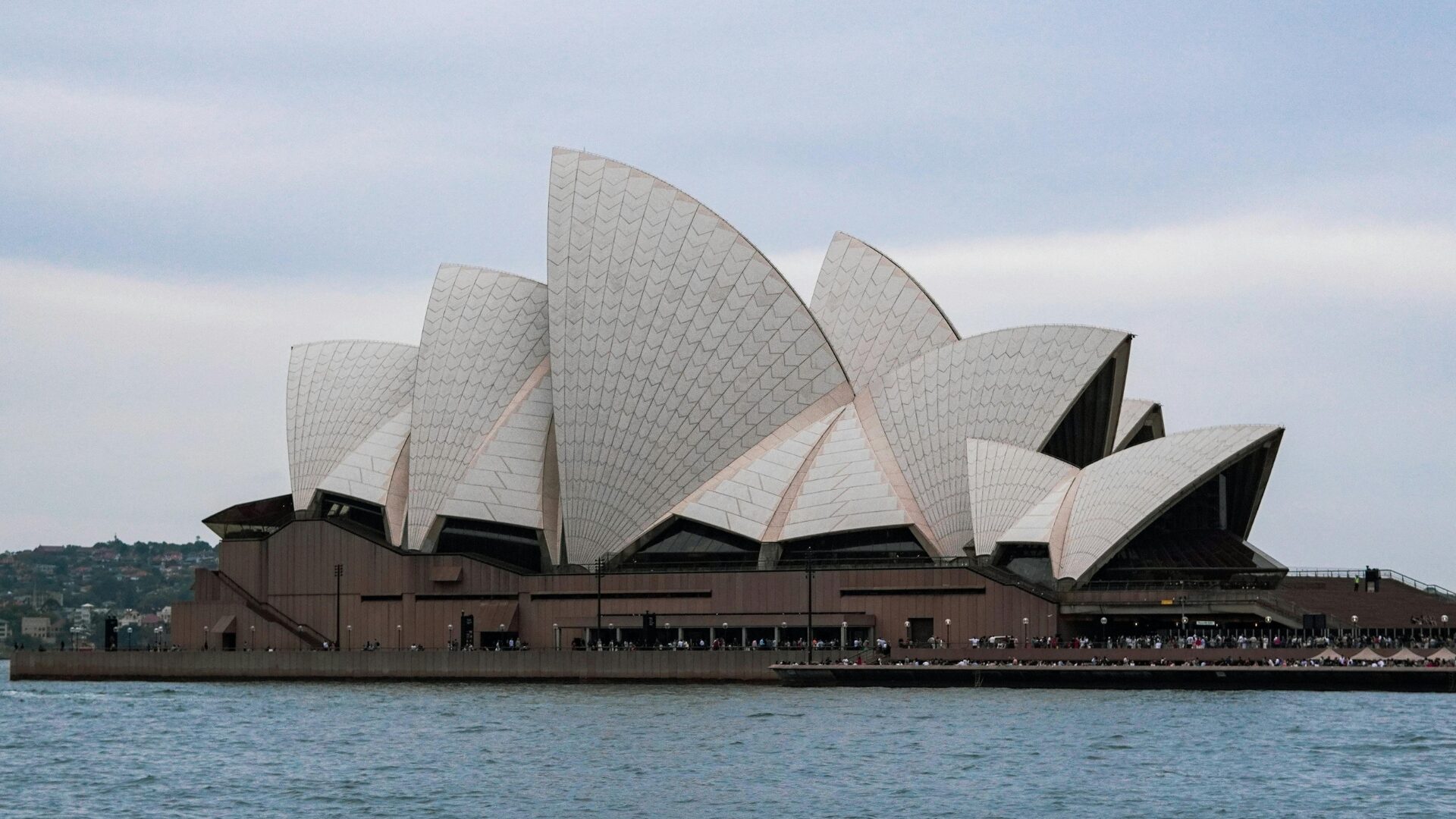
Australia offers more than a place to study, but getting your visa right is one of the first steps for turning that ambition into a real academic plan.
If you’re an international student who wants to study in Australia, you’ll usually need the Student visa subclass 500, which allows you to study an eligible course, live in Australia during your programme, and work limited hours while your course is in session.
In this guide, we’ll discuss the key requirements, application steps, fees, bank balance expectations, timelines, common mistakes, and practical ways to avoid delays with confidence and clarity.
Let’s begin with the essentials you need first.
Navigating the Australian Student Visa Process in 2026
The main visa for international students who want to study in Australia is the Student visa subclass 500. It lets you join an eligible course, travel in and out of Australia while your visa is valid, and work up to 48 hours per fortnight when your course or training is in session.
Home Affairs says students can stay for up to six years, depending on their course type and length. A three-year bachelor’s degree, a one-year diploma, or a packaged pathway can therefore lead to different visa periods.
The base charge starts from AUD 2,000 for the main applicant, unless an exemption applies, and students may also pay for health checks, police certificates, biometrics, and family members.
You can apply from inside or outside Australia, but the application must be completed online. If granted, your visa is digitally linked to your passport, so you will not receive a physical label.
Essential Requirements for a Study Visa in Australia
Before you apply for a study visa in Australia, you need to understand the core requirements that show you are enrolled, prepared, financially ready, and able to meet the conditions of studying overseas.
With that in mind, here are the requirements that can shape your application from the very beginning.
1. Confirmation of Enrolment (CoE)
A Confirmation of Enrolment, often called a CoE, proves that you have accepted a place in an eligible Australian course and is usually needed before your Student visa subclass 500 can be decided.
Before this, your provider will usually send a Letter of Offer with your course details, conditions, tuition information, acceptance steps, and any deposit you need to pay. Once you accept the offer and meet the requirements, your provider can issue your CoE.
Your CoE shows your course name, provider, start date, end date, and enrolment status, helping Home Affairs understand your study plan and visa length. If you are taking a packaged pathway, such as English language study followed by a diploma or degree, you may need a CoE for each course.
Before applying, check that your CoE is still valid and matches your passport, offer, and study dates.
2. Genuine Student (GS) Requirement
The Genuine Student requirement applies to Student visa applications lodged on or after 23 March 2024, replacing the former Genuine Temporary Entrant requirement.
To meet it, you must show that you are a genuine applicant and that studying in Australia is your main reason for applying. Home Affairs also recognises that genuine students may later apply for permanent residence if eligible, so post-study plans do not automatically count against you.
In the online form, you’ll answer GS questions in English, with a 150-word limit for each response, usually covering:
- current circumstances, including family, community, employment, and economic ties
- course and provider choice
- understanding of study and life in Australia
- how the course could benefit your future
- relevant visa history, if asked
Home Affairs gives more weight to answers supported by evidence, such as transcripts, certificates, employer details, bank statements, tax records, previous study history, or reasons for study gaps.
3. English Language Proficiency Benchmarks
English language evidence is not the same for every Student visa subclass 500 applicant, so check your document checklist before booking a test.
Australia’s Simplified Student Visa Framework uses your education provider and country of citizenship to decide whether you need to provide English language evidence. If required, Home Affairs accepts approved tests taken at a secure test centre, such as:
- IELTS Academic or General Training
- PTE Academic
- TOEFL iBT
- Cambridge C1 Advanced
- CELPIP General
- LANGUAGECERT Academic
- Michigan English Test
- Occupational English Test
Approved English tests changed on 7 August 2025, so older advice may be outdated. Before applying, check whether you need English evidence, whether your test is accepted, and whether your result is still valid.
Veterinary Studies
In-person
Advance your animal care skills in Sydney, home...

Creative Writing
In-person
Unleash your storytelling potential in Sydney, a city...

Step-by-Step: How to Apply for a Study Visa in Australia
Once you understand the main requirements, the next stage is knowing how the application actually moves from choosing a course to submitting your documents through Australia’s online immigration system.
With that said, here are the steps that turn your study plans into a visa application.
Step 1: Choose Your Course and Obtain Your CoE
Your first step is to choose a course that is eligible for international student enrolment, as your visa application must be linked to a confirmed study programme in Australia.
This could be a university degree, vocational qualification, English language programme, postgraduate course, or packaged pathway, such as Certificate III in Carpentry, Diploma of Nursing, or a Graduate Diploma in Early Childhood Education.
After choosing a course, your provider will usually send a Letter of Offer with the key conditions and acceptance steps.
Once you accept and meet the requirements, they can issue your Confirmation of Enrolment, or CoE, for your Student visa subclass 500 application.
Step 2: Create an Account with the Australian Immigration Digital Portal
Your next step is to create an ImmiAccount, the online portal used by the Australian Department of Home Affairs for visa applications.
You’ll use it to start your Student visa subclass 500 application, enter your details, upload documents, pay the visa charge, receive messages, and track updates, so use an email address you check often.
If an education agent or migration agent helps you, make sure you still understand what is being submitted, because you are responsible for the accuracy of your application.
Step 3: Collate Your Digital Documentation
Before you complete the online form, gather your documents in digital format so you can upload them clearly in ImmiAccount.
Your exact checklist depends on your course, citizenship, and personal circumstances, but you may need:
- Passport identity page
- Confirmation of Enrolment
- Overseas Student Health Cover evidence
- Financial evidence, such as bank statements, loan approval letters, scholarship letters, or sponsor documents
- Proof of access to at least AUD 29,710 for annual living costs, before tuition and travel
- English language test results, if required
- Academic transcripts or certificates
- Employment letters, if relevant
- Health, character, or identity documents requested by Home Affairs
Avoid unclear screenshots or incomplete records, especially for financial evidence. If you have study gaps, previous visa refusals, or a change in study direction, prepare evidence that explains your situation clearly.
Name your files clearly before uploading, so your application is easier to review.
Step 4: Complete the Visa Application Online
Once your documents are ready, complete your Student visa subclass 500 application in ImmiAccount.
Take care with your personal details, passport information, course details, education history, employment history, travel history, and Genuine Student responses.
Your answers should match your documents. For example, your course name and start date should match your CoE, and your passport details should match your identity page.
For the Genuine Student questions, avoid vague answers such as “Australia has good education”. Instead, connect your course, provider, and future plans clearly.
For example:
I chose the Diploma of Nursing because it builds on my interest in healthcare and gives me practical clinical training before progressing further in the field. I chose this provider because the course structure includes supervised placements, which will help me gain applied experience in an Australian healthcare setting.
Before submitting, review the form for small errors, such as an incorrect passport number, missing date, or unclear answer.
Step 5: Pay the Application Fees and Attend Biometrics if Required
After reviewing your form, pay the Student visa subclass 500 application charge through ImmiAccount.
The base charge starts from AUD 2,000 for the main applicant, unless exempt, with possible extra costs for health checks, police certificates, biometrics, or family members.
After payment, Home Affairs may ask for biometrics, such as a facial image and fingerprints, at an approved collection centre.
Keep checking ImmiAccount and your email for updates or requests for more information, and avoid booking flights or making non-refundable plans until your visa is granted.
Join the Immerse Education 2025 Essay Competition
Follow the instructions to write and submit your best essay for a chance to be awarded a 100% scholarship.
Financial Planning: Fees and Proof of Funds
Studying abroad can be a major step towards your academic and personal goals, but it can also come with significant costs, which is why planning your visa fees, tuition, living expenses, travel, and health cover early is so important.
With that in mind, here are the key costs and proof of funds details you need to understand before applying.
How Much is the Student Visa Fee in Australia in 2026?
The Student visa subclass 500 base application charge starts from AUD 2,000 for the main applicant, unless an exemption applies.
You may also need to pay extra costs depending on your application, so the visa fee is not always your only expense. These can include:
- Health checks
- Police certificates
- Biometrics
- Charges for family members included in your application
Before paying, use the official Visa Pricing Estimator in ImmiAccount or on the Home Affairs website, as fees can change and the estimator does not include every extra cost.
How Much Bank Balance is Required for an Australia Student Visa?
For a study visa for Australia, you may need to show that you have enough money to cover your stay, not just your tuition fees. As a guide, student visa applicants must show access to at least AUD 29,710 for annual living costs, before adding tuition and travel costs.
These estimated costs are based on guidance shared by QS.
| Cost type | Estimated amount |
| Annual living costs | From AUD 29,710 |
| Undergraduate bachelor’s degree | Around AUD 20,000 to AUD 45,000 per year |
| Postgraduate master’s degree | Around AUD 22,000 to AUD 50,000 per year |
| Doctoral degree | Around AUD 20,000 to AUD 42,000 per year |
| Weekly accommodation | Around AUD 90 to AUD 440 |
| Weekly groceries and eating out | Around AUD 140 to AUD 280 |
| Weekly gas and electricity | Around AUD 10 to AUD 20 |
| Weekly phone and internet | Around AUD 15 to AUD 30 |
| Weekly public transport | Around AUD 30 to AUD 60 |
Overseas Student Health Cover
Overseas Student Health Cover, or OSHC, is usually required for your Student visa subclass 500, and it should cover the full length of your stay in Australia.
For a single student policy, estimated annual costs are often:
- Budget providers: around AUD 450 to AUD 550
- Average providers: around AUD 550 to AUD 650
- Premium providers: around AUD 650+
Before choosing, compare hospital cover, doctor visits, prescription support, waiting periods, and claims, then keep your OSHC certificate ready.
Academic Standards: Is a 2.5 GPA Accepted in Australia?
A 2.5 GPA may be accepted by some Australian institutions, but it depends on the provider, course level, subject, and entry route.
Your GPA affects admission, not the visa itself. For the Student visa subclass 500, Home Affairs focuses on your enrolment, Genuine Student requirement, finances, health cover, and supporting documents.
If your GPA is around 2.5, you may still have options, especially if direct university entry is competitive. These can include foundation programmes, diploma pathways, vocational courses, or English preparation before your main qualification.
Check the exact entry requirements for your chosen course before applying, as each provider sets its own academic standards.
Practical Tips for a Successful Application
A successful application is not only about having the right documents, but also about showing that you have prepared carefully for the full process.
Here are some practical tips that can help you avoid problems before and after submission:
- Apply before peak intake periods, especially before February or July starts.
- Use the same email throughout, including for your provider, ImmiAccount, and OSHC.
- Save copies of every receipt, including visa payment, OSHC, and health checks.
- Check passport validity early, as renewing it later can complicate your records.
- Keep evidence of provider communication, especially if your start date or enrolment changes.
Life After Approval: Preparing for Your Move
Once your Student visa subclass 500 is granted, check your visa grant letter so you understand your conditions, expiry date, and work rights.
Most students can work up to 48 hours per fortnight while their course or training is in session, with different rules during scheduled breaks or for some research students.
Before travelling, prepare your passport, visa grant letter, CoE, OSHC details, accommodation address, emergency contacts, and enough funds for your first few weeks.
If you are still comparing locations, our guide to the top universities in Australia can help you understand where different study paths could take you.
You can also plan practical arrival steps early, from opening a bank account to finding accommodation in Sydney before your course begins.
FAQs
Can I Work On A Student Visa In Australia?
Yes. Most students can work up to 48 hours per fortnight while their course or training is in session.
How Long Does The Visa Processing Take?
Processing times vary by application, intake period, and document quality, so check the official Home Affairs visa processing time guide.
What Happens If My Visa Is Refused?
You’ll receive a refusal decision explaining the reasons and whether review rights are available for your case.
Conclusion
Applying for a study visa for Australia feels easier when you understand the requirements, costs, documents, and timelines before starting your application.
From your CoE to proof of funds, each step should support a clear, credible plan for studying and living overseas.
The strongest applications are organised, honest, and specific, helping your chosen course feel connected to your goals, circumstances, and future direction.
To prepare for that next step with more confidence, explore our Sydney Summer School and experience academic life in an inspiring international setting.