
 Русский (RU)
 Українська (UK)
 Türkçe (TR)
 Italiano (IT)
 Français (FR)
 Português (PT)
 中文 (中国) (ZH)
 Español (ES)
 日本語 (JA)
 ไทย (TH)
 Deutsch (DE)
 Ελληνικά (EL)
 Polski (PL)
 Bahasa Indonesia (ID)
 Nederlands (NL)
 العربية (AR)
 한국어 (KO)

As a high school junior, summer can feel like a turning point. You’re close enough to college that future plans start feeling real, but still early enough to explore academic interests before applications begin. Summer programs for high school juniors can help you move beyond classroom learning through university-level academics, research environments, and practical projects.
Picture yourself conducting research in a university lab, building coding projects with mentors, discussing politics and literature in seminar-style classes, or working alongside researchers and professionals on real-world problems. Many programmes also introduce you to skills that high school classes rarely cover in depth, such as scientific writing, computational analysis, research methodology, data interpretation, academic discussion, and collaborative problem-solving.
How do you choose the right summer programs for high school juniors?
That’s often the difficult part. Some programs are highly academic and research-focused, while others emphasize career exploration, leadership, or interdisciplinary learning. With so many options available, it can be difficult to tell which programs provide meaningful academic value and which are more introductory.
Across the U.S. and internationally, universities, nonprofits, and research organizations offer summer opportunities that allow students to explore advanced topics in greater depth. You might study genetics at a biomedical research institute, analyze Earth science data with NASA mentors, participate in humanities seminars, or contribute to scientific research projects alongside university faculty. Some programs focus on intensive academic coursework, while others emphasize independent research, leadership development, or collaboration within small cohorts.
Of course, these programs often come with demanding schedules, challenging assignments, and high expectations. But they can also help you understand what subjects genuinely interest you before college applications begin. To make the search easier, we’ve put together a list of 15 Summer Programs for High School Juniors.
For adjacent opportunities, consider the online program for high school juniors.
15 Summer Programs for High School Juniors
1. Research Science Institute (RSI) – Massachusetts Institute of Technology (MIT)
Location: Massachusetts Institute of Technology, Cambridge, MA
Cost/Stipend: Free
Acceptance rate/cohort size: Less than 2.5% acceptance rate
Dates: June 28th – August 8th
Application Deadline: Applications close December 10th
Eligibility: High school juniors worldwide; highly selective admission process
The Research Science Institute (RSI) is a six-week residential research program that combines advanced STEM coursework with independent research. During the first phase, you attend lectures and seminars covering topics in physics, engineering, mathematics, and other quantitative disciplines. You then move into a mentored research placement, where you work with faculty, postdocs, or researchers from institutions connected to MIT.
Participants conduct experiments or computational analysis, meet regularly with mentors, and complete a formal research paper. The program also includes writing workshops, peer review sessions, and research presentations designed to mirror university-level scientific work. By the end of the program, you present your findings in a symposium-style setting alongside fellow participants.
Why it stands out: It walks you through the complete research process, from coursework and experimentation to writing and presenting a formal research paper.
2. Immerse Education’s Pre-University Summer School
Location: Cambridge, London, Oxford, Singapore, Sydney, Tokyo, and Toronto
Cost/Stipend: Varies; summer school scholarship available through our bursary programme
Acceptance rate/cohort size: Selective; an average of 7 participants per class
Dates: Multiple 2-week summer cohorts
Application Deadline: Rolling admissions
Eligibility: Students worldwide aged 13-18 currently enrolled in middle or high school
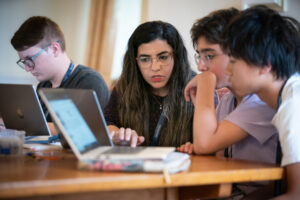
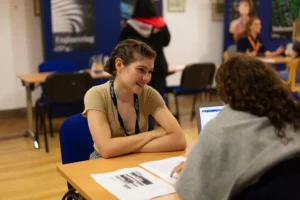
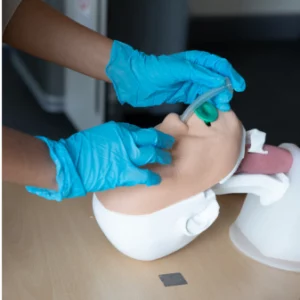
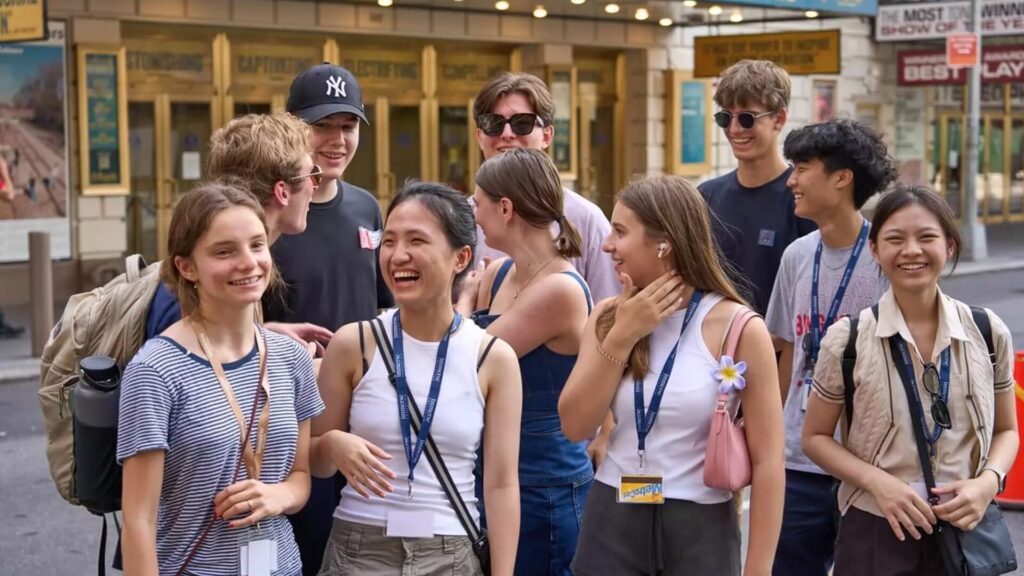
The Academic Insights Programme is one of the most immersive summer programs for high school juniors if you want to experience university-style learning before applications begin. You study alongside peers while living on or near university campuses, with courses taught by tutors connected to institutions such as Oxford and Cambridge. Subjects range from Architecture and Artificial Intelligence to Business Management, Law, Medicine, and Philosophy.
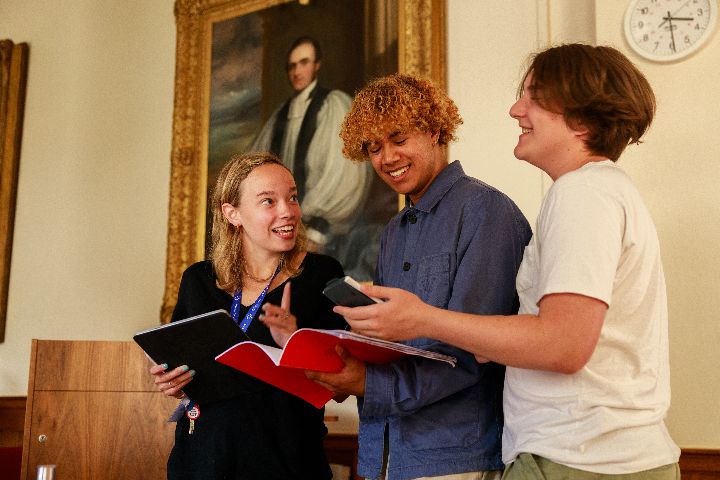
Sessions are designed to be practical and discussion-based, with activities that may include case studies, laboratory exercises, engineering design tasks, or debates. Throughout the program, you also receive support from university student mentors who guide discussions about academics and student life. The experience concludes with a final project, written feedback, and a certificate of completion.
Why it stands out: You combine small-group academic learning with mentorship and a final project while experiencing life in globally recognized university cities
3. Telluride Association Summer Seminar (TASS)
Location: Cornell University, Ithaca, NY, and University of Maryland, College Park, MD
Cost/Stipend: Free (tuition, housing, meals, books, and travel assistance covered)
Acceptance rate/cohort size: Highly selective; cohort size not specified
Dates: June 21st – July 25th
Application Deadline: Applications open October 15th and close December 3rd
Eligibility: High school sophomores and juniors aged 15-17; international students eligible under specific criteria
TASS is a humanities and social sciences seminar program focused on critical thinking, discussion, and community-based learning. Participants enroll in either TASS-CBS or TASS-AOS, both of which explore themes related to history, literature, politics, art, and social structures. Classes are discussion-driven and involve close reading, essay writing, film analysis, and collaborative intellectual work rather than lectures alone.
Outside the classroom, you will participate in democratic decision-making, community projects, and public speaking activities. Faculty members, teaching assistants, and resident advisors support both the academic and residential aspects of the experience. The program places strong emphasis on reading, writing, and examining how power and privilege shape societies.
Why it stands out: It combines rigorous humanities study with community living and student-led decision-making, creating an experience that extends beyond academics alone.
4. Princeton Summer Journalism Program (PSJP)
Location: Princeton University, Princeton, NJ (hybrid format with virtual and residential components)
Cost/Stipend: Free (housing, meals, transportation, and program expenses covered)
Acceptance rate/cohort size: Not specified
Dates: Late June-Early August
Application Deadline: Typically closes in February
Eligibility: U.S. high school juniors from limited-income backgrounds interested in journalism
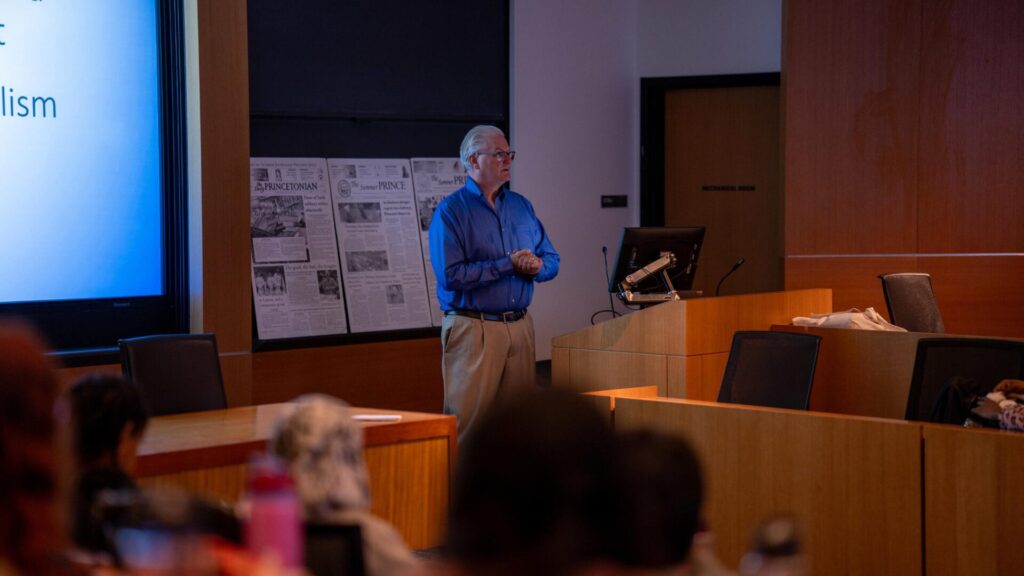
The Princeton Summer Journalism Program brings a writing and media-focused pathway to summer programs for high school juniors, especially for students interested in journalism, current events, and college preparation. Participants first attend virtual workshops and lectures led by journalists and educators before joining a residential experience on Princeton’s campus. During the program, you work on reporting assignments, attend seminars on current events and media, and develop writing and editing skills.
You will also visit major news organizations, cover live events, and collaborate on producing The Princeton Summer Journal. Alongside journalism training, you receive one-on-one college advising and guidance through the admissions process. The structure is designed to introduce students to both journalism practice and college-level academic expectations.
Why it stands out: It combines journalism training with long-term college advising, allowing students to build both reporting skills and application readiness over an extended period.
5. MITES Summer – Massachusetts Institute of Technology (MIT)
Location: Massachusetts Institute of Technology, Cambridge, MA
Cost/Stipend: Free (travel, housing, and meals covered)
Acceptance rate/cohort size: Highly selective; cohort size not specified
Dates: Late June-Early August
Application Deadline: Applications close February 1st
Eligibility: U.S. citizens or permanent residents currently enrolled as high school juniors
MITES Summer is a six-week residential STEM program where students take intensive college-level courses taught by MIT instructors. Coursework commonly includes subjects such as physics, calculus, and life sciences, alongside problem-solving sessions, labs, recitations, and collaborative assignments. The pace closely reflects the academic structure of MIT, with regular quizzes, office hours, and group-based learning. .
Outside class, students live on campus and gain exposure to the routines and expectations of a research-focused university environment. The program is designed to help you evaluate your interest in STEM majors while building familiarity with advanced coursework. You also become part of a broader MITES alumni network that continues beyond the summer.
Why it stands out: It offers sustained exposure to MIT-style STEM academics while connecting students to a long-standing alumni community and research-oriented learning environment.
6. Stanford Institutes of Medicine Summer Research Program (SIMR)
Location: Stanford University, Stanford, CA
Cost/Stipend: Free; limited need-based stipends available
Acceptance rate/cohort size: Highly competitive; preference given to local Bay Area students
Dates: June 8th – July 30th
Application Deadline: Applications available in December; deadline February 21st
Eligibility: U.S. citizens or permanent residents currently living and attending high school in the U.S.; current juniors or seniors aged 16+ by program start
The Stanford Institutes of Medicine Summer Research Program is one of the most specialised summer programs for high school juniors for students interested in medicine, biology, and related STEM fields. Across eight weeks, you work alongside Stanford faculty, postdoctoral researchers, and graduate students on medically oriented research projects in areas such as neurobiology, genetics, cancer biology, bioengineering, and bioinformatics.
You’ll contribute to ongoing lab work, learn how scientific studies are designed, and gain exposure to university-level research methods and collaboration. You can also choose a bioengineering bootcamp pathway focused on hands-on engineering applications rather than traditional lab research. Throughout the summer, you’ll develop technical and analytical skills while gaining insight into how medical research is conducted at a major research institution.
Why it stands out: It places high school students directly into active Stanford research labs, offering early exposure to biomedical research environments and specialized scientific fields rarely accessible before college.
7. Simons Summer Research Program
Location: Stony Brook University, Stony Brook, NY
Cost/Stipend: Free; stipend awarded upon completion
Acceptance rate/cohort size: Highly selective
Dates: June 29th – August 7th
Application Deadline: February 5th
Eligibility: Current high school juniors who are U.S. citizens or permanent residents and at least 16 years old by program start
If you want summer programs for high school juniors that feel close to undergraduate research, the Simons Summer Research Program gives you the opportunity to work on an independent scientific project under the guidance of Stony Brook University faculty mentors. During the program, you’ll join a research team, learn laboratory or computational techniques, and gradually take responsibility for your own project. Participants also attend weekly faculty lectures, workshops, and campus events that introduce broader scientific topics and the university research culture.
By the end of the summer, you’ll prepare a written research abstract and present your findings through a formal research poster symposium. The program is designed for students interested in hands-on scientific inquiry and encourages independence, problem-solving, and analytical thinking.
Why it stands out: You’ll conduct mentor-guided research at a major public research university while completing a formal abstract and poster presentation similar to undergraduate research programs.
8. STEM Enhancement in Earth Science (SEES) Summer Intern Program
Location: University of Texas Center for Space Research and virtual components
Cost/Stipend: Fully funded; housing, meals, and local transportation included for selected participants
Acceptance rate/cohort size: Nationally competitive
Dates: Distance learning and virtual work begin in May and June; on-site internship July 5-18; symposium July 20-21
Application Deadline: February 22nd
Eligibility: Current high school sophomores or juniors who are U.S. citizens and at least 16 years old by July 5th
The SEES Summer Intern Program is a NASA-supported STEM internship that introduces high school students to Earth and space science research through mission-based projects. Participants complete online training modules in Earth science and Python before collaborating with NASA scientists, engineers, and university researchers on research projects involving aerospace, astronomy, remote sensing, and planetary science.
Depending on the project, students may analyze satellite data, study environmental systems, or work on engineering and systems-modeling tasks. The internship combines virtual collaboration with an on-site research experience at the University of Texas Center for Space Research. Students also present their findings during a formal virtual science symposium at the end of the program.
Why it stands out: It combines NASA-backed research mentorship with technical training in data analysis, coding, and Earth systems science through both virtual and on-site research experiences.
9. The Jackson Laboratory Summer Student Program
Location: JAX campuses in Bar Harbor, Maine, and Farmington, Connecticut
Cost/Stipend: Free; includes housing, meals, travel, and a $7,000 stipend
Acceptance rate/cohort size: Highly competitive
Dates: May 30th – August 7th
Application Deadline: January 26th
Eligibility: U.S. high school students aged 16+
The Summer Student Program at The Jackson Laboratory introduces high school students to advanced genetics and genomics research through full-time laboratory placements. You’ll work in an active research lab under the supervision of scientific mentors while contributing to projects involving genetics, molecular biology, and biomedical sciences. Alongside lab work, the program includes journal clubs, workshops, and career discussions with professionals across scientific and medical fields.
Students gradually build independence in research techniques, data interpretation, and scientific communication throughout the summer. At the end of the program, participants present their research findings to peers and researchers within the institution.
Why it stands out: The program combines intensive laboratory research with a substantial stipend and exposure to one of the leading genetics research institutions in the U.S.
10. Hutton Junior Fisheries Biology Program
Location: Various research and field sites across the U.S., Canada, Mexico, Puerto Rico, and the Pacific Islands
Cost/Stipend: Fully funded; includes housing and a $3,000 stipend
Acceptance rate/cohort size: Not specified
Dates: Eight-week internship typically running from mid-June to late July or early August
Application Deadline: January 25th
Eligibility: Rising high school juniors or seniors aged 16+ who are residents of the U.S., Canada, or Mexico
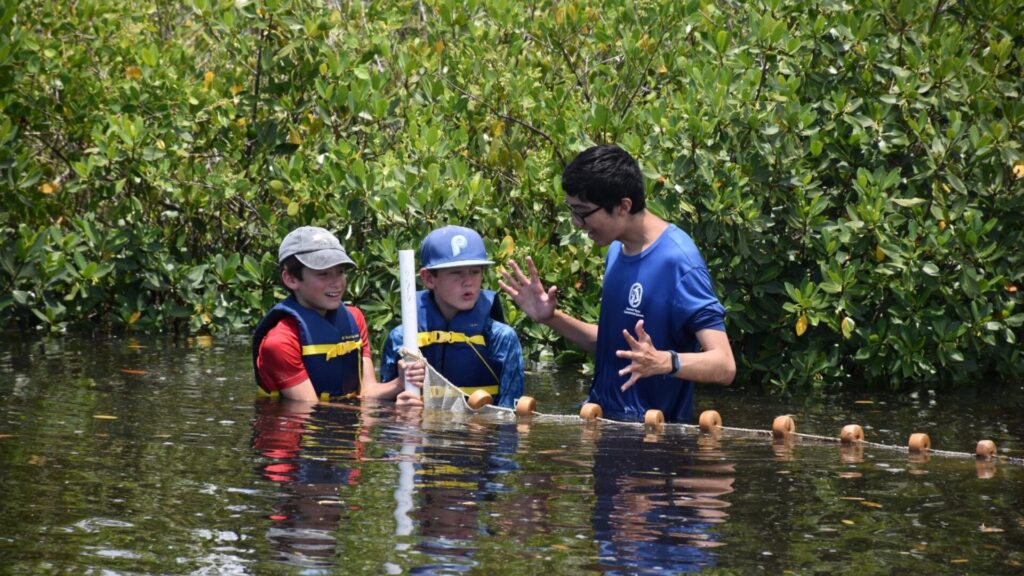
The Hutton Junior Fisheries Biology Program is an eight-week summer internship focused on fisheries science, aquatic ecosystems, and environmental conservation. Students are paired with professional mentors and participate in hands-on fieldwork involving water-quality testing, habitat restoration, fish population studies, and ecological monitoring. The program introduces you to scientific data collection methods while also helping you understand careers in conservation and aquatic sciences.
Throughout the internship, you’ll collaborate with researchers and agencies working on real environmental challenges affecting freshwater and marine ecosystems. The experience is designed to strengthen practical scientific skills while encouraging long-term interest in environmental research and resource management.
Why it stands out: It provides direct field-based experience in fisheries biology and conservation science while pairing students with working environmental professionals across North America.
11. Aspiring Scientists Summer Internship Program (ASSIP)
Location: George Mason University
Cost/Stipend: $25 application fee; $1,299 tuition for accepted interns
Acceptance rate/cohort size: Not clearly specified
Dates: June 18th – August 12th
Application Deadline: February 15th
Eligibility: High school and undergraduate students worldwide aged 15+ for remote/computational projects or 16+ for in-person opportunities
The Aspiring Scientists Summer Internship Program (ASSIP) allows high school students to work on faculty-guided research projects across disciplines such as neuroscience, environmental science, computational modeling, and molecular biology. You contribute to active research projects while learning how scientists design experiments, interpret data, and communicate findings.
Depending on the project, students may gain experience with laboratory techniques, coding, data analysis, or scientific literature review. The program also includes workshops on research ethics, STEM careers, and professional communication. By the end of the internship, students often contribute to research posters, presentations, or publications connected to their projects.
Why it stands out: It gives high school students the opportunity to contribute to publishable research and professional conference-level work alongside university faculty.
12. Yale Young Global Scholars (YYGS)
Location: Yale University, New Haven, CT
Cost/Stipend: $7,000 tuition; need-based financial aid available
Acceptance rate/cohort size: Approximately 13.8%-18%
Dates: Sessions held during June and July
Application Deadline: March 15th
Eligibility: High-achieving high school students from around the world
Yale Young Global Scholars is an academic enrichment program that brings together high school students from different countries for university-style seminars and collaborative learning experiences. You engage in discussions, lectures, and group projects centered on global issues and interdisciplinary subjects. The curriculum emphasizes critical thinking, communication, and exposure to diverse viewpoints through seminar-style instruction similar to Yale’s undergraduate classrooms.
Outside class, students participate in community activities and networking opportunities with peers from a wide range of academic and cultural backgrounds. The program is designed to help students explore academic interests while gaining familiarity with residential university life.
Why it stands out: Students learn in discussion-based seminars alongside peers from over 150 countries, creating an internationally focused academic environment similar to a global undergraduate classroom.
13. National Youth Science Camp (NYSCamp)
Location: Monongahela National Forest, West Virginia
Cost/Stipend: Fully funded; housing, meals, transportation, and supplies included
Acceptance rate/cohort size: Typically, two delegates are selected per U.S. state and Washington, D.C.
Dates: July 11th – August 1st
Application Deadline: Varies by state selection process
Eligibility: High-achieving U.S. high school students; international delegates also participate through partnerships
The National Youth Science Camp is a residential STEAM program that combines advanced scientific learning with outdoor leadership and community-based experiences. You will attend lectures and directed studies led by scientists, researchers, and STEM professionals across disciplines, including physical sciences, engineering, and computer science.
The program also includes seminars, collaborative projects, and arts programming alongside outdoor activities such as hiking, kayaking, and rock climbing in West Virginia’s national forests. Students engage closely with peers and mentors through discussion-based learning and shared residential experiences. Delegates also travel to Washington, D.C., for additional educational activities and professional exposure.
Why it stands out: It blends advanced STEM learning with outdoor leadership, interdisciplinary seminars, and national-level networking in a fully funded residential setting.
14. Anson L. Clark Scholars Program
Location: Texas Tech University
Cost/Stipend: Free; includes housing, meals, and a $750 stipend
Acceptance rate/cohort size: 12 students
Dates: June 21st – August 6th
Application Deadline: February 16th
Eligibility: High-achieving U.S. high school juniors and seniors aged 17+ by program start
The Anson L. Clark Scholars Program is a selective seven-week research program where students work closely with university faculty on individual research projects across STEM, humanities, and social science disciplines. You conduct full-time research while attending seminars, discussions, and academic workshops designed to strengthen analytical and communication skills.
The small cohort size allows for individualized mentorship and close collaboration with faculty members throughout the summer. In addition to research, students participate in field trips and community-building activities that expose them to broader academic and professional environments. The experience concludes with formal presentations of student research projects.
Why it stands out: Its exceptionally small cohort size allows students to receive individualized faculty mentorship while completing intensive interdisciplinary research projects.
15. Girls Who Code Summer Immersion Program
Location: Virtual
Cost/Stipend: Free
Acceptance rate/cohort size: Moderately competitive
Dates: Round 1: June 16-30 | Round 2: July 19-21 | Round 3: July 31st – August 11th
Application Deadline: Early deadline February 17th; general deadline March 29th
Eligibility: Girls and non-binary students; U.S. applicants must be current freshmen, sophomores, or juniors; international students must be aged 14-18 by June 16th
The Girls Who Code Summer Immersion Program is a virtual computer science program focused on building foundational programming and web development skills. You learn coding concepts through hands-on projects involving HTML, CSS, JavaScript, and interactive design while collaborating with peers in structured online sessions. The curriculum introduces industry-relevant technical skills alongside problem-solving and project development workflows commonly used in technology careers.
Participants also connect with women and non-binary professionals in tech through mentorship sessions, career talks, and networking opportunities. Sponsored program cohorts often provide insight into how major companies apply coding and software development in professional environments.
Why it stands out: It combines practical coding instruction with mentorship and industry exposure specifically designed to support girls and non-binary students exploring technology careers.
Turn Junior Summer Into University Momentum
Junior summer sits at the edge of bigger decisions, when academic interests start becoming possible university choices.
The 15 summer programs for high school juniors in this article give you ways to test that readiness through research, seminars, fieldwork, and mentorship.
A demanding project or discussion can help you understand how you think, where you work best, and what kind of subject challenge motivates you.
For support turning those insights into stronger next steps, visit our University Preparation blogs for applications, interviews, subject planning, and supercurricular guidance.