
 Русский (RU)
 Українська (UK)
 Türkçe (TR)
 Italiano (IT)
 Français (FR)
 Português (PT)
 中文 (中国) (ZH)
 Español (ES)
 日本語 (JA)
 ไทย (TH)
 Deutsch (DE)
 Ελληνικά (EL)
 Polski (PL)
 Bahasa Indonesia (ID)
 Nederlands (NL)
 العربية (AR)
 한국어 (KO)

Biology is one of the most dynamic and rapidly evolving scientific disciplines, influencing fields ranging from medicine and biotechnology to environmental science and genetics. For high school students interested in understanding living systems and exploring future careers in the life sciences, biology summer programs in Europe offer an opportunity to engage with advanced scientific concepts in academically rigorous environments.
These programs allow you to investigate topics such as molecular biology, genetics, ecology, physiology, neuroscience, biotechnology, and biomedical sciences while gaining experience with the methods and approaches used in contemporary scientific research. Many programs combine lectures, laboratory sessions, practical experiments, and collaborative projects that mirror aspects of undergraduate biological sciences education.
What kinds of biology summer programs in Europe are there?
Biology summer programs in Europe vary in focus, academic depth, and learning format. Some programs provide broad introductions to biological sciences, while others concentrate on specialised areas such as genetics, molecular biology, neuroscience, ecology, biotechnology, or biomedical sciences.
Universities, research institutions, and educational organisations across Europe offer programs that combine theoretical learning with practical scientific investigation. Students may attend lectures, participate in laboratory experiments, analyse biological data, complete research projects, and engage in discussions that reflect the structure of university-level science education
To make selection easier, we’ve curated a list of 15 Biology Summer Programs in Europe for High School Students, selected based on academic rigour, institutional credibility, subject relevance, opportunities for practical scientific engagement, and exposure to university-level biological sciences.
For adjacent opportunities, consider the online biology program.
Key Takeaways
- Costs range from free, as with UNIQ Biomedical Sciences and the Sutton Trust Biological Sciences Summer School, to €4,600 for Constructor University’s residential Summer Camp in Germany.
- Several free programs are restricted to UK state school students, including UNIQ Biomedical Sciences, the Sutton Trust Biological Sciences Summer School, and Wadham College’s Climate Change Summer School.
- Program length ranges from two days, as with the LifeLab Medicine Summer School, to nearly two weeks, as with the Synthetic Biology and Its Applications Summer School in Estonia.
- Several programs include hands-on laboratory techniques, including molecular cloning at the University of Tartu and genetic research at the Petnica International Science Camp in Serbia.
- International students are welcomed at a smaller set of paid programs, including King’s College London’s Medical Science pathway, Constructor University’s Summer Camp, and Brown Experiential Education’s Oxford program.
- The Petnica International Science Camp stands out for its multidisciplinary, project-based research format, open to students aged 15 to 19 from around the world.
- Immerse Education’s Biology Summer School is one of the few options open to students worldwide aged 13 to 18, combining small-group instruction with an independent research project and detailed written feedback.
15 Biology Summer Programs in Europe for High School Students
1. UNIQ Biomedical Sciences
Location: Oxford, United Kingdom
Cost: Free (travel, accommodation, meals, tuition, and staffing costs covered)
Program Dates: June 29th – July 3rd
Deadline: Applications open December 15th – January 13th
Eligibility: You must meet UNIQ’s general selection criteria. You must be studying at least two of the following subjects at A-level or equivalent: Chemistry, Biology, Physics, or Maths. International students are not eligible unless they meet UNIQ’s specific eligibility requirements. The programme is primarily intended for students attending UK state schools
The UNIQ Biomedical Sciences course introduces you to undergraduate-level study of human health and disease. You’ll examine topics ranging from genetics and neuroscience to organ systems, experimental psychology, and molecular biology. The program emphasizes how biological processes influence health, disease development, and treatment approaches. You’ll observe a first-year Oxford lecture and gain exposure to the tutorial teaching model used at the university.
Leading researchers will discuss their work and answer questions on topics such as sleep science, developmental biology, and hormonal responses to stress. Current students provide insight into academic life and study expectations. By the end of the program, you’ll have a clearer understanding of biomedical sciences and undergraduate study in the field.
Why it stands out: You’ll experience Oxford’s lecture and tutorial system while exploring a broad range of biomedical science disciplines in a single week.
2. Immerse Education’s Biology Summer School
Location: Oxford, Cambridge
Cost: Varies; summer school scholarship available through our bursary programme
Application Deadline: Multiple summer cohorts; rolling admissions.
Program Dates: 2 weeks during the summer
Eligibility: Students worldwide aged 13-18 currently enrolled in middle or high school; open to international students
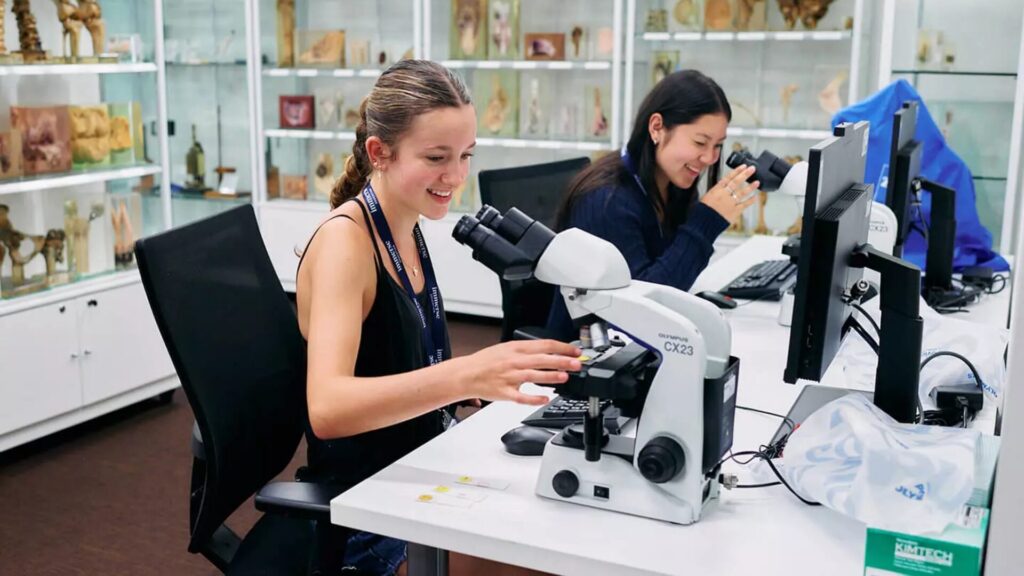
The Academic Insights Program lets high school students experience university life firsthand. You will live on campus and study in small groups of 7-10, and learn from tutors from eminent top universities like Oxford and Cambridge. If you join the Biology Track, you’ll step into a university-style learning environment where you’ll study cellular biology, genetics, ecology, and more, exactly as undergraduates would. The course is experiential and focuses on hands-on learning.
You’ll also get to design and carry out your own mini research project on a biology topic that fascinates you, giving a taste of real-world scientific work. By the end of the program, you’ll receive written feedback and a certificate of completion. You can find more details about the application and specific program details here.
Why it stands out: It pairs you with university-level tutors in focused small groups, helping you deepen subject knowledge and gain rigorous academic mentorship.
3. Sutton Trust Biological Sciences Summer School
Location: University of Nottingham, Nottingham, United Kingdom
Cost: Free
Program Dates: July 5th – July 10th
Deadline: 5th March
Eligibility: You must attend a state-funded, non-fee-paying school and be studying in Year 12 in England or Wales, Year 13 in Northern Ireland, or S5 in Scotland (or equivalent). You must be studying Biology and one other science at A-Level or equivalent. International students are generally not eligible, as the programme is designed for UK students meeting Sutton Trust criteria
This Biological Sciences summer school provides an introduction to undergraduate study across multiple areas of the life sciences. You’ll examine topics in biology, biotechnology, animal science, environmental biology, and biochemistry through interactive academic sessions. The program emphasises practical learning through laboratory-based activities led by academic staff from the Schools of Life Science and Bioscience.
You’ll gain exposure to different biological science degree pathways and the academic expectations associated with them. Current undergraduate students support the learning experience and provide insight into university study. The course is designed to help you evaluate different subject specialisations within the biological sciences. By the end of the program, you’ll have a broader understanding of life science disciplines and their potential academic pathways.
Why it stands out: You’ll explore multiple biological science fields within a single laboratory-focused programme, helping you compare potential university specialisations.
4. King’s College London Pre-University Summer School (Medical Science)
Location: King’s College London, London, United Kingdom
Cost: £3,195 tuition only or £3,965 residential package (one week)
Program Dates: July 6-10, July 13-17, July 20-24, or July 27-31
Deadline: 27th April
Eligibility: Students aged 16-17 who are enrolled in, or about to start, their final three years of high school. Applicants must meet academic and English language requirements. International students are eligible
The Medical Science pathway introduces you to university-style learning through an intensive academic programme delivered at King’s College London. You’ll participate in lectures and seminars designed to reflect undergraduate teaching methods and assessment practices. The program emphasises active learning through discussion, academic analysis, and structured classroom activities.
You’ll complete assignments that mirror university-level coursework and receive feedback from tutors on your performance. Classes are conducted entirely in English and require independent engagement with academic material. Alongside subject learning, you’ll gain exposure to the expectations and pace of higher education study. By the end of the program, you’ll have developed a stronger understanding of medical science and university-level academic work.
Why it stands out: You’ll experience undergraduate-style teaching and assessment while studying medical science in a structured university environment.
5. Synthetic Biology and Its Applications Summer School
Location: University of Tartu, Tartu, Estonia
Cost: €600
Program Dates: July 27th – August 6th
Deadline: 20th April
Eligibility: Upper secondary school students and beginner-level BSc students. International students are eligible
This synthetic biology course provides an introduction to modern genetic engineering and its applications. You’ll gain hands-on experience in molecular cloning by genetically modifying baker’s yeast using pre-designed plasmid vectors. The program emphasises experimental techniques used in molecular biology, including PCR, fluorescence microscopy, FACS, and western blotting.
You’ll apply concepts from synthetic biology to investigate gene expression regulation and biological logic gates. Laboratory sessions also introduce lab safety procedures and the operation of common research equipment. You’ll collect experimental data and analyse results using research-based methods. By the end of the program, you’ll have practical experience with molecular biology workflows and a stronger understanding of synthetic biology principles.
Why it stands out: You’ll build and analyse genetically engineered yeast strains while applying synthetic biology concepts through extensive laboratory work.
6. Summer Camp 2026 at Constructor University – Biology Track
Location: Constructor University (Bremen, Germany)
Cost: €4,600
Program Dates: July 24th – August 4, 2026
Deadline: Rolling basis
Eligibility: High school students aged 16-18 from around the world
Constructor University’s Summer Camp 2026 allows you to explore biology through an intensive university-style academic experience while living on campus in Germany. You’ll study major biological concepts ranging from cell biology, genetics, and evolution to neuroscience, ecology, immunology, and bioengineering.
Throughout the program, you’ll investigate how cells communicate, examine DNA and RNA as the basis of life, explore evolutionary processes, and analyse how the brain influences behaviour and learning. By the end of the program, you’ll have developed a stronger understanding of biological systems, scientific reasoning, and contemporary challenges shaping the future of life sciences.
Why it stands out: Combines broad college-level biology instruction with a fully residential international experience, allowing you to explore advanced life science topics while experiencing university life in Germany alongside students from around the world.
7. Brown Experiential Education: Oxford
Location: Oxford, UK
Cost: Approximately £6,227 ($8,270); financial aid is available
Dates: July 6-17
Application Deadline: May 8th
Eligibility: Students worldwide completing grades 10-12 who are ages 16-18 by June 14th
As one of the most biotechnology-focused biology summer programs in Europe for high school students, this program explores how foundational biology translates into real-world medical advances. Throughout the course, you will explore topics including DNA, proteins, CRISPR gene editing, cancer immunotherapy, artificial intelligence in medicine, and brain-computer interfaces.
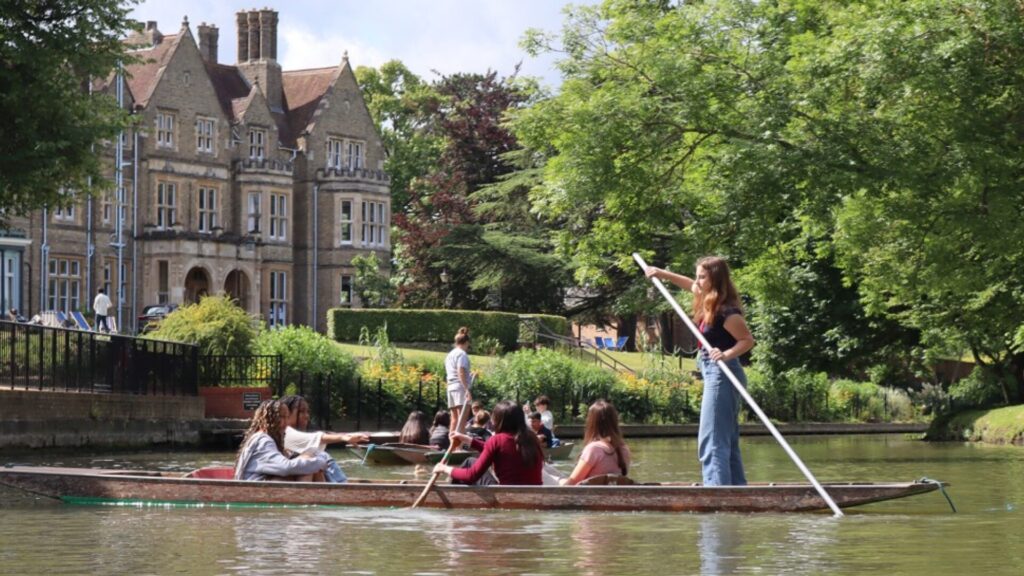
You will be part of site visits, explore the Bodleian Library’s history of science, observe disease study at the Big Data Institute, and punt on the River Cherwell. Ultimately, you will develop strong scientific literacy, master the ability to analyse biotech innovations, and learn to communicate complex scientific ideas effectively through collaboration.
Why it stands out: It removes you from a standard classroom setting to directly trace how biological discoveries evolve from historic university research centres into modern clinical care and commercial biotech startups.
8. Petnica International Science Camp
Location: Petnica Science Centre, Valjevo, Serbia
Cost: €860
Program Dates: July 5-13 or July 14-22
Deadline: June 15th
Eligibility: High school students aged 15-19. International students are eligible
Petnica International is a residential science camp that introduces you to scientific research through project-based learning. You’ll choose a research project and work under the guidance of Petnica associates and assistants throughout the programme. The camp emphasises scientific methodology, research techniques, laboratory exercises, and fieldwork across several disciplines, including biology and chemistry.
You’ll apply research skills while participating in lectures and classroom sessions that support your project work. The program also provides exposure to interdisciplinary scientific topics and collaborative learning environments. Alongside research activities, you’ll engage with a community of students interested in science from different backgrounds. By the end of the program, you’ll have practical experience with research processes and a stronger understanding of how scientific investigations are conducted.
Why it stands out: You’ll conduct your own research project while combining laboratory work, fieldwork, and scientific methodology within a multidisciplinary science camp.
9. Wadham College Climate Change Summer School
Location: Wadham College, University of Oxford, Oxford, United Kingdom
Cost: Free (accommodation, meals, and travel support provided)
Program Dates: August 17-21
Deadline: May 1st
Eligibility: Year 12 pupils attending UK state schools or sixth-form colleges. International students are not eligible
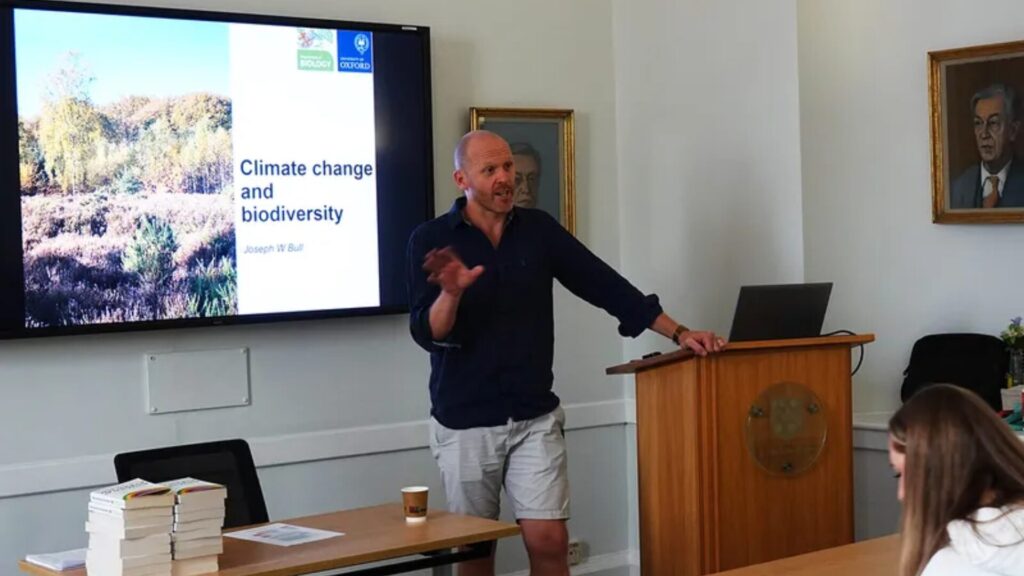
This residential summer school stands out in this list of biology summer programs in Europe for high school students because it examines climate change through perspectives drawn from both the biological and human sciences. You’ll engage in seminar sessions led by academics from disciplines including Biology, Human Sciences, Biochemistry, Geography, and Chemistry. The program emphasises understanding the impacts of climate change alongside approaches for mitigation and adaptation.
You’ll apply subject knowledge through academic discussions and complete an assignment focused on the programme’s central theme. Tutors provide feedback on your work, helping you develop analytical and academic skills. You’ll also gain exposure to undergraduate life through interactions with current Oxford students and college-based activities. By the end of the program, you’ll have a deeper understanding of interdisciplinary approaches to environmental challenges and university-level study.
Why it stands out: You’ll examine climate change through both biological and human science perspectives while experiencing residential study at Oxford.
10. Marine Pathways Summer School
Location: Dove Marine Laboratory, Newcastle University, Cullercoats, United Kingdom
Cost: £170
Program Dates: August 17-21
Deadline: Rolling basis
Eligibility: Students aged 15-18 (Year 10-13) with an interest in marine topics. International student eligibility is not mentioned
This introductory marine science course explores key concepts in marine biology, ecology, and environmental science. You’ll participate in interactive activities, laboratory investigations, and practical fieldwork designed to strengthen your understanding of marine ecosystems. The program emphasises scientific inquiry through hands-on research experiences and curriculum-linked STEM activities. You’ll gain exposure to marine environmental issues while learning from university researchers and undergraduate students.
Field trips and practical sessions help you apply biological and ecological concepts outside the classroom. The course also develops investigative, collaborative, and presentation skills through group activities and research-based learning. By the end of the program, you’ll have a stronger foundation in marine science and a clearer understanding of related university study options.
Why it stands out: You’ll combine laboratory investigations with field-based marine science activities alongside university researchers and students.
11. Bitesize Uni Summer School
Location: Newcastle University, Newcastle upon Tyne, United Kingdom
Cost: Free (including accommodation and travel)
Program Dates: July 12-14 or July 15-17
Deadline: March 15th
Eligibility: UK students in Year 12, first-year college, or equivalent in Northern Ireland and Scotland. International students are not eligible
Bitesize Uni is a residential summer school designed to introduce you to university study through subject-specific academic experiences. You’ll participate in interactive sessions delivered by university academics and explore a degree subject that matches your interests. The program emphasises informed decision-making by providing insight into university life, academic expectations, and potential study pathways.
Current university students and staff help you understand the realities of undergraduate study and campus life. All sessions are timetabled and designed to support academic exploration and personal development. By the end of the program, you’ll have a clearer understanding of university study and whether it aligns with your future goals.
Why it stands out: You’ll combine academic subject exploration with a fully funded residential experience that mirrors key aspects of university life.
12. Access to Sheffield (STEM)
Location: University of Sheffield, Sheffield, United Kingdom
Cost: Free
Program Dates: 3rd August – 6th August
Deadline: Applications open in September and close in early November
Eligibility: Students starting Year 12 who are studying at least three A Levels, including Maths and a Science subject or two Science subjects. Applicants must live within commuting distance of the University of Sheffield and expect to be home fee-paying students unless identified as forced migrants. Additional widening participation criteria apply. International students are not eligible
For students comparing biology summer programs in Europe for high school students, Access to Sheffield (STEM) offers a broader route into university-level science, technology, engineering, and mathematics. You’ll explore subjects through practical workshops, laboratory sessions, and academic taster activities delivered on campus. The program emphasises hands-on learning and exposure to areas that may not be covered in school curricula.
You’ll work alongside current undergraduate students and gain insight into the academic and practical nature of STEM degrees. Sessions cover disciplines ranging from Biosciences and Bioengineering to Chemistry, Physics, Mathematics, and Engineering. The programme also helps you understand university expectations and potential degree pathways. By the end of the program, you’ll have a stronger understanding of STEM study options and the skills used in university laboratories.
Why it stands out: You’ll explore a wide range of STEM disciplines through laboratory-based activities while working directly with current undergraduate students.
13. University of Edinburgh Sutton Trust Summer School
Location: University of Edinburgh, Edinburgh, Scotland, United Kingdom
Cost: Free
Program Dates: July 13-18
Deadline: March 5th
Eligibility: Students in S5 (Scotland), Year 12 (England and Wales), or Year 13 (Northern Ireland) who have always attended a state-funded school or college. International students are not eligible
This residential summer school introduces you to university study through a combination of academic, social, and admissions-focused activities. You’ll explore multiple subject areas, including Biological Sciences, Chemistry, Medicine, Veterinary Medicine, Physics, and Mathematics, through lectures, tutorials, laboratory experiments, and group work. The program emphasises exposure to undergraduate teaching methods and academic exploration across disciplines.
You’ll receive guidance on university applications, personal statements, student finance, accommodation, and studying in Scotland. Living in student halls allows you to experience key aspects of university life alongside students from across the UK. Social activities help you engage with both the university community and the city of Edinburgh. By the end of the program, you’ll have a clearer understanding of higher education options and potential academic pathways.
Why it stands out: You’ll explore multiple academic disciplines through lectures, tutorials, and laboratory sessions while living as a residential student in Edinburgh.
14. STEM Research Placements and Experiences
Location: United Kingdom (research centres, laboratories, museums, offices, and fieldwork sites)
Cost: Free (travel subsidy provided)
Program Dates: July – August (1-2 weeks)
Deadline: Applications open in December and close in spring
Eligibility: Students over 16 years old in Year 12 (England and Wales) or S5 (Scotland), studying relevant STEM-related qualifications. Applicants must attend state-funded education in the UK and meet at least one widening participation criterion. International students are not eligible
This research placement programme introduces you to scientific investigation through supervised independent projects in STEM disciplines. You’ll work on a research question within fields such as science, technology, engineering, mathematics, computing, or quantitative social science. The program emphasises research methodology, data analysis, critical thinking, and independent study. Placements take place in professional environments, including laboratories, research institutes, museums, fieldwork settings, and offices.
You’ll complete preparatory activities before your placement and submit a final report and poster after the experience. The programme also provides insight into higher education pathways and research careers. By the end of the placement, you’ll have developed practical research skills and a stronger understanding of how scientific investigations are conducted.
Why it stands out: You’ll complete an independent research project in a professional STEM environment while developing skills that mirror real research practice.
15. LifeLab Medicine Summer School
Location: University of Southampton, Southampton, United Kingdom
Cost: £180 (free bursary places available)
Program Dates: July 23-24
Deadline: Closed for the year; applications open in the spring term
Eligibility: Students currently in Years 9, 10, or 11. Bursary applicants must meet at least one widening participation criterion. International student eligibility is not mentioned
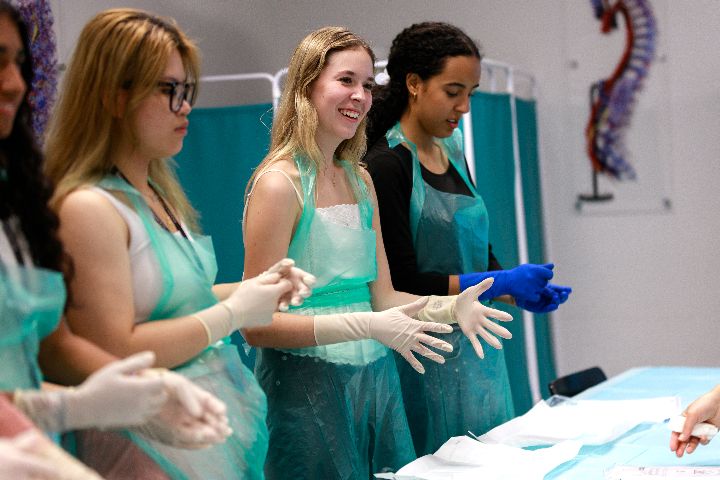
LifeLab Medicine Summer School adds a clinical training option to this selection of biology summer programs in Europe for high school students, introducing you to healthcare practice through practical activities and hospital-based experiences. You’ll learn clinical skills such as suturing and practise them using simulation models. The program emphasises experiential learning through anatomy and pathology teaching delivered in the Centre for Learning Anatomical Sciences.
You’ll visit clinical areas to observe healthcare professionals and gain exposure to working medical environments. Medical students will discuss their training experiences and explain the medical school application process. You’ll also hear from professionals working in medicine through dedicated talks and discussions. By the end of the program, you’ll have a clearer understanding of medical training pathways and the skills required to pursue a career in medicine.
Why it stands out: You’ll practise clinical skills and explore hospital environments while learning directly from medical students and healthcare professionals.
Frequently Asked Questions: Biology Summer Programs in Europe for High School Students
What is a biology summer program for high school students?
A biology summer program introduces high school students to advanced biological concepts and lab-based research methods before college. Programs typically cover topics like molecular biology, genetics, ecology, and neuroscience through lectures, laboratory sessions, and collaborative projects. Most are hosted at universities or research institutions across Europe and run between two days and two weeks. Many conclude with a research poster, presentation, or written assignment.
Do I need prior lab experience to apply?
No, most biology summer programs are designed to introduce lab techniques from the ground up. The Synthetic Biology and Its Applications Summer School teaches molecular cloning and PCR techniques as part of the curriculum itself, and Immerse Education’s Biology Summer School similarly introduces cellular biology and genetics before students design their own mini research project. A genuine interest in life sciences matters more than prior lab experience.
How much do biology summer programs in Europe cost?
Costs range from free to €4,600 for Constructor University’s residential program in Germany. Free options include UNIQ Biomedical Sciences and the Sutton Trust Biological Sciences Summer School, both restricted to UK state school students. Immerse Education’s Biology Summer School offers bursary support that can help reduce costs for eligible students.
Can international students attend these programs?
A smaller set of paid programs welcome international students, including King’s College London’s Medical Science pathway, Constructor University’s Summer Camp, and the Petnica International Science Camp. Most free, UK government supported programs, including UNIQ Biomedical Sciences and Wadham College’s Climate Change Summer School, are restricted to UK state school students. Immerse Education’s Biology Summer School is open to students worldwide aged 13 to 18.
What age do I need to be to apply?
Age requirements vary by program, generally falling between 15 and 19. The Petnica International Science Camp accepts students aged 15 to 19, while most UK university access programs target Year 12 students aged 16 to 17. Immerse Education’s Biology Summer School accepts a broader range of students aged 13 to 18 from anywhere in the world.
Will I complete a hands-on research project?
Yes, several programs include direct research or laboratory components. The Synthetic Biology and Its Applications Summer School has students genetically modify yeast using molecular cloning techniques, and the Petnica International Science Camp has students complete a full research project under mentor guidance. Immerse Education’s Biology Summer School follows a similar approach, with students designing and carrying out their own mini research project on a biology topic of their choosing.
How do these programs help with college applications?
Participating in a biology summer program demonstrates genuine scientific curiosity and hands-on research experience, both of which admissions officers value. Programs like the Petnica International Science Camp result in a completed research project, giving students concrete material to discuss in applications. Immerse Education’s Biology Summer School provides written feedback and a certificate of completion that students can reference directly in personal statements and interviews.
From Biology Interests to University Confidence
Exploring biology beyond school can help you test what excites you most, from molecular cloning and marine ecosystems to medical science and climate change.
The 15 biology summer programs in Europe for high school students mentioned here include Oxford biomedical lectures, Tartu synthetic biology labs, Petnica research projects, and Newcastle marine fieldwork.
These experiences can help you compare biology, medicine, biotechnology, ecology, and neuroscience pathways before committing to a university degree.
Ready to take the next step? Explore our University Preparation blogs for guidance on choosing subjects, strengthening applications, and preparing for interviews.