
 Русский (RU)
 Українська (UK)
 Türkçe (TR)
 Italiano (IT)
 Français (FR)
 Português (PT)
 中文 (中国) (ZH)
 Español (ES)
 日本語 (JA)
 ไทย (TH)
 Deutsch (DE)
 Ελληνικά (EL)
 Polski (PL)
 Bahasa Indonesia (ID)
 Nederlands (NL)
 العربية (AR)
 한국어 (KO)

If you’re interested in science, technology, engineering, or mathematics, STEM internships in NYC designed for high school students can help you explore your interests before college. These experiences let you step outside the classroom, work alongside researchers or professionals, and see how STEM is applied to real-world problems.
Imagine spending your summer helping with biomedical research, writing code for a software project, analysing environmental data, assisting engineers, or learning how discoveries move from the laboratory into everyday life. Along the way, you’ll gain a clearer picture of what working in STEM actually looks like and whether it’s a path you’d like to continue pursuing.
Why is New York City an ideal place for high school students to pursue STEM internships?
One of the biggest advantages of exploring STEM in New York City is the variety of opportunities available. Research universities, teaching hospitals, technology companies, engineering firms, museums, and nonprofit research organizations allow you to learn about fields including medicine, biotechnology, computer science, environmental science, and robotics.
The city also gives students access to researchers, professors, entrepreneurs, and industry professionals who work on some of today’s most pressing scientific and technological challenges. Beyond the experience itself, completing a STEM internship in New York can strengthen future college applications while helping you make more informed decisions about what you’d like to study after high school.
To help you find the right fit, we’ve put together a list of 15 STEM internships in NYC for high school students!
For adjacent opportunities, consider internships in NYC.
Key takeaways
- Memorial Sloan Kettering’s Summer Student Program pays a $1,200 stipend for an eight week biomedical research placement, but it is restricted to 11th graders living within 25 miles of the Upper East Side campus and is not open to international students.
- Immerse Education’s Medicine Summer Internship in New York runs two weeks with rolling admissions and is open to high school students worldwide aged 15 to 18, with bursary support available.
- The American Museum of Natural History’s Science Communication Internship offers a $2,000 stipend to 10th graders who live in or attend school in New York City, with applications due March 1.
- NYU Tandon’s CS4CS cybersecurity program is free for students in grades 8 through 11 who live in NYC or nearby commuter areas, though it is not open to international students.
- Columbia’s My Streetscape Summer Research Institute and Engineering the Next Generation both pay $17 per hour to rising 12th graders working on engineering and AI focused research projects.
- BioBus offers multiple Junior Scientist Internship tracks across Harlem and the Lower East Side paying $17 per hour to 9th through 11th graders who live and attend high school in NYC.
- Several NYC STEM internships, including BRAINYAC at Columbia and HK Maker Lab, are restricted to NYC public school students or partner program participants and are not open to international students.
- ARISE at NYU Tandon combines four weeks of remote workshops with in-person lab work from July 6 to August 14 and provides a $2,000 stipend to NYC-based 11th and 12th graders.
15 STEM Internships in NYC for High School Students
1. Memorial Sloan Kettering Cancer Center Summer Student Program
Location: Memorial Sloan Kettering Cancer Center, New York City, NY
Stipend: $1,200
Dates: June 29th – August 21st
Application Deadline: December 1st – February 6th
Eligibility: 11th graders who are at least 14 years old, have a GPA of 3.5 in science subjects, are legally authorized to work in the US, and live in New York, New Jersey, or Connecticut within 25 miles of the Main Campus of Memorial Sloan Kettering Cancer Center on the Upper East Side in Manhattan; not open to international students
Memorial Sloan Kettering’s Summer Student Program places you in a biomedical or computational research lab for eight weeks under the guidance of a principal investigator and research mentor. You will work on an independent research project that contributes to your mentor’s broader research, with topics ranging from cancer biology and immunology to pharmacology, structural biology, and molecular and developmental biology.
Throughout the internship, you will learn laboratory techniques, analyze data, and take part in activities focused on translational medicine and biomedical research. The programme concludes with you presenting the results of your research project.
Why it stands out: You will take part in activities outside the lab that will deepen your knowledge of translational medicine and research.
2. Immerse Education’s New York Medicine Summer School

Location: Barnard College, Columbia University, New York
Cost: Varies; summer school scholarship available through our bursary programme
Application Deadline: Multiple summer cohorts with rolling admissions
Program Dates: 2 weeks during the summer
Eligibility: High school students across the globe aged 15-18
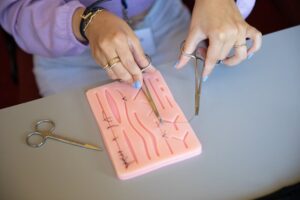
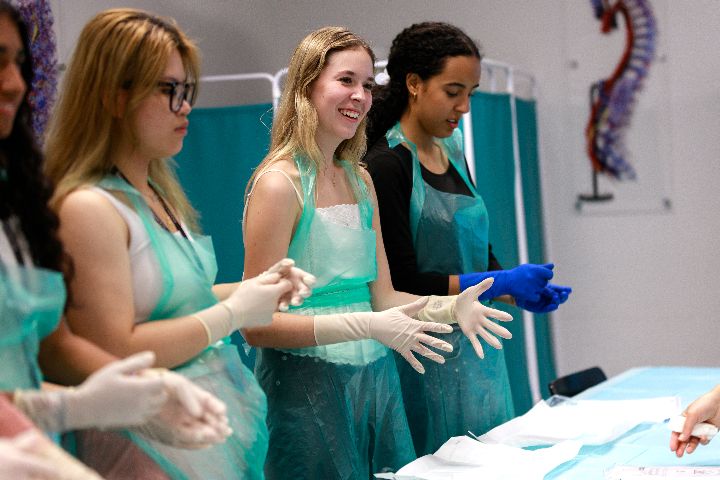
Immerse Education’s Medicine Career Insights Program is one of the most career-focused STEM internships in NYC designed for high school students, helping you explore careers in major global industry hubs. You’ll participate in hands-on medical simulations, attend engaging classes, and participate in critical discussions. You’ll receive guidance from experienced medical professionals and gain both clinical and critical thinking skills. You’ll not only gain theoretical knowledge about a medical career but also understand the development of treatment plans.
Participants engage in project-based learning with established companies, attend interactive workshops, and visit offices, factories, and headquarters. The program also includes in-person weekly 1:1 career coaching sessions and sessions where you will receive personalized feedback on your resume and overall profile. You’ll also present your findings to industry experts at the end of the program. At the conclusion of the program, you’ll receive a certificate. You can find more details about the application here!
Why it stands out: You’ll explore university-level concepts in fields like medicine and psychology, giving you early exposure to the academic pathways behind real careers.
3. American Museum of Natural History Science Communication Internship Program
Location: American Museum of Natural History, New York City, NY
Stipend: $2,000 upon completion of research and program requirements
Dates: July 6th – August 14th
Application Deadline: March 1st
Eligibility: 10th graders who have passed all of their classes for at least the last 3 semesters, and live in or attend school in New York City; international student eligibility not specified
The American Museum of Natural History’s Science Communication Internship trains you to explain scientific ideas using the museum’s collections and exhibitions. You will study different collections, learn the stories behind them, and communicate those ideas to visitors through conversations and educational activities.
Museum educators also teach techniques for presenting complex science in ways that are accurate, engaging, and easy to understand. During the summer, you can attend museum events and career development sessions organized for interns. The internship focuses on public science communication inside one of the world’s leading natural history museums.
Why it stands out: While you work at AMNH, you can participate in events happening at the museum and some career-preparedness activities.
4. Summer Program Advancing Research Knowledge, Education and Development (SPARKED)
Location: Mount Sinai Tisch Cancer Center, New York City, NY
Stipend: Provided
Dates: July 13th – August 20th; the internship continues one or two afternoons weekly from November through May
Application Deadline: Opens in December
Eligibility: Rising 11th and 12th graders (aged 16-18) who have completed at least one high school science course, have an 80% GPA in science subjects, have a guardian’s permission, and a recommendation from a science teacher; international student eligibility not specified
The Summer Program Advancing Research Knowledge, Education, and Development program immerses students whose favorite subject is science in hands-on biomedical research. You can either choose to conduct biology experiments at the cancer center’s wet lab or dive into bioinformatics concepts in its data science labs with the help of the computational tools there.
Apart from the work component, you are also called to participate in workshops that aim to enhance your scientific knowledge and help you plan your education and career path. At the end of the program, you will share your research outcomes and exchange ideas with other participants, strengthening your presentation and teamwork skills.
Why it stands out: A team of co-directors will be supervising you throughout the program, ensuring that you make the best out of the program.
5. Brain Research Apprenticeships in New York at Columbia (BRAINYAC)
Location: Columbia University, New York City, NY
Stipend: Provided
Dates: June 30th – August 14th (summer lab sessions)
Application Deadline: October 6-31
Eligibility: High school students who live in New York City and attend at least one of the New York City-based partner programs (S-PREP, BioBus, Lang Youth Medical, Columbia Secondary School, or Double Discovery Center); not open to international students
BRAINYAC pairs you with a Columbia University neuroscientist to work on an active brain research project at the Zuckerman Institute. You may assist with microscopy, laboratory experiments, data collection, or testing experimental methods while contributing to your mentor’s ongoing research.
Every Thursday, you will also attend BRAINYAC classes and programme events that introduce neuroscience concepts and research careers. Throughout the summer, you will prepare a scientific poster explaining your work. The programme concludes with a poster session where you present your research to scientists, mentors, and fellow interns.
Why it stands out: You will also participate in a two-hour BRAINYAC class session every Thursday morning and attend other events that are part of the program.
6. CS4CS: Cyber Security for Computer Science
Location: NYU Tandon School of Engineering, Brooklyn, NY
Cost: Free
Dates: July 13th – August 7th
Application Deadline: May 15th
Eligibility: Current 8th-11th-grade students who live in NYC or neighboring commuter areas (e.g., Jersey City, Newark, Hempstead); not open to international students
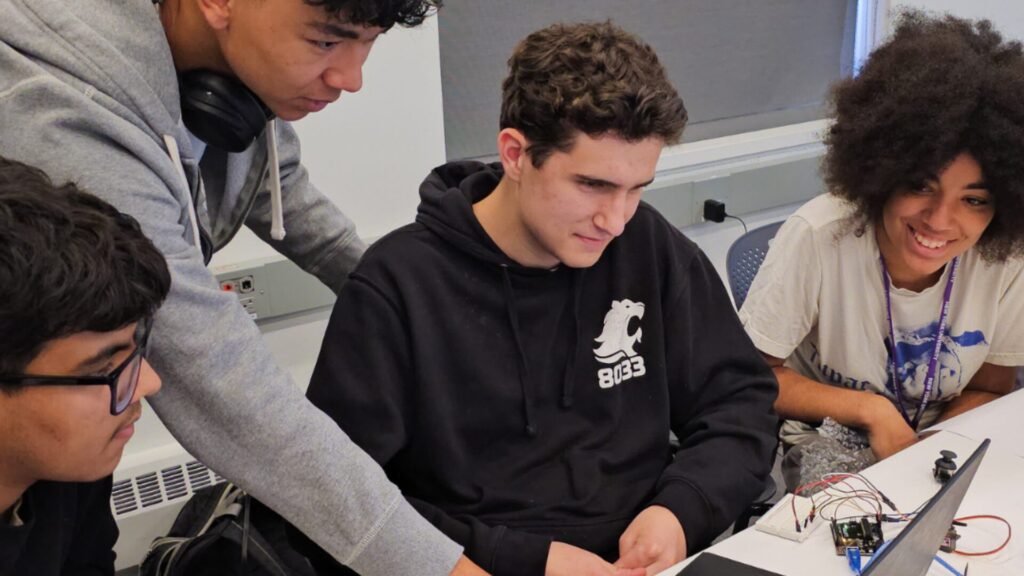
CS4CS at NYU Tandon introduces you to cybersecurity through coding challenges, Capture the Flag competitions, and hands-on security exercises. You will explore topics such as cryptography, digital forensics, security scripting, and ethical hacking while working with mentors from the cybersecurity industry.
Alongside the technical sessions, you will complete a research project that can be presented at conferences and added to your portfolio. The programme also includes theatre-based communication workshops that help you explain technical ideas more clearly. It combines technical training with real security challenges throughout the four weeks.
Why it stands out: Students benefit from theater-based communication workshops and case-driven security learning.
7. ieSoSC: Innovation, Entrepreneurship and the Science of Smart Cities
Location: NYU Tandon School of Engineering, Brooklyn, NY
Cost: Free
Dates: July 6th – August 7th (ieSoSC I) or July 13th – August 7th (ieSoSC II, by invitation only)
Application Deadline: May 15th
Eligibility: 9th to 11th graders who reside in New York City; not open to international students
NYU Tandon’s ieSoSC is a strong option among STEM internships in NYC designed for high school students who are interested in engineering, coding, entrepreneurship, and smarter cities. You will learn programming, electronics, microcontrollers, sensors, and circuit deployment before applying those skills to develop a prototype for a smart city product or service.
The programme also introduces product development, project management, intellectual property, and startup pitching through workshops and team activities. Communication and presentation workshops prepare you to explain your ideas to different audiences. The summer ends with teams presenting their prototypes and business concepts.
Why it stands out: You will be attending workshops where you will learn communication and presentation skills needed to promote your product or service.
8. My Streetscape Summer Research Institute
Location: Fu Foundation School of Engineering and Applied Science, New York City, NY
Stipend: $17 per hour
Dates: July 6th – August 14th
Application Deadline: December 2nd – March 1st
Eligibility: Rising 12th graders who are US citizens or permanent residents and attend a high school in New York City; preference given to Harlem school students or residents; not open to international students
My Streetscape Summer Research Institute brings together engineering, artificial intelligence, and urban research to study transportation and city life. You will interview Harlem residents, collect community data, and use coding, computer vision, IoT, and AI tools to explore solutions for urban mobility challenges.
Faculty mentors guide your research while professional development workshops, speaker series, and field trips are built into the programme. Some projects are also presented to city officials or developed into research publications. The programme focuses on technology that addresses real challenges faced by local communities.
Why it stands out: You will be scheduled with professional development workshops, faculty speaker series, and field trips over the duration of the program.
9. Engineering the Next Generation (ENG): Foundations of Research Track
Location: Fu Foundation School of Engineering and Applied Science, New York City, NY
Stipend: $17 per hour
Dates: July 6th – August 13th
Application Deadline: December 2nd – January 16th
Eligibility: Rising 12th graders who attend a school in NYC, are legally allowed to work in the city, and have prior work or volunteer experience; not open to international students
Columbia Engineering’s ENG Foundations of Research Track places you on a research team working alongside faculty members, undergraduate students, and graduate researchers. You may contribute to projects in biomedical, computer, environmental, or other engineering disciplines while learning research methods in university laboratories.
The programme also includes science communication workshops, college readiness sessions, and professional development activities throughout the summer. Mentorship comes from both faculty and student researchers, giving you regular guidance as your project develops. The experience concludes with a research poster symposium where you present your work.
Why it stands out: The program follows a multi-level mentorship model with both students and staff there to mentor you and ensure you get the best outcome from your participation.
10. HK Maker Lab
Location: Columbia University, New York City, NY
Cost: Free
Dates: July 6th – August 7th
Application Deadline: December 22nd (Priority Deadline) and January 7th (Regular Deadline)
Eligibility: 10th or 11th graders who attend a NYCDOE public or charter high school; you also need to demonstrate educational and/or economic disadvantage as listed here; not open to international students
HK Maker Lab at Columbia Engineering combines biomedical engineering with product design and entrepreneurship. You will study human biology, electrical circuits, 3D modelling, and the engineering design process before creating a digital solution for a global health problem.
After developing your prototype, you will build a business plan and present your idea to biomedical industry professionals. The programme also introduces product development and innovation through team-based projects. Selected participants may later be invited to return for a paid summer research internship.
Why it stands out: This program combines engineering, biomedicine, and entrepreneurship, and it may lead to a paid research internship the following summer.
11. MoMath High School Integrators Volunteer Program (Summer)
Location: National Museum of Mathematics, New York City, NY
Stipend: None
Dates: Five (eight-hour) days a week, including a Saturday or Sunday, for a minimum of eight weeks during the summer
Application Deadline: Filled on a first-come, first-served basis until April
Eligibility: Open to high school students; international student eligibility not specified
The National Museum of Mathematics’ High School Integrators Program puts you on the museum floor, where you will explain interactive exhibits to visitors and school groups throughout the summer. As you answer questions and demonstrate mathematical ideas, you’ll deepen your own understanding of the concepts behind each exhibit.
The programme also gives you the chance to learn from mathematicians, museum educators, interpreters, and staff who work with the public every day. Volunteers work five full days a week, including one weekend day, for at least eight weeks. The experience centers on communicating mathematics in ways that people of all ages can understand.
Why it stands out: This highly selective program has helped its participants gain acceptance to some top colleges.
12. NYU GSTEM
Location: New York University, New York City, NY
Cost: $5,500 plus $3,840 for students who need accommodation with a meal plan included (need-based scholarships available)
Dates: June 29th – August 7th
Application Deadline: February 1st – March 2nd
Eligibility: 11th graders with a strong academic record; US citizens from anywhere in the world, and non-US citizens who are in the US on an F-1 student visa can apply
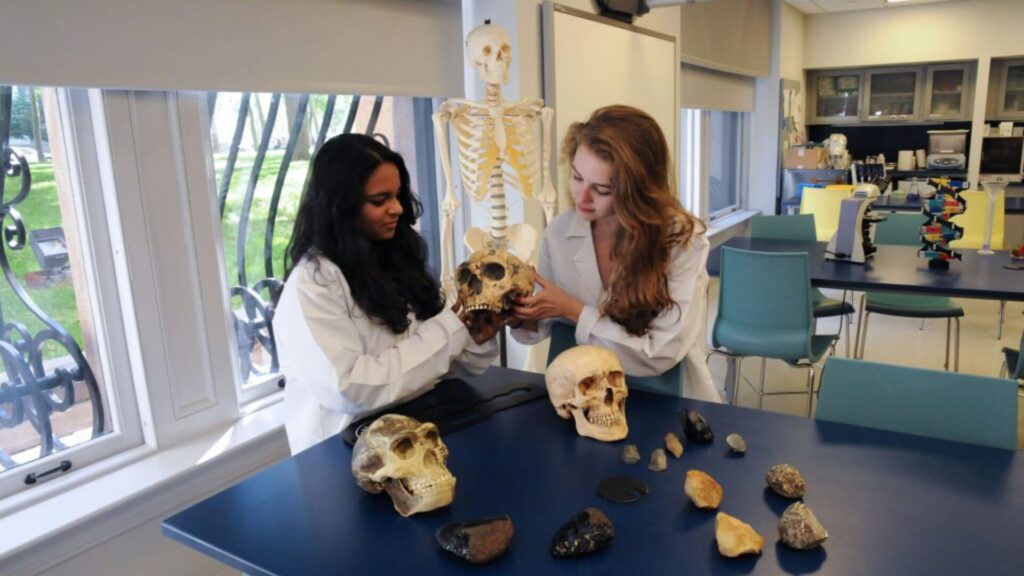
NYU’s GSTEM pairs you with a faculty member or researcher to complete an independent STEM research project in biology, chemistry, computer science, mathematics, or physics. You will work in university laboratories while learning research methods, laboratory techniques, coding, and data analysis related to your chosen field.
Workshops on scientific writing, public speaking, and research communication are built into the summer, alongside visits to STEM organizations. Faculty mentors guide your project from the early research stage through data collection and analysis. The programme concludes with Symposium Day, where you present your research to family, faculty, and fellow researchers.
Why it stands out: You will be scheduled with workshops and field trips to STEM organizations that focus on improving your scientific writing, public speaking, and presentation skills.
13. CUNY STEM Research Academy
Location: Multiple CUNY college campuses across New York City
Stipend: About $1,500; some campuses pay $1,575
Dates: Varies by college campus
Application Deadline: Varies by college campus
Eligibility: 10th and 11th graders who attend a New York City Public School; preference given to those students whose schools do not offer research options; not open to international students
The CUNY STEM Research Academy begins with a college-level course during the spring semester before moving into a paid summer research internship. After completing the spring coursework, you will join a research laboratory at one of several CUNY campuses and contribute to projects in fields such as genetics, urban ecology, toxicology, engineering, physics, animal science, or space science.
Throughout the programme, you’ll strengthen your research, scientific writing, and data analysis skills while working with university researchers. Each campus offers different research areas, allowing you to choose a field that matches your interests. The summer finishes with a research exhibition at the American Museum of Natural History.
Why it stands out: Since this program runs across several CUNY colleges, you will notice that there is a wide range of subject offerings, including fly genetics, urban ecology, toxicology, electrical engineering, space science, physics, animal science, and many more.
14. BioBus High School Junior Scientist Internships
Location: Harlem and the Lower East Side, New York City, NY
Stipend: $17 per hour
Dates: July 6th – June 15th (Lower East Side Junior Scientist Program and Harlem Science Internship Program) and September – June 15th (Harlem Women in STEM Junior Scientist Program)
Application Deadline: January 15th – March 15th
Eligibility: 9th to 11th graders who live and attend a high school in New York City; check out the specific program to see eligibility; not open to international students
BioBus offers several Junior Scientist Internship tracks where you will design and carry out your own research project with support from professional scientists. Depending on your project, you may use research-grade microscopes, investigate soil contamination, study fruit fly behaviour, examine microscopic worms, or even design scientific equipment.
Alongside laboratory work, you’ll participate in workshops that strengthen your science communication and presentation skills. Every internship is built around an independent research question that you develop with your mentor. The programme serves students across Harlem and the Lower East Side through different internship tracks.
Why it stands out: In addition to working on your research project, you will also participate in events that aim to enhance your science communication skills.
15. ARISE: Applied Research Innovations in Science and Engineering
Location: NYU Tandon School of Engineering, Brooklyn, NY
Stipend: $2,000
Dates: June 1-25 (Remote Workshops) and July 6th – August 14th (In-Person Lab Work)
Application Deadline: February 27th
Eligibility: Rising 11th and 12th-graders who live and attend a school in NYC; not open to international students
ARISE at NYU Tandon is one of the most structured STEM internships in NYC designed for high school students, beginning with four weeks of remote workshops covering laboratory safety, research methods, and college-level scientific writing before you move into full-time research. You will then join an NYU laboratory and work alongside scientists on projects in engineering, life sciences, computer science, data science, materials chemistry, and related fields.
Faculty and research mentors guide you as you contribute to ongoing university research using professional laboratory techniques. The programme ends with the ARISE Colloquium, and many participants also present their work at the American Museum of Natural History Poster Symposium.
Why it stands out: Students have the opportunity to share their research at Colloquium and at the American Museum of Natural History (AMNH) Poster Symposium.
Frequently asked questions: STEM internships in NYC for high school students
Are STEM internships in NYC open to international students?
Most STEM internships in NYC are not open to international students. Programs like Memorial Sloan Kettering’s Summer Student Program, NYU Tandon’s CS4CS, BRAINYAC, and BioBus require applicants to live in New York City or nearby areas and often require US work authorization. If you’re an international student, Immerse Education’s Medicine Summer Internship in New York is worth considering, since it welcomes high school students worldwide aged 15 to 18 and includes bursary support to help with cost.
Do NYC STEM internships pay a stipend?
Many NYC STEM internships pay a stipend, though amounts vary widely. BioBus, Columbia’s My Streetscape Summer Research Institute, and Engineering the Next Generation all pay $17 per hour. The American Museum of Natural History and ARISE at NYU Tandon each offer a $2,000 stipend, while Memorial Sloan Kettering provides $1,200. Some programs, like CS4CS and HK Maker Lab, are unpaid but free to attend, and MoMath’s volunteer program offers no stipend at all.
What grade level do you need to be in for a STEM internship in NYC?
Eligibility varies by program, but most NYC STEM internships target specific grade bands rather than accepting all high schoolers. Memorial Sloan Kettering requires 11th graders, while CS4CS accepts students in grades 8 through 11. My Streetscape and Engineering the Next Generation are limited to rising 12th graders, and BioBus accepts 9th through 11th graders. Check each program’s eligibility section closely, since a mismatch in grade level is a common reason applications get rejected.
How competitive are STEM internships in NYC?
Competition varies significantly by program. University-affiliated research internships like BRAINYAC at Columbia and ARISE at NYU Tandon tend to be highly selective, since they place a small number of students directly into research labs with faculty mentors. Museum-based programs and volunteer roles, like MoMath’s High School Integrators Program, are somewhat less competitive but still fill on a rolling or first-come basis. Applying early and meeting every eligibility requirement improves your chances regardless of the program.
Can you do a STEM internship in NYC if you don’t live there?
Some NYC STEM internships accept students from outside the city, but many restrict eligibility to NYC residents or nearby commuter areas. NYU’s GSTEM program, for example, accepts US citizens from anywhere in the country as well as non-US citizens on F-1 student visas. If you live outside the tri-state area entirely, Immerse Education’s Medicine Summer Internship is a global option, open to students worldwide aged 15 to 18 with bursary support available.
What kind of research do STEM interns in NYC actually do?
Research topics depend on the host institution, but most NYC STEM internships place you in an active lab or project rather than a classroom-only setting. Memorial Sloan Kettering interns work on cancer biology, immunology, or pharmacology projects, while BRAINYAC interns assist with neuroscience research at Columbia’s Zuckerman Institute. CS4CS focuses on cybersecurity, and BioBus interns design independent projects involving microscopy or soil contamination. Most programs end with a poster session or presentation of your findings.
When should you apply for a STEM internship in NYC?
Application timelines vary widely, so it helps to start researching in the fall before your intended summer. Some programs, like My Streetscape and Engineering the Next Generation, open applications as early as December, while others, like CS4CS and ieSoSC, have deadlines in May. Memorial Sloan Kettering’s window runs from December through February. Because deadlines and requirements differ across every program, confirm exact dates on each program’s website well before summer.
Turn STEM Experience Into University Readiness
STEM experience can help you move from curiosity to direction, whether you are exploring biomedical research, cybersecurity, engineering, science communication, or environmental data.
These 15 STEM internships in NYC for high school students show how practical projects, mentorship, and real research can shape your academic interests.
They also give you stronger examples for future applications, from research posters and coding projects to lab work, presentations, and university-level skills.
Ready to turn your internship experience into a stronger university plan? Explore our University Preparation blogs for practical guidance on applications, subjects, and next steps.