
 Русский (RU)
 Українська (UK)
 Türkçe (TR)
 Italiano (IT)
 Français (FR)
 Português (PT)
 中文 (中国) (ZH)
 Español (ES)
 日本語 (JA)
 ไทย (TH)
 Deutsch (DE)
 Ελληνικά (EL)
 Polski (PL)
 Bahasa Indonesia (ID)
 Nederlands (NL)
 العربية (AR)
 한국어 (KO)

Senior year is when college starts feeling real. With applications approaching and decisions about future majors becoming more important, college programs for high school seniors can help you test your academic interests through university-level learning before you arrive on campus.
You might attend a university seminar, complete a research project, or debate ideas with equally curious peers. Rather than choosing a major based only on classroom experience, you can explore a subject in greater depth and decide whether it still excites you. That early exposure can give you the clarity and confidence needed to make more informed college decisions.
How do you choose the right college programs for high school students?
Not every college program is designed for the same purpose. Some are built around a single academic subject, such as engineering, medicine, law, business, or psychology, while others encourage students to explore several disciplines before choosing a direction. The best program is usually the one that matches both your academic interests and the questions you’re hoping to answer before college.
It’s also worth looking at how the program is structured. University-hosted programs that include seminars, projects, mentorship, or research often provide a much clearer picture of college life than lecture-only experiences. Beyond strengthening college applications, they can help you feel more confident about the academic choices you’ll soon be making.
To help you find the right fit, we’ve put together a list of 15 college programs for high school seniors!
For adjacent opportunities, consider the online research program.
Key takeaways
- Columbia’s BrainSTORM program is free and matches up to 25 students annually with neuroscience research mentors over an academic year running from June through May.
- Immerse Education’s Academic Insights Pathway takes place across six global locations, including Oxford, Cambridge, Singapore, Sydney, Toronto, and Boston, for two weeks with classes of four to 10 students.
- Stanford’s SIMR program provides a minimum $500 stipend, with need-based grants up to $2,500 or more, for an eight week biomedical research internship, but it is not open to international students.
- The Anson L. Clark Scholars Program at Texas Tech fully funds 12 students annually with a $750 stipend and covered room and board over seven weeks.
- The Sutton Trust Summer School at Cambridge is entirely free, including transport, accommodation, and meals, but it is limited to Year 12 students at UK state-maintained schools.
- Pratt Institute’s Summer PreCollege costs $8,192 for residential students or $5,452 for commuters and awards four college credits over a four week program.
- Cornell’s Precollege Studies and NYU’s Precollege program both let students earn real university credit while choosing from residential, commuter, or online formats.
- Programs like the Broad Summer Scholars Program and JJ Vance Memorial Summer Internship pair students with active researchers but restrict eligibility to US citizens, permanent residents, or those with valid US work authorization.
15 College Programs for High School Seniors
1. Columbia University – BrainSTORM
Location: Virtual or hybrid; Columbia University Irving Medical Center, New York City, New York
Cost: Free
Acceptance Rate/Cohort Size: Selective; up to 25 students are matched with mentors each academic year
Dates: June – May
Application Deadline: January 1st
Eligibility: High school students located anywhere in the United States who will be in Grades 9-12 during the programme year; not open to students outside the U.S.
Columbia’s BrainSTORM stands out among the many college programs for high school seniors by introducing you to neuroscience through clinical and research perspectives. The program includes a monthly seminar series and a selective research mentorship track. If selected for the mentorship program, you work with a mentor on a guided research project shaped by your interests and your mentor’s expertise.
You may explore areas such as neurology, neuropsychology, neuroscience, brain disorders, cognitive research, or experimental design. The program culminates in research work that can help you understand whether neuroscience, medicine, psychology, or research fits your college plans.
Why it stands out: You can access Columbia neuroscience mentorship for free while completing a guided research project over an academic year.
2. Immerse Education’s Pre-University Summer School
Location: Cambridge, London, Oxford, Singapore, Sydney, Tokyo, and Toronto
Cost: Varies according to programme; summer school scholarship available through our bursary programme
Application Deadline: Multiple cohorts with rolling admissions
Programme Dates: 2 weeks during the summer
Eligibility: Students worldwide aged 13-18 who are currently enrolled in middle or high school
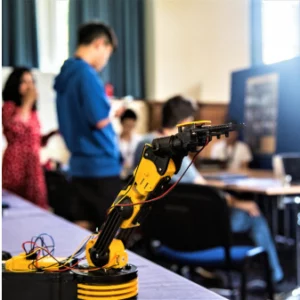
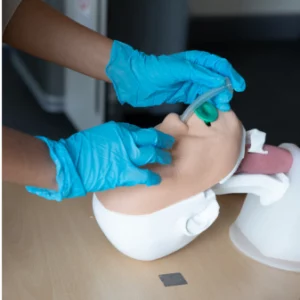
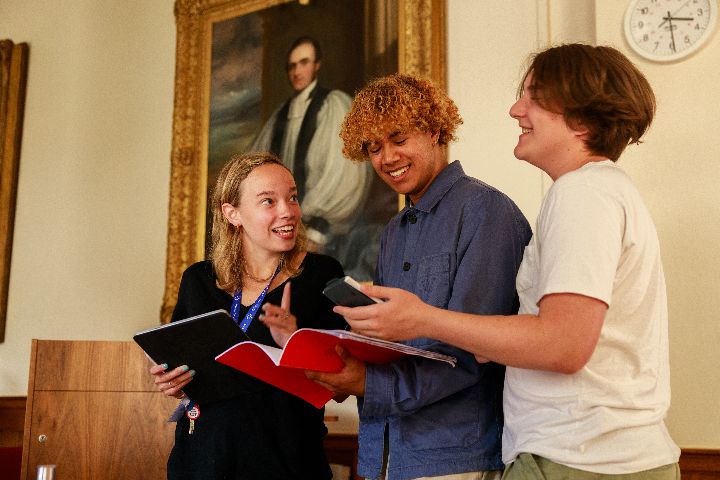
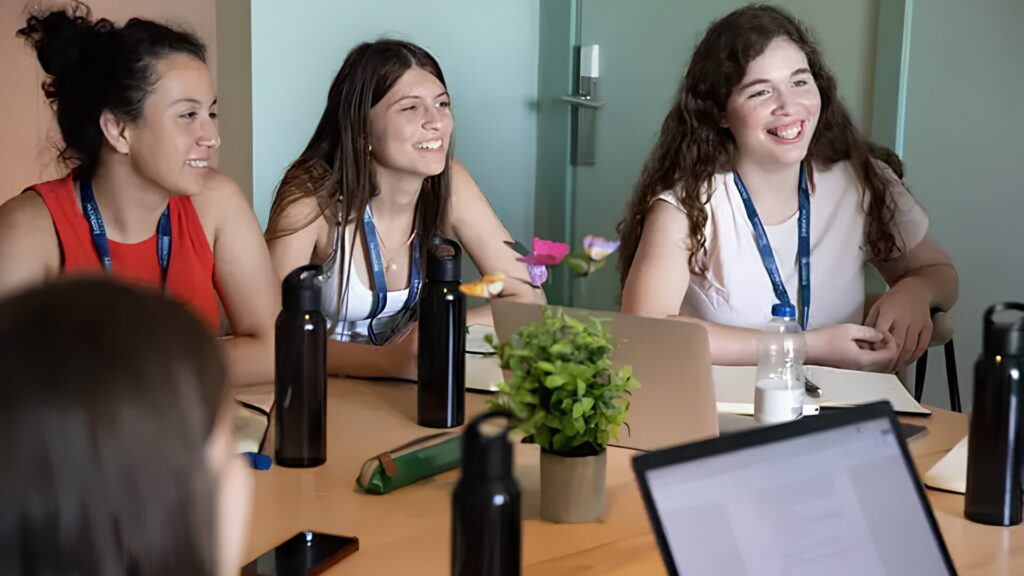
The Academic Insights Program provides school students with an opportunity to take undergraduate-level classes at universities around the world. You work with academics from universities like Oxford, Cambridge, and Harvard in classes of 4-10 students. They attend university-style lectures and 1:1 weekly sessions with their tutor. The program includes practical experiences such as dissections in medicine, robotic arm building in engineering, or moot courts for law.
You can choose from over 20 subjects, including architecture, artificial intelligence, business management, computer science, economics, medicine, philosophy, and more. By the end of the program, you will complete a personal project and receive written feedback and a certificate of completion. You can find more details about the application here.
Why it stands out: You’ll be taught by top faculty, work on an independent project, and live on campus, giving you a complete experience of future university life.
3. Stanford Institutes of Medicine Summer Research (SIMR)
Location: Stanford University School of Medicine, Stanford, California
Cost: Free; all admitted participants receive a minimum stipend of $500, with need-based grants of $2,500 or more available to help cover local commuter expenses
Acceptance Rate/Cohort Size: Selective; approximately 50-60 students are admitted per session
Dates: June 8th – July 30th
Application Deadline: February 21st
Eligibility: Current high school juniors and seniors who are at least 16 by the programme start date, live and attend high school in the U.S., and are U.S. citizens or permanent residents; not open to international students
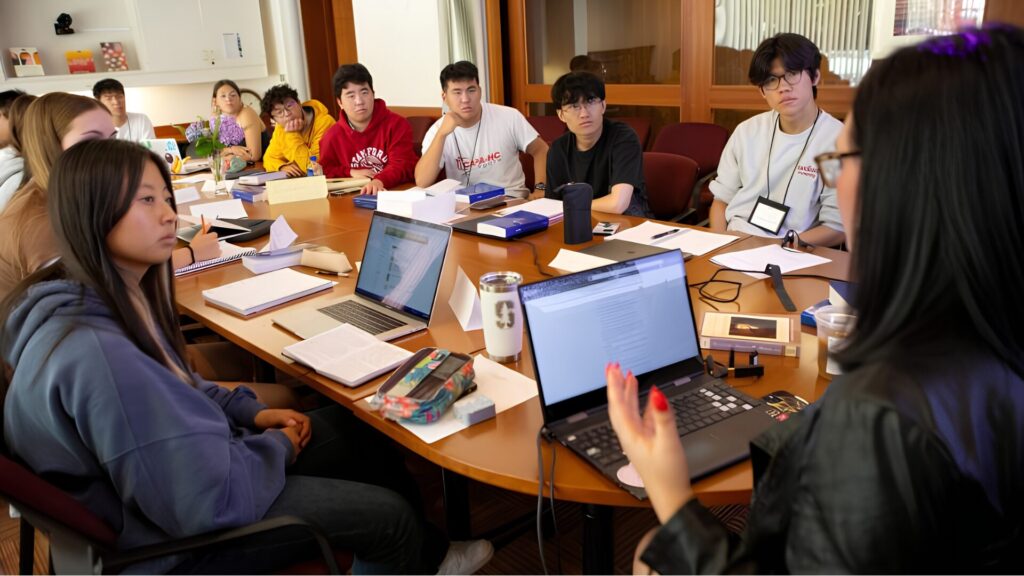
SIMR is an eight-week summer research internship where you work under direct guidance from a mentor in a Stanford laboratory or research group. You can apply to research areas connected to medicine and biology, including immunology, cancer biology, neurobiology, bioengineering, stem cell biology, genetics, and related fields. The program is built around hands-on research rather than classroom-only learning, so you contribute to ongoing scientific work and learn how biomedical questions are investigated.
You also attend research-related activities and gain exposure to scientific communication and professional research environments. Because SIMR is hosted within Stanford’s medical research ecosystem, it can help you test whether biomedical research, medicine, or life sciences align with your future college pathway.
Why it stands out: You gain direct mentored research experience inside Stanford’s medical research environment through a highly selective summer internship.
4. Anson L. Clark Scholars Program
Location: Texas Tech University, Lubbock, Texas
Cost: Fully funded; room and board included; $750 stipend provided
Acceptance Rate/Cohort Size: Highly selective; 12 students selected annually
Dates: June 21st – August 6th
Application Deadline: February 16th
Eligibility: Rising high school seniors and recent high school graduates who are at least 17 years old by the programme start date and are U.S. citizens or permanent residents; not open to international students
The Anson L. Clark Scholars Program is a seven-week residential research program for students ready to explore college-level academic work. You are matched with a Texas Tech faculty mentor and complete an independent research project in a field aligned with your interests. Rather than taking regular summer classes, you work closely with a mentor, attend seminars, and produce a final research report.
The program also includes campus activities that introduce you to university life and academic expectations. Because the experience mirrors undergraduate research, it can help you understand whether advanced study in STEM, humanities, social science, or another field fits your college plans.
Why it stands out: You receive fully funded, one-on-one faculty research mentorship in a small cohort of 12 students.
5. Broad Summer Scholars Program (BSSP)
Location: Broad Institute of MIT and Harvard, Cambridge, Massachusetts
Cost: Free; $3,600 stipend provided, with partial transportation reimbursement
Acceptance Rate/Cohort Size: Highly selective; fewer than 20 students are selected annually
Dates: June 29th – August 7th
Application Deadline: Applications open November 24th and close January 21st
Eligibility: Rising high school seniors attending a Massachusetts high school within commuting distance of the Broad; students must have earned a B or better in science and maths classes and be U.S. citizens, permanent residents, or non-U.S. citizens with employment authorisation; not open to international students without U.S. work authorisation
The Broad Summer Scholars Program gives you six weeks of hands-on biomedical research experience at the Broad Institute. You are matched with Broad scientists and contribute to original research in areas such as cancer biology, infectious disease, psychiatric disease, chemical biology, and computational biology.
The program includes exposure to both experimental and computational techniques, along with scientific talks, career exploration, and poster-presentation training. You also attend a college fair and social activities with peers interested in science. By presenting your work in a final poster session, you gain practical experience with research communication in a professional scientific environment.
Why it stands out: You conduct original research with Broad scientists while receiving a stipend, research training, and scientific presentation experience.
6. JJ Vance Memorial Summer Internship
Location: University of Miami Miller School of Medicine, Miami, Florida
Cost: Free; paid internship (approximately $15 per hour for a mandatory 40-hour work week)
Acceptance Rate/Cohort Size: Selective; cohort size is not publicly available
Dates: June 15th – August 7th
Application Deadline: January 31st
Eligibility: Outstanding high school juniors in good standing from Miami- and Broward-area high schools; not open to international students unless they meet local school and work-authorisation requirements
The JJ Vance Memorial Summer Internship is a paid research program hosted by the University of Miami Miller School of Medicine. You work with faculty, postdoctoral fellows, or HIHG staff while participating in an 8-week research course in biological and computational sciences. The program gives you exposure to genomics, biomedical research, and computational approaches used in medical science.
Because you are paired with a research mentor, you gain a closer view of how university-level research is structured and carried out. This can help you explore whether biology, genetics, medicine, computational science, or research fits your future college plans.
Why it stands out: You gain paid, mentored research experience at a medical school while exploring biological and computational sciences.
7. Fashion Institute of Technology (FIT) – Summer High School Classes
Location: Fashion Institute of Technology, New York City, New York
Cost: $550 for one 10-day class
Acceptance Rate/Cohort Size: Open registration; course seats may fill
Dates: July 6-21
Application Deadline: Registration opens February 4th and closes June 10th
Eligibility: High school students in grades 9-12 as of fall, as well as graduating high school seniors who completed school in the preceding May or June; open to international students
FIT’s High School Summer 10-Day Courses let you explore college-level creative subjects in a focused format. You can choose from precollege classes in areas such as fashion design, business, styling, communication, art, and design, depending on availability. Each class meets for three hours, and you can take one class or combine morning and afternoon classes for a full-day schedule.
The program helps you build practical skills, develop creative confidence, and understand how studio or industry-focused subjects are taught at FIT. Because the courses take place at a specialized college for fashion, design, and business, they can help you test whether a creative major fits your college goals.
Why it stands out: You can explore FIT’s fashion, design, and business fields through short, focused precollege classes in New York City.
8. Sutton Trust Summer School – University of Cambridge
Location: University of Cambridge, Cambridge, UK
Cost: Free; travel by public transport, accommodation, and meals are provided
Acceptance Rate/Cohort Size: Highly selective; Cambridge reports around 400 students across 25 subject streams
Dates: August 17-21
Application Deadline: Cambridge-specific applications close February 12th, while other general Sutton Trust UK summer school applications remain open until March 5th
Eligibility: Year 12 students at UK state-maintained schools who meet Sutton Trust eligibility and academic criteria; not open to international students
The Sutton Trust Summer School at Cambridge is a free, subject-specific residential programme for academically strong UK state-school students. You spend five days in Cambridge, attending academic sessions led by university departments and exploring what undergraduate study can feel like. Depending on your subject, you may take part in lectures, seminars, research-style tasks, and small-group teaching similar to Cambridge supervisions.
You also stay in a Cambridge college and participate in student-life activities, giving you a realistic introduction to residential university life. Because the programme combines academic teaching with admissions guidance and campus experience, it can help you make more informed decisions about competitive university applications.
Why it stands out: You experience Cambridge academic teaching and college life for free through a highly selective widening-participation programme.
9. Pratt Institute – Summer PreCollege
Location: Pratt Institute, Brooklyn, New York
Cost: Residential: $8,192 (covers tuition, housing, and meals); Commuter: $5,452; requires a non-refundable $65 application fee
Acceptance Rate/Cohort Size: Selective; cohort size and acceptance rate are not publicly available
Dates: July 6-31
Application Deadline: Rolling admissions close on May 1st, with a final payment deadline of May 31st
Eligibility: High school students who turn 16 on or before December 31st of the programme year; open to international students
Pratt’s Summer PreCollege Intensive is a four-week residential programme for students interested in art, design, architecture, or writing. You live on Pratt’s Brooklyn campus, take two college-level courses, and earn 4 college credits upon successful completion. The programme helps you build portfolio-ready work while experiencing studio classes, critiques, and the pace of creative study at an art and design college.
You can choose from subject areas such as fine art, design, architecture, fashion, illustration, photography, and creative writing, depending on course availability. Because the programme combines residential life with college-level creative coursework, it can help you decide whether a studio-based undergraduate pathway fits your goals.
Why it stands out: You earn college credit while building a creative portfolio and experiencing residential studio learning at Pratt.
10. University of Edinburgh Pre-University Summer School
Location: University of Edinburgh, Edinburgh, Scotland
Cost: £5,250 (includes residential housing and meals)
Acceptance Rate/Cohort Size: Selective; cohort size and acceptance rate are not publicly available
Dates: June 29th – July 10th
Application Deadline: May 19th
Eligibility: Students aged 16-18 in their penultimate or final year of high school; open to UK and international students
The University of Edinburgh Pre-University Summer School is a two-week residential programme for students who want to experience academic life before university. You can choose from subject tracks such as Design, Humanities, Life Sciences, and Social Sciences. Teaching includes seminars, academic workshops, subject-based learning, and independent study designed to introduce you to university expectations.
Because all pre-university students stay in university accommodation at Pollock Halls, you also gain a practical sense of residential student life. The programme can help you explore possible majors while building academic confidence and subject-specific skills.
Why it stands out: You combine subject-focused study with residential university life at Edinburgh.
11. Pre-University – King’s College London
Location: King’s College London, London, UK
Cost: Tuition starts at £3,195 for one week; residential packages start at £3,965; £65 application fee; no stipend listed
Acceptance Rate/Cohort Size: Selective; cohort size and acceptance rate are not publicly available
Dates: Four 1-week sessions in July: Session 1: July 6-10; Session 2: July 13-17; Session 3: July 20-24; Session 4: July 27-31
Application Deadline: April 10th
Eligibility: Students in their final three years of high school who are aged 16 or 17 before the course begins; open to international students with the required English proficiency
King’s Pre-University Summer School lets you study one or more week-long modules on campus in central London. You can explore subjects across areas such as law, STEM, health and life sciences, computer science, media, politics, and international relations. Teaching combines lectures, seminars, discussions, simulations, guest-speaker sessions, and assignments designed to reflect university-level assessment.
You can choose a tuition-only or residential option, with accommodation available at King’s Stamford Street Apartments. Because the programme includes academic classes, extracurricular activities, and supervised campus life, it gives you a structured preview of studying at a London university.
Why it stands out: You can build a flexible pre-university schedule by combining multiple one-week King’s modules in central London.
12. Rockefeller University Summer Science Research Program (SSRP)
Location: Rockefeller University, New York City, New York
Cost: Free
Acceptance Rate/Cohort Size: Highly selective; cohort size and acceptance rate are not publicly available
Dates: 7 weeks, starting June 22nd
Application Deadline: Applications open October 13th and close January 2nd
Eligibility: High school juniors and seniors who are at least 16 years old by the programme start date; applicants must be eligible to work in the U.S.; international students may apply only if they have valid U.S. work authorisation
Rockefeller’s SSRP is a mentored summer research program for high school juniors and seniors interested in biomedical science and laboratory research. You work in a team-based research setting under the guidance of Rockefeller scientists and mentors. The program emphasizes authentic research experience, including scientific methods, data analysis, collaboration, and research communication.
You also attend seminars and participate in activities that introduce you to life inside a research university. Because the program places you in a professional scientific environment, it can help you understand whether biomedical research, medicine, or laboratory science fits your college plans.
Why it stands out: You gain free mentored research experience at a leading biomedical research university.
13. Cornell University – Pre-College Studies
Location: Cornell University, Ithaca, New York; online options available
Cost: Tuition-based; no stipend listed
Acceptance Rate/Cohort Size: Selective; cohort size and acceptance rate are not publicly available
Dates: June 1st – July 31st, depending on the selected session
Application Deadline: Applications open January 12th; deadlines vary by residential, commuter, and online format
Eligibility: Students must have completed Grade 10 or the international equivalent before starting; online students must be aged 15-19; open to international students who meet programme requirements
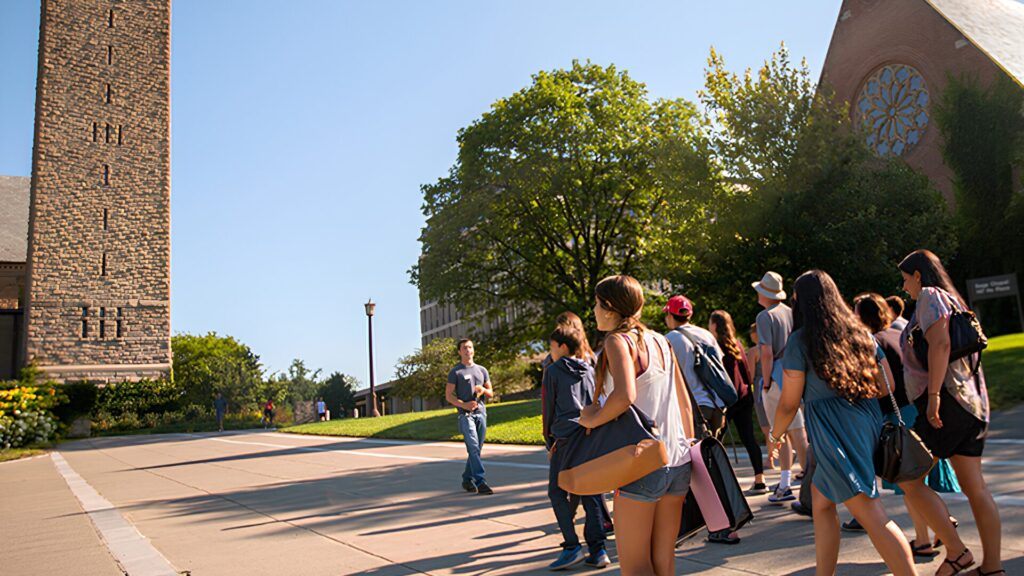
Cornell Precollege Studies is one of the credit-bearing college programs for high school seniors, allowing you to take real Cornell courses before enrolment. You can choose from online, commuter, or residential formats while experiencing university-level coursework, assignments, deadlines, and academic expectations.
Depending on your selected course, you may study areas such as STEM, business, humanities, social sciences, or writing. Because you learn through actual university courses, the program can help you test academic interests and better understand the workload of college study.
Why it stands out: You earn Cornell credit while experiencing college-level academics through flexible online, commuter, or residential options.
14. New York University – Pre-College
Location: New York University, New York City, New York
Cost: Credit-based tuition ranges from $700 for a 0-credit course to $8,008 for a 4-credit course
Acceptance Rate/Cohort Size: Selective; cohort size and acceptance rate are not publicly available
Dates: July 1st – August 12th
Application Deadline: March 13th for international on-campus students; June 1st for residential housing registration; June 15th for domestic commuter and online students
Eligibility: Rising high school juniors and seniors; open to international students who meet NYU Precollege requirements
NYU Precollege lets you take college-level courses while experiencing academic life at New York University. You can choose from a wide range of credit-bearing courses across subjects such as STEM, business, arts, humanities, social sciences, and media.
The program gives you exposure to real university coursework, assignments, deadlines, and classroom expectations. You may participate as a commuter or apply for residential housing, depending on availability and eligibility. Because you study in an NYU classroom and can earn college credit, the program can help you test academic interests before applying to college.
Why it stands out: You earn NYU college credit while studying on a major urban campus in New York City.
15. Emory University – Pre-College Program
Location: Emory University, Atlanta, Georgia
Cost: Tuition-based; costs vary by course and format; $70 application fee and $350 enrolment deposit apply; no stipend listed
Acceptance Rate/Cohort Size: Selective; cohort size and acceptance rate are not publicly available
Dates: Session A: June 14-27; Session B: June 28th – July 11th; Session C: July 12-25; Summer College Session 1: May 15th – June 26th; Summer College Session 2: June 29th – August 7th
Application Deadline: Deadlines vary by session; the Summer College Session 2 deadline is June 5th
Eligibility: High school students; requirements vary by programme format and course; open to international students who meet Emory’s application requirements
Emory Pre-College offers noncredit pre-college courses and credit-bearing Summer College options for high school students. You can choose from more than 100 courses taught by Emory faculty across areas such as science, humanities, business, arts, health, and social sciences. Depending on your selected format, you may experience residential campus life, commuter learning, online study, or college-credit coursework.
The program is designed to introduce you to university-level academics while helping you explore possible majors and career interests. Because Emory offers both noncredit and credit-bearing pathways, you can choose the level of academic intensity that best fits your college preparation goals.
Why it stands out: You can explore Emory coursework through flexible noncredit or credit-bearing options while experiencing university-style learning.
Frequently asked questions: College programs for high school seniors
Are college programs for high school seniors open to international students?
Eligibility varies significantly across programs. Highly selective US research programs like SIMR at Stanford, the Broad Summer Scholars Program, and the Anson L. Clark Scholars Program are generally not open to international students due to citizenship or work authorization requirements. Programs like NYU Precollege, Cornell Precollege Studies, and King’s College London’s Pre-University Summer School do accept international applicants. Immerse Education’s Academic Insights Pathway is also open globally to students aged 13 to 18.
Do college programs for high school seniors cost money?
Cost varies widely by program type. Fully funded options like Columbia’s BrainSTORM, the Anson L. Clark Scholars Program, and the Sutton Trust Summer School charge nothing and sometimes even provide stipends or travel reimbursement. Tuition-based programs, like NYU Precollege or Pratt’s Summer PreCollege, can range from a few hundred dollars for a single course up to several thousand dollars for a residential multi-week program. Financial aid and bursary support are available for many of these options.
Can a college program for high school seniors earn you college credit?
Yes, several programs award real college credit that can often transfer once you enroll in a degree program. Pratt Institute’s Summer PreCollege awards four credits, Cornell’s Precollege Studies uses actual Cornell courses, and NYU Precollege offers credit-bearing options ranging from zero to four credits depending on the course. Not every program offers credit, so if transferable credit matters to you, confirm this directly with the program before applying.
What is the difference between a research-based program and a coursework-based program for seniors?
Research-based programs, like Stanford’s SIMR or the Broad Summer Scholars Program, place you inside an active lab where you contribute to a mentor’s ongoing research and typically present findings in a final poster session. Coursework-based programs, like NYU Precollege or Emory’s Pre-College Program, instead have you take university classes alongside a syllabus, assignments, and exams. Research programs tend to be more selective and suit students who already know they want lab experience, while coursework programs suit students still exploring subjects.
How selective are college programs for high school seniors?
Selectivity ranges dramatically depending on the program’s structure and funding. Programs offering stipends or full funding, like the Anson L. Clark Scholars Program with only 12 spots or the Broad Summer Scholars Program with fewer than 20 students selected annually, are highly competitive. Tuition-based coursework programs, like NYU Precollege or Cornell Precollege Studies, tend to have more available seats since they aren’t capped by research lab capacity, though popular sessions can still fill quickly.
Is Immerse Education a good fit for a high school senior deciding on a major?
Immerse Education’s Academic Insights Pathway can help seniors test out a potential major before committing to it in college applications. The program lets you take undergraduate-level classes in small groups of four to 10 students across locations like Oxford, Cambridge, and Harvard, choosing from over 20 subjects including medicine, engineering, law, and computer science. You’ll complete a personal project, receive written feedback, and earn a certificate of completion, giving you a concrete sense of what studying that subject in college actually involves.
Take the Next Step With a Clearer University Plan
Senior year is the right time to test your interests, compare subjects, and understand how university-level study differs from familiar high school learning before applying.
The 15 college programs for high school seniors featured here offer research, credit-bearing courses, mentorship, and practical exposure to academic and campus life before enrolment.
Use these experiences to refine your major choices, strengthen applications, and identify the subjects, teaching styles, and university environments where you can thrive with confidence.
Ready to turn that insight into a stronger university plan? Read our University Preparation blogs for guidance on applications, courses, interviews, and student life today.