
 Русский (RU)
 Українська (UK)
 Türkçe (TR)
 Italiano (IT)
 Français (FR)
 Português (PT)
 中文 (中国) (ZH)
 Español (ES)
 日本語 (JA)
 ไทย (TH)
 Deutsch (DE)
 Ελληνικά (EL)
 Polski (PL)
 Bahasa Indonesia (ID)
 Nederlands (NL)
 العربية (AR)
 한국어 (KO)

Summer programs are an excellent option for rising high school freshmen because they offer a chance to explore academic interests, experience college-level coursework and campus life, build practical skills, and gain exposure to real-world industries , all without the long-term financial commitment of enrolling in a degree program. Many of the best opportunities are fully funded or heavily subsidized, making them an accessible way to test new fields, strengthen college applications, and connect with like-minded peers and mentors.
Summer programs can act as a foundation for your college journey, giving you a taste of what university life is like at a top institution, in person.
What summer programs are available for rising high school freshmen?
Rising high school freshmen have access to a variety of summer programs designed to help them transition smoothly from middle school into a more rigorous academic environment. Many universities and community colleges offer academic enrichment camps where you can explore subjects like creative writing, introductory coding, or robotics without the stress of formal grades.
In addition to campus-based academics, specialized organizations host leadership summits, language immersion courses, and outdoor experiential learning programs that focus on building teamwork and resilience. While some of the most competitive, credit-bearing pre-college programs are usually reserved for older high schoolers, rising freshmen can take full advantage of these foundational summer options to discover new passions, build early confidence, and start shaping their extracurricular interests before day one of high school.
We’ve narrowed down our list to 15 summer programs for rising high school freshmen that stand out for their rigorous curriculum, exceptional networking opportunities, and prestigious host institutions.
For adjacent opportunities, consider the online research program.
Key takeaways
- WYSE Summer Camps at the University of Illinois Urbana-Champaign cost $1,500 for residential students, with full and partial Trail Blazer Scholarships available covering up to 100% of the cost.
- Immerse Education’s Academic Insights Programme spans eight locations, including Boston, Cambridge, and Tokyo, with small classes of seven to 10 students open to students worldwide aged 13 to 18.
- MIT’s You GO Girl! program costs just a $100 suggested materials donation and is restricted to the greater Boston area, open to students of any gender entering 9th grade.
- Brown University’s STEM for Rising 9th and 10th Graders costs $6,052 and is specifically designed for students ages 13 to 15, unlike most pre-college programs that target older high schoolers.
- Rice University’s Techniques of a Pro Mathematician costs $2,200 for early registration and requires familiarity with sine, cosine, and tangent before the program begins in July.
- UConn’s Explore Engineering program costs $3,500 for early bird registration and is designed by current undergraduate engineering students, including up to 100% financial aid waivers.
- Carnegie Mellon’s Summer Engineering Experience Maker Camp is completely free but restricted to US applicants who can commute daily to the Pittsburgh campus.
- Program costs for rising freshman programs range from free options like Carnegie Mellon’s SEE Maker Camp to over $6,052 for Brown University’s STEM program.
15 Summer Programs for Rising High School Freshmen
1. Grainger College of Engineering, University of Illinois Urbana-Champaign – Summer Camps (WYSE)
Location: University of Illinois Urbana-Champaign, Urbana, Illinois
Cost: $1,500 + a $25 deposit for residential camps; $750 + a $25 deposit for the commuter option; $550 + a $25 deposit for day camps; partial (50%) and full (100%) Trail Blazer Scholarships are available
Dates: Week-long sessions run between June 21st and August 1st; camps open to rising 9th graders include Exploring Your Options (June 21-27 or July 12-18), Illinois Aerospace Institute (July 12-18 or July 26th – August 1st), Power of Bioengineering (July 19-25), Mid-GLAM day camp (June 22-26), and the Discover ECE day camp (June 29th – July 2nd)
Application Deadline: Priority deadline: March 31st; Reviewed until seats are filled after this date
Eligibility: Rising 9th till 12 grade students; open to international students for residential camps only
In this camp, you can choose between a broad survey camp like Exploring Your Options or a focused session in aerospace, bioengineering, materials science, or electrical and computer engineering. You visit active research labs across campus, interact with engineering students, faculty, and researchers from multiple departments, and work in teams to complete hands-on engineering projects with campers from across the US and the world.
Instruction includes demonstrations, lab tours, and classroom presentations from world-class instructors. Residential campers live in certified student housing in suites with 2–3 other campers, gaining an authentic collegiate experience. The week closes with ceremonies showcasing your projects and accomplishments. You leave with teamwork, problem-solving, and early exposure to real engineering disciplines.
Why it stands out: It gives rising freshmen direct access to research labs, faculty, and hands-on team projects at one of the nation’s top engineering colleges, with blind-reviewed admissions and scholarships that keep the experience accessible.
2. Immerse Education’s Pre-University Summer School
Location: Cambridge, London, Oxford, Singapore, Sydney, Tokyo, and Toronto
Cost: Varies; summer school scholarship available through our bursary programme
Dates: 2 weeks during the summer
Application Deadline: Multiple summer cohorts; rolling admissions.
Eligibility: Students across the globe aged 13-18 currently enrolled in middle or high school; open to international students
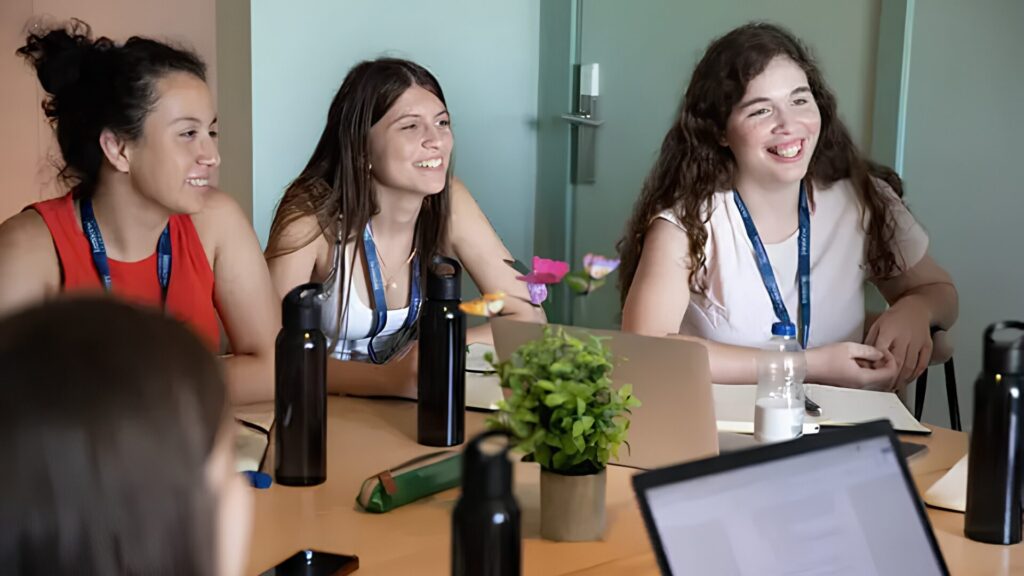
The Academic Insights Program lets high school students experience university life firsthand. You will live on campus and study in small groups of 7-10, and learn from tutors from eminent top universities like Oxford and Cambridge. You can explore a wide range of subjects, spanning over 20 options, including Architecture, AI, Business Management, Computer Science, Economics, Medicine, Philosophy, and more. The courses are experiential and focus on hands-on learning.
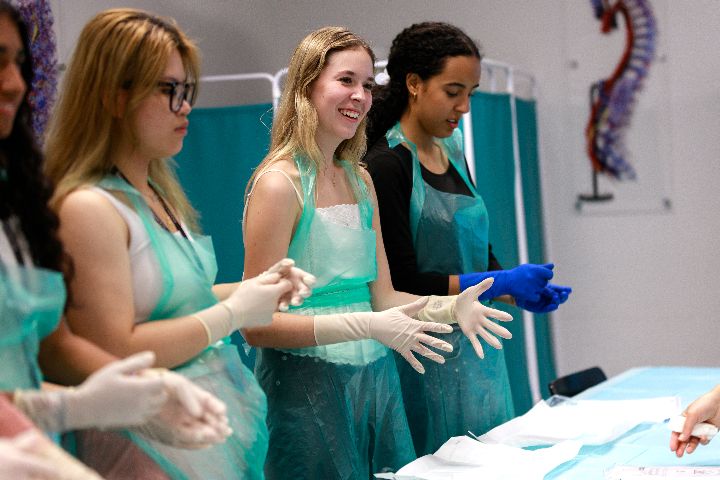
You may find yourself conducting dissections in medicine, designing a robotic arm in engineering, participating in a moot court for law, or building creative writing portfolios and business case studies. By the end of the program, you’ll complete a personal project, receive written feedback, and receive a certificate of completion. You can find more details about the application here.
Why it stands out: You’ll get an early start at university life and academics because the program includes an independent project, discussion-based classes, and living at a college campus.
3. Brown University – Brown Pre-College: STEM for Rising 9th and 10th Graders
Location: Brown University campus in Providence, Rhode Island
Cost: $6,052; need-based scholarships are available
Dates: July 12-24
Application Deadline: May 15th
Eligibility: Students completing grades 8-9 by summer; ages 13-15 by June 14th; cannot be concurrently enrolled in Summer@Brown or Leadership Institute on-campus programs before STEM 9/10; open to international students
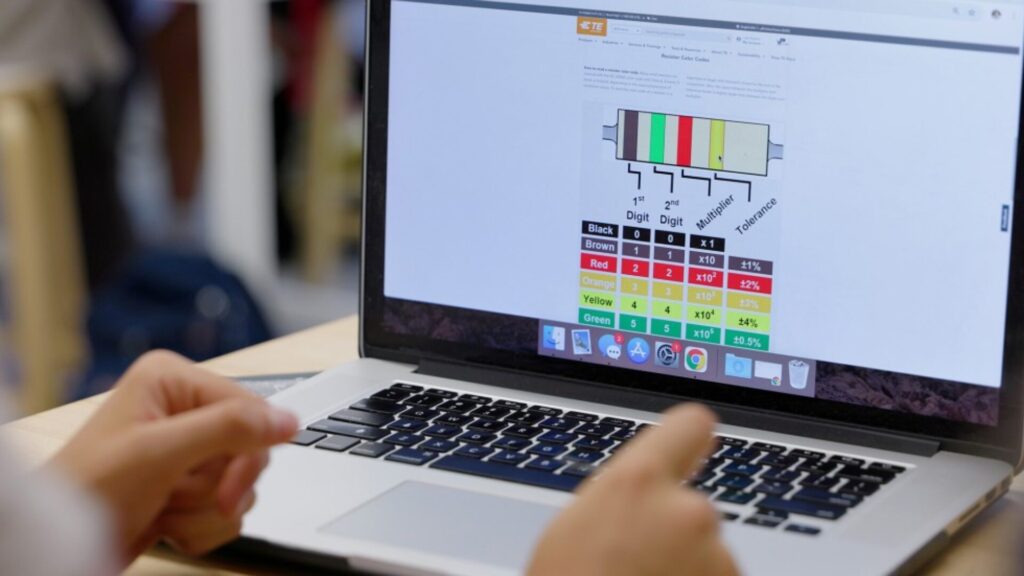
As one of the more academically rigorous summer programs for rising high school freshmen, this 12-day residential experience lets you stay on Brown University’s campus while focusing on a single STEM subject of your choice. Your days combine classroom instruction with practical activities, allowing you to apply what you learn through laboratory work, engineering tasks, field investigations, or research, depending on your course.
Morning sessions are primarily dedicated to academic learning, while scheduled afternoons give you time to work individually or with classmates on a project. Throughout the program, you may also meet Brown graduate students and learn about current research, providing a better understanding of how scientific work is carried out in a university setting. At the end, you present your project at the Presentation of Learning.
Why it stands out: It immerses younger high schoolers in a supportive, grade-free Ivy League residential environment that combines rigorous STEM academics and hands-on research projects to foster early college independence.
4. MIT Edgerton Center – MIT You GO Girl
Location: MIT campus, Cambridge, Massachusetts; in-person commuter program
Cost: $100 suggested materials donation
Dates: Session One: August 4-7; Session Two: August 18-21
Application Deadline: Not specified
Eligibility: Rising 9th grade students from the greater Boston area; able to commute to the MIT campus; open to eligible students of any sex/gender; not open to international students
This four-day commuter program is held on MIT’s campus and is intended for students who will be entering high school in the fall. You take part in hands-on STEM activities that introduce scientific and engineering ideas through experiments, design challenges, and guided investigations. Depending on the year’s curriculum, you might construct simple machines, explore motion through visual analysis, or use models to examine concepts in biology and other sciences.
In addition to the academic activities, you join small-group sessions that focus on preparing for high school, collaborative learning, and problem-solving. You also have opportunities to speak with MIT undergraduate mentors, who share their experiences and answer questions about studying STEM at the university level.
Why it stands out: It immerses rising ninth graders in a low-pressure, hands-on STEM experience by combining engaging projects with valuable high school preparatory sessions and near-peer mentoring.
5. University of Chicago College of Engineering – Engineering Summer Camp
Location: UIC campus, Chicago, Illinois
Cost: $500 per student; 10% discount for children of University of Illinois (UIC, UIUC, UIS, or System Office) employees
Dates: July 20-24
Application Deadline: Rolling registration until tracks reach capacity
Eligibility: Rising 8th or 9th graders; open to international students
Over five days, you explore several engineering disciplines through activities hosted by different departments at UIC. You are introduced to areas such as computer science, civil engineering, chemical engineering, mechanical engineering, and materials engineering, with each day highlighting a different subject. You work with other participants on practical assignments that may include programming, robotics, design exercises, or analyzing engineering data.
These activities are designed to show how engineers use different methods to address technical challenges across a range of industries. As you move through the program, you also develop skills in teamwork, communication, and structured problem-solving while gaining a broader understanding of engineering as a field of study.
Why it stands out: It immerses high school students in more than 15 unique, hands-on challenges across five different disciplines inside real research labs.
6. University of Connecticut, School of Computing – UConn AI Summer Camp
Location: UConn Storrs Campus, Storrs, Connecticut
Cost: $250; 50% or 100% financial assistance is available for students with demonstrated financial need
Dates: July 27-31
Application Deadline: July 1st; rolling admissions after
Eligibility: Rising 9th – 12th grade students; younger students who have completed Algebra I are also eligible; neurodivergent students welcome with accommodations; not open to international students
During this five-day program at UConn’s Storrs campus, you explore the foundations of artificial intelligence through a combination of coding exercises, classroom instruction, and collaborative activities. You use Python to work through introductory programming concepts and examine how machine learning models analyze data, identify patterns, and generate predictions.
As the program progresses, you are introduced to topics such as different machine learning approaches, algorithmic decision-making, and ethical questions surrounding the use of AI. Practical exercises help you understand both the capabilities and the limitations of AI systems by applying concepts to real examples. You also visit university research facilities, including the Autonomous Driving Lab.
Why it stands out: It immerses high school students in hands-on artificial intelligence and Python programming instruction while providing unique on-site access to UConn’s Autonomous Driving Lab and prototype vehicles.
7. Georgia Tech CEISMC Summer PEAKS – Seth Bonder 3: Introduction to Deep Learning in Keras
Location: Georgia Tech Atlanta Campus, Atlanta, Georgia
Cost: $400 – $550; scholarships are available for families qualifying for the Georgia Free or Reduced Lunch Program
Dates: One-week session offered within the June – July Summer PEAKS season
Application Deadline: Rolling per-session registration
Eligibility: Rising 9th – 12th graders, including rising freshmen; prior Python programming background required; not open to international students
In this program, you dive into a deep learning-focused in-person course on Georgia Tech’s Atlanta campus, building on a required Python background. Working through daily hands-on coding sessions, you use Keras, a Python deep learning library, to construct and train neural network models. You advance through structured learning modules, then select and develop a final deep learning project of your own.
The week emphasizes practical machine learning workflows, computational thinking, and collaborative problem-solving alongside peers and instructors. By the final showcase, you present a functioning model to family and classmates, applying AI concepts to real problems.
Why it stands out: It is one of the few pre-college offerings where rising high schoolers code deep neural networks directly in Keras and leave with a working model built during an extended, project-based week on a major research university’s campus.
8. Rice University Tapia Center – Techniques of a Pro Mathematician
Location: Rice University, Houston, TX
Cost: Early Bird (before February 1): $2,200; Regular (before May 1st): $2,500; limited number of scholarships are available; discounts are also offered for Rice alumni/staff (10%) and siblings (5%)
Dates: Session 1: July 5-10; Session 2: July 12-17; Session 3: July 19-24
Application Deadline: Rolling until spots fill
Eligibility: Rising 8th – 12th grade students who excel at mathematics and have completed a high school geometry course; must be familiar with sine, cosine, and tangent (SOHCAHTOA), including the ability to sketch graphs of sin(x) and cos(x) by hand by June; open to international students
During this week-long residential program, you examine how mathematicians develop logical arguments, construct proofs, and communicate their reasoning. The curriculum focuses on mathematical thinking, with activities centered on solving problems, evaluating different solution methods, and writing clear mathematical explanations. You spend time working independently as well as in small groups, comparing approaches and discussing the reasoning behind your solutions.
Throughout the program, you receive feedback on both your written work and presentations, helping you refine how you explain mathematical ideas. Outside of scheduled sessions, you live on campus and interact with other students who have an interest in mathematics and related STEM subjects.
Why it stands out: It shifts the focus away from rote formula memorization toward mastering the fundamental logic and communication of mathematical thinking, equipping you with the advanced analytical strategies used by professional college mathematicians.
9. University of Connecticut, Vergnano Institute for Impact – UConn Explore Engineering
Location: Storrs, Connecticut
Cost: Standard: $4,000; Early Bird: $3,500; financial aid is available
Dates: July 12-24
Application Deadline: March 1st (early bird); May 1st (standard)
Eligibility: Students entering 9th – 11th grade in September; open to international students
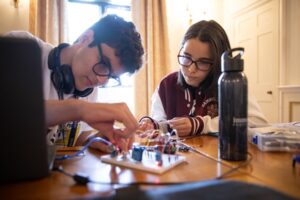
In this engineering program, you complete a project that introduces you to principles from both mechanical and electrical engineering. Working with guidance from faculty members and university student mentors, you move through the engineering design process by planning, building, testing, and modifying a prototype. Along the way, you gain experience with skills such as assembling circuits, using basic fabrication tools, creating computer-aided designs, and developing working models.
Depending on your chosen project, you might build an underwater robotic device or design a prosthetic system that integrates mechanical structures with electronic components. Throughout the program, you assess how your design performs, identify technical issues, and revise your prototype based on testing and feedback.
Why it stands out: Its two-week residential program is designed by current undergraduate engineering students, featuring hands-on Grand Challenge projects, faculty-led major exploration, and financial waivers up to 100%.
10. Carnegie Mellon University, College of Engineering – Carnegie Mellon Summer Engineering Experience (SEE): Maker Camp
Location: Carnegie Mellon University, College of Engineering, Pittsburgh, Pennsylvania
Cost/Stipend: None
Dates: July 13-17
Application Deadline: March 23rd
Eligibility: Rising 8th and 9th graders; U.S. applicants only; daily commuting distance to CMU’s Pittsburgh campus required since no residential housing is offered; not open to international students
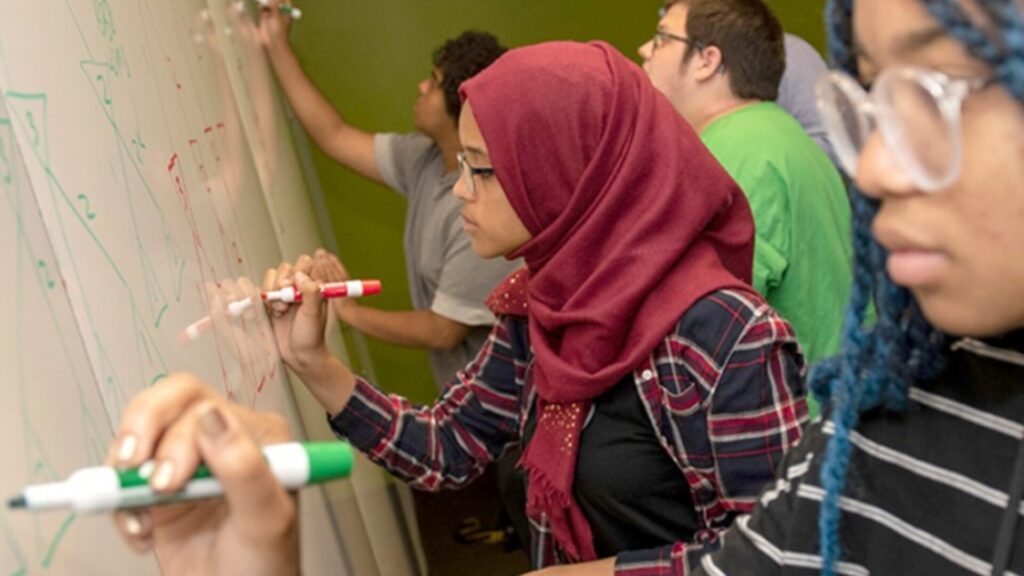
During this week-long program, you learn about the engineering design process by completing a series of practical projects that involve designing, building, testing, and improving solutions. Sessions led by Carnegie Mellon’s engineering outreach team introduce you to several engineering disciplines and explain how engineers evaluate and solve technical problems. You work with other participants on team-based activities, applying design principles to projects using readily available materials rather than specialized equipment.
As each project develops, you test your ideas, identify areas for improvement, and revise your designs based on the results. Through this process, you gain experience with the step-by-step approach engineers use to refine solutions and address design challenges.
Why it stands out: It’s a week-long, completely free hands-on program that lets rising 8th–11th graders explore engineering through project-based sessions—a Making & Engineering Maker Camp for younger students and a Biomedical Engineering track for older ones.
11. Illinois Institute of Technology – Elevate College Prep Summer Programs
Location: Illinois Tech’s Mies Campus, Chicago, Illinois
Cost: $550 – $4,500 depending on the course and its length
Dates: Multiple programs between June 22nd and July 31st
Application Deadline: May 15th
Eligibility: Rising high school freshmen through rising seniors, ages 14-17; residential overnight programs require students to be at least 15 by the start date, so rising freshmen can attend daytime and virtual courses; open to international students
As a rising high school freshman, you join Illinois Tech’s Elevate College Prep on its Chicago Mies Campus to explore STEM through hands-on daytime courses taught by university faculty. You can choose beginner-friendly tracks such as Coding Bootcamp: Introduction to Python, Build Your Own Robot using Arduino kits and robotic platforms, Rocket Engineering 101, or Game Design from the Ground Up.
You write real code, prototype robots, run guided experiments, and build collaborative team projects while experiencing college-level learning and campus life. You strengthen technical foundations, teamwork, and problem-solving skills, and you receive an official certificate of completion. Open, non-selective enrollment and virtual options keep it accessible even at the youngest high school grade level.
Why it stands out: It lets a rising freshman as young as 14 take college-level, faculty-taught STEM courses on a major tech university’s campus through open enrollment and flexible one- to four-week formats that few pre-college programs extend to the youngest high schoolers.
12. United States Naval Academy – US Naval Academy Summer STEM (Session 1 – Rising 9th Graders)
Location: Annapolis, Maryland
Cost: $450; financial aid is available
Dates: June 1-6
Application Deadline: March 31st
Eligibility: Rising 9th graders during the summer; demonstrated strong academic performance including GPA and test scores; strong record of extracurricular accomplishments; not open to international students
At the U.S. Naval Academy Summer STEM program, you participate in a series of short workshops covering topics in science, technology, engineering, and mathematics within a structured campus setting. The activities may include introductory coding, basic robotics, and group problem-solving exercises that demonstrate how these concepts are used in practical applications.
You work in small teams with guidance from student mentors at the Naval Academy, completing structured tasks that focus on logic, design, and systems thinking. Outside of workshop sessions, you take part in a residential experience that includes time on campus and activities designed to support collaboration and communication in a group environment.
Why it stands out: It gives rising 9th graders a hands-on residential week in Annapolis, learning from Naval Academy faculty and midshipmen in world-class labs at a top-5 undergraduate engineering program.
13. University of Washington Youth & Teen Programs – Coding in Python I
Location: Online or the University of Washington Seattle campus
Cost: $895 – $995 + nonrefundable $50 registration fee; financial aid is available
Dates: Summer (1B): June 29th – July 10th; Summer (2B): July 13-24; Summer (3A & 3B): July 27th – August 7th
Application Deadline: Two weeks before the start date of each respective course
Eligibility: Incoming 9th – 12th graders; open to international students
In this program, you are introduced to the basics of programming using Python through structured lessons and hands-on practice. You learn foundational concepts such as variables, loops, conditionals, functions, lists, dictionaries, debugging, and simple file operations, applying each idea through short coding exercises. The course is designed around incremental problem-solving, with each topic building on the previous one in a beginner-focused format.
As you move through the program, you complete small projects that reinforce what you have learned, leading up to a final assignment where you create a basic text-based game that combines multiple concepts. The program is available in both online and in-person formats, and you receive a digital badge after finishing the course.
Why it stands out: It takes rising 9th–12th graders with no prior experience from Python fundamentals to building their own text-based game, with hands-on exercises, a shareable digital badge for college applications, and both in-person and online options.
14. University of Arizona, College of Engineering – University of Arizona Summer Engineering Academy (SEA) – Day Camps
Location: University of Arizona campus, Tucson, Arizona
Cost: $750 for residential camps. $350 for commuter camps + $50 non-refundable registration fee; need-based scholarships are available
Dates: June 8-11 (Engineering Our Energy and Water); June 29th – July 3rd (Women in Engineering); July 6-9 (Semiconductor Design, Fabrication and Application); July 20-23 (Challenge Accepted)
Application Deadline: June 30th or until sessions fill
Eligibility: Rising 9th through 12th graders; open to public, private, charter, and homeschool students; open to international students
In this four-day program at the University of Arizona, you select an engineering track and participate in a series of structured, hands-on activities led by faculty members, graduate students, and industry partners. Each track focuses on a specific area of engineering and shows how academic concepts are applied through guided projects and laboratory-based work.
Depending on your selection, you may work on circuit design in semiconductor-related sessions, explore basic principles of optics and electronics by constructing simple devices, or develop prototypes connected to topics such as renewable energy or water use. The program follows a daytime schedule with planned lab sessions and breaks, and certain tracks may also include a visit to an external industry site.
Why it stands out: It lets you explore themed engineering challenges working alongside UA professors, grad students, and industry partners like Intel and Bosch, with need-based scholarships available.
15. Georgia Institute of Technology, Center for Education Integrating Science, Mathematics, and Computing (CEISMC) – No Cap: Truth in the Age of AI
Location: Atlanta, Georgia
Cost: $550
Dates: June 1-5
Application Deadline: Rolling per-session registration
Eligibility: Rising 9th through 12th grade students; open to international students
In this camp at Georgia Tech, you are introduced to basic concepts in computer science with an emphasis on artificial intelligence. The program, hosted by CEISMC, includes structured lessons in introductory programming and guided activities that explain how AI systems handle data and support digital tools. You work alongside other participants on exercises that look at how algorithms operate and how computational methods are used to create and evaluate simple applications.
The program is organized into a series of learning modules that may count toward a computer science certificate offered by the institution. Through these activities, you become familiar with foundational computing concepts and begin building skills that can support further study in technology-related areas.
Why it stands out: It’s a week-long high school program on the Atlanta campus that tackles AI, misinformation, and discerning truth—and counts toward CEISMC’s stackable Computer Science Certificate when paired with a second qualifying program.
Frequently asked questions: Summer programs for rising high school freshmen
Are summer programs for rising high school freshmen open to international students?
Eligibility varies considerably. MIT’s You GO Girl!, UConn’s AI Summer Camp, and the US Naval Academy’s Summer STEM program are all restricted to US students, some requiring commuting distance to a specific campus. However, Brown University’s STEM for Rising 9th and 10th Graders, Illinois Institute of Technology’s Elevate College Prep, and the University of Illinois’s WYSE camps all explicitly welcome international students. Immerse Education’s Academic Insights Programme is also open globally to students aged 13 to 18.
How much do summer programs for rising freshmen cost?
Costs range from completely free to over $6,000. Free options include Carnegie Mellon’s SEE Maker Camp, while shorter programs like Georgia Tech’s No Cap: Truth in the Age of AI cost $550. Longer, more intensive programs like Brown’s STEM 9/10 cost $6,052, and UConn’s Explore Engineering costs up to $4,000. Financial aid and scholarships are available for many programs, including full Trail Blazer Scholarships at the University of Illinois.
Are there programs specifically designed for rising freshmen, or are most meant for older students?
A handful of programs are intentionally built for this exact age group rather than repurposed from older high school offerings. Brown University’s STEM for Rising 9th and 10th Graders and MIT’s You GO Girl! both target students specifically completing 8th or 9th grade. Others, like Immerse Education’s Academic Insights Programme, set a broader age range starting at 13, making them accessible without being exclusively designed for incoming freshmen.
What kind of activities do rising freshman programs typically include?
Most programs emphasize hands-on, project-based learning over traditional lectures. WYSE Summer Camps have you visit active research labs and complete team engineering projects, while Rice’s Techniques of a Pro Mathematician focuses on constructing proofs and mathematical arguments. UConn’s Explore Engineering has you build a full working prototype, like an underwater robotic device, over two weeks. Nearly all programs conclude with a presentation or showcase of your work.
How selective are summer programs for rising freshmen?
Selectivity varies by program type. Rice’s Techniques of a Pro Mathematician and Brown’s STEM 9/10 program both require meeting specific academic prerequisites, while programs like Illinois Institute of Technology’s Elevate College Prep and UIC’s Engineering Summer Camp use open, non-selective enrollment. Regardless of selectivity, meeting age and grade requirements precisely matters, since many of these programs are narrowly targeted at students in a specific one- or two-year age band.
Is Immerse Education a good option for a rising freshman exploring academic interests?
Immerse Education’s Academic Insights Programme is well-suited to this age group, since it’s specifically designed for students aged 13 to 18 across eight global locations, including Boston, Cambridge, and Singapore. You’ll study in small groups of seven to 10 students, working on hands-on projects like designing a robotic arm in engineering or building a creative writing portfolio. You’ll complete a personal project, receive written feedback, and earn a certificate of completion, offering a low-pressure way to explore interests well before you need to commit to a specific academic direction.
From Rising Freshman to Future University Student
Freshman year is not only a beginning; it is also your first chance to test interests, build independence, and discover how you learn best early
These 15 summer programs for rising high school freshmen turn that transition into an active experience through projects, mentorship, campus exposure, and new academic challenges
Instead of treating summer as a pause, use it to identify strengths, practise responsibility, meet motivated peers, and enter high school with clearer goals ahead
Ready to prepare for high school and future university life? Read our University Preparation blogs for guidance on study habits, subject choices, applications, and long-term academic planning