




 Русский (RU)
 Українська (UK)
 Türkçe (TR)
 Italiano (IT)
 Français (FR)
 Português (PT)
 中文 (中国) (ZH)
 Español (ES)
 日本語 (JA)
 ไทย (TH)
 Deutsch (DE)
 Ελληνικά (EL)
 Polski (PL)
 Bahasa Indonesia (ID)
 Nederlands (NL)
 العربية (AR)
 한국어 (KO)

If you’re a high school student fascinated by game design, you’re likely drawn to the exciting blend of creativity and technology the field offers. Game design internships for high school students allow you to explore programming languages, visual graphics, compelling narratives, and user experience through real-world projects. You can also gain hands-on experience with industry-standard software such as Unity and Unreal Engine while strengthening your teamwork and problem-solving skills.
These opportunities can become a valuable stepping stone in your academic and professional journey. They give you a firsthand look at how the gaming industry operates while introducing you to project management, collaborative creativity, and technical execution. This experience can strengthen your resume and deepen your understanding of the development lifecycle, from concept to deployment.
An internship can also provide a strong foundation for your academic journey by showing you what a subject looks like at a professional level within an affordable and structured setting.
How do you choose the right game design internships for high school students?
With countless internship options available, it’s crucial to sift through and find programs that truly offer a genuine learning experience. Look for opportunities that emphasize hands-on projects, provide responsive mentorship, and facilitate valuable networking connections.
Across the globe, various internships are tailored to aspiring game designers, each presenting unique opportunities to learn and grow. Many of these programs focus on distinct areas like programming, design, and storytelling, empowering you to select an internship that aligns with your career aspirations.
To help you choose, we’ve drawn up a list of 15 game design internships for high school students worth considering.
For adjacent opportunities, consider the software development & AI program.
Key takeaways
- Pocket Play LLC’s remote Game Developer Internship requires a portfolio link with your application and lets you prototype your own original mobile game concept in Unity.
- Immerse Education’s Academic Insights Programme spans eight locations, including Boston, Cambridge, and Tokyo, with small classes of seven to 10 students open to students worldwide aged 13 to 18.
- Gameheads is a completely free, 10-month program restricted to Bay Area youth ages 15 to 25, culminating in a showcase at the Game Developers Conference.
- The UCLA Game Lab High School Summer Institute costs $3,591 for the virtual option or $6,541 for residential students, awarding four units of college credit upon completion.
- Carnegie Mellon’s National High School Game Academy costs $13,281 and models its curriculum on CMU’s graduate Entertainment Technology program, with full scholarships available for eligible US students.
- BAFTA UK’s Young Game Designers competition is completely free and restricted to UK residents, with winning games exhibited in London’s Science Museum.
- DigiPen’s Pre-College Game Design program costs $2,995 online and offers a tuition credit worth the full program cost if you later enroll at DigiPen Institute of Technology within three years.
- Program costs for game design internships range from free options like Gameheads and BAFTA’s Young Game Designers to over $13,281 for Carnegie Mellon’s National High School Game Academy.
15 Game Design Internships for High School Students
1. Pocket Play LLC – Game Developer Intern: Mobile Games
Location: Fully remote
Cost/Stipend: None
Dates: Flexible dates
Application Deadline: Rolling basis
Eligibility: Passionate individuals with skills in C# and Unity; a portfolio link is required as part of the application; open to international students
Pocket Play LLC offers one of the most hands-on game design internships for high school students, allowing you to work remotely on mobile game projects from concept to launch. You focus on designing hyper- and hybrid-casual games while collaborating with experienced developers and designers in a fast-paced studio environment.
Your core project is developing and prototyping your very own game concept using C# and Unity within the internship period. You also assist with performance testing and optimization of gameplay features, analyze real-time player metrics, and iterate designs based on data. You additionally gain exposure to market launch strategies while working with studios around the world.
Why it stands out: It lets you design, build, and prototype your own original mobile game concept in Unity while working directly inside a real publishing studio that partners with developer teams worldwide.
2. Immerse Education’s Software Development & AI Summer School
Location: University College London, London, UK
Cost: Varies; summer school scholarship available through our bursary programme
Dates: 2 weeks during the summer
Application Deadline: Multiple summer cohorts with rolling admissions
Eligibility: High school students worldwide aged 15-18
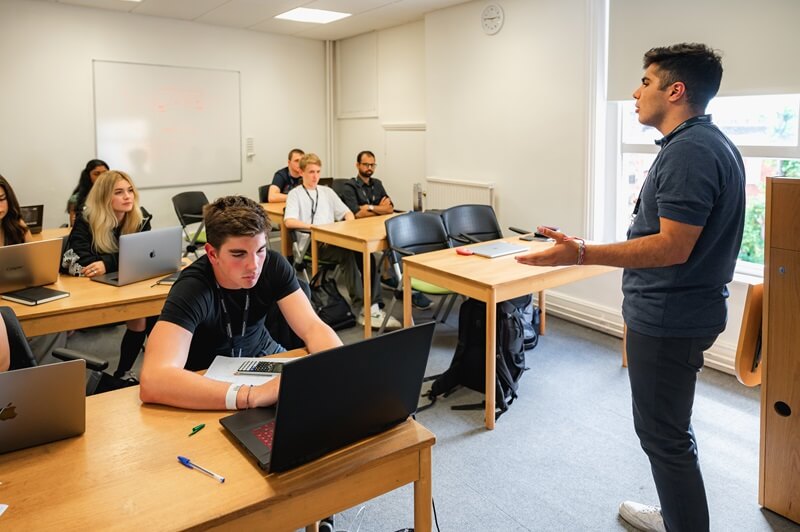
This two-week Software Development & Gaming programme is designed for students who want to go beyond playing games and start creating them. It focuses on the fundamentals of programming, game design, and problem-solving, taught through hands-on, practical work.
You’ll learn how software is built from the ground up, covering core programming concepts, game mechanics, and user experience design. Through structured projects, you’ll move from idea to execution, developing systems that actually work. The Career Insights pathway gives you exposure to how the industry operates. You can find more details about the application here.
Why it stands out: You’ll learn from practitioners, explore real development workflows, and work on projects that reflect real-world challenges in software and gaming.
3. SCS Software Internship for 3D Artists
Location: Prague, Czech Republic
Cost/Stipend: Competition winner gets a 2-week internship
Dates: Two weeks; specific dates are arranged after the December 16th winner announcement
Application Deadline: October 15th
Eligibility: Junior and senior high school students; open to international students
The SCS Software Internship for 3D Artists invites students to compete in creating a 3D model, sharpening their skills in graphic design and 3D software. Participants experience mentorship from top industry professionals, engaging in real game asset creation that mimics the actual workflow in game development. Through hands-on activities, interns receive valuable feedback on their designs, fostering artistic and technical growth.
The collaborative environment encourages creative exchange and networking, ultimately leading to career opportunities within the industry. By the end of the program, you’ll develop presentation skills, enhance your ability to work within a team, and strengthen your artistic confidence.
Why it stands out: It offers a highly selective two-week opportunity for participants to collaborate with industry professionals on real game asset creation, significantly enhancing their technical skills and artistic confidence.
4. Academy of Interactive Entertainment – School Holiday Courses
Location: AIE campuses in Sydney, Melbourne, Canberra, and Adelaide, Australia
Cost: A$360 per two-day course; a 10% discount code is offered for additional bookings within the same holiday period
Dates: Sydney cycle courses: July 6-7 (Jurassic Life, 3D Art) and July 9-10 (Let’s Get Stealthy, Game Design)
Application Deadline: Ongoing until course places fill
Eligibility: Aged 13-18 (13+ minimum age confirmed at booking); enrolled roughly in Year 9 through Year 12 or equivalent; open to international students
In this program, you’ll spend two intensive days learning game design hands-on at one of Australia’s most awarded game development educators, working in campus computer labs with industry-standard software. In design-focused courses like Sydney’s “Let’s get Stealthy,” you build your own stealth game in Unreal Engine, creating puzzles, defining objectives, and implementing hazards that shape the player experience.
Other offerings have you coding gameplay mechanics, physics interactions, and rules in Unity with C#, or modelling 3D game assets in Maya before bringing them into an engine for playtesting. You finish with a playable mini-game to take home, a certificate of completion, and practical exposure to the design, art, and programming workflows used in professional game studios.
Why it stands out: It lets high schoolers design and playtest their own working game in industry tools like Unreal Engine, Unity, and Maya over just two days, taught on real campuses of Australia’s most awarded game development school.
5. Gameheads – Gameheads: Classic
Location: Oakland, California (in-person, with additional Gameheads sites in Honolulu, Hawaii, and a hybrid location in Atlanta, Georgia)
Cost/Stipend: None
Dates: A 10-month, year-over-year program
Application Deadline: April
Eligibility: Youth ages 15-25 in the Bay Area; not open to international students
Gameheads stands out among free game design internships for high school students by offering long-term training in video games and interactive media. Weekly classes cover game design, UX/UI, coding, art and animation, project management, and narrative-focused areas such as design thinking. You also gain practical experience with industry tools including Unity, Unreal Engine, Figma, Blender, zBrush, Substance Painter, and Trello.
Over the summer, you research, design, and build original interactive projects in teams with your peers. You also showcase games at the Game Developers Conference and visit studios such as Double Fine, Sony, and Autodesk. One-on-one college and career counseling supports your path into STEAM fields, and mentorship from industry professionals sharpens your design, technical, and collaboration skills.
Why it stands out: It combines completely free industry-grade game design training with mentors, hardware and software, internship access, and real showcases at events like the Game Developers Conference.
6. NYU Tisch School of the Arts – Future Game Designers
Location: NYU Game Center, Downtown Brooklyn (commuter only)
Cost/Stipend: None
Dates: Saturdays from January 31st – May 9th
Deadline: November 10th
Eligibility: High school freshmen, sophomores, and juniors; open to international students
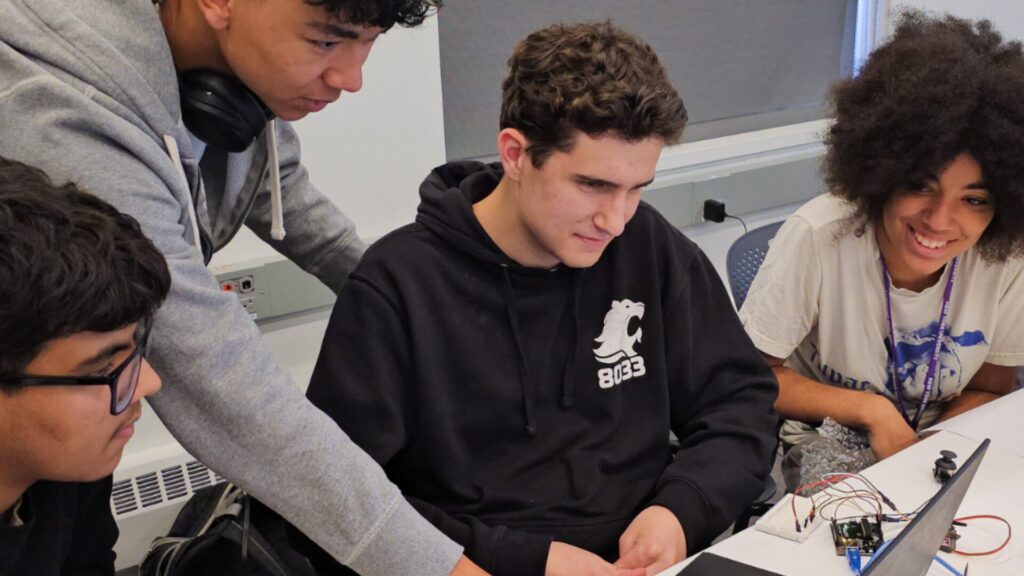
The Future Game Designers program at NYU Game Center offers an engaging opportunity for students interested in game design. Through a combination of hands-on workshops and interactive lessons, participants explore various aspects of game development. You work in teams to conceptualize and build prototypes, ultimately culminating in a polished final game that showcases your skills.
This experience not only promotes interaction with like-minded peers and industry professionals but also enhances understanding of the gaming landscape. By the end of the program, you’ll develop critical design, programming, and teamwork skills vital for success in both academic and professional settings.
Why it stands out: It is an all-inclusive, free workshops that specifically aim to empower underrepresented groups in the game industry through hands-on team-based projects.
7. DigiPen Academy / WANIC – Intro to Game Development
Location: DigiPen Institute of Technology campus, Redmond, Washington
Cost/Stipend: None
Dates: June 29th – July 17th
Application Deadline: April 23rd
Eligibility: Students entering high school grades 9-12; membership in the WANIC consortium required (no out-of-consortium students); no prior experience required; not open to international students
In this program, you discover what actually goes into making the games you play, exploring the key disciplines of a real production environment: game programming, game art, and music and sound design. You learn game design by doing, first working independently in the Unity game engine to experiment with each discipline hands-on.
You then join a small team for a capstone project, building a simple game from concept to completion — practicing the collaborative pipeline, scoping, and iteration skills central to game design. You earn 0.5 CTE high school credit while studying on the campus of a top-ranked game development college.
Why it stands out: It gives complete beginners a tuition-free, state-funded introduction to the full game development pipeline culminating in a team-built game, taught on the Redmond campus of DigiPen Institute of Technology.
8. BAFTA UK – Young Game Designers
Location: London, UK
Cost/Stipend: None
Dates: Winners ceremony: June 18th; Young BAFTA Showcase weekend: June 27-28
Application Deadline: March 12th
Eligibility: UK residents including the Channel Islands and Isle of Man, aged 10-18 during the school year that began September 3rd (August 13th in Scotland); entrants under 16 need at least one parent or legal guardian resident in the UK, and under-18s need a signed parental consent form; no close relation to BAFTA staff; not open to international students
In this program, you compete in one of two tracks: the Game Concept Award, where you develop an original game idea judged on gameplay design, creativity, and platform suitability, or the Game Making Award, where you build a playable prototype with at least one working level using tools such as Scratch, Kodu, GameMaker, or Unity.
You practice core game design skills like designing mechanics, mapping player progression, and pitching your idea, supported by a video pitch and BAFTA’s worksheets on idea capture, interaction, and playtesting. Your entry is assessed by judging panels from leading studios such as IO Interactive and TT Games. You also retain full copyright of your game and the right to develop it commercially.
Why it stands out: Winners’ games are exhibited in the Power Up experience at the Science Museum in London, the National Science and Media Museum in Bradford, and the Science and Industry Museum in Manchester alongside landmark video games from the past five decades.
9. UCLA Game Lab – High School Summer Institute
Location: Los Angeles, USA
Cost: Virtual: $3,591; Residential: $6.541; need-based financial aid may be available for in-state students
Dates: Virtual: June 22nd – July 9th; In-person: July 12-30
Application Deadline: Virtual: June 15th; In-person: June 30th
Eligibility: High school students who are 15 to 18 years old by the start of the program; open to international students
The UCLA Game Lab Summer Institute immerses students in diverse game-making techniques and tools, guiding them to develop both analog and digital games that embody their creative visions. During this three-week program, participants engage in hands-on coursework focusing on game design, character animation, world building, and game programming.
Each student will culminate their experience by creating complete games or valuable assets that they can showcase in their portfolios. Additionally, upon successful completion, students earn four units of college credit that can aid in their future education pursuits. This opportunity not only attracts students interested in gaming but facilitates their growth as aspiring creators.
Why it stands out: The UCLA Game Lab Summer Institute distinguishes itself by offering participants four units of college credit while facilitating hands-on experience in diverse game-making techniques and tools, ensuring their creative visions come to life.
10. NYU Steinhardt – Coding for Game Design Summer High School Program
Location: NYU Downtown Brooklyn Campus, New York, USA (In-person)
Cost: $3,045 + a $50 application fee; scholarships are available
Dates: Session 1: July 6-17; Session 2: July 27th – August 7th
Application Deadline: Rolling admissions
Eligibility: Students entering grades 10-12 (sophomore, junior, or senior) in Fall; intermediate programming experience, preferably with at least one formal coding course completed with a B+ or higher; open to international students
The Coding for Game Design Summer High School Program introduces you to professional game development through an intensive two-week experience focused on game design, programming, and collaborative development. Throughout the program, you’ll collaborate closely with experienced game designers and coding instructors.
You’ll study topics including game mechanics, dynamics, aesthetics, level design, audio design, and Unity development through lectures, coding workshops, gameplay analysis, and supervised project sessions. The program concludes with a team game showcase where you’ll present your completed project and receive feedback in a university-style learning environment.
Why it stands out: It combines professional game design instruction, Unity and C# programming, collaborative game development, and responsible AI integration—culminating in a fully developed game showcased at NYU.
11. Black Girls Code Summer Camps – Game Design: She Won’t Just Play the Game. She’ll Build It
Location: In-person camps in Memphis, San Juan area (Puerto Rico), Atlanta, Bay Area, Detroit, Raleigh-Durham, Chicago, Washington DC, Los Angeles, and New York City (Manhattan and Brooklyn) – plus two virtual sessions joinable from anywhere
Cost: Exact fee terms shown at sign-up
Dates: 14 sessions running between June 8th and August 14th; individual dates vary as per location
Application Deadline: Closes when a session fills
Eligibility: Girls ages 10-17, within Black Girls Code’s mission serving Black girls, women, and gender-expansive youth; open to international students
In this program, you’ll spend a week inside professional game development through Black Girls Code’s exclusive partnership with Endless Access, the youth-focused game studio behind Threadbare, learning how art, sound, storytelling, and mechanics combine into engaging player experiences.
You’ll design game assets, sound effects, story elements, skill trees, and gameplay loops using real industry tools, with a typical day built around two coding sessions, a guest speaker or mentor session, and a social block featuring leadership or wellness activities. Alongside game design, you’ll build foundational AI skills and complete a leadership curriculum delivered with Lean In Girls. Your week culminates in a capstone where you showcase your game to family, peers, and industry professionals.
Why it stands out: It puts you inside an actual game studio’s workflow and ends with you presenting your own game at a celebratory closing showcase before industry professionals.
12. Girls Make Games – In-Person Summer Camps
Location: Redmond, WA, Los Angeles, CA, Elizabeth City, NC, Wilmington, NC
Cost: $2,300; need-based financial aid and payment plans are available
Dates: July 6-24 at Redmond, Bay Area, and Los Angeles camps; Elizabeth City, NC runs July 6-23; Wilmington, NC runs July 13-31
Application Deadline: Closes as camps fill
Eligibility: Girls and non-binary kids ages 8-18, with high schoolers placed in the Teens group (13-18); open to international students
As a Teen camper, you spend three weeks learning how a video game goes from concept to playable build, with game design as the backbone of the curriculum. You work in a team of 3–5 campers guided by a dedicated counselor to design, build, and ship a fully functional team game.
Your training covers game design, game programming, game art creation and animation, and music and audio engineering, using Construct 3 as the beginner engine, with placement into advanced Unity or Unreal tracks based on assessed experience. You practice pitching and presentation skills, and hear from female industry speakers plus venue-hosted workshops on topics like virtual reality and game engine development.
Why it stands out: It embeds you inside real game industry venues while you design and build a complete team game in three weeks, backed by a scholarship fund that has never turned an applicant away and offers up to 100% need-based financial aid.
13. Carnegie Mellon Pre-College – National High School Game Academy (NHSGA)
Location: Carnegie Mellon University, Pittsburgh, Pennsylvania
Cost/Stipend: $13,281 + a $50 non-refundable application fee and $800 non-refundable enrollment deposit; full scholarships are available to students demonstrating financial need (U.S. citizens or permanent residents only)
Dates: June 20th – August 1st
Application Deadline: March 1st
Eligibility: At least 16 years old by the program start date; current high school sophomore or junior at application, in 10th – 11th or 11th – 12th grade during summer; academic average of B (3.0/4.0) or better with a strong interest in the entertainment industry and one track (Software Development, Game Generalist, Visual Arts/Graphic Design, or Sound Design/Music Composition); open to international students
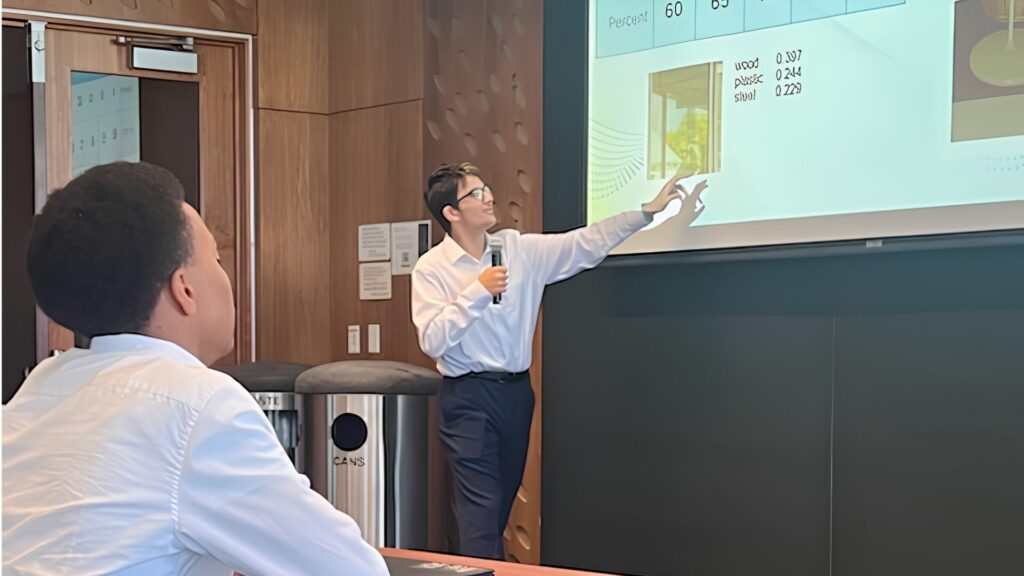
The National High School Game Academy is an intensive addition to this list of game design internships for high school students, offering six weeks of industry-style learning at Carnegie Mellon. Modelled on CMU’s Master of Entertainment Technology graduate curriculum, the programme begins with daily lectures, workshops, and assignments covering game design, Unity programming, 2D and 3D art, interactive storytelling, animation, sound design, and public speaking.
You then join faculty-assigned six-person teams for a one-week “Lightning Round” game before pitching and building an original video game from scratch over the final weeks. You’ll practice pitching, production management, and public presentation while receiving daily hands-on faculty mentoring. The program culminates in a playable, all-original game prototype presented publicly.
Why it stands out: It immerses high school students in Carnegie Mellon’s Entertainment Technology graduate-program methods, culminating in two team-built original games — including a from-scratch Unity prototype designed to serve as a portfolio piece for college applications.
14. DigiPen Institute of Technology – Pre-College Game Design
Location: Online (delivered by DigiPen Academy, a division of DigiPen Institute of Technology, Redmond, Washington)
Cost: $2,995
Dates: July 6-31
Application Deadline: Enrollment is completed directly through the registration portal with payment
Eligibility: At least 16 years old; entering junior or senior year of high school, or graduated high school within the last 18 months; open to international students
In this program, you spend four weeks living the schedule of a DigiPen game design undergraduate, entirely online with live instruction. You take three core academic classes: Principles of Game Design, Applied Computer Science for Games, and Interactive Narrative and Character Creation, plus the Game Project Lab, where students from every Pre-College track collaborate to complete a game.
Mornings focus on coursework while afternoons shift into hands-on project studio work. You prototype, playtest, and iterate on game ideas, blending mechanical, spatial, and narrative design, and you use Tabletop Simulator alongside required design reading. You finish with graded courses and a final transcript for your college applications, taught by DigiPen faculty-trained instructors.
Why it stands out: It gives you an authentic preview of DigiPen’s renowned game design degree, complete with a graded college-style transcript and a tuition credit worth the full program cost if you later enroll at DigiPen Institute of Technology within three years.
15. UT Austin Computer Science – Academy for Game Development
Location: University of Texas at Austin campus, Gates Dell Complex, Austin, Texas
Cost: $2,100
Dates: July 5-10
Application Deadline: First-come, space-available basis
Eligibility: Students entering 10th – 12th grade in Fall; beginner-friendly with no prior programming experience required; interest in games and the game development process expected; international student eligibility not explicitly stated
At this residential academy, you spend six days learning game design from the inside, building your own playable web-based game while studying how design studios are staffed and operate. You work hands-on with JavaScript and the Phaser framework, using package managers, local web servers, and web development tools to bring your project to life.
Daily lab sessions pair small-group project work with faculty-led lectures, guest talks, and campus tours. Instruction comes from Dr. Sarah Abraham, whose research spans rendering, artist tools, and game mechanics. You also meet industry professionals, hear UT application tactics from admissions, and explore internship and career paths.
Why it stands out: It combines a genuine studio-style game design experience with full immersion in college life through residence hall living, dining, and round-the-clock mentor support at a 10:1 ratio inside a top-10 computer science department.
Frequently asked questions: Game design internships for high school students
Are game design internships for high school students open to international students?
Most are, including Pocket Play LLC’s remote internship, NYU Steinhardt’s Coding for Game Design program, and Carnegie Mellon’s National High School Game Academy. A few notable exceptions exist: Gameheads restricts eligibility to Bay Area youth, and DigiPen Academy’s WANIC program requires membership in a specific Washington state consortium. Immerse Education’s Academic Insights Programme is also open globally to students aged 13 to 18.
Do you need prior coding experience for a game design internship?
It depends on the program. DigiPen Academy’s Intro to Game Development and UT Austin’s Academy for Game Development are both explicitly beginner-friendly, requiring no prior programming background. Others, like NYU Steinhardt’s Coding for Game Design program, expect intermediate programming experience with at least one formal coding course completed. Check each program’s eligibility section closely, since expectations range from complete beginner access to fairly advanced technical prerequisites.
How much do game design internships cost?
Costs vary enormously by program length and prestige. Free options include Gameheads, BAFTA’s Young Game Designers, and DigiPen Academy’s WANIC program. Mid-range options include NYU Steinhardt’s Coding for Game Design at $3,045 and UT Austin’s Academy for Game Development at $2,100. Premium options include Carnegie Mellon’s National High School Game Academy at $13,281 and UCLA’s Game Lab Summer Institute at up to $6,541. Financial aid is available for many programs.
What is the difference between a design-focused and a programming-focused game internship?
Design-focused programs, like the SCS Software Internship for 3D Artists or Girls Make Games, emphasize visual art, level design, and narrative alongside technical skills. Programming-focused programs, like Georgia Tech’s Introduction to Deep Learning in Keras track within game contexts or NYU Steinhardt’s Coding for Game Design, instead center on writing code in languages like C# or JavaScript. If you’re drawn more to the creative side, a design-focused program fits better; if you enjoy the technical build process, a programming-focused option offers deeper engagement.
Do game design internships award college credit?
A few do, though most instead provide a certificate or portfolio piece. UCLA’s Game Lab Summer Institute awards four units of college credit, and DigiPen Academy’s WANIC program awards 0.5 CTE high school credit. Most other programs, including Carnegie Mellon’s NHSGA and NYU Steinhardt’s Coding for Game Design, provide a completed game project and certificate rather than transferable academic credit.
Is Immerse Education a good option for exploring game design or tech careers?
Immerse Education’s Academic Insights Programme is worth considering if you want broader exposure to computer science and technology alongside game design specifically, spanning eight global locations including Boston, Cambridge, and Singapore. The two week program places you in small groups of seven to 10 students, working on hands-on projects across more than 20 subjects. While it isn’t game-design specific like the other programs in this list, it offers a well-rounded alternative if you’re still deciding between technical fields.
Turn Your Game Design Interest Into Direction
Game design can transform curiosity into direction, helping you understand how creativity, technology, and teamwork connect with future academic and career choices more confidently today.
The 15 game design internships for high school students listed in this article offer practical exposure to programming, storytelling, art, production, and user experience design.
Each programme can help you test your strengths, build confidence, and discover which roles best match your interests before making important education and career decisions.
Ready to discover where your interests could lead? Visit our Career Exploration blogs for practical guidance, inspiring ideas, and clearer next steps towards your future.