
 Русский (RU)
 Українська (UK)
 Türkçe (TR)
 Italiano (IT)
 Français (FR)
 Português (PT)
 中文 (中国) (ZH)
 Español (ES)
 日本語 (JA)
 ไทย (TH)
 Deutsch (DE)
 Ελληνικά (EL)
 Polski (PL)
 Bahasa Indonesia (ID)
 Nederlands (NL)
 العربية (AR)
 한국어 (KO)

As a rising sophomore, summer can be a great time to explore your interests and build academic depth beyond the classroom. Summer programs for rising sophomores can give you access to university-level coursework, hands-on projects, and learning experiences on a college campus. They also let you test subjects you are curious about while developing skills such as research, coding, lab techniques, and academic writing.
Depending on the programme, you may complete a project or problem set with a faculty mentor, run an experiment in a teaching lab, or debate ideas with students from around the world. An in-person experience can also provide an early look at university life, helping you consider which majors suit you and what kind of campus environment you may prefer.
What kinds of summer programs are available for rising sophomores?
Summer programs, typically run by universities, government organizations, and educational entities, let you spend a few weeks exploring your academic and career interests alongside motivated peers. These programs let you engage in hands-on research, rigorous coursework, a mix of classroom and fieldwork, lab activities, networking events, or other skill-building opportunities.
You can choose from research internships, workshops, on-campus college courses, summer camps, or full-time pre-college programs, depending on your interests.
Choosing the best summer program can be tricky, as each opportunity varies in scope. The right program for you is one that lets you explore concepts beyond the classroom and learn how to apply them. To help you get started with your search, we have put together a list of 15 summer programs for rising sophomores in high school.
For adjacent opportunities, consider the online research program.
Key Takeaways
- Costs range from $1,005 for shorter Northwestern CTD sessions to over $15,200 for longer University of Chicago Summer Sessions tracks.
- PROMYS @ Boston University offers a notably accessible cost structure, free for US families earning under $80,000 per year, with need-based aid available above that threshold.
- Program length varies widely, from one week, as with several Stanford Pre-Collegiate Summer Institute sessions, to six weeks, as with PROMYS and George Mason’s ASSIP.
- Several programs offer transferable college credit, including Northwestern’s CTD camps, George Mason’s ASSIP, and FIT’s 10-day courses, which include an official transcript.
- Most programs on this list welcome international students, including Columbia’s Summer Residential Program, Brown’s Summer@Brown, and the University of Michigan’s MMSS.
- Some programs allow students to explore multiple subjects in one summer, including Boston University’s Summer Challenge, which includes two seminars, and the University of Michigan’s MMSS, which allows stacking multiple two-week courses.
- Immerse Education’s Academic Insights Programme is one of the few options open to students worldwide aged 13 to 18, offering small-group instruction across more than 20 subjects at campuses including Oxford, Cambridge, and Tokyo.
15 Summer Programs for Rising Sophomores
1. Columbia University’s Summer Residential Program
Location: Columbia University, New York, NY
Cost: $12,838/session
Acceptance rate/cohort size: Not officially disclosed
Dates: June 29th – July 17th | July 21st – August 7th
Application deadline: March 3rd (early); March 17th (regular)
Eligibility: Students entering grades 9-12, ages 15 and up; open to international students
Columbia University’s residential summer program lets you enroll in a course while spending three weeks living on the university’s Morningside campus in the middle of New York City. You will select one subject from a catalog of options in science, business, social science, tech, and humanities, and study core concepts through on-campus lectures and hands-on activities for three weeks.
Many courses use the city as the backdrop for fieldwork, letting you explore how textbook concepts apply in real-world settings such as museums, courtrooms, labs, or organizations related to your topic. Columbia University instructors lead the classes, helping you build analytical writing and discussion skills expected at a research university. You will finish the course with a clearer understanding of the chosen subject and how it will be taught at the collegiate level.
Why it stands out: It lets you experience college-level coursework and Columbia University’s teaching style while treating New York City as an extended classroom, letting you engage in site visits and interactions with professionals.
2. Immerse Education’s Pre-University Summer School
Location: Cambridge, London, Oxford, Singapore, Sydney, Tokyo, and Toronto
Cost: Varies; summer school scholarship available through our bursary programme
Application Deadline: Multiple summer cohorts; rolling admissions.
Program Dates: 2 weeks during the summer
Eligibility: Students across the globe aged 13-18 currently enrolled in middle or high school; open to international students
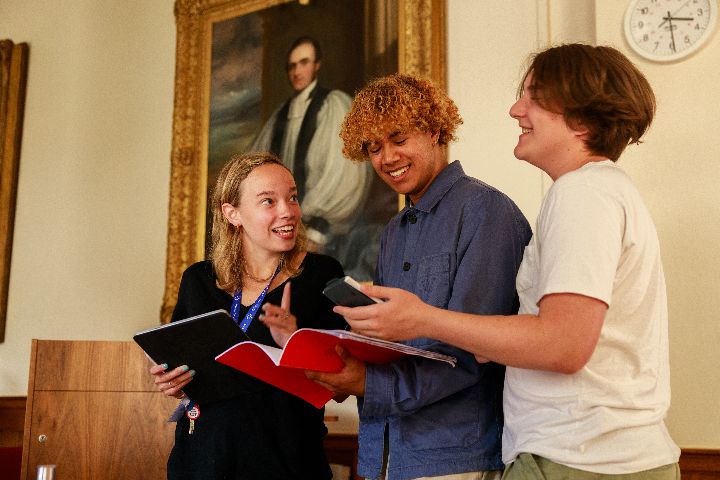
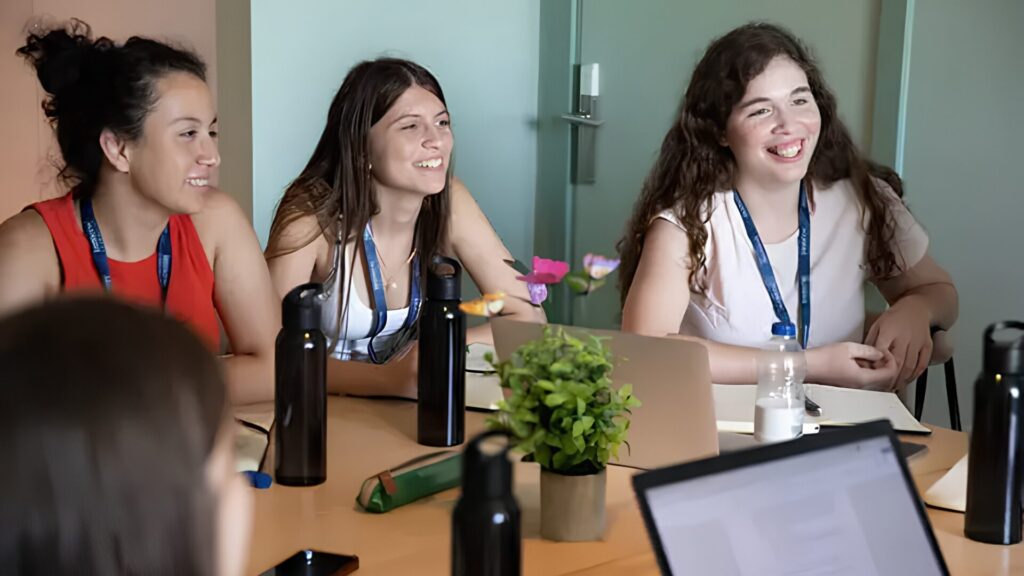
The Academic Insights Program lets high school students experience university life firsthand. You will live on campus and study in small groups of 7-10, and learn from tutors from eminent top universities like Oxford and Cambridge. You can explore a wide range of subjects, spanning over 20 options, including Architecture, AI, Business Management, Computer Science, Economics, Medicine, Philosophy, and more. The courses are experiential and focus on hands-on learning.
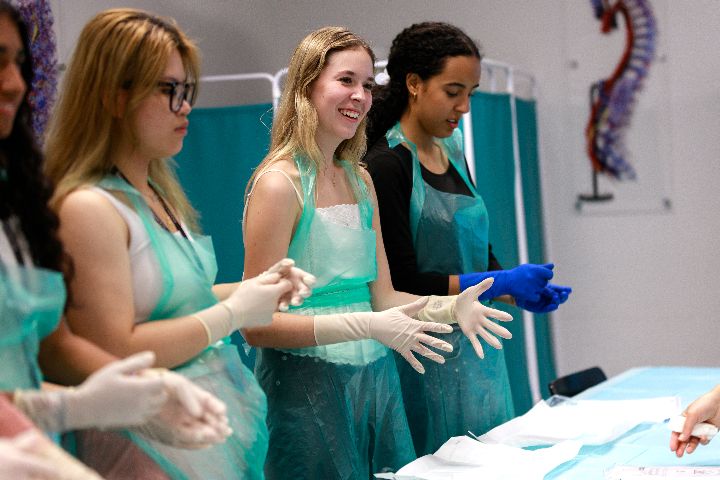
You may find yourself conducting dissections in medicine, designing a robotic arm in engineering, participating in a moot court for law, or building creative writing portfolios and business case studies. By the end of the program, you’ll complete a personal project, receive written feedback, and receive a certificate of completion. You can find more details about the application here.
Why it stands out: You’ll get an early start at university life and academics because the program includes an independent project, discussion-based classes, and living at a college campus.
3. Brown University Pre-College: Summer@Brown
Location: Online or Brown University, Providence, RI
Cost: $3,096 – $10,858 (varies depending on length and format); financial aid available
Acceptance rate/cohort size: Not specified
Dates: June 15th – July 25th (1- to 6-week sessions available)
Application deadline: May 15th
Eligibility: Students completing grades 9-12, ages 14-18; open to international students
Summer@Brown lets you take a credit-free college course in a subject of your choice taught using Brown’s open curriculum. You can pick from a wide variety of on-campus and online courses across the sciences, humanities, and social sciences, and commit to one at a time. You will explore a chosen subject through discussion-driven classes led by Brown instructors, designed to help you build study habits crucial for college.
The experience can help you explore the independence of engaging in college academics of your choice and completing advanced project work. If you choose the residential format, you will live in Brown’s residence halls and navigate campus life alongside students from around the world.
Why it stands out: You will explore university academics and gain exposure to Brown’s open-curriculum teaching style that focuses on self-directed study.
4. University of Chicago Summer Sessions
Location: Online or University of Chicago, Chicago, IL
Cost: $75 application fee + $2,500 – $15,200 fee, depending on program type and length; need-based aid available
Acceptance rate/cohort size: Selective; small cohort
Dates: Multiple one- to eight-week sessions in the summer
Application deadline: February 11th (priority); March 12th (regular)
Eligibility: High school students, ages 14 and up (course-specified requirements may vary); open to international students
UChicago’s Summer Sessions offer high school students a focused, deep dive into a single subject through the university’s discussion-heavy teaching style. You can choose a track in areas such as the sciences, writing, law, or economics, and work through it in small groups.
Faculty and instructors will guide you throughout, helping you complete assignments, analyze texts, engage in discussions, and defend arguments. If you choose the residential format, you will stay in residence halls and explore Chicago alongside classmates. The program offers an early, honest look at how a famously academic college approaches learning.
Why it stands out: You will be immersed in UChicago’s signature inquiry-based teaching and get to explore a field of choice through live lectures, discussions, and hands-on activities.
5. Smith College Summer Science & Engineering Program
Location: Smith College, Northampton, MA
Cost: $4,985 per two-week session + $50 application fee; limited need-based aid available
Acceptance rate/cohort size: Not specified
Dates: July 4-17 (Session 1) | July 19th – August 1st (Session 2)
Application deadline: May 1st or until full; March 1st for international students
Eligibility: Students entering grades 9-12; open to international students
SSEP is a research-focused program where you will take lab-based courses in the life sciences, physical sciences, and engineering led by Smith faculty. You can choose from various research-style courses and spend your days running experiments, collecting data, and presenting findings.
Undergraduate students will offer support during each course, giving you a close view of how college-level research works. You will conduct scientific investigations, formulate hypotheses, design experiments and surveys, and collect and analyze data, gaining hands-on research experience.
Why it stands out: You will explore science and engineering fields and research fundamentals within a STEM community at a college known for its science education.
6. FIT High School Summer 10-Day Courses
Location: Fashion Institute of Technology (FIT), New York, NY
Cost: $550/10-day course; scholarships available
Acceptance rate/cohort size: Not officially disclosed
Dates: July 6-21
Application deadline: June 10th (first-come, first-served enrollment)
Eligibility: Students in grades 9 to 12 (including graduating seniors); international students are eligible and may attend on a B-2 tourist visa or under the visa waiver program
This 10-day in-person summer program at FIT gives students a hands-on introduction to college-level coursework in fashion, business, design, and various creative industries. Courses are modeled after FIT college classes and cover fields like illustration, photography, animation, fashion design, marketing, toy design, interior design, film, and more, all taught by FIT faculty, alumni, and industry professionals.
Each course runs for three hours a day across 10 days, and you can attend one morning course, one afternoon course, or both. Classes are held in studios, design labs, and sewing rooms, and some tracks include visits to on-campus facilities such as the Museum at FIT. You will leave with portfolio pieces, an official transcript, and firsthand experience of life at an NYC college.
Why it stands out: It offers hands-on creative skill-building opportunities and portfolio-preparation support, along with exposure to life on campus, all within 10 days!
7. Boston University Summer Challenge Residential Track
Location: Boston University, Boston, MA
Cost: $3,730 tuition + $1,440 housing and dining fees + other fees
Acceptance rate/cohort size: 200-400 students
Dates: June 14-26 | July 5-17 | July 19-31
Application deadline: May 15th
Eligibility: Students entering grades 10-12 (rising sophomores through seniors); open to international students
Among the most flexible summer programs for rising sophomores, Boston University’s Summer Challenge lets you attend two non-credit seminars while experiencing campus life over two weeks. Each seminar combines lectures, discussion, group work, and field trips, helping you compare how different subjects are taught at university level. Small classes also give you more opportunities to connect with instructors and receive regular feedback.
The opportunity to engage in two seminars lets you compare fields side by side. An admissions workshop will also be part of the experience, offering insights into the college application process. You will additionally spend time exploring Boston and living among high schoolers from across the country and abroad.
Why it stands out: It lets you explore two subjects over a single summer session, as well as offers the opportunity to experience life on a college campus and connect with a diverse cohort of peers.
8. Stanford Pre-Collegiate Summer Institutes
Location: Online
Cost: $3,200; need-based financial aid available
Acceptance rate/cohort size: Not specified; ~16 students/class
Dates: June 15-26 | July 6-17
Application deadline: March 13th
Eligibility: Students, ages 13-19, in grades 8-11 at the time of application; open to international students
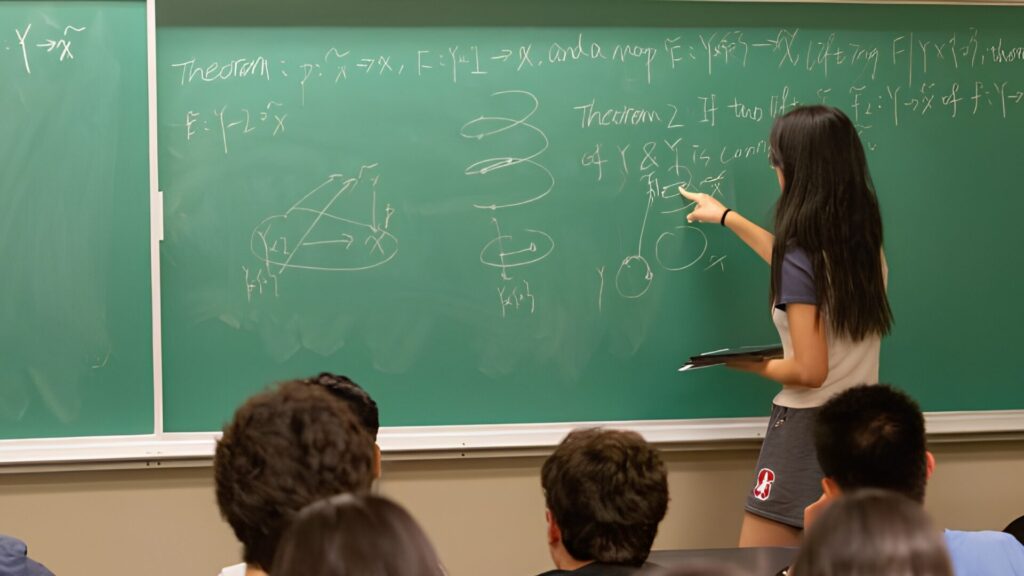
This virtual pre-college summer program lets you explore a single subject intensively over two weeks while learning from Stanford University instructors. You can choose one course from a catalog spanning the sciences, engineering, humanities, and social sciences. Each course covers the core concepts relevant to the subject through seminars, discussions, and project work.
You will study within small classes that allow frequent interaction with instructors and close collaboration with classmates. The single-subject format lets you dive into an academic or career interest and judge it as a possible major. Project work, in-class assignments, and case study discussions may also be part of the experience.
Why it stands out: You will join a diverse cohort of peers from around the world, learn from Stanford instructors, and explore a field through live classes and independent work.
9. University of South Florida’s AI & Machine Learning Summer Intensive
Location: University of South Florida (USF), Tampa, FL
Cost: $795 day program fee + $1,395 optional residential add-on
Acceptance rate/cohort size: 30 students/session
Dates: July 13-17
Application deadline: Not specified; registration opened February 1st
Eligibility: Rising 10th to 12th grade students; international student eligibility not disclosed
This five-day program at USF introduces you to AI and machine learning through a week of hands-on, themed sessions. You will begin by learning Python programming fundamentals and data handling, then move on to building machine learning models, connecting to the cloud via APIs, and developing social AI applications such as negotiation bots.
The schedule includes field trips to USF’s robotics lab and a human-computer interaction lab, where you will explore how AI is applied to physical and virtual systems. The week concludes with an Innovation Fair where you will present your own prototype to USF faculty and tech professionals, and attend a keynote from the Dean of Engineering as well as an awards ceremony.
Why it stands out: You will learn about emerging tech from USF faculty researchers while also building projects you get to present, all within five days.
10. George Mason University’s Aspiring Scientists Summer Internship Program (ASSIP)
Location: Virtual or George Mason University, Fairfax, VA
Cost: $25 application fee and $1,299 tuition for three course credits; fee waivers available
Acceptance rate/cohort size: Not specified
Dates: June 18th – August 12th
Application deadline: February 15th
Eligibility: High school students and undergraduate students worldwide who are at least 15 years old (or 16+ for in-person/wet lab internships)
ASSIP at George Mason University is a program for high school students interested in exploring a STEM research area of choice. During the eight-week program, you will work with a faculty mentor on research projects in engineering, chemistry, physics, neuroscience, statistics, biology, data science, or medicine. You will follow structured research tasks and take part in lab or data-related work for your assigned project.
You will also undergo training in scientific writing and basic research methods, with opportunities to practice analyzing and organizing data. In addition, you will attend sessions led by professionals and academics who will introduce you to STEM-related career paths. The experience ends with a research symposium, where you will practice communicating your work. You will also earn three college credits at the end.
Why it stands out: You will spend eight weeks engaging in real research alongside a mentor, building lab and data analysis skills.
11. University of Michigan Math and Science Scholars (MMSS)
Location: University of Michigan campus, Ann Arbor, MI
Cost: $1,400 tuition + $1,100 residential + $100 application fee; financial aid available
Acceptance rate/cohort size: Not specified
Dates: June 21st – July 3rd | July 5-17 | July 19-31
Application deadline: Rolling until courses fill (opens mid-January)
Eligibility: Rising sophomores, juniors, and seniors; open to international students
MMSS allows students to enroll in two-week courses in mathematics, the sciences, and computer science taught by University of Michigan faculty. Topics range widely, from astronomy and biology to programming and forensic science. You will learn through lectures, lab work, and projects tied to current research.
Each course lets you explore how concepts connect to active faculty research to help you gain insights into future investigations within the chosen field. You can stack sessions to study more than one subject in a single summer. The opportunity to experience residential life on campus will help you get a taste of the daily routine of college students.
Why it stands out: It lets you pick from a broad menu of single-topic courses, each led by a University of Michigan professor working in that field.
12. Northwestern University Center for Talent Development (CTD) Academic Summer Camps
Location: Northwestern University, Evanston, IL
Cost: $1,005 – $6,105, based on program length and type; financial aid available
Acceptance rate/Cohort size: Not specified
Dates: June 28th – August 7th (multiple three- and one-week sessions within this window)
Application deadline: One week before each session begins
Eligibility: Students entering grades 6-12; applicants’ performance should align with academic qualification tiers specified on the program site based on standardized test scores, grades, or teacher recommendations. International students with English language proficiency are eligible. Some courses may have specific additional prerequisites.
CTD offers intensive academic summer camps with both day and residential options on Northwestern’s Evanston campus. You can choose from fast-paced accelerated courses that cover one to two semesters of material within three weeks, or enrichment courses that explore interdisciplinary topics. Classes will be led by teachers and content experts and may offer college credit.
You will work on projects like designing original apps, community action plans, or writing portfolios, depending on the track you choose. If you choose the residential format, you will live in Northwestern’s dorms, engage in weekend activities including museum visits and Chicago trips, and receive structured study support.
Why it stands out: You will explore a field of choice through advanced classes and instruction led by Northwestern University instructors, while getting the chance to earn college credit!
13. PROMYS @ Boston University
Location: Boston University, Boston, MA
Cost/Stipend: Free for U.S. families earning under $80,000/year; otherwise, up to $8,000 (need-based aid available for reduction in fees based on family income)
Acceptance rate/cohort size: ~80 students each summer; selective admissions
Dates: June 28th – August 8th
Application deadline: February 27th
Eligibility: Students who have completed grade 9, ages 14-18; open to international students
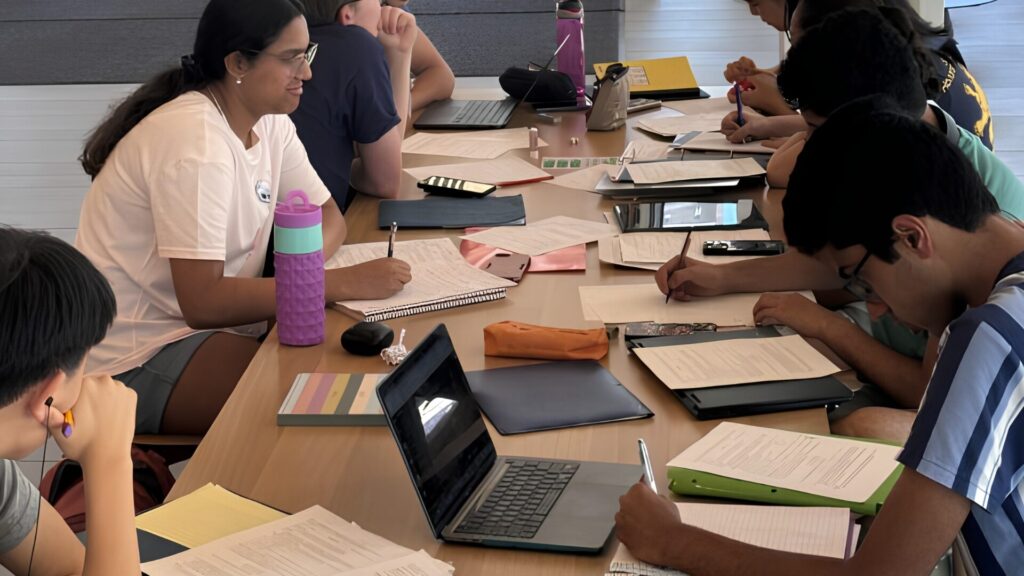
PROMYS (Program in Mathematics for Young Scientists) is a six-week residential program that lets you engage in advanced math learning, focused on the deep exploration of number theory and problem-solving. You will spend each day on challenging problem sets, then test and refine your own conjectures. Faculty and returning counselors, many of them research mathematicians, will work alongside you in seminars and informal sessions.
The curriculum focuses on helping you build a foundation in mathematics from the ground up and explore how original research is conducted. Guest lecturers will introduce advanced topics that point toward college and graduate study. The experience can give you a clear sense of whether a math-heavy major suits you.
Why it stands out: You will join an alumni community whose members return each summer as counselors and include working research mathematicians.
14. Barnard College Pre-College Exploratory Programs
Location: Barnard College, New York, NY
Cost: $8,160 base fee + $2,611 residential add-on (optional) + $75 application fee; limited need-based aid available
Acceptance rate/cohort size: Not officially shared
Dates: June 29th – July 17th | July 20th – August 7th | July 20th – August 7th
Application deadline: February 9th (priority); April 15th (final)
Eligibility: Rising high school sophomores through seniors, age 14 and older; open to international students
Barnard College’s three-week Exploratory Institutes let you explore a single theme, such as leadership, health and society, innovation, or food and the environment, during the summer. You will join a cohort of peers and learn through seminars, project work, and visits across New York City. Faculty and graduate instructors guide discussions that connect your topic to current issues.
Each institute is organized around an applied theme rather than a single class, so you will see how disciplines intersect to address a problem. You can choose to live on Barnard’s campus, which is part of the Columbia University community, and get a taste of college life. The program can help you explore interests that go beyond traditional classroom subjects.
Why it stands out: You will explore an interdisciplinary theme for three weeks while experiencing life at an NYC college!
15. Syracuse University Summer College
Location: Online or Syracuse University, Syracuse, NY
Cost: $65 non-refundable application fee + $1,995 – $5,995 based on length and duration; scholarships available
Acceptance rate/cohort size: Not specified
Dates: July 5-31 (one- to four-week sessions available within this window)
Application deadline: May 1st (final); March 1st (scholarship deadline)
Eligibility: High school students, ages 15 and up, with a GPA of 3.0 or higher; open to international students
Syracuse University Summer College adds a career-focused option to this list of summer programs for rising sophomores, with courses in architecture, engineering, business, media, and the health sciences. You will select a track and explore the subject through lectures, studios, and labs led by Syracuse University faculty. Available areas include literature, medicine, sport, economics, journalism, and more.
Non-credit options are available for rising sophomores, allowing you to explore a career path without worrying about credit requirements. You can choose to live on campus and take part in college-style routines and activities throughout the program. The experience can help you assess and shortlist majors and explore career paths before college.
Why it stands out: You get to choose from career-focused, pre-professional courses and experience college-level academics in a subject of your choice.
Frequently Asked Questions: Summer Programs for Rising Sophomores
What is a summer program for rising sophomores?
A summer program for rising sophomores gives younger high school students early access to university-level coursework, research, and campus life. Programs typically include lectures, hands-on projects, and small-group instruction, often led by university faculty. Most run between one week and several weeks during the summer. Many conclude with a final project, presentation, or certificate of completion.
Am I too young to apply as a rising sophomore?
No, many of these programs are specifically designed to welcome younger students. Stanford’s Pre-Collegiate Summer Institutes accept students as young as 13, and PROMYS @ Boston University accepts students who have just completed grade 9. Immerse Education’s Academic Insights Programme accepts students aged 13 to 18, making it accessible even to younger high schoolers.
How much do these programs cost?
Costs vary considerably, from around $1,005 for shorter Northwestern CTD sessions to over $15,200 for extended University of Chicago Summer Sessions tracks. PROMYS @ Boston University is free for US families earning under $80,000 annually. Immerse Education’s Academic Insights Programme offers bursary support that can reduce costs for eligible students.
Can international students attend these programs?
Yes, the majority of programs on this list welcome international students, including Columbia’s Summer Residential Program, Brown’s Summer@Brown, and Boston University’s Summer Challenge. Immerse Education’s Academic Insights Programme is open to students worldwide aged 13 to 18, with campuses in eight cities including Boston, Oxford, and Singapore.
Should I choose a residential or online program?
Residential programs, such as Columbia’s Summer Residential Program and Barnard’s Pre-College Exploratory Programs, give students a fuller experience of campus life alongside academic coursework. Online options, like Stanford’s Pre-Collegiate Summer Institutes, offer more flexibility and often lower costs. Immerse Education’s Academic Insights Programme combines both elements by offering residential stays at university campuses alongside structured small-group academics.
Will I earn college credit?
Some programs offer transferable college credit, though many do not. George Mason’s ASSIP awards three college credits upon completion, and FIT’s 10-day courses provide an official transcript. Programs like Immerse Education’s Academic Insights Programme instead provide a personal project, written feedback, and a certificate of completion rather than transferable credit.
How do these programs help with college applications?
Participating in a summer program as a rising sophomore demonstrates early academic initiative, which can strengthen a student’s overall application narrative over time. Programs like PROMYS have students build a foundation in advanced problem-solving, while Immerse Education’s Academic Insights Programme provides a completed personal project and detailed written feedback. Both give students concrete experiences to build on in future summers and reference later in applications.
What’s the difference between single-subject and multi-subject programs?
Single-subject programs, such as Smith College’s Summer Science & Engineering Program, allow for deep focus on one academic area through research-style coursework. Multi-subject programs, like Boston University’s Summer Challenge and University of Michigan’s MMSS, let students sample more than one field in a single summer. Immerse Education’s Academic Insights Programme offers a similarly broad range, with students choosing from over 20 subjects depending on their interests.
Prepare Smarter for Future University Decisions
Early university planning becomes easier when you have tested your interests, experienced unfamiliar subjects, and learned how you respond to greater academic independence and responsibility
The summer programs for rising sophomores in this guide create space to investigate potential majors, practise advanced skills, and experience different learning environments firsthand early
Rather than choosing based on prestige alone, consider which programme offers the subject depth, teaching format, support, and outcomes that fit your priorities most closely
Wondering how to turn this early experience into a stronger university plan? Browse our University Preparation blogs for thoughtful guidance and practical next steps today.