
 Русский (RU)
 Українська (UK)
 Türkçe (TR)
 Italiano (IT)
 Français (FR)
 Português (PT)
 中文 (中国) (ZH)
 Español (ES)
 日本語 (JA)
 ไทย (TH)
 Deutsch (DE)
 Ελληνικά (EL)
 Polski (PL)
 Bahasa Indonesia (ID)
 Nederlands (NL)
 العربية (AR)
 한국어 (KO)

STEM is no longer limited to classrooms, textbooks, or science fairs. As a high school student, you have access to a wide range of online courses that can help you explore science, technology, engineering, and mathematics in far greater depth than a typical school curriculum. Whether you are curious about artificial intelligence, coding, robotics, biotechnology, or advanced mathematics, the best online STEM courses for high school students allow you to learn directly from experts and institutions worldwide.
Imagine building your first mobile app, analyzing real-world data, designing engineering solutions, or exploring scientific concepts through interactive projects. These programs allow you to develop practical skills, work on challenging problems, and discover academic interests that could shape your future studies and career goals. Many also offer certificates, project-based learning experiences, and opportunities to engage with students who share similar interests.
Online programs allow you to access world-class academic mentorship from anywhere in the world – no travel required. They’re a great way to build research skills, earn credentials, and get a taste of university-level work from home.
How do you choose the right online STEM courses for high school students?
Finding the right STEM course can feel overwhelming. Some programs may be overly introductory, while others may require prior knowledge or focus on areas that do not align with your interests. That is why it is important to evaluate your goals before making a choice.
The best online STEM courses combine strong academic content with engaging, hands-on learning. You should look for programs that offer practical projects, expert instruction, and opportunities to apply concepts. Depending on your interests, you might explore subjects such as computer science, engineering, mathematics, or data science.
To make your search easier, we have compiled a list of the 15 Best Online STEM Courses for High School Students. These programs stand out for their quality, accessibility, and ability to provide meaningful learning experiences.
Key takeaways
- MITES Semester is completely free but highly selective, admitting an estimated 1.5 to 4 percent of applicants over a six month hybrid program restricted to US citizens.
- Immerse Education’s Online Research Programme offers 1:1 or small-group mentorship from tutors at Oxford, Cambridge, and Ivy League universities, open to students aged 13 to 18, with optional college credit for students 14 and older.
- The AIMI Summer Research Internship costs $2,400 plus a $45 application fee and admits approximately 100 students annually across two sessions, restricted to US high school attendees.
- NASA’s GeneLab for High Schools accommodates large cohorts of over 800 students but requires US citizenship and a completed biology course with a minimum 3.0 GPA.
- Fred Hutch Cancer Center’s Coding for Cancer program is highly selective, admitting just 20 students, and pays a $1,000 stipend while teaching R programming for beginners.
- Johns Hopkins CTY Online Programs require above-grade-level assessment scores, typically in the 98th percentile, and admit fewer than 10 students per specialized course.
- UC San Diego’s Bioengineering Research Scholars Program costs between $2,100 and $2,700 per course and lets students progress from foundational concepts to independent research within the same track.
- Program costs for online STEM courses range from free options like MITES Semester and SPINWIP to $2,700 per course for UC San Diego’s Bioengineering Research Scholars Program.
15 Best Online STEM Courses for High School Students
1. MITES Semester
Location: Online
Cost/Stipend: None
Acceptance rate/cohort size: Estimated 1.5-4%; approximately 275-300 students
Dates: June – December
Application Deadline: February 1st
Eligibility: High school juniors who are U.S. citizens or permanent residents; not open to international students
MITES Semester offers you a six-month hybrid STEM and college preparation program. You will take advanced STEM courses, collaborate on a team project, and participate in workshops that strengthen your academic and college readiness skills.
The program also includes mentorship, admissions guidance, and opportunities to connect with a nationwide community of peers who share your interest in science and technology. Because coursework continues through the fall, you can engage with the material over an extended period rather than in a short summer session.
Why it stands out: Few online STEM programs match its combination of advanced coursework, college advising, mentorship, and long-term engagement over six months.
2. Immerse Education’s Online Engineering Summer School

Location: Fully remote
Cost: Varies; summer school scholarship available through our bursary programme
Dates: Multiple start dates throughout the year; typically short-term, intensive sessions (often around 2 weeks)
Application Deadline: Rolling enrollment (course availability may change based on session demand). Apply at least 4-6 weeks before your preferred start date to ensure your spot is secured
Eligibility: Students aged 13-18 seeking university-level research experience. Open to students around the world.
The Engineering Online Research Programme is a premium, personalized academic experience that connects you directly with expert tutors from world-leading universities like Oxford, Cambridge, and the Ivy League. In this 1:1 mentorship track, you explore advanced engineering concepts, from robotics and AI to sustainable infrastructure, tailored specifically to your interests.
Unlike a standard course, this is a research-intensive fellowship where you receive individual guidance to produce a university-level academic paper or project. You will develop critical technical writing and analytical skills, culminating in a final piece of work that can strengthen your university portfolio. This program is ideal for motivated students who want to go beyond the school curriculum and engage in deep, scholarly inquiry. You can access the application form here. You can find examples of papers Immerse students have worked on here. You can find more details about the application here.
Why it stands out: It offers rare 1:1 mentorship with elite academics, allowing you to produce a high-level research paper that serves as a tangible asset for college applications.
3. Brown Pre-College Online
Location: Online
Cost: $3,364 – $6,520 (varies by course length); scholarships are available
Acceptance rate/cohort size: Selective; cohort size varies by course
Dates: Multiple 2-, 3-, 4-, and 6-week sessions from June 15th – July 24th
Application Deadline: May 15th
Eligibility: Students aged 14-18 who will be entering grades 9-12 or graduating from high school in the year of participation; open to international students
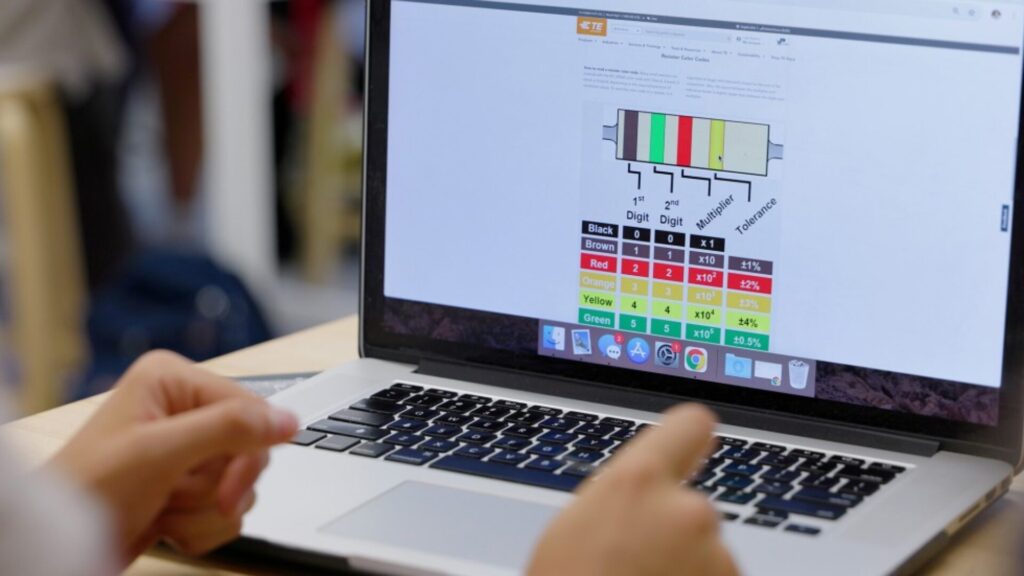
Brown Pre-College Online gives you the freedom to explore STEM subjects through small, discussion-based classes led by Brown instructors. You can study areas such as computer science, data science, medicine, engineering, environmental science, or mathematics. Courses emphasize active participation, collaborative learning, and independent inquiry.
You will engage with challenging material while receiving feedback from instructors and classmates. Because classes are conducted online, you can access Brown’s academic environment from anywhere while balancing other summer commitments. This program uniquely allows you to tackle Ivy League academics and connect with a global peer network, all completely free from the pressure of formal grades.
Why it stands out: You can explore university-level STEM topics in an interactive online setting without committing to a lengthy residential program.
4. AIMI Summer Research Internship
Location: Virtual
Cost/Stipend: $2,400 + $45 application fee
Acceptance rate/cohort size: Highly selective; approximately 100 students admitted annually (50 per session)
Dates: June 15-26 (Session A) or July 6-17 (Session B)
Application Deadline: February 20th
Eligibility: Students entering grades 9-12 who are at least 14 years old by the start of the program; applicants must attend a U.S. high school; not open to international students
The AIMI Summer Research Internship introduces you to the growing intersection of artificial intelligence and healthcare through a structured virtual research experience. You’ll attend technical lectures led by Stanford researchers, explore topics such as machine learning and medical imaging, and work with a small team on a health AI project.
Throughout the program, Stanford student mentors and research advisors guide your progress while guest speakers share how AI is used across medicine, industry, and public service. By the end, you’ll present your work and earn a certificate of completion.
Why it stands out: You get direct exposure to AI applications in medicine while working alongside Stanford mentors on a collaborative research project.
5. GeneLab for High Schools (GL4HS)
Location: NASA Ames Research Center, Mountain View, CA
Cost/Stipend: None
Acceptance rate/cohort size: Not selective; typically, large cohorts (>800 students)
Dates: June 1st – August 28th
Application Deadline: March 15th, or earlier if 1,000 applications are received
Eligibility: U.S. citizens and permanent residents attending U.S.-based high schools; rising juniors, seniors, or incoming college freshmen in Fall; have completed at least one biology course; maintain a minimum unweighted GPA of 3.0; have access to a computer with reliable internet; not open to international students
If you are interested in biology, data science, and space research, NASA’s GL4HS offers a unique introduction to all three. Throughout this 12-week online program, you’ll explore how scientists study the effects of spaceflight on living organisms using real biological datasets.
The curriculum covers bioinformatics, computational biology, and omics-based research methods through recorded lectures, interactive notebooks, and optional office hours with instructors. You can also apply for the optional Capstone Project, where teams analyze datasets and present original research proposals.
Why it stands out: You get hands-on exposure to NASA space biology research while learning the same bioinformatics techniques used to study complex biological data.
6. Fred Hutch Cancer Center – Coding for Cancer
Location: Online
Cost/Stipend: No cost / $1,000 stipend
Acceptance rate/cohort size: Highly selective; 20 students
Dates: July 27th – August 21st
Application Deadline: March 29th
Eligibility: Students entering 11th or 12th grade in the fall; applicants should be available for all program dates and are preferably residents of Washington State; not open to international students
Coding for Cancer introduces you to computational biology through the lens of cancer research. You’ll learn the R programming language, explore core concepts in cancer biology, and see how researchers use data to answer biomedical questions.
The first part of the course focuses on coding skills and foundational scientific knowledge, while the latter half centers on an individual research project. You’ll interact with computational biologists and receive guidance from scientists working in the field. The curriculum is designed to accommodate beginners, making it accessible even if you have never written code before.
Why it stands out: Few high school programs connect coding, data analysis, and cancer research so directly while remaining beginner-friendly and fully virtual.
7. Stanford Program for Inspiring the Next Generation of Women in Physics (SPINWIP)
Location: Online
Cost: None
Acceptance rate/cohort size: Selective; ~150 students
Dates: July 6-24
Application Deadline: May 1st
Eligibility: High school students in grades 9-11 at the time of application; open to international students
If you want to explore physics beyond the classroom, SPINWIP offers an accessible introduction to some of the field’s most exciting areas. You’ll learn about quantum physics, quantum computing, astrophysics, and cosmology through sessions led by Stanford researchers and faculty.
You’ll also build Python programming skills and use them in physics-based projects. Small-group mentoring creates space for discussion, collaboration, and individualized support. Alongside the academic content, you’ll participate in college planning and career development workshops that help you understand future pathways in STEM.
Why it stands out: You get exposure to advanced physics topics and Stanford mentorship in a fully virtual program that welcomes students from around the world.
8. Harvard Secondary School Program
Location: Online
Cost/Stipend: $4,180 (4 credits) or $8,160 (8 credits); financial aid is available
Acceptance rate/cohort size: Selective; class sizes vary by course
Dates: June 20th – August 8th
Application Deadline: April 1st
Eligibility: Students who will graduate from high school and enter college in the next one to three years; must be at least 16 years old by the start of the program and not turn 19 before July 31st; open to international students
As one of the most prestigious best online STEM courses for high school students, the 7-Week Online Secondary School Program lets you take Harvard Summer School courses from home while earning college credit. You can enroll in one or two courses selected from a catalog that spans STEM subjects such as computer science, math, engineering, and the general sciences.
Your classes are taught by Harvard faculty and visiting instructors. Alongside your coursework, you’ll gain access to academic resources such as tutoring and writing support. The experience is designed to help you test your readiness for university academics while exploring subjects that align with your interests and future goals.
Why it stands out: You earn transferable college credit through real Harvard Summer School courses without needing to relocate or spend the summer on campus.
9. Johns Hopkins Center for Talented Youth (CTY) Online Programs
Location: Online
Cost: Varies by format and subject; need-based financial aid is available
Acceptance rate/cohort size: Highly selective; less than 10 students
Dates: Fall A: Starts September 8th; Fall B: Starts October 11th; Spring A: Starts January 24th; Spring B: Starts March 21st; Summer A: Starts June 20th; Summer B: Starts July 11th
Application Deadline: Fall A: August 11th; Fall B: September 15th; Spring A: December 8th; Spring B: February 16th; Summer A: May 10th; Summer B: June 7th
Eligibility: Students in grades 2-12 who establish eligibility by achieving qualifying scores on an above-grade-level assessment (such as the SCAT, PSAT, SAT, or ACT), typically requiring scores in the 98th percentile for their age group; open to international students
In this program, you will dive into advanced, fast-paced STEM tracks designed specifically for gifted learners. You will explore sophisticated topics across mathematics, science and engineering, and computer science and technology, featuring specialized courses like advanced calculus, space exploration, physics, and coding.
Throughout your chosen course, you will engage in core activities such as completing rigorous assignments, solving complex problems, reviewing interactive digital materials, and receiving individualized instructor feedback. A unique feature of CTY is its flexible formatting, allowing you to choose between session-based, live synchronous, or individually paced year-round schedules. By managing these rigorous workloads, you will sharpen your critical thinking, advanced problem-solving, and independent data analysis skills.
Why it stands out: It provides pre-screened, academically advanced learners from around the world access to highly specialized, university-level STEM curricula that are entirely customizable to their individual learning speeds.
10. Columbia University Online Courses for High School Students
Location: Online
Cost: 1-Week: $2,868 per session; 2-Week: $4,018 per session; financial aid is available
Acceptance rate/cohort size: Selective; cohort size not specified
Dates: Session AA (1 Week): June 22-26; Session A (2 Weeks): July 6-17; Session B (2 Weeks): July 20-31; Academic Year: Fall (7 weeks) and Spring terms
Application Deadline: Early April
Eligibility: Rising 9th through 12th-grade students; open to international students
Columbia’s online pre-college courses give you the flexibility to explore subjects that may not be available in your high school curriculum. Depending on your interests, you can study topics ranging from computer science and engineering to neuroscience, data science, and sustainability.
Experienced instructors teach courses and emphasize discussion, inquiry, and applied learning. Rather than following a one-size-fits-all curriculum, you choose a subject area that aligns with your academic goals. The online format allows you to engage with challenging material while balancing other commitments throughout the year.
Why it stands out: The extensive course catalog lets you tailor your STEM experience instead of committing to a single predefined program.
11. Stanford University Mathematics Camp (SUMaC) Online
Location: Online
Cost: $3,750; need-based financial aid is available
Acceptance rate/cohort size: Highly competitive; 64 students
Dates: June 15th – July 3rd or July 6th – July 24th
Application Deadline: February 2nd
Eligibility: Students in grades 10-11 at the time of application who are at least 15 years old during the program; have experience writing and reading mathematical proofs; strong mastery of high school geometry and algebra; open to international students
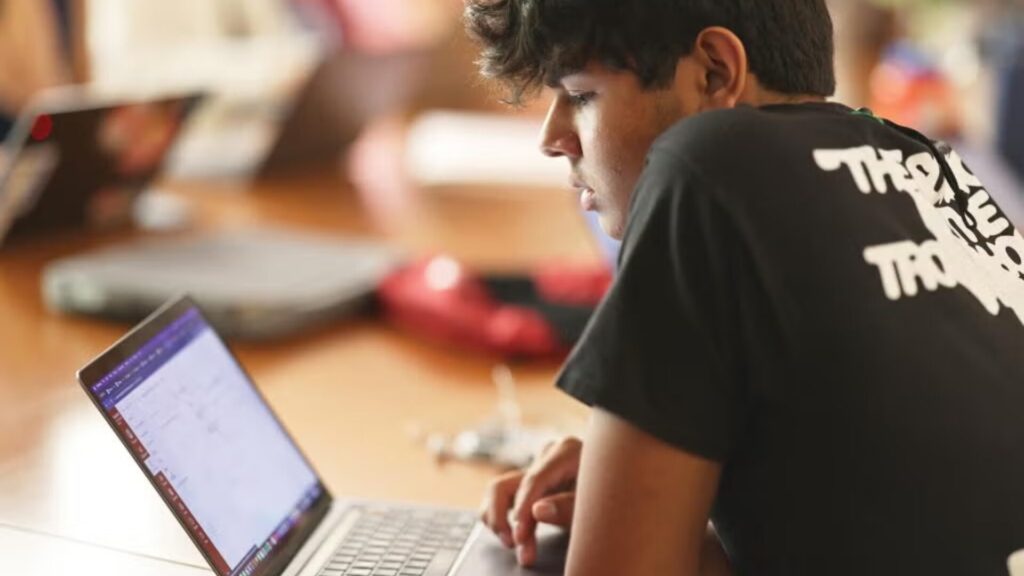
SUMaC is designed for students who want to move beyond standard high school mathematics and engage with ideas typically encountered at a much higher level. Through live lectures, guided problem-solving sessions, and collaborative discussions, you’ll explore advanced topics such as abstract algebra, number theory, or algebraic topology.
The program emphasizes mathematical reasoning rather than memorization, encouraging you to develop proofs and tackle unfamiliar problems. You’ll also attend guest lectures and complete a final research project presentation. By managing this challenging workload, you will rapidly develop your proof-writing capabilities, logical reasoning, and complex problem-solving skills.
Why it stands out: Few online math programs combine Stanford-level rigor, research-oriented learning, and a highly selective international cohort in such an immersive format.
12. UC San Diego Bioengineering Research Scholars Program
Location: Online
Cost: $2,100 to $2,700 per course
Acceptance rate/cohort size: Selective; cohort size not specified
Dates: Multiple sessions offered in winter, summer, spring, and fall; dates vary by course and track
Application Deadline: Varies by track
Eligibility: High school students in grades 9-12; most courses require a minimum GPA of 3.0, and age requirements vary by program format; open to international students
The UC San Diego Bioengineering Research Scholars Program lets you explore bioengineering through a progression of courses that move from foundational concepts to independent research. Depending on the track you choose, you’ll gain experience with topics such as cell culture, bioimaging, tissue engineering, biomechanics, and biomedical research methods.
Courses emphasize hands-on learning, experimental design, data analysis, and scientific communication. You’ll collaborate with researchers, develop original projects, and engage with the research process from idea generation to presentation. Ultimately, you will develop practical laboratory techniques, experimental design proficiency, and data analysis skills.
Why it stands out: Its tiered structure allows you to progress from introductory laboratory techniques to research-driven projects within the same bioengineering ecosystem.
13. University of Rochester – Pre-College Online STEM Courses
Location: Online
Cost: $1,595; need-based scholarships are available
Acceptance rate/cohort size: Selective; exact cohort sizes are not published
Dates: Offered year-round in multiple sessions; 2-week sessions run during the northern hemisphere summer, and 4-week sessions run during fall and spring
Application Deadline: Rolling basis; enrollment changes possible until roughly 7 days before a cohort start
Eligibility: High school students ages 13 and up; open to international students
In this program, you explore science, technology, engineering, and math through non-credit online courses designed and taught by University of Rochester faculty, choosing from Biomedical Engineering, Intro to Video Game Design, Personalized Medicine, and Orthopedic Medicine. You learn through pre-recorded video lessons, interactive multimedia, simulations, and curated module assignments completed at your own pace on Canvas.
In Video Game Design, you gain hands-on experience with GameMaker Studio 2 to customize a templated game, while Personalized Medicine has you study genomic sequencing, practice reading gene data, and identify disease-causing mutations. A subject-expert mentor gives feedback through Canvas discussion boards and email. Each course culminates in a capstone project presented in your choice of media.
Why it stands out: It lets you sample multiple STEM fields from a leading research university on a fully flexible, year-round schedule—taking as many faculty-designed courses as you like, each with mentor support, a capstone project, and a University of Rochester Certificate of Completion.
14. Cornell University Pre-College Studies
Location: Online
Cost: $1,940 per credit + $75 nonrefundable application fee; financial aid is available
Acceptance rate/cohort size: Selective; cohort varies by course
Dates: 3-week 1: June 1-19; 3-week 2: June 22nd – July 10th; 3-week 3: July 13-31; 6-week: June 22th – July 31st
Application Deadline: 3-week 1: April 28th; 3-week 2 & 6-week: May 5th; 3-week 3: June 2nd
Eligibility: Current high school students prepared for college-level coursework who meet specific course prerequisites; open to international students
In this program, you will experience Ivy League academics through fast-paced courses spanning engineering, computer science, veterinary medicine, math, and the physical sciences. Throughout your session, you will participate in live or asynchronous lectures, collaborate with peers on discussion boards, complete substantial independent assignments, and receive college admissions counseling.
A unique feature of this program is that you take actual undergraduate classes alongside matriculated university students, earning transferable college credits and an official Cornell transcript. By managing 15 weeks of rigorous material condensed into a few weeks, you will rapidly develop advanced time management, independent study, and critical academic skills.
Why it stands out: It offers you the authentic challenge of studying alongside current undergraduates to earn an official Cornell transcript and transferable Ivy League credits entirely from home.
15. Genome Engineering: Changing the Future of Medicine
Location: Online
Cost: $1,795; need-based scholarships are available
Acceptance rate/cohort size: Selective; small groups with an assigned mentor
Dates: Multiple sessions offered; course lengths range from 2-4 weeks
Application Deadline: Typically accepted until approximately one week before the session begins
Eligibility: Open to students ages 13 and older; open to international students
If you’re interested in genetics and modern medicine, this course offers a practical introduction to genome engineering. You’ll learn how DNA variations contribute to disease, examine the principles behind genome editing, and explore how technologies such as CRISPR are used in medical research. The course also looks at therapeutic applications for inherited disorders and the ethical questions surrounding gene editing.
You’ll receive guidance from a mentor and complete a capstone project focused on a real genetic condition. Ultimately, you will develop a foundational understanding of molecular biology, analytical interpretation of clinical data, and critical ethical reasoning skills.
Why it stands out: You study both the science and ethics of genome editing while completing a capstone project guided by mentors in the field.
Frequently asked questions: Online STEM courses for high school students
Are online STEM courses for high school students open to international students?
Eligibility is mixed. MITES Semester, NASA’s GeneLab, and the AIMI Summer Research Internship all restrict eligibility to US citizens or US high school attendees. However, Brown Pre-College Online, Johns Hopkins CTY Online Programs, and Stanford’s SUMaC Online are all explicitly open to international students. Immerse Education’s Online Research Programme is also open globally to students aged 13 to 18.
How much do online STEM courses cost?
Costs range from completely free to a few thousand dollars. Free options include MITES Semester, SPINWIP, and NASA’s GeneLab. Mid-range courses like Genome Engineering cost $1,795, while more intensive programs like the AIMI Summer Research Internship cost $2,400 plus fees. UC San Diego’s Bioengineering Research Scholars Program runs $2,100 to $2,700 per course. Financial aid is available for most tuition-based options.
Do online STEM courses award college credit?
Some do, though it’s not universal. Harvard’s Secondary School Program and Cornell’s Pre-College Studies both award real, transferable college credit through an official transcript. Others, like SPINWIP and Fred Hutch’s Coding for Cancer, provide a certificate or research experience rather than formal credit. Immerse Education’s Online Research Programme offers credit through specific accredited pathways for students aged 14 and above.
What is the difference between a coursework-based and a research-based online STEM program?
Coursework-based programs, like Brown Pre-College Online or the University of Rochester’s Pre-College Online STEM Courses, walk you through structured lessons and assignments across a set curriculum. Research-based programs, like the AIMI Summer Research Internship or Fred Hutch’s Coding for Cancer, instead have you work on an original project with mentor guidance, often culminating in a presentation or capstone. If you already have a research interest, a research-based program offers deeper engagement; if you want broad exposure, coursework-based options are the gentler starting point.
How selective are online STEM courses for high school students?
Selectivity varies considerably. MITES Semester and Fred Hutch’s Coding for Cancer are both highly selective, admitting small cohorts from large applicant pools. Johns Hopkins CTY Online Programs require top percentile assessment scores for eligibility. Other programs, like the University of Rochester’s Pre-College Online STEM Courses, use more open, rolling enrollment. Regardless of selectivity, meeting GPA and coursework prerequisites matters as much as application quality.
Is Immerse Education a good option for pursuing STEM research online?
Immerse Education’s Online Research Programme is a strong choice if you want individualized, Oxford-style mentorship without needing US citizenship or high school attendance. Offered in 1:1 or small group formats across more than 20 subjects, including AI, coding, and physics, the program has you work with a tutor to write an academic research paper. You’ll receive a written evaluation, the chance to publish your research, and an invitation to present at the Immerse Online Symposium, with the option to earn college credit if you’re 14 or older.
Your STEM Course Was Just The Beginning
Choosing among these online STEM courses for high school students gives you real exposure to research, coding, and university-level academics from anywhere in the world.
Once the course ends, you can turn that experience into a clearer sense of your academic and career direction.
The technical skills, research exposure, and confidence you built become a strong foundation for stronger university applications ahead.
Keep building on what you started with this course by exploring our University Preparation blogs for guidance on your next steps.