


 Русский (RU)
 Українська (UK)
 Türkçe (TR)
 Italiano (IT)
 Français (FR)
 Português (PT)
 中文 (中国) (ZH)
 Español (ES)
 日本語 (JA)
 ไทย (TH)
 Deutsch (DE)
 Ελληνικά (EL)
 Polski (PL)
 Bahasa Indonesia (ID)
 Nederlands (NL)
 العربية (AR)
 한국어 (KO)

AI shows up in almost every field now, no matter what you end up studying in college. Whether you’re headed toward medicine, marketing, law, environmental science, accounting, or design, machine learning is quietly changing how work gets done in all of these areas. Understanding how these systems actually think gives you a real head start before freshman year even begins. If you want to build that understanding while you’re still in high school, online AI courses for high school students are a solid place to start.
Picture spending your free time figuring out how algorithms predict what you’ll click next, training a simple dataset, writing actual lines of code, or learning how something like a chatbot is built from the ground up. You’ll create real applications, test out different tools, and see exactly what’s happening behind the apps you and everyone else scrolls through daily. That kind of hands-on building feels completely different from just using tech casually.
What kinds of online AI courses for high school students are there?
The right course depends a lot on what you’re actually trying to learn. Some programs go heavy on coding, core algorithms, and data structures, which suits students who genuinely enjoy math and logic-based problem solving. Others lean more toward real-world application, showing you how AI is being used to tackle real problems in healthcare, finance, clean energy, and ethics.
Beyond the technical skills, this kind of experience does real work for your college application, since it shows genuine initiative in exploring a fast-growing field most students only encounter secondhand. It also gives you early, practical exposure to concepts and tools you’re going to run into again in college and eventually in whatever career you choose.
To help you find the right fit, we’ve curated a list of 15 online AI courses for high school students worth exploring!
For related options, consider the AI program.
Key takeaways
- CS50’s Introduction to Artificial Intelligence with Python is free to audit but expects at least a year of prior Python experience, making it one of the more advanced options in this list.
- Immerse’s Artificial Intelligence Online Research Programme offers 1:1 or group tutoring with 10 to 15 total hours of learning, open to students aged 13 to 18 worldwide, with some courses leading to an accredited university qualification.
- Elements of AI is completely free and needs no math or programming background, having drawn over two million learners worldwide since its creation by the University of Helsinki.
- MIT 6.S191 gives students access to MIT’s actual deep learning course materials for free, including guest lectures on emerging topics like AI safety and generative AI.
- The Machine Learning Crash Course from Google assumes some prior Python and algebra knowledge, covering newer topics like large language models and fairness in machine learning at no cost.
- AI Fluency: Framework & Foundations, created by Anthropic with university professors, requires no coding background and teaches a four-part framework for working effectively with AI tools.
- Practical Deep Learning for Coders by fast.ai requires about a year of coding experience but only high school-level math, letting you train and deploy real models from the first lesson.
- Nearly every course in this list is completely free, with only Stanford AI4ALL and Immerse’s AI Online Research Programme carrying a tuition cost among the broader field of online AI courses.
15 Online AI Courses for High School Students
1. CS50’s Introduction to Artificial Intelligence with Python
Location: Online (Harvard OpenCourseWare; also on edX)
Cost: Free; an optional edX verified or professional certificate carries a fee, and Harvard Extension or Summer School transfer credit carries tuition
Acceptance rate/cohort size: Open access (no cap)
Dates: Self-paced; seven weeks of material to work through anytime
Application Deadline: None; open access
Eligibility: Open to anyone worldwide; the course expects CS50x or at least a year of Python, so it suits high schoolers who already code
CS50’s Introduction to Artificial Intelligence with Python is one of Harvard’s most advanced free online computer science courses for students who already have a solid foundation in Python programming. Taught by Brian Yu and David Malan, the course explores core AI topics including search algorithms, knowledge representation, probability, optimization, machine learning, neural networks, and natural language processing.
You’ll complete challenging programming assignments where you build AI systems using Python and popular machine learning libraries. The projects gradually introduce you to the techniques that power modern artificial intelligence while strengthening your problem-solving and coding skills. By the end of the course, you’ll have built several AI applications that demonstrate how fundamental artificial intelligence algorithms are implemented in real code.
Why it stands out: You learn AI by coding it yourself in Python under the same Harvard staff who teach CS50, ending with projects you wrote from scratch.
2. Immerse Education’s Online AI Summer School

Location: Online
Cost/Stipend: Varies; summer school scholarship available through our bursary programme
Acceptance rate/cohort size: Selective; 1:1 tutoring
Dates: Available year-round
Application Deadline: Not disclosed
Eligibility: Students aged 13 to 18 years old; international students welcome
Artificial Intelligence is changing the world as we speak, so why not learn it to stay ahead of the curve? Immerse Education’s AI online summer school is a pre-university course that gives you the chance to be engaged in the field of AI and its practical implications.
Immerse Education’s online program provides a virtual learning experience with rigorous, in-depth academic sessions, a personal research project, and a choice of 1:1 or group lessons. The total hours of learning would be 10-15 hours. At the end of the program, you will get a certificate of completion and, for some courses, an accredited university qualification.
Why it stands out: It combines pre-university academic rigor with personal research projects and optional 1:1 instruction, giving students a structured yet flexible introduction to AI as an academic field.
3. Elements of AI
Location: Online (University of Helsinki and MinnaLearn)
Cost: Free; a free certificate is available, with optional University of Helsinki credit (2 ECTS)
Acceptance rate/cohort size: Open enrollment; over 2 million learners
Dates: Self-paced; complete anytime with no fixed schedule
Application Deadline: None; open enrollment
Eligibility: Open to anyone worldwide; the Introduction to AI part needs no math or programming, so it suits complete beginners and high schoolers
Elements of AI is a free online course created by the University of Helsinki and MinnaLearn to make artificial intelligence accessible to everyone, even if you’ve never written a line of code. The first part, Introduction to AI, explains how AI works, where it’s used, and its strengths and limitations through short lessons and interactive exercises instead of complex mathematics.
If you want a more technical challenge, you can continue to the second section, Building AI, which introduces basic AI concepts using Python. Because the course is completely self-paced, you can learn at your own speed without following a fixed schedule. More than two million learners from around the world have signed up for the program, making it one of the most widely taken AI courses available online.
Why it stands out: It’s the most beginner-friendly course here, needing zero math or coding, yet it carries the credibility of a major research university and a free certificate.
4. AI For Everyone
Location: Online (Coursera; DeepLearning.AI)
Cost: Free to study; an optional certificate costs about $49, with financial aid available
Acceptance rate/cohort size: Open enrollment (no cap)
Dates: Self-paced; about four weeks at a few hours a week, with rolling start dates
Application Deadline: None; rolling enrollment
Eligibility: Open to anyone worldwide; fully non-technical with no coding or math, so it suits high schoolers seeking AI literacy
AI For Everyone is a beginner-friendly online course taught by Andrew Ng, one of the leading educators in artificial intelligence and the co-founder of DeepLearning.AI and Coursera. Designed specifically for non-technical learners, the course explains what artificial intelligence is, how technologies like machine learning and neural networks are used in the real world, and where their current limitations lie.
Through short video lessons and practical case studies, you’ll explore how organizations build AI projects, how AI teams work together, and the ethical and societal questions surrounding the technology. Since no programming or mathematics is required, it’s an excellent starting point for students who want to understand AI before learning to code.
Why it stands out: It distills the big picture of AI into about six hours from one of the field’s most trusted teachers, with no technical background required.
5. Machine Learning Crash Course
Location: Online (Google for Developers)
Cost: Free
Acceptance rate/cohort size: Open access (no cap)
Dates: Self-paced; self-contained modules to work through anytime
Application Deadline: None; open access
Eligibility: Open to anyone worldwide; assumes some Python and introductory math, so it suits high schoolers who already have a little coding and algebra; no certificate
The Machine Learning Crash Course from Google for Developers is a free online program designed for students who already have some experience with Python and basic algebra and want to begin building machine learning models. Through a mix of animated lessons, interactive visualizations, quizzes, and coding exercises, you’ll learn the concepts behind linear regression, logistic regression, classification, neural networks, data processing, and embeddings.
The course also introduces newer topics such as large language models (LLMs), AutoML, and fairness in machine learning, helping you understand how modern AI systems are developed and evaluated. Rather than focusing only on theory, you’ll solve practical machine learning problems using Python, reinforcing each concept through hands-on work.
Why it stands out: It’s a free, genuinely hands-on tour of modern machine learning, including up-to-date units on large language models and fairness, straight from Google’s own engineers.
6. AI for Beginners
Location: Online (Microsoft, on GitHub)
Cost: Free and open-source
Acceptance rate/cohort size: Open access (no cap)
Dates: Self-paced; a 12-week, 24-lesson curriculum to work through anytime
Application Deadline: None; open access
Eligibility: Open to anyone worldwide; beginner-friendly for AI, but the labs run in Python with TensorFlow and PyTorch, so it suits high schoolers who already code
AI for Beginners is a free, open-source learning curriculum created by Microsoft for students who want a broad introduction to artificial intelligence through hands-on coding. Spread across 24 lessons, the course covers major AI topics including symbolic AI, neural networks, computer vision, natural language processing, transformers, reinforcement learning, genetic algorithms, and AI ethics. Each lesson combines explanations with interactive Jupyter notebooks and practical labs where you’ll experiment with real AI models using Python, TensorFlow, and PyTorch.
Although the course is beginner-friendly in its explanations, having some prior Python experience will help you complete the programming exercises more comfortably. Since everything is hosted on GitHub, you can work through the material entirely at your own pace and revisit lessons whenever you need.
Why it stands out: It’s an unusually broad, free curriculum that covers everything from classic symbolic AI to transformers, with runnable code for every topic.
7. MIT 6.S191: Introduction to Deep Learning
Location: Online (MIT; videos on YouTube, labs on GitHub)
Cost: Free; all lectures, slides, and labs are open-sourced
Acceptance rate/cohort size: Open access (no cap); listeners welcome
Dates: Lectures are released weekly during the spring offering (the latest ran Monday mornings from March 30th to May 25th), and all materials stay online year-round
Application Deadline: None for the public; MIT students register for the for-credit version
Eligibility: Open to anyone worldwide; assumes elementary calculus and linear algebra with Python helpful, so it suits high schoolers who have a good math footing, along with basic knowledge of elementary calculus, linear algebra, and Python
MIT 6.S191: Introduction to Deep Learning is an advanced, free online course that introduces students to the core ideas behind modern deep learning through the same material taught at MIT. The curriculum covers neural networks, computer vision, sequence models, generative AI, reinforcement learning, and large language models, while also featuring guest lectures on emerging topics such as AI for science and AI safety.
Alongside the lectures, you’ll complete hands-on programming labs in Python where you’ll build and train deep learning models using real-world datasets. Projects include applications such as music generation, image recognition, and fine-tuning large language models, helping you see how these techniques are used in practice. S
Why it stands out: You get MIT’s actual deep-learning course, lectures, and coding labs alike, free and refreshed every year with the latest in generative AI.
8. Practical Deep Learning for Coders
Location: Online (fast.ai; videos, free book, notebooks)
Cost: Free, including the companion book
Acceptance rate/cohort size: Open access (no cap)
Dates: Self-paced; Part 1 is nine lessons of about ninety minutes, available anytime
Application Deadline: None; open access
Eligibility: Open to anyone worldwide; needs about a year of coding (preferably Python) but only high school math, so it suits high schoolers who already program; no certificate
Practical Deep Learning for Coders by fast.ai takes a hands-on approach to learning artificial intelligence by having you build and deploy a working deep learning model from your very first lesson. You’ll immediately start creating applications for image classification, natural language processing, recommendation systems, and other real-world AI tasks using PyTorch and the fastai library.
As the course progresses, you’ll gradually learn the deep learning concepts behind the models you’ve already built, making advanced topics easier to understand. The lessons are supported by free cloud-based notebooks and a companion online book, so you don’t need powerful hardware to complete the projects. Although the course expects about a year of programming experience, it requires only high school-level mathematics.
Why it stands out: Few free courses get you training and deploying real models quickly, and it insists you need only high school math to do world-class work.
9. Introduction to Artificial Intelligence (AI)

Location: Online (Coursera; IBM)
Cost: Free to study; an optional certificate carries a fee, with financial aid available
Acceptance rate/cohort size: Open enrollment (no cap)
Dates: Self-paced; about 13 hours, with rolling start dates
Application Deadline: None; rolling enrollment
Eligibility: Open to anyone worldwide; no prior AI or coding knowledge required, so it suits high schoolers seeking an applied overview.
This beginner course from IBM takes about 13 hours to finish, and you do not need to know any coding at all to get started. Through short videos and simple practice labs, you will learn how computers find patterns in data and try to think like the human brain. You will also see how modern tools create text or images, and how they help robots see and talk.
You can watch and read all the lessons completely for free. You only have to pay if you decide you want a certificate to show off what you learned. You finish with a well-rounded, no-code picture of applied AI, its ethics and governance, and the careers opening up around it, so you can judge where the technology fits.
Why it stands out: It’s a no-code, employer-recognised introduction that pairs core AI concepts with generative AI, ethics, and real career context.
10. Machine Learning with Python
Location: Online (freeCodeCamp.org)
Cost: Free, including a free certificate
Acceptance rate/cohort size: Open access (no cap)
Dates: Self-paced; a project-based certification (freeCodeCamp estimates about 300 hours), with no fixed schedule
Application Deadline: None; open access
Eligibility: Open to anyone worldwide; built around Python and TensorFlow, so it suits high schoolers who already code; free certificate on finishing the projects
Among online AI courses for high school students, this free, project-based certification from freeCodeCamp stands out for being designed for learners who already know Python and want to apply it to artificial intelligence. Using TensorFlow, you’ll learn how different types of neural networks, including deep, convolutional, and recurrent neural networks, are built and used for tasks such as image recognition, natural language processing, and reinforcement learning.
The course emphasizes learning through coding, with guided exercises followed by independent projects that reinforce each concept. As you progress, you’ll build several machine learning models before completing five larger projects that demonstrate your understanding of the material.
Why it stands out: It’s fully free, certificate included, and project-based, so you prove the skill by writing real models rather than watching lectures.
11. Generative AI Explained
Location: Online (NVIDIA Deep Learning Institute)
Cost: Free, with a certificate of competency on completion
Acceptance rate/cohort size: Open enrollment (no cap)
Dates: Self-paced; about two hours, start anytime
Application Deadline: None; a free NVIDIA account is required to enroll
Eligibility: Open to anyone worldwide; no coding or prerequisites, so it suits complete beginners and high schoolers
This short, free course from NVIDIA’s Deep Learning Institute runs about two hours and needs no coding. It explains what generative AI is, how it works, where it gets used, and the challenges and opportunities that come with it.
A free NVIDIA account gets you in, and finishing earns a certificate of competency. You develop a clear conceptual picture of generative AI from a company at the center of the field, so you understand the technology behind the tools you already use. You can register here!
Why it stands out: In about two hours and with no coding, you get a credible grounding in generative AI plus a certificate, straight from NVIDIA.
12. AI Fluency: Framework & Foundations
Location: Online
Cost: Free, with a certificate of completion
Acceptance rate/cohort size: Open enrollment (no cap)
Dates: Self-paced; start anytime
Application Deadline: None; open registration
Eligibility: Open to anyone worldwide; no coding or prerequisites, for newcomers and experienced AI users alike, so it suits high schoolers
As one of the more practical online AI courses for high school students, this course, created by Anthropic with Professors Joseph Feller (University College Cork) and Rick Dakan (Ringling College), teaches how to work with AI well. It centers on a four-part framework: Delegation, Description, Discernment, and Diligence, with closer looks at how generative AI works and how to prompt it effectively.
No coding is needed, and a final assessment leads to a certificate of completion. You learn a repeatable way to collaborate with AI systems effectively, efficiently, ethically, and safely, so you develop practical skills that transfer to any AI tool. You can enroll here!
Why it stands out: You will get a clear, step-by-step blueprint that helps you use any AI tool safely and smartly. It was built with real university professors, and you even get a certificate to show off when you finish.
13. Hugging Face LLM Course
Location: Online (Hugging Face)
Cost: Free, with no ads
Acceptance rate/cohort size: Open access (no cap)
Dates: Self-paced; a sequence of chapters available anytime
Application Deadline: None
Eligibility: Open to anyone worldwide; it suits high schoolers who have good knowledge of Python and some prior experience with machine learning
As one of the most accessible online AI courses for high school students thanks to its free, no-cost format, this course shows you how to build the powerful systems that drive modern AI tools. In the first few chapters, you will discover how these smart programs work and how to grab ready-to-use models from their online hub. Later on, you will learn how to prepare data, teach computers to read text, and even build your own live app demo.
You will need to be pretty good at writing Python code and already know a little bit about how computers learn. In this course, you’ll load a real model, fine-tune it on your own data, and share a working demo, gaining hands-on command of the tools practitioners actually use.
Why it stands out: You work directly with the open-source libraries that power much of real-world AI, fine-tuning and sharing your own model along the way.
14. Introduction to Machine Learning
Location: Online (Wolfram U)
Cost: Free, with a certificate upon attending the online class and passing the quiz
Acceptance rate/cohort size: Open enrollment (no cap)
Dates: A short interactive course offered as scheduled online classes throughout the year; register for an upcoming session
Application Deadline: None; register for the next scheduled session
Eligibility: Open to anyone worldwide; introductory skill in any programming language (or basic Wolfram Language familiarity) is recommended, so it suits high schoolers with a little coding background
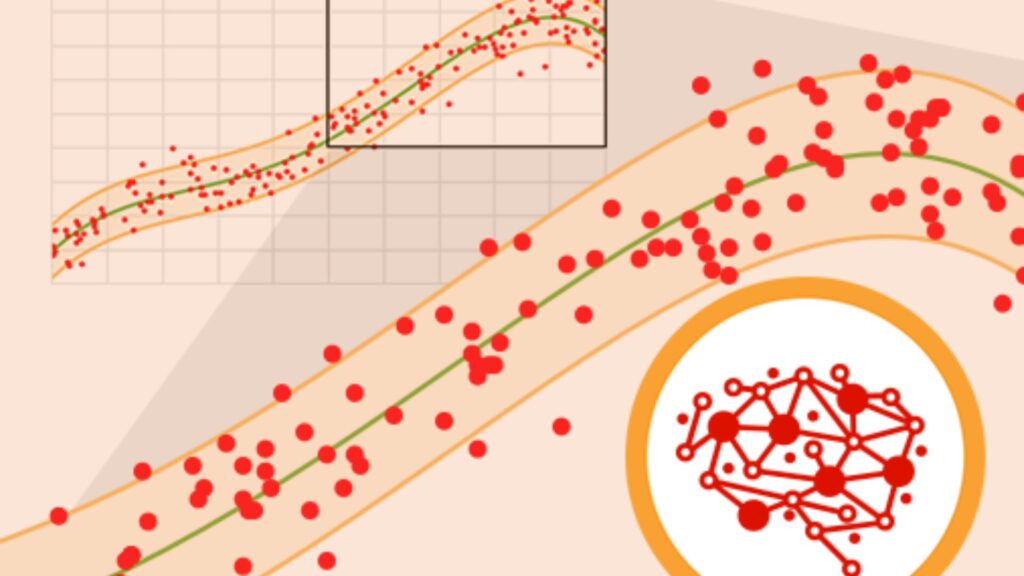
This free course from Wolfram U introduces you to machine learning by using the built-in “superfunctions” of the Wolfram Language. Through fun video lessons and a live online class, you will explore important concepts like supervised and unsupervised learning, regression, classification, clustering, and anomaly detection. You will even get a look at newer LLM workflows to see how modern AI text tools operate.
Best of all, if you attend the class and pass the quick quiz, you will earn a free certificate to show what you learned. You will run real machine-learning tasks in just a few lines of code using functions like Classify, Predict, and FindClusters, getting faster results without heavy setup. You can register here.
Why it stands out: Its built-in superfunctions let you do real machine learning in only a few lines of code, making results feel immediate for newcomers.
15. OpenAI Academy
Location: Online (OpenAI)
Cost: Free
Acceptance rate/cohort size: Open enrollment (no cap)
Dates: Self-paced courses plus scheduled and on-demand events; join anytime
Application Deadline: None; open registration
Eligibility: Open to anyone worldwide; the foundations courses need no coding, so they suit high schoolers (it is a hub of courses and events rather than one fixed course)
OpenAI Academy is a free online learning hub that helps beginners build practical AI skills through self-paced courses, live events, and expert-led workshops. The best place to start is AI Foundations, a beginner-friendly course that requires no programming experience and introduces the basics of artificial intelligence, large language models, and ChatGPT.
Through hands-on exercises, you’ll learn how to write effective prompts, provide useful context, evaluate AI-generated responses, and use AI tools responsibly in everyday situations. As your skills grow, you can continue with more advanced learning paths such as Applied AI Foundations and Agents and Workflows, which explore how AI can be used to automate tasks and build more capable applications.
Why it stands out: With OpenAI Academy, you get a free, continually updated hub of courses and live events from OpenAI, with a genuinely no-code on-ramp for beginners.
Frequently asked questions: Online AI courses for high school students
Do you need coding experience before starting an online AI course?
It depends heavily on the course. Beginner-friendly options like Elements of AI, AI For Everyone, and IBM’s Introduction to Artificial Intelligence require no coding or math background at all. More advanced courses, like CS50’s AI with Python or MIT 6.S191, expect at least a year of Python experience and some calculus or linear algebra. Check each course’s prerequisites closely, since jumping into an advanced course without the expected background can make the material significantly harder to follow.
Are online AI courses for high school students free?
The vast majority are, including CS50’s AI course, Elements of AI, Google’s Machine Learning Crash Course, and MIT 6.S191. A few charge for an optional certificate, like AI For Everyone at around $49, while Immerse’s AI Online Research Programme and Stanford AI4ALL are among the only paid options in this list, with Immerse offering bursary support and Stanford offering need-based financial aid.
What is the difference between a conceptual AI course and a hands-on coding course?
Conceptual courses, like AI For Everyone or IBM’s Introduction to Artificial Intelligence, explain what AI is and how it’s used without requiring you to write any code. Hands-on coding courses, like Practical Deep Learning for Coders or the Hugging Face LLM Course, instead have you build, train, and fine-tune real models using Python and libraries like PyTorch or TensorFlow. If you want AI literacy for general understanding, a conceptual course suffices; if you want to build technical skills, a coding-focused course is necessary.
Do online AI courses award a credential that matters for college applications?
Most award a certificate rather than transferable college credit. CS50, Elements of AI, and NVIDIA’s Generative AI Explained all offer certificates of completion, which can strengthen a resume or application by demonstrating initiative. Immerse’s AI Online Research Programme is a partial exception, offering an accredited university qualification for some course formats. If transferable credit specifically matters to you, confirm this directly with the program before enrolling.
How long does it take to complete an online AI course?
Course length varies enormously. NVIDIA’s Generative AI Explained takes about two hours, while AI For Everyone takes about four weeks at a few hours per week. More intensive options, like AI for Beginners from Microsoft or Machine Learning with Python from freeCodeCamp, can take significantly longer, with the latter estimated at around 300 hours for its full project-based certification. Choose a course length that realistically fits around your school schedule.
Is Immerse Education a good option for exploring AI in depth?
Immerse’s Artificial Intelligence Online Research Programme is a strong choice if you want personalized, rigorous instruction rather than a self-paced video course. The program offers 10 to 15 hours of learning through 1:1 or group lessons, culminating in a personal research project and a certificate of completion. For some course formats, you can also earn an accredited university qualification, giving you a more structured and mentored alternative to the free, self-directed courses listed here.
What Comes After Your Online AI Course?
Choosing among these online AI courses for high school students gives you real, hands-on exposure to how algorithms and models actually work.
Once the course ends, you can turn that technical experience into a clearer sense of your academic and career direction.
The coding skills, project work, and analytical thinking you built become a strong foundation for stronger university applications ahead.
Keep building on what you started with this course by exploring our University Preparation blogs for guidance on your next steps.