15 Engineering Summer Programs for High School Students
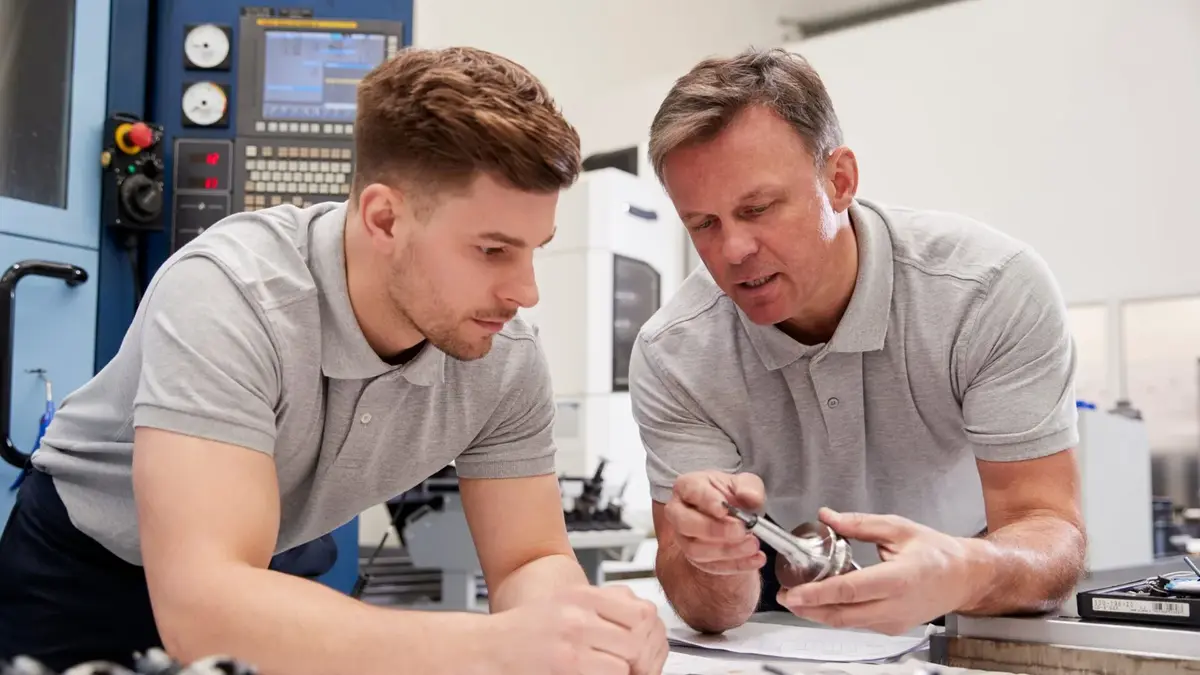
Summers offer rare flexibility; you have time to step outside the usual schedule and engage with subjects that genuinely interest you. If you’re curious about how scientific principles turn into real-world systems, engineering summer camps for high school students give you the space to experiment, build, and think critically in ways traditional classes often can’t. These camps are designed to help you develop technical foundations while experiencing what applied, problem-driven learning looks like.
Instead of passively absorbing information, you’ll spend your days actively working through engineering challenges. That might mean designing and testing prototypes, debugging code, analyzing failures, or collaborating on solutions with peers and instructors. The emphasis is on process as much as outcome, helping you understand how engineers approach complex problems and make decisions under real constraints.
How do you choose the right engineering summer camp for high school students?
Not all camps offer the same level of technical depth or meaningful engagement. Some focus more on demonstrations than on doing, which is why careful selection matters. Strong engineering camps balance hands-on work with guided instruction and clear learning outcomes.
Hosted by universities, research centers, and educational organizations, engineering summer camps span fields such as mechanical, electrical, civil, biomedical, computer, and environmental engineering. You’ll work with experienced instructors, collaborate on projects, and apply concepts through labs, design challenges, and simulations. Along the way, you’ll strengthen problem-solving, teamwork, and technical communication skills that are essential for advanced STEM study.
You’ll be expected to stay curious, persistent, and engaged throughout the experience. To help you find strong options, we’ve curated a list of 15 engineering summer camps. These camps stand out for their hands-on learning, academic depth, and accessibility, giving you a clear starting point to explore engineering in a meaningful and practical way.


15 Engineering Summer Camps for High School Students
1. MIT’s MITES Summer Program
Location: MIT Campus, Cambridge, MA
Cost/Stipend: None
Acceptance rate/cohort size: Selective
Dates: Late June through early August
Application Deadline: Applications typically close in February
Eligibility: High school juniors (U.S. citizens or permanent residents)
MIT’s MITES Summer Program is a six-week residential experience that immerses high school students in college-level study and campus life at MIT. You’ll take five rigorous courses across math, science, and the humanities, including core subjects like calculus and physics, along with a project-based elective. The program emphasizes hands-on learning through labs, engineering projects, and research exposure, supported by mentorship from MIT faculty, graduate students, and undergraduates.
Beyond academics, you’ll participate in lab tours, seminars, and workshops focused on college readiness and career exploration in STEM. Living on campus, you gain firsthand experience of MIT’s collaborative environment while building strong academic foundations and practical skills for future STEM pathways.
Why it stands out: You’ll get to join a robust alumni community (90% in selective universities) and potentially obtain career and academic support.
2. Immerse Education’s Engineering Summer School

Location: Toronto, Oxford, Cambridge, Sydney, Boston, Singapore, Tokyo, New York, and London
Cost/Stipend: Varies; summer school scholarship available through their bursary programme
Dates: 2 weeks during the summer
Application Deadline: Multiple summer cohorts with rolling admissions
Eligibility: Students worldwide aged 13-18 currently enrolled in middle or high school
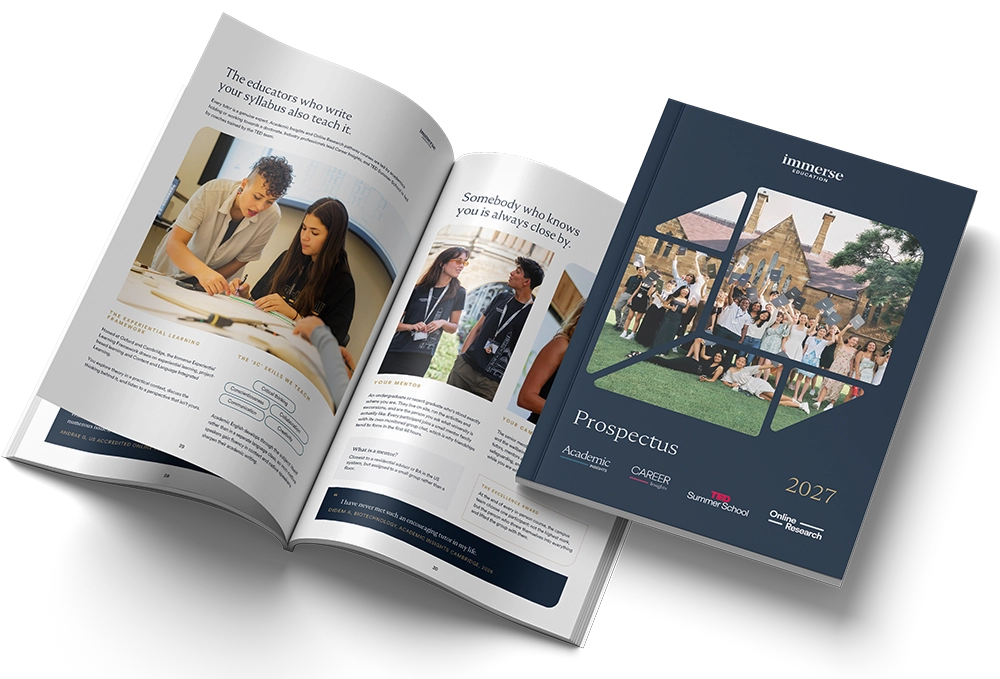
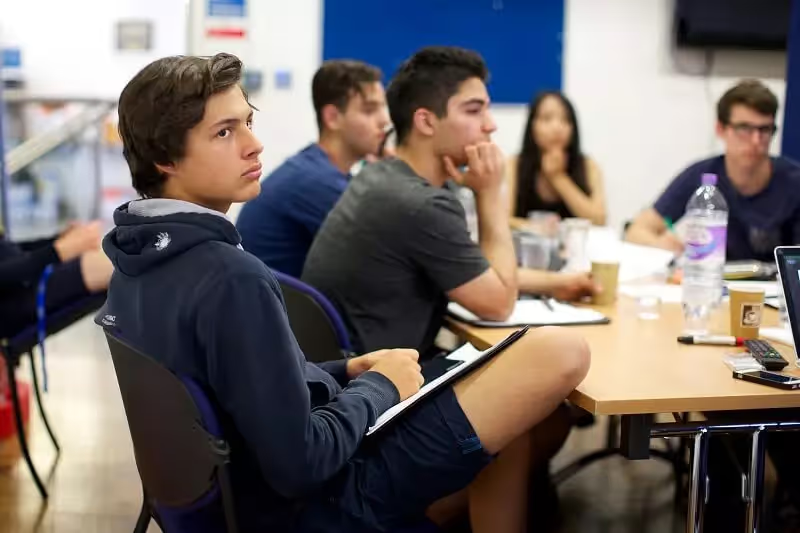
The Engineering Pathways allow high school students to explore engineering through two distinct routes at leading institutions worldwide. Both pathways include practical engineering experiences, but with different outcomes. The Engineering Academic Insights programme focuses on undergraduate-level study, pairing you with academic tutors from universities such as Oxford and Cambridge in classes of 4–10 students.
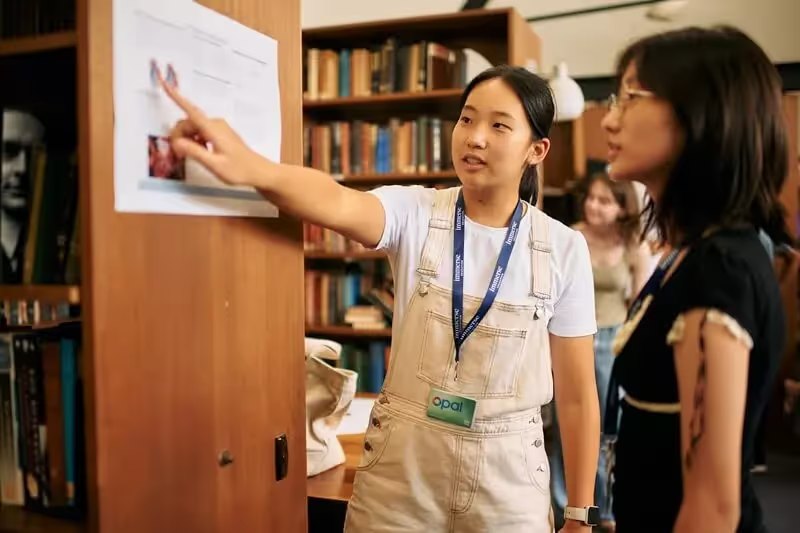
The Engineering Career Insights programme emphasises applied industry learning, connecting you with professionals to understand how engineering works in real-world settings. By the end of the programme, you will complete a personal project, receive written feedback, and a certificate of completion. You can find more details about the application here.
Why it stands out: This program combines age-appropriate academic depth with authentic university-style instruction, making it especially valuable if you want both skill development and early exposure to elite academic environments.
3. Santa Clara Summer Engineering Seminar (SES)
Location: Santa Clara University, Santa Clara, CA
Cost/Stipend: None
Acceptance rate/cohort size: Highly selective
Dates: SES Introduction (Year-One): Session One: July 12-16, Session Two: July 19-23 | SES Advanced (Year-Two) Returning Participants: July 26-30
Application Deadline: March 31st
Eligibility: Current 10th and 11th graders from around the world, but priority is given to sophomores who have limited prior exposure to engineering
The Santa Clara Summer Engineering Seminar (SES) is a free, five-day residential program for high school sophomores and juniors interested in exploring engineering at Santa Clara University. You’ll take part in hands-on workshops led by engineering faculty and undergraduate students across disciplines such as bioengineering, civil and environmental engineering, computer science, electrical engineering, and mechanical engineering.
The program combines short lectures, lab activities, and team-based projects to show how engineering concepts apply to real-world and humanitarian challenges. You’ll live in campus dorms, interact with current students and professors, and experience daily life at a university. SES is offered in introductory sessions for first-time participants, with an advanced “Year Two” option for returning students who want deeper exposure to specific engineering fields.
Why it stands out: It’s a free, highly selective residential program that prioritizes students with limited prior exposure to engineering while offering a real campus experience.
4. Missouri University of Science and Technology’s Engineering with Biology
Location: Missouri University of Science and Technology, Rolla, MO
Cost/Stipend: $650 registration fees / None
Acceptance rate/cohort size: 30 students
Dates: June 14-18
Application Deadline: Rolling until full
Eligibility: Students worldwide aged 14-18 years
Missouri University of Science and Technology’s Engineering with Biology camp introduces high school students to synthetic biology and how it can be used to solve real-world challenges like disease detection, environmental cleanup, and food security. Through hands-on lab projects, you’ll learn how living organisms can be engineered to produce useful chemicals and perform specific functions. The program covers core concepts such as designing and testing genetic systems, comparing solutions, and modeling biological systems using engineering tools.
You’ll explore applications like using yeast to create vitamin-enriched foods and examine the ethical and societal impacts of synthetic biology. The camp also includes a design competition where you propose and plan solutions to problems you care about. Overall, it’s an interdisciplinary experience that blends biology, engineering, and problem-solving.
Why it stands out: You explore synthetic biology through hands-on labs that blend engineering design with real biological systems and ethics.
5. Missouri University of Science and Technology’s Jackling Introduction to Engineering Camp
Location: Missouri University of Science and Technology, Rolla, MO
Cost/Stipend: $650 / None
Acceptance rate/cohort size: 150 students
Dates: Session 1: May 31st – June 4th, Session 2: June 14-18, Session 3: June 28th – July 2nd
Application Deadline: Rolling until full
Eligibility: Domestic and international students aged 15-18 years
Missouri University of Science and Technology’s Jackling Introduction to Engineering Camp is a foundational summer program that introduces high school students to a wide range of engineering disciplines. You’ll attend morning sessions led by faculty and engineering professionals that outline how different fields work and the real-world problems engineers solve.
In the afternoons, you’ll visit up to five engineering departments of your choice for hands-on activities, lab tours, and research demonstrations. The program also includes team challenges and friendly competitions that help you apply what you’ve learned in a practical setting. Overall, the camp offers broad exposure to engineering pathways while helping you explore which disciplines align with your interests.
Why it stands out: You get broad exposure to multiple engineering disciplines while choosing departments that match your interests.
6. Kode with Klossy Summer Camps
Location: Virtual and select in-person cities
Cost/Stipend: None
Acceptance rate/cohort size: Selective
Dates: Various 2-week sessions from June to August (exact dates to be announced)
Application Deadline: Not specified
Eligibility: Young women and gender expansive teens globally, aged 13-18
Kode with Klossy is a free, two-week summer coding camp for girls, trans, and non-binary students ages 13–18, offered in both virtual and in-person formats. You choose a project-based track, Web Development, Mobile App Development, Machine Learning, or Data Science, based on your interests.
Throughout the program, you learn core programming languages and tools such as HTML, CSS, JavaScript, Python, SQL, and Swift through hands-on, collaborative lessons. Daily coding practice builds toward a final project, such as a website, mobile app, chatbot, or data visualization. The camp emphasizes creativity, problem-solving, and confidence in tech while introducing you to real-world applications of coding.
Why it stands out: It combines rigorous, project-based coding instruction with a strong focus on gender equity in tech.
7. Johns Hopkins Explore Engineering Innovation (EEI)
Location: Residential or commuter sites nationwide / Hybrid and online options also available
Cost/Stipend: Costs vary by program type and location. Check details here
Acceptance rate/cohort size: Selective
Dates: Varies based on the program type. Check details here
Application Deadline: Applications open in December and are reviewed on a rolling basis. Please check more details here
Eligibility: High school students worldwide (aged 15-17 years) with As and Bs in high school math and science classes and completed a full year of high school chemistry and/or physics, including a lab. Check more details here
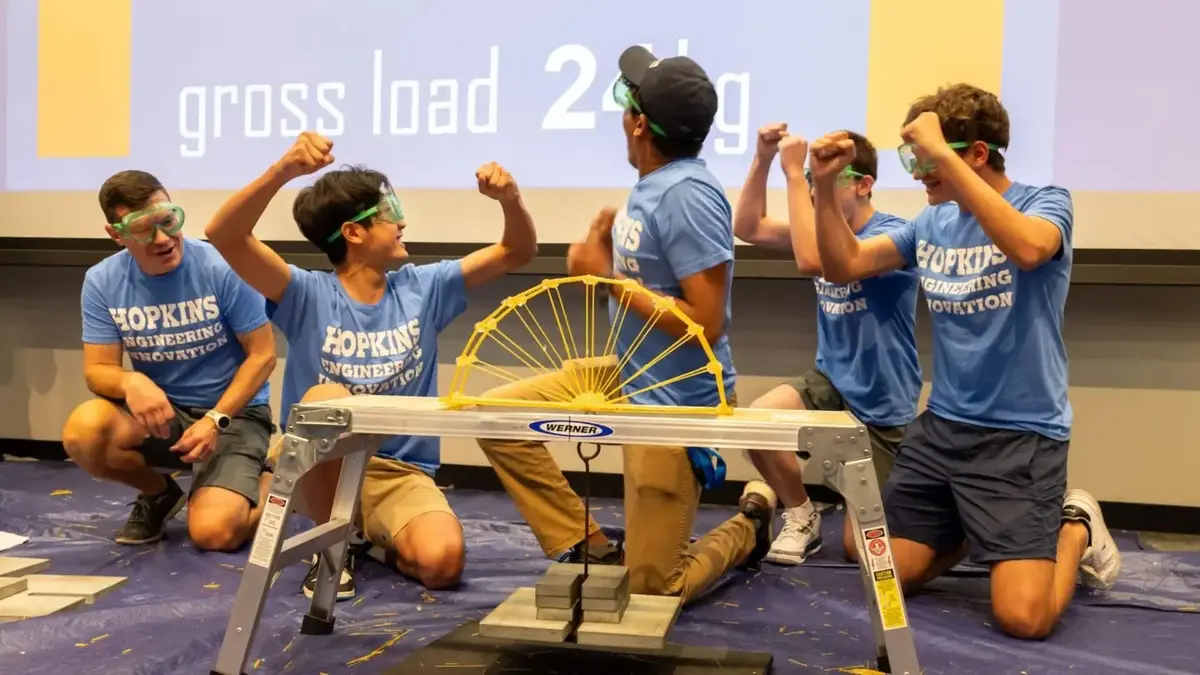
Johns Hopkins’ Explore Engineering Innovation (EEI) is a multi-week, college-level summer program that lets high school students explore what it’s really like to think and work like an engineer while earning three college credits from Johns Hopkins University. Offered in online, hybrid, and in-person formats across the U.S., the program introduces you to multiple engineering disciplines, including civil, chemical, electrical, computer, mechanical, and materials engineering.
You’ll work on hands-on, team-based projects that build problem-solving, design, and communication skills in a college-style learning environment. Along the way, you’ll learn how different engineering fields intersect and apply math and science to real challenges. EEI is especially useful if you’re still exploring which engineering major or career path fits you best.
Why it stands out: You earn Johns Hopkins College credit while exploring multiple engineering fields through structured, hands-on projects.
8. Johns Hopkins Sustainable Energy Engineering (SEE)
Location: Multiple locations / online
Cost/Stipend: Costs vary by program type and location. Check details here
Acceptance rate/cohort size: Selective
Dates: In-person: June 29th – July 24th, online: June 29th – July 31st
Application Deadline: Applications open in December and are reviewed on a rolling basis. Please check more details here
Eligibility: Domestic and international high school students (aged 15-17 years) with As and Bs in high school math and science classes; Completed Algebra II; Completed a high school science course with a lab
Johns Hopkins’ Sustainable Energy Engineering (SEE) is a multi-week, college-level summer program that introduces high school students to the science and engineering behind clean energy systems while offering three college credits. The program is available in in-person and live online formats and covers topics such as solar power, wind energy, smart grids, and energy storage. You’ll analyze real-world data, model energy systems, and work in teams to design practical, sustainable solutions.
Hands-on projects include studying hydropower using data from a major U.S. dam, testing wind turbine efficiency, and designing energy-efficient living spaces. The program also examines how energy decisions affect communities, economies, and the environment. SEE is well-suited for students interested in engineering, sustainability, and real-world problem-solving.
Why it stands out: The program focuses specifically on clean energy systems using real-world data and engineering models.
9. Boston Leadership Institute Engineering Research Program
Location: Olin College, Greater Wellesley, MA
Cost/Stipend: Three-Week Tuition: $2500, Three-Week Residential Fee: $2097
Acceptance rate/cohort size: Competitive admission
Dates: July 13-31
Application Deadline: To be announced
Eligibility: High school students worldwide
The Boston Leadership Institute Engineering Research Program is a hands-on summer experience designed for high school students interested in exploring engineering through real projects. You’ll work in teams on applied challenges that combine electrical engineering, mechanical engineering, and programming, such as building and programming Arduino-powered sailboats and testing them in on-water regattas. The program also includes design-based projects using CAD and 3D printing, where students create and refine functional prototypes like model boats or electronic devices.
Along the way, you’ll learn practical skills such as soldering, wiring, circuitry, and performance testing through experimental research. Field trips to places like MIT, Boston University’s EPIC Center, and Boston Harbor connect classroom learning to real engineering environments. The program emphasizes teamwork, problem-solving, and applying engineering principles in realistic settings.
Why it stands out: You work on engineering projects that combine hardware, programming, and experimental testing in real research-style settings.
10. University of Michigan Summer Engineering Exploration (SEE) Camp
Location: University of Michigan, Ann Arbor, MI
Cost/Stipend: $700 (subject to change)
Acceptance rate/cohort size: ~7% (based on the previous year’s program)
Dates: July 5-11
Application Deadline: February 19th
Eligibility: Students worldwide who will be in grades 10 and 11 at the time of the camp, especially those with limited access to engineering resources
The University of Michigan Summer Engineering Exploration (SEE) Camp is one of the more inclusive engineering summer camps for high school students, designed as a one-week residential program that introduces engineering in an accessible, supportive environment. Hosted by the University of Michigan’s College of Engineering and the Society of Women Engineers, the camp focuses on students entering grades 10–11, especially those with limited access to engineering resources.
You’ll explore a range of engineering disciplines through introductory lectures, hands-on projects, and experiments in areas such as robotics, environmental engineering, and computer science. The program also includes lab visits, interactions with engineering faculty and current students, and exposure to different engineering industries. In addition to academics, you’ll experience campus life and learn more about the college admissions process. No prior engineering experience is required, making the camp well-suited for students who want a broad overview before choosing a path.
Why it stands out: It’s designed specifically for students with limited access to engineering resources, making it highly accessible and supportive.
11. California State Summer School for Mathematics and Science (COSMOS)
Location: The program is hosted by the University of California system and is offered at multiple campuses throughout the state
Cost/Stipend: $5,518 + $46 application fee (financial aid available)
Acceptance rate/cohort size: Competitive admissions (160-200 participants each campus)
Dates: July 5th – August 1st
Application Deadline: February 6th
Eligibility: Students in grades 8-12. COSMOS is limited to California students only
The California State Summer School for Mathematics and Science (COSMOS) is one of the most academically intensive engineering summer camps for high school students, offering a selective, four-week residential experience with deep exposure to college-level engineering concepts. In the engineering-focused clusters, you work with university faculty in advanced labs while exploring fields like mechanical and aerospace engineering through hands-on, project-based learning.
Mechanical engineering topics include statics, dynamics, strength of materials, CAD/CAM, sustainable manufacturing, controls, and feedback systems, with applications such as 3D printing and smart machinery. The aerospace engineering cluster covers fluid dynamics, thermodynamics, aircraft design, and rocket propulsion, alongside wind tunnel tours and experimental demonstrations. By working within a single intensive cluster, you gain a realistic view of engineering problem-solving and how theory connects to real-world systems.
Why it stands out: You’ll be placed in groups built around active UC research, giving you exposure to major UC laboratories, tech partnerships, and undergraduate research pipelines.
12. San Diego State University (SDSU) Robotics Camp
Location: San Diego State University, San Diego, CA
Cost/Stipend: None
Acceptance rate/cohort size: Unspecified
Dates: July 14-21 (based on the previous year’s date)
Application Deadline: February – May
Eligibility: Students all around the world in grades 8-12
The San Diego State University (SDSU) Robotics Camp is a free, week-long summer program for middle and high school students, hosted by SDSU’s SMILE Lab and Talent Search and supported by the National Science Foundation and the SDSU College of Engineering. You’ll get hands-on experience with robotics and engineering by coding in Scratch and Python, assembling and programming MBot Mega robots, and working with drones through guided flight and programming sessions.
The camp also introduces key STEM topics such as artificial intelligence, cybersecurity, and renewable energy through interactive lessons and team challenges. You will explore SDSU’s engineering labs, attend campus tours, and learn from guest speakers working in STEM fields. Through collaborative design and problem-solving activities, you gain early exposure to how engineering concepts are applied in real research and development settings.
Why it stands out: It offers free, hands-on exposure to robotics, AI, and programming within a university research lab environment.
13. STEM Academy’s High School Summer Camps at Oregon State University
Location: Oregon State University, Corvallis, OR
Cost/Stipend: The cost is based on the program
Acceptance rate/cohort size: Unspecified
Dates: Depending on the course. You can check the details here.
Application Deadline: Rolling
Eligibility: All students in high school are eligible to apply
STEM Academy’s High School Summer Camps at Oregon State University are weeklong programs that immerse high school students in hands-on STEM learning. You’ll explore fields such as toxicology, food science, microbiology, chemistry, cybersecurity, robotics, and computing through interactive lectures, lab experiments, and team-based projects. Working alongside OSU faculty, graduate students, and researchers, you’ll use real scientific tools and methods to solve practical problems.
The camps emphasize inquiry-based learning, collaboration, and engineering-focused skills like design, prototyping, and problem-solving. Some camps also offer scholarships or free participation for students from underserved backgrounds, making these programs more accessible.
Why it stands out: You work directly with university researchers using real lab tools across a wide range of STEM fields.
14. Summer Engineering Academy (SEA) at University of South Alabama
Location: University of South Alabama, Shelby Hall, Mobile, AL
Cost/Stipend: $300
Acceptance rate/cohort size: Not specified
Dates: July 14-18 (based on the previous year’s program)
Application Deadline: June 23rd (based on the previous year’s program)
Eligibility: Rising 10-11 grade students from all around the world
The Summer Engineering Academy (SEA) at the University of South Alabama is a one-week program for high school students who want an introduction to engineering and college-level learning. You’ll explore core fields such as electrical, civil, computer, and mechanical engineering through faculty-led lectures, hands-on projects, and team-based activities.
The program emphasizes practical learning, including basic programming, automation concepts like microcontrollers and sensors, and applied engineering systems. You’ll also interact with engineering students, faculty, and professional engineers, gaining insight into engineering careers and academic pathways. Company visits and campus experiences help connect classroom concepts to real-world engineering and give you a taste of college life.
Why it stands out: It provides a low-cost, practical introduction to multiple engineering fields with direct industry and faculty interaction.
15. University of Miami Summer Scholars Program
Location: University of Miami, Coral Gables, FL
Cost/Stipend: Not mentioned
Acceptance rate/cohort size: Unspecified
Dates: June 27th – July 17th
Application Deadline: NA
Eligibility: Domestic and international students completing grades 10-11
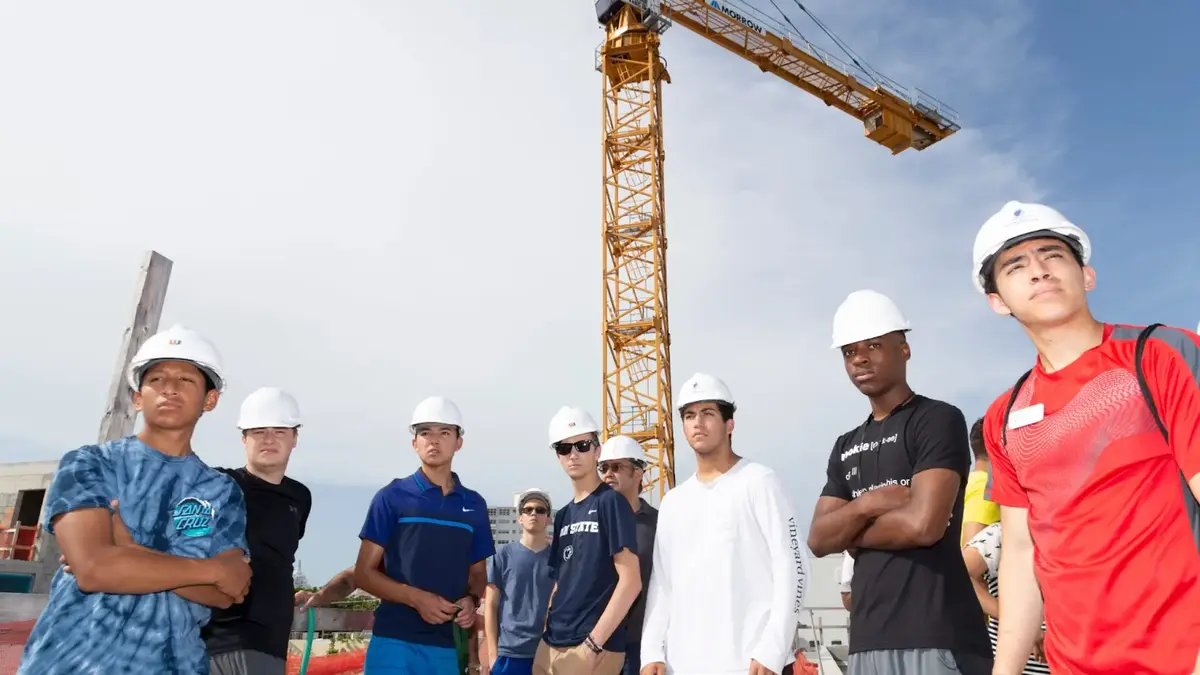
The University of Miami Summer Scholars Program gives high school students the chance to study engineering in a real college setting while earning academic credit. You’ll learn directly from UM faculty through courses that combine lectures, hands-on projects, and team-based design work. Engineering options include introductions to civil, architectural, environmental, mechanical, and aerospace engineering, where you explore how engineers solve real-world problems.
Coursework emphasizes teamwork, communication, ethics, and creative problem-solving, mirroring professional engineering environments. You’ll also take part in lab work, design projects, and site visits, such as machine shops or wind tunnel facilities. Overall, the program offers a strong foundation in engineering concepts while helping you experience college-level academics and campus life.
Why it stands out: You earn academic credit while experiencing college-level engineering coursework and design-focused labs.
Join the Immerse Education 2027 Essay Competition
Follow the instructions to write and submit your best essay for a chance to be awarded a 100% scholarship.
Building an Engineering Mindset Early
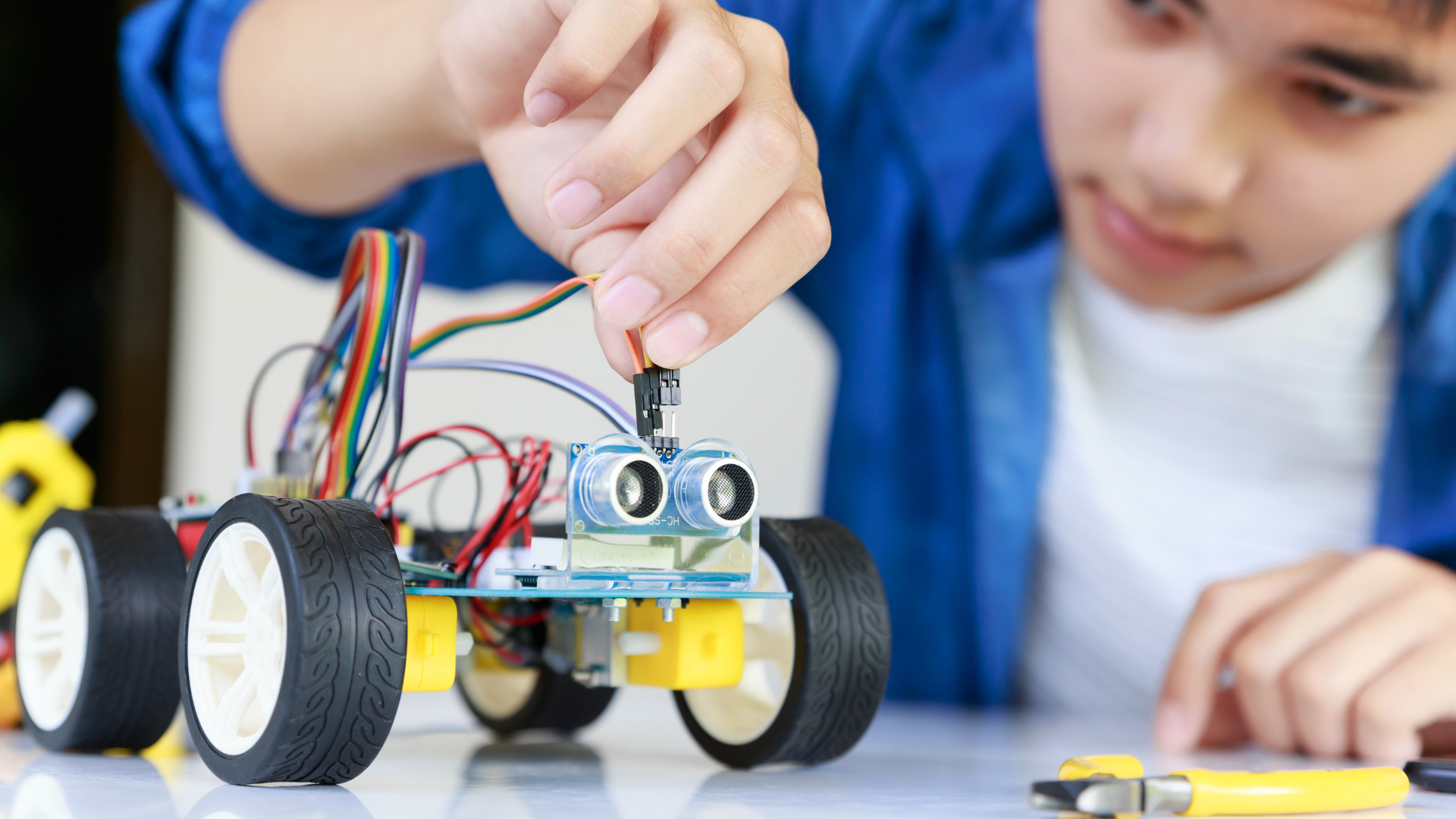
An engineering mindset develops early, when curiosity turns into questioning, testing ideas, and learning from failure through hands-on problem solving.
The engineering summer camps for high school students featured here create structured environments where you apply theory through projects, collaborate with peers, and think like engineers facing real constraints.
Through these experiences, you build confidence, technical foundations, and clearer academic direction while strengthening teamwork, communication, and iterative design skills and long term growth.
To continue developing this mindset, explore our Engineering Top Books Guide for carefully selected reading that deepens understanding, supports independent learning, and prepares you for future study.





Unlock Inspiring Opportunities with the Immerse Education Newsletter
Join our newsletter to stay ahead with exclusive updates, exciting programme highlights, and expert insights from the world of immersive education.
Learn how Immerse can transform your life
An in-depth overview of our university and career preparation programmes
Get a glimpse into the life of an Immerse participant
Find the right programme for you with sample timetables, location showcases, and more