



 Русский (RU)
 Українська (UK)
 Türkçe (TR)
 Italiano (IT)
 Français (FR)
 Português (PT)
 中文 (中国) (ZH)
 Español (ES)
 日本語 (JA)
 ไทย (TH)
 Deutsch (DE)
 Ελληνικά (EL)
 Polski (PL)
 Bahasa Indonesia (ID)
 Nederlands (NL)
 العربية (AR)
 한국어 (KO)

As a high school student interested in entrepreneurship, you may have plenty of ideas but not know how to turn them into something real. Entrepreneurship involves identifying problems, testing solutions, understanding customers, and making informed decisions. One of the best ways to explore the field is by taking an entrepreneurship course designed for high school students.
Imagine spending part of your summer developing a business idea with other ambitious students, pitching your startup to experienced founders, or working through real case studies from successful companies. You might learn how to validate an idea, build a business model, or understand what investors look for in early-stage startups. Unlike internships or research programmes, entrepreneurship courses are designed to teach you the fundamentals first, making them an accessible way to explore the field before taking on more hands-on experiences.
How do you choose the right entrepreneurship courses for high school students?
Not all entrepreneurship courses are built the same way, so it’s worth knowing what you’re actually signing up for before committing your summer to one. Some are heavily project-based, pushing you to build a real business or product from scratch and defend it in front of judges by the end. Others lean more academic, closer to an intro college business course, spending real time on finance, marketing theory, and strategy before asking you to apply any of it.
It’s also worth looking at who teaches the course and how you’ll learn. Courses led by university faculty, founders, or experienced entrepreneurs often include workshops, mentoring sessions, and practical projects that help you apply what you’ve learned. Completing a well-designed entrepreneurship course can also strengthen your college applications by showing initiative, curiosity, and a genuine interest in business beyond your school curriculum.
To help you find the right fit, we’ve put together a list of 15 entrepreneurship courses for high school students!
To understand what entrepreneurship looks like in a professional setting, you can consider entrepreneurship internship opportunities.
Key takeaways
- Wharton’s Leadership in the Business World is highly selective, admitting approximately 120 students per session, and costs $11,899 for a three week residential program at Penn.
- Immerse Education’s Entrepreneurship Summer School takes place in San Francisco over two weeks, open to students aged 15 to 18 worldwide, culminating in a recognised certificate.
- The Oxford Saïd Teen Leadership Summer Academy costs up to £8,995 and combines leadership development with entrepreneurial problem-solving pitched to industry professionals.
- Imperial College London’s Sutton Trust Summer School is completely free for eligible UK students, covering economics, finance, and data science pathways.
- UC San Diego’s Essentials of Entrepreneurship, Innovation, & Design is free for students in the Future Innovators program, requiring attendance at 8 of 10 sessions to receive an award of completion.
- IGNITE Young Minds costs £4,500 and draws on the Cambridge Judge Entrepreneurship Centre ecosystem, including sessions on how AI tools can support problem-solving and career planning.
- Columbia’s Entrepreneurship & Innovation course runs during the academic year through weekend sessions rather than during the summer, making it a rare option for students who can’t commit to a full summer program.
- Program costs for entrepreneurship courses range from free options like UC San Diego’s Essentials course to nearly $11,899 for Wharton’s flagship Leadership in the Business World program.
15 Entrepreneurship Courses for High School Students
1. Leadership in the Business World (Wharton Global Youth Program, University of Pennsylvania)
Location: Philadelphia, PA
Cost: $11,899; need-based financial aid is available
Acceptance rate/cohort size: Highly selective; Wharton selects approximately 120 students to attend per session
Dates: Jun 7-27; Jun 28th – Jul 18th; Jul 19th – Aug 8th
Application Deadline: March 18th
Eligibility: High school students currently enrolled in grades 10-11; international students are welcome
Leadership in the Business World (LBW) is Wharton’s flagship three-week entrepreneurship and business program for high school students. You explore entrepreneurship, marketing, finance, leadership, and negotiations through Wharton faculty lectures, case studies, simulations, and team-based discussions. Working in groups, you develop a business idea, evaluate market opportunities, build a business plan, and present your venture in a final pitch.
The program also includes company visits, guest speakers, and networking opportunities with entrepreneurs and business leaders, giving you exposure to how business concepts are applied in practice. By living on Penn’s campus and completing university-level coursework, you gain a realistic understanding of undergraduate business education while developing skills that transfer to future entrepreneurial projects.
Why it stands out: You’ll build and pitch a startup idea using Wharton’s case-based learning approach while experiencing life at one of the world’s leading business schools.
2. Immerse Education’s Entrepreneurship Summer School
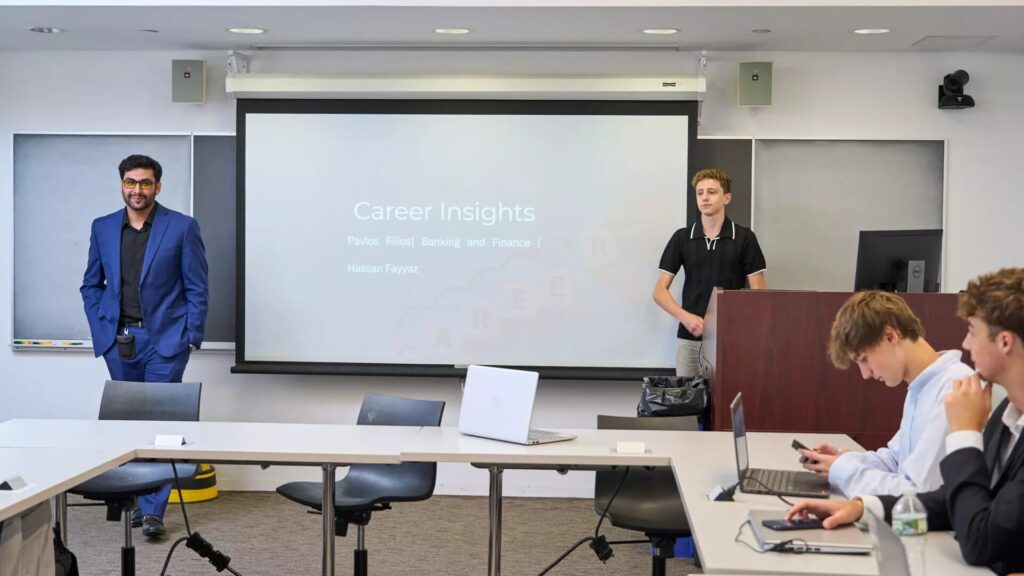
Location: University of California, Berkeley, San Francisco
Cost: Varies; summer school scholarship available through our bursary programme
Dates: 2 weeks during the summer
Application Deadline: Multiple summer cohorts with rolling admissions
Eligibility: 15-18-year-old students; open to international students
Its direct exposure to Silicon Valley’s startup ecosystem makes the Immerse Education Entrepreneurship Summer School one of the most career-focused entrepreneurship courses for high school students around. You’ll gain knowledge about a range of topics, including innovation, business planning, and financial management. You’ll participate in interactive workshops, work on startup projects, and gain insights into real-world case studies.
The programme will allow you to gain a range of entrepreneurial skills, including strategic thinking and creativity required to launch successful businesses. You’ll receive guidance from established entrepreneurs and explore different industries and business models. The program will prepare you for a future career in entrepreneurship through hands-on challenges and real-world experience. You’ll also earn a recognised certificate on the completion of the program.
Why it stands out: It will give you hands-on exposure to startup strategy through real projects, expert mentorship, and practical challenges, while also earning you a recognised certificate.
3. Oxford Saïd Teen Leadership Summer Academy
Location: Saïd Business School, University of Oxford, Oxford, UK
Cost: Up to £8,995 (approximately $11,800); no stipend
Acceptance rate/cohort size: Selective; the acceptance rate and cohort size are not publicly available
Dates: July 18-31
Application Deadline: Early spring (applications reviewed on a rolling basis until full)
Eligibility: Students aged 15-18; international students are welcome
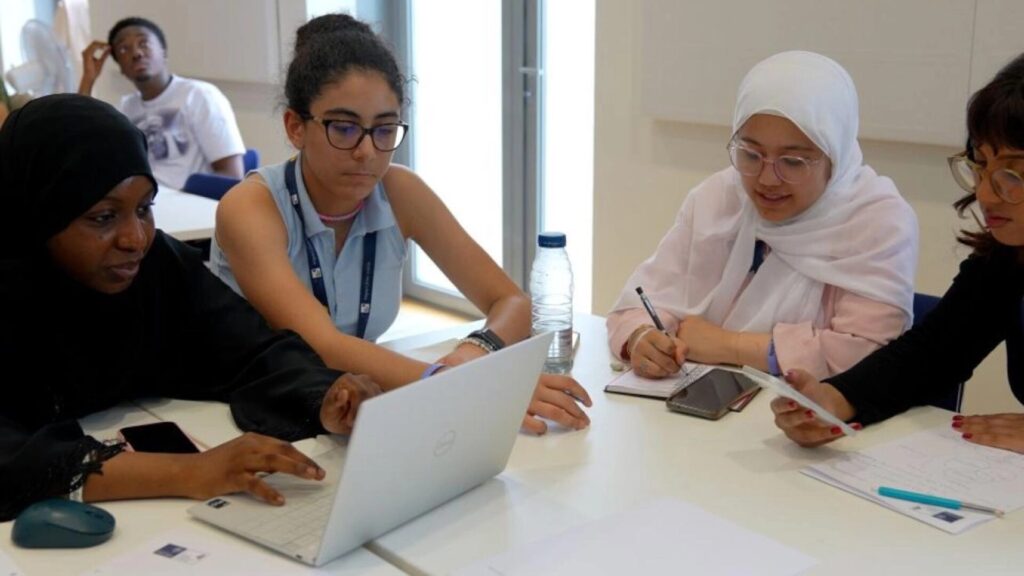
The Oxford Saïd Teen Leadership Summer Academy explores entrepreneurship through leadership, innovation, strategy, and business decision-making. You attend seminars led by Oxford faculty and industry experts while working in teams to develop solutions to real business challenges.
Throughout the program, you build entrepreneurial skills by refining business ideas, strengthening leadership abilities, and presenting your work to a panel of experts. Alongside the academic curriculum, you participate in educational visits, networking sessions, and college-based activities that provide insight into studying business at Oxford. Living and learning at the University of Oxford gives you first-hand experience of university life while helping you decide whether entrepreneurship, business, or management is the right academic path for you.
Why it stands out: You’ll combine leadership development with entrepreneurial problem-solving while studying at Oxford’s Saïd Business School and presenting solutions to industry professionals.
4. Harvard Pre-College Program – Business & Economics Courses
Location: Cambridge, MA
Cost: $6,100 + $75 application fee; limited need-based scholarships available
Acceptance rate/cohort size: Selective; average class size is 15 students
Dates: June 21st – July 2nd; July 5-17; July 19-31
Application Deadline: Early and priority financial aid: January 7th; Regular and financial aid: February 11th; Late: April 1st
Eligibility: Rising juniors and seniors who will graduate high school in the next two years; students must be at least 16 by June 20th and under 19 before July 31st. International students may apply, but should review Harvard’s visa and travel guidance
Harvard’s Pre-College Program lets you take a two-week, non-credit college-level course while living on campus, and its Ivy League name makes it one of the most prestigious entrepreneurship courses for high school students on this list. If you choose a business, economics, or management-focused course, you explore topics such as markets, leadership, decision-making, and organizational behavior through discussion-based classes.
You study one subject intensively, with three hours of class each day and regular homework outside class. The program also includes college readiness activities, campus life programming, and a written instructor evaluation at the end. This is useful if you want to test business or economics in a rigorous university setting before committing to a college major.
Why it stands out: You’ll experience Harvard-style academic discussion, small classes, and residential college life while exploring business or economics at a university level.
5. Imperial College London’s Year 12 Sutton Trust Summer School – Economics, Finance, and Data Science
Location: Imperial College London, London, UK
Cost: Free; accommodation, food, and activities are typically covered for selected students
Acceptance rate/cohort size: Selective; the acceptance rate and cohort size are not publicly available
Dates: July 14-17 or July 21- 24
Application Deadline: March 5th
Eligibility: UK Year 12 students from state schools who have achieved a minimum of eight GCSEs (with five grades 7-9 including maths and all sciences, and a grade 5+ in English) and are studying at least three A-levels, including Mathematics
Imperial’s Sutton Trust Summer School gives eligible Year 12 students a free residential introduction to studying at a highly selective university. In the Economics, Finance, and Data Science pathway, you explore how data, markets, and financial decision-making intersect in academic and professional settings.
You attend subject sessions, take part in academic activities, and meet current students and staff who can explain what university study looks like from the inside. The program is designed to support students from underrepresented backgrounds in understanding competitive university pathways. It can help you decide whether economics, finance, data science, or a related quantitative degree fits your academic interests.
Why it stands out: It gives eligible UK students free access to Imperial’s academic environment, helping you explore economics, finance, and data science before university applications.
6. Business Opportunities Summer Session (BOSS) – Penn State Smeal College of Business
Location: University Park, PA
Cost: $350 program fee after acceptance; no stipend
Acceptance rate/cohort size: Selective; the acceptance rate and cohort size are not publicly available
Dates: June 14-26
Application Deadline: March 20th
Eligibility: Rising high school seniors from the U.S. and Puerto Rico who are interested in studying business in college; not open to international students
BOSS is a two-week residential business program hosted by Penn State’s Smeal College of Business. You take business fundamentals and college preparation courses taught by Penn State faculty while living in residence halls and eating in campus dining facilities. The program includes academic sessions, peer interaction, and exposure to business-focused college life.
You also work on applied business activities, including group presentations and hands-on learning components. This is a good fit if you want to understand what a business major involves before applying to college.
Why it stands out: This program helps you understand what a business major entails and whether a business school environment is the right fit for your academic goals.
7. 10150 Measuring Business Success: An Introduction to Financial Accounting – Summer@Brown Pre-College Program

Location: Providence, RI
Cost: $5,786 for a 2-week residential course; need-based financial aid is available
Acceptance rate/cohort size: Selective; the acceptance rate and cohort size are not publicly available
Dates: June 22nd – July 2nd
Application Deadline: May 8th
Eligibility: Students aged 14-18 who will have completed at least Grade 9; international students are welcome
This Brown Pre-College course introduces you to financial accounting through the language of business and entrepreneurship. You learn how to interpret financial statements, evaluate business performance, and understand how accounting supports entrepreneurial decision-making.
Through case studies and practical exercises, you examine how startups and established companies measure financial success and communicate results to investors and stakeholders. Because the course is taught in Brown’s pre-college environment, you also gain experience with university-level coursework while exploring business as a potential field of study.
Why it stands out: It connects accounting with entrepreneurship, helping you understand how financial information shapes business decisions.
8. ENIN0104 Entrepreneurship & Innovation: Changing the World via Venture Creation – Columbia University’s Academic Year Weekend
Location: Online
Cost: Tuition-based
Acceptance rate/cohort size: Selective; the acceptance rate and cohort size are not publicly available
Dates: Weekend program during the academic year; exact session dates vary
Application Deadline: Varies by term
Eligibility: High school students in grades 9-12; international students are welcome
This Columbia Pre-College course explores how entrepreneurial ventures are created, developed, and brought to market. You examine topics such as opportunity recognition, customer discovery, business models, value proposition design, and venture financing through lectures and collaborative activities.
You also develop and refine your own startup concept while receiving feedback from the instructor and classmates. The course offers a practical introduction to entrepreneurship while exposing you to Columbia’s academic environment during the school year.
Why it stands out: You’ll build a startup concept using entrepreneurial frameworks while studying on Columbia University’s campus.
9. NOCR 00005 01 Career Insight: Business and Entrepreneurship by University of Chicago
Location: Chicago, IL
Cost: $5,890; need-based financial aid is available
Acceptance rate/cohort size: Selective; cohort size not publicly available
Dates: June 15-25
Application Deadline: Priority: February 11th; Regular: March 12th
Eligibility: Rising high school sophomores, juniors, and seniors; international students are welcome
This two-week Career Insight course introduces you to entrepreneurship through company visits, discussions with founders and business professionals, and classroom sessions led by University of Chicago instructors. You explore how entrepreneurs identify opportunities, launch ventures, and respond to real business challenges while completing collaborative activities.
The program combines academic study with direct exposure to Chicago’s entrepreneurial ecosystem, giving you insight into both university learning and startup careers. It is a useful option if you want to explore entrepreneurship before applying to business or economics programs.
Why it stands out: You’ll pair classroom learning with visits to startups and conversations with entrepreneurs, providing a practical view of entrepreneurial careers.
10. BUFE0220 Introduction to Business, Finance, and Economics – Columbia University’s Pre-College Summer Programs
Location: New York City, NY
Cost: Residential: $12,838; Commuter: $6,381; Online: $4,018; limited need-based financial aid available for eligible U.S. residents
Acceptance rate/cohort size: Selective; the acceptance rate and cohort size are not publicly available
Dates: In person: June 29th – July 17th; July 21st – August 7th. Online: July 6-17; July 20-31
Application Deadline: Applications are currently closed for most summer sessions; limited availability may remain by session
Eligibility: High school students; international students are welcome, subject to Columbia’s program and visa requirements
This Columbia Pre-College course introduces you to how firms raise money, evaluate investments, and operate within financial markets. You study stocks, bonds, accounting statements, valuation models, risk, financial instruments, and microeconomic models of firm behavior. The course includes case studies and sustained independent work, helping you connect business theory with applied financial analysis.
You also discuss how markets value firms, securities, and investments, which can help you understand whether business, finance, economics, or entrepreneurship fits your college path. Since the course is available in both in-person and online formats, you can choose between a campus-based Columbia experience or a more flexible academic option.
Why it stands out: It teaches business and finance through case studies, valuation concepts, and independent work, giving you early exposure to how firms make financial decisions.
11. LSTU S-131 Start-ups from the Perspective of Business and IP Law
Location: Cambridge, MA, or online, depending on selected SSP format and course availability
Cost: $4,180–$15,735 + $75 application fee, depending on format; financial aid is available for U.S. citizens and permanent residents
Acceptance rate/cohort size: Selective; the acceptance rate and cohort size are not publicly available
Dates: June 22nd – August 7th
Application Deadline: June 15th
Eligibility: Students who will graduate high school and enter college in the next three years; students must be at least 16 by June 20th and under 19 before July 31st. International students may apply, but should review Harvard’s visa and course-format rules
This Harvard Secondary School Program course approaches entrepreneurship through business law and intellectual property. You examine how legal structures, contracts, ownership, trademarks, copyright, patents, and related protections shape venture creation and business strategy.
The course is especially useful if you want to understand entrepreneurship beyond pitching, by studying the legal decisions that affect how startups are built and protected. As part of SSP, you take credit-bearing Harvard Summer School coursework alongside a broader college-style academic schedule. The program can help you test whether entrepreneurship, business law, innovation, or intellectual property fits your future academic direction.
Why it stands out: It connects entrepreneurship with business and intellectual property law, helping you understand the legal foundations behind venture creation.
12. Essentials of Entrepreneurship, Innovation, & Design – UC San Diego Extended Studies
Location: La Jolla, CA
Cost: Free of charge for students in the Future Innovators program
Acceptance rate/cohort size: Limited space; the acceptance rate and cohort size are not publicly available
Dates: March 31st – June 2nd
Application Deadline: March 27th, or earlier if full
Eligibility: Open enrollment; international students should confirm visa and enrollment requirements directly with UC San Diego
This in-person UC San Diego course introduces you to entrepreneurship through design thinking, business modeling, customer discovery, and startup communication. You explore how new ideas are developed, financed, marketed, and presented to stakeholders. The course is highly interactive, with exercises, group-based work, and guest lecturers who discuss different parts of the venture-building process.
You also study topics such as Lean Startup methodology, intellectual property, leadership, team design, and startup narratives. Students who attend 8 out of 10 sessions receive an award of completion.
Why it stands out: It gives you a practical introduction to entrepreneurship and innovation through design thinking, customer discovery, and startup-focused group work.
13. Wharton Global Youth Program – Strategy and International Management (Cambridge, UK)
Location: Cambridge, UK
Cost: $9,599 tuition; financial aid is available
Acceptance rate/cohort size: Selective; approximately 80 students
Dates: July 4-17
Application Deadline: Priority: January 28th; Final: March 18th
Eligibility: High school students currently enrolled in grades 9-11; international students are welcome
This two-week Wharton Global Youth program introduces you to strategy, management, and international business in Cambridge. You study how companies compete, grow, expand across borders, and respond to organizational challenges through cases, simulations, lectures, and guest speaker sessions. A major component is the capstone case competition, where you work in teams and present strategic recommendations to judges.
Academic classes are held Monday to Friday in Cambridge University classrooms, with social and cultural activities outside class. The program is useful if you want to explore entrepreneurship-adjacent fields such as management, global strategy, consulting, or business leadership.
Why it stands out: You’ll work with global peers on case analysis and strategy problems while studying international management in Cambridge.
14. IGNITE Young Minds Summer Programme
Location: Cambridge Judge Business School, University of Cambridge, Cambridge, UK
Cost: £4,500
Acceptance rate/cohort size: Selective; the acceptance rate and cohort size are not publicly available
Dates: July 19-25
Application Deadline: June 15th
Eligibility: Students aged 15-18; international students are welcome
IGNITE Young Minds is a seven-day residential program focused on entrepreneurship, leadership, creativity, teamwork, and future-ready skills. You take part in interactive workshops, lectures, mentor sessions, and team projects that move from idea generation to presenting solutions. The program draws on the Cambridge Judge Entrepreneurship Centre ecosystem and includes contributors such as faculty, entrepreneurs, and industry leaders.
You also explore how AI tools can support problem-solving, learning, and career planning. Students live at Clare College and receive a Certificate of Attendance from the Entrepreneurship Centre at Cambridge Judge Business School.
Why it stands out: It combines Cambridge-based entrepreneurship workshops, team projects, and residential college life in a short, structured format.
15. LSE Summer School’s 100-Level Courses
Location: London, UK
Cost: £3,350 student rate or £4,450 standard rate for one session; £60 application fee; scholarships are available
Acceptance rate/cohort size: Selective; the acceptance rate and cohort size are not publicly available
Dates: Session One: June 22nd – July 10th; Session Two: July 13-31; Session Three: August 3-21
Application Deadline: Applications are open; the exact closing deadline is not publicly available
Eligibility: Applicants must meet course-specific academic requirements. The program is mainly designed for undergraduate students, postgraduate students, and professionals, so high school students should confirm eligibility directly with LSE before applying. International students are welcome if they meet entry and visa requirements
LSE Summer School offers degree-standard courses in business and management, accounting, finance, economics, law, international relations, and related fields. Courses are created by LSE faculty and are based on regular LSE undergraduate courses, giving you exposure to rigorous university-level learning.
For entrepreneurship-focused students, the strongest fit would be business, management, finance, or innovation-related courses rather than a dedicated high-school entrepreneurship track. You can study for three, six, or nine weeks while living and learning in central London. Because the program is not primarily designed for high school students, it should be included only if your list allows advanced or older students who meet LSE’s entry requirements.
Why it stands out: It offers academically rigorous LSE courses in business-related fields, but it is better suited to advanced students who meet university-level entry requirements.
Frequently asked questions: Entrepreneurship courses for high school students
Are entrepreneurship courses for high school students open to international students?
Most courses welcome international students, including Wharton’s Leadership in the Business World, the Oxford Saïd Teen Leadership Summer Academy, and Columbia’s Entrepreneurship & Innovation course. Penn State’s BOSS program and Imperial’s Sutton Trust Summer School are exceptions, restricted to domestic or UK state school students respectively. Immerse Education’s Entrepreneurship Summer School is also open globally to students aged 15 to 18.
How much do entrepreneurship courses cost?
Costs vary enormously by prestige and format. Free options include Imperial’s Sutton Trust Summer School and UC San Diego’s Essentials of Entrepreneurship. Mid-range programs like Penn State’s BOSS cost $350, while premium residential options like Wharton’s Leadership in the Business World cost $11,899 and IGNITE Young Minds costs £4,500. Financial aid is available for most tuition-based programs listed here.
What is the difference between a pitch-focused program and an academic entrepreneurship course?
Pitch-focused programs, like Wharton’s Leadership in the Business World or the Oxford Saïd Teen Leadership Summer Academy, have you build and present an actual business idea to judges or mentors by the program’s end. Academic entrepreneurship courses, like Columbia’s Introduction to Business, Finance, and Economics or Harvard’s Pre-College business track, instead focus on studying concepts through case studies and discussion without necessarily requiring a final pitch. If you already have a startup idea, a pitch-focused program offers more hands-on venture development.
Do entrepreneurship courses award college credit?
Very few do. Most programs in this list, including Wharton’s Leadership in the Business World and the Oxford Saïd academies, provide a certificate of completion rather than transferable credit. Brown’s Measuring Business Success course is one of the few clearly credit-bearing options in this specific list. If earning credit matters to you, confirm this directly with each program, since entrepreneurship-focused courses tend to favor certificates over formal academic credit.
How selective are entrepreneurship courses for high school students?
Selectivity varies considerably. Wharton’s Leadership in the Business World is highly selective, admitting about 120 students per session from a large applicant pool. Imperial’s Sutton Trust Summer School is also competitive despite being free, prioritizing widening-participation criteria. Other programs, like UC San Diego’s Essentials of Entrepreneurship, use more open enrollment. Regardless of selectivity, meeting GPA and academic prerequisites matters as much as overall application strength.
Is Immerse Education a good option for exploring entrepreneurship before college?
Immerse Education’s Entrepreneurship Summer School in San Francisco is a strong choice if you want direct exposure to Silicon Valley’s startup ecosystem without needing US residency. The two week program covers innovation, business planning, and financial management through interactive workshops and startup projects, with guidance from established entrepreneurs. You’ll build strategic thinking and creativity skills relevant to launching a business, finishing with a recognised certificate, open to students worldwide aged 15 to 18.
Ready to Build on Your Business Skills?
Choosing among these entrepreneurship courses for high school students gives you a genuine introduction to pitching, strategy, and venture building.
Once the course ends, you can turn that hands-on experience into a clearer sense of your academic and career direction.
The confidence, business thinking, and presentation skills you built become a strong foundation for stronger university applications ahead.
Keep building on what you started this summer by exploring our University Preparation blogs for guidance on your next steps.