
 Русский (RU)
 Українська (UK)
 Türkçe (TR)
 Italiano (IT)
 Français (FR)
 Português (PT)
 中文 (中国) (ZH)
 Español (ES)
 日本語 (JA)
 ไทย (TH)
 Deutsch (DE)
 Ελληνικά (EL)
 Polski (PL)
 Bahasa Indonesia (ID)
 Nederlands (NL)
 العربية (AR)
 한국어 (KO)

For many high school students, an interest in medicine begins with curiosity about how the human body works, how diseases are treated, or how scientific discoveries improve people’s lives. If you’ve ever found yourself fascinated by biology, healthcare, or medical research, exploring one of the many pre-med courses for high school students can be a great way to take that curiosity further. Beyond introducing you to medical concepts, these courses allow you to experience how medicine is studied, researched, and practiced in real-world settings.
Many combine academic learning with practical experiences such as laboratory research, case-based discussions, mentorship, and interactions with physicians, researchers, and healthcare professionals. Whether you’re investigating cancer biology in a research lab, learning advanced laboratory techniques, or exploring emerging fields like genetics and neuroscience, these experiences can help you build scientific skills while gaining a clearer understanding of careers in medicine and biomedical science.
What types of pre-med courses are available for high school students?
Pre-med courses come in many forms, depending on your interests. Some focus on biomedical research, allowing you to work alongside scientists on ongoing research projects. Others introduce clinical medicine, genetics, neuroscience, biomedical engineering, or public health through lectures, workshops, laboratory sessions, and project-based learning. Many programs also allow you to interact with mentors and professionals who can offer valuable insight into studying medicine and pursuing healthcare careers.
With so many options available, finding the right course can feel overwhelming. Some students may be looking for an introduction to medicine, while others may want an intensive research experience or the opportunity to explore a specialized area of healthcare. Choosing a program that aligns with your interests and goals can help you make the most of your summer while giving you a better sense of whether medicine is the right path for you.
To help you get started, I’ve curated a list of 15 pre-med courses for high school students.
For adjacent opportunities, consider the online medicine program.
Key takeaways
- Stevens Institute’s Medicinal Chemistry course costs $3,350 and has students use professional drug-discovery tools like SciFinder and Schrödinger molecular modeling software.
- Immerse Education’s Medicine Summer School spans seven locations, including London, Tokyo, and Sydney, working in small groups, open to students worldwide aged 13 to 18.
- Georgetown’s Medical Immersion Academy costs $9,540 for residential students and offers a snapshot of the first-year medical school curriculum taught by Georgetown School of Medicine faculty.
- Stevens Institute’s Biology: Genetics & Medicine course has students edit an actual E. coli bacterial gene using CRISPR/Cas9 technology while discussing the ethics of gene editing.
- Tufts Pre-College Mini Med School places students inside the university’s own Clinical Simulation Center and anatomy labs, taught by Tufts medical students and Department of Medical Education faculty.
- The University of Connecticut’s AH 2001 Medical Terminology course is one of the few pre-med offerings that awards real transferable college credit rather than a non-credit certificate.
- Wake Forest’s Women’s Health Institute costs $3,500 and includes on-site visits to Labor and Delivery wards and the Neonatal Intensive Care Unit alongside clinical simulations.
- Program costs for pre-med courses range from $2,350 for UConn’s residential Pre-Med course to $9,540 for Georgetown’s Medical Immersion Academy.
15 Pre-Med Courses for High School Students
1. Stevens Institute of Technology – Medicinal Chemistry: Discovering Molecules that Cure
Location: Hoboken, New Jersey
Cost: $3,350; limited need-based scholarships are available
Dates: July 5-11
Application Deadline: June 15th (June 1st international)
Eligibility: Rising high school sophomores, juniors, or seniors; full English proficiency in listening, speaking, reading, and writing; open to international students
In this course, you spend one residential week at Stevens exploring how therapeutic molecules are discovered, designed, and developed into medicines. You investigate the published literature on a specific drug using SciFinder, then build and study structures with Schrödinger computational modeling tools.
You also synthesize aspirin using green chemistry methods and complete a research project tracing the development of a single small-molecule drug. The course is built for students weighing chemistry, chemical biology, or a pre-medicine path toward the pharmaceutical and healthcare industries. You build practical laboratory technique, literature-search fluency, and computational modeling skills that map directly onto early-stage drug discovery work.
Why it stands out: It puts professional drug-discovery tools such as SciFinder literature searching and Schrödinger molecular modeling alongside hands-on green chemistry synthesis in a single one-week high school course.
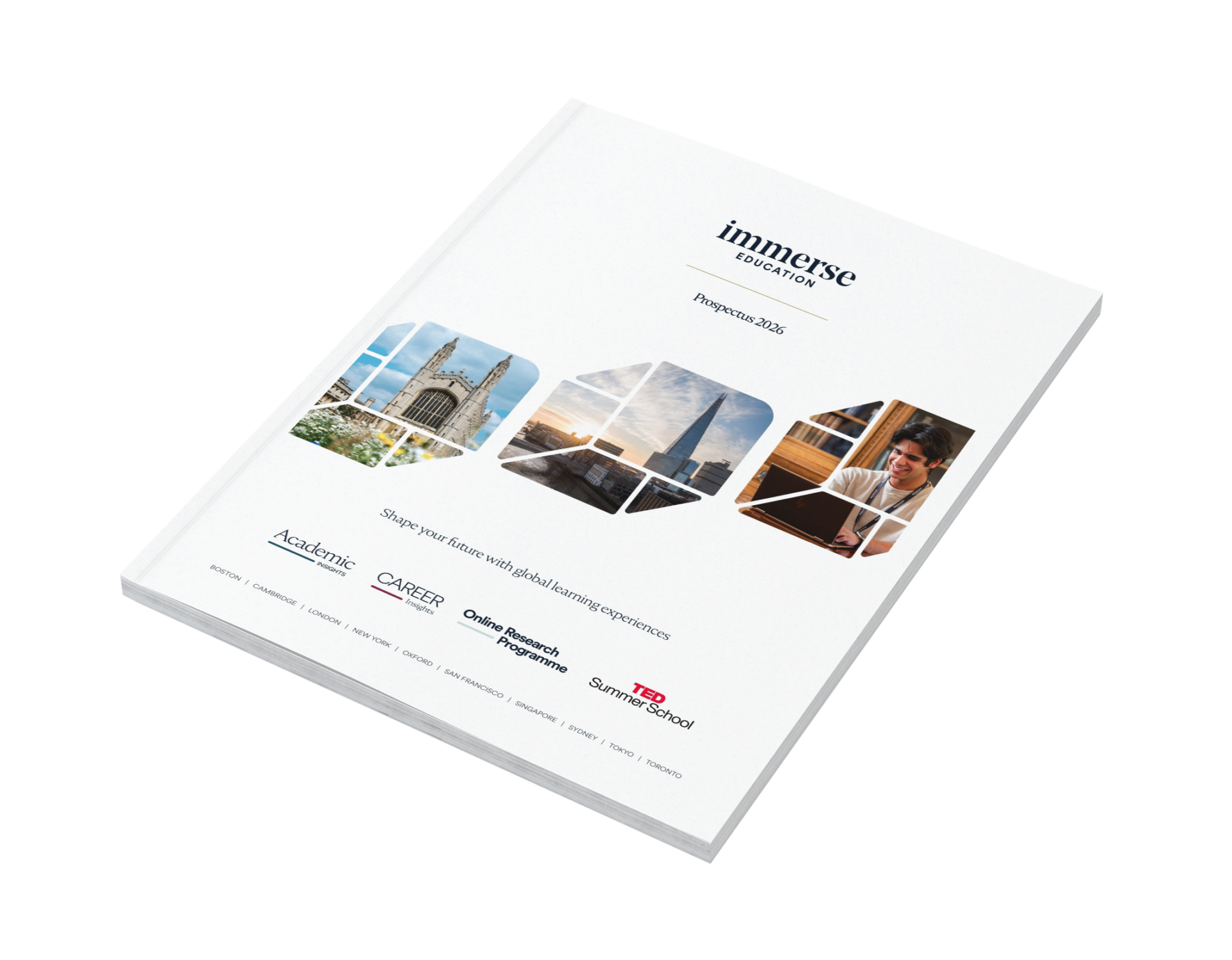
2. Immerse Education’s Medicine Summer School
Location: Cambridge, Oxford, London, Singapore, Tokyo, Toronto, New York, and Sydney
Cost: Varies; summer school scholarship available through our bursary programme
Dates: 2 weeks during the summer
Application Deadline: Multiple cohorts with rolling admissions.
Eligibility: Students worldwide aged 13-18 currently enrolled in middle or high school
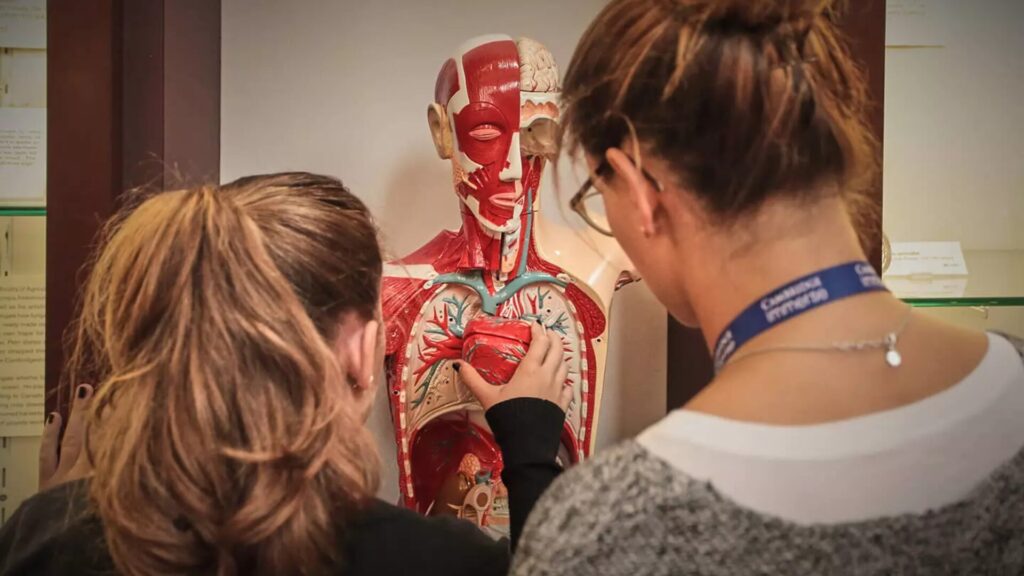
Immerse Education’s Medicine Summer School is a two-week, in-person programme that introduces you to university-level medical science through small-group teaching and case-based learning.
You explore core topics such as anatomy, physiology, and clinical reasoning while learning how doctors apply scientific knowledge to diagnose and treat patients. Classes emphasise discussion, critical thinking, and clear communication, mirroring the structure of undergraduate medical education. By the end of the programme, you will complete an academic project, receive detailed feedback, and gain a clearer understanding of what studying medicine at a top university involves.
Why it stands out: It connects you with medical academics and clinicians, helping you understand how medicine is studied and practiced at leading universities.
3. Stevens Institute of Technology’s Summer Residential Program – Biology: Genetics & Medicine
Location: Stevens Institute of Technology, Hoboken, NJ
Cost: $3,350; need-based scholarships are available
Dates: Session I: July 5-11; Session II: July 12-18
Application Deadline: June 15th
Eligibility: Rising sophomores, juniors, and seniors in high school; open to international students
Stevens Institute of Technology’s Summer Residential Program—Biology: Genetics & Medicine offers a one-week learning experience to high school students. The program allows you to explore a gene editing technology called CRISPR/Cas9.
The technology is applied by scientists engaged in the study and treatment of inherited diseases such as sickle cell disease, haemophilia, and muscular dystrophy, along with the development of effective cancer treatments. You’ll gain hands-on experience through editing an E.coli bacterial gene and learn about the ethical aspects of using CRISPR technology. You’ll also have the chance to explore topics such as gene editing, virtual reality, modeling of the CRISPR system, and bioinformatics to design target sequences.
Why it stands out: You’ll gain hands-on experience with CRISPR/Cas9 gene editing while exploring its applications in treating genetic disorders and cancer.
4. Georgetown University – Medical Academy
Location: Washington, District of Columbia
Cost: $4,120 (residential); $3,490 (commuter) + $50 application fee; limited need-based scholarships are available
Dates: Session I: June 21-27; Session II: July 5-11; Session III: July 12-18
Application Deadline: Rolling admissions with May 15th final deadline; later applications reviewed case by case; registration first-come, first-served
Eligibility: Current 8th-grade through high school seniors; minimum age 15; good academic standing; open to international students
In this program, you explore medicine through anatomy, physiology, radiology, surgery, cancer, emergency care, and biomedical ethics. You participate in hands-on labs involving suturing, orthopedic casting, small-mammal dissection, and a patient simulator.
You also practice taking blood pressure, listening for heart sounds, drawing blood, and examining organs from human body donors. These activities build introductory clinical, observational, procedural, teamwork, and ethical-reasoning skills relevant to pre-medicine. You learn directly from Georgetown medical students, School of Medicine faculty, and MedStar Georgetown University Hospital physicians while discussing medical specialties, medical-school preparation, and the path to becoming a physician.
Why it stands out: It combines broad medical-field exposure with multiple clinical simulations and direct instruction from medical faculty, physicians, and current medical students.
5. Georgetown University – Medical Immersion Academy
Location: Washington, D.C.
Cost: $9,540 (residential); $7,610 (commuter) + $50 application fee; scholarships are available
Dates: June 21st – July 10th
Application Deadline: May 15th; rolling consideration thereafter
Eligibility: Current 8th, 9th, 10th, 11th, or 12th-grade students who are at least 15 years old with a minimum 2.0 GPA; open to international students
In the Medical Immersion Academy program, you will study systems like cardiology and immunology to build a strong pre-medicine foundation. You will experience a snapshot of the first-year medical school curriculum while learning directly from Georgetown University School of Medicine faculty.
You will engage in hands-on clinical laboratories to practice fundamental skills such as airway management, suturing, and splinting. You will also complete a research-based capstone poster project focusing on a specific medical theme. By interacting with leading practitioners, you will gain a realistic understanding of specialties like emergency medicine, oncology, and pediatrics. This rigorous clinical exposure provides the practical tools and insights necessary to successfully navigate your future medical education.
Why it stands out: It provides rare, accelerated exposure to a first-year medical school curriculum and direct mentorship from university clinical faculty before students even enter undergraduate studies.
6. Georgetown University – Biotechnology for Science & Health Academy
Location: Washington, D.C.
Cost: $6,800 (residential); $5,530 (commuter) + $50 non-refundable application fee, waived for early-bird applications; limited need-based tuition scholarships are available
Dates: June 28th – July 10th
Application Deadline: Early bird: January 31st; final deadline: May 15th; later applications reviewed case-by-case; seats allocated first-come, first-served
Eligibility: Current 8th, 9th, 10th, 11th, or 12th grader during the academic year before the program; at least 15 years old by the check-in date; good academic standing with at least a 2.0 GPA; open to international students
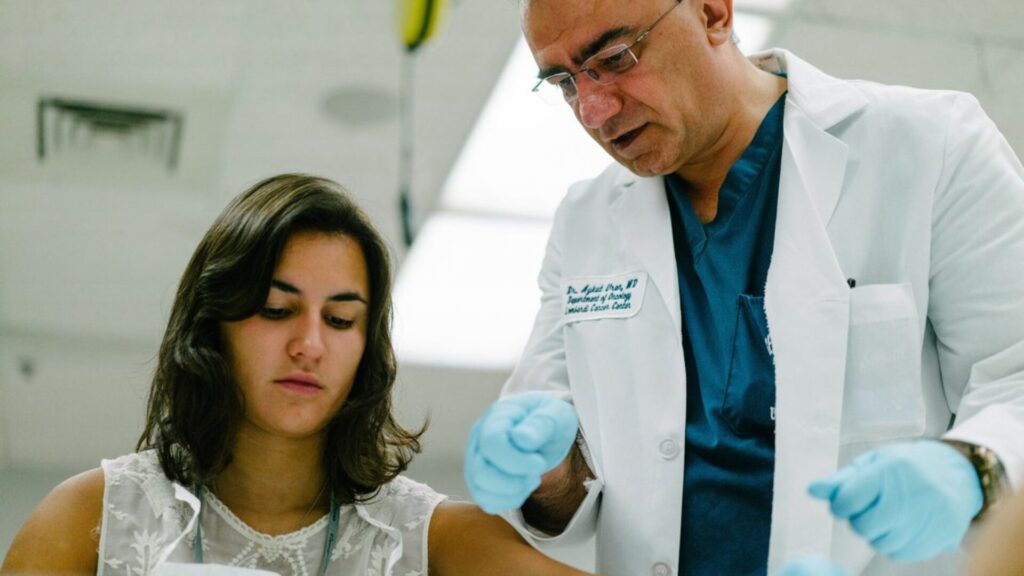
In this program, you explore how laboratory science underpins modern medicine across two weeks of lectures, hands-on lab work, group discussions, and off-site visits in Washington, D.C. You clone a gene and analyze the resulting product, purify proteins, and examine how DNA and protein diagnostics are used in modern healthcare.
You also practice basic laboratory safety, advanced DNA purification, enzyme biochemistry, bioinformatics, and forensic applications, building the bench skills and scientific reasoning that pre-medical study demands. You work on a capstone project in the evenings and meet scientists who discuss their career paths and current work. You finish with a Certificate of Participation.
Why it stands out: It pairs Georgetown laboratory instruction with visits to Washington, D.C. research institutes, companies, or laboratories where working scientists discuss their careers.
7. Wake Forest University – Medicine Institute
Location: Winston-Salem, North Carolina
Cost: $3,500 + $60 application fee
Dates: July 5-10; July 19-24
Application Deadline: Rolling until filled
Eligibility: Current grades 9-12; strong academic standing; fluent English; open to international students
In this pre-med course, you explore pre-medicine through clinical instruction, simulations, laboratory work, and visits to Wake Forest healthcare facilities. You practice taking blood pressure, listening to the heart and lungs, interviewing standardized patients, suturing, and conducting ultrasound examinations.
You tour the Wake Forest School of Medicine and Atrium Health Wake Forest Baptist Medical Center, including exposure to the emergency department and cardiac catheterization laboratory. Sessions covering internal medicine, cardiology, pulmonology, neurology, cancer care, surgery, and ultrasound help you connect clinical specialties with patient assessment and medical technology. By working with medical students and professionals, you build foundational clinical reasoning, communication, procedural awareness, and a clearer understanding of medical education and careers.
Why it stands out: It combines practical clinical-skills training and simulation laboratories with direct exposure to a medical school and academic medical center.
8. Wake Forest University – Women’s Health Institute
Location: Winston-Salem, NC
Cost: $3,500 + $60 application fee; need-based scholarships are available
Dates: June 7-12
Application Deadline: Rolling basis until all programs are filled
Eligibility: Current 9th – 12th grade students; good academic standing; no school suspensions; fluent in English; open to international students
In this pre-med course, you will explore the diverse medical and surgical fields comprising women’s healthcare. Throughout the week, you will engage in clinical simulations including surgical techniques, ultrasound imaging, and birthing scenarios. You will conduct on-site visits to working medical facilities, including the Labor and Delivery wards and the Neonatal Intensive Care Unit.
Additionally, you will learn alongside medical students and healthcare professionals while covering clinical topics like gynecology, obstetrics, minimally invasive surgery, and gynecologic oncology. This hands-on program provides direct exposure to various healthcare pathways by allowing you to interview patients and practice technical procedures in specialized simulation labs.
Why it stands out: It provides early, hands-on exposure to specialized hospital units like the NICU and Labor and Delivery wards, bridging the gap between classroom science and real-world medical practice.
9. Tufts University School of Medicine – Tufts Pre-College Mini Med School
Location: Medford and Boston, Massachusetts
Cost: Commuter $3,625 – $5,425 and residential $4,650–$6,950 depending on sessions; limited need-based financial aid is available for U.S. students only
Dates: Session 1: June 22-26; Session 2: July 5-17; Session 3: July 19-24
Application Deadline: May 1st; rolling admissions
Eligibility: Students entering grades 11-12 or a Spring high school graduate; one year of high school biology; age 16 by the program start date; evidence of English proficiency if English is not your primary language; open to international students
As one of the more clinically immersive pre-med courses for high school students, this course has you study medical sciences alongside faculty and medical students from Tufts University School of Medicine. You attend lectures and career seminars led by physicians, dentists, veterinarians, and physician assistants, then work through purpose-built patient case studies in small groups guided by a medical student teaching assistant.
You practice clinical skills including suturing, taking vital signs, and scrubbing in at the Tufts Clinical Simulation Center, and tour the medical campus anatomy labs. A multi-day diagnostic lab, The Tragic Case of Stan, has you run clinical-style tests on a fictional patient’s bacterial infection and then select a treatment. You finish by building a capstone project on a clinical skill or health topic.
Why it stands out: It places high school students inside a working medical school’s own Clinical Simulation Center and anatomy labs, taught by Tufts medical students and Department of Medical Education faculty.
10. Boston University – Academic Immersion: Introduction to Medicine
Location: Boston, Massachusetts
Cost: $5,640 +$75 application fee, $75 service fee, and $2,160 residential housing/dining or $276 commuter lunch
Dates: Residential: July 19th – August 7th; commuter: July 20th – August 7th
Application Deadline: May 14th, followed by rolling admissions till May 29th
Eligibility: Students entering junior or senior year of high school in fall; open to international students
In this course, you study anatomy and physiology, infectious diseases, and contemporary medical issues through intensive premedical seminars. You practice physical examinations and vital-sign measurement in simulation labs, learn suturing and surgical knots, investigate anatomy, and examine radiology imaging.
During the final two weeks, you complete systems-physiology laboratory work and present your findings to peers and members of the Boston University community. These experiences help you connect scientific concepts with clinical workflows while developing observation, laboratory, communication, and evidence-presentation skills. Faculty and graduate students from Boston University lead the activities, while the three-week residential or commuter format provides focused exposure to medical study and career possibilities.
Why it stands out: It pairs premedical science seminars with simulation, surgical-skills practice, laboratory investigation, radiology exposure, and a final scientific presentation.
11. University of Connecticut – Pre-Med: Explore the Medical Field
Location: Storrs, CT
Cost: $2,350 (residential); $1,200 (non-residential) + $250 course fee and $50 application fee; need-based scholarships are available
Dates: July 5-11; July 12-18; July 19-25
Application Deadline: Priority deadline: June 11th; rolling thereafter
Eligibility: Current high school freshmen, sophomores, or juniors; ages 14-17; minimum 2.0 GPA; completed at least one year of high school; open to international students
In this course, you will gain comprehensive insight into a physician’s career by engaging directly with healthcare professionals and medical faculty. Throughout this immersive week, you will practice basic medical skills, explore common physical examinations, and observe a dynamic demonstration of a mock “code” response. You will also delve into specialized clinical topics, reviewing foundational concepts in fields like cardiology and gastroenterology.
By taking daily supervised trips to the state-of-the-art UConn Health Center, you will directly explore real-world medical environments alongside practicing physicians. Additionally, you will receive personalized guidance from university pre-med academic advising staff to help navigate your future healthcare training.
Why it stands out: It integrates practical clinical exploration with daily visits to the UConn Health Center and direct mentorship from specialized medical school faculty and pre-med advisors.
12. University of Connecticut – AH 2001: Medical Terminology
Location: Storrs, Connecticut (first week delivered online)
Cost: $3,663 (UConn course fees $1,563 plus program fees $2,100) + $50 non-refundable application fee; $100 early-bird discount for applications submitted by April 1st; need-based scholarships and discounts are available to applicants residing in the United States
Dates: June 15-27
Application Deadline: Priority deadline: June 11th; later applications reviewed case-by-case based on course availability
Eligibility: Current high school freshmen, sophomores, or juniors during the previous academic year; aged 14-17 at the time of the program; at least one year of high school completed before the start; good academic standing with a minimum 2.0 GPA; high school biology with a grade of C or higher; open to international students
One of the few credit-bearing pre-med courses for high school students, AH 2001: Medical Terminology has you build a working clinical vocabulary that underpins pre-medical study, learning to break unfamiliar terms into roots, prefixes, and suffixes. You work systematically through the body systems, naming organs, describing their locations and functions, and connecting terminology to disease processes, symptoms, diagnoses, and treatments.
Lectures, hands-on activities with anatomical models and manikins, and real-world medical scenarios push you to use written and spoken abbreviations the way healthcare professionals do. You earn two University of Connecticut credits in a course taught by a UConn Early College Experience allied health instructor who is also a licensed EMT and EMT instructor.
Why it stands out: It is one of the few UConn Pre-College Summer offerings that is credit-bearing, so you leave with two University of Connecticut credits rather than a non-credit summer experience.
13. Boston University – Summer Challenge: Chemistry of Medicine
Location: Boston, Massachusetts
Cost: $3,730 + $75 application fee and$75 service fee;$1,440 residential housing/dining or $184 commuter lunch; limited need-based financial aid is available
Dates: Session 1: residential June 14-26; commuter June 15-26; Session 2: residential July 5-17; commuter July 6-17; Session 3: residential July 19-31; commuter July 20-31
Application Deadline: May 15th
Eligibility: Students entering sophomore, junior, or senior year of high school in fall; college-preparatory curriculum; age 14 by program start for residential participation; open to international students
If you’re weighing your options among pre-med courses for high school students, the Summer Challenge: Chemistry of Medicine program has you explore how chemistry, biology, and pharmacology combine to explain how medicines work and how new drugs are developed. You study mechanisms of action, examine biologically active compounds, and use interactive exercises to connect molecular structure with drug effects.
You investigate how chemists modify molecules to improve effectiveness, reduce side effects, and enhance safety. Real-world medicine-development examples help you build foundational medicinal-chemistry reasoning, scientific analysis, and communication skills relevant to premedical study. The two-week, noncredit seminar includes small classes, a final presentation, and a second seminar selected from Boston University’s Summer Challenge offerings.
Why it stands out: It connects medicinal chemistry with practical questions about drug action, molecular design, treatment effectiveness, side effects, and pharmaceutical safety.
14. Stevens Institute of Technology – Biomedical Engineering: Where Medicine Meets Innovation
Location: Hoboken, NJ
Cost: $3,350; need-based scholarships are available
Dates: Session I: July 5-11; Session II: July 12-18
Application Deadline: June 15th
Eligibility: Rising 10th – 12th grade students; open to international students
In the Biomedical Engineering: Where Medicine Meets Innovation program, you will explore the intersection of technology, biology, and healthcare to develop next-generation medical solutions. Over the course of this one-week residential experience, you will discover various career options within the biomedical field by networking directly with industry professionals.
You will gain practical experience by using real medical devices and learning how to analyze physiological data during specialized, hands-on laboratory sessions. In addition, you will apply core problem-solving techniques from engineering to biological systems, understanding how innovations like implantable devices and 3-D printed organs are created. Finally, you will investigate how these technical advances translate into better diagnostic tools, treatments, and recovery methods for patients across the healthcare spectrum.
Why it stands out: It allows high school students to directly use medical devices and perform physiological data analysis, providing rare, practical insight into how engineering principles actively improve modern healthcare.
15. Stevens Institute of Technology – Research Methods in Biomedical Engineering
Location: Hoboken, New Jersey
Cost: $4,950; limited need-based scholarships are available
Dates: July 19-31
Application Deadline: June 15th; June 1st for international applicants
Eligibility: Rising high school sophomores, juniors, or seniors; full English proficiency in listening, speaking, writing, and reading; open to international students
In the Research Methods in Biomedical Engineering program, you spend two weeks on the Hoboken campus learning how biomedical research is designed, conducted, and interpreted in healthcare-related fields. You formulate research questions, design experiments, and record physiological signals from human subjects using electromyography (EMG), electrooculography (EOG), and electroencephalography (EEG).
You then identify, design, and run your own experiment, processing the raw signals into meaningful results with MATLAB and Excel. You also learn best practices for conducting human-subject research and the ethical groundwork behind clinical and pre-medical study. You leave with practical skills across the full research workflow, from experimental design through data acquisition and analysis.
Why it stands out: It moves you from learning EMG, EOG, and EEG acquisition techniques to designing and running your own human-subject experiment within a single two-week course.
Frequently asked questions: Pre-med courses for high school students
Are pre-med courses for high school students open to international students?
Most are, including Stevens Institute’s various programs, Georgetown’s Medical Academy and Medical Immersion Academy, and Tufts Pre-College Mini Med School. UConn’s Pre-Med and Medical Terminology courses are also open to international students. Immerse Education’s Medicine Summer School is similarly open globally to students aged 13 to 18 across seven locations.
How much do pre-med courses cost?
Costs vary considerably by length and institution. UConn’s Pre-Med course costs $2,350 for residential students, while Stevens Institute’s various one-week programs cost $3,350 each. Longer or more intensive programs cost more: Georgetown’s Medical Immersion Academy costs $9,540 for residential students, and Boston University’s Academic Immersion costs $5,640 plus additional fees. Financial aid is available for most tuition-based programs listed here.
What is the difference between a clinical skills program and a laboratory research program?
Clinical skills programs, like Georgetown’s Medical Academy or Wake Forest’s Medicine Institute, have you practice hands-on procedures like suturing, taking vital signs, and using patient simulators. Laboratory research programs, like Stevens Institute’s Biology: Genetics & Medicine or Research Methods in Biomedical Engineering, instead focus on designing experiments and analyzing data using techniques like CRISPR gene editing or EMG signal processing. If you’re drawn to direct patient-facing skills, a clinical program offers that hands-on practice; if you want research experience, a lab-focused program provides deeper technical engagement.
Do pre-med courses award college credit?
Very few do. The University of Connecticut’s AH 2001 Medical Terminology course is one of the only clearly credit-bearing options in this list, awarding two real UConn credits. Most others, including Georgetown’s Medical Academy and Wake Forest’s Medicine Institute, provide a certificate of participation rather than transferable credit. If credit matters to you, UConn’s offering stands out as the clearest option among those listed here.
How selective are pre-med courses for high school students?
Selectivity varies by program length and prestige rather than an extremely competitive review process. Most programs in this list use rolling admissions with GPA minimums ranging from 2.0 to 3.0, rather than a highly selective acceptance rate. Georgetown’s various academies and Stevens Institute’s residential programs require good academic standing but don’t publish specific acceptance rates, making eligibility criteria more important than competitive selection.
Is Immerse Education a good option for exploring medicine before college?
Immerse Education’s Medicine Summer School is a strong choice if you want small-group, case-based learning across seven global locations, including London, Tokyo, and Sydney, without needing US residency. The two week program covers anatomy, physiology, and clinical reasoning through discussion-based teaching that mirrors undergraduate medical education. You’ll complete an academic project and receive detailed feedback, giving you a clearer sense of what studying medicine at a top university involves, regardless of where you live.
Your Pre-Med Course Was Just The First Rotation
Choosing among these pre-med courses for high school students gives you a genuine introduction to clinical skills, medical reasoning, and hands-on patient simulation.
Once the course ends, you can turn that early exposure into a clearer sense of your academic and career direction.
The clinical skills, confidence, and scientific reasoning you built become a strong foundation for stronger university applications ahead.
Keep building on what you started with this course by exploring our University Preparation blogs for guidance on your next steps.