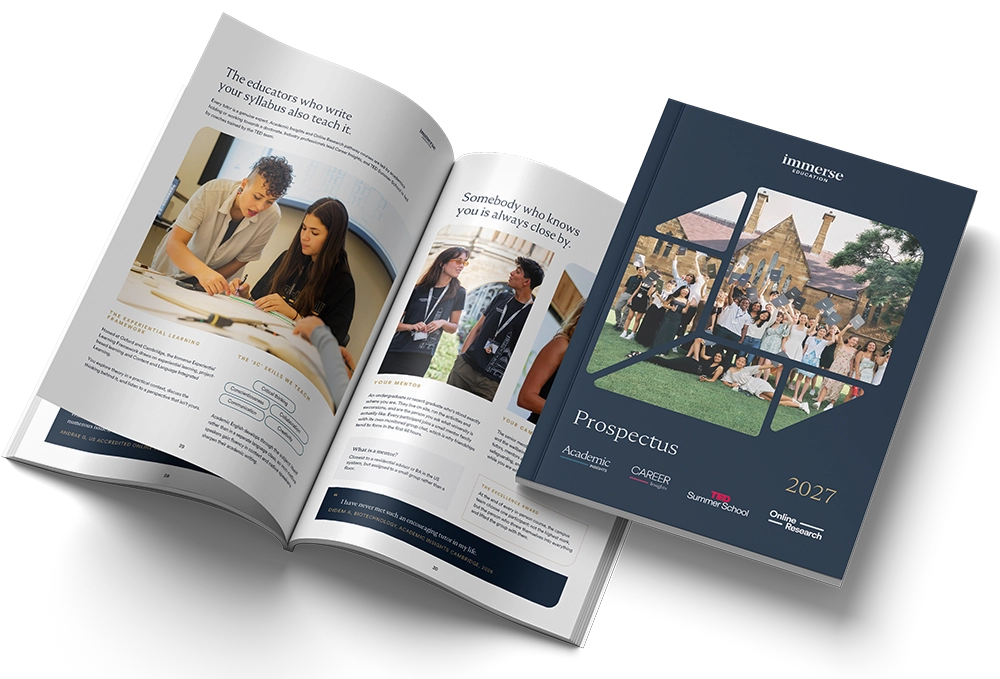
15 Free Summer Internships for High School Students

As a high school student thinking about your future, the idea of gaining real-world experience can feel both exciting and hard to access. You may want to explore potential careers, build practical skills, or strengthen your college applications, but many internships seem expensive, exclusive, or out of reach. Free summer internships offer a rare chance to learn, contribute, and grow without financial barriers.
Imagine spending your summer working alongside professionals, contributing to real projects, conducting research, supporting community initiatives, or assisting in labs, offices, or nonprofits. Instead of just learning about careers in theory, you’ll experience what day-to-day work actually looks like. Through mentorship, hands-on tasks, and structured programs, free internships allow you to build confidence, responsibility, and clarity about your interests.
How do you choose the right free summer internships for high school students?
With so many listings online, it can be difficult to tell which internships are truly worthwhile. Some roles offer little more than basic tasks, while others provide meaningful mentorship, skill development, and structured learning. That’s why careful guidance matters, so you can identify internships that are genuinely educational, aligned with your interests, and respected by colleges and institutions.
Across fields like STEM, business, medicine, public policy, arts, and social impact, universities, research institutions, and organizations now offer free summer internships designed specifically for high school students. You may gain experience through research projects, professional shadowing, workshops, group collaborations, and one-on-one mentorship. These programs range from introductory exposure opportunities to selective, competitive internships that help you build a strong academic and professional profile.
No matter your background or future goals, these experiences help you answer important questions: What fields excite you most? What type of work environment suits you best? To help you get started, we’ve curated a list of 15 free summer internships for high school students. They’ve been selected for their accessibility, educational value, and long-term impact.
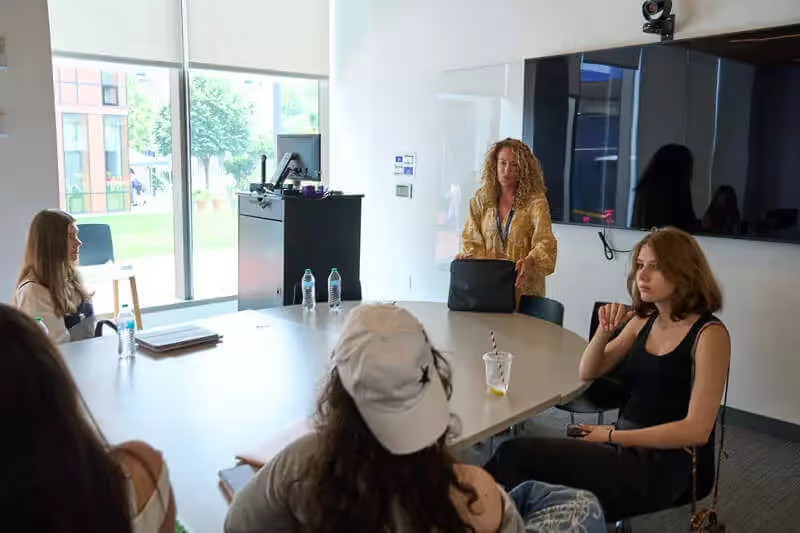



15 Free Summer Internships for High School Students
1. Stanford Institutes of Medicine Summer Research (SIMR) Program
Location: Stanford School of Medicine, Stanford, CA
Cost: All students receive a minimum stipend of $500; students from underrepresented groups will receive at least $1,500
Dates: June 8th to July 30th
Application Deadline: February 21st
Eligibility: High school juniors and seniors at least 16 years old, who are U.S. citizens or permanent residents
At SIMR, one of the most competitive free summer internships for high school students, you spend eight weeks working directly in a Stanford School of Medicine research lab. You learn how biomedical scientists design experiments, analyse data, and translate findings into a clinical context while working alongside graduate students and postdocs at a major academic medical centre.
Depending on your lab placement, you might explore stem cell biology, cancer genetics, immunology, neurobiology, or bioengineering approaches to medicine. You also attend weekly faculty talks and professional development sessions that introduce you to pathways in academic medicine and translational research. By participating in SIMR, you gain experience with real-world lab techniques and develop a clearer understanding of what long-term research training in medicine entails.
Why it stands out: Its deep connections to Silicon Valley make it easier to transition to interdisciplinary courses such as biomedical entrepreneurship or AI-driven health research.
2. Immerse Education’s Career Insights Summer School
Location: Cambridge, London, New York, San Francisco, Singapore, Sydney, and Tokyo
Cost: Varies; summer school scholarship available through their bursary programme
Application Deadline: Multiple summer cohorts with rolling admissions
Program Dates: 2 weeks during the summer
Eligibility: High school students around the world aged 15-18
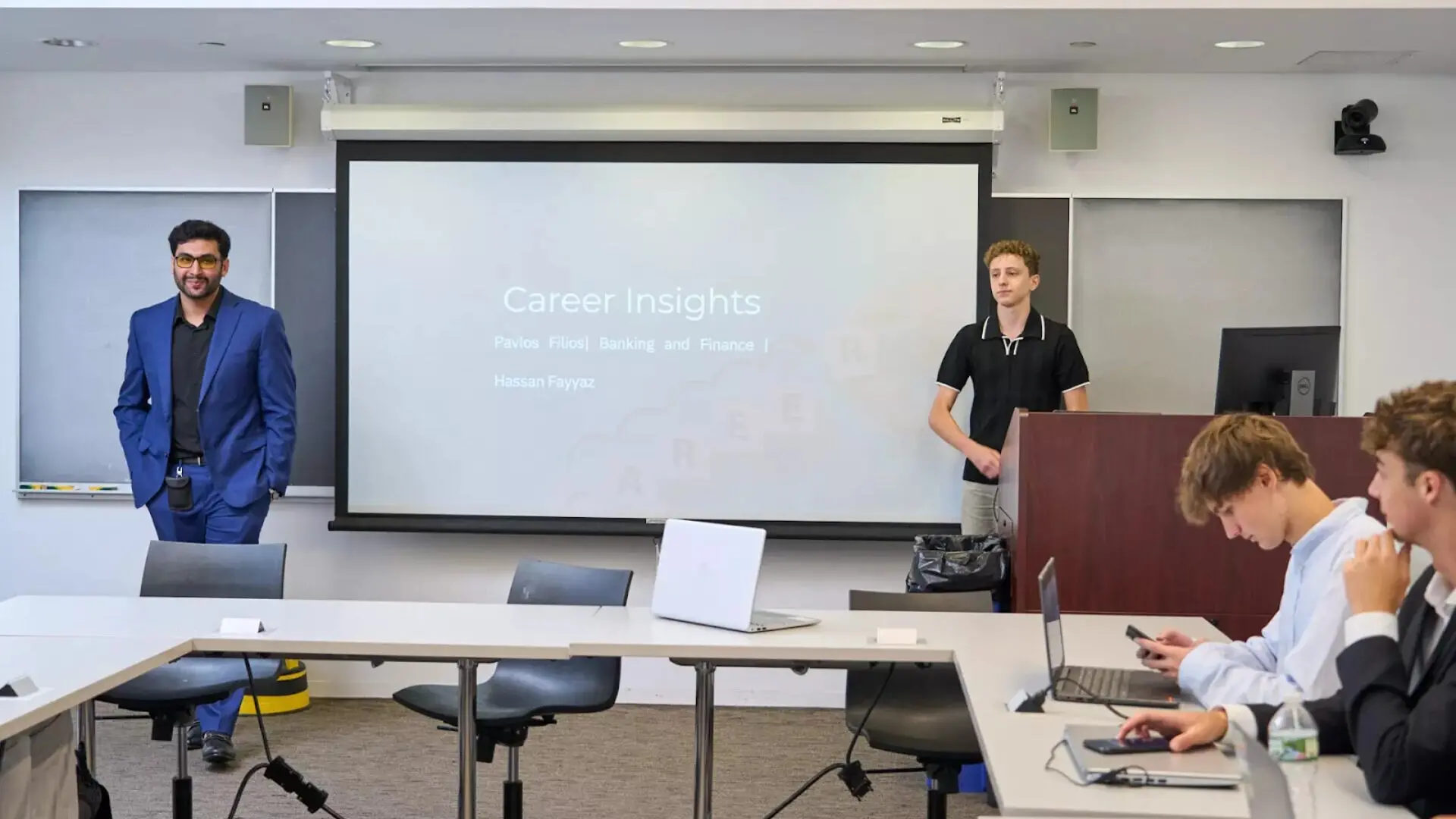
The Career Insights Programme allows high school students to explore professional pathways through real-world, industry-led experiences in global cities. The programme places you in small cohorts and connects you with industry professionals across a range of sectors, offering insight into how careers operate beyond the classroom. You’ll take part in interactive workshops, applied projects, and guided sessions led by experts working in their fields.
The programme includes practical, career-focused experiences such as workplace visits, project briefs, and hands-on tasks designed to reflect real professional environments. You can explore a range of career pathways, including medicine, engineering, law, business, journalism, fashion, and more, gaining exposure to multiple industries. By the programme’s end, you will complete a professional-style project and receive personalised feedback and a certificate of completion. You can find more details about the application here!
Why it stands out: You’ll be taught by top faculty, work on an independent project, and live on campus, giving you a complete experience of future university life.
3. Summer Internship Program – National Heart, Lung, and Blood Institute
Location: Bethesda, Maryland, and Framingham, MA
Cost: None. A stipend of $5,400 is paid in two installments
Dates: May – August
Application Deadline: February 19th
Eligibility: Open to U.S. high school students
During this internship, you will work in a lab at the National Institutes of Health (NIH) and help with biology research that has to do with the heart, lungs, or blood. You work closely with scientists who teach you about cutting-edge biomedical research methods, how to interpret data, and how to design experiments. You can practice effectively and professionally communicating scientific concepts by attending seminars and poster sessions.
Additionally, you receive mentorship that explains the structure of research careers at the NIH and graduate pathways. Through regular lab exercises, you become acquainted with the speed and accuracy needed in biomedical science and discover how big research centers tackle important health issues.
Why it stands out: You’ll work alongside federally funded researchers, gaining firsthand experience with biomedical experiments and public-health–driven science.
4. Magee-Womens Research Institute: High School Summer Internship Program
Location: MWRI or Magee-Womens Hospital, Pittsburgh, PA
Cost: None, $1,800 stipend
Dates: June 15th – July 24th
Application Deadline: February 9th
Eligibility: Current high school sophomores or juniors; over 16 years old by program start; have primary residence in the local southwest Pennsylvania region (Counties: Greene, Fayette, Somerset, Westmoreland, Allegheny, Washington, Beaver, Lawrence, Mercer, Butler, Armstrong, Indiana, and Cambria)
Through this program, you get acquainted with studies primarily about female health, reproductive biology, and fetal development. You follow the steps of researchers, get involved in lab activities, and see how groups study the biological processes that influence maternal and infant health. Seminars and discussions help you better understand by showing how research results affect public health measures and clinical practices.
At the end of the program, you will have a deeper understanding of how biomedical research affects patient care in a direct way. You also gain experience with scientific reading and data interpretation while learning from mentors committed to advancing women’s health research.
Why it stands out: You’ll work on women’s health research projects, strengthening your understanding of fields like reproductive biology and maternal-fetal medicine.
5. UT Southwestern Medical Center – High School Student Internship
Location: Virtual
Cost: None
Dates: 2 weeks in June
Application Deadline: February 2nd
Eligibility: Rising 10th, 11th, and 12th-grade high school students. Must be legal residents of the United States
At UT Southwestern, you join a research team working in fields such as genetics, neuroscience, biochemistry, or clinical research. You gain hands-on experience with laboratory protocols while learning how large academic medical centres conduct basic and translational research. Daily interactions with scientists and trainees help you understand how experiments are planned, executed, and refined.
You also attend seminars that introduce you to medical careers and the academic environment of a major research institution. You gain real-world research skills and a better understanding of how scientific discoveries are used in medicine through this internship.
Why it stands out: It offers a window into mental-health careers, helping you understand how clinicians and researchers study behavior, diagnosis, and treatment.
6. Indiana University Simon Cancer Future Scientist Program
Location: IU School of Medicine’s downtown Indianapolis campus, IN
Cost: None
Dates: June 8th – July 31st
Application Deadline: January 31st
Eligibility: Open to High school juniors from Marion County public schools
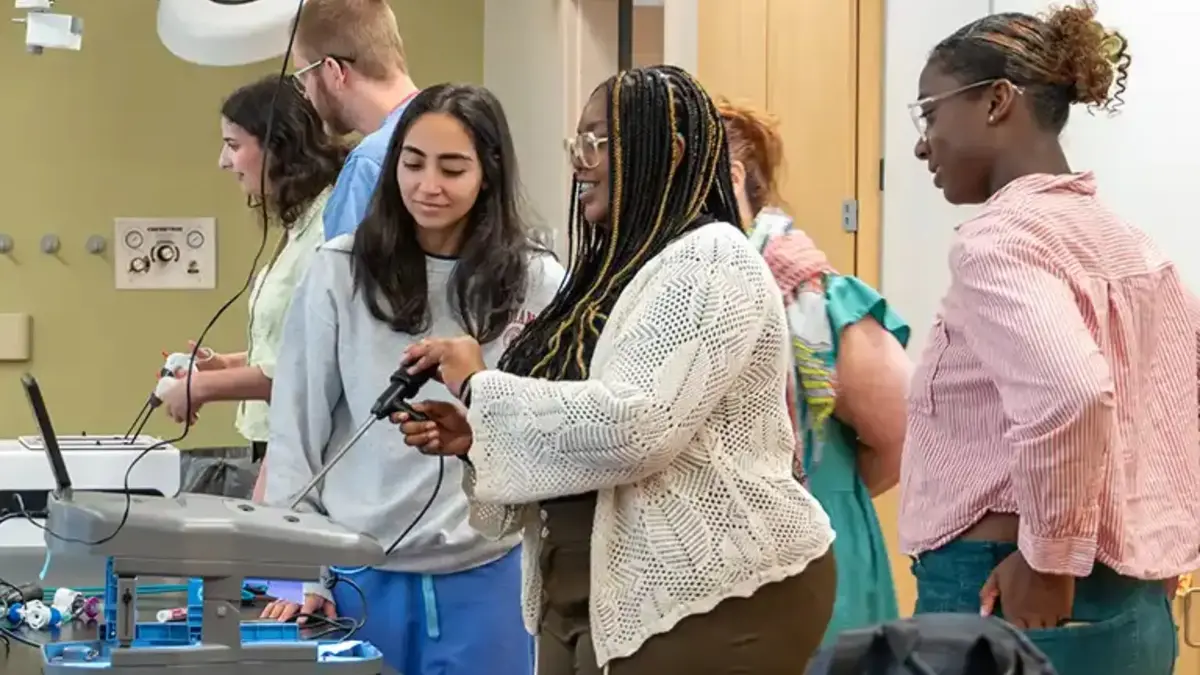
This program places you within cancer research labs where you investigate cellular mechanisms, tumour biology, or translational approaches to treatment. You collaborate with IU researchers who teach you basic methods such as molecular analysis, cell culture, and microscopy. You will learn about the scientific and clinical aspects of cancer research through the program’s seminars on oncology, ethics, and career exploration.
Your mentors help you interpret scientific literature and understand how specific experiments support broader therapeutic objectives. This experience helps you better grasp the breadth of training needed for jobs in biomedical science and cancer research.
Why it stands out: You’ll learn how cancer research is conducted in modern labs, giving you insight into molecular biology, oncology, and data analysis.
7. Child Health Research Internship – Children’s Hospital Colorado
Location: Anschutz Medical Campus, Aurora, CO
Cost: None, $4,400 stipend
Dates: June 1st – July 31st
Application Deadline: February 1st
Eligibility: Colorado high school seniors over 18
You join research teams in this program that focus on pediatric health issues, such as population health, developmental science, oncology, and respiratory medicine. You get practical experience with basic lab procedures or data analysis, and you learn how clinicians and researchers design studies involving children and families. Mentors help you comprehend how research findings influence clinical practice and guide you through scientific reading.
Additionally, you witness the cooperative process that underpins pediatric research, which includes multidisciplinary team meetings and ethics discussions. You will learn more about how clinical research works in a hospital and how pediatric medicine is different from other types of biomedical research by taking part.
Why it stands out: It lets you observe how clinical research and pediatric care intersect, helping you understand how studies translate into patient outcomes.
8. Mayo Clinic’s Science Program for the Advancement of Research Knowledge (SPARK)
Location: Mayo Clinic, Jacksonville, FL
Cost: Free
Dates: June 2nd – December 3rd
Application Deadline: December 31st
Eligibility: High school juniors and seniors enrolled in Duval or St. Johns counties in Florida with a minimum 3.5 unweighted GPA
Through SPARK, you are paired with a research mentor from the Mayo Clinic who helps you with a summer biomedical science project. You participate in conversations about data analysis and scientific communication, acquire experience with laboratory procedures, and learn how to design experiments. You are introduced to healthcare pathways, from laboratory science to clinical practice, through weekly educational sessions.
Additionally, you create a research poster, which gives you firsthand experience in presenting scientific findings. You can better grasp the standards for academic research and the degree of detail needed in professional scientific settings by using this framework.
Why it stands out: It pairs you with leading researchers, allowing you to participate in authentic biomedical investigations rarely accessible to high school students.
9. Broad Summer Scholars Program (BSSP)
Location: Broad Institute of MIT and Harvard, Cambridge, MA
Cost: $3,600 stipend
Dates: June 29th – August 7th
Application Deadline: January 21st
Eligibility: Rising high school seniors attending schools in Massachusetts within commuting distance of the Broad Institute
At the Broad Institute, you join a computational or experimental biology project within a genomics research environment. You’ll use high-throughput data, molecular tools, and computational methods to study complex biological systems. Coding skills, data interpretation, and research communication are among the things the workshops teach, while mentors assist you with daily lab workflows.
Additionally, the program features talks from renowned scientists that introduce innovative strategies for human health and disease. Through these experiences, you gain insight into how large-scale biomedical research is conducted and how genomics influences modern medicine.
Why it stands out: Participating in state-of-the-art genomics projects will provide you with access to lab technologies, computational tools, and mentorship from top scientists.
10. Montefiore Einstein High School Research Program in Cancer (BEYOND ALBERT)
Location: Albert Einstein College of Medicine / Montefiore Einstein Comprehensive Cancer Center, Bronx, NY
Cost: Free to apply and participate. Participants receive a stipend (e.g., $2,500), a MetroCard for transportation, and often a daily meal voucher
Dates: Full-time, 8-week summer session
Application Deadline: January 12th
Eligibility: High‑school students aged 16 or older, rising juniors or seniors, residing in the Bronx and attending a Bronx high school
You can gain practical experience in cancer biology and related biomedical sciences by participating in biomedical research labs through the BEYOND ALBERT program. Under the guidance of faculty members, you will collaborate with seasoned researchers in lab experiments, data collection, and group projects. To improve scientific literacy, research skills, and long-term academic planning, the program also offers professional development workshops, seminars, and mentorship sessions.
After finishing, you will get a stipend, transportation assistance, meal support, and, if you qualify, college credits through the Lehman College Now Program. You may additionally take part in an academic‑year component: weekly seminars and continued mentoring, further strengthening their preparation for biomedical studies.
Why it stands out: You could build a foundation for pre-med and biomedical research pathways because of the mentorship by Einstein faculty, and by creating research presentations.
11. Fred Hutch Summer High School Internship Program
Location: Fred Hutchinson Cancer Center, Seattle, WA
Cost: Free; students will receive a stipend at the end of the program
Dates: June 22nd – August 14th
Application Deadline: March 13th
Eligibility: High school students entering their senior year. Must reside in Greater Seattle or the surrounding areas
This internship places you in a research group investigating cancer biology, immunotherapy, infectious disease, or computational biology. In addition to learning essential laboratory techniques, you get to see how interdisciplinary teams collaborate to solve large scientific problems. Every week, seminars are held that give you the opportunity to relate your experimental work to broader topics in biomedical research, such as research ethics, patient benefits, and drug discovery.
Furthermore, you receive guidance aimed at deepening your knowledge of scientific vocations and educational pathways. By working in a leading research institute, you gain early exposure to rigorous experimental science and collaborative problem-solving.
Why it stands out: It immerses you in the study of infectious diseases and cancer, teaching you how big research facilities work and assisting you in developing technical skills.
12. Fermilab Program for Research, Innovation, and STEM Mentorship (PRISM)
Location: Fermi National Accelerator Laboratory (Fermilab), Batavia, IL (on-site and off-site work schedule)
Cost: Free; participants are paid $500 per week
Dates: July 13th – August 7th
Application Deadline: January 13th – March 1st
Eligibility: Current high school seniors; U.S. citizens; Illinois high school enrollment; proof of medical insurance
PRISM is a four-week, paid experience within a national laboratory and one of the more specialised free summer internships for high school students focused on STEM research. Through structured themes and mentorship from lab professionals, you explore particle physics, quantum science, engineering design, and artificial intelligence in an authentic research environment.
There will be a combination of experiential learning, expert-led lectures, and tours of Fermilab research facilities. Producing a research abstract, research poster, and final presentation are among the program’s requirements; this gives the experience a clear academic deliverables structure rather than being solely observational. Although PRISM does not offer housing, it does offer transportation support and a schedule that consists of both on-site and off-site activities.
Why it stands out: In collaboration with a national laboratory setting of the U.S. Department of Energy, PRISM offers paid participation along with a themed, multi-area STEM curriculum and formal research-style deliverables (abstract, poster, final presentation).
13. University of Georgia Young Scholars Internship Program (YSP)
Location: University of Georgia – Athens, Griffin, or Tifton campuses (GA)
Cost: Free; paid internship (stipend provided; typically ~30 hours per week working with faculty mentors)
Dates: June 1st – July 7th (five-week program) with a Young Scholars Pre-Collegiate Research Conference immediately following (July 8-10)
Application Deadline: January 23rd
Eligibility: High school students who have completed their sophomore year and are at least 16 years old by the program start; coursework in high school science (with lab) and algebra recommended. Must work and commute daily to the Athens, Griffin, or Tifton campus.
YSP is a five-week, paid research internship where high school students conduct 30 hours per week of hands-on research under the guidance of UGA faculty, graduate students, or research staff in agricultural, food, and environmental sciences. The work-learn part of the internship puts interns in real research settings, like labs, fields, and facilities, where they learn how to do research, collect data, and analyze it while working on projects that are already going on.
Participants also attend workshops and site visits to learn more about careers in science and how businesses operate. The experience ends with a three-day Young Scholars Pre-Collegiate Research Conference, where interns share their results through posters and/or oral presentations. Students learn about college-level research and career options in STEM and agriculture through professional research cycles and by sharing their results with a scientific audience.
Why it stands out: Students get a paid, faculty-mentored research experience that takes place on several campuses. This gives them a chance to really get into scientific inquiry, with workshops and a formal pre-collegiate research conference.
14. Simons Summer Research Program
Location: Stony Brook University, Long Island, New York
Cost: None
Dates: June 29th – August 7th
Application Deadline: February 5th
Eligibility: Open to high school students. Must be US citizens and/or permanent residents.
This program pairs you with faculty mentors at partner universities, where you help with research in biology, neuroscience, chemistry, or a related field. You go to lab meetings, practice experimental methods, and read things that help you understand the scientific basis of your project. The program stresses thinking for yourself and pushes you to come up with and improve your own research questions.
You will finally present your work to other students and faculty, which will help you learn how to communicate formally in science. This structure, which is based on mentorship, teaches you how academic research goes from ideas to results that can be published.
Why it stands out: Its labs are connected to national research centers, and you’ll contribute to cutting-edge computational and applied math projects.
15. Stanford Medical Youth Science Program
Location: Stanford Campus, Northern California, CA
Cost: None
Dates: June 22nd – July 26th
Application Deadline: March 23rd
Eligibility: Open to low-income, first-generation high school juniors from Northern California
SMYSP offers an immersive academic and research experience for students interested in understanding health disparities, community-based research, and clinical science. You take part in hands-on health modules, follow healthcare professionals around, and look into research topics that have to do with medicine and public health.
Faculty and peer mentors help you through workshops on how to think like a scientist, analyze data, and get ready for college. You also complete a capstone project that introduces you to the structure of research inquiry and the challenges of addressing real-world medical issues. By the end of the program, you will have gained insight into how medicine, research, and community engagement intersect.
Why it stands out: It exposes you to both community health issues and medical research, providing a broader view of how medicine operates beyond the hospital.
Join the Immerse Education 2027 Essay Competition
Follow the instructions to write and submit your best essay for a chance to be awarded a 100% scholarship.
From Mentorship to Real-World Confidence
Real confidence develops when learning moves beyond observation and into responsibility. Working alongside professionals shows you how real environments operate, not just how they are described.
You gain perspective on how projects evolve, how feedback is used, and how progress is measured outside the classroom. These moments shape how you think about work, effort, and direction.
By taking part in the free summer internships for high school students featured in this article, you step into environments that value initiative, curiosity, and sustained engagement without financial barriers.
If you want to explore how these experiences connect to future careers and study choices, our Career Exploration blogs offer practical guidance to help you plan with clarity.






Unlock Inspiring Opportunities with the Immerse Education Newsletter
Join our newsletter to stay ahead with exclusive updates, exciting programme highlights, and expert insights from the world of immersive education.
Learn how Immerse can transform your life
An in-depth overview of our university and career preparation programmes
Get a glimpse into the life of an Immerse participant
Find the right programme for you with sample timetables, location showcases, and more