
 Русский (RU)
 Українська (UK)
 Türkçe (TR)
 Italiano (IT)
 Français (FR)
 Português (PT)
 中文 (中国) (ZH)
 Español (ES)
 日本語 (JA)
 ไทย (TH)
 Deutsch (DE)
 Ελληνικά (EL)
 Polski (PL)
 Bahasa Indonesia (ID)
 Nederlands (NL)
 العربية (AR)
 한국어 (KO)

Medicine summer programs in Europe for high school students help you explore the field at a deeper level than regular school courses. As a high school student interested in medicine, you’ve probably imagined what it would be like to study the subject at university. The anatomy labs, hospital environments, research projects, and long conversations about patient care and medical discovery. But medicine is such a vast field that it can be difficult to understand what the experience is really like before you get there.
These programmes provide you with valuable medical experience. Imagine your summer in a landmark European university city, studying human physiology, learning clinical skills from medical professionals, and solving real healthcare challenges along with dedicated peers from around the world. Medicine summer programs in Europe can help you move beyond classroom biology and see how medicine is practised in real life.
What are the medicine summer programs in Europe for high school students?
Europe is a compelling destination for students considering medicine. The continent is home to some of the world’s oldest and most respected universities, internationally recognised teaching hospitals, and leading biomedical research institutions. Whether you’re studying in London, Edinburgh, Stockholm, Milan, or St Andrews, you’ll find yourself in places where medical education and scientific discovery have shaped global healthcare for generations. Beyond academics, living and learning alongside global peers broadens your perspective on how medicine is practised across healthcare systems.
To help you choose, we’ve compiled a list of 15 Medicine Summer Programs in Europe for High School Students, based on their academic rigour, learning opportunities, and meaningful exposure to the world of medicine.
For adjacent opportunities, consider the online medicine program.
Key Takeaways
- Costs range from free, as with the University of Nottingham’s Pathways to Medicine, to £6,850 for the University of St Andrews’ Summer Academic Experience Course.
- Several free programs are restricted to UK state school students, including the University of Nottingham’s Pathways to Medicine and Imperial College London’s Year 12 Work Experience Programme.
- Program length ranges from two days, as with the University of Southampton’s LifeLab Summer School, to a two-year commitment, as with the University of Nottingham’s Pathways to Medicine.
- Several programs include direct clinical skills training, including BioGrad’s Clinical Skills and Medical Research course and the Imperial Global Summer School’s training at St. Mary’s Hospital.
- The Karolinska Institutet’s Summer Research School stands out for its highly selective, research-intensive format, accepting only up to 5 students for hands-on computational biology work.
- Most paid programs welcome international students, while several free UK access programs, including the Sutton Trust Edinburgh Medical School, are restricted to UK state school students.
- Immerse Education’s Medicine Summer School is one of the few options open to students worldwide aged 13 to 18, combining small-group, case-based learning with an academic project and detailed feedback.
15 Medicine Summer Programs in Europe for High School Students
1. King’s College London Pre-University Summer School Medical Science
Location: King’s College London, England
Cost/Stipend: Tuition fee £3,195 + Application fee £65
Acceptance rate/cohort size: Not specified
Dates: July 6-10
Application Deadline: April 10th
Eligibility: 16 or 17-year-old students; Open to students worldwide
The Pre-University Medical Science school at King’s College is a one-week course in which you learn how major body systems function and how they relate to various diseases and health conditions. Sessions cover the endocrine, cardiovascular, and musculoskeletal systems through seminars, workshops, and group discussions.
You will also choose a topic to research independently and gather and evaluate information. Along with this, you will collaborate with other students on a group project and prepare a presentation based on your findings.
Why it stands out: You study human body systems, complete independent research, and present your work in a university-style academic setting.
2. Immerse Education’s Medicine Summer School
Location: London, Oxford, Cambridge
Cost: Varies; summer school scholarship available through our bursary programme
Acceptance rate/cohort size: Selective; an average of 7 participants per class
Program Dates: 2 weeks during the summer
Application Deadline: Multiple cohorts with rolling admissions.
Eligibility: Students worldwide aged 13-18 currently enrolled in middle or high school
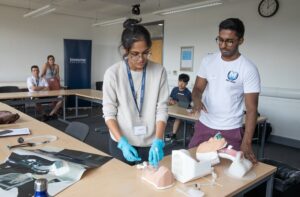
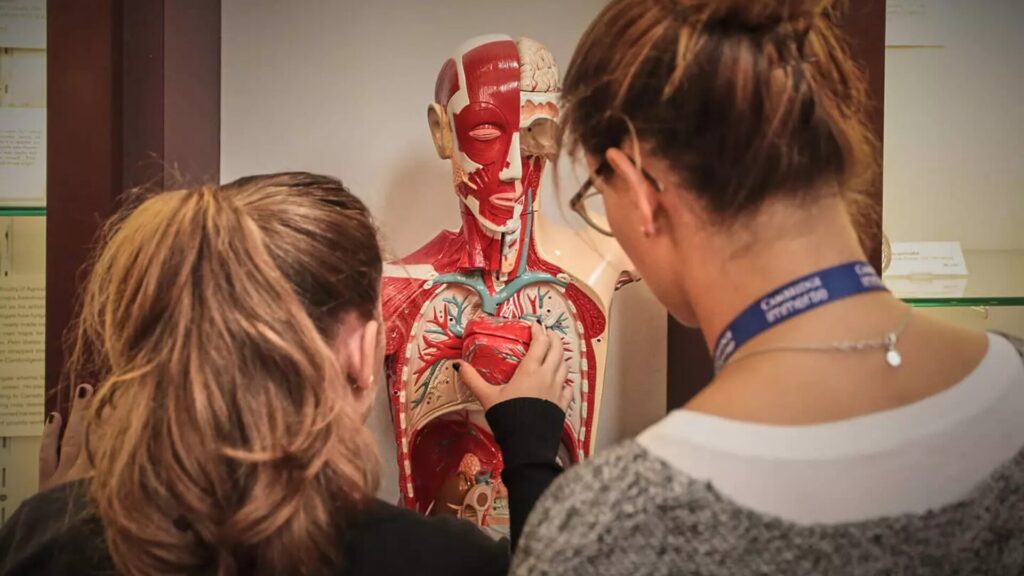
Immerse Education’s Medicine Summer School is a two-week, in-person programme that introduces you to university-level medical science through small-group teaching and case-based learning. You explore core topics such as anatomy, physiology, and clinical reasoning while learning how doctors apply scientific knowledge to diagnose and treat patients.
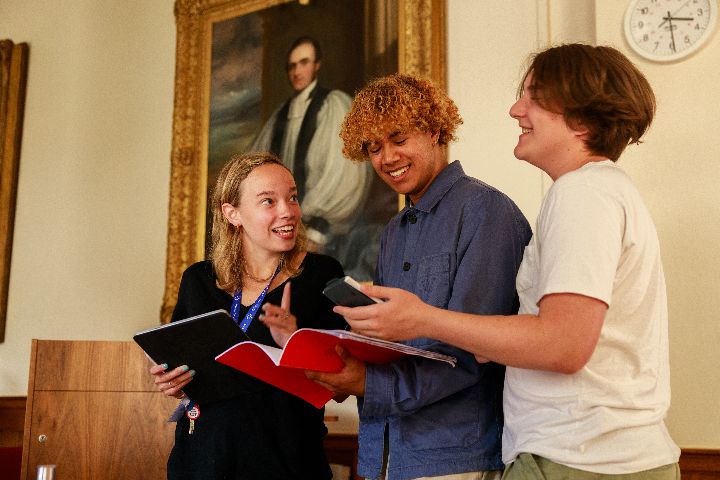
Classes emphasise discussion, critical thinking, and clear communication, mirroring the structure of undergraduate medical education. By the end of the programme, you will complete an academic project, receive detailed feedback, and gain a clearer understanding of what studying medicine at a top university involves.
Why it stands out: It connects you with medical academics and clinicians, helping you understand how medicine is studied and practised at leading universities.
3. University of St Andrews Summer Academic Experience Course (Medicine)
Location: University of St Andrews, St Andrews, Scotland
Cost/Stipend: £6,850
Acceptance rate/cohort size: Not specified
Dates: July 11th – August 1st
Application Deadline: Not specified
Eligibility: If you are between 16 and 18 years old, on arrival, you can submit an application, which includes an academic transcript with strong GCSE grades, A grades, or a minimum 3.2 GPA or equivalent, a positive academic reference on headed paper, and a short personal statement of no more than 100 words. This is designed for students worldwide who have a good level of English
The University of St Andrews Summer Academic Experience Course in Medicine introduces you to both the scientific and practical sides of medicine. You will attend lectures led by faculty from the School of Medicine and participate in lab sessions exploring topics related to anatomy, physiology, and medical science.
You will work through clinical case discussions, interpret data, and learn to approach scientific questions. You get to practice communication skills with qualified GPs and simulated patients, giving you insight into doctor-patient interactions. Alongside your coursework, you’ll complete a poster project and visit the Royal College of Surgeons in Edinburgh.
Why it stands out: You’ll get exposure to clinical communication, complete a research-based poster project, and learn about the UK medical school admissions process.
4. University of Nottingham Pathways to Medicine
Location: University of Nottingham, Nottingham, UK
Cost/Stipend: Free
Acceptance rate/cohort size: Not specified
Dates: Not specified
Application Deadline: November (tentatively)
Eligibility: Students in Year 12; More information here
The Pathways to Medicine programme at the University of Nottingham is a two-year initiative for Year 12 and 13 students interested in pursuing medicine. You’ll attend masterclasses and information sessions on medical careers and the university application process. The programme includes mentoring opportunities, networking events with healthcare professionals, and a work experience placement.
Additionally, you attend a summer residential where you develop skills and gain further exposure to medical careers. Support continues across both years, giving you regular opportunities to build knowledge and connect with others interested in medicine.
Why it stands out: The programme combines long-term mentoring, work experience, and a summer residential over two academic years.
5. Imperial Global Summer School at Imperial College London
Location: London, UK
Cost: Details to be announced soon
Application Deadline: Rolling admissions till seats are filled
Dates: June 29-10; August 3-14
Eligibility: The program is for students aged 16 and 17; open to international students
The Global Summer School is a two-week academic program designed to combine medical learning with collaborative project work. During the first week, you will study at St. Mary’s Hospital, where medical professionals teach clinical skills such as ABCDE assessment, CPR, blood pressure and glucose measurement, and urine analysis. You will also explore key topics in life sciences and genetics while learning how to diagnose common disorders.
In the second week, you will collaborate with students from different academic fields in the Innovation Challenge, a project focused on applying subject knowledge to real-world problems. Guided by industry experts, you will strengthen teamwork, communication, and presentation skills. By the end of the program, you will gain both medical insight and practical experience working on multidisciplinary challenges.
Why it stands out: You will have the opportunity to combine medical knowledge with teamwork and gain exposure to clinicians, entrepreneurs, and STEM innovators.
6. Premed Projects – London Hospital Work Experience
Location: London, UK
Cost/Stipend: £3,535
Acceptance rate/cohort size: Maximum 40 students
Dates: 2-week sessions from July to August
Application Deadline: Rolling
Eligibility: Students ages 14-18 with a strong interest in medicine; Open to students worldwide
The Premed Projects London Hospital Work Experience is a two-week program in London that gives students exposure to healthcare through hospital-based experiences. During the program, you will visit multiple hospitals and learn about different areas of medicine and patient care.
You’ll meet practising doctors, current medical students, and medical school admissions tutors, and hear about different pathways into the profession. You gain insight into how healthcare teams work and how medical environments operate. At the end of the course, you’ll receive a work experience certificate along with a detailed reference for future medical school applications on request.
Why it stands out: You gain exposure to multiple hospitals while interacting with doctors, medical students, and admissions tutors throughout the two-week program.
7. Rosetta Institute Molecular Medicine Workshops: AI-Enhanced Bioinformatics, Developmental Biology
Location: University College London, UK
Cost/Stipend: $3,380 for a bed in a double room and $3,580 for a single room; Non-residential: $2,280
Acceptance rate/cohort size: Not specified
Dates: August 3-15
Application Deadline: Rolling
Eligibility: Students ages 14-18; Open to students worldwide
The Rosetta Institute Molecular Medicine Workshops are residential summer programs in which you study how diseases develop at the molecular and cellular level. You’ll attend lectures and participate in laboratory sessions led by PhD-level instructors and learn about genetics, cell biology, gene regulation, and modern medicine.
Further, you might use AI tools to analyse biological datasets and investigate disease-related genes. You’ll also examine how disruptions in normal biological processes can lead to conditions such as congenital disorders and cancer. The workshop concludes with an independent research project where you investigate a gene or molecular process of your choice and present your findings.
Why it stands out: You explore advanced topics like developmental biology and AI-assisted bioinformatics while completing an original research project.
8. University of Edinburgh Insights into Life Sciences

Location: University of Edinburgh, Edinburgh, UK
Cost/Stipend: £5,250
Acceptance rate/cohort size: Not specified
Dates: June 29-10
Application Deadline: May 19th
Eligibility: High school students ages 16-18; Open to domestic and international students
The Pre-University: Life Sciences programme at the University of Edinburgh is a two-week course for high school students who are considering studying life sciences at university. You explore subjects such as biology, chemistry, genetics, and immunology while learning from science specialists.
Throughout the programme, you will examine how life sciences contribute to solving real-world challenges and how different scientific disciplines work together. You’ll work with scientific data, learn how to evaluate evidence, and design and plan a scientific investigation as part of a group. The programme includes visits to science organizations and opportunities to meet researchers and scientists from the University of Edinburgh.
Why it stands out: You design and carry out a scientific investigation while exploring multiple life science fields and meeting scientists working in research and academia.
9. BioGrad Clinical Skills and Medical Research
Location: BioGrad, Liverpool, UK
Cost/Stipend: £999
Acceptance rate/cohort size: Not specified
Dates: Multiple cohorts
Application Deadline: Rolling
Eligibility: Students ages 16-19; open to UK and international students
The Clinical Skills and Medical Research Course by BioGrad Education is a five-day program where you learn core techniques used in both healthcare and biomedical research. Taught by doctors and scientists, the course takes place in clinical training spaces and industry-standard laboratories.
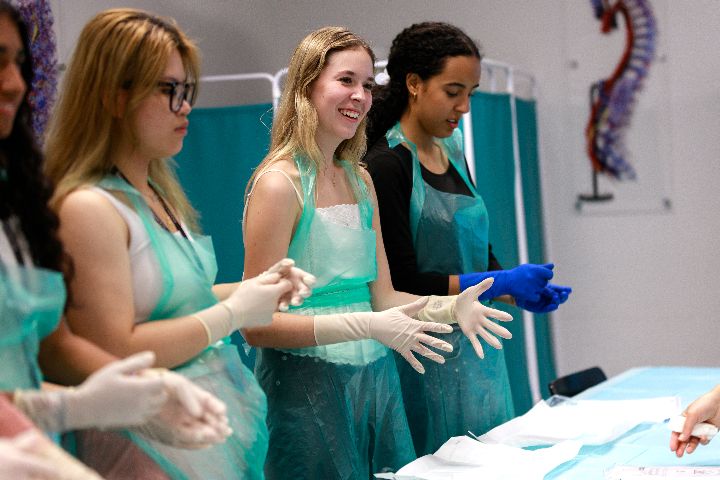
You learn to take patient histories, measure blood pressure, assess vital signs, and perform basic life support for adults, children, and infants. You also learn how electrocardiograms, spirometry, and X-rays are used to evaluate heart and lung conditions. You work with scientific equipment in labs to prepare solutions and carry out experiments. You also gain experience with techniques such as ELISA testing, Gram staining, and blood typing.
Why it stands out: You get both clinical and laboratory skills in a single program, with experience using equipment and techniques commonly found in healthcare and research settings.
10. Karolinska Institutet Summer Research School in Computational Biology and Bioinformatics
Location: Karolinska Institutet, Stockholm, Sweden
Cost/Stipend: Food allowance of 5,000 SEK; housing provided for non-local students
Acceptance rate/cohort size: Up to 5 students
Dates: Not specified
Application Deadline: March 5th
Eligibility: High school students worldwide with strong programming skills, good English, and an interest in biomedical science
The Summer Research School in Computational Biology and Bioinformatics is a research program at the Karolinska Institutet for high school students interested in medical science. Amongst the list of medicine summer programs in Europe for high school students, the Karolinska Institutet offers the chance to specifically study how computational methods are used to answer biological and medical questions.
During the program, you will apply programming, data analysis, and mathematical techniques to genetics, neuroscience, microbiology, and biomedicine. You also get exposed to computational biology and bioinformatics, fields that help researchers make sense of large scientific datasets.
Why it stands out: You use programming in a real medical research environment at one of Europe’s leading medical universities.
11. Imperial Year 12 Work Experience Program
Location: Imperial College London, London, UK
Cost/Stipend: Free
Acceptance rate/cohort size: Not specified
Dates: June 29th – July 3rd
Application Deadline: March 5th
Eligibility: Students in Year 12 attending a state school in the UK
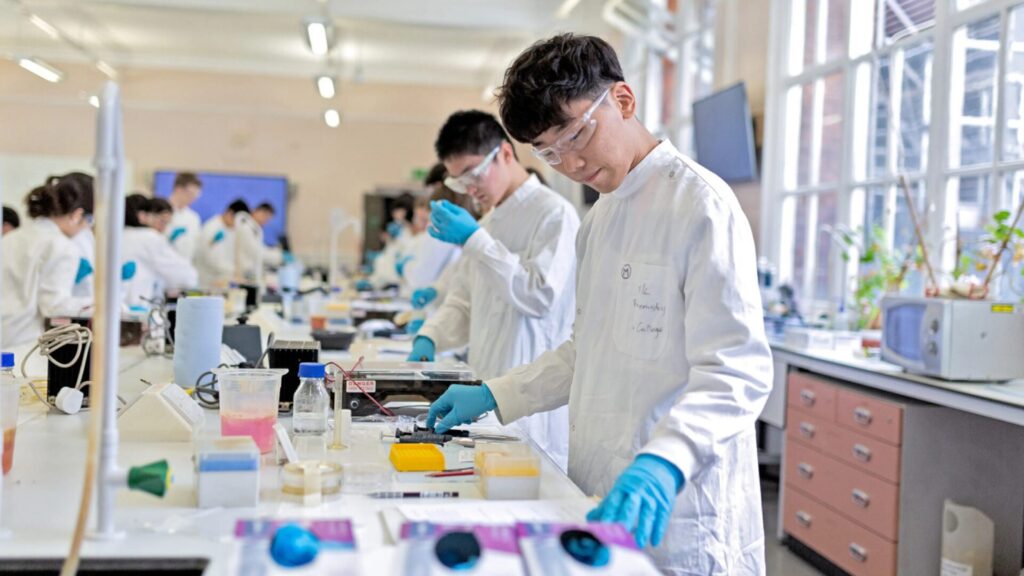
The Imperial College London Work Experience Programme is a five-day summer school that gives you a closer look at academic research. You can choose a subject area such as Bioengineering, Biomedical Research, Chemical Engineering, Materials, Mathematics, or the National Heart and Lung Institute and spend the week based within that department.
You’ll work in teaching laboratories, workshops, and specialist facilities while learning about ongoing projects. There are scheduled talks on university applications, including personal statement writing and interview preparation. At the end of the programme, you work with a group to prepare and deliver a presentation about your experience.
Why it stands out: You spend a week within a focused academic department, gaining exposure to research environments and a schedule designed to reflect working life at a leading university.
12. NHS Lothian – Step Into Healthcare
Location: Edinburgh and the Lothians, UK
Cost/Stipend: Varies by program
Acceptance rate/cohort size: Not specified
Dates: Varies by session
Application Deadline: Rolling
Eligibility: Senior school students studying or living in Edinburgh and the Lothians
This program lets you explore different healthcare careers through a range of focused pathways. Depending on your interests, you can choose to learn more about fields such as medicine, dentistry, nursing, midwifery, or allied health professions. You take part in workshops and practical activities that introduce the skills, responsibilities, and day-to-day work associated with each role.
Additionally, you’ll meet NHS professionals and hear about their experiences working in healthcare. The structure allows you to focus on specific career areas, giving you a clearer picture of the options available within the healthcare sector.
Why it stands out: You can explore multiple healthcare career paths while learning directly from professionals working across the NHS.
13. FutureDocs Abroad Summer Honors Program
Location: Athens, Greece
Cost/Stipend: Not specified
Acceptance rate/cohort size: Not specified
Dates: June 26th – July 10th; July 10th – July 25th
Application Deadline: Not specified
Eligibility: High school and undergraduate students interested in medicine; international students are welcome to apply
At the FutureDocs Abroad Summer Honors Program, you have the opportunity to observe how healthcare professionals work across different medical specialties. During the program, you shadow physicians, observe surgical procedures, and learn anatomy through lab-based experiences.
You’ll spend time in hospital wards and clinics, observing patient care and day-to-day medical decision-making. The program also introduces you to healthcare systems in other countries, giving you insight into how medical care is delivered within different settings.
Why it stands out: You gain exposure to operating rooms, anatomy labs, and multiple clinical specialties through experiences that are rarely available to high school students.
14. University of Southampton The LifeLab Summer School
Location: University of Southampton, Southampton, UK
Cost/Stipend: £180; free bursary spaces available
Acceptance rate/cohort size: Not specified
Dates: July 23rd – July 24th
Application Deadline: To be announced
Eligibility: UK students in Years 9, 10, and 11
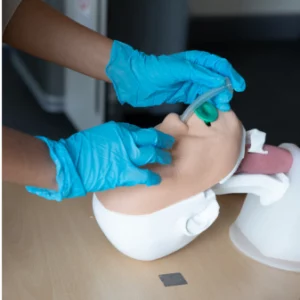
The LifeLab Medicine Summer School is a two-day program for students in Years 9–11 who want to learn more about studying and working in medicine. During the program, you will practice clinical skills such as suturing and use models to develop basic procedural techniques. You’ll participate in anatomy and pathology sessions at the Centre for Learning Anatomical Sciences.
The program includes visits to clinical areas, giving you the chance to observe healthcare professionals in their work environment. Throughout the two days, you hear from professionals working in medicine and gain a closer look at what a medical career involves.
Why it stands out: You practice clinical skills and hear directly from both medical students and healthcare professionals.
15. The Sutton Trust Edinburgh Medical School
Location: University of Edinburgh, Edinburgh, UK
Cost/Stipend: Not specified
Acceptance rate/cohort size: Not specified
Dates: July 13th – July 18th
Application Deadline: Not specified
Eligibility: Students aged 15; Year 12 students from state-funded schools in England or Wales
The Sutton Trust Edinburgh Medical School gives you an introduction to what studying medicine at university can look like. You attend academic sessions that explore key medical topics and help you engage with the subject beyond the school curriculum.
Being one of the UK-focused options in the list of medicine summer programs in Europe for high school students, you will also receive guidance on the UCAS application process and learn more about applying to medical school. There are scheduled evening activities that provide time to explore the city and connect with your peers.
Why it stands out: You explore university-level medical topics while receiving dedicated support for UCAS applications and medical school admissions.
Frequently Asked Questions: Medicine Summer Programs in Europe for High School Students
What is a medicine summer program for high school students?
A medicine summer program introduces high school students to clinical and academic medicine before college, often through lectures, lab sessions, and hospital-based experiences. Programs typically cover topics like anatomy, physiology, and clinical reasoning, often hosted at universities or teaching hospitals across Europe. Most run between two days and two weeks, though some extend over multiple years. Many conclude with a research poster, presentation, or work experience certificate.
Do I need prior medical knowledge to apply?
No, most medicine summer programs are designed to introduce students to the subject from the ground up. King’s College London’s Pre-University Medical Science course and Immerse Education’s Medicine Summer School both build foundational knowledge in anatomy and physiology through small-group teaching before moving into more applied case-based learning. A genuine interest in healthcare matters more than prior coursework.
How much do medicine summer programs in Europe for high school students cost?
Costs range from free to £6,850 for the University of St Andrews’ three-week residential course. Free options include the University of Nottingham’s Pathways to Medicine and Imperial College London’s Year 12 Work Experience Programme, both restricted to UK students. Immerse Education’s Medicine Summer School offers bursary support that can help reduce costs for eligible students.
Can international students attend these programs?
Most paid programs, including Premed Projects’ London Hospital Work Experience and the Rosetta Institute’s Molecular Medicine Workshops, welcome international students. Several free, UK government-supported programs, including the Sutton Trust Edinburgh Medical School and Imperial’s Year 12 Work Experience Programme, are restricted to UK state school students. Immerse Education’s Medicine Summer School is open to students worldwide aged 13 to 18.
What age do I need to be to apply?
Different medicine summer programs in Europe have differing age requirements, generally falling between 14 and 19. Premed Projects and the Rosetta Institute both accept students starting at age 14, while most UK university access programs target students aged 16 to 18. Immerse Education’s Medicine Summer School accepts a broader range of students aged 13 to 18 from anywhere in the world.
Will I get hands-on clinical experience?
Yes, several programs include direct clinical skills training. BioGrad’s Clinical Skills and Medical Research course has students practice taking patient histories and performing basic life support, and the LifeLab Summer School has students practice suturing using simulation models. Immerse Education’s Medicine Summer School takes a more academic approach, using case-based learning to build clinical reasoning skills.
How do these programs help with medical school applications?
Participating in a medicine summer program in Europe can demonstrate a genuine interest in healthcare and exposure to clinical environments, both of which admissions officers value. Programs like the University of St Andrews’ course include a poster project and a visit to the Royal College of Surgeons, giving students concrete material to discuss. Immerse Education’s Medicine Summer School provides an academic project and detailed feedback that students can reference directly in personal statements and interviews.
Ready for the Next Step towards Medicine?
A medicine summer programme helps you test whether clinical work, biomedical research, or patient care feels like the right path for your future.
The medicine summer programs in Europe covered here include King’s College London seminars, BioGrad’s hands-on clinical skills training, and Karolinska Institutet’s computational biology research.
Completing a poster project, practising clinical skills, or shadowing physicians gives you stronger material for personal statements, interviews, and meaningful supercurricular reflection.
To turn those experiences into lasting readiness, explore our University Preparation blogs for personal statements, interviews, academic writing, entry requirements, and extracurriculars.