15 Online Summer Camps for High School Students

In high school, summer is often seen as a break from classes, exams, and daily routines. But it can also be a powerful opportunity to grow academically, personally, and intellectually. Summer programs allow you to explore subjects beyond your school curriculum, challenge yourself in new ways, and build skills that matter for college and beyond. One of the most flexible and accessible ways to do this is through online summer camps for high school students.
Imagine attending live classes taught by university professors, collaborating with students from different countries on group projects, or learning skills like coding, research writing, entrepreneurship, or creative storytelling. Online summer camps remove geographical barriers, making high-quality learning experiences available to students regardless of where they live. Despite being virtual, many of these programs are highly interactive and designed to replicate the rigor and engagement of in-person programs.
What kinds of online summer camps for high school students are there?
Finding meaningful online summer camps can be challenging. Some programs offer little more than pre-recorded lectures, while others may lack academic depth or real mentorship. That’s why it’s important to know what kinds of opportunities are available and how they differ from one another.
Online summer camps for high school students span a wide range of disciplines, including STEM, computer science, medicine, business, humanities, social sciences, arts, and leadership. Many camps are led by experienced instructors, professors, or industry professionals and include live sessions, group work, and one-on-one feedback.
Also, you should have a look at online research opportunities for high school students.
Regardless of the format, these programs require commitment and active participation. To help you navigate the options, we’ve curated a list of 15 Online Summer Camps for High School Students. Each program on this list was selected for its academic rigor, quality of instruction, interactive learning model, and overall value for motivated high school students.


15 Online Summer Camps for High School Students
1. Kode With Klossy Camps
Location: Virtual
Cost/Stipend: Free
Acceptance rate/cohort size: Not specified
Dates: Summer dates to be announced in Spring
Application Deadline: TBA
Eligibility: Young women and gender-expansive teens ages 13–18; international students welcome
The Kode With Klossy Camps invite you into an accessible, hands-on summer coding experience built for high school students who have been historically underrepresented in tech. You’ll spend two immersive weeks learning essential tech skills like building websites, crafting mobile apps, exploring data science, or delving into artificial intelligence, all through guided projects and collaborative work.
The program combines a structured curriculum with community engagement, allowing you to not only grow technically but also connect with peers and mentors who can support your journey into STEM. Because these camps are open to beginners, you can join without worrying about prior experience. Being part of this community also opens doors to future opportunities and friendships that extend beyond the summer.
Why it stands out: You gain project-based tech immersion tailored to beginners, supported by a global community of peers and mentors.
2. Immerse Education’s Online Research Programme

Location: Fully remote
Cost/Stipend: Varies; summer school scholarship available through their bursary programme
Acceptance rate/cohort size: 1-on-1 tutoring
Dates: Flexible; multiple cohorts in a year
Application Deadline: Rolling admissions; multiple dates throughout the year
Eligibility: Students around the world aged 13-18 (accredited options require age 14+)
You will work closely with your tutor to explore a subject of your choice in depth and produce an academic research paper, making this one of the more academically rigorous online summer camps for high school students. Offered in 1:1 and small group formats, the programme also gives you the option to earn college credit from universities in the US and the UK.
The virtual research program is offered in over 20 subjects, including artificial intelligence, chemistry, psychology, economics, computer science, creative writing, philosophy, and more. At the end of the program, you’ll receive a written evaluation from your tutor, an opportunity to publish your research, and an invitation to present at the Immerse Online Symposium. You can find examples of papers Immerse students have worked on here. You can find more details about the application here.
Why it stands out: You can develop a university‑level research project, giving you a meaningful academic edge and preparation for higher education.
3. Luddy Cybersecurity Immersion Camp
Location: Virtual
Cost/Stipend: Program fee is $300
Acceptance rate/cohort size: Not specified
Dates: June 15th – June 19th
Application Deadline: Applications open in January
Eligibility: High school students; international students welcome
At the Luddy Cybersecurity Immersion Camp, you take part in a week-long, interactive virtual camp created for high school students curious about the fast-growing world of cybersecurity. You collaborate in teams to build your own projects while gaining practical experience with widely used cybersecurity tools and technologies such as Wireshark, Nmap, and others.
The camp also introduces you to the role of Artificial Intelligence in cybersecurity. The camp is beginner-friendly; even if you have little to no technical background, you are encouraged to apply.
Why it stands out: You get a dynamic, immersive introduction to real-world tech topics and tools on a major research campus with opportunities to build tangible skills.
4. Columbia University Pre-College Programs
Location: Virtual; on-campus options also available
Cost/Stipend: Varies by course and format
Acceptance rate/cohort size: Competitive
Dates: Multiple summer sessions from June through August
Application Deadline: Varies
Eligibility: High school students; international students welcome
The Columbia University Pre-College Programsallow you to tailor your summer around subjects that excite you, whether it is technology, humanities, business, science, social impact, or creative arts. You’ll enroll in week-long or multi-week courses taught by Columbia instructors that mix academic rigor with practical application, discussion, and project work. The virtual option gives you the flexibility to learn from home. Each course encourages you to think critically, engage deeply with your topic, and connect with peers who share your interests.
You’ll come away not only with new knowledge but with a certificate of participation and personalized instructor feedback that showcases your commitment to learning. With a wide variety of disciplines to choose from, you can explore interests deeply or combine courses across fields to expand your academic horizons.
Why it stands out: You get a customizable pre-college experience backed by an Ivy League university with a wide variety of options to match your academic passion and schedule.
5. Virtual “Blender” Camp: Oregon State University STEM Academy
Location: Virtual
Cost/Stipend: $200; needs-based scholarships available
Acceptance rate/cohort size: Small class sizes
Dates: June 22-26
Application Deadline: Registration will open on March 2nd
Eligibility: High school students; international students welcome
In the Virtual “Blender” Camp, you’ll learn how to create striking 3D art and animation using Blender, a free industry-standard digital modeling and rendering program. Over the course of a week, instructors will guide you through the essentials of 3D space, how to manipulate models, apply textures and lighting, and render scenes that look polished and professional. You’ll build your own projects that could range from simple shapes to animated objects, developing technical skills and creative confidence alike.
Since the camp online format runs weekday afternoons, you can fit it into a busy summer while still getting meaningful hands-on experience. The camp suggests you install and test Blender on your own computer before classes begin so that you’re ready to dive into the software right away. With collaborative opportunities and flexible project depth, you’ll leave the program with tangible digital work you can continue to develop after camp.
Why it stands out: You get structured, skill-building instruction in professional-level 3D modeling and animation software from your home, with projects you can keep using long after.
6. NASA GeneLab for High Schools (GL4HS)
Location: Online
Cost/Stipend: Free
Acceptance rate/cohort size: Selective
Dates: About 12 weeks during the summer
Application Deadline: Typically around April
Eligibility: Rising high school juniors and seniors during the fall of the program year who are US residents or US green card holders
If you want to dig into life science research with real NASA data and tools, this online summer training will take you deep into space biology and bioinformatics.You’ll explore how biological systems respond to spaceflight environments and learn to analyze big biological datasets using methods like omics and computational biology. The course is mostly self-paced, so you can fit labs and lectures around your own schedule, but optional live office hours and guided components help you stay connected with instructors and peers.
You’ll also build skills in scientific communication by preparing presentations and, if you choose, working on an optional project with other students. The program is designed to mirror real research practices and introduces you to NASA’s scientific approaches with a supportive structure that helps you make meaningful progress.
Why it stands out: You get a deep dive into NASA’s space biology research and data analysis skills that are rare in standard high school programs.
7. Girls Who Code Pathways Program
Location: Online
Cost/Stipend: Free
Acceptance rate/cohort size: Not specified
Dates: 6 weeks during the summer
Application Deadline: Varies by year
Eligibility: High school students who identify as girls or non-binary (ages ~14-18); international students welcome
The Girls Who Code Pathways Program gives you a flexible yet structured way to build real computer science skills over the summer at your own pace, all without travel or tuition fees. Throughout the roughly six-week period, you choose from project-based tracks like web development (HTML, CSS, and JavaScript), cybersecurity and data science with Python, and AI fundamentals, completing coursework that earns certificates you can add to your portfolio.
You’ll also have access to a virtual community space like Discord, where you can ask questions, collaborate with other students, and join workshops led by advisors and tech professionals that bring context to what you’re learning. Because the program is asynchronous, you can balance learning with other summer plans while still progressing through meaningful, practical projects. Even if you’re new to coding, the modular design lets you start from the basics while giving room to challenge yourself as you grow.
Why it stands out: You get a self-paced summer CS experience with multiple specialization tracks and peer community support that fits your schedule.
8. Summer Journalism Bootcamp
Location: Online
Cost/Stipend: Free
Acceptance rate/cohort size: Not specified
Dates: Typically three Saturday sessions in August
Application Deadline: Usually, registration is recommended before August 1st
Eligibility: High school and college students from the US
The Summer Journalism Bootcamp gives you a compact, skill-building introduction to reporting and newsroom fundamentals across three interactive online sessions. You’ll learn core journalism practices, including how to find compelling story ideas, report ethically, write in various journalistic formats, and explore multimedia skills such as photo and video journalism.
The camp combines structured webinars led by FreeP editors with practical assignments you complete between sessions, culminating in a reporting piece you can add to your portfolio and potentially see published on the FreeP platform. Guest panels bring in professional journalists from outlets like The Boston Globe and The New York Times to share insights and real-world experience.
Why it stands out: The format is ideal if you want to explore journalism fundamentals in a supportive, low-barrier setting and build authentic work that reflects your voice as a storyteller.
9. Kelley Women’s Leadership Institute
Location: Virtual; in-person format also available
Cost/Stipend: Free
Acceptance rate/cohort size: Competitive
Dates: Varies
Application Deadline: March 20th (for the virtual program)
Eligibility: High school sophomores, juniors, and seniors; international students welcome
The Kelley Women’s Leadership Institute invites you to explore the world of business through hands-on workshops, faculty-led discussions, and real case work that mirrors professional challenges you’ll encounter in college and beyond. The program exposes you to different areas of business, improves your communication skills, and helps you think strategically about goals and careers.
Virtual sessions include structured activities and discussions that bring the business world to you wherever you are. You’ll walk away with a clearer sense of your strengths and potential paths in business and leadership.
Why it stands out: You get a focused taste of business leadership and college life, and explore business career opportunities.
10. Wharton Global Youth Program: Financial Decision Making
Location: Online
Cost/Stipend: $4,099
Acceptance rate/cohort size: Selective
Dates: Two-week sessions in June and July
Application Deadline: Typically around the start of May
Eligibility: High school students; international students welcome
If you want to sharpen your financial decision-making skills this summer, the Wharton Global Youth Financial Decision Making program lets you explore both personal and corporate finance concepts through real-world examples and data. You’ll join live online lectures led by Wharton instructors and participate in smaller recitation sessions that reinforce core lessons like budgeting, saving versus spending, understanding credit, and the basics of markets and investing. You’ll use analytical tools and financial datasets to build confidence in making financial choices you face daily and in the future.
The curriculum also covers how banks and economies work, risk and return in investing, and ethical thinking in finance, giving you a rounded foundation you can carry beyond high school. Collaborative activities and projects help you apply what you learn while connecting with peers from around the world. By the end, you’ll earn a certificate of completion that reflects your growth in financial reasoning and practical decision-making.
Why it stands out: You’ll get a structured, real-time finance education from Wharton faculty that equips you with lifelong money-smarts and analytical skills.
11. Engineering Tomorrow Virtual Summer Camp
Location: Virtual
Cost/Stipend: Free
Acceptance rate/cohort size: Limited capacity
Dates: Varies by course/ topic (three one-week/3-day camps)
Application Deadline: May 21st (or sooner if full)
Eligibility: High school students; international students welcome
The Engineering Tomorrow Virtual Summer Camp gives you an introduction to different branches of engineering through short, theme-based sessions led by real engineers. Each week focuses on a fresh topic such as product development, power and energy systems, or engineering in medicine, allowing you to explore practical problems and design thinking in just a few days. You’ll meet online with instructors who break down concepts you might not encounter in typical school classes, and you’ll apply what you learn through guided projects and discussions.
There are multiple sessions, and you can pick the week that fits your interests and schedule. The camp’s half-day format makes it easy to fit into a busy summer while still giving you meaningful exposure to engineering principles. Even if you’re new to engineering, the supportive environment helps you build confidence and discover where your curiosity might lead.
Why it stands out: You can test drive different engineering disciplines across three themed weeks with real engineering insights.
12. Architecture Summer Camp Academy: University of Wisconsin-Milwaukee
Location: Online
Cost/Stipend: Not specified; you may check after registration opens
Acceptance rate/cohort size: Limited cohort
Dates: July 26th – August 1st
Application Deadline: Registration opening soon; dates vary by year
Eligibility: High school students ages 14-18; international students welcome
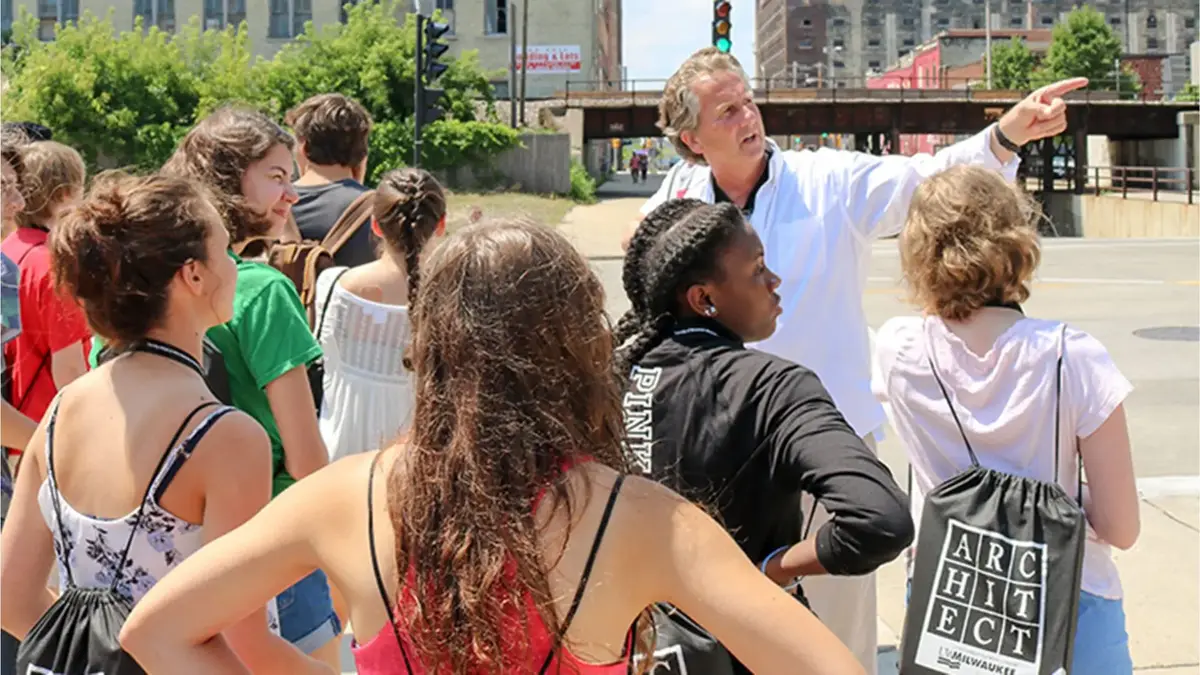
The Architecture Summer Camp Academy lets you explore architectural design and creative thinking through a structured, hands-on week of virtual workshops led by faculty and designers from the University of Wisconsin-Milwaukee’s School of Architecture and Urban Planning. Each day, you’ll encounter real design challenges that ask you to sketch, model, analyze, and present architectural solutions, learning how to communicate your ideas through drawings, digital tools, and models.
Instructors guide you through fundamentals like spatial reasoning, architectural representation techniques, and 3D design technologies while helping you think like a designer who solves real problems creatively. As part of a cohort of future designers, you’ll build confidence and add meaningful work to your growing portfolio.
Why it stands out: You get an immersive architectural design experience with expert guidance and a flexible hybrid format that brings together digital creativity and real-world exploration.
13. Summer Healthcare Experience in Oncology (SHE) – UChicago Medicine
Location: Online
Cost/Stipend: Free
Acceptance rate/cohort size: Limited cohort
Dates: July 13-25
Application Deadline: March 2nd
Eligibility: High school students who are residents of Cook, Lake, Will, or DuPage counties in Illinois or Lake County in Indiana
The Summer Healthcare Experience in Oncology (SHE) invites you to a focused, two-week crash course in biomedical sciences and cancer research designed to deepen your understanding of oncology and related careers. Over the session, you’ll participate in faculty-led lectures, interactive workshops, and collaborative projects that connect concepts in genetics, patient care, and research fundamentals to real-world cancer science. Trainees work on team-based case studies and genetics-based research projects, giving you hands-on exposure to scientific thinking even in a virtual setting.
The program also includes panel discussions with clinicians and researchers, helping you broaden your perspective on how biomedical careers can impact patient outcomes. This program is especially valuable if you’re considering careers in medicine, biomedical research, or public health and want to immerse yourself in cancer science with peers and mentors.
Why it stands out: You get a project-driven introduction to cancer research and healthcare with expert instruction from top cancer centers across the U.S. in a supportive summer environment.
14. Stanford Program for Inspiring the Next Generation of Women in Physics (SPINWIP)
Location: Online
Cost/Stipend: Free
Acceptance rate/cohort size: Competitive
Dates: July 7-25
Application Deadline: TBA
Eligibility: High school students in 9th-11th grade at the time of application; international students welcome
The SPINWIP program introduces you to exciting areas of modern physics and computational problem solving through a virtual, three-week summer experience hosted by Stanford faculty and researchers. You’ll explore topics like quantum physics, quantum computing, astrophysics, and cosmology through a mix of lectures, small group projects, and hands-on Python coding activities that help bring complex concepts to life. Daily sessions also include college planning and career development workshops, giving you insight into academic pathways and future opportunities in STEM.
Small-group work with Stanford undergraduates and networking opportunities with professors help you build mentorship relationships and connect with peers who share your interests. Because no prior physics or coding experience is required, you can join even if you’re just starting to explore these fields. The program’s commitment to accessibility and diversity means you’ll be learning in a supportive environment that values your curiosity and encourages growth.
Why it stands out: You get a Stanford-hosted physics immersion that combines cutting-edge science, real coding experience, and mentorship.
15. UCLA Neuroscience High School Scholars Program
Location: Online
Cost/Stipend: Free
Acceptance rate/cohort size: Competitive
Dates: June 15th – July 23rd
Application Deadline: February 9th
Eligibility: Rising high school juniors and seniors; international students welcome
The UCLA Neuroscience High School Scholars Program offers one of the most research-intensive experiences among the various online summer camps for high school students, delivering a six-week deep dive into brain science and Alzheimer’s research. You take part in interactive seminars, journal clubs, discussions, and guest talks led by leading clinicians and neuroscientists.
You’ll engage with core neuroscience topics tied to Alzheimer’s disease and related dementias, explore research methods and ethical considerations, and participate in virtual lab activities that bring scientific concepts to life. The structure builds both foundational knowledge and critical thinking skills, and culminates in a final research project where you investigate a topic of interest and present your findings.
Why it stands out: You get a rigorous neuroscience summer experience that pairs real scientific learning with mentorship and project-based exploration on topics tied to Alzheimer’s and brain health.
Join the Immerse Education 2027 Essay Competition
Follow the instructions to write and submit your best essay for a chance to be awarded a 100% scholarship.
What These Programmes Teach Beyond the Screen
Learning does not stop at the edge of a screen. When designed well, virtual programmes challenge how you think, work, and engage with ideas in meaningful ways.
Online summer camps for high school students help you build habits that matter, from managing your time and contributing to discussions to tackling projects with independence and purpose.
As you navigate deadlines, feedback, and collaborative work, you begin to think more like a university student, developing confidence in your ability to learn on your own terms.
To turn these skills into a strong foundation for higher education, explore our University Preparation blogs and take the next step toward university with clarity, confidence, and direction.





Unlock Inspiring Opportunities with the Immerse Education Newsletter
Join our newsletter to stay ahead with exclusive updates, exciting programme highlights, and expert insights from the world of immersive education.
Learn how Immerse can transform your life
An in-depth overview of our university and career preparation programmes
Get a glimpse into the life of an Immerse participant
Find the right programme for you with sample timetables, location showcases, and more