
 Русский (RU)
 Українська (UK)
 Türkçe (TR)
 Italiano (IT)
 Français (FR)
 Português (PT)
 中文 (中国) (ZH)
 Español (ES)
 日本語 (JA)
 ไทย (TH)
 Deutsch (DE)
 Ελληνικά (EL)
 Polski (PL)
 Bahasa Indonesia (ID)
 Nederlands (NL)
 العربية (AR)
 한국어 (KO)

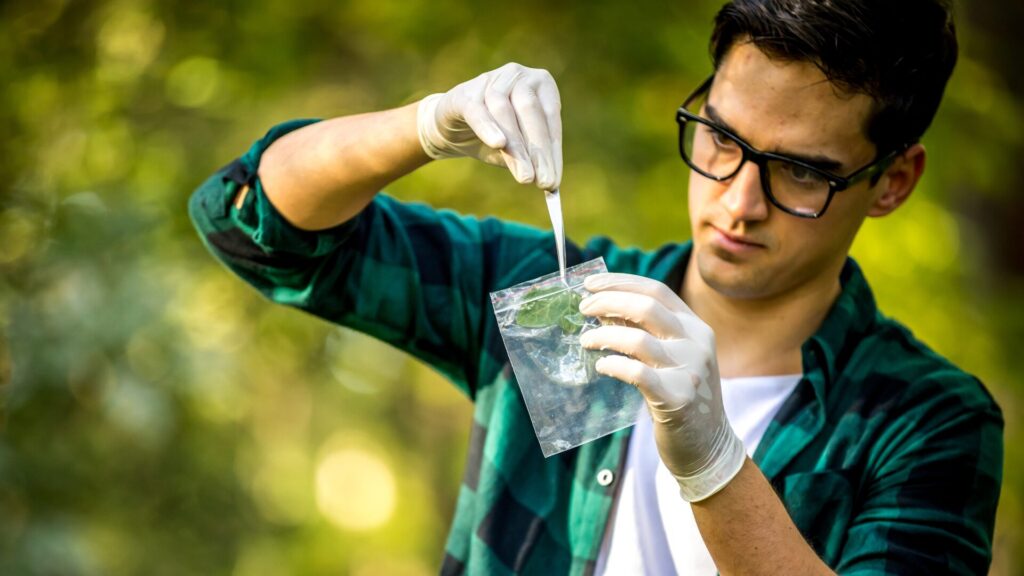
Science programs in Canada for high school students give you the opportunity to explore biology, chemistry, physics, environmental science, biotechnology, and quantum science beyond the limits of a typical classroom. Through experiments, research projects, and interactions with scientists and professors, you can investigate advanced topics, challenge your thinking, and discover which scientific fields interest you most.
These experiences also help you develop practical skills that can support your future studies and career. You may learn to use laboratory equipment, analyse scientific data, apply the scientific method, collect field samples, interpret results, and communicate your findings while gaining insight into how universities and professional research environments operate.
Why should you consider science programs in Canada?
Canada is a strong destination for students who are interested in studying science. It is home to some of the world’s well-known universities and cutting-edge research institutes. As a result, the country offers a wide range of opportunities for exploring science. Canada is known for its strong emphasis on research and innovation, so you can expect to learn a range of scientific concepts and be exposed to the latest discoveries in the field.
Another reason Canada is worth considering for studying science is the incredible diversity of scientific environments it offers. You can study geological formations, medicine, food science, quantum mechanics, biotechnology, and various niche branches of science. Additionally, the country’s multicultural atmosphere makes it an ideal setting for you to meet people from diverse backgrounds who share your interests and gain mentorship from a variety of experts.
The country hosts a variety of science programs, with each option varying in scope, rigor, and difficulty level. To help you choose the right option, we have compiled a list of 15 science programs in Canada for high school students. The selection covers opportunities offering hands-on learning experiences across a variety of disciplines.
For more opportunities, consider the online medicine program and summer schools in Canada.
Key takeaways
- The Alberta Innovates HYRS Program pays a CA$3,000 stipend for a six week biomedical research placement, but requires an 85% standing in Math 20, Biology 20, and one other grade 11 science course.
- Immerse Education’s Academic Insights Programme includes a Toronto location among its sites, running two weeks in small groups of seven to 10 students, and is open to students worldwide aged 13 to 18.
- The WISEST Summer Research Program at the University of Alberta pays CA$15 per hour over six weeks, admitting up to 40 students who have completed two 20-level science courses.
- York University’s Spark Lab Summer Program costs CA$495 for a five-day week or CA$435 for a four-day holiday week, letting students choose from experimental courses or research courses built around faculty projects.
- The University of Waterloo’s Quantum School for Young Students is free and open to 200 students online across Canada, though the optional in-person lab session is limited to 25 students from the Waterloo region.
- McMaster University’s ChemLab Day is a free half-day program accommodating up to 60 students per session, running multiple sessions between April 20 and 24.
- The Focused Ultrasound High School Summer Research Program at Sunnybrook Health Sciences Centre provides a stipend for students at least 16 years old who are legally authorized to work in Canada.
- Program costs across Canadian science programs range from free options like Queen’s University’s Summer of Science to CA$899 for the University of Guelph’s Food Science Summer Camp.
15 Science Programs in Canada for High School Students
1. Alberta Innovates High School Youth Researcher Summer (HYRS) Program
Location: University of Lethbridge, Lethbridge, AB (Students in or south of Claresholm), University of Alberta, Edmonton, AB (Students north of Red Deer), and University of Calgary, Calgary, AB
Acceptance rate/cohort size: ~20 students; cohort size can vary by site
Stipend: CA$3,000
Dates: July 2nd – August 13th (University of Alberta and University of Calgary) | July 3rd – August 14th (University of Lethbridge)
Application deadline: March 16th (University of Calgary) | March 13th (University of Alberta) | March 22nd (University of Lethbridge); applications open in January
Eligibility: 11th-grade students who attend a central Alberta high school, including all high schools south of Red Deer to north of, but not including, Claresholm; students should have a minimum of an 85% standing in each of Math 20-1 or 20-2, Biology 20, and one other grade 11 science (Chemistry 20 or Physics 20); not open to international students
As one of the most research-intensive science programs in Canada for high school students, this six-week opportunity lets you spend your summer engaging in biomedical and healthcare research. You will work alongside university staff and professors, contribute to ongoing campus projects, and may be placed in a laboratory or on research focused on clinical or community work.
Upon completing your research, you will get to present your work at the given university’s annual research symposium. During your time in the program, you will also attend guest lectures that focus on healthcare research and related careers. You will additionally participate in educational sessions hosted by the university students.
Why it stands out: It combines hands-on research with tours, career-focused activities, and mentorship, giving you a glimpse of what working in scientific research looks like.
2. Immerse Education’s Toronto Engineering Summer School

Location: Trinity College, University of Toronto, Toronto, Canada
Cost: Varies; summer school scholarship available through our bursary programme
Application Deadline: Multiple cohorts with rolling admissions.
Program Dates: 2 weeks during the summer
Eligibility: Students around the world aged 13-18 currently enrolled in middle or high school
The Academic Insights Engineering Summer School broadens the range of science programs in Canada for high school students by offering a structured introduction to university-level engineering. Taught by expert academics from institutions such as Oxford and Cambridge, the programme combines theory with applied learning in small classes averaging just seven participants. Students aged 13–15 explore foundational principles such as mechanics, forces, materials, and basic electronics.
Guided workshops and design tasks help students understand how engineers approach problem-solving. For students aged 16–18, the curriculum advances into mechanical systems, electrical circuits, sustainability, and applied engineering design. Students complete more independent projects and analyse real engineering challenges, developing reasoning expected at the undergraduate level. Across all ages, learning includes university-style lectures, problem-solving sessions, weekly 1:1 tutorials, and a personal engineering project, ending with written feedback and a certificate.
Why it stands out: Age-specific syllabi tailored to students’ academic stages, expert tutors from leading universities, small-group teaching that encourages discussion, and personalised feedback that supports meaningful academic growth and university readiness.
3. York University’s Spark Lab Summer Program
Location: York University Markham Campus, Markham, ON, or York University Keele Campus, Toronto, ON
Cost: CA$495 (five-day weeks) | CA$435 (holiday four-day weeks); financial assistance is available
Acceptance rate/cohort size: Not officially disclosed
Dates: Weekly from June 29th to July 31st
Application deadline: Rolling
Eligibility: 9th to 12th graders; international student eligibility not specified
The Spark Lab Summer Program stands out among the many science programs in Canada for high school students for its multiple one-week hands-on sessions designed to immerse you in a specific scientific discipline. Each session is either categorized as an experimental course or a research course. The experimental courses cover core aspects of science subjects through hands-on experiments. The options here span areas like anatomy and physiology, biochemistry, forensic science, microbiology, neuroscience, chemical reactions, and health and anatomy.
The research courses, on the other hand, are put together by the university’s professors and graduate students and are structured around their ongoing research. In this track, you will study molecular and physiological mechanisms and genetics in biological systems. This can be an opportunity to explore a field of choice in an accessible, hands-on format.
Why it stands out: You get to spend a significant amount of time in labs to familiarize yourself and practice using different scientific lab equipment.
4. Concordia University Science & Engineering Camps
Location: Concordia Sir George Williams Campus, Montreal, QC
Cost: A non-refundable registration of CA$50/week + camp fees CA$100 – CA$1,000 depending on the program; 5% discount available for students who apply by March 6th; 15% discount for Concordia University employees, and family discounts available for students attending with siblings
Acceptance rate/cohort size: Varies by camp; limited spots
Dates: One- to five-week camps available during the summer
Application deadline: March 6th (early bird registration); registrations open on February 16th
Eligibility: Students from ages 5 to 17 from anywhere in the world; each camp caters to a specific age group, with options available for high school students
Concordia University offers a series of camps, some of which are designed to help high school students explore a scientific field of choice. You can choose tracks like the Introduction to Artificial Intelligence camp to explore the impact of AI in the world and the importance of using it in an ethical manner, or the STEAMpunks camp offering hands-on workshops, lab visits, physical activities, and outings focused on STEAM subjects.
The Environment camp is another option that offers nature-focused experiences, with one track on heat islands, solar energy, and plastic, and another on the study of plants, animals, and microorganisms. Another option is the Concordia Counsellor-in-training: Arts and Science camp that lets you build leadership skills with a focus on arts and science activities.
Why it stands out: You can choose from a range of short, accessible options to explore a scientific discipline under the guidance of experienced instructors on a university campus.
5. Ontario Science Centre DNA Fingerprinting
Location: Toronto Metropolitan University, Toronto, ON
Cost: CA$30
Acceptance rate/cohort size: 20-30/session
Dates: Multiple one-day workshops; March 10th – June 5th (English) | March 24th – June 5th (French)
Application deadline: Not publicly available
Eligibility: 12th graders (primarily designed for Canadian students); international student eligibility not specified
Organized by the Ontario Science Centre, this one-day workshop aims to give you an in-depth understanding of DNA fingerprinting. During the workshop, you will use the techniques and equipment used by biotechnology professionals to extract and amplify a DNA sample with the help of the polymerase chain reaction. You will be working with your very own DNA sample that you will extract from your body.
The workshop will then give you hands-on training in using gel electrophoresis to separate DNA fragments. The science center’s laboratory will mail the DNA results and teach you to analyze them later at your school. Using what you learned, you will be able to share your genotype and the frequency of your inherited alleles.
Why it stands out: It is structured in line with the Canadian grade 12 biology (SBI4U) and grade 12 science (SNC4M) curricula, offering you the opportunity to build lab skills crucial for school and beyond.
6. Geneskool Summer Science Program
Location: University of the Fraser Valley, Abbotsford, BC; Vancouver Island University, Nanaimo, BC; Thompson Rivers University, Kamloops, BC; and Capilano University, North Vancouver, BC
Cost: CA$350 (bursaries available)
Acceptance rate/cohort size: Not specified
Dates: July 6-10 (University of the Fraser Valley) | July 13-17 (Vancouver Island University) | August 10-14 (Thompson Rivers University) | and August 17-21 (Capilano University)
Application deadline: Two weeks before the session start date
Eligibility: Rising 9th through 12th graders (international student eligibility not specified)
The Geneskool Summer Science Program is one of the hands-on science programs in Canada for high school students that offers week-long experimental experiences on a university campus. You will spend five days working on experiments in biology and biochemistry while also exploring concepts across biotechnology, genomics, fibre, blood typing, microbiology, and microscopy.
You will also spend time examining a scientific mystery. You will learn from science experts, guest speakers, and Geneskool volunteers. The experience can help you familiarize yourself with professional lab environments while exploring what it is like to study science at the collegiate level.
Why it stands out: You will work in labs, practice biochemistry techniques, and explore a university campus, all in five days!
7. University of Waterloo ChemX Summer Camp
Location: University of Waterloo, Waterloo, ON
Cost: CA$700 + HST (bursaries available)
Acceptance rate/cohort size: Up to 28 students
Dates: August 3-8
Application deadline: April 24th
Eligibility: Rising 11th and 12th graders (international student eligibility not specified)
ChemX is one of the most chemistry-focused science programs in Canada for high school students, offering a week-long experience for those considering a degree in the subject. You will spend time in the university’s labs, including the pharmaceutical teaching lab, where you will conduct experiments and acquire new skills.
You will learn how to collect and test samples and use professional lab equipment. The program will also introduce you to the current scientific research being conducted at the university and future research it will undertake. You will also become familiar with the different ways chemistry plays an important role in other science subjects as well.
Why it stands out: You will explore chemistry fundamentals, work in labs, and interact with professors and students from the university’s science department, gaining a glimpse into studying science at the collegiate level.
8. McMaster University ChemLab Day: Light, Matter & Chemistry
Location: McMaster University, Hamilton, ON
Cost: Free
Acceptance rate/cohort size: 60 students/session; longer groups may be accommodated
Dates: April 20-24 (multiple sessions available within this window)
Application deadline: Opens in February and is accepted on a first-come, first-served basis
Eligibility: 11th and 12th graders; international student eligibility not specified
McMaster University’s ChemLab Day is a free program for high schoolers interested in chemistry, chemical biology, and sustainable chemistry. This half-day program begins with 90 minutes of hands-on experiments related to the program’s theme, Light, Matter, and Chemistry.
You will conduct flame tests, explore absorption spectrophotometry and concentration, learn about UV fluorescence/induced fluorescence, determine atomic radius, and perform candy chromatography. In the next hour, you will explore the university’s five main research facilities: MS, NMR, Light Microscopy, Electron Microscopy, and X-Ray Diffraction. The next hour is dedicated to a campus tour focused on science facilities led by undergraduate students.
Why it stands out: You will get to conduct university-level laboratory experiments while gaining knowledge in spectroscopy and the different analytical techniques that researchers in the field of chemistry use.
9. Science Unlimited Summer Camp @ University of Toronto
Location: University of Toronto, Toronto, ON
Cost: CA$300 (financial assistance available)
Acceptance rate/cohort size: Up to 50 spots
Dates: August 17-21
Application deadline: April 17th
Eligibility: Students who have completed grades 10 or 11 at the time of the program; international student eligibility not specified
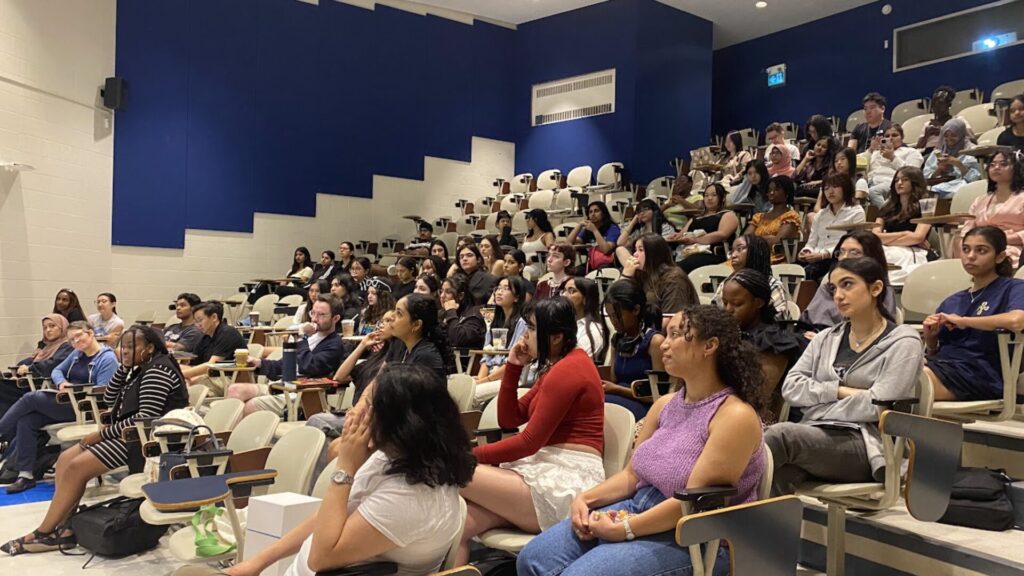
The Science Unlimited Summer Camp is a week-long program that offers you the opportunity to explore various branches of science through a series of workshops. You will attend workshops offered by the university’s departments in astronomy and astrophysics, chemistry, computer science, earth sciences, mathematics, physics, and the environment, with each session diving into a STEM topic.
Depending on which department’s session you are sitting in, you will engage in experiments, explore nanoscience, or learn programming. The experience can offer exposure to potential degree paths in college as well as insights into life on a college campus.
Why it stands out: It lets you explore STEM pathways, learn from professors, and connect with a diverse cohort of peers, all in five days!
10. WISEST Summer Research Program @ University of Alberta
Location: University of Alberta, Edmonton, AB
Cost/Stipend: Free (housing available for ~CA$1,500 – CA$2,000); stipend: CA$15/hour
Acceptance rate/cohort size: Up to 40 students/year
Dates: July 2nd – August 13th
Application deadline: April 1st
Eligibility: High school students currently in grades 11 (rising 12th graders) who live in Canada and have completed two 20-level science courses; international student eligibility not specified
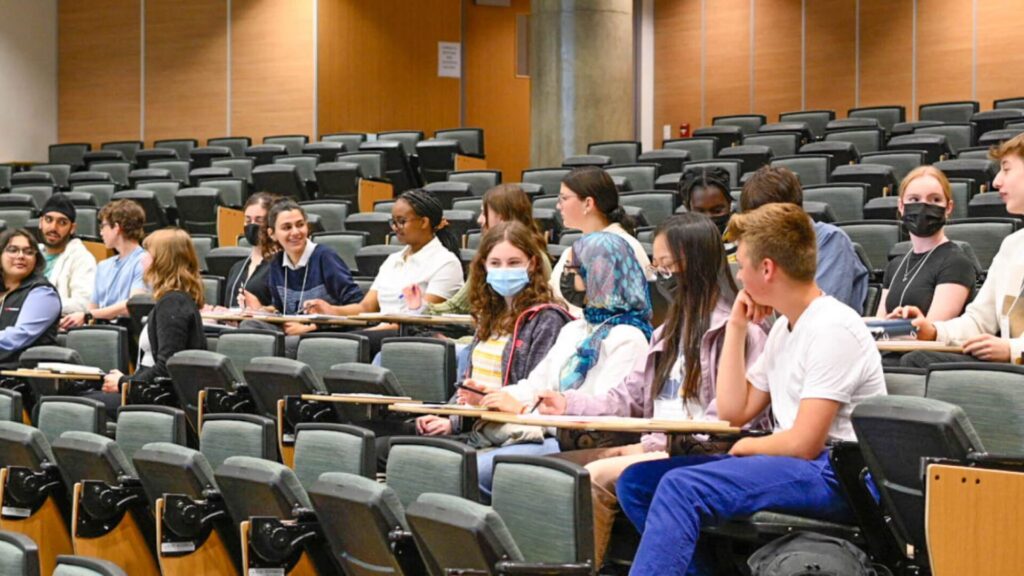
The WISEST Summer Research Program places you in a University of Alberta lab for six weeks, where you will contribute to real research in STEM. You will work with researchers, collecting and analyzing data, conducting experiments, and developing scientific communication skills over the course of six weeks.
You will also conduct literature reviews, work on individual and team research projects, and present your work. Additionally, the schedule includes workshops, lab tours, and networking events with STEM professionals. A few virtual activities such as role model panels and social events may be part of the experience.
Why it stands out: It lets you engage in real research within a lab environment and connect with professionals to explore career paths while getting paid for your work!
11. U of G’s Food Science Summer Camp
Location: University of Guelph, Guelph, ON
Cost: CA$899.00 + HST
Acceptance rate/cohort size: Up to 30 spots
Dates: July 27-31
Application deadline: Rolling; opens in March
Eligibility: Rising 9th through 12th graders (international student eligibility not specified)
This five-day camp, run by the University of Guelph’s Department of Food Science, lets you explore the science behind the food you eat through hands-on labs, tasting sessions, and workshops. You will take part in activities focused on sensory testing and flavor perception experiments, chocolate tempering and molding, candy-making chemistry, and fermentation and microbiology.
You will explore the science of baking through sessions covering dough, gluten, and the baking process. As the program is lab-intensive, group sizes are kept small, offering you more direct access to instructors and equipment.
Why it stands out: It lets you explore the role and behind-the-scenes of food production through hands-on lab sessions on a university campus.
12. University of Waterloo’s Quantum School for Young Students
Location: Online + an optional in-person lab session at the University of Waterloo, Waterloo, ON
Cost: Free
Acceptance rate/cohort size: 200 students (online sessions); up to 25 students for the in-person session
Dates: August 4-13 (online) + August 17th ( lab day)
Application deadline: May 15th
Eligibility: High school students; online sessions are open to students from all over Canada, but the optional in-person lab is only open to students from the Waterloo region. International students can get recordings of the sessions once the program is complete
Among the most specialised science programs in Canada for high school students, the Quantum School for Young Students is a week-long program hosted by the Institute for Quantum Computing. You will join students from across Canada to study foundational topics in cryptography, quantum mechanics, and quantum computing through lectures, problem-solving sessions, and discussions led by researchers in the field. The curriculum also covers concepts such as entanglement, superposition, and linear algebra.
You will learn how quantum technology is being used to transform fields like communication, computing, and imaging. Throughout the week, you will also have the opportunity to interact with graduate students and faculty, ask questions about careers in physics and engineering, and get a preview of cutting-edge research. The in-person lab day will let you work with real quantum equipment on the University of Waterloo campus.
Why it stands out: It lets you network and receive mentorship from leading quantum researchers and explore the field of quantum science at no cost!
13. Queen’s University’s Summer of Science
Location: Queen’s University, Kingston, ON + virtual sessions may be available
Cost: Free
Acceptance rate/cohort size: Not specified
Dates: July 7-9, July 14-16, July 21-23, and August 4-6
Application deadline: May 20th
Eligibility: Middle school and high school students (international student eligibility not specified); in-person session open to students from Kingston and the surrounding area
Run by the McDonald Institute in partnership with the Carbon to Metal Coating Institute, this free afternoon enrichment program introduces you to the physical sciences and the everyday practices of working scientists. Over 12 sessions across four weeks, you will build skills such as hypothesis formation, experimentation, data analysis, and presentation of results while exploring astronomy, chemistry, particle physics, neutrino physics, dark matter detection, and microelectronics.
Sessions are led by undergraduate instructors and scientists from the McDonald Institute and C2MCI. You can participate either in person in Kingston or virtually. You may also have the opportunity to contribute to your instructor’s ongoing research projects, with your involvement recognized accordingly. The program concludes with a student presentation on your research involvement at an event open to family and friends.
Why it stands out: You will explore scientific disciplines through hands-on work and even get to contribute to the ongoing research at Queen’s University at no cost!
14. University of Waterloo GeoX Summer Camp
Location: University of Waterloo, Waterloo, ON
Cost: CA$700 + HST (bursaries available)
Acceptance rate/cohort size: 30 students
Dates: August 9-15
Application deadline: April 24th
Eligibility: 11th and 12th graders (international student eligibility not specified)
In this one-week summer camp, you will explore topics across earth and environmental sciences at a university level. You will spend time in labs, learn about rocks and minerals, and engage in hands-on outdoor and field exercises. A key part of the experience is mapping and sampling the rocks and minerals. You will also have the opportunity to examine outcrops across different locations and test water and soil samples.
You will spend the week on campus, interacting with faculty and students from the university’s science department and gaining a better overview of what it is like to study at the University of Waterloo. You will also learn about the different disciplines within the fields of earth and environmental sciences.
Why it stands out: It lets you explore environmental and earth science through lab and fieldwork and experience living on campus.
15. Focused Ultrasound High School Summer Research Program
Location: Sunnybrook Health Sciences Centre, Toronto, ON
Stipend: Provided
Acceptance rate/cohort size: Not specified
Dates: Starts July 6th and ends in August (tentatively)
Application deadline: February 20th
Eligibility: High school students who will be at least 16 years old by July 1st and have the legal authorization to work in Canada
Sunnybrook Health Sciences Centre offers summer research experiences in its Focused Ultrasound Lab to high schoolers. As a participant, you will work at the lab and contribute to ongoing research in the fields of physics, tech, medicine, engineering, and biology.
You may engage in project work focused on investigating the impact of focused ultrasound, designing tools and software for safe ultrasound exposures of tissues, and conducting experimental work. Throughout the program, you will gain insights into research, medicine, and device development.
Why it stands out: You will learn about careers in medical research and device development and build workplace skills through a paid summer experience.
Frequently Asked Questions
Are science programs in Canada open to international students?
Eligibility varies significantly by program. Concordia University’s Science & Engineering Camps and Immerse Education’s Academic Insights Programme are both explicitly open to students from anywhere in the world, while programs like the Alberta Innovates HYRS Program and WISEST Summer Research Program require Canadian residency or attendance at a specific regional high school. Several programs, including Geneskool and the University of Waterloo’s ChemX Summer Camp, simply don’t specify international eligibility, so it’s worth emailing the program directly to confirm before you apply.
How much do science programs in Canada cost?
Costs range from completely free to just under CA$900, depending on program length and intensity. Free options include McMaster’s ChemLab Day, Queen’s University’s Summer of Science, and the University of Waterloo’s Quantum School for Young Students. Mid-range options like Geneskool and York University’s Spark Lab Summer Program cost a few hundred dollars, while the University of Guelph’s Food Science Summer Camp runs CA$899 plus tax. Bursaries and financial assistance are available for several programs, so cost alone shouldn’t rule out an option you’re interested in.
Do science programs in Canada pay a stipend?
Some do, though it’s not the norm across shorter enrichment programs. The Alberta Innovates HYRS Program pays CA$3,000, and the WISEST Summer Research Program pays CA$15 per hour, both reflecting their longer, research-intensive formats. The Focused Ultrasound High School Summer Research Program at Sunnybrook also provides a stipend. Shorter, workshop-style programs like McMaster’s ChemLab Day or the Ontario Science Centre’s DNA Fingerprinting workshop are unpaid, since they’re structured more as single-day or week-long enrichment rather than research employment.
What is the difference between an experimental course and a research course in a science program?
Experimental courses, like those offered through York University’s Spark Lab, walk you through structured, hands-on activities in a specific subject area, such as forensic science or microbiology, without requiring you to design your own study. Research courses, by contrast, are built around a professor’s or graduate student’s ongoing research, meaning you contribute to real, unresolved scientific questions. If you want a taste of a subject, an experimental course is the lower-commitment option; if you want genuine research exposure, look for programs explicitly structured around faculty research, like WISEST or the Alberta Innovates HYRS Program.
How selective are science programs in Canada?
Selectivity varies considerably by program type. Research-intensive options like the Alberta Innovates HYRS Program admit around 20 students per site, and WISEST caps its cohort at 40 students annually. Shorter enrichment programs, like Concordia’s Science & Engineering Camps or the University of Guelph’s Food Science Summer Camp, tend to have more available spots since they aren’t limited by lab capacity. Regardless of selectivity, meeting grade-specific prerequisites, like Alberta Innovates’ math and science grade requirements, matters just as much as your overall application.
Is Immerse Education a good option for exploring science in Canada?
Immerse Education’s Academic Insights Programme is a strong choice if you want a broader, mentorship-driven introduction to science alongside other subjects, with Toronto as one of its global locations. The two week program places you in small groups of seven to 10 students, where you might conduct dissections in medicine or design a robotic arm in engineering, guided by tutors from top universities. You’ll complete a personal project, receive written feedback, and earn a certificate of completion, giving you a well-rounded experience if you’re still deciding which scientific field interests you most.
Continue Your Science Journey Across Borders
Science programmes can turn classroom curiosity into practical confidence by letting you test ideas, use specialist equipment, and learn directly from researchers.
These 15 science programs in Canada for high school students offer pathways into biology, chemistry, engineering, quantum science, and medical research while revealing university-level expectations.
As you compare cost, eligibility, location, research access, and mentorship, you can choose an experience that supports your goals and broadens your academic perspective.
Ready to take your scientific ambitions further? Visit our Study Abroad blogs for practical guidance, destination insights, and inspiring ideas to help you plan your next international learning experience with confidence.