
 Русский (RU)
 Українська (UK)
 Türkçe (TR)
 Italiano (IT)
 Français (FR)
 Português (PT)
 中文 (中国) (ZH)
 Español (ES)
 日本語 (JA)
 ไทย (TH)
 Deutsch (DE)
 Ελληνικά (EL)
 Polski (PL)
 Bahasa Indonesia (ID)
 Nederlands (NL)
 العربية (AR)
 한국어 (KO)

Social science programs in Singapore for high school students can make an abstract subject feel immediate and practical. You start asking sharper questions about why communities resist certain policies, what shapes mental health outcomes, or how public sentiment shifts during a crisis. These programmes introduce real methodology, from survey design and qualitative coding to policy analysis and statistical software. You are not just reading theory; you are learning how researchers actually test it.
Beyond the skillset, there is something these programmes offer that a classroom cannot replicate. Spending time inside a real university, working with faculty mentors, presenting research, and sitting in on seminars shows you what academic life actually feels like before you are enrolled in it.
For a lot of students, that exposure is what turns a vague interest into a clear direction. It can act as a foundation for your college journey, giving you a taste of what university life is like at a top institution, in person.
Why should you attend a social science program in Singapore?
NUS and NTU sit in the global top 15, and both run outreach programs specifically for pre-university students with social science interests. Singapore’s makeup of four major communities, multiple languages, and a government that is unusually research-driven makes it a more interesting environment for this subject than most. The Institute of Policy Studies and ISEAS conduct serious social science research here, and that culture filters into how universities in the city teach the discipline.
Every program on this list is run by a university or a government-affiliated institution. We have prioritized programs that are free or selective, since those tend to carry the most weight on a college application. Below are 15 social science programs in Singapore for high school students.
For adjacent opportunities, consider the online psychology program, the online economics program, and summer programs in Singapore.
15 Social Science Programs in Singapore for High School Students
1. NUS-MOE Humanities and Social Sciences Research (HSSR)
Location: Singapore
Cost: $60
Dates: Orientation briefing: January 8th (online); Research mentorship and consultation period: January 10th – May 29th
Application Deadline: October 24th
Eligibility: JC1/JC2 or IP Year 5/6 students taking A-Level exams with outstanding aptitude in one of six subjects: Economics, Geography, History, Literature in English, Chinese Language and Literature, or Malay Language and Literature; enrolled in Singapore schools sitting the A-Level examination; not open to international students
The NUS-MOE HSSR is a research program co-run by NUS’s Faculty of Arts and Social Sciences and Singapore’s Ministry of Education. You are assigned an NUS faculty supervisor, choose a research area that goes beyond your A-Level curriculum, and work independently and in consultation to produce an Extended Essay.
This is one of the only pre-university programs in Singapore where your independent social science research directly counts toward your national examination results. If you later enroll in NUS FASS, completed work under this program may also qualify for Advanced Placement Credit, letting it count toward your degree requirements.
Why it stands out: Very few programs at this level carry formal academic weight here; your research paper is assessed as part of your A-Levels, and the work can follow you into your NUS degree.
2. Immerse Education’s Singapore Psychology Summer School

Location: Singapore
Cost: Varies; summer school scholarship available through our bursary programme
Dates: 2 weeks during the summer
Application Deadline: Multiple summer cohorts; rolling admissions
Eligibility: Students aged 13-18 currently enrolled in middle or high school; open to international students
Immerse Education’s Singapore Psychology Summer School is one of the most university-focused social science programs in Singapore for high school students, introducing you to the science of the mind and behaviour in one of Asia’s most innovative academic hubs. You will study in small groups of 7–10, learning from expert tutors while examining topics such as developmental psychology, neuropsychology, memory, emotion, and perception. The course is discussion-led and research-focused: you may analyse case studies, design ethical experiments, interpret behavioural data, and evaluate psychological theories through applied academic tasks.
You will also strengthen your critical thinking, communication, and research skills while exploring how psychology connects with culture, society, healthcare, and future careers. By the end of the programme, you’ll complete a personal research project, receive written feedback, and receive a certificate of achievement. You can find more details about the application here.
Why it stands out: You’ll study psychology in a global education hub, learn in a small-group setting, receive expert academic support, complete a personal research project, and gain insight into university-level psychology study and future pathways in mental health, research, and related careers.
3. MOE GEB Humanities and Social Sciences Research Programme (HSSRP)
Location: Singapore
Cost: None
Dates: Mentorship launches in January/February; research workshops run from February to May; Project Review in August; HSSRP Symposium in October
Application Deadline: November 10th; submission is processed through each school’s Teacher-Coordinator; check with your school for internal deadlines
Eligibility: Year 3 and Year 4 students in schools offering School-based Gifted Education (SBGE) or the Integrated Programme (IP); not open to international students
The HSSRP is organized by MOE’s Gifted Education Branch and brings together secondary school students with strong aptitude in the humanities and social sciences to conduct original research under expert mentors drawn from NUS, NTU, SMU, the National Institute of Education, and RSIS.
The program runs through five structured stages: mentorship sessions, research methodology workshops, a Project Review where you present to a panel of subject experts, a formal symposium, and the possibility of having your paper selected for the HSSRP publication. What makes this distinctive is the full research cycle: you are not writing a school essay, you are producing a paper that goes through peer-level review and, for selected students, formal publication.
Why it stands out: A formal publication credit at the secondary school level is rare, and if your research paper is selected for the HSSRP publication, that is a meaningful credential that goes well beyond what most enrichment programs offer.
4. Nanyang Research Programme (NRP)
Location: NTU campus, Singapore
Cost: None
Dates: Commences April 13th; Progress Report due September 11th; Research Paper due January 15th (following year); Oral Presentation in February to March
Application Deadline: Late February
Eligibility: JC1 and Year 5 students enrolled in participating Singapore schools; check with your school’s NRP Teacher Coordinator for school-specific criteria; not open to international students
The NRP is an eight-month research program at NTU where you’ll work directly in a research environment alongside university faculty. Research topics span multiple faculties, including the College of Humanities, Arts, and Social Sciences, which covers social science, economics, sociology, and related disciplines.
You work individually or in pairs, receive ongoing supervision from an NTU researcher, submit a formal research paper, and then defend your work in an oral presentation assessed by the university. The eight-month span means you go through the entire process from scoping a question to submitting a defensible paper at a depth that is genuinely uncommon at the pre-university level.
Why it stands out: The combination of NTU faculty supervision, a research paper submission, and a formal oral assessment means you leave with the kind of research experience that most students don’t encounter until their second or third year of university.
5. Nanyang Research Programme Junior Researcher (NRPjr)
Location: NTU campus, Singapore
Cost: None
Dates: Commences April 13th; Progress Report due September 11th; Research Paper due January 15th (following year); Oral Presentation in February to March
Application Deadline: Late February
Eligibility: Year 3 and Year 4 students in selected Singapore Secondary Schools and Integrated Programme (IP) Schools; not open to international students
The NRPjr is the secondary-school entry point to NTU’s research ecosystem, designed for those who want to begin building research experience before JC. It covers topics from the College of Humanities, Arts and Social Sciences, meaning social science research is available.
You’ll work in pairs, with both a teacher mentor from your school and an NTU supervisor guiding your research across the eight months. The timeline and academic expectations mirror those of the full NRP, which means you are going through the same research cycle, literature review, methodology, analysis, submission, and oral defense just two years earlier than most.
Why it stands out: It enables you to start structured and NTU-supervised research in secondary school
6. NTU Social Science Challenge
Location: NTU campus, Singapore
Cost: None
Dates: May 30th – July 18th
Application Deadline: May 16th
Eligibility: Pre-university students from Junior Colleges, Polytechnics, IB Schools, and Millennia Institute; not open to international students
The NTU Social Science Challenge gives this list of social science programs in Singapore for high school students a competitive, policy-focused option led by the NTU School of Social Sciences Club. Throughout the program, you’ll attend masterclasses and workshops led by NTU SSS faculty and industry professionals, then work as a team to research, analyse data, and develop solutions to a real societal problem specifically tied to Singapore’s demographics.
The core competition component is a policy evaluation and societal analysis project, which means you are doing the kind of applied social science work that researchers and policymakers actually do, not a theoretical exercise.
Why it stands out: It is one of the few programs that puts social science thinking into a competitive format where you are working under real-time pressure, with real peers, on a real policy problem, in the same environment where NTU social scientists conduct their research.
7. NUS College Summer School

Location: NUS Kent Ridge campus, Singapore
Cost: SGD 2,725 (Singaporeans/PR); SGD 3,978.50 (ASEAN); SGD 5,450 (International)
Dates: June 21-27
Application Deadline: Rolling admissions from January to May
Eligibility: Pre-university students aged 16 to 18; born on or before June 20, 2010; English fluency required; open to international students
The NUS College Summer School is a one-week interdisciplinary program built around themes like urban sustainability, global citizenship, and artificial intelligence and society, all areas where social, political, and ethical questions are central. You’ll attend faculty-led taster seminars, participate in team-based project work, and go on curated fieldwork excursions that connect classroom ideas to what you actually observe in Singapore.
The curriculum is modeled on NUS College’s real honours program, so the academic approach of small group seminars, cross-disciplinary problem framing, and collaborative pitches reflects what university-level learning at a research institution genuinely looks like.
Why it stands out: It includes a full week living on NUS’s residential campus, working with university faculty, going on fieldwork, and experiencing the NUS College learning environment, which gives you a more grounded sense of what a top research university actually operates like.
8. Lee Kuan Yew School International Youth Discovery Programme (IYDP)
Location: NUS University Town and Lee Kuan Yew School of Public Policy at NUS Bukit Timah Campus, Singapore
Cost: Requires direct inquiry for exact fees
Dates: June 29th – July 3rd
Application Deadline: May 22nd
Eligibility: Students in Grades 10 to 12 with a strong command of spoken and written English; open to international students
In IYDP, over five days, you’ll attend seven seminars covering Policy and Governance, Behavioural Economics, International Affairs and Geopolitics, Sustainable Economics, Digital Economy, and Leadership in a VUCA world, all taught through participative lectures, case discussions, and panel sessions.
The content is drawn directly from the frameworks LKYSPP uses in its graduate-level policy training, which means you are engaging with real analytical tools used by policymakers. The program also includes organization visits and a city tour, and you consolidate each day’s learning through a short quiz that tests how well you have absorbed the material.
Why it stands out: You are taught public policy, geopolitics, and behavioral economics by faculty at the same institution that trains government ministers and senior officials across Asia.
9. Humanities Scholarship and Programme (HSP)
Location: Various participating Junior Colleges across Singapore
Cost/Stipend: Recipients receive a scholarship of SGD 1,000 per year with school fee exemption, no cost to the student
Dates: Runs throughout JC; annual Overseas Enrichment Programme and biennial Symposium as signature events
Application Deadline: IP students: mid-October to mid-November of IP Year 4; non-IP students: mid-January to mid-February of JC Year 1
Eligibility: JC Year 1 students or IP Year 4 students admitted to one of the eight participating schools with demonstrated aptitude in the humanities; outstanding GCE O-Level or Year 4 IP results, minimum B3 in English, and strong CCA and conduct records; not open to international students
The HSP is an MOE initiative offered at eight of Singapore’s most selective JCs, which runs across both JC years and is built around developing interdisciplinary thinking in the humanities and social sciences. The curriculum asks you to go beyond individual subject knowledge; you are expected to connect historical, political, and social ideas across local, regional, and global contexts, and to apply that thinking to real and current issues.
Two events anchor the program: an annual Overseas Enrichment Programme that takes scholars outside Singapore for academic immersion, and a biennial Symposium where you present an analysis of challenges facing Singapore in a wider global frame.
Why it stands out: Being a Humanities Scholar at one of Singapore’s top JCs with dedicated programming, overseas exposure, and a formal symposium is a two-year commitment that leaves you with a research and analytical foundation most students don’t build until university.
10. NUS SCALE Youth Programme: International Economics and Finance
Location: Singapore
Cost: Not publicly listed
Dates: June to August or December to February
Application Deadline: Rolling admissions
Eligibility: High school and pre-university students aged 15-18 with a basic understanding of economics terminology; open to international students
This NUS SCALE program takes a focused look at the economic challenges facing developing countries, with particular attention to Southeast Asia and East Asia. You’ll work through real development issues like how policies are designed to address poverty, inequality, trade, and financial crises, and how well those policies have actually worked when tested against evidence. Singapore’s own economic trajectory is used as a reference point throughout, which grounds the discussion in a context you can see and engage with directly.
The course asks you to apply what you learn by making your own policy suggestions for developing countries, including potentially your own. The program wraps up with a group presentation, which means you also practice communicating economic arguments clearly to an audience, a skill that carries well into university-level social science.
Why it stands out: It works through ASEAN and East Asian development economics on the NUS campus with the policy analysis framed around real regional data, giving you both a sharper economic lens and a clearer sense of what studying economics at a research university actually involves.
11. Young Leaders and Changemakers Summer Camp (YLCSC)
Location: Lee Kuan Yew School of Public Policy, Bukit Timah Campus, Singapore
Cost: SGD 3,625 + prevailing GST (Standard Registration); SGD 2,900 + prevailing GST (Early Bird Registration); a group registration discount is also available where the 4th participant attends for free
Dates: June 29th – July 3rd
Application Deadline: June 1st
Eligibility: Minimum 16 years old; open to local post-secondary students and high school or university students from the region and beyond; open to international students
The YLCSC is designed for those who want to understand how public policy actually gets made and applied to real problems. Over five days, you’ll work through interactive workshops, hands-on activities, and expert-led discussions focused on how policies are created, evaluated, and implemented, and where they fall short.
The program builds toward a capstone project where you and your team develop a creative policy solution and pitch it to an audience, which means you are practicing the full cycle of policy thinking: problem identification, design, and advocacy.
Why it stands out: It enables you to develop a policy solution and present it under the guidance of LKYSPP faculty at the same institution that trains government officials and policymakers across Asia.
12. NUS SCALE Youth Programme: Negotiation in a Global World for Young Leaders
Location: Singapore
Cost: Exact fee provided upon application
Dates: June to August or December to February
Application Deadline: Rolling admissions that close once the cohort capacity is filled
Eligibility: Pre-university and high school students aged 15-18 from any field of study; open to international students
Among social science programs in Singapore for high school students, this NUS SCALE programme stands out for showing how cognitive biases shape communication, relationships, and negotiation outcomes. The course is taught by a senior NUS faculty member, and it runs almost entirely through role-play-based simulations rather than lectures.
Each session asks you to step into a negotiation scenario, debrief what happened, and trace how your assumptions and communication style shaped the result, which makes the learning stick in a way that passive instruction rarely does. You wrap up with a quiz on core negotiation concepts, and leave with individual assessment feedback from the instructor.
Why it stands out: It trains you in how social scientists think; understanding bias, communication, and conflict through repeated simulation is a skill set that applies directly to political science, psychology, economics, and beyond.
13. SMU – Young Leaders Summer Programme
Location: Singapore
Cost: $SGD 3,500
Dates: July 13-18
Application Deadline: May 17th
Eligibility: High school students planning to enter university in program year + 1 and +2 years; at least 16 years old by July 1st and not yet 19 before July 31st; strong written and spoken English proficiency; strong academic high school record; open to international students
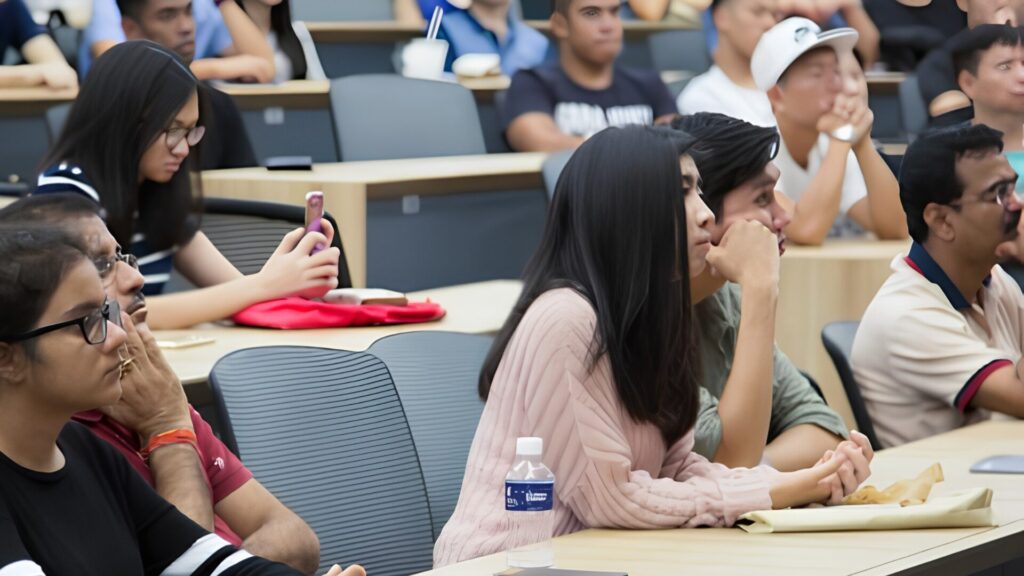
In this program, you join an intensive one-week academic enrichment programme at SMU’s city campus, engaging with interdisciplinary content shaped by the World Economic Forum’s Future of Jobs 2025 framework. Through seminar-style classes and structured group discussions, you explore leadership, critical thinking, and collaboration as tools for addressing complex societal challenges, methods central to social science inquiry.
You build foundational exposure to data analytics and data visualization, examining how these methods support decision-making across social and organizational contexts. Sample classes in areas such as cybersecurity and software engineering introduce you to how technology intersects with human systems and society. You complete a group project and deliver a final presentation to a panel of judges.
Why it stands out: It combines an interdisciplinary, discussion-based curriculum anchored in the WEF Future of Jobs framework with full residential immersion on a central business district campus, offering a structured, non-graded preview of university-level social science and leadership study at one of Asia’s most internationally recognized institutions.
14. Community Youth Leadership in a Sustainable World
Location: National University of Singapore (NUS), Singapore
Cost: Not publicly listed (Requires direct inquiry for open/group enrolment)
Dates: June to August or December to February
Application Deadline: Not publicly listed (Dependent on specific group or open enrolment calendars)
Eligibility: High school and pre-university students in grades 10-12; at least 15 years old; open to international students
The Community Youth Leadership in a Sustainable World programme is built around one central question: how do we actually make progress on the 17 Sustainable Development Goals? Over the course of four interactive workshops, you’ll dig into the opportunities and challenges across the region tied to the SDGs, covering everything from public policy and institutional change to individual values and community action.
You’ll be given real tools and frameworks to break down complex issues around climate change and sustainability, and then apply them through case study analyses, breakout group discussions, peer-sharing, and pop quizzes. The program wraps up with a group presentation where you and your peers share your key takeaways and insights.
Why it stands out: You’re not just learning about sustainability in theory; you’re building the leadership skills and analytical frameworks to actually do something about it at a community level.
15. Nanyang Technological University (NTU) – Inspiring NTU: Future Exploration Programme
Location: Nanyang Technological University, 50 Nanyang Avenue, Singapore
Cost/Stipend: S$3,542.50 program fee (June run); S$3,106.50 program fee (July run); group rate of S$3,379 / S$2,943 available for two or more students registering together; programme fee inclusive of residential accommodation at NTU student hostels / No stipend
Dates: June Run: June 22-26; July Run: July 20-24
Application Deadline: March 25th (June run); May 25th (July run)
Eligibility: High school, junior college, or pre-university students aged 16 and above; good command of English; curiosity about technology, innovation, and global developments; open to international students
In this program, you engage with social science–relevant topics, including an NTU economics lecturer’s examination of the policies and development strategies shaping Singapore’s economic performance over six decades, the societal implications of AI on careers and economies, and the dynamics of innovation and entrepreneurship in Singapore’s public and private sectors. You attend a dedicated session on FinTech, exploring how digital payments, blockchain, and AI are restructuring financial systems, grounding abstract economic concepts in real-world industry transformation.
Guided tours of NTU research facilities, including the Robotics Research Centre and Singapore Centre for 3D Printing, connect social science theory to applied technological research. The programme closes with an NTU Office of Admissions talk and student ambassador–led campus exploration.
Why it stands out: It provides a grounded, interdisciplinary perspective on how technology and public policy intersect in one of Asia’s most distinctive economies.
From Social Science Insight to Personal Growth
Social science helps you see people, policy, and culture with sharper questions. It teaches you to look beyond opinions and understand evidence clearly and fairly.
The 15 social science programs in Singapore for high school students mentioned here can turn curiosity into practical skills through research, discussion, policy analysis, and collaboration.
Use each project to notice how you communicate, lead, adapt, and respond when ideas become complex or challenge your assumptions in real academic settings.
What could you build next with stronger confidence, emotional intelligence, and leadership? Explore our Personal Development blogs to keep developing skills that move with you.