





 Русский (RU)
 Українська (UK)
 Türkçe (TR)
 Italiano (IT)
 Français (FR)
 Português (PT)
 中文 (中国) (ZH)
 Español (ES)
 日本語 (JA)
 ไทย (TH)
 Deutsch (DE)
 Ελληνικά (EL)
 Polski (PL)
 Bahasa Indonesia (ID)
 Nederlands (NL)
 العربية (AR)
 한국어 (KO)

4.0 GPA, honour graduate, top of your class, sounds unique, right? Not at Oxford. At Oxford, that’s the generic profile, so how do you stand out?
Oxford summer programmes can strengthen your application by giving you clear examples: discussions, readings, projects, and questions you pursued independently. Used well, those details can lift your profile to the top of a crowded stack.
In this article, we’ll cover 7 ways these programmes can support your application. You’ll also learn how to use the experience in your personal statement and in interviews.
Let’s get straight into it.
Why Admissions Teams Value Learning Beyond School
Admissions teams know grades matter, but they also know top marks are common in selective applicant pools. What helps you stand out is evidence of how you learn when nobody is steering the process. Learning beyond school shows you choose challenge on purpose, follow questions past the syllabus, and build academic habits that look a lot like university study.
There’s data behind this. In NACAC’s Fall 2023 admissions survey of four-year colleges, 44.3% rated extracurricular activities as moderately important, and 6.5% rated them as of considerable importance in admission decisions.
For Oxford-style selection, that value becomes even more practical. Academic experiences outside school give you concrete examples to write about, stronger reflection for your application, and richer material for interviews where tutors are testing how you think, not what you’ve memorised.
7 Ways Oxford Summer Programmes Support Applications
Oxford summer programmes can strengthen your application by giving you specific academic evidence, not just another line on your CV.
Here are 7 ways Oxford summer programmes can help you stand out in a competitive applicant pool.
1. Deeper Academic Insight Outside School
You might love Science at school, then realise it’s far broader than your exam topics. Our Oxford summer programmes help you test that shift through guided reading, discussion, and big questions without neat mark-scheme answers.
You explore how real scientists think, argue, and evaluate evidence. You leave with a clearer academic direction, plus specific ideas to reference in your personal statement and interviews, which makes your interest feel credible.
2. Confidence Gained Through Intellectual Stretch
Imagine being asked a question you can’t answer straight away, then being expected to talk it through anyway. That’s the kind of stretch that builds real academic confidence.
Our Oxford summer school puts you in discussions where you learn to think aloud, challenge assumptions, and improve your ideas in real time. When you later face tough admissions questions, you’re calmer, clearer, and more convincing because you’ve practised that pressure before.
3. Proof of Long-Term Subject Interest
Oxford tutors don’t just want to hear that you’re “passionate”. They want evidence you’ve stayed curious over time.
Joining a summer school helps because it gives you credible proof, not just a promise: a reading that changed your view, a question you pursued beyond the session, or a project you chose to extend. When you can explain what you explored and why it mattered, your commitment feels real.
4. Differentiation in Highly Selective Admissions
Honours graduate, perfect grades, glowing recommendation letters, that’s the baseline for many Oxford applicants. When the paper profiles blur together, differentiation comes from what you can explain, not what you can list.
A strong summer school experience adds depth because it gives you specific academic moments to reflect on: ideas you wrestled with, feedback you acted on, and questions you chose to pursue. That’s harder to fake.
5. Concrete Experiences to Discuss at Interview
Picture an admission officer pausing and asking, “What would change your mind?” You can respond with a real example from our summer school, like the moment a tutor challenged your first answer, introduced a different perspective, and helped you rethink your conclusion.
That kind of story shows intellectual flexibility in action. It proves you don’t just hold opinions, you test them, refine them, and learn fast under pressure.
6. Early Development of Independent Study Skills
2 weeks of immersion away from home and your usual support systems change how you study. At our Oxford summer school, you manage your own time, plan your reading, meet deadlines, and show up prepared for discussion.
You learn what self-discipline looks like on a busy academic schedule, not in theory, but in real life. That independence carries straight into university, where nobody chases you, but everyone expects you to keep up.
7. Broader Worldview Shaped by Diverse Peers
Someone from Brazil hears your argument and spots a blind spot you missed. A peer from Korea adds context you’d never considered. That’s when your thinking levels up.
At Immerse, we’ve welcomed participants from more than 150 nationalities, so discussions rarely stay one-dimensional. You learn to explain ideas clearly, handle disagreement, and see your subject through new lenses, which improves how you write and speak in applications.
Creative Writing
In-person
Reach your full writing potential against the stunning...

International Relations
In-person
Analyse global dynamics in Oxford, a city that...

How to Use the Oxford Summer School Experience in Your Application
The strongest applications don’t list experiences, they interpret them. That’s what you need to do here. Here are some ways you can integrate your Oxford summer school experience.
In Your Personal Statement
- Pick one “anchor moment” and build around it, like a tutorial question that exposed a gap in your thinking.
- Name the idea, then show your thinking: what you believed, what challenged it, and what you believe now.
- Add one sentence of extension to prove independence, such as a book chapter, journal article, or lecture you pursued afterwards.
- End with direction: the Oxford-style question you’d explore next and why it matters to your subject.
- Keep it grounded in substance, not scenery. Mention place only if it explains learning, not status.
In Interviews
- Prepare three mini-stories using the format: claim, evidence, counterargument, refined view. Practise saying them aloud.
- Bring one “intellectual risk” example, like a time you changed your mind after feedback or peer debate.
- Expect follow-ups. Rehearse answering: “What would change your mind?” using evidence, not opinion.
- Link the experience to how you’ll study at university, like how you handled reading volume, note-making, or self-study time.
- Practise concise summaries. Aim for 20 seconds first, then expand if the tutor pushes further.
Join the Immerse Education 2025 Essay Competition
Follow the instructions to write and submit your best essay for a chance to be awarded a 100% scholarship.
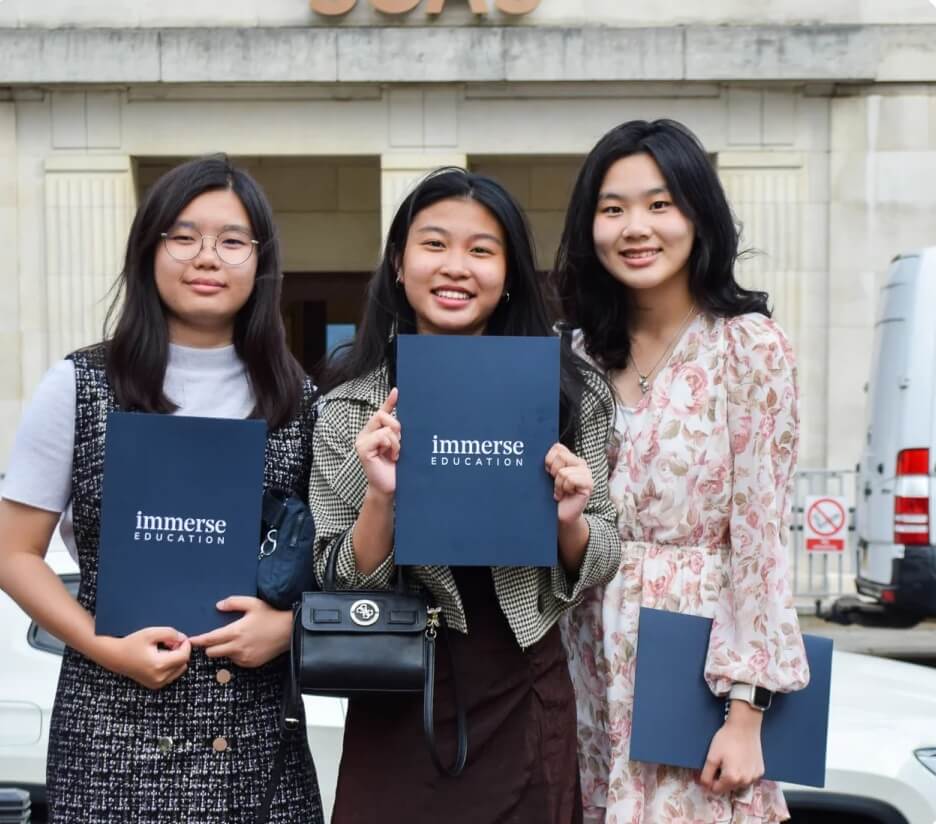
Should You Enrol in an Oxford Summer Programme?
Enrol if you want more than another achievement to list. The real value is academic clarity and evidence.
If you enjoy being challenged, speaking up in discussion, and testing ideas without a neat mark scheme, you’ll gain quickly. You’ll also leave with strong material for your application, like readings, debates, and feedback you can reflect on with confidence.
If you’re enrolling purely to tick a box for top universities, it’s likely to be useless. Selective admissions teams don’t reward a programme name on its own, and they can spot prestige-chasing fast. Oxford-level selection rewards how you think and learn, so highlight the learning, not the label.
If you show up curious and do the work, our Oxford summer school can give you proof that makes your application genuinely convincing.
FAQs
Will doing an Oxford summer course guarantee I get into Oxford University?
No. Summer programmes don’t guarantee admission. They strengthen applications only when you evidence learning, reflection, and academic growth.
Can I mention multiple summer programmes in my application?
You can, but depth beats quantity. One well-analysed experience is stronger than several listed without reflection.
Are Oxford summer programmes useful if I already have top grades?
Yes. Top grades are common. These programmes help differentiate you by showing how you think beyond exams.
When is the best time to attend an Oxford summer programme?
Ideally, before writing your personal statement, so the experience genuinely shapes your academic direction.
Conclusion
Oxford summer programmes can help, but only when you turn the experience into evidence. It’s the learning, reflection, and growth that carries weight.
The strongest applications show a clear academic direction. They point to specific ideas explored, questions pursued, and feedback acted on.
If Oxford is your goal, use experiences that sharpen how you think, speak, and study. Then communicate that clearly in your application.
If you’re ready to challenge yourself, take a look at our Oxford summer courses where you’ll learn alongside ambitious peers, get stretched by expert tutors, and leave with the kind of academic proof that makes your application stand out.