
 Русский (RU)
 Українська (UK)
 Türkçe (TR)
 Italiano (IT)
 Français (FR)
 Português (PT)
 中文 (中国) (ZH)
 Español (ES)
 日本語 (JA)
 ไทย (TH)
 Deutsch (DE)
 Ελληνικά (EL)
 Polski (PL)
 Bahasa Indonesia (ID)
 Nederlands (NL)
 العربية (AR)
 한국어 (KO)
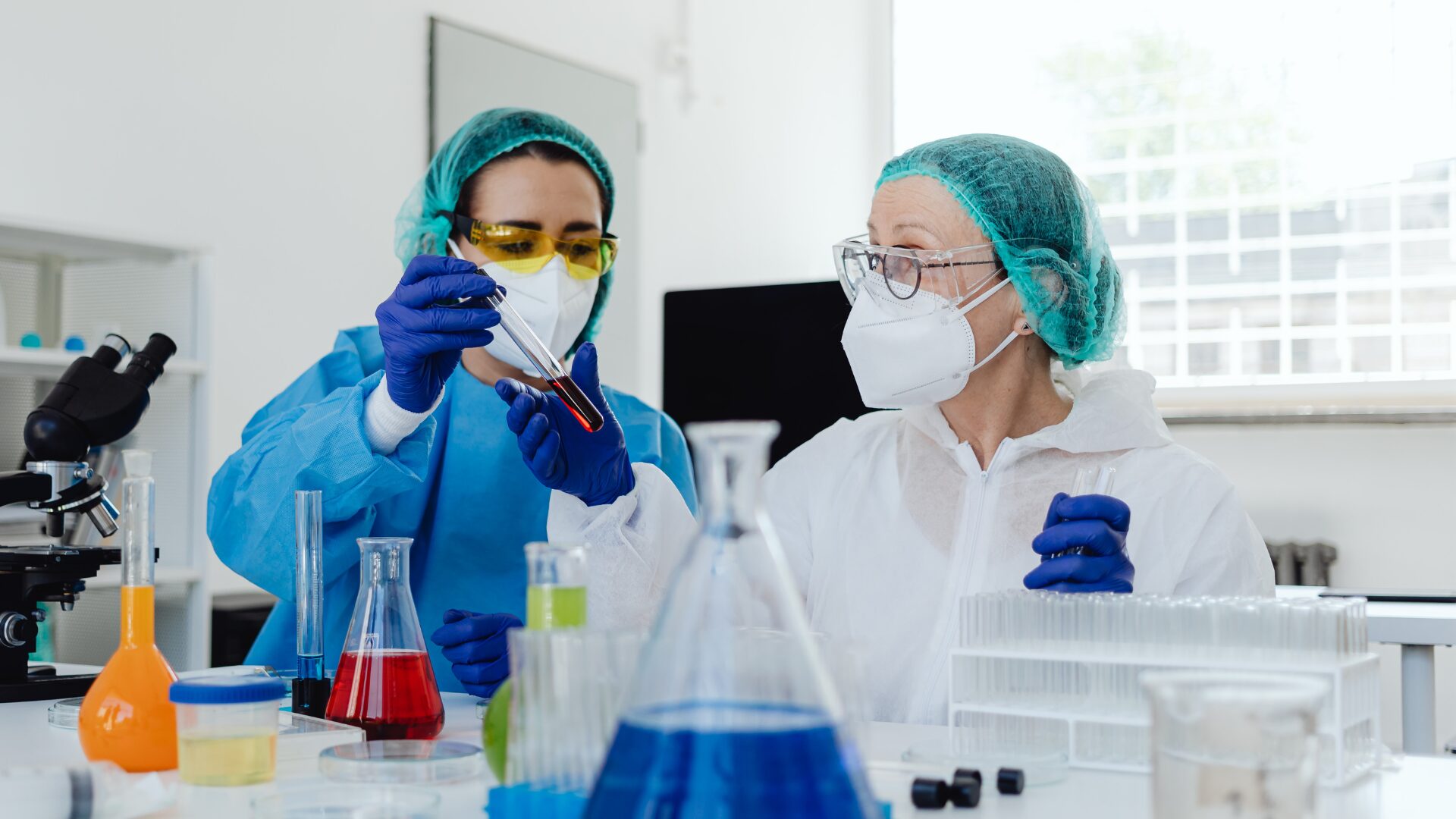
If you’re a high school student interested in chemistry, it can feel both fascinating and overwhelming. You might wonder if you resonate with the subject outside of textbooks. After all, chemistry is as much about hands-on experimentation as it is about theoretical knowledge. One of the best ways to explore your interests is through chemistry programs for high school students.
Picture conducting experiments in state-of-the-art laboratories, working with world-renowned faculty, or collaborating with peers who share your interests. Now imagine exploring your chemistry interest alongside an experience that mirrors university life. Chemistry programs for high school students offer a blend of deep subject study and the opportunity to explore undergraduate life at host university campuses.
What chemistry programs for high school students are available?
But would a chemistry program be worth it? Aren’t some programs just expensive ways to learn the same concepts you’ve been learning in school? These doubts are not misplaced, which is why proper guidance is important, so you can pick the programs that are right for you.
Across universities & research centers, a range of rigorous, intensive, and hands-on chemistry programs are available. You’ll get to explore topics such as analytical chemistry, organic chemistry, biochemistry, and more. You’ll be taught by experienced faculty to perform laboratory techniques, interpret experimental data, and contribute to ongoing research.
If you’re just starting out in the subject, there are plenty of opportunities that cater to those needs, while still involving hands-on components and faculty guidance.
To help you decide, we’ve crafted a list of 15 Chemistry Programs for High School Students. They’ve been handpicked for their experimental research opportunities, faculty mentorship, and prestige.
15 Chemistry Programs for High School Students
1. Center for Excellence in Education – Research Science Institute
Location: MIT Cambridge, Massachusetts
Cost: Free
Dates: June 28th – August 8th. Details here
Application Deadline: December 10th
Eligibility: Students in the middle of their junior year (third year, or grade 11) of high school. International students have their own selection procedure & selection schedule
RSI is a fully funded, six-week chemistry program of advanced STEM coursework and practical research, often regarded as one of the most rigorous chemistry programs for high school students. You’ll have a first week of intensive lectures on cutting-edge science topics taught by leading professors, then spend the next five weeks working on an independent research project under the guidance of an expert mentor.
You will be guided to read current scientific literature, develop and do your own research plan, and at the end of the day, present your findings in both written and conference form. The program aims to mentor you through the entire research process from start to finish, including practical lab work and academic collaboration.
Why it stands out: It gives you an experience of the complete research process, so you’ll be better prepared for future university research.
2. Immerse Education’s Chemistry Online Research Program
Location: Online
Cost: Varies; financial aid available
Dates: Year-round
Application Deadline: Year-round cohorts
Eligibility: Students around the world aged 13-18 currently enrolled in middle or high school
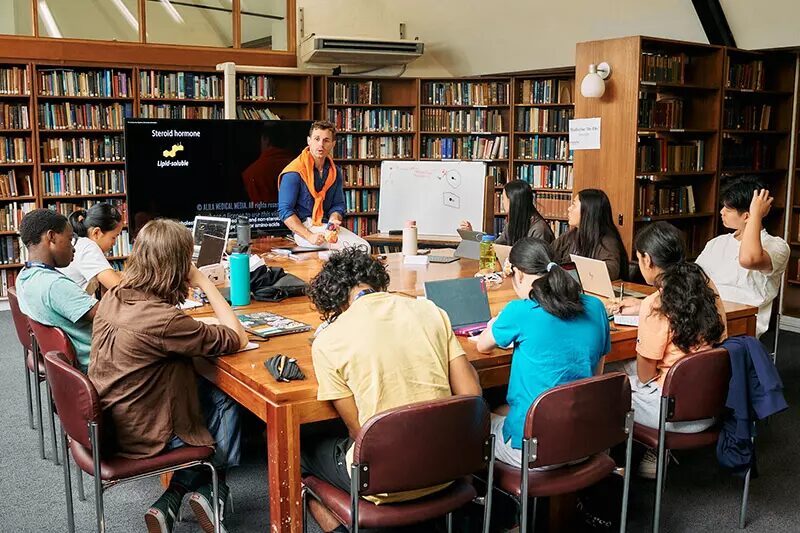
At Immerse’s Online Research Program, you will have the opportunity to study under tutors from universities like Oxford and Cambridge, mirroring undergraduate education. You will attend 1:1 weekly sessions with your tutor and design an independent research project in Chemistry. You can pick any topic of your interest, such as pharmaceuticals or materials, and create your research project around the same.
You will gain practical knowledge, learn how to approach scientific questions, and improve your ability to explain complex ideas clearly. You’ll also have access to a global network of students who share your interests in chemistry. The online and global nature of the program makes it accessible and flexible while providing you with university-style learning opportunities. You can find more details about the applicationhere.
Why it stands out: You’ll get access to 1:1 Oxbridge- or Ivy-style research supervision culminating in a publishable academic paper.
3. Boston University RISE Internship – Chemistry
Location: Boston University, Boston, Massachusetts
Cost: Varies; financial aid available. More details here
Dates: June 28th/29th – August 7th
Application Deadline: Not specified yet; applications open on December 15th
Eligibility: U.S. citizens and legal permanent residents who are entering their senior year of high school are eligible to apply for the RISE program
The Research in Science & Engineering (RISE) program at Boston University is a six-week program over the summer in which you’ll assist Boston University faculty, graduate students, and peers from the program on real laboratory research. The practical will help in building hands-on skills in courses like biology, chemistry, engineering, neuroscience, and more offered in the program.
Apart from the collaboration on faculty-led research projects, you will attend academic and professional workshops. The workshops will cover topics like research ethics, reading a research paper, the scientific process, and networking in the scientific community. Upon completion, you’ll present your findings at a symposium, gain fundamental knowledge on the subjects, and develop technical abilities.
Why it stands out: You’ll study the larger research process, giving you an idea of how research works at universities and in actual life.
4. Stanford University – IFSS Program
Location: Stanford University, California
Cost: Free
Dates: June 16th – June 26th
Application Deadline: Not specified yet
Eligibility: High school students must be at least 16 years old by the start of the program, and must be local to four counties: Alameda, Santa Clara, San Francisco, or San Mateo.
In the Inspiring Future Scientists through Shadowing (IFSS) program, you will be fully immersed in the research environment of the chemistry department. You will observe researchers and graduate students as they work on research projects. Instead of working on a single research project, you’ll have a firsthand experience of multiple scientific techniques and lectures.
You’ll engage with researchers, observe scientific methodologies, and understand the experimental process. Upon completion, this experience will help you understand the field of chemistry at a basic theoretical and practical level.
Why it stands out: You will be working on multiple projects and labs, helping you narrow down what fields you are truly interested in.
5. YSP Summer Focus – WU in St. Louis
Location: Washington University, St. Louis, Missouri
Cost: $4,500 stipend provided
Dates: June 1st – July 24th
Application Deadline: January 26th
Eligibility: Only high school juniors (11th grade) entering their senior year (12th grade) after the summer, who are residents of Missouri or Illinois
The Young Scientist Program offers high school students an opportunity to work closely with a mentor on an intensive biomedical research project designed to be completed within eight weeks. You will be paired with a Mentor (graduate students, postdocs, and laboratory staff) who will work with you one-on-one on an independent biomedical research project.
You will participate in two courses during the program: a Writing Course to develop skills in scientific communication and critical reading of research literature, and a NextUp Course focused on college preparation and career exploration. By the end, you will present your findings to mentors in a symposium, be trained on research methodologies and scientific communication, and receive a stipend of $4,500.
Why it stands out: Its structure helps you gain research experience that mirrors undergraduate research and also prepares you for college admissions.
6. Princeton University – Laboratory Learning Program
Location: Princeton University, Princeton, NJ
Cost: Free
Dates: 5-6 weeks in summer, varies depending on the project
Application Deadline: March 15th (tentative, based on previous year)
Eligibility: U.S. high school students must be 16 years old and have not yet turned 18 by the program. Legal Permanent Residents (LPRs) currently in the U.S can also apply.
The Laboratory Learning Program at Princeton University takes you into real scientific research by placing you in active labs working alongside faculty, graduate students, and researchers. The program functions full-time at regular business hours. You’ll undergo thorough laboratory safety training by faculty, whom you will also assist closely with on ongoing projects.
You’ll take part in practical experiments and learn advanced lab techniques in subjects like chemistry, chemical engineering, and molecular biology. The program will conclude with your two-page research summary and presentations, with acquired practical skills and preparation for STEM careers.
Why it stands out: You’ll work at active, existing Princeton labs and access high-level equipment that is typically reserved for university students.
7. Rockefeller University – SSRP
Location: Rockefeller University, New York, NY
Cost: Free
Dates: June 22nd – August 6th
Application Deadline: January 2nd
Eligibility: High school students accepted must be of age 16 or older at the start of the program and must commit to attending the entire program; international students accepted
In the Rockefeller University SSRP, you’ll work as part of a professional research team led by graduate and postdoctoral mentors from Rockefeller, MSK, and WCMC. Your team of 8-10 students mentored by 3 research fellows will conduct research within dedicated RockEDU teaching laboratories. In the first week, you will be introduced to the research topic and research techniques, and laboratory norms. In the second week, you’ll choose a research question related to the team topic to explore.
You’ll study research questions guided by the team leader and scientist-mentors by the end of the fifth week. By the end of the program, in the sixth & seventh weeks, you will complete the search topic, analyze its data, and submit a poster to present findings at the program symposium.
Why it stands out: It focuses on independent research, mentorship from eminent researchers, and a final poster presentation, providing you with valuable experience for STEM applications. Source: Penn University
8. Penn University Arts and Sciences High School Programs – Chemistry Research Academy
Location: University of Pennsylvania, PA
Cost: $10,050
Dates: July 11th – August 1st
Application Deadline: Opens in December; rolling admissions
Eligibility: Domestic and international high school students currently in 10th -11th grade
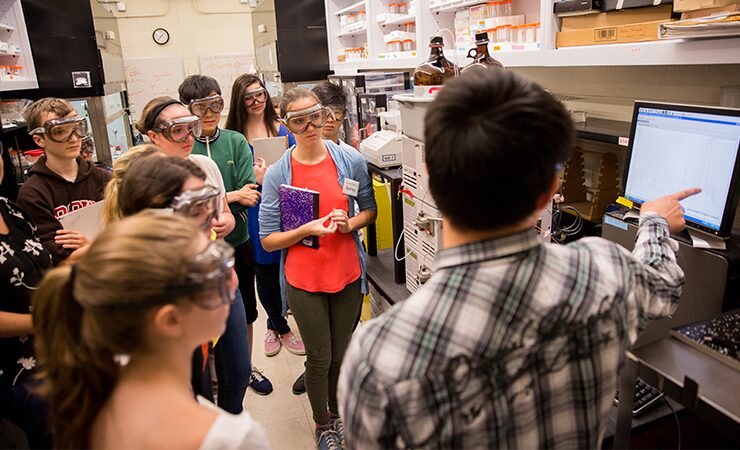
The Penn Chemistry Research Academy is a leading program of molecular research and modern chemistry. You will gain knowledge to understand the theory, while having opportunities to gain skills in modern techniques like spectroscopy and gas chromatography. The program has 50% practical class time, in which you learn and study analytical techniques and optimization of synthetic methods.
Within theoretical learning, you will learn chemical bonding principles in organic and coordination chemistry, how analytical techniques work, and material science’s fundamentals and applications. This experience prepares you to approach chemistry with knowledge and the skills necessary for future academic and research pursuits.
Why it stands out: It introduces you to advanced chemistry concepts, preparing you well for competitive STEM applications.
9. University of Notre Dame – Exploring the World of Chemistry
Location: Notre Dame Campus, Indiana
Cost: $5,200; financial aid available
Dates: Session I : June 6th – 20th; Session II : June 27th – July 11th
Application Deadline: February 18th
Eligibility: At least 16 years old and current sophomores and juniors (will be rising juniors and seniors); international students accepted
‘Exploring the World of Chemistry Summer Scholars Session I and II’ is a fundamental chemistry program with an emphasis on practical laboratory work. Within the program, you will participate in discussions and practical laboratory work, providing you with an opportunity to learn how to apply theory in real-life situations.
You’ll be introduced to the lab setting and use modern instruments to conduct experiments that cover various chemistry topics. The program will guide you from the structures of organic compounds to analytical techniques. This approach helps deepen your fundamental understanding by making the concepts practical beyond textbooks and lectures.
Why it stands out: It focuses on lab work and provides high-quality equipment, so you’ll better understand various theoretical chemistry concepts.
10. Michigan University Michigan Math and Science Scholars
Location: University of Michigan, Ann Arbor, MI
Cost: $2,500
Dates: Session 1: June 21st – July 3rd; Session 2: July 5th – July 17th; Session 3: July 19th – July 31st
Application Deadline: Applications open in mid-January
Eligibility: Applicant must be a rising sophomore, junior, or senior in high school from around the world
The Michigan Math and Science Scholars (MMSS) program engages you with the latest developments and research in math and science. In the program, you will study college-level courses like Organic Chemistry, Surface Chemistry, and Sustainable Polymers. You will be taught by Michigan faculty through lectures, demonstrations, and lab work. You will cover topics like nomenclature, stereochemistry, reaction mechanisms, and instrumentation, including IR and NMR spectroscopy, in Organic Chemistry.
In Sustainable Polymers and Surface Chemistry, besides textbook concepts, you’ll acquire practical experience by working on projects like stop-motion animation to communicate scientific findings. The program is fully residential and provides a strong foundation in advanced chemistry to prepare you for future scientific study and careers.
Why it stands out: You’ll be taught directly by Michigan faculty and reside on the college campus, giving you a glimpse into what university life would be like.
11. Johns Hopkins Fast-Paced High School Chemistry
Location: Loyola Marymount University, Los Angeles, California, and Roger Williams University, Bristol, Rhode Island
Cost: $6,459 – $7,259; Varies by location
Dates: Session 1: Jun 22nd – Jul 11th; Session 2: Jul 13th – Aug 1st
Application Deadline: Opens in January
Eligibility: For students in grades 7-11. Students must achieve qualifying scores on an advanced assessment to be eligible for CTY programs. If you don’t have qualifying scores, you have several different testing options. Learn more
Johns Hopkins Center for Talented Youth’s Fast-Paced High School Chemistry program provides a wide coverage of multiple fundamental chemistry concepts. You will learn to identify the matter’s chemical properties, study atomic theory, and explore how molecules interact. Through lab work, you will learn how to apply scientific principles and evidence, explore the properties of water, and temperature and concentration effects on reaction.
You will learn characterization and differentiation between transition metals and representative elements, and identify the elements found in organic compounds. By the end, you will have completed at least 20 hours in the lab.
Why it stands out: It combines a revision of high-school chemistry with substantive lab work, preparing you well for AP exams and college applications.
12. SSP: Synthetic Chemistry
Location: Southwestern Oklahoma State University, Oklahoma
Cost: Free for participants with a family income of $75,000 or less; for more details, check here
Dates: June 8th – July 13th (tentative)
Application Deadline: February 21st (tentative)
Eligibility: Applicants must be at least 15 years old but not yet 19 during the program. Current freshmen, sophomores, and seniors are not eligible; international students accepted
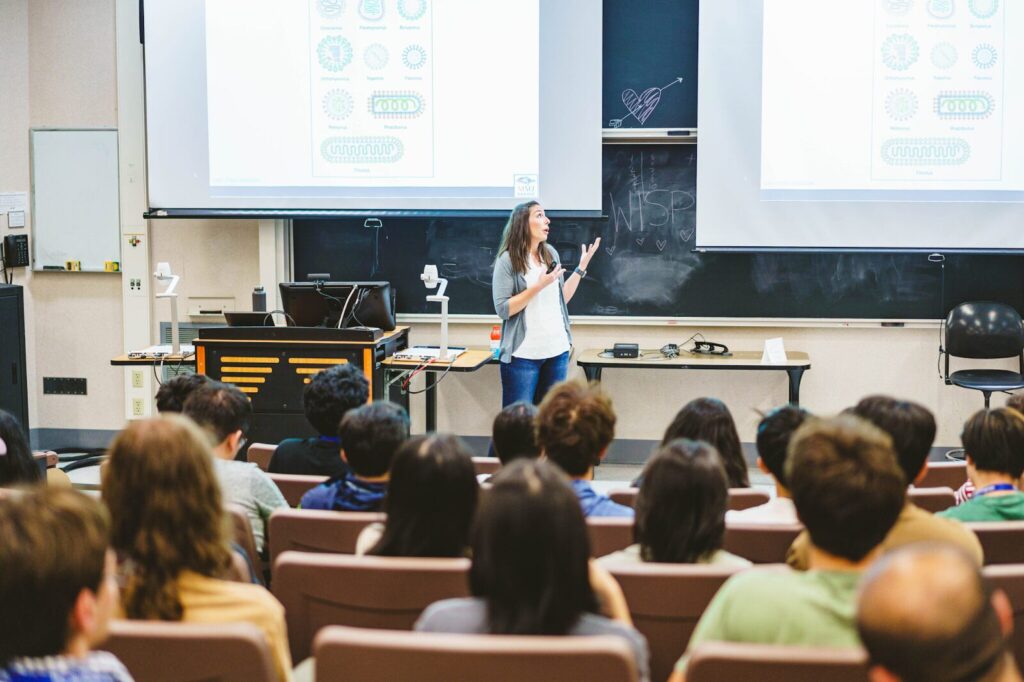
In the synthetic chemistry program, you will explore concepts like organic chemistry, coordination chemistry, and compound characterisation, making it one of the most academically advanced chemistry programs for high school students interested in undergraduate-level coursework. During the classes, you will learn how to use organic and inorganic chemistry to create safe and effective chemical reactions. You will learn techniques of de novo synthesis, characterizing organic and inorganic molecules.
In labs led by trained professionals and experienced chemists, you will learn how to pivot, optimize, and troubleshoot research problems. The program will start with 200-level Organic I and Organic II college courses and end with 300- to 400-level courses in inorganic and coordination chemistry for chemistry majors. By the end, you will complete and summarize the project and present a professional poster.
Why it stands out: It involves gradual progression to advanced courses, mirroring undergraduate studies.
13. NYU’s ARISE Program
Location: NYU Campuses, Greenwich Village, Manhattan & Downtown Brooklyn, NY
Cost: Free
Dates: June 1st – August 14th
Application Deadline: February 21st
Eligibility: U.S. citizens aged 16 or older, full-time high school students with a minimum 3.0 GPA
ARISE is a fully funded 10-week summer program for students interested in careers in STEM fields. In the first four weeks, the program introduces you to safety training, college writing workshops, and research skills. For chemistry, you could participate in biochemistry, flow chemistry, and nanostructure labs. You will assist faculty on real projects, gain 120 hours of lab experience, and contribute to research.
You will have access to group and one-on-one college application support. By the end of the program, you will showcaseyour work at the American Museum of Natural History (AMNH) Poster Symposium and receive a $1,000 stipend for your participation.
Why it stands out: You’ll get access to NYU’s alumni network with jobs, internships, and research opportunities.
14. UNO: AMRI High School Summer Research Program
Location: Advanced Materials Research Institute, University of New Orleans
Cost: $2000 stipend
Dates: June 1st – July 24th
Application Deadline: March 13th
Eligibility: Students must reside and attend high school within 40 miles of the University of New Orleans. A commitment for the entire summer is a requirement of program participation.
The High School Summer Research Program at the University of New Orleans offers you research positions in Computer Science, Chemistry, Physics, and Biology. Throughout this eight-week program, you will be part of a large team in labs and work with experienced scientists on exploratory projects. You will conduct fundamental and applied research in nanomaterials, sensor arrays, environmental remediation, 3-D printing, etc.
You will work full-time in labs and participate in weekly seminars. The tutorials would be in ethics, careers in materials science, laboratory safety, crystallography, magnets, and computational methods. By the end, you will receive a stipend of $2000.
Why it stands out: You can work on an independent project or with a group, giving you an experience of various kinds of research.
15. UCLA Summer Online – Chemistry
Location: Virtual
Cost: Varies (UCLA students, Non-UCLA students, US citizens, Non-US citizens)
Dates: Multiple sessions. Find more details here
Application Deadline: Multiple, depending upon the session
Eligibility: For High school students worldwide
UCLA Summer Online Chemistry Courses lets you explore topics like General Chemistry for Life Scientists, General and Organic Chemistry Laboratory, Structure of Organic Molecules, and many more advanced options like drug discovery and biochemistry. If you are interested in more than theoretical lectures, then you can also explore lab work, workshops led by UCLA’s research center, college preparation activities, and leadership seminars.
This is a flexible online platform where you can learn on your schedule and enhance your skills. You will also receive a completion certificate when you finish. You also get to earn UCLA credits and prepare for college-level science.
Why it stands out: It offers theoretical and practical chemistry education online, which is typically only offered in person.
Preparing for University, One Experiment at a Time
Early exposure to hands-on chemistry helps clarify whether the subject excites you beyond textbooks. Practical experiments, laboratory work, and data analysis turn abstract ideas tangible.
These experiences show how chemistry programs for high school students build scientific thinking, independence, and confidence while reflecting university expectations before students commit to degrees.
Through research, collaboration, and experimentation, each programme develops skills beyond classrooms. You learn to question evidence, analyse results, solve problems logically, and communicate findings clearly.
To continue preparing thoughtfully, our University Preparation blogs offer guidance on academic readiness, research pathways, and transitions into higher education, helping you plan next steps.