
 Русский (RU)
 Українська (UK)
 Türkçe (TR)
 Italiano (IT)
 Français (FR)
 Português (PT)
 中文 (中国) (ZH)
 Español (ES)
 日本語 (JA)
 ไทย (TH)
 Deutsch (DE)
 Ελληνικά (EL)
 Polski (PL)
 Bahasa Indonesia (ID)
 Nederlands (NL)
 العربية (AR)
 한국어 (KO)

If you’re a high school student interested in biology, the subject can feel both fascinating and overwhelming. From genetics and ecology to molecular biology, there’s so much more to the field than what you can encounter in a typical classroom. If you are wondering what studying biology at a higher university level looks like, biology summer programs could be the way to do so.
Imagine spending your days conducting experiments in university laboratories, analyzing genetic data, or studying ecosystems under the guidance of experienced researchers. Many programs offer the chance to explore university campuses, collaborate with peers who share your interests, and experience biology academics at the university level.
At a biology summer program, you can combine classroom learning with practical applications and gain exposure to how biological research actually works.
How to pick the best biology summer programs for high school students?
We know that there are many biology summer programs available, and not all of them offer the same level of academic value. Some may be expensive, overly introductory, or disconnected from meaningful scientific work, which is why identifying high-quality programs is essential.
Across universities and research institutions, you’ll find rigorous biology programs in molecular biology, genetics, neuroscience, ecology, and biomedical science. You may participate in lab experiments, data analysis, field research, or independent projects while learning from scientists and faculty members.
Even if you’re just starting out in biology, you can find beginner-friendly programs. For more advanced students, there are numerous programs allowing you to deep-dive into more advanced biology topics.
No matter the level, the programs would require dedication. To make your search easier, we’ve come up with a list of 15 Best Biology Summer Programs for High School Students. They’ve been selected for their academic rigor, hands-on learning opportunities, and strong mentorship experiences.
15 Best Biology Summer Programs for High School Students
1. The Broad Summer Scholars Program
Location: Broad Institute, Cambridge, MA
Cost/Stipend: Free to attend; participants receive a $3,600 stipend
Acceptance rate/cohort size: Highly selective
Dates: June 29th – August 7th
Application Deadline: January 21st
Eligibility: Rising high-school senior (you can apply in your junior year); attending high school in MA
When you enter the Broad Summer Scholars Program, you’ll spend six intensive weeks working side-by-side with scientists at one of the world’s leading biomedical research centers. You could be involved in cutting-edge projects spanning cancer biology, infectious disease, computational genomics, psychiatric genetics, or chemical biology, depending on your interests and lab assignment.
You’ll get practical experience in real lab work, and also benefit from structured training that’ll include tutorials on scientific thinking, guidance for poster creation, and sessions on presenting your findings. Outside the lab and classes, you’ll attend seminars by leading researchers, explore potential scientific career paths, meet peers who share your passion, and finally, present your own research at a formal poster session.
Why it stands out: You’ll join cutting-edge genomics projects, giving you access to computational tools, lab technologies, and mentorship from world-class scientists.
2. Immerse Education’s Biology Summer School
Location: Oxford, Cambridge, and Online
Cost/Stipend: Varies; summer school scholarship available through our bursary programme
Acceptance rate/cohort size: Selective; 7 average participants per class
Dates: 2 weeks during the summer
Application Deadline: Multiple summer cohorts; rolling admissions.
Eligibility: Students worldwide aged 13-18 currently enrolled in middle or high school
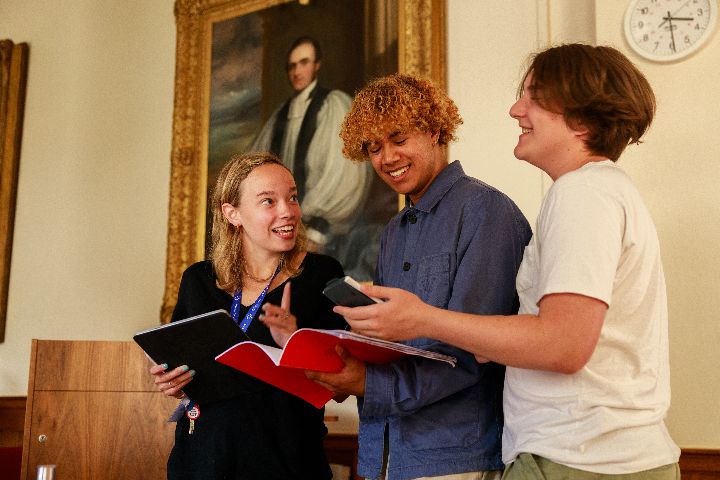
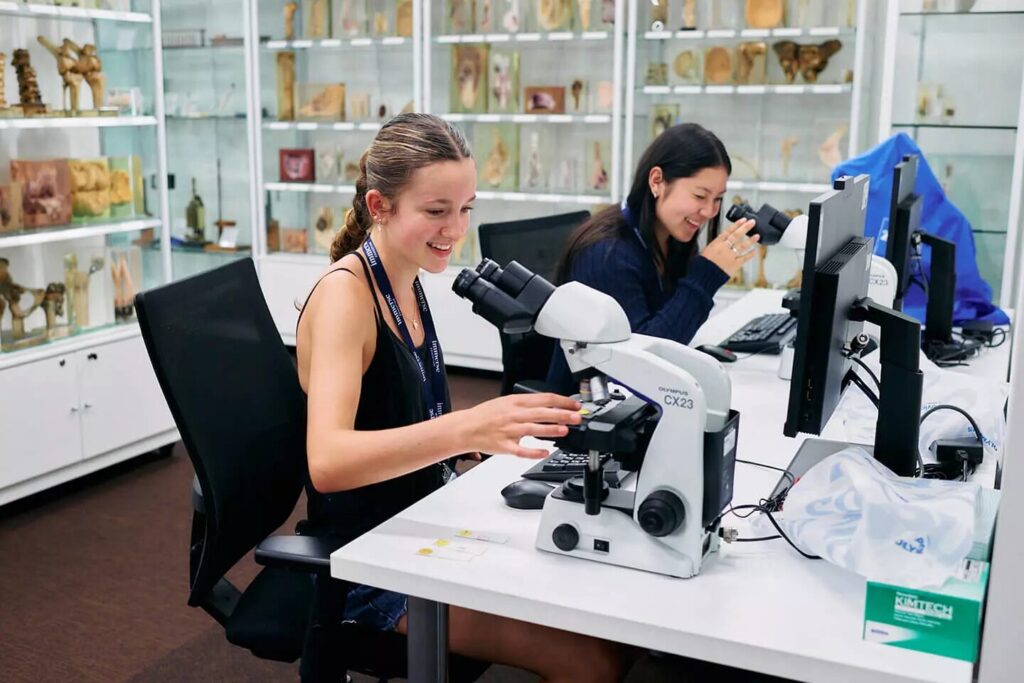
The Academic Insights Program is frequently recognised as one of the best biology summer programs for high school students, giving participants an immersive introduction to university-level study. You will live on campus and study in small groups of 7-10, and learn from tutors from eminent top universities like Oxford and Cambridge. If you join the Biology Track, you’ll step into a university-style learning environment where you’ll study cellular biology, genetics, ecology, and more, exactly as undergraduates would.
The course is experiential and focuses on hands-on learning. You’ll also get to design and carry out your own mini research project on a biology topic that fascinates you, giving a taste of real-world scientific work. By the end of the program, you’ll receive written feedback and a certificate of completion. You can find more details about the application and specific program details here.
Why it stands out: It pairs you with university-level tutors in focused small groups, helping you deepen subject knowledge and gain rigorous academic mentorship.
3. Stanford Institutes of Medicine Summer Research Program (SIMR)
Location: Stanford University, Stanford, CA
Cost/Stipend: Free to attend; participants receive a stipend; exact stipend amount may vary
Acceptance rate/cohort size: Highly selective
Dates: June 8th – July 30th
Application Deadline: February 21st
Eligibility: High school juniors or seniors aged 16+ by the start of the program, living in and attending high school in the U.S.
If you enroll in SIMR, you’ll spend eight weeks engaged in real biomedical research at Stanford, working in a lab under the direct supervision of a faculty member, graduate student, or post-doc mentor. You’ll get to choose from a variety of fields, from immunology, neurobiology, and cancer biology to genetics, bioinformatics, stem cell research, or bioengineering, depending on your interests.
During the program, you’ll split your time between lab work, safety training, lectures, and seminars about scientific careers and medicine. Towards the end, you’ll produce a research poster and present your findings to the Stanford community. You’ll participate in experiments, analyze data, and learn lab techniques, not as a class project, but as part of actual ongoing investigations.
Why it stands out: Its deep connections to Silicon Valley make it easier to transition to interdisciplinary courses such as biomedical entrepreneurship or AI-driven health research.
4. Wake Forest University— Biology Research Institute
Location: Wake Forest University, Winston-Salem, NC
Cost/Stipend: Tuition is $3,500
Acceptance rate/cohort size: Not specified
Dates: 5th July – 10th July & 19th July – 24th July
Application Deadline: Rolling basis; application opens on November 1st
Eligibility: High school students in grades 9 through 12; open to students from all geographic locations
At the Biology Research Institute, you will dive into the many layers of biology research alongside experts and peers. The schedule combines lab experiments with fieldwork, where you’ll explore topics such as plant hormone development, oceanic molecular biology, ecology, and disease biochemistry. You will collect and analyze scientific data, pose your own research questions, and share your findings in presentations to your cohort.
Throughout the program, you will learn laboratory techniques, engage in outdoor studies, and examine how biological systems connect at both tiny and global scales. This institute also provides a glimpse into how biologists think and work, helping you decide whether a future study in biology or a related science might be right for you.
Why it stands out: It immerses you in hands-on biological investigation, helping you understand how scientific inquiry works in real lab environments.
5. UChicago Medicine’s Research Start Program
Location: Multiple partner institutions in Illinois – primarily the University of Chicago (Chicago), the University of Illinois Urbana-Champaign (Urbana-Champaign), the University of Illinois Chicago, Northwestern University, and Rush University
Cost/Stipend: Free to attend; participants receive a stipend
Acceptance rate/cohort size: Highly selective – typically no more than 30 students are chosen each summer
Dates: June 15th – August 7th
Application Deadline: January 19th
Eligibility: High school juniors or seniors at the time of application, living in Illinois or Lake County, Indiana
If you join ResearchStart, widely regarded as one of the best biology summer programs for high school students, you’ll spend eight weeks embedded in a cancer research laboratory under the mentorship of established faculty and researchers. You’ll engage in full-time lab work, exploring areas such as cancer immunology, bioengineering, therapeutic development, molecular biology, and more.
Alongside, you’ll attend weekly workshops and seminars covering cancer biology, pharmacology, scientific writing, ethics, and career paths, helping you build both technical and soft skills. The experience culminates in a summer symposium where you present your findings to members of the scientific community, giving you a taste of what research presentation and professional scientific communication feel like. The program can help you build long-term research experience and strong mentorship networks. Here’s the link to the online application form.
Why it stands out: It offers structured research engagement with the medical faculty, helping you see how clinical research questions are formulated and pursued.
6. Carnegie Mellon University— Pre-College Program in Computational Biology
Location: Carnegie Mellon University, Pittsburgh, PA
Cost/Stipend: Residential tuition is about $10,750, and commuter tuition is about $8,041
Acceptance rate/cohort size: Very selective
Dates: 4-week program from 20th June – July 18th
Application Deadline: Early deadline is February 1st; final deadline is March 1st
Eligibility: High school students worldwide between 10th and 11th grade or 11th and 12th grade
In this summer program, you will explore the frontier where biology meets computation in one of the world’s leading computer science departments. You will spend your days alternating between laboratory experiments and computational challenges that help you analyze real biological data, such as DNA sequences from environmental samples.
You’ll work with robotics and cutting-edge tools while learning how to write code that answers research-inspired questions and reveals patterns in complex datasets. This program encourages collaboration and problem-solving as you work alongside peers who share your interest in both science and technology. Overall, you will have a deeper understanding of how modern biology relies on computational thinking and practical lab skills.
Why it stands out: It introduces you to the intersection of computing and life sciences, helping you build analytical and bioinformatics skills early.
7. Columbia University – State Pre-College Enrichment Program (S-PREP)
Location: Columbia University (Vagelos College of Physicians and Surgeons), New York, NY
Cost/Stipend: Free
Acceptance rate/cohort size: Selective
Dates: July 6th – July 31st
Application Deadline: April 15th
Eligibility: Students in grades 7-12; must be New York State residents
If you join S-PREP, you’ll dive into a focused, free summer enrichment program at Columbia designed to strengthen your foundation in biology, chemistry, mathematics, and pre-medical sciences. Over the course of July, you’ll attend daily classes covering topics like anatomy, biochemistry, organic chemistry, brain & cognitive science, depending on what fits your level and interest. In addition to STEM courses, the program offers college preparation workshops, SAT/PSAT preparation, academic counseling, and career guidance, giving you a head start if you’re considering a path in medicine or the health sciences.
Importantly, S-PREP isn’t just a one-time crash course; participation also gives you priority access to more advanced research internships at Columbia (for example, through neuroscience or cancer-research programs) if you qualify and apply.
Why it stands out: It offers academically challenging science coursework, helping you strengthen your background in biology and chemistry before college.
8. Geosciences Bridge Program at the University of Maryland Eastern Shore (UMES)
Location: UMES campus, Princess Anne, MD
Cost/Stipend: Paid internship; stipend of $500 per week
Acceptance rate/cohort size: Highly competitive
Dates: July 1st – August 9th
Application Deadline: May 31st
Eligibility: Graduating U.S. high school seniors
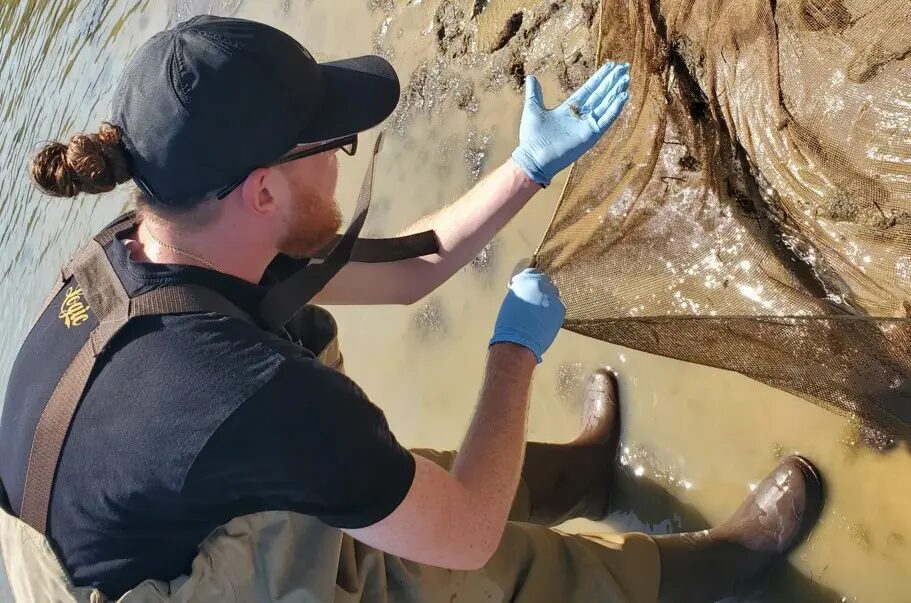
If you join the Geosciences Bridge Program at UMES, you’ll spend six immersive weeks living on campus, attending lectures, and taking part in field trips. You will conduct hands-on work in a broad range of geoscience areas, including marine biology, atmospheric science, environmental science, GIS/remote sensing, and marine geology. During this time, you’ll also take two college-credit courses, helping you transition into college-level academics even before you start your bachelor’s degree.
The program is particularly aimed at students from underrepresented groups in the geosciences, providing you with the opportunity to join a supportive cohort, connect with peers and faculty, and develop foundational skills. So, if you’re passionate about marine life, environmental issues, oceans, or climate, this can be a strong first step.
Why it stands out: It gives you exposure to Earth science and geoscience research; helpful if you’re interested in geology, climate, or environmental science early on.
9. New York University – Simons-NYU Science Explorations Program
Location: New York University, Manhattan, NY
Cost/Stipend: Free
Acceptance rate/cohort size: Selective; ~80 students are selected each summer
Dates: July 5th – July 25th
Application Deadline: March 13th
Eligibility: Rising high school junior, rising high school senior, or recent high school graduate, and U.S citizens/permanent residents
If you join the Simons-NYU Science Explorations Program, you’ll spend three immersive weeks at NYU exploring core disciplines like biology, chemistry, neuroscience, physics, and psychology through college-level lectures and practical labs. You’ll work under guidance from experienced NYU faculty and researchers, gaining exposure to scientific enquiry and experimental techniques.
The program will give you an opportunity to witness what college-level science feels like while still in high school. Alongside academics, you’ll collaborate with peers from diverse backgrounds who share your passion for science. Applications open around the end of January/beginning of February.
Why it stands out: Its labs are connected to national research centers, and you’ll contribute to cutting-edge computational and applied math projects.
10. The Rockefeller University – Summer Science Research Program (SSRP)
Location: The Rockefeller University, NYC, NY
Cost/Stipend: Free to attend
Acceptance rate/cohort size: The program accepts 32 students per summer, who are then divided into 4 teams of 8-10 scholars each
Dates: June 22nd – August 6th
Application Deadline: January 2nd
Eligibility: High school juniors or seniors across the world who will be at least 16+ at the start of the program
If you get into SSRP, you’ll spend seven intense weeks working full-time in real biomedical research labs at Rockefeller, under the guidance of experienced scientists and mentors. Right from the start, you’ll join a small research team. After a brief orientation, you’ll be helped to pick a research question to explore, then carry out experiments, collect data, and analyze results.
You’ll also attend elective seminars, workshops, and guest lectures that give context to your lab work and help you build professional skills, a structure typical of the best biology summer programs for high school students. At the end of summer, you’ll present your findings in a formal symposium. Crucially, SSRP doesn’t require previous lab experience; what’s more important is your genuine curiosity in science and willingness to learn. Here’s the link to apply.
Why it stands out: It focuses on independent research, mentorship from eminent researchers, and a final poster presentation, providing you with valuable experience for STEM applications.
11. Research Science Institute (RSI)
Location: MIT, Cambridge, MA
Cost/Stipend: Free
Acceptance rate/cohort size: Highly selective; acceptance rate is less than 2.5 percent
Dates: June 28th – August 8th, details here
Application Deadline: December 10th
Eligibility: High school juniors aged 16+; international students from participating countries
At Research Science Institute (RSI), you’ll spend six intense weeks at MIT diving into advanced STEM topics alongside some of the brightest students from around the world. The summer begins with a week of high-level coursework taught by experienced professors, where you’ll explore themes in biology, chemistry, physics, math, or computer science.
After that, you’ll transition into mentored research, designing and executing a scientific investigation under the supervision of a research mentor, working in lab environments that mirror university-level research. Throughout the program, you’ll sharpen your skills in scientific thinking, experiment design, data analysis, and communication. The program culminates with a conference-style presentation where you deliver both written and oral reports on your work.
Why it stands out: You’ll have the opportunity to complete actual research projects at RSI’s cutting-edge labs that are ordinarily inaccessible to high school students.
12. University of Michigan’s Aspirnaut Internship Program
Location: University of Michigan, Ann Arbor, MI
Cost/Stipend: Participation is fully funded; you receive a stipend
Acceptance rate/cohort size: 6-10 students per year
Dates: June 14th – July 24th
Application Deadline: February 15th
Eligibility: Open to rising high school seniors; Non-US citizens need a U.S. work authorization (EAD) and must attend a Michigan high school
If you join the Aspirnaut program, you’ll spend six weeks living on the University of Michigan campus and working in life sciences labs alongside experienced researchers. You’ll participate in a genuine research project, from designing experiments to collecting and analyzing data, therefore, contributing to active scientific work. The program also offers a full residential experience, which can help you get a feel for college life.
Beyond lab work, you’ll benefit from professional development that includes mentorship, college and career guidance, and standardized-test preparation. At the end, you’ll present your findings, giving you valuable experience in scientific communication and a strong addition to your college applications or future STEM resume. Here’s the application portal.
Why it stands out: It combines research immersion with residential community building, helping you explore scientific careers while developing collaboration and technical skills.
13. University of Pennsylvania – Provost’s Summer Mentorship Program (SMP)
Location: University of Pennsylvania, Philadelphia, PA
Cost/Stipend: Free
Acceptance rate/cohort size: Selective
Dates: July 6th – July 31st
Application Deadline: Applications open late December/ early January
Eligibility: Open to students enrolled in a Philadelphia high school who are currently in 9th or 10th grade
If you join SMP, you’ll spend four weeks on Penn’s campus exploring a professional track (e.g., medicine, nursing, engineering, dental, or law), depending on which affiliate school you’re paired with. During that time, you’ll get practical exposure and experiential learning in your chosen field.
You’ll also take part in workshops that will cover financial literacy, time management, personal statement writing, and other skills that help with university applications. The program includes field trips, a city-wide college fair, and sessions to explore different career paths. It serves as a great way to learn about various options and network with peers, professionals, and college reps. If intrigued, you may contact SMP.
Why it stands out: You’ll engage in medically relevant research projects, helping you connect scientific questions with real healthcare applications.
14. NIH High School Summer Internship Program (HS-SIP)
Location: NIH Institutes & Centers in the U.S.
Cost/Stipend: Paid internship
Acceptance rate/cohort size: Not specified
Dates: Varies by course
Application Deadline: February 18th
Eligibility: Graduating U.S. high school seniors with a certain age criterion; check here
If you join NIH SIP, you’ll spend your summer working full-time in real biomedical or behavioral-science research at NIH labs, guided by principal investigators. You’ll gain practical experience, applying modern lab or computational methods across molecular biology, bioinformatics, epidemiology, neuroscience, or related disciplines. Alongside research, you’ll access structured professional-development resources, career guidance, and even a community of fellow interns working across different fields.
At the end of your internship, you’ll have the opportunity to present your research during a Poster Day, giving you a taste of how scientific results are communicated in real research environments. SIP offers a strong bridge for you if you want to explore biomedical science as a career. Here’s the link to start your application.
Why it stands out: It lets you work alongside federal researchers on meaningful biomedical projects, helping you gain lab experience that stands out on applications.
15. Stanford STaRS Internship Program
Location: Stanford University, Stanford, CA
Cost/Stipend: Free
Acceptance rate/cohort size: Approximately 20 people each summer
Dates: June 15th – August 7th
Application Deadline: November 30th
Eligibility: High school students aged 16+ from the U.S.
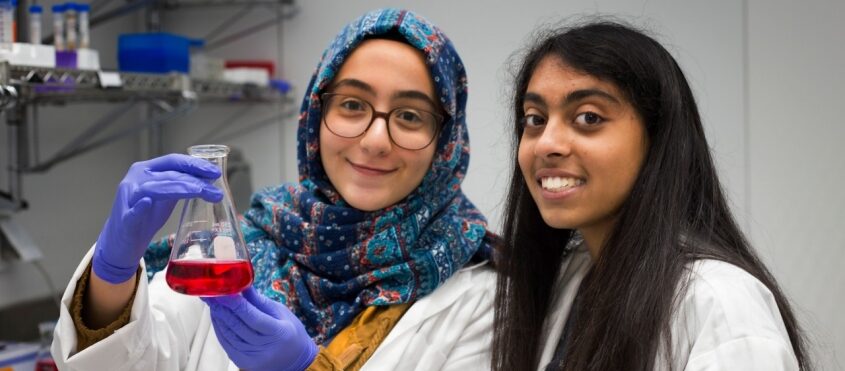
If you join STaRS, you’ll spend seven to eight weeks working full-time in a real biomedical research lab at Stanford. You’ll be getting practical experience with lab techniques like histology, microscopy, genotyping, imaging, and immunohistochemistry. You’ll engage in a meaningful project under guidance from faculty and experienced lab mentors. The program also offers workshops, lectures, and community-building activities, giving you exposure not only to science but also to campus life and peer community.
You’ll wrap up the internship by presenting your findings in a final showcase. STaRS is a great fit if you’re curious about biomedical research and healthcare, motivated to learn from scratch, and ready to commit to an intense summer, making it one of the best biology summer programs for high school students focused on translational science.
Why it stands out: It gives you exposure to surgical science and translational research, helping you see how clinical innovations are developed and tested.
Turning Curiosity Into Scientific Practice
You move from interest to understanding when you apply biology in real contexts. Scientific thinking develops through asking questions, testing ideas, and learning from results, not memorisation alone.
When learning extends beyond the classroom, biology becomes active and exploratory. You analyse data, design experiments, and engage with ideas at a deeper academic level.
Exploring these 15 best biology summer programs for high school students helps you experience advanced subjects early and understand how university-level biology really works.
If you want to keep expanding your knowledge beyond exam specifications, our Beyond the Syllabus blogs offer expert insights and fresh perspectives to support your academic curiosity.