
 Русский (RU)
 Українська (UK)
 Türkçe (TR)
 Italiano (IT)
 Français (FR)
 Português (PT)
 中文 (中国) (ZH)
 Español (ES)
 日本語 (JA)
 ไทย (TH)
 Deutsch (DE)
 Ελληνικά (EL)
 Polski (PL)
 Bahasa Indonesia (ID)
 Nederlands (NL)
 العربية (AR)
 한국어 (KO)

Psychology becomes much more concrete when you move from theory to research, asking questions, designing studies, and analysing data to understand behaviour. If you’re curious about how psychologists test ideas through experiments, surveys, or statistical models, psychology research programs for high school students can give you a structured way to explore that process.
In these programmes, you may design your own study, interpret findings, or work through real research questions with guidance from mentors. You build core skills such as critical thinking, data analysis, and academic writing while gaining exposure to how research is conducted at the university level. They also give you a taste of campus life at a top institution.
How do you choose the right psychology research program for high school students?
Programs vary in depth and structure, so it’s important to look beyond basic introductions. Some focus on lectures, while others emphasize hands-on research and mentorship. Prioritize programs that include project-based work, structured guidance, and opportunities to engage with real data.
Many university-hosted programs include seminars, supervised research tasks, and collaborative projects across areas like cognitive, social, or developmental psychology. You might participate in psychology research, experimental design, identify cognitive biases, and work with data using tools such as SPSS or R. These experiences reflect how psychology is studied in college and help you evaluate whether research aligns with your interests.
To help you get started, we’ve compiled a list of 15 psychology research programs for high school students. They’ve been selected for their academic rigor, research exposure, and relevance to university-level study.
For adjacent opportunities, check out the online psychology research program.
15 Psychology Research Programs for High School Students
1. Tufts University – Tufts Summer Research Experience
Location: Medford/Somerville Campus, Massachusetts (near Boston)
Cost/Stipend: Residential: $11,790; Commuter: $9,196; limited need-based scholarships are available
Acceptance rate/cohort size: Competitive; cohort size not disclosed
Dates: July 5th – August 14th
Application Deadline: May 1st
Eligibility: Students entering grades 11-12 or a Spring high school graduate; at least 15 years old by the program start date; open to international students
The Tufts Summer Research Experience is a six-week pre-college program where you participate in collegiate-level psychology and behavioral research. You will explore various research methodologies, covering core topics like controlled behavioral experiments, fieldwork, survey design, case studies, and observational research.
Throughout the summer, you will actively engage in daily cohort research sessions, attend specialized skills-building workshops, and shadow current Tufts researchers in their active labs. By completing these hands-on activities, you will learn essential academic skills such as evaluating real-world data, understanding data visualization, and navigating research ethics. Ultimately, you will synthesize your findings to develop and present a formal academic poster at the program’s closing exhibition.
Why it stands out: It goes beyond standard classroom learning by allowing you to shadow active researchers and directly evaluate real psychological data at a top-tier university.
2. Immerse Education’s Psychology Summer School
Location: Cambridge, Sydney, Singapore, Oxford, Toronto, and London
Cost/Stipend: Varies; summer school scholarship available through our bursary programme
Acceptance rate/cohort size: Selective; an average of 7 participants per class
Dates: Multiple 2-week sessions across June-August
Application Deadline: Rolling admissions
Eligibility: Students aged 13-18; open to international students
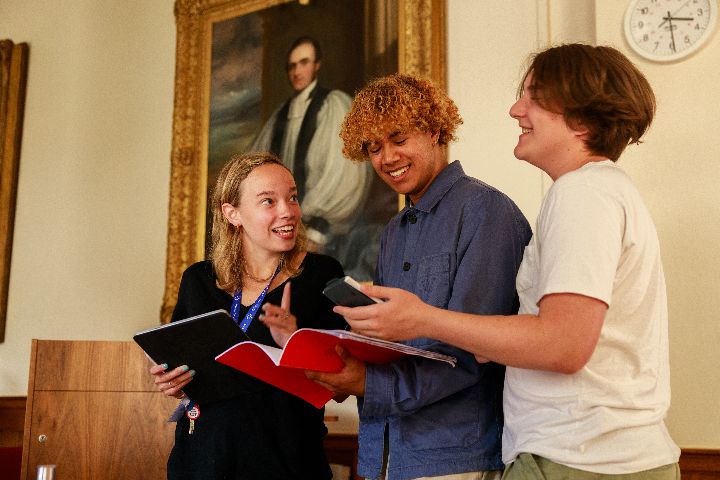
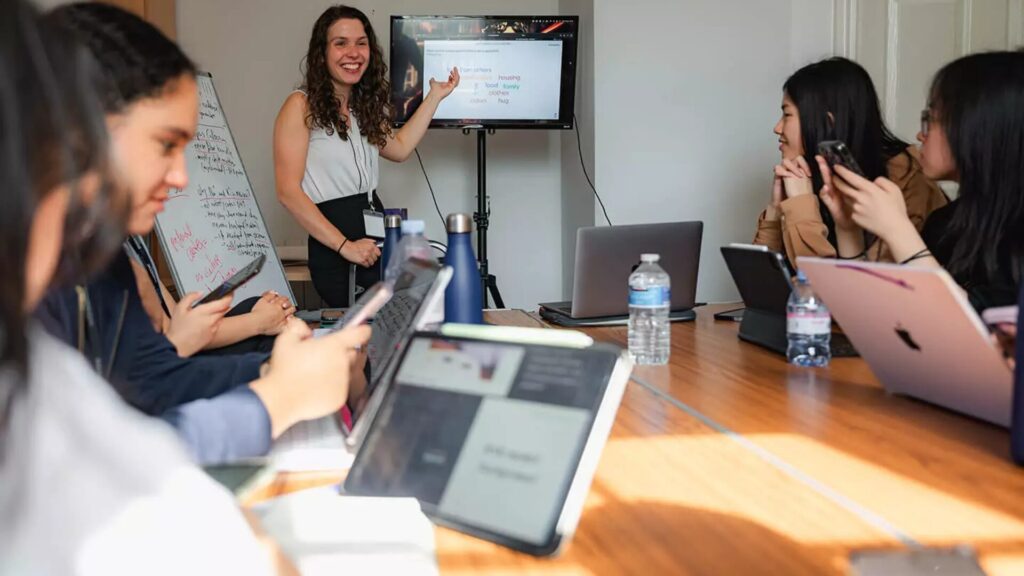
Immerse Education’s Psychology Research Programme introduces you to key concepts in psychology through a research-oriented, university-style learning experience. You explore areas such as cognitive psychology, behavioral science, mental health, and research methods, guided by expert tutors. The program emphasizes critical thinking through seminars, discussions, and case studies, helping you understand how psychological research is designed and interpreted.
You also engage in activities that develop your ability to evaluate theories and apply them to real-world scenarios. The in-person experience allows you to study and live in a Cambridge college environment, giving you insight into academic life at a leading institution. By the end, you receive a certificate and personalized feedback that can support your future academic decisions. Apply now!
Why it stands out: It offers a research-focused introduction to psychology in a small-group, university-style setting, combining theory with analytical and discussion-based learning.
3. Gettysburg College – Camp Psych
Location: Gettysburg College Campus, Gettysburg, Pennsylvania
Cost: $1,395; financial aid is available
Acceptance rate/cohort size: Selective; approximately 20-25 students per group
Dates: July 12-17
Application Deadline: Rolling basis until the camp is full
Eligibility: Rising high school sophomores, juniors, and seniors; open to international students
Gettysburg College’s Camp Psych is a one-week residential summer program that gives you an authentic, insider look at psychological science. You will delve into all the program’s core topics, which cover cognitive, social, and developmental psychology.
To understand these concepts practically, you will participate in hands-on behavioral experiments, conduct data analytics with resident advisors, and collaborate on engaging group research projects. A unique feature of this camp is that current college professors teach all the classes using a curriculum that directly mirrors first-year undergraduate coursework. By completing this rigorous week, you will build robust critical thinking, analytical, and applied research skills.
Why it stands out: It allows high schoolers to transcend traditional textbook learning by actually engaging in their own research under the direct mentorship of published college faculty.
4. University of Southern California Pre-College Programs – Psychological Science and Society
Location: University Park Campus, Los Angeles, CA
Cost/Stipend: Residential: $11,570; Commuter: $8,130; International: $12,208; need-based financial aid is available
Acceptance rate/cohort size: Highly Competitive; typically 20-30 students per course
Dates: June 22nd – July 17th
Application Deadline: International: March 13th; Domestic: May 8th
Eligibility: Students who have completed 9th grade by the start of the program and are pursuing a rigorous high school curriculum; open to international students
The USC Psychological Science and Society program is a four-week summer course where you investigate the scientific foundations of the mind and human behavior. You will cover the history of psychology, research methods, and cognitive, developmental, clinical, and social psychology, alongside cognition, intelligence, learning, personality, mindsets, motivation, the mind-body connection, social media, mental health, games, therapy, happiness, and relationships.
You will test cognitive illusions, conduct interactive behavioral experiments, engage in clinical role-play, and attend museum field trips. Uniquely, the program allows you to earn three units of USC elective credit while balancing rigorous, university-level academics with an authentic residential campus experience.
Why it stands out: It moves beyond standard introductory high school lectures, requiring you to actively connect cutting-edge psychological research directly to complex societal issues and your own lived experiences.
5. The Ohio State University – Humanities and Cognitive Sciences High School Summer Institute
Location: The Ohio State University, Columbus Main Campus
Cost: $425; need-based financial aid is available
Acceptance rate/cohort size: Competitive; cohort size not specified
Dates: July 13-17
Application Deadline: May 31st
Eligibility: Students entering grades 10, 11, or 12 in Autumn; open to international students
The Ohio State University’s Humanities and Cognitive Sciences High School Summer Institute is a week-long program where you explore the intersection of brain science and human culture. During the institute, you will study topics like the science of creativity, storytelling mechanics, and the brain functions behind art and media consumption.
Your days will involve attending morning lectures by renowned professors, engaging in deep group discussions, and participating in hands-on laboratory demonstrations. You get to experience authentic university life while interacting directly with actual faculty and graduate researchers. Consequently, you will build essential skills in critical thinking, cross-disciplinary analysis, and complex problem-solving.
Why it stands out: It is one of the few summer camps in the country that deliberately bridges the gap between STEM and the humanities, demonstrating how empirical science and artistic expression fundamentally influence one another.
6. Stony Brook University – Simons Summer Research Program
Location: Stony Brook University, Stony Brook, NY
Cost/Stipend: No tuition cost; residential housing and dining costs are estimated at approximately $2,450 / Stipend paid, amount not disclosed
Acceptance rate/cohort size: Highly Competitive; approximately 30–40 students annually
Dates: June 29th – August 7th
Application Deadline: February 5th
Eligibility: High school juniors at the time of application and must be at least 16 years of age by the start of the program; U.S. citizens or permanent residents; not open to international students
In this program, you will delve into core topics like cognitive science, developmental psychology, perception, and behavioral neuroscience. During the seven weeks, you will work daily in an active R1 laboratory, attend weekly faculty research seminars, write a formal research abstract, and present your findings at a closing poster symposium.
This program is uniquely fully funded and exclusively targets rising seniors, so you can apply your research to major science competitions. Through this intensive immersion, you will master critical skills such as complex data analysis, advanced laboratory methodologies, project troubleshooting, and scientific communication.
Why it stands out: It bypasses typical summer camp structures to integrate you directly into authentic, graduate-level research teams with a highly selective acceptance rate of under 5%.
7. Boston University – Research in Science & Engineering (RISE) – Internship Track
Location: Boston University Campus (Boston, MA)
Cost/Stipend: Total Residential: $10,393 – $10,735 (Includes $5,930 Tuition, $485 Service Fees, and $3,978 – $4,320 Housing/Dining); scholarships are available
Acceptance rate/cohort size: Highly Competitive; approximately 190 students total
Dates: June 28th – August 7th
Application Deadline: February 4th
Eligibility: High school students entering their senior year in Fall; U.S. citizens and legal permanent residents; not open to international students
Known as one of the most demanding psychology research programs for high school students, the Boston University RISE Internship Track gives you a rigorous six-week summer experience focused heavily on hands-on psychology research for 40 hours a week. You will thoroughly cover critical topics such as the scientific process, research ethics, analyzing academic papers, and professional STEM networking.
During the program, you will conduct daily laboratory tasks, design an independent research project with a mentor, attend weekly academic workshops, and present your final data at a Poster Symposium. The program features a 45-year legacy and its model of pairing high school students directly with distinguished faculty to contribute to actual university studies.
Why it stands out: It transcends typical high school science camps by immersing you in an authentic 40-hour work week where you actively drive ongoing, real-world university research alongside leading academic experts.
8. UNIQ Experimental Psychology – University of Oxford
Location: Oxford, UK (University of Oxford colleges)
Cost/Stipend: None
Acceptance rate/cohort size: Highly selective; approximately 30-50 students per subject
Dates: July 20-24
Application Deadline: January 13th
Eligibility: Year 12 (England/Wales), Year 13 (NI), or S5 (Scotland) students at a UK or Islands state school; usually requires a minimum of six GCSEs at grade 7/A or above; not open to international students
The UNIQ Experimental Psychology programme at Oxford gives you a five-day introduction to psychology through lectures, seminars, and small-group academic sessions led by university staff. You engage with topics such as cognition, human development, mental health, and research methods, following a structure similar to undergraduate teaching. Sessions are designed to strengthen critical thinking and evidence-based reasoning, helping you understand how psychologists study behavior and evaluate findings.
You also participate in collaborative academic and social activities, allowing you to learn alongside peers in a supportive setting. Staying in an Oxford college provides first-hand experience of student life, from shared accommodation to everyday campus routines.
Why it stands out: It offers a fully funded residential experience focused on academic rigor while supporting students from underrepresented backgrounds in accessing university-level psychology.
9. University of Toronto’s Summer Psychology Research Initiative (SPRINT)
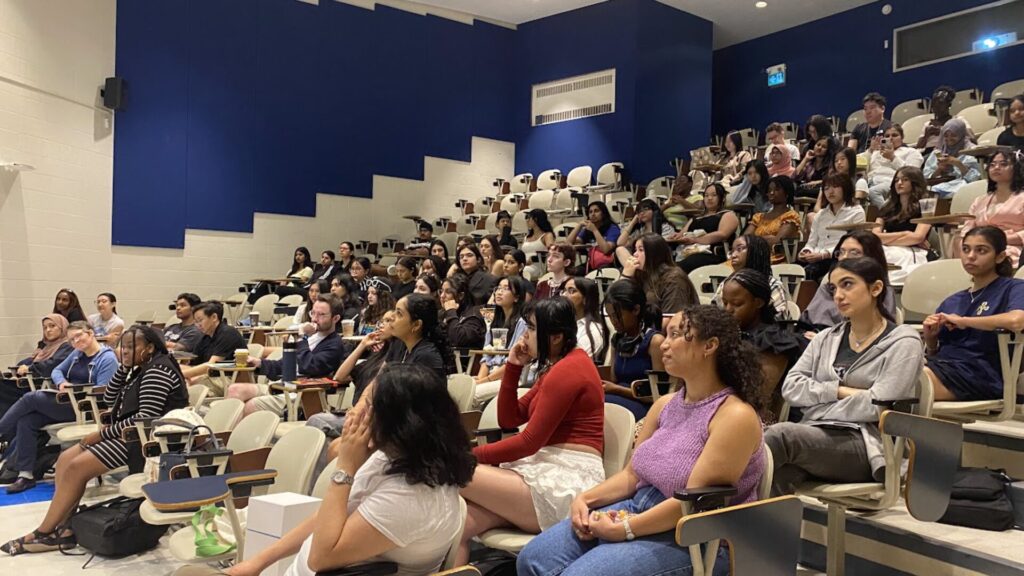
Location: Toronto, Canada (St. George campus, University of Toronto)
Cost/Stipend: None
Acceptance rate/cohort size: Highly Selective; approximately 60 students
Dates: 10-day program held typically in the last two weeks of July
Application Deadline: Usually late May or June
Eligibility: High school students residing in Ontario; not open to international students
In this psychology research programs for high school students option, you explore topics such as research methods, data literacy, and major areas within psychological science. A central focus of the program is helping you understand how studies are designed, analysed, and interpreted, while building skills in critical thinking and scientific reasoning.
You also learn alongside peers in a collaborative environment that encourages discussion and curiosity. The initiative places strong emphasis on equity, diversity, and inclusion, with programming intended to support students from underrepresented backgrounds in psychology. By the end, you gain a stronger sense of how university-level psychological research operates and how you might pursue it further.
Why it stands out: It emphasizes research literacy, statistical thinking, and inclusive academic engagement, offering a strong conceptual foundation in contemporary psychological science.
10. University of California, Santa Cruz – Science Internship Program (SIP)
Location: UC Santa Cruz Main Campus, Santa Cruz, CA
Cost: Residential: $11,600; Commuter: $9,500 + $68 application fee + $750 deposit; full and partial scholarships are available
Acceptance rate/cohort size: Highly Competitive; approximately 250-300 interns
Dates: June 15th – August 8th
Application Deadline: February 27th
Eligibility: High school students aged 14-17 at the start of the program (must not have graduated high school before the summer); open to international students
The University of California, Santa Cruz Science Internship Program (SIP) brings a more open-ended research style to psychology research programs for high school students, with a rigorous 10-week summer opportunity focused on university-level psychology research. Within the psychology track, you explore diverse behavioural topics like spontaneous communication, social media polarity, cognitive science, and overlapping neuroscience concepts.
During the internship, you will perform qualitative coding, analyze large textual corpora, run predictive logistical regressions, and synthesize complex behavioral data. You collaborate in small peer groups directly under the mentorship of active UCSC faculty and doctoral scholars. Ultimately, you develop skills in statistical data analysis, formal research methodology, and scientific communication.
Why it stands out: It elevates high schoolers from passive learners into active investigators who contribute to genuine, publishable scientific discoveries alongside leading academics.
11. U.S. Department of the Navy – Science and Engineering Apprenticeship Program (SEAP)
Location: Over 35 Department of Navy (DoN) laboratories across the U.S. (e.g., Washington D.C., California, Maryland, Florida, Virginia, etc.)
Cost/Stipend: No cost / $4,000 stipend for new participants; $4,500 for returning participants
Acceptance rate/cohort size: Highly Selective; around 5-15 students per participating laboratory
Dates: 8 weeks during the summer (typically starting in June and ending in August)
Application Deadline: November 1st
Eligibility: High school students who have completed grade 9 (including graduating seniors); most labs require students to be 16 years old by the start date, though some allow 15-year-olds; not open to international students
The U.S. Department of the Navy’s Science and Engineering Apprenticeship Program (SEAP) places you in an eight-week paid summer internship to explore psychology research at active naval laboratories. If assigned to a lab focusing on human behavior, you will dive into topics like cognitive psychology, behavioral science, and human factors engineering.
During your apprenticeship, you will conduct literature reviews, run human-subject performance simulations, and collect behavioral data. The program offers a generous stipend and pairs you directly with senior Navy scientists for real-world defense projects. Consequently, you will learn vital skills in experimental design, statistical data analysis, and scientific communication.
Why it stands out: It allows high schoolers to earn a competitive stipend while actively contributing to critical national security research alongside elite professionals.
12. Sutton Trust Summer School – UCL Psychology and Human Development
Location: London, UK (University College London campus)
Cost/Stipend: None
Acceptance rate/cohort size: Highly Selective; 25 places
Dates: July 27-31
Application Deadline: March 5th
Eligibility: Year 12 (England/Wales), Year 13 (NI), or S5 (Scotland); must attend a UK state-funded school and meet widening participation criteria, such as first-gen, Free School Meals, or low-participation neighbourhood; not open to international students.
This residential summer school at UCL offers you an introduction to psychology and human development through academically structured sessions taught by university faculty. You attend lectures and seminars on topics such as cognitive development, social behavior, lifespan psychology, and core principles of behavioral science. The program also includes sessions on research methods and evaluating evidence, helping you understand how psychological knowledge is produced and tested.
Through group discussions and interactive workshops, you experience the discussion-based teaching style commonly used in UK universities. Living on campus gives you insight into both the academic and social sides of university life during the program.
Why it stands out: It offers a fully funded residential experience that combines academic exposure with a realistic introduction to university life at a leading research institution.
13. Hofstra University – Summer Science Research Program (HUSSRP)
Location: Hofstra University Campus, Hempstead, NY
Cost: $2,250 + $65 non-refundable application fee
Acceptance rate/cohort size: Competitive; approximately 200+ students
Dates: July 6-31
Application Deadline: February 2nd
Eligibility: Current high school sophomores (10th grade) or juniors (11th grade); minimum age of 15; must have completed at least one year of a high school research course; U.S. citizens or permanent residents; not open to international students
The Hofstra University Summer Science Research Program (HUSSRP) offers you a hands-on opportunity to conduct rigorous, full-time research under the direct guidance of university faculty. In the behavioral science and psychology track, you will explore topics like experimental psychology, cognitive processes, and human behavior based on your assigned mentor’s current laboratory work.
Throughout the summer, you will actively design independent research methodologies, attend weekly scientific seminars, analyze empirical data, and create a capstone research poster. You will learn skills in advanced data analysis, scientific communication, and independent scholarly inquiry. HUSSRP uniquely pairs you one-on-one with Hofstra professors while effectively preparing your project for prestigious national science competitions like the Regeneron Science Talent Search.
Why it stands out: It actively transitions high school students from standard classroom learning into authentic, university-level academic investigation with dedicated professional mentors.
14. Wake Forest University Psychology Institute
Location: Wake Forest University Reynolda Campus, Winston-Salem, NC
Cost: $3,500; need-based scholarships are available
Acceptance rate/cohort size: Selective; approximately 20-30 students
Dates: July 12-17; July 19-24
Application Deadline: Rolling admissions
Eligibility: Current 9th-12th grade students, from rising sophomores through rising college freshmen; open to international students
Wake Forest’s Psychology Institute is one of the more hands-on psychology research programs for high school students, introducing you to psychology and neuroscience through a one-week residential program. You take part in activities such as sheep-brain dissection, sensory perception experiments, and observational research projects that explore how illusions, biases, and emotions influence behaviour.
The program emphasizes experimental design, evidence-based inquiry, and interpreting results, helping you understand how psychological science is studied in practice. You also gain experience presenting findings and discussing research in a collaborative academic setting. Living on campus adds a realistic preview of university life during the week.
Why it stands out: It offers high schoolers an intensive, hands-on introduction to college-level research, including guided sheep brain dissections and neuroplasticity exercises.
15. Vanderbilt University – Research Experience for High School Students (REHSS)
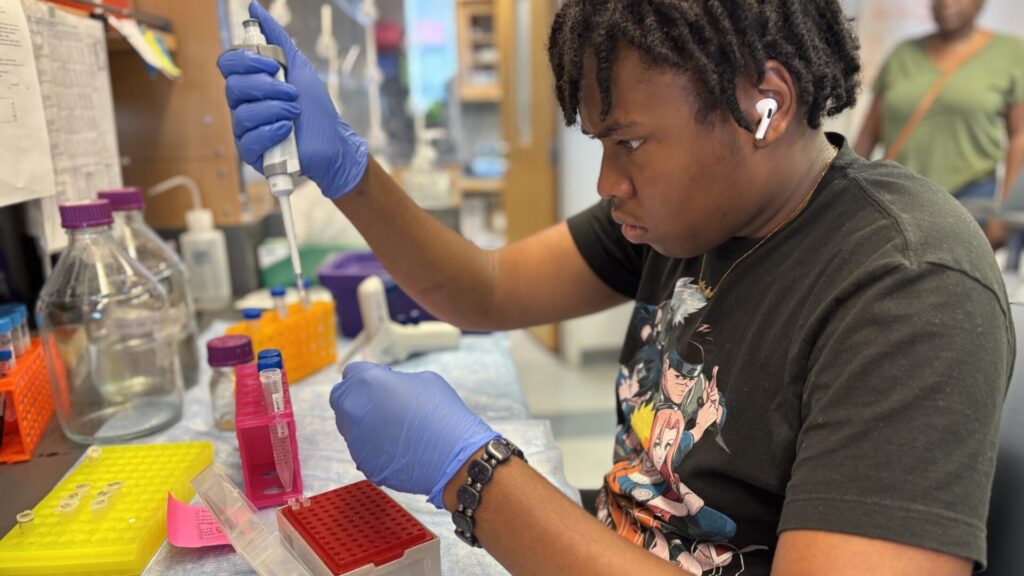
Location: Vanderbilt University & Vanderbilt University Medical Center (VUMC) labs in Nashville, TN
Cost: None
Acceptance rate/cohort size: Highly Selective; a small group of students from the three partner high schools
Dates: Late May to early July
Application Deadline: Usually late January to February
Eligibility: Must be a rising senior at Stratford STEM, John Overton, or Hillsboro High School and enrolled in the ISR program; 16+ years old; not open to international students
As a rising high school senior, you can participate in Vanderbilt University’s REHSS, a six-week internship that immerses you in a campus research lab. If matched with a psychology lab, the topics you explore reflect your faculty mentor’s active studies, which can range from cognitive psychology to behavioral neuroscience.
Throughout the summer, you will conduct an independent research project, analyze experimental data, attend weekly professional workshops, and present your findings at a university symposium. The program is designed to give you 40 hours a week of hands-on mentorship, enabling you to build experimental design, statistical analysis, and scientific communication skills.
Why it stands out: It allows high school students to completely bypass simulated classroom environments in favor of contributing directly to active, graduate-level scientific research alongside established university faculty.
Think Like a Researcher, Grow Like a Leader
Psychology research programs for high school students can help you move from reading theories to designing studies, testing ideas, and interpreting behaviour through evidence.
Across these programmes, you might analyse survey data, shadow lab researchers, design experiments, study cognitive biases, or present findings through research posters.
Those experiences can strengthen how you explain ideas, handle feedback, work in teams, and make decisions when evidence is incomplete.
Want to grow beyond the research project? Explore our Personal Development blogs to build the communication, leadership, adaptability, and self-awareness that make your skills last.