
 Русский (RU)
 Українська (UK)
 Türkçe (TR)
 Italiano (IT)
 Français (FR)
 Português (PT)
 中文 (中国) (ZH)
 Español (ES)
 日本語 (JA)
 ไทย (TH)
 Deutsch (DE)
 Ελληνικά (EL)
 Polski (PL)
 Bahasa Indonesia (ID)
 Nederlands (NL)
 العربية (AR)
 한국어 (KO)

In high school, summers can easily become a break from assignments, exams, and routines, but they can also become a chance to explore what your academic interests look like beyond the classroom. Summer internships for high school students in 2026 can help you use that time more purposefully by giving you early exposure to real projects, professional settings, and potential career paths.
You could spend your summer working in a neuroscience lab, analysing NASA satellite data, contributing to environmental policy research, or learning how museums, tech companies, and research institutions operate behind the scenes. Instead of only studying theory, internships let you apply concepts in real settings while working alongside researchers, engineers, scientists, historians, and industry professionals.
Summer internships can also help you build advanced academic and professional skills early on. Depending on the programme, you may learn coding languages like Python or JavaScript, laboratory techniques, scientific writing, CAD tools, data visualisation, policy analysis, archival research, statistical modelling, or presentation and communication skills. Many internships also introduce you to collaborative workflows, university-level expectations, and independent project work.
Why pursue summer internships as a high school student?
Summer internships are especially compelling because universities, research institutes, government laboratories, and global companies are continuing to expand opportunities specifically designed for high schoolers. Across fields like artificial intelligence, biomedical science, climate research, engineering, journalism, and public policy, many programs now combine hands-on work with mentorship, career exploration, and exposure to emerging technologies.
You’ll find internships hosted by places like MIT, NASA-affiliated research centers, Johns Hopkins APL, Microsoft, The Met, and major biomedical institutes, environments where professional researchers and industry experts actively work on real-world problems. Some programs place you inside advanced laboratories and university campuses, while others connect you with fieldwork, policy projects, museum archives, or engineering facilities.
To help you, we’ve created a list of 15 Summer Internships for High School Students in 2026.
For adjacent opportunities, consider the online program for high school students in 2026.
15 Summer Internships for High School Students in 2026
1. NASA SEES Internship
Location: University of Texas at Austin + NASA collaboration
Cost/Stipend: Free; fully funded
Acceptance rate/cohort size: 10-11%
Dates: June-July
Application Deadline: February 22nd
Eligibility: U.S. citizen high school sophomores or juniors (rising juniors/seniors) who are 16 by July 5th, with strong STEM interest and ability to complete online requirements
NASA SEES is one of the most research-intensive summer internships for high school students in 2026, introducing you to aerospace and environmental science through satellite data, Earth systems research, and climate science projects. Before arriving on campus, you complete distance-learning modules focused on Earth science and Python, then collaborate with mentors and researchers on projects involving remote sensing, astronomy, natural hazards, or mission design.
The program combines remote collaboration with an on-site research experience at the University of Texas at Austin. You’ll also present your findings during a final science symposium, gaining experience in scientific communication and technical presentation skills.
Why it stands out: It gives you hands-on research involvement under faculty guidance, helping you see how scientific inquiry and engineering projects work in professional settings.
2. Immerse Education’s Career Insights Summer School
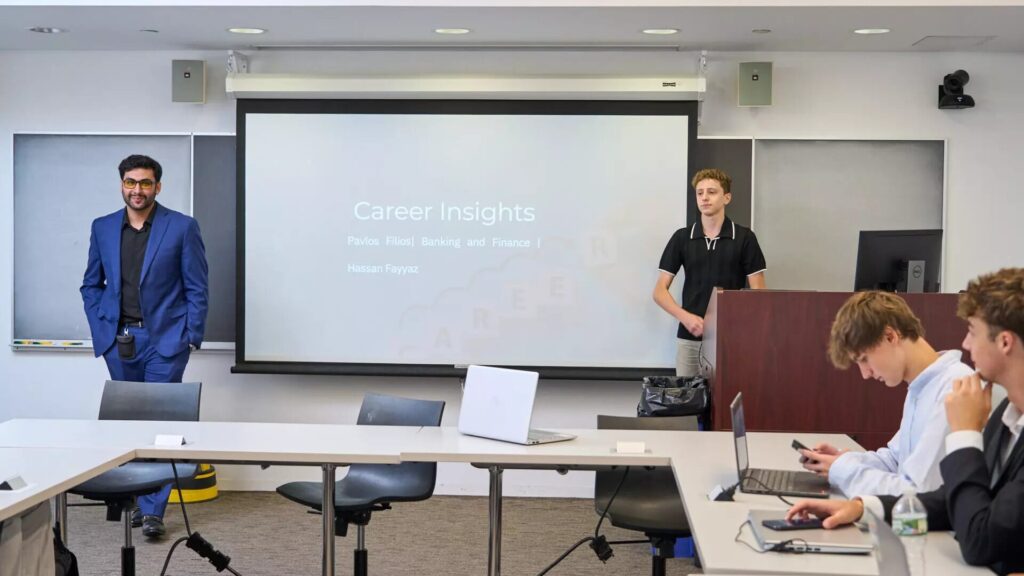
Location: Cambridge, London, New York, San Francisco, Singapore, Sydney, and Tokyo
Cost/Stipend: Varies; summer school scholarship available through our bursary programme
Acceptance rate/cohort size: Not disclosed; an average of 7 participants per class
Dates: 2 weeks during the summer
Application Deadline: Rolling admissions across multiple cohorts
Eligibility: High school students around the world aged 15-18
Set across major global industry hubs, the Career Insights Programme is designed to help you explore professional environments through project-based learning and career workshops. Depending on your chosen field, you may visit offices, company headquarters, studios, or innovation spaces while learning directly from professionals. The programme includes interactive sessions focused on workplace problem-solving, collaboration, and presentation skills.
You’ll also receive weekly 1:1 career coaching alongside personalised feedback on your resume and overall profile. At the end of the programme, you present your work and findings to industry experts. The experience is structured to give you a clearer understanding of professional workflows and career pathways in competitive industries.
Why it stands out: You’ll gain direct industry exposure, build a professional network, and receive a certificate you can include in future applications.
3. Fermilab PRISM Internship Program
Location: Illinois (on-site and off-site schedule)
Cost/Stipend: $500 weekly stipend
Acceptance rate/cohort size: Not disclosed
Dates: July 13th – August 7th
Application Deadline: March 1st
Eligibility: High school seniors or recent graduates who are U.S. citizens with proof of medical insurance and Illinois high school enrollment
Quantum science, artificial intelligence, and particle physics come together in Fermilab’s PRISM internship program. Over the course of the internship, you attend lectures, research sessions, facility tours, and hands-on workshops led by scientists and STEM professionals. The program introduces you to advanced scientific concepts while also emphasizing collaborative research and communication.
You’ll work on projects connected to physics, engineering, or AI and prepare a research abstract and poster presentation by the end of the internship. Alongside the technical work, the program gives you exposure to large-scale national laboratory environments and interdisciplinary STEM careers.
Why it stands out: It places you in cutting-edge physics and engineering research environments, helping you gain hands-on experience with real experiments and advanced instrumentation.
4. Max Planck Florida Institute for Neuroscience Summer Research Internship
Location: Max Planck Florida Institute for Neuroscience, Florida
Cost/Stipend: $13/hour stipend
Acceptance rate/cohort size: Not disclosed
Dates: June 17th – July 26th
Application Deadline: March 4th
Eligibility: Rising high school juniors and seniors aged 16+ living in Palm Beach or Martin County with U.S. work authorization
Inside MPFI research labs, you’ll work alongside scientists and researchers in neuroscience, scientific programming, or mechanical engineering. The internship combines lab-based learning with mentorship and independent project work, giving you exposure to professional biomedical research environments. Throughout the six weeks, you gain hands-on experience with research tools, laboratory techniques, and data collection methods used in neuroscience and engineering.
The program concludes with a community research presentation where you share your work and findings. You’ll also observe how collaborative international research institutions operate across different scientific disciplines.
Why it stands out: It introduces you to world-class biomedical research environments while helping you understand how interdisciplinary science teams collaborate.
5. Research Science Institute (RSI) – Massachusetts Institute of Technology (MIT)
Location: Massachusetts Institute of Technology, Cambridge, MA
Cost/Stipend: Free
Acceptance rate/cohort size: Highly selective; around 100 students accepted
Dates: Late June – Early August
Application Deadline: December 10th
Eligibility: High school juniors worldwide; eligibility varies by participating country
RSI combines advanced STEM coursework with intensive independent research at MIT and affiliated institutions. During the first week, you attend university-level lectures and seminars taught by leading scientists and professors. The remainder of the program focuses on individual research projects completed under the guidance of experienced mentors.
You’ll review scientific literature, conduct experiments or computational work, and develop a final research paper alongside oral presentations. The program also includes field trips to science and technology facilities in the Boston area. By the end of the summer, you’ll have direct experience with the pace and expectations of high-level academic research.
Why it stands out: You’ll complete independent research projects in advanced labs that are typically inaccessible to high schoolers.
6. Fred Hutch Summer High School Internship Program (SHIP)
Location: Fred Hutchinson Cancer Center, Seattle, WA
Cost/Stipend: Free; financial award provided upon completion
Acceptance rate/cohort size: Competitive
Dates: June 22nd – August 14th
Application Deadline: March 13th
Eligibility: Rising high school seniors aged 16+ living in Greater Seattle or nearby areas
Designed for those interested in medicine, biology, and public health, SHIP introduces you to laboratory research through hands-on training and mentored activities. Early in the internship, you learn laboratory safety, research techniques, and core scientific methods before joining a Fred Hutch research group. Working with peers and mentors, you’ll take part in ongoing biomedical or infectious disease research projects while attending seminars and professional development workshops.
The program also includes collaborative activities and discussions that expose you to careers in science and medicine. Through the internship, you gain familiarity with how large research centers organize scientific work and interdisciplinary collaboration.
Why it stands out: It immerses you in cancer and infectious disease research while helping you build practical laboratory and research skills.
7. Student Historians Internship
Location: The New York Historical, New York City
Cost/Stipend: $700 stipend
Acceptance rate/cohort size: Not disclosed
Dates: July 7th – August 13th
Application Deadline: Applications closed; decisions released by May 8th
Eligibility: High schoolers entering grades 10-12 living in the New York City metro area
For students drawn to history, museums, and public storytelling, the Student Historians Internship adds a humanities-focused option to the many summer internships for high school students in 2026. Using museum and library collections at The New York Historical, you conduct in-depth research connected to the annual historical theme while creating digital public-history projects, collaborating with fellow interns, and learning about archives, public history, and digital scholarship.
The program also develops communication, analytical writing, and media-production skills through academically rigorous project work. By the end of the internship, you’ll have completed research-based work designed for public educational use.
Why it stands out: It combines archival research, digital humanities, and public-history storytelling in a museum setting rarely accessible at the high-school level.
8. USC Center for the Political Future High School Internship
Location: Virtual
Cost/Stipend: Free
Acceptance rate/cohort size: Highly competitive
Dates: May 26th – August 14th
Application Deadline: April 24th
Eligibility: Rising local high school sophomores, juniors, or seniors with a minimum 3.5 GPA and interest in politics, sustainability, and climate policy
Focused on environmental policy and legislative analysis, this USC internship introduces you to the intersection of politics, sustainability, and public policy research. During the program, you complete two major research-based writing projects centered on legislation at the local, state, or federal level.
You’ll attend check-in sessions, hear from guest speakers, and revise your work through structured feedback cycles. The internship emphasizes analytical writing, policy evaluation, and understanding how legislation moves through government systems. Successful completion may also lead to the publication of one of your assignments online.
Why it stands out: It gives you direct experience with policy analysis and legislative research while strengthening academic writing skills.
9. The Met High School Internship Program
Location: The Metropolitan Museum of Art, New York City
Cost/Stipend: $1,100 stipend
Acceptance rate/cohort size: Not disclosed
Dates: July 7th – August 7th
Application Deadline: March 13th
Eligibility: High schoolers in grades 10-11 living in New York, New Jersey, or Connecticut
At The Met, you explore museum careers through departmental placements connected to areas like education, curatorial work, design, social media, imaging, and public programming. The internship combines professional work experience with cohort-based learning and mentorship from museum staff. You’ll attend workshops, check-ins, and collaborative sessions while building career readiness and communication skills.
No prior background in art history is required, making the program accessible to a wide range of academic interests. Alongside your placement work, you also participate in Teen Fridays and museum-wide events that introduce you to creative communities and professional arts environments.
Why it stands out: It helps you explore how major museums operate while giving you direct exposure to creative and cultural careers.
10. Microsoft Discovery Program

Location: Redmond, Washington, or Atlanta, Georgia
Cost/Stipend: Paid internship
Acceptance rate/cohort size: Not disclosed
Dates: 4 weeks during the summer
Application Deadline: Not disclosed
Eligibility: Graduating high school seniors living near Redmond or Atlanta with an interest in technology and pre-calculus completed before the program starts
Microsoft’s High School Discovery Program stands out among summer internships for high school students in 2026 for those interested in technology careers, mentorship, and project-based learning. During the four-week internship, you work on hands-on projects while learning from Microsoft employees across different teams and technical areas, with additional focus on professional development, collaboration, and exposure to workplace environments within the tech industry.
You’ll explore how software, problem-solving, and innovation connect to real-world products and services used globally. Alongside technical learning, the internship encourages you to think about how your academic interests could evolve into long-term career pathways in technology.
Why it stands out: It introduces you to professional workflows inside a major technology company while helping you build foundational technical and workplace skills.
11. Science & Engineering Apprentice Program (SEAP)
Location: Various lab locations across the USA
Cost/Stipend: Free; new participants receive $4,000, and returning participants receive $4,500
Acceptance rate/cohort size: Highly selective
Dates: Eight weeks during the summer
Application Deadline: November 1st
Eligibility: U.S. citizen high school students
Inside the Department of the Navy laboratories, you’ll work on research connected to engineering, defense technology, and applied science through the Science and Engineering Apprenticeship Program (SEAP). Over the course of eight weeks, you collaborate with scientists and engineers while contributing to ongoing naval research projects. The experience introduces you to research methods, laboratory environments, and STEM problem-solving in government-funded facilities.
Alongside technical work, you also gain mentorship and exposure to career pathways in defense-sector science and engineering. Applications are evaluated through academic performance, recommendations, essays, and demonstrated STEM interest.
Why it stands out: It offers hands-on exposure to naval engineering and defense-sector research, helping you understand how applied STEM work operates in government labs.
12. Hutton Junior Fisheries Biology Program
Location: Sites across all 50 U.S. states, Canada, Mexico, Puerto Rico, and the Pacific Islands
Cost/Stipend: Free; $3,000 stipend provided
Acceptance rate/cohort size: Selective
Dates: Eight-week summer internship (typically mid-June to late July or early August)
Application Deadline: January 25th
Eligibility: Grades 11-12; age 16+ by application close; residents of the U.S., Canada, Mexico, or Puerto Rico
Not all summer internships for high school students in 2026 take place in labs or offices; the Hutton Junior Fisheries Biology Program centres on fieldwork, conservation research, and fisheries science. During the internship, you work alongside fisheries professionals while learning about marine ecosystems, habitat restoration, environmental monitoring, and aquatic research methods through practical outdoor work, mentorship, and reporting tasks.
You may assist with water-quality testing, fish population monitoring, or ecological data collection, depending on your placement site. Through the experience, you gain a clearer understanding of how scientific research supports wildlife management and sustainability efforts.
Why it stands out: It immerses you in fisheries biology and ecological fieldwork, giving you direct exposure to conservation and environmental research careers.
13. Scripps Research Translational Institute Student Research Internship
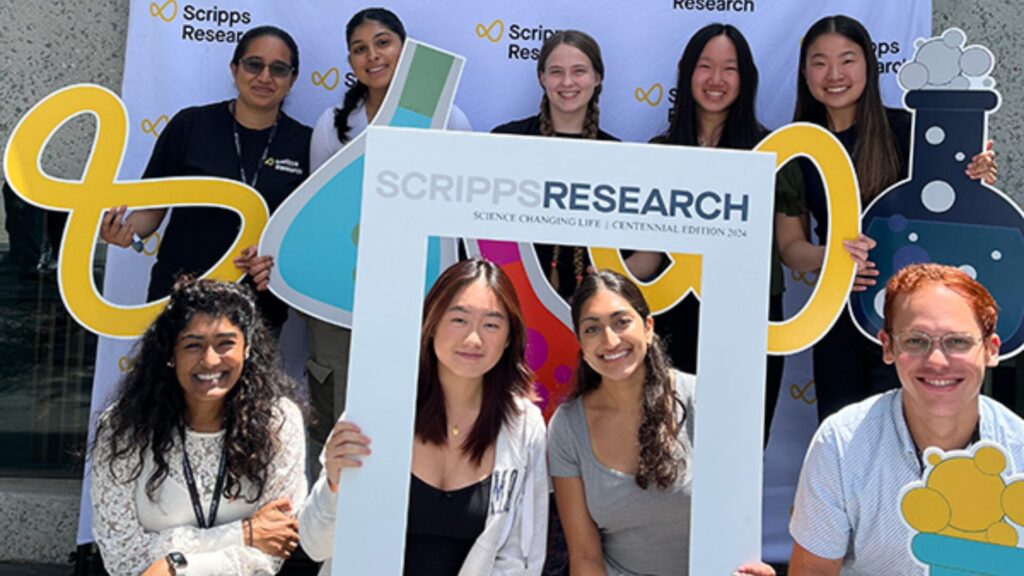
Location: Scripps Research Translational Institute, La Jolla, CA
Cost/Stipend: Free
Acceptance rate/cohort size: Selective
Dates: June 1st – August 7th or June 15th – August 7th
Application Deadline: March 30th
Eligibility: Highly motivated U.S. high schoolers aged 16+
If you’re interested in healthcare, genetics, or computational biology, the Scripps Research internship introduces you to translational science and biomedical research. Throughout the program, you learn about study design, statistical analysis, and the role of mobile technologies in healthcare research. You’ll also explore how genetics influences human traits and diseases while gaining experience with scientific communication and presentation skills.
Depending on your placement, the internship may involve research discussions, data analysis, or exposure to clinical-science workflows. The experience is structured to help you understand how laboratory discoveries move toward real-world medical applications.
Why it stands out: It places you in a leading biomedical research environment focused on translational science and clinical research applications.
14. Johns Hopkins APL ASPIRE Internship
Location: Virtual options available with mandatory onboarding at APL, Laurel, MD
Cost/Stipend: No stipend
Acceptance rate/cohort size: Not disclosed
Dates: June 23rd – August 21st
Application Deadline: February 15th
Eligibility: Rising juniors or seniors aged 15+ who meet residency, GPA, and U.S. citizenship requirements
For students interested in applied STEM, Johns Hopkins APL ASPIRE is a strong addition to summer internships for high school students in 2026 because it lets you contribute to ongoing research before college. Matched with an APL mentor, you may work in cybersecurity, artificial intelligence, aerospace engineering, or environmental science while completing at least 190 hours of coding, experimentation, technical research, or engineering problem-solving.
The program emphasizes collaboration, analytical thinking, and practical application of STEM concepts beyond classroom learning. At the end of the internship, you create a digital research poster summarizing your project and outcomes.
Why it stands out: It exposes you to applied engineering and technical research projects in one of the country’s leading research laboratories.
15. Aspiring Scientists Summer Internship Program (ASSIP)
Location: George Mason University
Cost/Stipend: $25 application fee; $1,299 tuition for accepted interns
Acceptance rate/cohort size: Not clearly specified
Dates: June 18th – August 12th
Application Deadline: February 15th
Eligibility: High school and undergraduate applicants worldwide aged 15+ for remote/computational projects or 16+ for in-person opportunities
Faculty-guided research sits at the center of the Aspiring Scientists Summer Internship Program (ASSIP). Depending on your selected project, you may work in neuroscience, computational modeling, environmental science, molecular biology, or related STEM fields. Throughout the internship, you contribute to active university research while learning how scientists design experiments, analyze results, and communicate findings.
Some projects emphasize laboratory techniques, while others focus on coding, data analysis, or literature review. The program also includes workshops covering STEM careers, research ethics, and professional communication skills. By the end of the experience, you may contribute to research posters, presentations, or publication-related work connected to your project.
Why it stands out: It gives you the opportunity to contribute to advanced university research projects and gain exposure to professional scientific workflows.
From First Internship to Future Possibility
Think of an internship as a preview, not a final decision, giving you space to test interests before committing to one path.
With summer internships for high school students in 2026, you can enter labs, museums, policy projects, tech teams, and research settings.
A lab report, field note, museum task, or coding project can become evidence of how you learn and contribute.
For your next move, our Career Exploration blogs can help you compare roles, understand industries, and turn early experience into direction.