
 Русский (RU)
 Українська (UK)
 Türkçe (TR)
 Italiano (IT)
 Français (FR)
 Português (PT)
 中文 (中国) (ZH)
 Español (ES)
 日本語 (JA)
 ไทย (TH)
 Deutsch (DE)
 Ελληνικά (EL)
 Polski (PL)
 Bahasa Indonesia (ID)
 Nederlands (NL)
 العربية (AR)
 한국어 (KO)

In high school, learning doesn’t have to be limited to classroom textbooks or standard lab sessions. Online natural sciences programs for high school students offer structured exposure to scientific thinking, research methods, and interdisciplinary concepts through guided virtual environments. These programs are designed to help you understand how scientific knowledge is developed, tested, and applied across real-world contexts.
You will engage with academic-style content delivered through virtual lectures, interactive labs, simulations, and project-based learning. Depending on the program, you may explore topics such as molecular biology, thermodynamics, ecology, astrophysics, or environmental systems. Many programs also include structured workshops in areas like data analysis, scientific writing, and experimental design, helping you build a strong foundation in how science operates beyond theory.
What kinds of online natural sciences programs for high school students are there?
Finding strong opportunities involves identifying programs that combine structured academic learning with interactive and applied experiences. Some programs focus on core disciplines like biology, chemistry, or physics, while others take an interdisciplinary approach, integrating environmental science, earth science, or computational modeling.
Universities, research organisations, and science education platforms offer programs covering areas such as genetics, neuroscience, climate science, quantum physics, and sustainability. You may participate in virtual labs, guided research projects, mentorship sessions, and capstone presentations that mirror real academic and scientific workflows.
Many programs emphasise active engagement, requiring you to complete assignments, participate in discussions, and contribute to structured projects. This ensures you not only learn concepts but also apply them in meaningful ways.
To make selection easier, we’ve curated a list of 15 Online Natural Sciences Programs for High School Students. For adjacent opportunities, consider the in-person natural sciences program.
15 Online Natural Sciences Programs for High School Students
1. Biorocket Research Internship Program
Location: New York City, USA (Hybrid – in-person + virtual; not fully online)
Cost: Free; $2,000 stipend
Program Dates: February 25th – May 21st (Spring Session); July 6th – August 14th (Summer Session)
Deadline: Applications open November 1st
Eligibility: High school students aged 16+ enrolled in or living near NYC public or charter schools; not open to fully international remote students
The Biorocket Research Internship Program is a six-month biology research internship focused on genetic engineering and laboratory practice. You’ll examine core biological techniques and develop hands-on familiarity with lab workflows under a scientist mentorship. The program emphasizes collaborative research design, where you’ll build and refine a summer project with peers and mentors.
You’ll apply scientific methods while engaging in lab tours, field visits, and exposure to biotech environments. The curriculum also integrates science communication, including improv-based training to present complex ideas clearly. You’ll gain exposure to research culture, career pathways, and interdisciplinary collaboration. By the end, you’ll have stronger lab skills, clearer scientific interests, and experience presenting research.
Why it stands out: Combines lab-based research training with structured science communication and a paid stipend.
2. Immerse Education’s Online Summer School

Location: Fully remote
Cost: Varies; summer school scholarship available through our bursary programme
Application Deadline: Rolling admissions; multiple dates throughout the year
Program Dates: Flexible; multiple cohorts in a year
Eligibility: Students worldwide aged 13-18 (accredited options require age 14+)
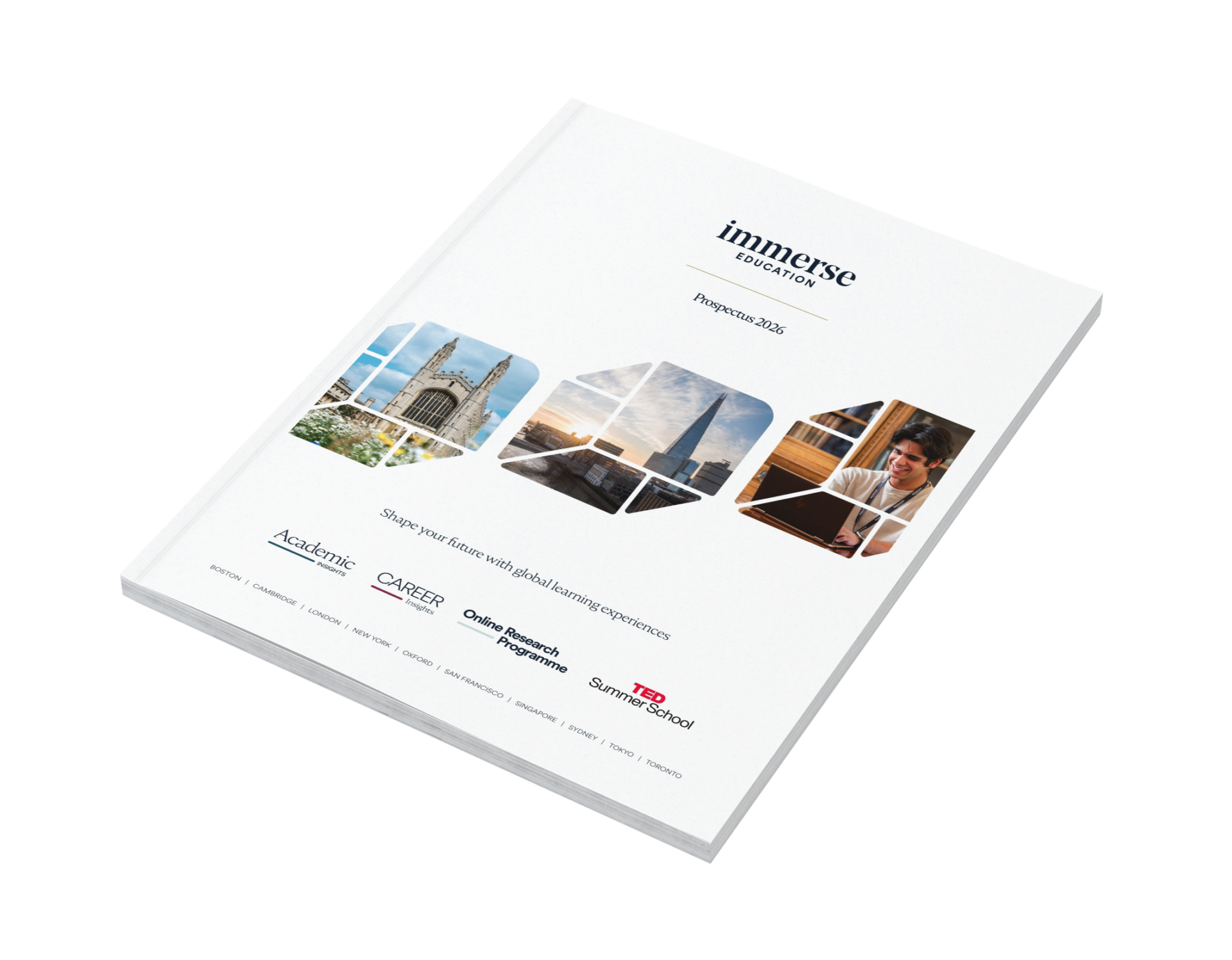
The Online Research Program offers high school students the opportunity to conduct rigorous research with tutors from Oxford, Cambridge, and Ivy League universities. You will work with your tutor to explore a subject of your choice in depth and write an academic research paper. The program is offered in 1:1 and small group formats, and you can choose to receive college credit from universities in the US and the UK.
The virtual research program is offered in natural science subjects, including artificial intelligence, chemistry, biology, computer science, engineering, mathematics, physics, and more. At the end of the program, you’ll receive a written evaluation from your tutor, an opportunity to publish your research, and an invitation to present at the Immerse Online Symposium. You can find examples of papers Immerse students have worked on here. You can find more details about the application here.
Why it stands out: You experience authentic Oxford-style tutorials online, work closely with leading academics, and produce an assessed research paper — with the option to earn UCAS points or US college credit if you are aged 14 or above.
3. Texas Aerospace Scholars (TAS)
Location: Virtual (online learning + virtual summer experience; final stage includes in-person at Johnson Space Center, Houston, TX)
Cost: Free (all-expense-paid residential component for selected students)
Program Dates: October – Early June; selected students go for the residential program in July
Deadline: September
Eligibility: U.S. citizens residing in Texas; high school juniors; not open to international students
Texas Aerospace Scholars is a year-long STEM program focused on space exploration, aeronautics, and engineering systems. You’ll examine core concepts in Earth science, aerospace technology, and mission design through a structured online curriculum. The program emphasizes technical skill development, where you’ll build proficiency in coding, computer-aided design (CAD), and engineering workflows.
You’ll apply these skills in problem-solving tasks aligned with real NASA mission contexts. High-performing students advance to a virtual summer experience, collaborating in teams under guidance from NASA scientists and engineers. The curriculum integrates teamwork, technical communication, and applied design thinking. By the end, you’ll have stronger engineering fundamentals and insight into aerospace career pathways.
Why it stands out: Integrates NASA-aligned curriculum with progressive selection into advanced virtual and residential experiences.
4. AIMI Summer Research Internship
Location: Virtual (online)
Cost: $2,400 program fee; $45 application fee (financial aid available)
Program Dates: Session A: June 15-26; Session B: July 6-17
Deadline: Financial Aid: February 13th; Standard: February 21st
Eligibility: High school students based in the U.S. (citizens, permanent residents, or valid visa holders attending a U.S. high school); not open to fully international students
The AIMI Summer Research Internship is a two-week virtual program focused on artificial intelligence in healthcare and medical imaging. You’ll examine core concepts in machine learning, clinical applications, and model evaluation through structured lectures. The program emphasizes applied research, where you’ll build a team-based project under guidance from mentors and Stanford student leads.
You’ll apply technical concepts to datasets and healthcare problems, developing analytical and computational skills. The curriculum integrates expert talks, exposing you to real-world AI use in medicine and policy contexts. You’ll gain exposure to interdisciplinary collaboration across science, engineering, and healthcare. By the end, you’ll have foundational experience in health AI research and technical problem-solving.
Why it stands out: Combines AI theory with mentored research projects focused on real clinical applications.
5. Camp Zon
Location: Virtual (online)
Cost: Paid (exact stipend amount unavailable)
Program Dates: July 16-17
Deadline: Application closed
Eligibility: High school students; no prior research experience required; international eligibility not mentioned
Camp Zon is a two-week virtual research program focused on cancer biology and blood development. You’ll examine core concepts in developmental biology and oncology through guided sessions led by researchers. The program emphasizes analytical thinking, where you’ll build skills in interpreting scientific literature and engaging in journal-style discussions. You’ll apply conceptual knowledge by observing live or recorded experimental processes, including model organism studies.
The curriculum integrates collaborative activities, mentorship interactions, and structured presentations. You’ll gain exposure to research environments and scientific communication practices. By the end, you’ll have developed critical thinking skills, foundational knowledge in biomedical science, and confidence in presenting scientific ideas.
Why it stands out: Combines virtual lab exposure with journal-based analysis and presentation training in cancer biology.
6. SPINWIP (Stanford Program for Inspiring the Next Generation of Women in Physics)
Location: Virtual (online)
Cost: Free
Program Dates: July 6th – July 24, 2026
Deadline: May 1, 2026
Eligibility: High school students (Grades 9-11); open to international students; no prior physics or coding experience required
SPINWIP is a three-week virtual physics outreach program and one of the more specialised online natural sciences programs for high school students interested in modern physics. You’ll explore areas such as quantum physics, quantum computing, astrophysics, and cosmology through lectures delivered by Stanford researchers. The program emphasizes computational learning, where you’ll build foundational coding skills in Python and apply them to physics-based projects.
You’ll work in small groups led by Stanford undergraduates, allowing for collaborative problem-solving and guided learning. The curriculum also includes college preparation sessions and career development workshops. By the end, you’ll have gained exposure to higher-level physics concepts, basic programming experience, and insight into academic and research pathways in physics.
Why it stands out: Combines coding, advanced physics topics, and mentorship within a structured virtual learning environment.
7. Aspiring Scientists Summer Internship Program (ASSIP)
Location: Hybrid (in-person at George Mason University, USA + remote options available)
Cost: $25 application fee; ~$1299 tuition (financial aid available)
Program Dates: June 18th – August 12, 2026
Deadline: Closed (applications processed Feb-April)
Eligibility: High school & undergraduate students; minimum age 15 (16+ for wet labs); international eligibility not clearly specified
ASSIP is an eight-week research internship where you’ll work directly with faculty mentors on advanced STEM projects. You’ll engage in disciplines such as artificial intelligence, neuroscience, cybersecurity, climate science, and bioengineering through hands-on research using professional-grade tools and technologies. The program emphasizes independent inquiry, where you’ll design experiments, analyze data, and contribute to ongoing research initiatives.
You’ll develop scientific writing and communication skills, culminating in a formal poster presentation. The curriculum also includes mentorship interactions and career exploration sessions. You may earn three college credits through George Mason University upon completion. By the end, you’ll have practical research experience, stronger analytical skills, and exposure to real-world scientific work.
Why it stands out: Offers intensive, mentor-led research with opportunities for publication, patents, and college credit.
8. The Junior Academy – New York Academy of Sciences
Location: Virtual (global online platform)
Cost: Free
Program Dates: Fall cycle (ongoing challenges throughout the year)
Deadline: July 2nd
Eligibility: Ages 13-17; open to international students; strong English proficiency required
The Junior Academy is a global online STEM program where you’ll collaborate with students from around the world to solve real-world challenges. You’ll work in teams on innovation challenges designed around pressing global issues, applying concepts from science, technology, engineering, and mathematics. The program emphasizes problem-solving and collaboration, where you’ll research, brainstorm, and develop solutions within a structured challenge framework.
You’ll engage through a digital platform, dedicating a few hours each week to discussions, project work, and submissions. The experience builds critical thinking, communication, and teamwork skills while exposing you to diverse perspectives from an international peer network. By the end, you’ll have experience tackling complex global problems, improved collaboration skills, and a stronger ability to think innovatively in STEM contexts.
Why it stands out: Offers a global, team-based innovation experience focused on solving real-world problems with students worldwide.
9. Secondary School Program (SSP) – Harvard University
Location: Cambridge, Massachusetts, USA (on-campus) with online and commuting options
Cost: $4,180 – $15,735 + $75 application fee (financial aid available for U.S. students)
Program Dates: Late June to early August (with shorter mid-July start option)
Deadline: Early April (earlier for priority financial aid)
Eligibility: High school students aged 16-18; international students are eligible
The Secondary School Program (SSP) is an academically intensive summer experience where you enroll in real college-level courses and earn official credit. You study subjects across a wide spectrum, including science, technology, business, social sciences, and the humanities, with instruction delivered by Harvard faculty. The coursework mirrors university standards, requiring active participation, independent study, and consistent academic effort.
Alongside academics, you also participate in student life activities and have access to academic support resources, which help you adjust to the expectations of higher education. By the end of the program, you gain not only college credit but also confidence in handling rigorous academics, a clearer sense of your academic interests, and practical exposure to university-level learning.
Why it stands out: Combines real college credit with flexible formats and a truly immersive academic experience.
10. Earth Systems Science – University of Pennsylvania
Location: Online
Cost: $8,692
Program Dates: May 26th – July 1st
Deadline: Early May
Eligibility: High school students in Grades 10-11; international students are eligible
This course introduces you to Earth as an interconnected system through the study of the atmosphere, hydrosphere, lithosphere, and biosphere. You’ll examine how these components interact and influence each other, with a focus on environmental processes and human impact.
The program emphasizes systems thinking, helping you understand large-scale planetary dynamics rather than isolated phenomena. You’ll build foundational knowledge in environmental science while developing analytical and conceptual skills. By the end of the program, you’ll gain a structured understanding of Earth systems and their real-world implications.
Why it stands out: Focuses on Earth as an integrated system, combining multiple scientific disciplines into one analytical framework.
11. Summer@Brown Innovation Inspired by Nature – Brown University

Location: Online (hybrid options include on-campus component)
Cost: $3,364
Program Dates: June 22nd – July 2nd
Deadline: May 15th
Eligibility: Students completing Grades 9-12; international students are eligible
Summer@Brown offers a range of college-level courses across disciplines, including biological and natural sciences, designed for high school students exploring advanced academics. You’ll work through the design thinking process by researching an environmental problem and developing a nature-inspired solution.
You participate in a design challenge that moves from identifying a clear design question through observational sketching, model construction using recyclable materials, peer review, and a final visual presentation. Out-of-class readings and research are expected throughout the course to support your projects. By the end, you will be able to find patterns in nature that address real problems and translate biological strategies into potential design solutions.
Why it stands out: Emphasizes student-driven learning through Brown’s open curriculum approach without the pressure of grades.
12. Summer Research Program with Columbia University – Columbia University
Location: Online
Cost: Coming soon
Program Dates: Coming soon
Deadline: Rolling admissions; scholarship deadline May 31st
Eligibility: Incoming Grades 10-12 and recent high school graduates; international students are eligible
This program introduces you to data science through a structured research-focused curriculum. You’ll begin with foundational training in coding using R, data cleaning, visualization, and analysis techniques. The program emphasizes applied learning, where you’ll build skills required for university-level research. In the later phase, you’ll apply these skills by assisting PhD researchers on active projects.
You’ll examine real datasets, contribute to research workflows, and develop your own project. The program also includes training in research methodology and presentation techniques. By the end of the program, you’ll produce a research project and gain practical experience in data-driven scientific inquiry.
Why it stands out: Combines structured data science training with direct involvement in ongoing university-level research projects.
13. MITES Semester
Location: Online (fully virtual); in-person conference at MIT, Cambridge, MA
Cost: Free; all program costs covered by MIT and donors
Dates: June through December
Application Deadline: February 1st
Eligibility: US citizens or permanent residents currently in 11th grade (rising seniors); public, private, and homeschooled students eligible; not open to international students or visa holders of any type
MITES Semester is a six-month online STEM and college preparation program run by MIT, beginning the summer before your senior year. During the STEM Immersion Phase from June through early August, you commit 25–30 hours per week to two rigorous online courses. One project-based course in a field such as Astrophysics, Computational Biology, Machine Learning, or Neuroscience, and one core course in Calculus, Physics, Computer Science, or Science Writing.
At the end of the summer phase, you receive a written instructor evaluation outlining your strengths and contributions, which you can submit as supplemental material with your college applications. The program is described by MIT as the only national online pre-college STEM program of its scale and stature.
Why it stands out: It is fully free and backed by MIT, combining rigorous university-level STEM coursework with six months of structured college application support.
14. ACS Project SEED
Location: In-person at university, government, and industry labs across 40+ US states and territories; virtual research option also available
Cost: Free; $4,000 fellowship stipend (Summer I); $4,000 fellowship stipend (Summer II)
Dates: June to July
Application Deadline: April 6th
Eligibility: Current high school sophomores, juniors, or seniors; must have completed at least one high school chemistry course; not open to international students
ACS Project SEED places high school students from economically disadvantaged backgrounds in real science laboratories for 8–10 weeks, where they work under the direct supervision of a professional scientist mentor in an academic, government, or industry setting. You conduct hands-on chemistry research, learn laboratory techniques, and receive mentoring in college preparation and career development.
A virtual research option is also available for students unable to commute to a lab site. You receive a $4,000 fellowship stipend upon completing Summer I, with the option to return for a second summer for an additional $4,000 award. Former participants are also eligible to apply for ACS college scholarships of up to $5,000 toward their freshman year studying chemistry or a related field.
Why it stands out: Backed by the American Chemical Society, it is one of the only paid science research programs in the US specifically designed for students from economically disadvantaged backgrounds, with a direct pathway to college scholarships.
15. NASA SEES High School Summer Intern Program
Location: Online
Cost: Free; housing, meals, and local transportation provided for on-site interns; limited travel scholarships available
Dates: Distance learning modules: May 15th – July 1st, Virtual Science Symposium: July 20-21
Application Deadline: February 22nd; recommendation forms due March 1st
Eligibility: US citizens only; current high school sophomores or juniors (rising juniors or seniors); must be 16 years old by July 5th; must not have previously participated in SEES; not open to international students
The SEES program is hosted by the University of Texas Center for Space Research in collaboration with NASA, placing you in mission-based research across disciplines including Earth science, astronomy, remote sensing, planetary science, and space geodesy. You begin with self-paced online distance learning modules in Earth and space science and Python programming from May 15 through July 1, completing all required activities before the on-site phase begins.
The program concludes with the SEES Virtual Science Symposium on July 20–21, where all interns present their research to NASA experts, scientists, and invited guests. Students who complete the program receive a NASA and UT Center for Space Research certificate.
Why it stands out: It is one of the few high school programs that combines structured online science training with a fully funded in-person research experience alongside active NASA scientists, culminating in a formal research presentation at a NASA-attended symposium.
From Virtual Science Programmes to Stronger Applications
Online study can show you how science works beyond memorising facts, especially when projects involve research questions, data, experimentation, and independent thinking.
Online natural sciences programs for high school students can help you explore biology, chemistry, physics, environmental science, and related fields before choosing a university direction.
The strongest experiences give you more than subject knowledge. They help you practise analysis, academic writing, collaboration, and presenting scientific ideas clearly.
To turn that experience into stronger applications, explore our University Preparation blogs for guidance on admissions, personal statements, academic planning, and university readiness.