
 Русский (RU)
 Українська (UK)
 Türkçe (TR)
 Italiano (IT)
 Français (FR)
 Português (PT)
 中文 (中国) (ZH)
 Español (ES)
 日本語 (JA)
 ไทย (TH)
 Deutsch (DE)
 Ελληνικά (EL)
 Polski (PL)
 Bahasa Indonesia (ID)
 Nederlands (NL)
 العربية (AR)
 한국어 (KO)

As a high school student, exploring your interests outside of school can help you prepare for college and beyond. Spring research programs for high school students give you the chance to move beyond classroom learning, investigate a specific field in greater depth, and experience what real academic research looks like at the university level.
Whether you are passionate about biology, computer science, engineering, economics, psychology, or public policy, research opportunities let you explore an open-ended question in your field of choice through focused scientific inquiry. These programs introduce you to the process of asking original questions, analyzing data, working with advanced tools and technologies, and communicating findings in a professional setting.
You will collaborate with professors, graduate researchers, or research mentors while developing skills in critical thinking, academic writing, experimentation, coding, lab techniques, literature review, and problem-solving. While summer programs are quite popular among high schoolers, spring programs can be a practical alternative for students who want access to smaller cohorts and school-year experiences.
How to choose the right spring research program for high school students?
Research programs vary in the extent of research exposure they offer. Some let you take on select research activities, while others require you to complete independent research projects! Some research opportunities may even lead to published work.
Beyond academics, many research programs expose you to campus life through seminars, workshops, lectures, and hands-on projects, helping you build confidence, independence, and a clearer understanding of what studying at a top university is actually like. The right program is one that offers the kind of exposure that aligns with your experience and goals.
To help make your search easier, we have compiled a list of 15 spring research programs for high school students.
For related options, check out summer programs for high school students.
15 Spring Research Programs for High School Students
1. The Met High School Spring Internship Program: Conservation & Scientific Research Placements
Location: Metropolitan Museum of Art, New York, NY
Cost/Stipend: No cost; stipend of $1,100
Application deadline: October 27th
Dates: February 10th – May 21st + Introductory Bootcamp on January 31st
Eligibility: 10th and 11th-grade students attending school in NYC; former interns are ineligible to reapply
The Metropolitan Museum of Art offers high schoolers opportunities to intern across departments, including museum studies and art conservation research. During the spring program, you will join a museum department based on your interests, with research-oriented placements available in areas such as Conservation and Scientific Research. Depending on your assignment, you may assist with examining historical objects, documenting preservation work, studying material composition, or supporting conservation projects involving paintings, textiles, paper artifacts, or armor collections.
You may also work alongside museum scientists using tools like microscopes and imaging technology to analyze artwork and evaluate restoration methods. In addition to departmental work, the program includes workshops, lectures, and Teen Friday activities that introduce you to different parts of museum operations and arts education.
Why it stands out: It offers you the experience of working with both scientific research methods and cultural preservation inside a major museum setting.
2. Immerse Education’s Online Summer School

Location: Fully remote
Cost: Varies; summer school scholarship available through our bursary programme
Acceptance rate/cohort size: Selective; 1:1 learning
Application Deadline: Rolling admissions; multiple dates throughout the year
Program Dates: Flexible; multiple cohorts in a year.
Eligibility: Students around the world aged 13-18 (accredited options require age 14+)
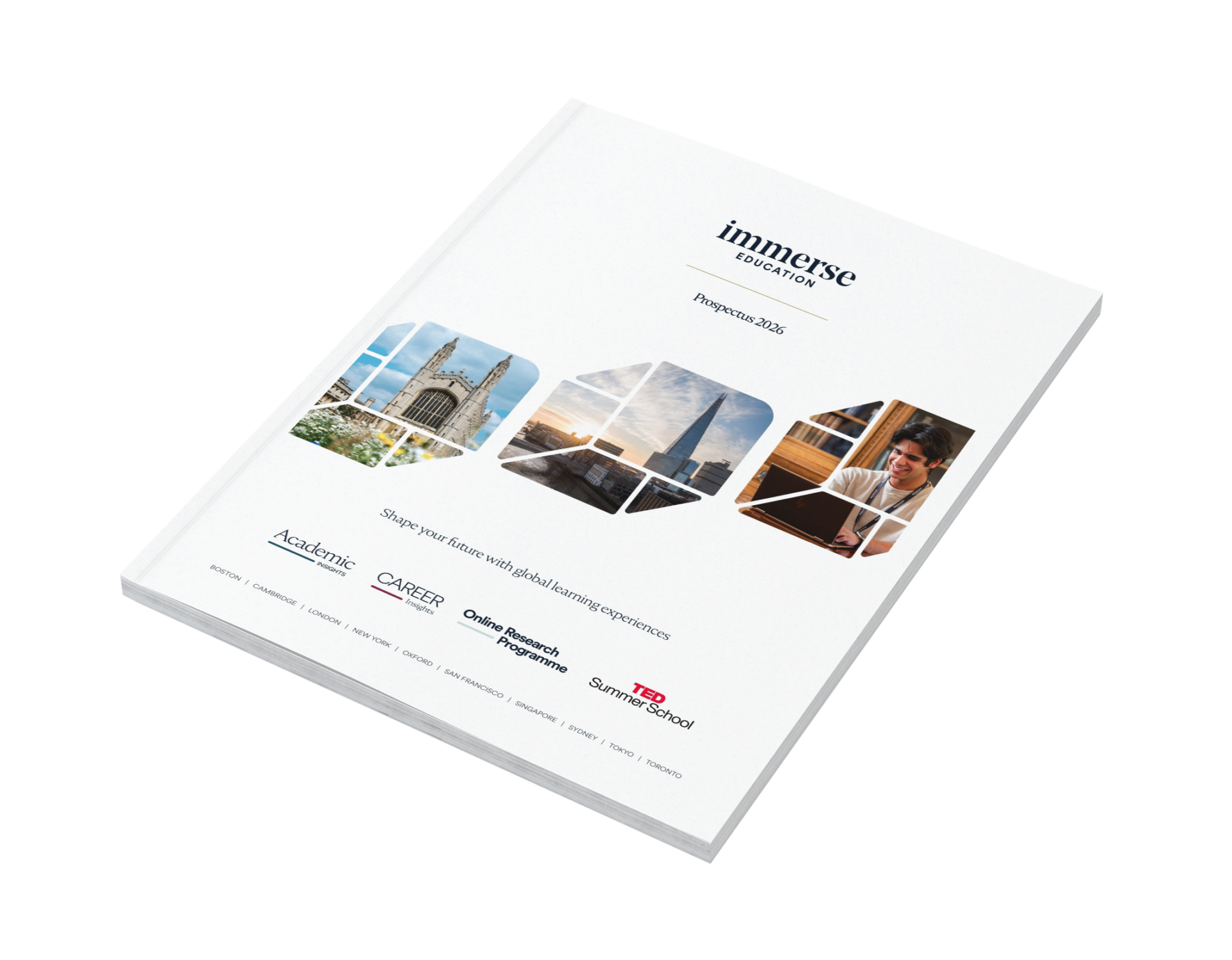
The Online Research Program offers high school students the opportunity to conduct rigorous research with tutors from Oxford, Cambridge, and Ivy League universities. You will work with your tutor to explore a subject of your choice in depth and write an academic research paper. The program is offered in 1:1 and small group formats, and you can choose to receive college credit from universities in the US and the UK.
The virtual research program is offered in over 20 subjects, including artificial intelligence, chemistry, psychology, economics, computer science, creative writing, philosophy, and more. At the end of the program, you’ll receive a written evaluation from your tutor, an opportunity to publish your research, and an invitation to present at the Immerse Online Symposium. You can find examples of papers Immerse students have worked on here. You can find more details about the application here.
Why it stands out: You’ll get access to 1:1 Oxbridge- or Ivy-style research supervision culminating in a publishable academic paper.
3. Air Force Research Laboratory (AFRL) Scholars Program
Location: Various sites across the U.S.
Cost/Stipend: No cost; stipend of $501.60-805.60/week (based on full-time work schedule)
Dates: Spring, summer, and fall internships available; minimum duration is eight weeks (exact date varies by project and site)
Application deadline: January 10; applications open on October 10th
Eligibility: U.S. high school students who are 16 or older, preferably with a GPA of at least 3.0 on a 4.0 scale
The AFRL Scholars Program offers spring research internships for high school students interested in areas such as physics, aerospace engineering, computer science, and other STEM fields connected to air and space research. During the internship, you will work on a focused research project, learn how technical research is conducted in a federal laboratory setting, and gain experience using scientific tools, data analysis methods, and research communication skills.
You can apply to up to three research projects, each led by an AFRL scientist or engineer who will serve as your mentor throughout the program. Research topics vary by location and may include areas like space systems, autonomous technologies, aerospace vehicles, directed energy, and materials science. You will also connect with scientists and participate in lab tours during the program.
Why it stands out: You work directly within a federal research lab environment on projects connected to real-world aerospace and defense research.
4. MIT Beaver Works Spring Saturday Programs
Location: Virtual or Massachusetts Institute of Technology, Cambridge, MA
Cost: Free!
Application deadline: February 20th
Dates: March 7th – April 25th (weekly Saturday meetings)
Eligibility: Current high school freshmen and sophomores; some programs may have additional prerequisites and grade level restrictions, and some are limited to high school girls; must reside in the United States and attend a U.S. high school
MIT Beaver Works offers spring STEM programs for high school students who want to explore technical subjects through project-based learning and applied research. You can choose from several specialized tracks in areas such as computer engineering, artificial intelligence, radio communications, and biotechnology. Classes are typically held on Saturdays and are taught by instructors connected to MIT, Lincoln Laboratory, and industry research teams.
Depending on the course you select, you may work on projects focused on machine learning systems, autonomous vehicles, circuit design, software development, or independent scientific investigation. The program emphasizes hands-on experimentation, collaborative problem-solving, and technical skill development across different STEM disciplines. If you are interested in continuing beyond the spring term, you can also apply to Beaver Works’ more advanced summer offerings.
Why it stands out: The program combines weekly university-level instruction with long-term technical projects across multiple specialized STEM fields.
5. UCSD Junior Research Academy
Location: Online via Zoom
Cost: $125 registration fee; partial scholarships are available
Dates: April 28th – May 21st (Tuesdays and Thursdays)
Application deadline: Not specified
Eligibility: Students in grades 8 and 9; international student eligibility is not specified
The UCSD Junior Research Academy is a four-week online enrichment program designed for students who want to explore an academic subject or personal interest in greater depth through research-focused activities. Classes are taught by junior and senior undergraduate students from UC San Diego and meet over eight online one-hour sessions.
You can choose from subject areas such as engineering, data science, algebra and problem solving, or nanoengineering, depending on the offerings available. The courses include discussions, activities, and opportunities to learn about how these fields are used in real-world settings. Some tracks also include a short final presentation or project that lets you share what you learned. The program is designed to help students explore potential academic interests before high school and college.
Why it stands out: You get access to instruction from UC San Diego undergraduates while exploring a specialized subject in a focused online setting.
6. Keller BLOOM (Bigelow Laboratory Orders Of Magnitude) Program
Location: Bigelow Laboratory for Ocean Sciences, East Boothbay, ME
Cost: Free + housing and meals covered
Application deadline: April 10th
Dates: May 17-22
Eligibility: Maine home-schooled, public, and private high school juniors interested in ocean or environmental science
The Bigelow Laboratory for Ocean Sciences runs the BLOOM Program, a fully funded spring research opportunity for Maine high school students interested in marine biology, oceanography, and environmental science. During the program, you will learn field and laboratory research techniques used in ocean science, beginning with training sessions that introduce you to scientific equipment and data collection methods in the Sheepscot River Estuary.
Alongside the research component, the program includes discussions on topics like environmental policy, ethics in scientific research, and careers in marine science. You will also meet researchers and college representatives during career-focused events and present your research experience to faculty, peers, and family members at the end of the program.
Why it stands out: It combines fieldwork on the water with laboratory-based marine science research in a small cohort setting.
7. Alley Pond’s Field Biology Internships
Location: Alley Pond Environmental Center, Douglaston, NY
Cost: $200 participation fee; financial aid is available upon request
Application deadline: January 2nd (Spring); fall and summer sessions are also available
Dates: March 14th – May 2nd (Saturdays); fall and summer internships also available
Eligibility: High school students who are 14 or older and can participate in outdoor activities for at least two hours; must be U.S. residents
The Alley Pond Environmental Center Field Biology Internship is designed for high school students interested in ecology, zoology, and environmental field research. During the program, you will take part in outdoor research activities such as monitoring water and soil quality, identifying aquatic invertebrates, conducting biodiversity surveys, observing bird populations, and studying native plant species.
Fieldwork will take place in Alley Pond Park and other natural areas across Queens, where you will examine how ecosystems function within an urban environment. You will also learn how to collect and organize scientific data, identify local wildlife, and communicate research findings through presentations and group discussions. The internship introduces you to core concepts in animal ecology and environmental science through direct observation and field-based investigation.
Why it stands out: You will gain experience in ecological field research within urban ecosystems rather than in remote natural settings.
8. Internship Opportunities @ Foreign Policy Research Institute (FPRI)
Location: Remote or in person at the Foreign Policy Research Institute, Philadelphia, PA
Cost/Stipend: Free; paid internships with need-based stipends + part-time unpaid internship options available
Application deadline: Varies by session
Dates: February – April (Spring Session)
Eligibility: High school students and college students authorized to work in the U.S.
The Foreign Policy Research Institute offers internships for high school students interested in international relations, public policy, and global affairs. During the program, you will work with a mentor while developing skills in research, writing, communication, and professional collaboration. Internship placements are available across several areas, including research, communications, events, and organizational operations.
If you join a research-focused team, you will assist scholars studying regions such as the Middle East, Africa, Eurasia, or Asia by contributing to background research, data analysis, and policy-related projects. Some research roles may expect prior experience with language study, quantitative analysis, or independent academic work. The program also includes seminars on foreign policy topics and career pathways, along with opportunities to write or contribute to research articles connected to the institute’s student publications.
Why it stands out: It offers you exposure to region-specific policy research within an active foreign affairs research organization.
9. Penn State Research Internships and Observation

Location: Penn State College of Medicine (PSCOM), Hershey, PA
Cost/Stipend: No cost; internships may be paid or unpaid
Application deadline: Rolling admissions
Dates: Start and end dates are flexible and depend on the research mentor you choose during the application process
Eligibility: High school students who are U.S. residents and are sponsored/supervised by a College of Medicine faculty member
Penn State College of Medicine provides high school students with opportunities to explore biomedical research through short-term shadowing experiences and longer research internships. Depending on the placement, you may spend anywhere from a few days to several months working alongside a faculty researcher or laboratory team.
During the experience, you will observe how biomedical research is conducted in a university lab setting, including experimental procedures, data collection, analysis methods, and day-to-day research operations. Your supervising mentor will guide your training and oversee the required safety and compliance preparation before you begin working in the lab. To qualify for the program, you will need to identify potential mentors by reviewing faculty research areas and contacting labs aligned with your academic interests.
Why it stands out: You will connect with and explore university research labs, gaining insights into biomedical research and the daily routine of health and research professionals.
10. U.S. Department of the Treasury Headquarters Student Internship Program
Location: U.S. Treasury Department’s headquarters, Washington, D.C.
Cost/Stipend: None
Dates: January – May (spring session); you can find current opportunities at www.usajobs.gov
Application deadline: Applications typically close in October for the spring session; the exact dates vary by year
Eligibility: High school, undergraduate, and graduate students who are enrolled or accepted at an accredited school and are U.S. citizens
The United States Department of the Treasury offers internship opportunities to students interested in economics, public policy, finance, law, and government operations. During the internship, you may be assigned to offices within international finance, economic policy, national security, legal affairs, or administrative management.
Your responsibilities may include conducting research, analyzing economic or policy data, preparing summaries and reports, assisting with meetings and events, and supporting projects related to budgeting, communications, human resources, or strategic planning. Depending on your placement, you may also conduct research on global financial systems, economic trends, and policy development connected to federal and international institutions.
Why it stands out: The program offers you exposure to how real economic and financial policy is handled within a federal government department.
11. Internships @ American Psychological Association
Location: Remote
Cost/Stipend: Free; stipend and academic credit (unpaid) opportunities available
Application deadline: Varies based on the opportunity
Dates: Spring, summer, fall, and winter internships available; exact dates vary depending on the specific opportunity
Eligibility: Students enrolled in school at least part-time, authorized to work in the U.S. through E-Verify, and residents of a U.S. state where APA is registered as an employer; students under 18 need to submit a D.C. Work Permit
APA offers remote internships throughout the year for students interested in psychology and related fields. During the internship, you will work with a supervisor who guides your assignments, introduces you to professional workplace practices, and helps you develop research and communication skills. Depending on your placement, your work may involve literature reviews, research support, educational content, publishing, policy projects, communications, or organizational operations connected to the field of psychology.
In addition to project work, you may take part in workshops, collaborative discussions, and other professional development activities with staff and fellow interns. The program also provides access to APA student resources, including research databases and career tools commonly used in psychology and behavioral science studies.
Why it stands out: The internship gives you access to professional psychology research resources while working remotely within a national psychology organization.
12. Internships @ CAIR-Chicago
Location: CAIR-Chicago, Chicago, IL
Cost/Stipend: None
Application deadline: December 1st (Winter/Spring Session); rolling admissions
Dates: January 1st – May 15th (Winter/Spring Session)
Eligibility: High school students worldwide in grades 9-12
The Council on American-Islamic Relations Chicago internship program offers year-round opportunities for students interested in civil rights, public policy, communications, and community engagement. The program begins with orientation and training, after which you are assigned to projects within areas such as legal advocacy, government affairs, outreach, operations, or communications.
Depending on your role, you may assist with policy research, review legislative materials, support case-related documentation, contribute to content development, or help coordinate community-focused initiatives. The internship concludes with an evaluation and exit interview. You may be invited to return for future sessions based on internship availability and your performance.
Why it stands out: The program places you in active civil rights advocacy work where you contribute to ongoing policy and community-focused projects.
13. OHSU School of Medicine Partnership for Scientific Inquiry (PSI)
Location: Virtual
Cost/Stipend: None
Application Deadline: December 1st
Dates: January 14th – May 27th + optional in-person summer internship
Eligibility: High school sophomores, juniors, and seniors in the Portland metro area or elsewhere in Oregon
The Oregon Health & Science University Partnership for Scientific Inquiry program introduces you to how biomedical research is conducted through a structured, multi-stage experience for high school students interested in medicine and life sciences. Over 16 weeks, you will attend weekly sessions where you learn core scientific concepts and follow ongoing research discussions led by scientists affiliated with OHSU and nearby research institutions.
You will build an understanding of research methods by reviewing scientific literature, participating in journal-style discussions, and developing an initial research proposal with guidance from researchers. If you are 16 or older, you can continue working on research through a summer internship where you will be paired with a research mentor and contribute to an active lab project. The experience typically concludes with a poster presentation where you will share your work in a research symposium setting.
Why it stands out: It combines a semester-long research foundation with a mentored summer lab internship that gradually transitions you into independent research work.
14. WashU Medicine Saturday Scholars Program
Location: Washington University School of Medicine, St. Louis, MO
Cost/Stipend: None
Application deadline: February 6th
Dates: February 14th – March 14th (five consecutive Saturdays)
Eligibility: High school juniors, seniors, and sophomores with a GPA of 3.0 or higher; high school freshmen may be considered if space is available. International student eligibility is not specified
The Washington University in St. Louis Saturday Scholars Program is a short-term anatomy-focused program for high school students, particularly those attending St. Louis Public Schools and nearby districts. The program runs over five Saturdays, with each session centered on a different human body system, such as the cardiovascular, respiratory, digestive, renal, or reproductive systems.
During each meeting, you will participate in anatomy-based lab activities, attend lectures led by medical students, and complete clinical skills exercises designed to reinforce the material. Throughout the program, you will also work on a small group research project. On the final Saturday, you will present your project to instructors, peers, and family members, followed by a closing recognition session. While the experience is primarily educational rather than research-based, it introduces you to how medical concepts are studied and communicated in academic settings.
Why it stands out: It combines hands-on anatomy labs with direct interaction with medical students in a structured, short-format program.
15. NYU SPS High School Academy’s Stock Investing: Valuing Companies and Advanced Research Techniques
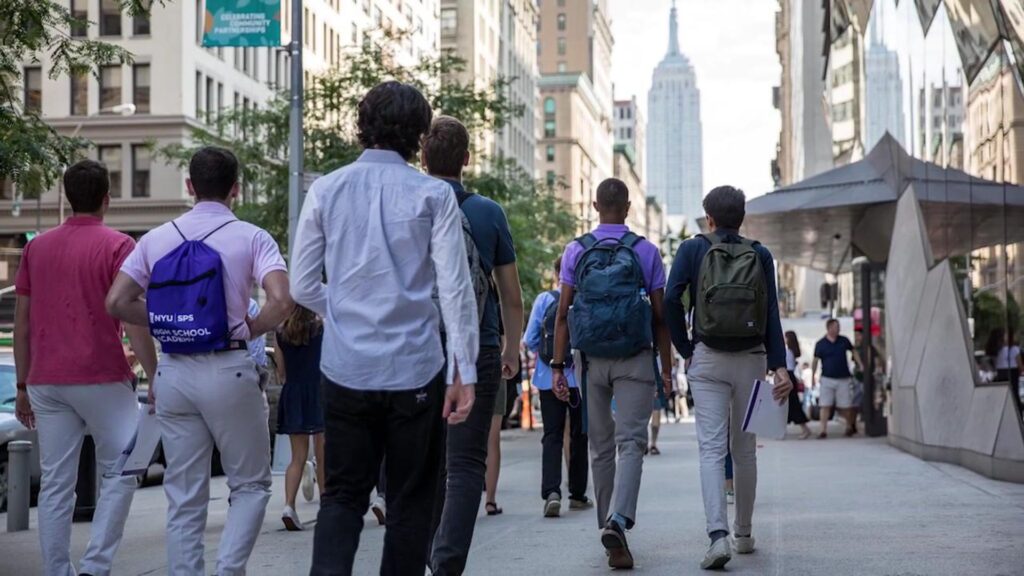
Location: New York University, New York, NY
Cost: $850 + $50 non-refundable application fee
Application deadline: February 13th
Dates: February 28th – March 21st
Eligibility: Students in grades 9-12 who will be able to commute to NYU weekly; applicants must have a minimum B grade average. Prior experience studying business/investing is recommended. International student eligibility is not specified
The New York University School of Professional Studies offers a spring program for high school students focused on introductory concepts in investing, business analytics, and financial decision-making. In the course, you will work with real or simulated market data to learn how financial analysts evaluate companies and economic trends. Topics typically include company valuation methods, basic financial modeling, economic growth forecasting, and discounted cash flow analysis.
You will complete project-based assignments that involve interpreting financial information, analyzing market behavior, and applying structured research methods used in finance and investment settings. The program also introduces you to how professionals approach portfolio construction and business decision-making, with opportunities to apply these ideas through guided exercises and independent projects.
Why it stands out: It introduces you to core investment analysis tools through hands-on work with real financial data and structured modeling exercises.
Using Spring Research to Prepare for College
Research can teach you how to move from curiosity to evidence, whether you are studying science, policy, psychology, finance, medicine, or technology.
The 15 spring research programs for high school students listed here can build college-ready skills through data analysis, literature reviews, lab work, mentorship, academic writing, and presentations.
Maybe the most useful lesson is not the topic itself, but the process: staying patient with difficult questions, revising your thinking, and communicating findings clearly.
Ready to turn research experience into stronger college preparation? Read our University Preparation blogs for application advice, study planning, personal statements, and academic skill-building.