
 Русский (RU)
 Українська (UK)
 Türkçe (TR)
 Italiano (IT)
 Français (FR)
 Português (PT)
 中文 (中国) (ZH)
 Español (ES)
 日本語 (JA)
 ไทย (TH)
 Deutsch (DE)
 Ελληνικά (EL)
 Polski (PL)
 Bahasa Indonesia (ID)
 Nederlands (NL)
 العربية (AR)
 한국어 (KO)

While you are in high school, summers can be more than just a break from assignments and exams. They can be an opportunity to explore your interests, gain practical skills, and step outside the classroom to experience something new. If you are interested in journalism, media, storytelling, or reporting, summer programs in the UK for high school students can help you develop your writing and communication skills while offering insight into how the media industry operates in the real world.
You may spend the summer reporting on current events, producing podcasts, interviewing people, writing feature stories, or visiting professional newsrooms in the heart of the United Kingdom. You will learn from experienced journalists, collaborate with students from around the world, and explore different areas of journalism, including broadcast media, investigative reporting, digital storytelling, photography, and political journalism. Some programs even allow you to publish your work, create multimedia projects, or experience newsroom-style training.
What kinds of journalism summer programs are available in the UK for high school students?
Many universities, media organisations, and journalism institutes across the UK offer programs focused on news reporting, broadcast journalism, digital media, podcasting, feature writing, photography, and storytelling. As a participant, you may attend workshops, participate in newsroom simulations, work on collaborative media projects, and learn directly from journalists and editors working in the industry.
Finding the right journalism program can sometimes be difficult, as the kind and extent of exposure you get can differ from one opportunity to another. Some opportunities focus mostly on theory, while others may not provide enough practical exposure or mentorship. The best programs combine hands-on learning with guidance from experienced professionals, helping you build both technical journalism skills and confidence as a communicator.
To make your search easier, we have curated a list of 15 journalism summer programs in the UK for high school students.
For related options, check out the online writing program, summer programs in Oxford, summer programs in Cambridge, and summer programs in London.
15 Journalism Summer Programs in the UK for High School Students
1. Nottingham Trent University’s Journalism for 15-17 Year Olds Short Course
Location: Nottingham Trent University City Campus, Nottingham, England
Cost: £545
Dates: July 20-24 | July 27-31
Application deadline: Not specified
Eligibility: Students ages 15-17 interested in current affairs, writing, and research; international students are eligible
As one of the more hands-on journalism summer programs in the UK for high school students, Nottingham Trent University’s Journalism for 15–17 Year Olds Course allows you to explore journalism in the real world over five days. You will learn about journalism in areas such as politics, sports, music, arts and culture, news, or fashion, based on your interests. You’ll explore career pathways in the field, develop skills in researching and writing accurate stories, and learn how to conduct media interviews.
In the process, you will practice newsgathering, create your professional work portfolio, and build connections with peers and professionals. Throughout the week, you will gain exposure to the tools and techniques journalists use while working in a newsroom. At the end, you will receive a certificate of attendance from Nottingham Trent University.
Why it stands out: It lets you practice real-world journalism by reporting in areas like politics, sports, and culture while building skills in interviewing, news writing, and creating a professional portfolio.
2. Immerse Education’s London Media & Journalism Summer School
Location: London, England
Cost: Varies; summer school scholarship available through our bursary programme
Dates: Two weeks during the summer
Application deadline: Multiple summer cohorts with rolling admissions
Eligibility: High school students worldwide, ages 15-18
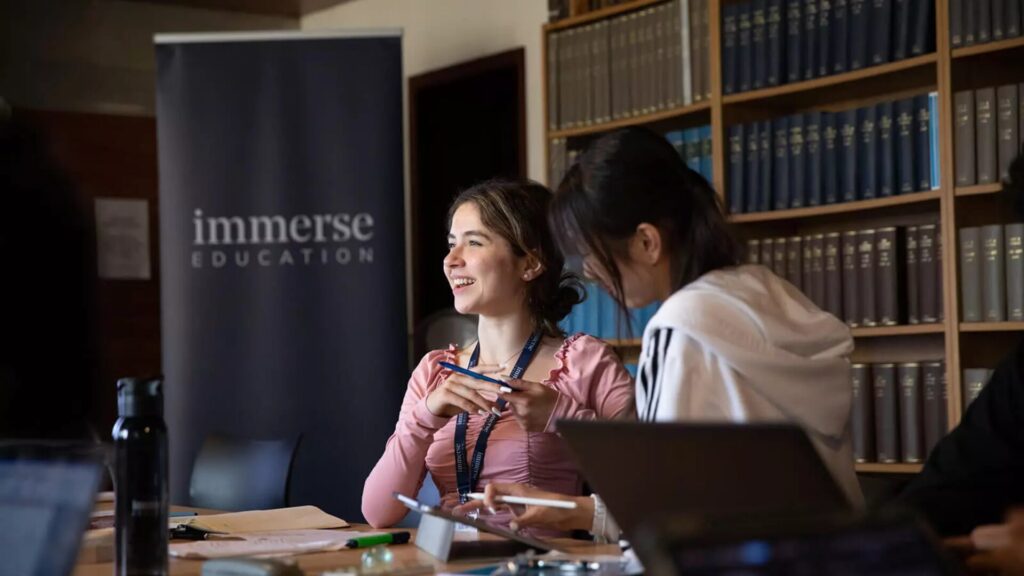
Immerse Education’s Media & Journalism Summer School offers a two-week immersive career-focused experience for high school students. You will learn about digital journalism, media ethics, and key reporting skills. You will engage in discussions, learn through presentations, and also work on projects in collaboration with your peers.
You will receive personalised feedback from expert mentors as you explore journalism basics, investigative reporting, journalistic styles, and the principles of storytelling and writing. The program also allows you to work on an individual research project and receive a certificate of completion. The program concludes with a final presentation where you will share your findings and experiences with peers and professionals. You can find more details about the application here!
Why it stands out: It lets you explore the world of media and journalism through hands-on exercises focused on investigative reporting, storytelling, and media ethics while working with a mentor and learning from professionals.
3. School of Journalism’s Journalism Summer School
Location: School of Journalism, London, England
Cost: £795
Dates: July 27th – August 7th
Application deadline: Rolling basis
Eligibility: Open to all, ages 16 and up, who are interested in journalism and are proficient in written English
This is a two-week opportunity to explore the basics of various forms of journalism. You will attend sessions led by a team of trainers and explore a range of topics, including social media, news and feature writing, broadcast journalism, data and digital journalism, and photography.
You will learn about the demands of the news industry and find opportunities to build foundational skills to pursue journalism. You may also work on projects like producing a podcast or a video, gaining exposure to modern multimedia tools and techniques journalists use.
Why it stands out: It lets you explore multiple forms of journalism, from broadcast and digital reporting to photography and feature writing, through hands-on sessions led by journalists.
4. BBC’s ‘Get In’ Taster Experiences
Location: Multiple BBC bases across the United Kingdom
Cost: Free
Dates: Year-round opportunities; dates confirmed after application
Application deadline: Not specified; you can register interest via an online expression of interest form, then complete a separate application once a date is confirmed
Eligibility: Students, ages 16-18, who live within a one-hour commute of the chosen BBC location, aspiring media professionals over 18, career changers, and school groups. International student eligibility is not specified
BBC’s free, in-person taster day gives you a look at what working at the BBC is really like. During the day, you will learn about different job roles across the BBC, develop hands-on skills, and spend time in a BBC studio.
The session will also walk you through the BBC’s apprenticeship application process and offer tips on how to apply. The experience can help you explore the daily routine of journalists and media professionals and see how the BBC operates.
Why it stands out: It offers a glimpse into the media and news industry through free taster sessions conducted at BBC offices.
5. London School of Economics and Political Science Summer School: International Journalism and Society Course
Location: London School of Economics and Political Science (LSE), London, United Kingdom
Cost: £60 non-refundable application fee + tuition starting from £4,450 or £3,350 for full-time students enrolled at a university/college; discounts and scholarships available
Dates: June 22nd – July 10th
Application deadline: Rolling admissions
Eligibility: High school students who have received an offer of a place at a university; international students are eligible
LSE’s Summer School offers credit-bearing courses across subjects, including media and journalism. The International Journalism and Society course is a three-week track that can help you examine the role of news media in modern society and learn about digital journalism, AI in reporting, media ethics, political journalism, and how the press covers terrorism and collective memory.
You will attend 36 hours of lectures and 18 hours of smaller seminars and workshops, including guest talks by working journalists. The course is modeled on LSE’s own postgraduate media and communications program and is led by professors. You will also attend talks led by media professionals during the program. You can choose to earn credits for your participation by completing an assessment at the end.
Why it stands out: It lets you explore the role of journalism in the coverage of international news events and LSE’s ongoing research under the guidance of a professor in a university classroom.
6. University of the Arts London’s Fashion Journalism Short Course
Location: University of the Arts London’s London College of Fashion, London, England
Cost: Starts at £450.00
Dates: Multiple three-day sessions each year; upcoming sessions in June, July, and December
Application deadline: Not specified
Eligibility: Students, ages 16 to 18; international student eligibility is not specified
This short course, conducted at the London College of Fashion, gives you a hands-on introduction to fashion journalism over the course of three days. You will learn how to write fashion news stories, analyze runway collections, spot trends, and brainstorm feature ideas under the guidance of a practicing fashion journalist.
The course also covers interview techniques for talking to fashion designers and the basics of networking in the industry. This can be an opportunity to experience how fashion reporting is taught at an art school. At the end, you will receive a digital badge and a certificate of attendance.
Why it stands out: You will learn about and practice fashion reporting under the guidance of an experienced journalist in an art school environment.
7. UAL’s London College of Communication Photojournalism Short Course

Location: UAL London College of Fashion, London, England
Cost: Typically, £670.00/session; fee can vary
Dates: Multiple five-day sessions each year; upcoming sessions in July and August
Application deadline: Not specified
Eligibility: Students, ages 16 to 18; international student eligibility is not specified
This short course offered by UAL is designed to help you explore how to tell stories through photography while developing your own photo essay or documentary project. Through workshops and hands-on sessions led by a practicing photojournalist, you will learn camera techniques, composition, light, and the history of photojournalism.
You will also research story ideas, study influential photojournalists, and learn how to edit your images using Adobe Lightroom. At the end of the course, you will present your photo essay and receive feedback. You will additionally receive a digital badge and certificate of attendance.
Why it stands out: It offers real-world field photojournalism experience, skill-building opportunities in photography and reporting, and professional-led instruction within a university environment.
8. News Associates Free Journalism Workshops
Location: Remote (via Zoom) and in-person at News Associates Twickenham office, London, England
Cost: Free
Dates: June 17th (remote) | July 25th (in-person) | August 11th (remote)
Application deadline: Not specified
Eligibility: Open to all; participants should be 16 or older to attend the in-person session. International student eligibility is not specified
These free, hands-on workshops give you a practical introduction to journalism and a taste of News Associates’ NCTJ-accredited training. The sessions typically include a breaking news exercise, and editors provide individual written feedback on your work.
Remote sessions run on Zoom and last about two and a half hours, while the in-person session in Twickenham runs for three and a half hours. All workshops cover the same content, so you can sign up for any one session that aligns with your schedule. You can also choose to attend free sports journalism workshops, which are run in partnership with Sportsbeat.
Why it stands out: It offers journalism exposure and personalized feedback on your writing from working editors, all at no cost!
9. King’s College London Pre-University Summer School: Pre-University Media, Communication & Digital Culture
Location: King’s College London, London, UK
Cost: £3,195 for one week – £9,375 for three weeks + £65 application fee
Dates: July 13-17
Application deadline: Typically, April
Eligibility: Students worldwide, ages 16-17, who are about to start the final three years of high school
As one of the more academically focused journalism summer programs in the UK for high school students, King’s College London lets high school students enrol in short courses designed to introduce them to university-level academics over one to three weeks. Classes include lectures, discussions, and practical exercises led by university faculty, and instruction spans multiple academic areas, including media and journalism.
The Media, Communication & Digital Culture course covers key concepts in digital media and communication, including social media, digital fandoms, and streaming cultures. You will learn through instruction sessions along with module-based assignments that help you apply the textbook theory to real media tasks. At the end, you will receive a Certificate of Completion.
Why it stands out: It lets you explore digital media and online culture through lectures, workshops, and projects focused on social media, streaming platforms, and the global impact of digital communication.
10. Oxford Brookes Engage University Summer School
Location: Oxford Brookes University, Oxford, England, UK
Cost: Free
Dates: Option 1: June 30th – July 2nd | Option 2: July 7-9
Application deadline: Varies by track; multiple rounds of applications available
Eligibility: Students in England, ages 16 and up, who are in the first year of a two-year Level 3 qualification (such as A Levels or BTEC) at a non-selective state school or college; applicants must also meet at least one additional criterion listed here
Through this program, Oxford Brookes University offers a fully funded subject-specific exploration opportunity to secondary school students. You will spend a week exploring a subject of your choice, learning about university academics, connecting with like-minded peers, and participating in social activities.
You can choose from a range of subject areas, including the creative industries track, which offers an introduction to various disciplines, from journalism, media, and publishing to photography and graphic design. Here, you will apply your skills to media or journalism projects and explore pathways in your field of choice. During the program, you will also get support and insights from Oxford Brookes students.
Why it stands out: This free program allows you to prepare for college, dive into journalism and media pathways, and connect with college students while experiencing university life.
11. Nottingham Trent University’s TV Presenting for 15-17 Year Olds Course
Location: Nottingham Trent University City Campus, Nottingham, England
Cost: £545
Dates: July 27-31 | August 3-7
Application deadline: Not specified
Eligibility: Students, ages 15-17, worldwide
This course introduces you to television presenting and skills crucial for pursuing a career in media and journalism. You will spend a week undergoing basic voice training, engage in on-location and studio-based presenting, and also receive performance coaching.
You will participate in collaborative work and discussions to exchange ideas and apply what you learn during the week. The program will offer individual guidance through small classes and provide you with the opportunity to build a professional journalism portfolio. You will learn from professionals and receive a certificate of attendance on program completion.
Why it stands out: It lets you build communication and TV presenting skills through studio and on-location practice, voice training, and performance coaching while building a professional media portfolio with guidance from industry tutors.
12. Stanford Pre-Collegiate Summer Institutes: Journalism 101
Location: Online
Cost: $3,200; need-based financial aid available
Dates: July 6-17
Application deadline: March 13th
Eligibility: Students in grades 8-11 at the time of application; international students are eligible, including for financial aid
Stanford University’s two-week online journalism course introduces you to core concepts like news reporting, feature writing, interviewing, fact-checking, research, ethics, and digital storytelling. Classes meet live for two hours each weekday, with an additional hour available for office hours, plus one to two hours of homework per day.
You’ll take part in interactive discussions, lectures, and mock interviews, practicing the kind of critical thinking and source verification that journalists rely on every day. The course ends with the submission of your own researched feature article, which can be a finished piece of writing you can add to your portfolio.
Why it stands out: It lets you explore journalism through discussions, lectures, and project work that you can add to your portfolio, all in a virtual format.
13. EnergyMag Internships
Location: Virtual
Cost/Stipend: None
Dates: Two to eight weeks in the summer; flexible dates
Application deadline: Open year-round
Eligibility: High school sophomores through seniors, domestic and international, who have taken at least one honours science or honours English class and maintain a GPA of 3.25 or higher; college students are also eligible
EnergyMag offers summer research-focused internships to high school students interested in learning how to report energy developments with a focus on sustainability, clean energy, and energy storage. During the internship, you will investigate and analyze a given organization, technology, market, or activity under the guidance of a mentor to gain insights into energy use and storage.
While working on the assignment, you will compile and assess the data you collect from various sources, and draft an analysis report, which may be published on the EnergyMag website. This experience can help you develop core journalism skills, including research, newsgathering, and communication.
Why it stands out: It lets you explore energy industry journalism through research-based reporting, data analysis, and interviews while producing publishable reports.
14. Columbia Scholastic Press Association (CSPA) Summer Journalism Workshop
Location: Virtual sessions available for international students
Cost: $1,100/session
Dates: Virtual sessions: July 6-10; July 13-17; July 20-24
Application deadline: June 30th
Eligibility: Senior high school students; international students studying in schools following American education plans are eligible to apply
The Summer Journalism Workshop, organized by CSPA and hosted by Columbia University, offers high school students the opportunity to participate in journalism workshops over the course of a week. The workshops will offer insights into areas like digital media, editorial leadership, writing, broadcast journalism, editing, and reporting.
The workshops are led by instructors with journalism experience. Depending on the session, you may engage in exercises and discussions to learn how to write, report, and edit news.
Why it stands out: It lets you explore journalism and digital media through specialised workshops in reporting, editing, broadcast journalism, and editorial leadership from the comfort of your home!
15. Georgetown University Pre-College Programs: Journalism and Media in the Digital Age
Location: Online
Cost: $1,895; need-based scholarships are available for students who demonstrate high potential and financial need.
Dates: Multiple one-, two-, and four-week sessions each year, including in the summer
Application deadline: One week before each session starts
Eligibility: Students, ages 13 and up; international students are eligible
This self-paced online course gives you a practical introduction to journalism and media across 20 to 30 hours of video lectures, assignments, and multimedia content. You will learn what makes a story newsworthy, how to gather facts through research and interviewing, how to structure and refine a piece, and how to navigate ethical and legal challenges that journalists face. The course also covers how storytelling changes across different platforms, from print and digital to video and social media.
You will be paired with a personal mentor who will offer feedback on assignments and help you develop your final project. The course concludes with a capstone project in which you will report and write your own news story for a platform of your choice. At the end, you will receive a Certificate of Completion from Georgetown University.
Why it stands out: You will explore the fundamentals of digital media and reporting through instruction and hands-on project work in a flexible, virtual format.
Turn Summer Reporting Into Career Direction
Summer journalism can show you how reporting, interviewing, editing, and storytelling become practical skills shaped by deadlines, audiences, and real media environments.
The 15 journalism summer programs in the UK for high school students listed here cover broadcast, digital media, fashion journalism, photojournalism, and newsroom-style training.
From Nottingham Trent and LSE to BBC tasters, UAL, King’s, and Oxford Brookes, these experiences help you test media interests early.
Want to turn summer reporting into a career direction? Read our Career Exploration blogs for journalism pathways, media roles, portfolio ideas, and future steps.