

 Русский (RU)
 Українська (UK)
 Türkçe (TR)
 Italiano (IT)
 Français (FR)
 Português (PT)
 中文 (中国) (ZH)
 Español (ES)
 日本語 (JA)
 ไทย (TH)
 Deutsch (DE)
 Ελληνικά (EL)
 Polski (PL)
 Bahasa Indonesia (ID)
 Nederlands (NL)
 العربية (AR)
 한국어 (KO)

If you’re a high school student interested in biotechnology, you’ve probably realised that the field sits at the intersection of some of the most exciting areas of modern science. From genetic engineering and medical research to bioinformatics, pharmaceuticals, and sustainable agriculture, biotechnology is transforming the way scientists approach some of the world’s biggest challenges. Biotechnology summer schools in the UK for high school students give you the opportunity to engage with the field through university-level learning and laboratory exploration.
Imagine spending your summer studying molecular biology in Cambridge, learning about CRISPR and genetic engineering in a university lab, or discussing the ethical implications of biotechnology with researchers and students from around the world. These programs combine academic rigour with hands-on scientific inquiry, helping students experience how biotechnology is shaping the future of medicine, healthcare, and innovation.
Studying biotechnology in the UK also offers a unique academic experience because of the country’s strong scientific tradition and world-renowned research institutions. Students often learn in historic university settings while gaining exposure to cutting-edge discoveries and contemporary debates in science and medicine.
Why should you study biotechnology in the UK?
Of course, not all summer schools offer the same level of rigor or hands-on engagement. Some focus mainly on lectures and theory, while others emphasize laboratory sessions, collaborative research projects, scientific discussions, and close mentorship from faculty and researchers. Finding the right program can make a major difference in how deeply you engage with the subject.
Across the UK, universities and educational organizations now offer exceptional biotechnology summer opportunities specifically designed for high school students. Whether you’re interested in pursuing medicine, biomedical research, genetics, or broader life sciences, these programs can help you deepen your scientific understanding while experiencing university-level study in an intellectually stimulating environment.
To help you explore the best options, we’ve compiled a list of 15 Biotechnology Summer Schools in the UK for High School Students. They’ve been selected for their academic quality, hands-on learning opportunities, and exposure to cutting-edge scientific research.
In addition to biotechnology opportunities, you can check out biology summer programs.
15 Biotechnology Summer Schools in the UK for High School Students
1. UNIQ Biochemistry University of Oxford
Location: Oxford, United Kingdom
Cost: None
Acceptance rate/cohort size: Selective; cohort size not specified
Dates: July 20-24
Application Deadline: January 13th
Eligibility: Year 12 student in England or Wales, Year 13 in Northern Ireland, or S5 in Scotland in the first year of further education; currently studying at a UK or Islands state school or college; under 18 at the time of the residential; studying Chemistry and at least one of Biology, Physics, or Maths to A level (or equivalent), with a strong Maths GCSE if not studying Maths beyond GCSE; minimum six GCSEs with one or more at grade 7/A or above (or six National 5s with one or more at grade A in Scotland); settled UK or Islands resident eligible for home fees status; not open to international students
In this program, you spend a Monday-to-Friday summer residential stay in an Oxford college, designed to give you a taste of what studying biochemistry as an Oxford undergraduate is like. The academic programme combines lectures, laboratory practicals, and a small-group tutorial covering a diverse range of biochemistry topics, delivered by the Oxford Biochemistry faculty.
The curriculum introduces the techniques modern biotechnology relies on, including physical methods such as X-ray crystallography and microscopy, alongside molecular and genetic approaches like CRISPR-Cas9 gene editing. You are encouraged to work independently and direct your own study, mirroring how Oxford undergraduates learn. The week closes with a mini conference, followed by sustained online support from August through December.
Why it stands out: It is a fully funded, Oxford-run access residence delivered directly by the University’s Biochemistry faculty and reserved for UK state-school students, giving you genuine immersion in the same lecture, lab, and tutorial formats used in the Oxford undergraduate degree.
2. Immerse Education’s Biotechnology Summer School
Location: Cambridge, UK
Cost/Stipend: Varies; summer school scholarship available through the bursary programme
Acceptance rate/cohort size: Selective; an average of 7 participants per class
Dates: 2 weeks during the summer
Application Deadline: Multiple summer cohorts; rolling admissions
Eligibility: Students aged 13-18 currently enrolled in middle or high school; open to international students
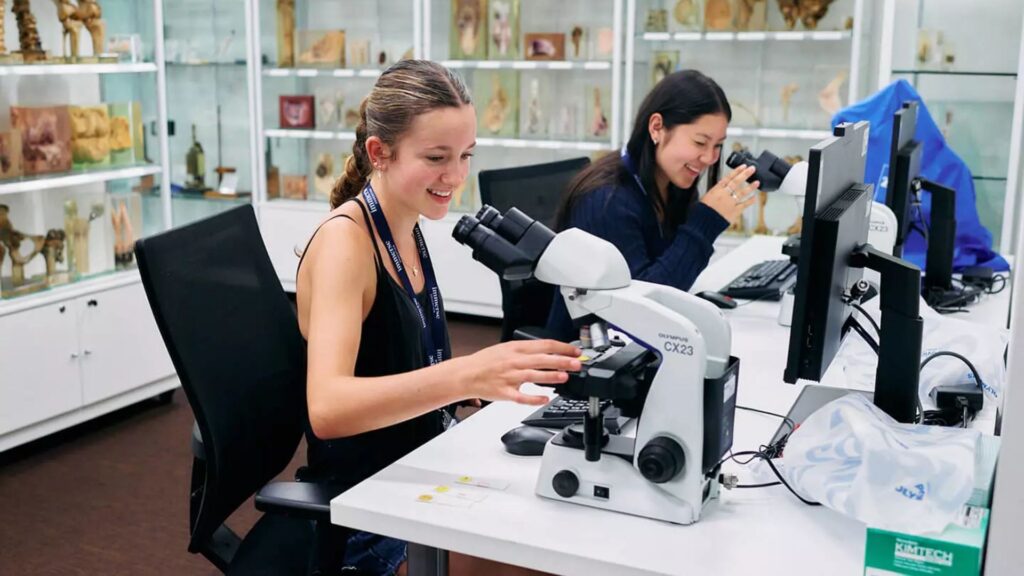
Immerse Education’s Biotechnology Summer School aims to prepare you for careers in today’s rapidly growing biotechnology industry. During the two-week program, you will learn various fundamental concepts in molecular biology, biotechnology, and genetic engineering through hands-on exercises.
Regardless of whether you want to become a biotechnologist working in a lab, an entrepreneur focused on biotech inventions, or take up any role in the field, the program will ensure you gain the skills to approach them with confidence.
Why it stands out: You’ll study under expert academics, be guided daily by a university student mentor, complete a project you can show in future applications, and experience genuine university college life, with other campuses worldwide as alternatives.
3. Imperial College London – Year 12 Work Experience Programme – Biomedical Research
Location: London, UK
Cost/Stipend: None
Acceptance rate/cohort size: Highly competitive; 20:1 application-to-place ratio
Dates: June 29th – July 3rd
Application Deadline: March 5th
Eligibility: In Year 12 at a UK state school; studying A-level or equivalent Biology and either Maths, Chemistry, or Physics; expect to study a STEM subject at university; achieved at least eight GCSEs including five at grades 7-9 and English Language grade 5 or higher; able to commute to campus daily; not open to international students
Among the more research-focused biotechnology summer schools in the UK for high school students, this program immerses you in the world of biomedical research during an intensive five-day professional experience. As a participant, you will gain hands-on exposure to specialised biotechnology applications through interactive demonstrations led by the Parkinson’s Tissue Bank and MRI scanning team.
Your daily routine will simulate real academic working life, requiring you to navigate professional workspaces, manage your time, and meet strict deadlines. You will observe complex anatomical procedures, including a brain dissection, which expands your understanding of clinical biotechnology. Finally, you will deliver a short oral presentation at an academic-style conference to conclude the program.
Why it stands out: It immerses high school students in the genuine daily rhythms of an academic researcher, combining high-level clinical biotechnology demonstrations with crucial professional responsibilities.
4. UNIQ Biomedical Sciences University of Oxford
Location: University of Oxford, Oxford, UK
Cost/Stipend: None
Acceptance rate/cohort size: Selective; cohort size not published
Dates: June 29th – July 3rd
Application Deadline: January 13th
Eligibility: UK state-school students in Year 12 in England or Wales, Year 13 in Northern Ireland, or S5 in Scotland; settled UK or Islands resident or expected to qualify for home-fee status; normally 16 or 17 and under 18 at the residential; studying at least two of Chemistry, Biology, Physics, or Maths at A level or equivalent; not open to international students
You experience Biomedical Sciences through Oxford’s free UNIQ access program, including a subject-specific residential in Oxford. The course introduces how the human body functions in health and disease, with exposure to genetics, organ systems, molecular and cellular biology, systems biology, and neuroscience.
You observe a first-year lecture, learn how Oxford tutorials work, and hear from leading scientists about their research. Topics may include sleep cycles, fruit flies as a model for development, and the role of hormones in stress. You also receive guidance from current Oxford students serving as UNIQ ambassadors.
Why it stands out: It gives eligible UK state-school students a free, residential Oxford Biomedical Sciences experience with undergraduate-style teaching, scientist-led subject exposure, and full core costs covered.
5. King’s College London Pre-University Summer School
Location: London, UK
Cost: £65 application fee. 1-week tuition is £1,200 to £3,195; residential is £1,970 to £3,965
Acceptance rate/cohort size: Selective; cohort size not specified
Dates: Session 1: July 6-10; Session 2: July 13-17; Session 3: July 20-24; Session 4: July 27-31
Application Deadline: April 27th
Eligibility: Pre-University Summer School: Students aged 16-17; open to international students
If you are comparing biotechnology summer schools in the UK for high school students, King’s College London’s Pre-University Summer School gives you the chance to explore biotechnology and medical science in a university environment while experiencing student life in central London. You can build a biotech-focused experience through subjects such as Medical Science, Neuroscience, and Science, Technology & Engineering.
You’ll learn through interactive lectures, workshops, discussions, and practical academic activities led by King’s academics in a style similar to undergraduate study in the UK. For students considering future studies in biotechnology, biomedical engineering, medicine, neuroscience, or healthcare research, the program offers a broad introduction to the life sciences in an international learning environment.
Why it stands out: It combines world-class academics, interdisciplinary life sciences courses, and an immersive London university experience that gives students an authentic preview of studying biotechnology-related subjects at a top global university.
6. Imperial Global Summer School
Location: Imperial College London, South Kensington, London, UK
Cost: £7,695
Acceptance rate/cohort size: Competitive; over 550 students annually
Dates: June 29th – July 10th; August 3-14
Application Deadline: Rolling admissions until spaces fill
Eligibility: Students aged 16-17 with strong academic performance and English proficiency; open to international students
Imperial College London’s Global Summer School offers a strong introduction to biotechnology, biomedical science, and modern life sciences through its Medicine and Life Sciences pathway. You’ll attend lectures, laboratory sessions, clinical workshops, and collaborative problem-solving activities designed around real scientific and healthcare challenges.
You’ll explore topics related to medicine, molecular biology, healthcare technology, and biomedical research while learning from Imperial academics and healthcare professionals. One of the central parts of the program is the Innovation Challenge, where you’ll work with other students to develop solutions to scientific and technological problems using ideas from different STEM fields.
Why it stands out: It features a combination of world-class STEM teaching, hands-on medicine and life sciences training, and interdisciplinary innovation projects at one of the world’s top science and engineering universities.
7. The University of Edinburgh Pre-University Summer School
Location: Edinburgh, Scotland, UK
Cost: £5,250
Acceptance rate/cohort size: Selective; limited capacity
Dates: June 29th – July 10th
Application Deadline: May 19th
Eligibility: Students aged 16-18 in the penultimate or final year of high school; open to international students
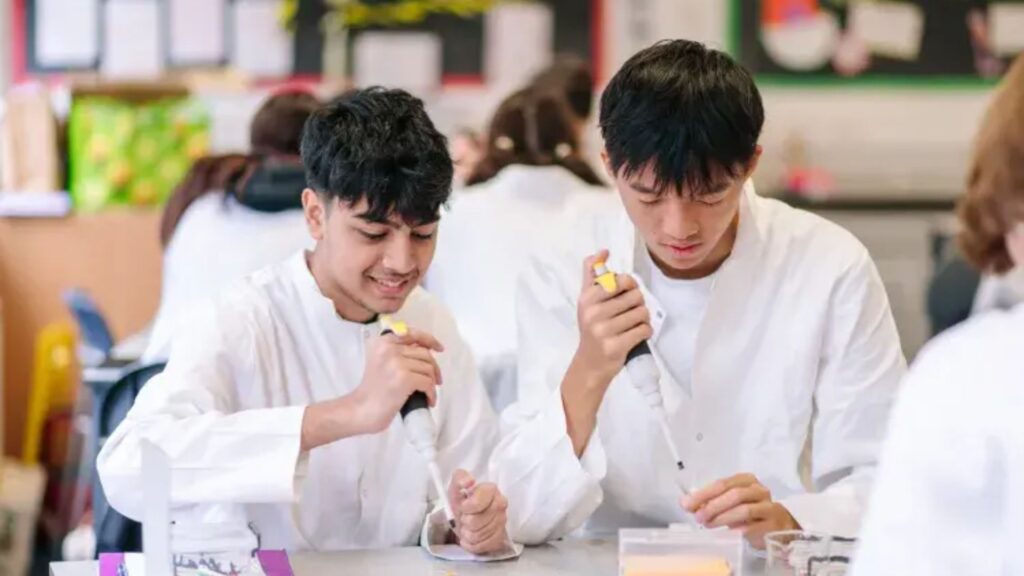
The University of Edinburgh’s Pre-University Summer School allows you to explore life sciences in a university setting through its Pre-University: Life Sciences course. You’ll take part in lectures, discussions, and academic activities led by University of Edinburgh staff while learning about topics connected to biomedical science, genetics, healthcare, and modern scientific research.
The program helps you understand how biotechnology and life sciences are linked to real-world challenges in medicine, health, and society. You’ll develop skills in critical thinking, communication, and collaborative learning through group activities and classroom discussions. You’ll also experience student life by staying in university accommodation and joining social and cultural activities with other international students.
Why it stands out: It features a combination of university-level life sciences learning, immersive student life experience, and exposure to biomedical and biotechnology-related topics at one of the world’s leading research universities.
8. Biological Sciences Summer School University of Leeds
Location: Leeds, UK
Cost/Stipend: None; travel bursary up to £100 available for eligible students
Acceptance rate/cohort size: Selective; limited cohort size
Dates: June 25-26
Application Deadline: April 7th
Eligibility: Year 12 UK students; interested in exploring biological sciences; targeted at students meeting widening participation criteria; not open to international students
This program immerses you in the practical foundations of biotechnology and life sciences through a two-day residential experience. You will engage in hands-on lab activities and collaborate on a specific biological research project of your choice, experiencing the complete scientific workflow from start to finish. Working closely with academic experts and current undergraduates, you will utilize university-level laboratory equipment to conduct experiments that mirror real-world biotechnology research practices.
The program allows you to attend specialized taster lectures that expand your understanding of current scientific developments and specialized career pathways. In addition to technical training, you receive dedicated guidance on crafting strong UCAS personal statements to support future academic applications.
Why it stands out: It empowers students to execute a complete biological research project of their choice while experiencing an immersive residential campus environment and gaining direct insights into university-level STEM admissions.
9. University of Warwick Pre-University Summer School
Location: Coventry, England, United Kingdom (Residential program on the University of Warwick campus)
Cost: £5,250 (includes tuition, 10 nights of accommodation, meals, and social trips) + £50 application fee
Acceptance rate/cohort size: Selective; cohort size not specified
Dates: July 14-24
Application Deadline: May 31st
Eligibility: Students aged 16-17 during the program who are considering applying to university; demonstrate sufficient English proficiency; open to international students
The University of Warwick’s Pre-University Summer School offers a residential program designed for high school students from around the world, helping them explore subjects connected to their academic interests. Over 10 nights on Warwick’s campus, you’ll study within one of five interdisciplinary tracks, including Health, Medical and Life Sciences or Science and Engineering, through lectures, seminars, and workshops led by Warwick faculty.
The program combines academic learning with sessions focused on communication skills, personal development, and applying to universities in the UK. You’ll also take part in collaborative group projects, guest lectures, and cultural excursions to places such as Oxford, London, and Warwick Castle.
Why it stands out: It blends university-level life sciences teaching, hands-on personal development workshops, and immersive residential experience at one of the UK’s top-ranked universities.
10. Sutton Trust Summer School – Biosciences University of Sheffield
Location: University of Sheffield, Sheffield, UK (residential at Endcliffe student village)
Cost/Stipend: None
Acceptance rate/cohort size: Highly selective; around 200 places across the Sheffield programme strands
Dates: July 20-23
Application Deadline: March 5th
Eligibility: Year 12 in England or Wales, Year 13 in Northern Ireland, or S5 in Scotland (or equivalent); attends and has always attended a state-funded UK school or college; no older than 17 as of September 1st; studying two A-Level (or equivalent) Science subjects with a keen interest in Biology; additional widening-participation criteria considered, including at least five GCSEs at grades 9-6 (or A*-B) including English and Maths, first-generation university applicants, history of free school meals, and attendance at schools or in neighbourhoods with low progression to higher education; not open to international students
Across four days at Sheffield’s School of Biosciences, you sit in lecture-style and interactive sessions led by academic experts researching biotechnology-relevant problems, including antibiotic resistance in MRSA, infectious diseases such as Covid-19, global food shortages, and degenerative illnesses like Alzheimer’s. Working in small groups, you build towards an end-of-week academic showcase where you present what you’ve learned to peers.
The programme explicitly targets team-working, communication, and problem-solving as its core skill outcomes. You stay in Endcliffe student village with catered meals, join Students’ Union visits, and experience Sheffield through evening social activities.
Why it stands out: It is fully funded, covering accommodation, meals, equipment, and travel, and successful participants who go on to study at Sheffield and meet the criteria are guaranteed a bursary and an Access to Sheffield Scholarship.
11. Selwyn College Year 12 Residential Summer School – Biological Natural Sciences – Selwyn College, University of Cambridge
Location: Selwyn College, University of Cambridge, Cambridge, UK
Cost/Stipend: None; travel bursaries available for eligible students
Acceptance rate/cohort size: Selective; cohort size not published
Dates: June 29th – July 1st
Application Deadline: June 1st
Eligibility: UK school students currently in Year 12 in England and Wales, S5 in Scotland, or Year 13 in Northern Ireland; likely to be predicted A*AA or above at A-Level or equivalent; priority given to widening-participation criteria such as state-school attendance, care experience, Free School Meals, refugee or asylum status, underrepresented background, first-generation university status, disability, or attendance in Selwyn link areas; not open to international students
In this program, you attend a two-night residential summer school at Selwyn College focused on Biological Natural Sciences. The program introduces you to biological topics connected to Cambridge’s first-year Natural Sciences course, including Biodiversity, Evolution and Ecology, Biomedical Sciences, Biomolecules and Cells, and Mathematics for Biological Sciences.
You experience example lectures and try a Cambridge-style supervision, which means small-group teaching. From a biotechnology lens, the strongest fit is exposure to biomedical sciences, biomolecules, cells, biological systems, and quantitative thinking for biology. The program also helps you explore whether you want to focus on biology or combine it with related sciences such as chemistry or earth sciences.
Why it stands out: It gives high-achieving UK Year 12-equivalent students a free residential Cambridge experience with direct exposure to Biological Natural Sciences teaching and small-group supervision.
12. Insight into Bristol – Biomedical and Biological Sciences stream, University of Bristol
Location: University of Bristol, Bristol, UK
Cost/Stipend: None
Acceptance rate/cohort size: Competitive; cohort size varies by subject stream
Dates: July 28-31
Application Deadline: Typically, in early March
Eligibility: Eligible for home fee status and attending a state (non-fee-paying) school or college; enrolled in Year 12 or equivalent during the academic year and under 18 during the program; identify as Asian, Black, or another racially minoritised background; demonstrate the academic ability to study at the University of Bristol; not open to international students
As a participant in the Biomedical and Biological Sciences stream, you engage directly with university-level coursework. You attend specialised academic sessions delivered by leading researchers, examining core principles in biotechnology, biological sciences, and molecular mechanisms. Throughout the residential program, you collaborate with peers on interactive tasks and group discussions that mirror actual undergraduate learning formats.
You stay in campus accommodation, experiencing realistic university life while networking with current students and campus societies. By completing this rigorous academic and social curriculum, you build vital analytical skills and receive targeted higher education guidance. Successfully finishing the program also makes you eligible for a guaranteed contextual offer or interview for future admission.
Why it stands out: It guarantees successful participants a contextual offer or interview for future undergraduate admission at the University of Bristol while providing a fully funded residential campus experience.
13. Bitesize Uni – Biomedical Sciences strand Newcastle University
Location: Newcastle University, Newcastle upon Tyne, UK
Cost/Stipend: None
Acceptance rate/cohort size: Selective; 200-400 places per year
Dates: July 12-14; July 15-17
Application Deadline: March 15th
Eligibility: UK students in Year 12/first-year college or equivalent in Northern Ireland and Scotland; able to attend the residential Newcastle University summer school; parent/carer and teacher forms required if offered a place; not open to international students
The Bitesize Uni Biomedical Sciences strand at Newcastle University is a free residential summer school designed to help you experience undergraduate study. You will explore core topics surrounding human health and disease, specifically anatomy, biochemistry, genetics, immunology, microbiology, neuroscience, pharmacology, and physiology. During the event, you will engage in interactive academic taster sessions, live in student accommodation, participate in social activities, and receive UCAS application guidance.
This program uniquely covers all your travel and living expenses while also qualifying you for the PARTNERS contextual university admissions route. Ultimately, you will learn practical scientific evaluation, independent living skills, and the confidence needed to succeed in higher education.
Why it stands out: It gives UK Year 12 students a fully funded residential Newcastle University experience with academic subject tasters, travel support, and a Biomedical Sciences strand linked to future degree exploration.
14. University of Kent – Bioscience Work Experience Week
Location: Kent, UK
Cost/Stipend: None; travel bursaries available
Acceptance rate/cohort size: Selective; 40 participants
Dates: August 24-28
Application Deadline: May 17th
Eligibility: Year 12 or Level 3 Year 1 students; residents of Kent; studying biology at a sixth form or college; not open to international students
As one of the most practical biotechnology summer schools in the UK for high school students, this program offers rigorous experiential learning and academic engagement while exploring what it is like to study bioscience at the university level. Focused heavily on biotechnology, your coursework involves carrying out a complete workflow for analysing a gene and isolating its encoded protein. You will develop key molecular biology skills by producing, purifying, and characterising proteins of biological and clinical significance.
Throughout the week, you will work directly in undergraduate teaching laboratories, gaining practical experience in cloning and recombinant protein production. Additionally, you will participate in an agar art competition using fluorescent bacteria cultures, listen to expert research talks, and present your findings via a scientific poster.
Why it stands out: It provides high school students with a complete biotechnology workflow experience, guiding them from gene analysis to recombinant protein purification in an undergraduate laboratory setting.
15. University of Bath Discover Bath – Biosciences

Location: University of Bath, Bath, UK
Cost/Stipend: None; travel reimbursement available
Acceptance rate/cohort size: Selective; exact cohort size not published
Dates: August 5-7
Application Deadline: Rolling basis
Eligibility: Year 12 students who meet widening participation criteria, are studying 3 A levels (including Biology and one other Science/Maths), and are on track for a Bath Bioscience course; not open to international students
As a participant in this academic program, you will experience undergraduate-level biosciences study with a direct emphasis on foundational biotechnology topics. You will attend engaging lectures, seminars, and workshops delivered by university faculty and researchers. The curriculum exposes you to critical areas like clinical drug development and molecular interactions, providing insight into real-world scientific applications.
You will practice writing formal scientific reports, developing the analytical and technical communication skills essential for a modern research scientist. Additionally, you will stay in undergraduate accommodation, receive targeted guidance on the UCAS application process, and participate in social activities with current students.
Why it stands out: It provides an immersive, fully subsidised preview of university-level biosciences with targeted UCAS application support and practical exposure to clinical drug development concepts.
Turn Biotechnology Curiosity Into University Readiness
Biotechnology can feel complex until you step into a lab, test ideas, and see how genetics, medicine, and research connect in practice each day.
The 15 biotechnology summer schools in the UK for high school students listed here offer exposure to CRISPR, molecular biology, biomedical research, and university-style learning environments.
From Oxford tutorials to Cambridge projects, Imperial workshops, and bioscience residentials, these experiences can help you clarify subjects, strengths, and future degree choices with confidence.
Visit our University Preparation blogs for guidance on personal statements, interviews, academic writing, entry requirements, and supercurriculars that can shape stronger applications and next steps.