

 Русский (RU)
 Українська (UK)
 Türkçe (TR)
 Italiano (IT)
 Français (FR)
 Português (PT)
 中文 (中国) (ZH)
 Español (ES)
 日本語 (JA)
 ไทย (TH)
 Deutsch (DE)
 Ελληνικά (EL)
 Polski (PL)
 Bahasa Indonesia (ID)
 Nederlands (NL)
 العربية (AR)
 한국어 (KO)
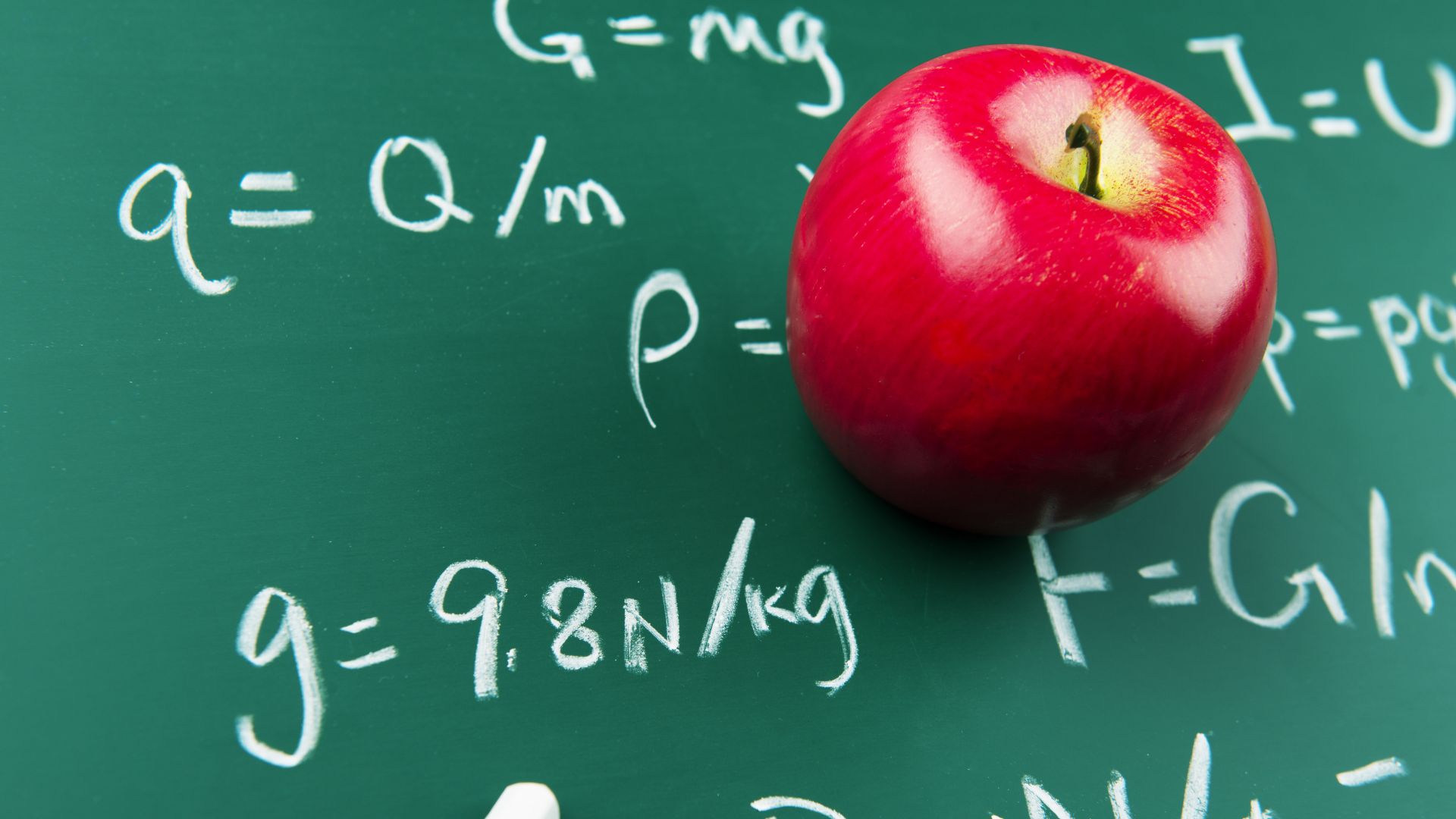
If you are planning to study physics after high school, spending time with the subject outside your regular classes can be one of the most beneficial things you do. Physics camps in the UK for high school students can help you engage with advanced ideas, learn from researchers and instructors, and experience the kind of problem-solving that physicists use every day.
Imagine spending part of your summer investigating black holes, discussing quantum mechanics with university instructors, analyzing real scientific data, or tackling challenging physics problems alongside students who share your interests. You get the opportunity to explore how physics is used to answer questions about the universe, develop new technologies, and solve problems that researchers are actively studying today.
Why attend physics camps in the UK as a high school student?
The UK has a long history of scientific research and is home to some of the world’s most respected universities, laboratories, and research institutions. For high school students interested in physics, attending a camp in the UK can provide direct exposure to university-style learning environments and the kinds of academic experiences that often shape future study and research interests. Many programs are hosted by universities and academic organizations that allow students to learn from researchers, faculty members, and subject specialists.
Depending on the program, you may attend lectures, participate in laboratory activities, work through advanced problem sets, work on projects, or explore specialized areas of physics that are rarely covered in school. These experiences help you gain a clearer understanding of what studying physics at the university level actually involves.
With so many options available, finding the right program can be challenging. Some camps focus primarily on academic enrichment, while others emphasize hands-on experimentation, research, or university preparation. To help you get started, we’ve curated a list of 15 physics camps in the UK for high school students worth considering!
For related options, consider the online physics program.
15 Physics Camps in the UK for High School Students
1. Immerse Education’s Cambridge Physics Summer School

Location: Cambridge UK
Cost: Varies; summer school scholarship available through our bursary programme
Application Deadline: Multiple cohorts with rolling admissions
Program Dates: 2 weeks during the summer
Eligibility: Students worldwide aged 13-18 currently enrolled in middle or high school
Immerse Education’s Cambridge Physics Summer School is one of the most university-focused physics camps in the UK for high school students, offering a rigorous introduction to university-level physics in small classes taught by highly qualified subject specialists. The programme is divided into two age-specific tracks to ensure appropriate academic depth. Students aged 13–15 study core topics including classical mechanics, waves, optics, electricity and magnetism, and thermodynamics, while students aged 16-18 cover more advanced material such as electromagnetism, electronic engineering, atomic and nuclear physics, and introductory quantum mechanics.
Teaching is delivered by tutors with doctoral-level training, university teaching experience, and active research backgrounds in physics and related fields. Each student completes an individual academic project and receives detailed written feedback. Beyond the classroom, students enjoy punting on the River Cam, exploring Cambridge’s historic colleges and cobblestone streets, and taking a supervised trip to London to visit iconic landmarks and experience the city independently.
Why it stands out: You’ll be taught by top faculty, work on an independent project, and live on campus, giving you a complete experience of future university life.
2. Imperial College London Physics Summer School
Location: Imperial College London, London, UK
Cost: £7,695 GBP (residential programme fee)
Application Deadline: Applications now open, waitlist for July and August sessions
Dates: July and August sessions (specific dates TBD) (tentatively)
Eligibility: International students aged 13-18 years old
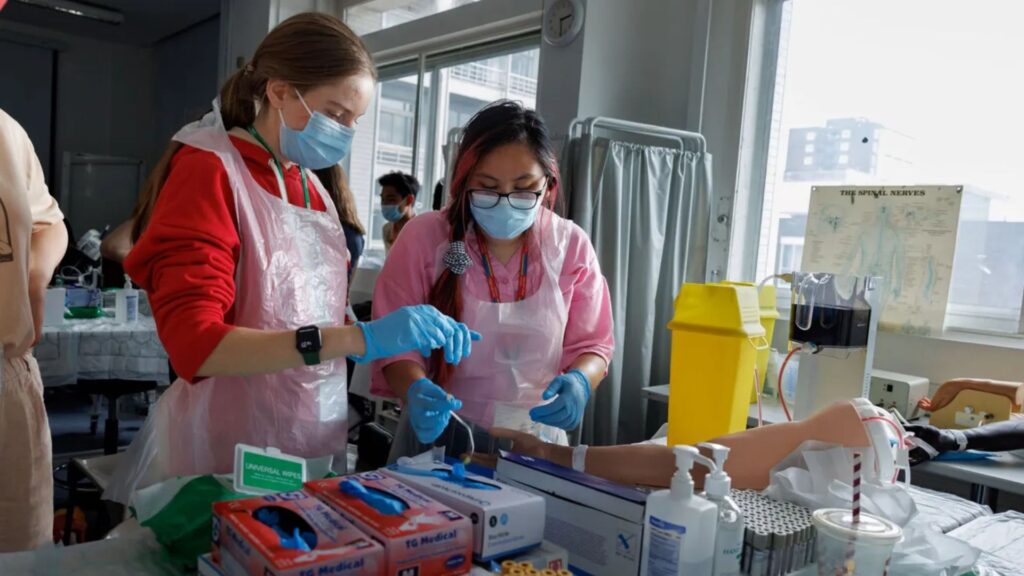
Imperial College London’s Physics Summer School adds a research-driven option to this list of physics camps in the UK for high school students, introducing physics through three approaches used by researchers: mathematics, experimentation, and computation. You learn how calculus is applied to physical systems, carry out experiments, and analyse the data you collect. The programme also teaches Python programming and shows how simulations can be used to model physical phenomena that are difficult to study directly.
The course links coding and physics together through practical tasks. Group work culminates in a presentation of experimental results, mirroring how findings are shared in research settings. Topics such as oscillatory motion are examined through both theory and observation. The result is similar to a camp experience that combines laboratory work, mathematical reasoning, and computational physics in one place.
Why it stands out: The program combines mathematics, experimental physics, and computational simulation (Python programming) in a single week, which is rare for high school physics programs.
3. University of Oxford Year 12 Physics Summer School
Location: Oxford Department of Physics, Oxford, UK
Cost: Free (small bursaries available for local transport)
Application Deadline: Applications open Spring (tentatively)
Dates: Last week of July, 9 am – 5 pm daily (tentatively)
Eligibility: Year 12 students, non-fee-paying schools, Oxfordshire/Berkshire/Buckinghamshire residents only
The University of Oxford Year 12 Physics Summer School gives you a week inside a working physics department rather than a traditional classroom environment. You spend much of the programme working on a research-style project, with recent themes including climate physics and particle physics. As the week progresses, you analyse information, develop explanations, and prepare a scientific poster to present your work.
Department tours and sample lectures help you understand how physics research is organised at the university level. You also meet people working in technical and research support roles that contribute to scientific projects. The focus remains on investigating a problem rather than simply attending lectures.
Why it stands out: This is a free program offering genuine research work experience placement rather than just lectures.
4. University of Warwick Sutton Trust Physics & Astronomy Summer School
Location: University of Warwick, Coventry, UK
Cost: Fully funded
Application Deadline:
Dates: July 28 -31
Eligibility: Year 12 students studying Physics and Mathematics at A-Level/equivalent, UK state-maintained schools, from less advantaged backgrounds
The University of Warwick Sutton Trust Physics & Astronomy Summer School introduces you to university physics through laboratory sessions, academic workshops, and astronomy activities. You spend time working with equipment used in undergraduate teaching and gain exposure to how experimental investigations are conducted.
A distinctive feature of the programme is access to Warwick’s observatory facilities, where astronomy becomes part of the learning experience. Discussions with departmental staff help connect classroom physics to current areas of research. The residential format allows you to experience campus life while exploring subjects beyond the school curriculum. Sessions are designed around studying physics at university rather than preparing for exams.
Why it stands out: The program includes visits to on-campus observatory facilities, which is uncommon for high school physics summer schools.
5. International Math & Physics Summer Camp (IMPSC)
Location: Online
Cost: $2,900 (Payment instructions sent upon acceptance)
Acceptance rate/cohort size: Unspecified (highly selective)
Application Deadline: May 28th
Dates: Session 1: June 22nd – July 11th; Session 2: July 13th – August 1st
Eligibility: Students worldwide in grades 9-12 worldwide, English proficiency required, born before August 2011
The International Math & Physics Summer Camp (IMPSC) delivers three weeks of intensive study in physics and mathematics through daily classes, assignments, and presentations. Physics topics include areas such as classical mechanics and advanced concepts that are typically introduced after high school. Teaching is carried out by professors and researchers, with regular problem sets that require detailed analytical work.
Presentations form a core part of the programme, pushing you to explain scientific ideas and defend your reasoning. Mathematics and physics are taught together so that theoretical concepts can be supported by rigorous mathematical tools. The schedule resembles an academic camp more than a summer enrichment programme.
Why it stands out: The program is led by IIT (Indian Institutes of Technology) professors and PhDs, providing college-level physics and mathematics instruction that goes significantly beyond standard high school curricula.
6. UKSA Space to Learn – National Space Academy
Location: National Space Academy, Leicester, UK (delivered across UK schools)
Cost/Stipend: Free (funded by UK Space Agency, limited funding on a first-come, first-served basis)
Application Deadline: Ongoing until December (tentatively)
Dates: Half-day sessions (11-16 years), Half-day or full-day sessions (16-18 years); Careers Conferences: 1-day events (tentatively)
Eligibility: Students aged 11-18; Schools across the UK (England, Scotland, Wales, Northern Ireland); Priority given to schools meeting 2 criteria, including pupil premium/equity funding/deprivation area/lack of specialized Physics teacher/Ofsted rating/rural area/SEN schools
The UKSA Space to Learn program features physics-focused masterclasses and careers conferences run by the National Space Academy with funding from the UK Space Agency. You’ll participate in high-quality, curriculum-based activities delivered by qualified, specially trained teachers equipped with a specialist kit. The masterclasses highlight the science, scope, and possibilities within the UK space industry and feature exciting hands-on learning opportunities closely linked to the curriculum.
Topics include Human Space Flight, Satellites and Gravity, Astronomy, Spectroscopy, Threats from Above, Asteroids, Artemis and Beyond, and Life in Space. Careers conferences are one-day events with workshops, activities, and speakers from relevant industry settings, partnering with businesses to provide real-life examples of career paths. A network of specially trained outstanding science teachers (Space Advocates) is based across the UK to deliver stellar space education with specialist training and kit.
Why it stands out: The program is completely free and funded by the UK Space Agency, with priority given to schools without specialized Physics teachers or in areas of deprivation.
7. SPINWIP (Stanford Physics Inquiry for Women in Physics)
Location: Virtual (Stanford and APS online)
Cost: Free (sponsored by APS and Stanford)
Application Deadline: Currently closed
Dates: July 6-24 (Monday-Friday, daily virtual classes)
Eligibility: Female-identifying or nonbinary students (grades 9-11) who have completed at least one year of high school physics; international students are welcome to apply
SPINWIP is a free online Physics program for female-identifying and nonbinary high school students, organised by Stanford University and the American Physical Society. Over three weeks, you explore topics such as quantum mechanics, relativity, and particle physics through lectures, coding activities, and collaborative problem-solving sessions.
The program also includes weekly one-on-one meetings with a Stanford mentor, which may include graduate students or lecturers, giving you space to ask questions and discuss concepts in more detail. In addition to the academic sessions, you attend career discussions with women working in Physics and related research fields. Since the program is fully online, you can participate from anywhere while working with students who share an interest in Physics.
Why it stands out: You get direct mentorship alongside an introduction to advanced Physics topics in a fully virtual format.
8. Year 12 Mechanics Masterclass: Bolton
Location: Bolton School, Chorley New Road, UK
Cost: Free (no cost to register)
Application Deadline: October 23rd
Dates: November 6th
Eligibility: Year 12 students studying A Level Physics or equivalent; Most suitable for local students or those traveling with a teacher; A Level Maths recommended but not required
This free in-person masterclass is an intense workout to practice A Level Physics concepts needed for good exam grades. You’ll develop problem-solving skills in Mechanics by trying questions and interacting with the Isaac Science team and other students during sessions led by senior university academics. The masterclass is delivered at Bolton School and is ideal for students keen to improve their grades, suitable for all A Level Physics students willing to engage and work hard.
You’ll complete a small amount of preparation beforehand (Isaac Science questions, maximum 45 minutes) and bring a smart device (phone, tablet, or laptop) to access the website, plus a calculator, pen, and paper. The program includes a tutorial and problem-solving on Mechanics, Further Mechanics, and a Cambridge Admissions presentation with a Q&A session. You’ll practice physics questions under the guidance of experienced physicists, and develop confidence with problem-solving skills in core areas.
Why it stands out: This is a completely free masterclass led by senior university academics from the Isaac Science team that includes a Cambridge Admissions Q&A session specifically for Natural Sciences.
9. Quantum in the Summer – University of Bristol
Location: University of Bristol, Bristol, UK (QET Labs campus)
Cost: Free (students cover accommodation, travel, and dinner; limited bursaries available covering accommodation, travel, and food)
Application Deadline: May 31st
Dates: August 3-7
Eligibility: Ages 16+ by start of summer school; Completed first year of A-level studies (or equivalent) by start; Currently studying Maths and Physics at A-level (or equivalent); Completed GCSEs (or equivalent); Strong mathematical ability; keen interest in Physics; UK and international students welcome (international students need a visa)
The University of Bristol’s Quantum in the Summer programme introduces you to quantum science through a combination of laboratory work, lectures, and computing activities. The course begins with classical optics before moving into topics such as quantum computing, quantum algorithms, and quantum key distribution. Light serves as the central theme, connecting ideas from electromagnetism to modern quantum technologies.
Practical sessions help you understand how these concepts are studied and applied in research environments. Researchers also discuss their own work, providing insight into how scientific investigations are planned and carried out. By the end, you gain a clearer understanding of how quantum technologies are built from fundamental physics.
Why it stands out: This is the 12th annual quantum summer school offering hands-on quantum mechanics and quantum computing education at a research university, with limited bursaries available for accommodation, travel, and food.
10. Selwyn College Physical Natural Sciences Summer School
Location: Selwyn College, University of Cambridge, Cambridge, UK
Cost: Free (all food and accommodation included; travel bursaries available for Free School Meals eligible, family income below £40,000, estranged from family, or in local authority care)
Acceptance rate/cohort size: Unspecified (priority given to state school students, underrepresented backgrounds)
Application Deadline: June 1st
Dates: July 6-8
Eligibility: UK state-school students in Year 12 (or equivalent) with predicted A*AA+ grades, studying Physics and/or Chemistry. Priority is given to students from underrepresented, low-income, first-generation, disabled, care-experienced, and widening-participation backgrounds
Selwyn College’s Physical Natural Sciences Summer School explores physics alongside subjects such as materials science, earth sciences, and applied mathematics. Through lectures, demonstrations, and small-group teaching sessions, you examine how different scientific disciplines contribute to understanding the physical world. The programme introduces areas that many students encounter only after arriving at university.
Supervision-style teaching gives you experience of the discussion-based approach used at Cambridge. Academic sessions focus on ideas and methods rather than examination preparation, helping you engage with science at a deeper level. Living on campus for the residential programme adds the feel of a university science camp. It is particularly useful if you want to explore how physics connects with other branches of the natural sciences.
Why it stands out: This is a completely free residential summer school at Cambridge University offering hands-on experience in university-level physics, materials science, and earth sciences with small-group supervision.
11. University of York – Year 12 Physics and Engineering Work Experience
Location: University of York, York, UK; hybrid format with four online days and one in-person campus day
Cost/Stipend: None
Acceptance rate/cohort size: Limited places
Dates: July 20-24
Application Deadline: January 25th
Eligibility: Year 12 UK students aged 16-17
York’s work experience week is especially useful if you want a project-based introduction to physics, engineering, or both. You attend academic sessions led by university staff and work on a supervised project linked to a research topic that interests you. The format combines independent work with regular support, giving you a taste of how university study requires both initiative and guidance. You also learn how to organize your findings into a poster for presentation.
The online conference-style poster component gives the program a concrete academic outcome, while the in-person day adds hands-on value through physics experiments, engineering problem-solving, and tours of teaching and research spaces.
Why it stands out: You complete a supervised project, develop research skills, and present a university-style poster while also getting exposure to physics experiments and research facilities.
12. Imperial College London – Year 12 Work Experience Programme

Location: Imperial College, London, UK
Cost/Stipend: None
Acceptance rate/cohort size: Not specified
Dates: June 29th – July 3rd
Application Deadline: March 5th
Eligibility: Current Year 12 students at UK state schools who can commute daily to the London campus
A week at Imperial can help you understand what research looks like as a daily working environment, not just as an abstract career idea. Depending on your department placement, you may join lab visits, workshops, department-led activities, and small research-focused tasks. The schedule is designed to show how researchers manage experiments, deadlines, technical spaces, and collaboration.
If your placement connects to physics, you can get a closer look at how physical science research is organized within a major university. You also receive guidance from student ambassadors on university applications and personal statements. The mini academic conference at the end gives you a chance to present your work in a formal setting.
Why it stands out: You spend time inside Imperial’s research environment, gaining a clearer view of physics-related academic careers, laboratory work, and the professional routines of university research.
13. Queen Mary University of London / St Paul’s School – Particle Physics Summer School
Location: St Paul’s School, London, UK (run in association with Queen Mary University of London)
Cost/Stipend: None; travel bursary offered
Acceptance rate/cohort size: Limited spaces; maximum 2 students from one school
Dates: July 10-12
Application Deadline: May 7th
Eligibility: High-achieving Year 10 students from UK state-maintained schools; must be on track for strong GCSE results in science and maths; student application plus teacher nomination required
For students already strong in physics and maths, this summer school offers an early look at one of the field’s most specialized areas. You explore how particle physics connects to questions across science, engineering, and computing. The course uses a mix of lectures and workshops, giving you both conceptual exposure and more interactive ways to engage with the material.
It is linked to Queen Mary’s Department of Physics and Astronomy, meaning the academic content is grounded in university-level expertise. The strongest element is the chance to encounter particle physics well before most students study it formally.
Why it stands out: You explore particle physics through workshops and lectures led by teachers and academic researchers, with a selective structure that includes school nomination.
14. Study Mind Physics Summer School
Location: Study Mind, Central London, UK
Cost: £349 (1 day), £1,099 (3 days), £1,499 (5 days full week); Accommodation available in UCL halls of residence
Application Deadline: Rolling enrollment (no specified deadline)
Dates: June 30th, July 7th, July 14th, July 21st, July 28th, August 4th, August 11th, August 18th (tentatively)
Eligibility: Ages 16-18 years old; international students are welcome to apply
This five-day physics summer camp is designed for students aged 16–18 years old to enhance their prospects of acceptance into physics-related academic programs. You’ll participate in engaging scenarios and activities over five days, demonstrating your passion for physics while honing your skills and expertise in the field. The program includes training from industry experts with extensive experience in physical sciences, providing mentorship to enhance your knowledge.
You’ll gain hands-on practical experience through mock experiments, case studies, and shadowing professionals at a top physics research firm. The curriculum covers academic writing and presentation skills, research methodologies, and practical experiments. You’ll explore different departments at a prestigious physics research institution, showcase your skills, and network with professionals for a firsthand look at life as a trainee physicist.
Why it stands out: The program is DofE Approved for Gold Residential certification and provides access to a prestigious physics research firm for networking with industry professionals.
15. London International Youth Science Forum (LIYSF)
Location: Imperial College London, London, UK
Cost: £3,295 GBP (in-person), £325-£395 GBP (virtual)
Application Deadline: Varies by the cohort
Dates: Varies by the cohort
Eligibility: Ages 16-21 years old; international students are welcome to apply
London International Youth Science Forum (LIYSF) brings together young people from around the world for two weeks of science study at Imperial College London. Within the physics track, you attend lecture demonstrations from researchers working in fields such as astrophysics and particle physics, including talks by Nobel Prize winners.
The programme also includes specialist sessions where you explore scientific questions in greater depth than a typical classroom allows. A major part of the experience is visiting university laboratories and departments across the UK to see how research is conducted. Alongside lectures, you can present your own interests during student sessions and engage with scientific discussions outside formal classes.
Why it stands out: LIYSF attracts students from 80 countries and features Nobel Prize-winning lectures, making it one of the most internationally diverse science programs in the U.K.
From Physics Camps to Deeper Scientific Reading
A physics camp can make abstract ideas feel alive, from quantum mechanics and particle physics to astronomy, computation, and experimental design.
The 15 physics camps in the UK for high school students featured in this guide can help you build scientific confidence through labs, lectures, research projects, problem-solving, and university-style learning.
Afterwards, keep following the questions that stayed with you. Was it black holes, forces, quantum theory, engineering, space science, or how physicists model reality?
Ready to take your curiosity further? Read our Physics Top Books Guide for titles that deepen your understanding beyond camp.