

 Русский (RU)
 Українська (UK)
 Türkçe (TR)
 Italiano (IT)
 Français (FR)
 Português (PT)
 中文 (中国) (ZH)
 Español (ES)
 日本語 (JA)
 ไทย (TH)
 Deutsch (DE)
 Ελληνικά (EL)
 Polski (PL)
 Bahasa Indonesia (ID)
 Nederlands (NL)
 العربية (AR)
 한국어 (KO)

Economics sits at the center of many of the questions shaping the modern world. Why do some countries grow faster than others? How do governments respond to inflation and unemployment? What drives consumer behavior, financial markets, and global trade? Economics programs in Canada for high school students can help you move beyond classroom theory and explore how economic ideas are applied in real-world settings.
Through university-level coursework, simulations, research projects, case studies, and discussions, you may encounter concepts such as econometrics, game theory, policy analysis, behavioral economics, and market design while building practical skills in data analysis, Excel modeling, and economic reasoning.
Many programs also provide opportunities to engage with professors, researchers, entrepreneurs, and policymakers, helping you better understand potential academic and career pathways. Along the way, you’ll gain firsthand experience of campus life, collaborate with peers from different backgrounds, and develop the analytical thinking skills that economics demands.
Why Canada?
Canada is home to several globally recognized universities with strong economics, business, and public policy departments, including the University of Toronto, the University of British Columbia, McGill University, Western University, and the University of Waterloo. The country’s diverse economy, international trade relationships, stable financial system, and multicultural population make it an interesting environment for studying topics such as globalization, labor markets, public policy, entrepreneurship, and sustainable economic development.
Many Canadian universities emphasize interdisciplinary learning, allowing students to explore how economics connects with fields like political science, technology, environmental studies, and business. Students also benefit from access to research-driven institutions, startup ecosystems, government organizations, and industry professionals who help bridge academic concepts with real-world applications.
To help you get started, we have curated a list of 15 economics programs in Canada for high school students.
For adjacent opportunities, consider the online economics progam and summer programs in Canada.
Key Takeaways
- Costs range from free, as with the Bank of Canada Museum’s programs and University of Manitoba’s Faculty of Arts Camp, to $8,400 CAD for Western University’s Summer Academy in Sustainability.
- Several programs are restricted to Canadian residents or specific regions, including Carleton’s Mini-Courses Program and University of Manitoba’s Faculty of Arts Camp, both of which are not open to international students.
- Program length ranges from a single afternoon, as with the Bank of Canada Museum’s classroom visits, to three weeks, as with University of Ottawa’s Youth Summer University.
- Several programs award real university credit, including University of Ottawa’s Business and Economics stream and Western University’s Summer Academy in Sustainability.
- York University’s Schulich Business Excellence Academy is free but limited to GTA students from equity deserving groups, and is not open to international students.
- Topics extend well beyond core economic theory, including game theory at University of Manitoba, migration policy at McGill, and inflation simulations at the Bank of Canada Museum.
- Immerse Education’s Economics Summer School is one of the few options open to students worldwide aged 13 to 18, combining seminars on market behavior and policy with optional UCAS points for UK university applications.
15 Economics Programs in Canada for High School Students
1. University of Toronto Pre-University Courses (World Economics Track)
Location: University of Toronto, Toronto, ON
Cost: Canadian students: $4,850 CAD; International students: $6,275 CAD
Acceptance rate/cohort size: Selective; approximately 20 to 25 students per class
Dates: Session I: June 14th – July 4th | Session II: July 5-25 | Session III: July 26th – August 15th
Application Deadline: Rolling admissions
Eligibility: High school students aged 15-18 with Advanced+ English proficiency; open to international students
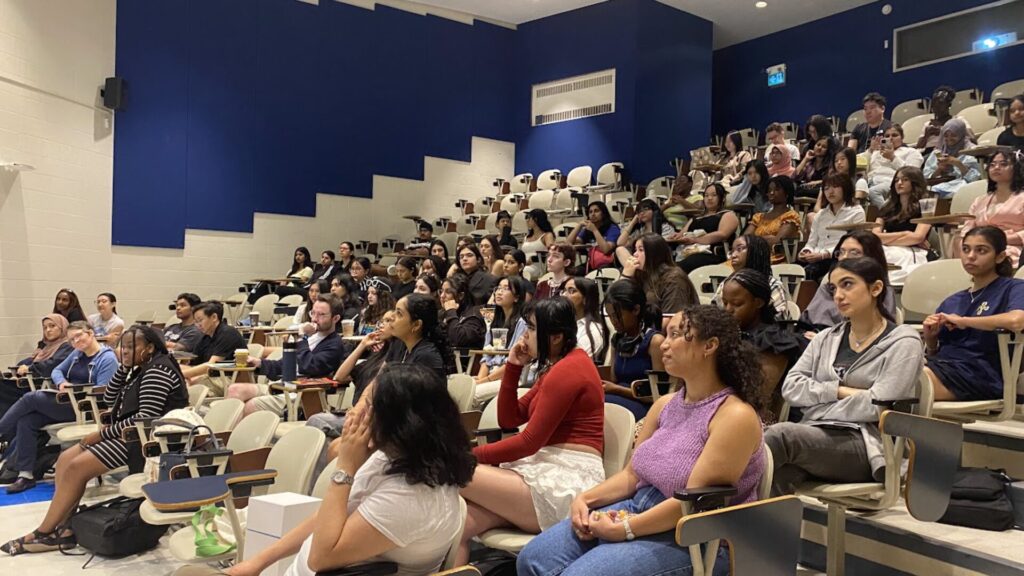
If you want to understand how trade, markets, globalization, and economic decision-making shape everyday life, this pre-university course is a strong starting point among economics programs in Canada for high school students. Through lectures, readings, discussions, and project work, you examine concepts such as scarcity, productivity, incentives, and international trade while comparing how countries respond to global challenges.
You also explore how individual choices connect to larger economic outcomes. Studying on the University of Toronto campus gives you firsthand exposure to university-level coursework and expectations. The program concludes with a final project that allows you to apply economic concepts to a real-world issue.
Why it stands out: You study economics through a global lens while experiencing academic life at one of Canada’s leading research universities.
2. Immerse Education’s Toronto Economics Summer School
Location: Trinity College, University of Toronto, Toronto, Canada
Cost/Stipend: Varies; summer school scholarship available through our bursary programme
Acceptance rate/cohort size: Selective; an average of 7 participants per class
Dates: 2 weeks during the summer
Application Deadline: Multiple summer cohorts with rolling admissions
Eligibility: Students from all around the world aged 13-18 currently enrolled in middle or high school
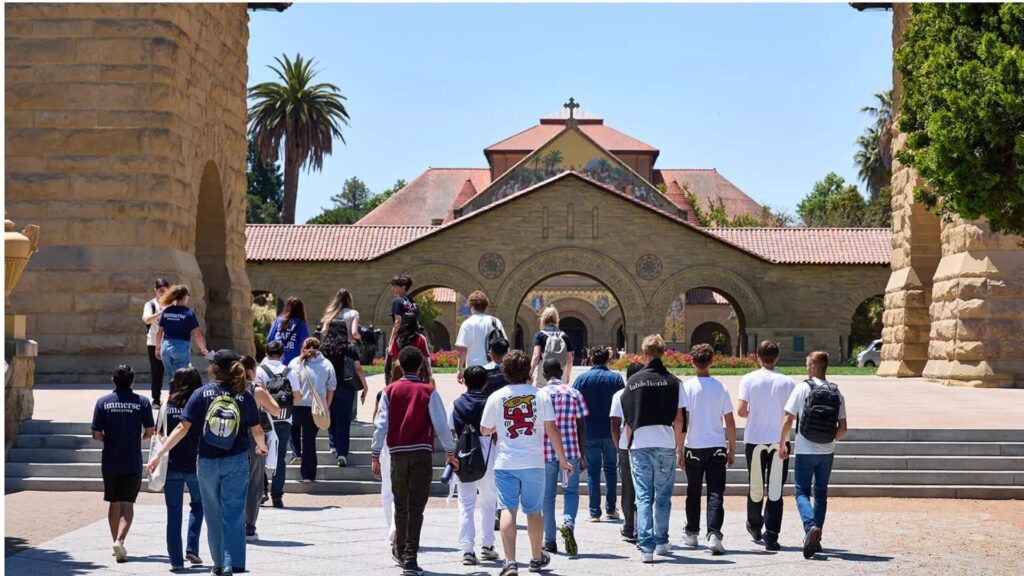
Immerse Education’s Economics Summer School gives you a focused, two-week immersion into economic theory and real-world applications, taught by expert tutors associated with top universities and academic institutions. The program aims to deepen your understanding of fundamental economic principles, global markets, and policy-making. Across lively seminars, workshops, and discussions, you’ll explore core concepts such as market behaviour, inflation, trade, inequality, fiscal and monetary policy, and how these forces shape global economies.
Beyond the classroom, excursions and cultural activities help you connect lessons to the world around you, while living and studying alongside peers from around the globe adds an international perspective. Completion earns you a certificate of achievement and, in some cases, optional UCAS points if you’re looking toward UK university applications. You can find more details about the application here.
Why it stands out: It blends concentrated academic development with an immersive international summer experience, helping you deepen your economics knowledge while engaging with peers in diverse cities worldwide.
3. UBC Future Global Leaders – Introduction to the Global Political Economy
Location: University of British Columbia, Vancouver, BC
Cost/Stipend: $1,940–$5,270 CAD depending on program format; bursaries are available
Acceptance rate/cohort size: Non-selective; approximately 20-35 students per class
Dates: July 6-17
Application Deadline: Rolling until full
Eligibility: Students aged 15-18 who have completed Grade 10; open to international students
For students interested in global affairs, this is one of the more internationally focused economics programs in Canada for high school students. The course examines how politics and economics intersect in shaping global markets and institutions, while topics such as international trade, multinational corporations, development, and financial systems help you consider competing economic perspectives.
Through discussions and case studies, you analyze how governments respond to economic pressures and global challenges. The on-campus format also introduces you to university life through social activities and interactions with peers from around the world. By the end of the course, you will leave with a stronger understanding of contemporary economic issues and their political dimensions.
Why it stands out: The program connects economics with international relations and public policy, helping you understand how global economic systems operate in practice.
4. Bank of Canada Museum School Programs – Inflation Busters
Location: Bank of Canada Museum, 30 Bank Street, Ottawa, Ontario, Canada
Cost: None
Acceptance Rate/Cohort Size: Non-selective; 25-50 students per session
Dates: School year
Application Deadline: Teachers reserve a session by request or by calling with booking confirmation provided within five to seven business days
Eligibility: School groups in grades 9-12 ; booked and supervised by a teacher; not open to international students
Inflation Busters brings economics programs in Canada for high school students into a practical, game-based setting by showing how rising prices affect everyday financial choices. In this program, you are assigned a role, create a specialised budget for a person or business, perform calculations to balance your budget, and respond to unexpected events that affect your finances and well-being.
Through this hands-on play, you compare consumer life under high inflation with that under low, stable inflation and examine the Bank of Canada’s role in monetary policy in everyday financial choices. The program reinforces practical financial planning skills and connects directly to Ontario economics and business curricula and Quebec financial education.
Why it stands out: It lets you experience inflation’s pressure firsthand through a staff-led budgeting game at Canada’s central bank museum, turning abstract monetary policy into concrete financial decisions.
5. University of Waterloo – Catalyst: Early Entrepreneurs
Location: University of Waterloo, Waterloo, ON
Cost/Stipend: $732 CAD + HST; bursaries are available
Acceptance rate/cohort size: Highly selective; 25 students per session
Dates: Session I: July 6-17 | Session II: July 20-31 | Session III: August 10-21
Application Deadline: February 13th
Eligibility: Current high school students entering Grade 10 or higher; open to international students
Students comparing economics programs in Canada for high school students with a business and entrepreneurship angle may find Waterloo’s Catalyst especially relevant. This two-week programme introduces the economic principles behind entrepreneurship, innovation, and business development, while activities in problem-solving, opportunity recognition, business modelling, and strategic thinking show how ideas move from concept to market.
Throughout the program, you explore how economic incentives influence consumer behavior, business decisions, and startup growth. The small cohort size encourages discussion and close interaction with instructors and peers. Exposure to Waterloo’s innovation community also provides insight into how economic ideas are applied in technology and business sectors.
Why it stands out: You learn economics through the lens of entrepreneurship while engaging directly with one of Canada’s strongest startup ecosystems.
6. McGill Summer Academy – Understanding Migration, Global Citizenship and Diasporic Resistance
Location: McGill University, Montreal, QC
Cost: $5,500 CAD; MSA Awards cover full program costs and travel for eligible Canadian students
Acceptance rate/cohort size: Selective; ~50 students per stream, per session
Dates: Session I: July 5-18 | Session II: July 19th – August 1st
Application Deadline: Varies by year (typically late January to early February)
Eligibility: Current Grade 10 and Grade 11 students (Sec IV and Sec V for Quebec); recommended equivalent of a B average (78-80%); open to international students
This McGill course gives economics programs in Canada for high school students a policy-focused and interdisciplinary dimension by examining how migration influences economies, societies, and public decision-making. Through case studies, discussions, collaborative projects, and a citizens’ assembly simulation, you examine the economic drivers of migration, labour mobility, globalization, and international development.
You also develop skills in research, public speaking, critical reading, and policy analysis. Interactions with McGill faculty and students provide a clearer picture of university-level learning and discussion. The program is particularly useful if you’re interested in economics, public policy, political science, or international relations.
Why it stands out: It connects economic issues such as migration and globalization with hands-on policy simulations and interdisciplinary analysis.
7. Carleton University Mini-Courses Program – Basic Economics (CU-431)
Location: Carleton University, 1125 Colonel By Drive, Ottawa, Ontario, Canada (in-person, on campus)
Cost: $200 plus tax registration fee; scholarships are available
Acceptance Rate/Cohort Size: Determined by a neutral computerized algorithm; cohort size not specified
Dates: May 4-8
Application Deadline: January 19th
Eligibility: Students in grades 8-11 in Eastern Ontario and secondary II to V in Western Quebec; not open to international students
In this course, you explore microeconomics, covering scarcity, opportunity cost, supply and demand, market equilibrium, utility, production costs, market structures, externalities, public goods, and market failure. You then turn to macroeconomics, working through national income accounting, gross domestic product, economic growth, business cycles, unemployment, inflation, and aggregate supply and demand.
You also examine money and exchange rates, taxation, government budgets, and international trade, connecting each concept to everyday decisions and real markets. By the end, you have built a working economic vocabulary and analytical foundation while experiencing a university classroom firsthand.
Why it stands out: It gives you a full week inside a real university classroom to study both branches of economics, taught by Carleton instructors and graduate students for a flat $200-plus-tax fee.
8. University of Guelph (Continuing Studies) – Discover Your Future Summer Institute
Location: University of Guelph, Guelph, Ontario, Canada
Cost: $4,450 CAD for Canadian residential students, $3,700 CAD for Canadian commuter students (no residence), $5,000 CAD for international students; optional Intensive English Program adds $2,250 CAD; 10% alumni and 10% staff discounts available for eligible U of G graduates and employees
Acceptance Rate/Cohort Size: Selective; cohort size not specified
Dates: Two-week sessions offered in July and August
Application Deadline: May 10th
Eligibility: Students aged 15-17; open to international students
In this program, you join a two-week residential institute at the University of Guelph that lets you sample academic disciplines from across the university’s eight colleges, including business and the social sciences, where economics is studied. Through interactive lectures, hands-on workshops, and collaborative group projects, you explore how academic fields connect to real-world questions while living in residence and attending university-style classes led by U of G instructors.
Beyond the classroom, you take supervised excursions to Niagara Falls and Toronto and join on-campus recreational activities. The experience pairs genuine academic exploration with a structured, fully supervised introduction to university life.
Why it stands out: It immerses high school students in a residence-based university experience that samples disciplines from all eight University of Guelph colleges, bundling academics, meals, excursions, health insurance, and 24/7 supervision into a single program fee.
9. University of Manitoba (Faculty of Arts) – Faculty of Arts Camp (Grade 11)
Location: University of Manitoba, Fort Garry campus, Winnipeg, Manitoba, Canada
Cost: None
Acceptance Rate/Cohort Size: Non-competitive; capped at 50 students
Dates: June 23rd and 24th
Application Deadline: June 16th
Eligibility: Enrolled in a Manitoba high school; completing grade 11 in June; not open to international students
Among the shorter economics programs in Canada for high school students, the University of Manitoba Faculty of Arts Camp stands out for its focus on economic game theory. In the Economic Game Theory session, led by Economics and Econometrics professors Dr. Ryan Compton and Dr. Janice Compton, you learn how individuals make decisions and how those choices intersect with the choices of others.
You play a variety of economic games that show how cooperation, competition, revenge, and trust enter into economic decisions. You meet professors and engage with fellow students while building a practical introduction to strategic reasoning and decision-making in economics.
Why it stands out: It lets you experience economics through live economic game play guided by two University of Manitoba economics professors, at no cost, as part of a focused two-day campus camp built exclusively for students finishing grade 11.
10. University of Ottawa – Youth Summer University

Location: University of Ottawa, Ottawa, ON
Cost: $7,345 CAD
Acceptance rate/cohort size: Selective; 50 students per cohort
Dates: French Program: July 5-25 | English Program: July 26th – August 15th
Application Deadline: Spring application cycle (typically April – May) until filled
Eligibility: Students aged 16-17 with an academic average of 80% or equivalent and who meet language requirements; open to international students
This three-week residential program combines university coursework, career exploration, and leadership development in a campus setting. If you’re interested in economics, you can choose the Business and Economics stream and earn university credits while studying alongside peers from around the world. Coursework is complemented by workshops focused on academic planning, self-assessment, and professional development.
You also participate in a hackathon that encourages you to apply analytical thinking to real-world challenges. Visits to institutions such as Parliament and the Supreme Court of Canada help connect classroom concepts to public policy and economic decision-making. The program additionally offers early conditional consideration pathways to select University of Ottawa undergraduate programs.
Why it stands out: You can earn university credits in business and economics while gaining direct exposure to Canadian policymaking institutions and university admissions pathways.
11. Western University – Summer Academy in Sustainability
Location: Western University, London, ON
Cost: $8,400 CAD ($500 application fee + $7,900 program fee)
Acceptance rate/cohort size: Selective; cohort size not specified
Dates: July (two-week residential program)
Application Deadline: June 1st
Eligibility: High school students who have completed Grade 11 and are entering Grade 12, maintaining a minimum 80% average in Grade 11; open to international students
This residential academy explores sustainability through an interdisciplinary lens that includes economics, business, public policy, and innovation. You examine how economic systems influence environmental and social outcomes while investigating topics such as sustainable entrepreneurship and responsible business practices. Coursework is paired with experiential learning activities, research exercises, and mentorship opportunities designed to strengthen university-level skills.
Discussions encourage you to evaluate trade-offs between economic growth, environmental stewardship, and social impact. Living on campus also provides a realistic introduction to university life and independent learning. The program allows you to earn a university credit while exploring issues that increasingly shape economic and business decision-making.
Why it stands out: It links economics to sustainability and social impact, helping you understand how economic decisions influence global challenges.
12. York University – Schulich Business Excellence Academy (SBEA)
Location: Virtual and in-person at Schulich School of Business, Toronto, ON
Cost: None
Acceptance rate/cohort size: Selective; up to 80 students
Dates: July 6-23
Application Deadline: Typically early June
Eligibility: High school students in the Greater Toronto Area (GTA) entering Grades 10, 11, or 12 in the fall who self-identify from equity-deserving groups (including BIPOC, 2SLGBTQIA+ individuals, and people with disabilities); not open to international students
This business-focused summer program introduces you to foundational concepts that underpin economics, management, and entrepreneurship. Through lectures, workshops, and collaborative projects, you explore topics such as strategy, business operations, consumer behavior, and organizational decision-making. Small-group activities and mentorship from Schulich undergraduate students help you develop teamwork and communication skills while gaining insight into business education.
The curriculum emphasizes practical applications of economic and business concepts rather than purely theoretical learning. The program concludes with an on-campus experience that includes a case competition, networking opportunities, and campus tours. Students who complete all requirements receive a Certificate of Completion.
Why it stands out: You receive mentorship from business students while exploring economic and business concepts through case-based learning at one of Canada’s leading business schools.
13. Ivey Business School – John F. Wood Summer Leadership Program
Location: Ivey Business School, Western University, London, ON
Cost: $450 CAD; limited need-based financial assistance is available
Acceptance rate/cohort size: Highly selective; 150 students
Dates: August 3-7
Application Deadline: May 25th
Eligibility: Students currently in Grades 9-11; open to international students
This residential leadership program introduces you to the case-method approach used in business education while developing skills relevant to economics, entrepreneurship, and management. Through workshops and team-based challenges, you analyze problems, evaluate alternatives, and propose practical solutions. A major component of the experience is an entrepreneurial project developed in partnership with the Morrissette Institute for Entrepreneurship, where you apply strategic thinking to real-world issues.
Faculty members, student leaders, and mentors guide discussions that encourage critical analysis and collaborative decision-making. Throughout the week, you gain exposure to how business leaders assess opportunities, risks, and economic trade-offs. The program concludes with presentations judged by Ivey alumni.
Why it stands out: You learn through Ivey’s case-based approach while tackling entrepreneurial challenges that mirror real business and economic decision-making.
14. Bank of Canada Museum – Central Bank in Your Classroom
Location: Virtual
Cost: None
Acceptance Rate/Cohort Size: Open booking-based program; minimum of 10 students
Dates: Year-round; requested dates submitted at least four weeks in advance
Application Deadline: Rolling basis
Eligibility: Students in Grades 11-12 and post-secondary, including Secondary Cycle Two, CEGEP and university levels; open to international students
In this program, you step into a live presentation led by an actual Bank of Canada employee who walks your class through how the country’s central bank shapes the economy. You explore core economics concepts, including inflation targeting, interest rate decisions, Canadian and international economic indicators, and the difference between monetary and fiscal policy.
Through interactive dialogue, you learn to distinguish a central bank’s responsibilities from those of government and commercial banks while examining what data informs rate decisions. You also hear firsthand about career pathways in economics, finance, data analysis, and communications, and the transferable skills behind them.
Why it stands out: It brings a working economist from Canada’s central bank directly into your classroom to explain real monetary policy decisions and economics career paths, entirely free of charge.
15. UBC Future Global Leaders Online – Business and Economics offerings
Location: Online; live virtual classes delivered via Zoom in the Pacific Time Zone by the University of British Columbia, Vancouver, British Columbia, Canada
Cost: CAD $925 per course
Acceptance Rate/Cohort Size: Open registration; maximum 35 students
Dates: Session 1: July 6-24; Session 2: July 27th – August 14th
Application Deadline: Closes for each course once it fills
Eligibility: High school students ages 15-18; open to international students
In this course, you explore how successful companies operate by studying core business functions, finance, accounting, marketing, and human resources management. Across three weeks of live, two-hour weekday classes on Zoom, you examine how these functions integrate to support strategic decision-making and build a big-picture understanding of how firms compete.
You take part in interactive lectures, breakout-room discussions, research tasks, and discussion boards, supported by virtual drop-in office hours in small classes of up to 35 students. You strengthen analytical and financial-reasoning skills relevant to business and economics, all without the stress of exams. You finish with a UBC letter of completion.
Why it stands out: It lets you sample first-year university business and economics material taught directly by UBC professors and affiliated instructors in small virtual classes, with no application, transcripts, or exams required.
Frequently Asked Questions: Economics Programs in Canada for High School Students
What is an economics program for high school students?
An economics program introduces students to how markets, policy, and global trade work before college, often through university-level coursework, simulations, and case studies. Topics can include econometrics, behavioral economics, and policy analysis, taught through lectures, workshops, and research projects. Many are hosted at Canadian universities like the University of Toronto and McGill. Most conclude with a final project, presentation, or policy proposal.
Do I need prior economics coursework to apply?
No, most programs are designed to introduce economic concepts from the ground up. Carleton’s Mini-Courses Program builds basic economic vocabulary starting with scarcity and opportunity cost, and Immerse Education’s Economics Summer School similarly introduces core principles like market behavior, inflation, and trade before moving into policy discussion. A genuine interest in how economies work matters more than prior coursework.
How much do economics programs in Canada cost?
Costs range from free to $8,400 CAD for Western University’s Summer Academy in Sustainability. Free options include the Bank of Canada Museum’s programs and University of Manitoba’s Faculty of Arts Camp, while mid-range programs like Waterloo’s Catalyst run around $732 CAD with bursaries available. Immerse Education’s Economics Summer School also offers bursary support for eligible students.
Can international students attend these programs?
Most university-run programs, including those at the University of Toronto, UBC, and McGill, accept international students. A few are restricted to Canadian residents or specific regions, including Carleton’s Mini-Courses Program, University of Manitoba’s Faculty of Arts Camp, and York University’s Schulich Business Excellence Academy. Immerse Education’s Economics Summer School is open to students worldwide aged 13 to 18.
What age do I need to be to apply?
Age requirements vary by program, generally falling between 13 and 18 years old. Immerse Education’s Economics Summer School accepts students aged 13 to 18 from anywhere in the world, while most Canadian university programs, including UBC’s Future Global Leaders and McGill’s Summer Academy, target students aged 15 to 17.
Will I earn university credit for completing a program?
Some programs offer real, transferable university credit, though most do not. University of Ottawa’s Youth Summer University allows students in the Business and Economics stream to earn credit, and Western University’s Summer Academy in Sustainability offers a credit as well. Programs like Immerse Education’s Economics Summer School and most shorter workshops instead provide a certificate of achievement, with Immerse also offering optional UCAS points for UK applications.
How do economics programs help with college applications?
Participating in an economics program shows admissions officers initiative and a developed interest in how real world systems work. Programs like McGill’s Summer Academy have students take part in a citizens’ assembly simulation, giving them a concrete policy project to discuss. Immerse Education’s Economics Summer School provides a certificate of achievement and exposure to global markets and policy making, both useful talking points in personal statements.
What’s the difference between policy-focused and business-focused economics programs?
Policy-focused programs, such as McGill’s Summer Academy on migration and UBC’s Introduction to the Global Political Economy, examine how governments and institutions respond to economic challenges. Business-focused programs, like Waterloo’s Catalyst and York’s Schulich Business Excellence Academy, apply economic thinking to entrepreneurship and organizational decision making. Immerse Education’s Economics Summer School covers both angles, exploring market behavior, policy, and global trade in a single program.
From Markets and Policy to University Applications
From economics, you can start seeing how markets, governments, businesses, and people respond to incentives, trade, inflation, inequality, and global change in practice today directly.
These economics programs in Canada for high school students can introduce policy analysis, entrepreneurship, game theory, migration, sustainability, monetary policy, and university-level economic reasoning early.
By comparing courses, simulations, campus experiences, and research opportunities, you can clarify which economic questions fit your strengths, interests, and future degree plans best academically.
Want to turn that insight into stronger applications? Read our University Preparation blogs for personal statements, interviews, academic planning, entry requirements, and supercurricular ideas next.