
 Русский (RU)
 Українська (UK)
 Türkçe (TR)
 Italiano (IT)
 Français (FR)
 Português (PT)
 中文 (中国) (ZH)
 Español (ES)
 日本語 (JA)
 ไทย (TH)
 Deutsch (DE)
 Ελληνικά (EL)
 Polski (PL)
 Bahasa Indonesia (ID)
 Nederlands (NL)
 العربية (AR)
 한국어 (KO)
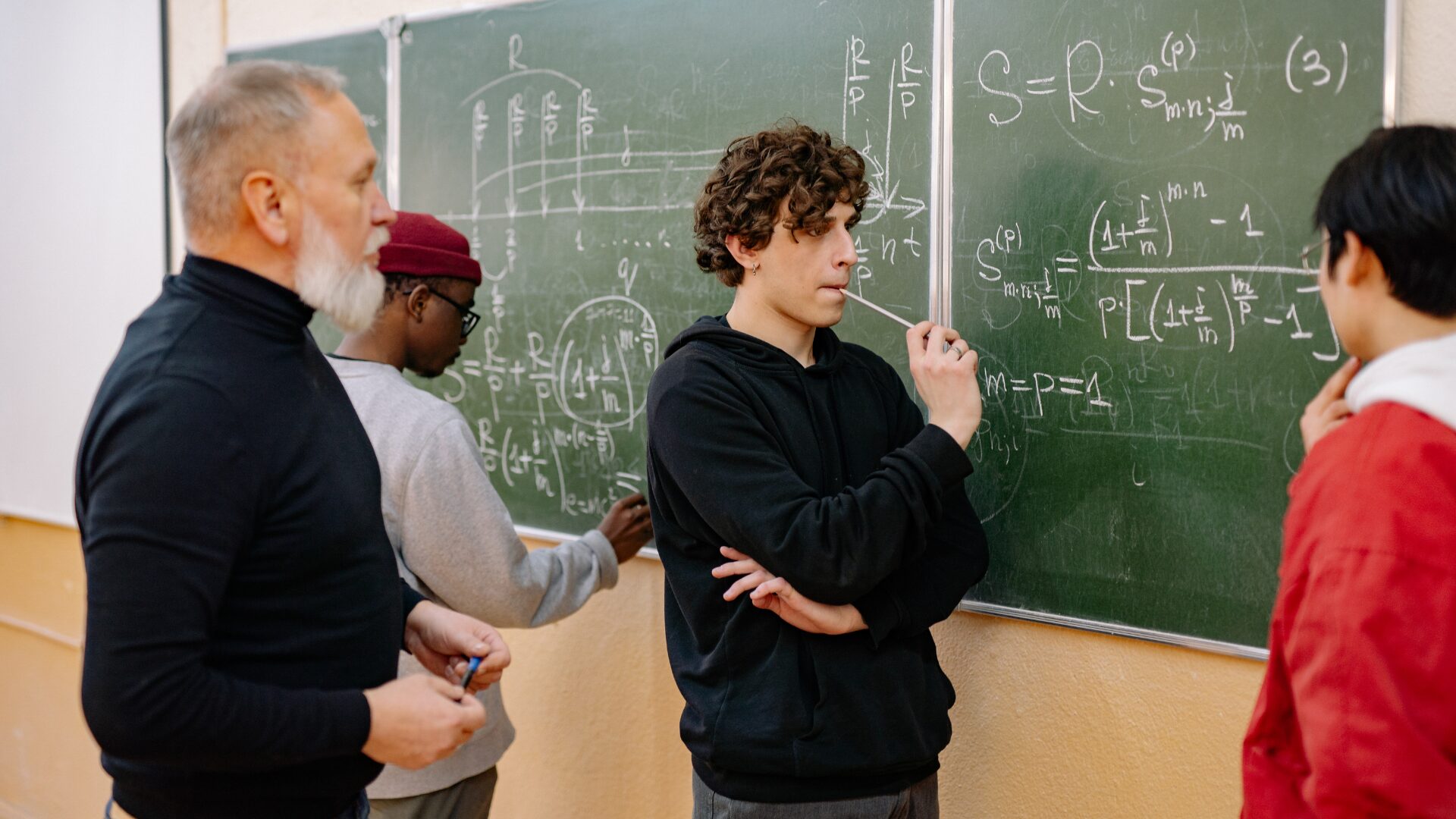
If you’re a high school student fascinated by physics, you’ve probably realized that the subject is about far more than formulas and problem sets. Physics summer programs in Europe for high school students can help you explore how the universe works, from subatomic particles and quantum mechanics to black holes, energy systems, motion, and matter.
Imagine spending your summer studying particle physics near CERN, conducting experiments in university laboratories, exploring astrophysics with researchers, or collaborating on engineering and computational projects alongside students from around the world. These programs combine advanced scientific learning with hands-on experiences that help students see how physics is applied in research and innovation.
Why should you attend a physics summer program in Europe?
Of course, not all summer programs offer the same level of rigor, mentorship, or research exposure. Some focus mainly on lectures, while others prioritize experiments, collaborative projects, and close interaction with scientists and faculty mentors. Finding the right program can make a huge difference in how much you learn and how inspired you feel afterward.
Many programs are designed for academically motivated students who want to challenge themselves through university-level content and scientific inquiry. Along the way, students develop analytical thinking, problem-solving abilities, and a stronger understanding of how scientists approach complex questions.
Across Europe, universities and educational organizations offer exceptional physics summer opportunities specifically designed for high school students. Whether you’re interested in astrophysics, quantum mechanics, engineering, or scientific research, these programs can help you deepen your knowledge while experiencing science in an international and intellectually stimulating environment.
To help you explore the best opportunities, we’ve compiled a list of 15 Physics Summer Programs in Europe for High School Students. They’ve been selected for their academic rigor, hands-on learning experiences, and exposure to world-class scientific research.
For adjacent opportunities, consider summer programs in Oxford, summer programs in Cambridge, and summer programs in London.
15 Physics Summer Programs in Europe for High School Students
1. CERN – Solvay Student Camp
Location: CERN, Geneva, Switzerland
Cost/Stipend: No participation fee; accommodation and meals are free, but students must arrange and pay for travel (limited travel grants may be available)
Acceptance rate/cohort size: Competitive; 30 students
Dates: April 19-25
Application Deadline: Not specified
Eligibility: High school students worldwide aged 16+; must complete the CERN–Solvay online physics course certificate; good knowledge of English required
CERN–Solvay Student Camp is one of the most distinctive physics summer programs in Europe for high school students, placing you inside CERN’s research environment through hands-on experiments, scientist-led lectures, and facility visits. Small-group activities help you see how advanced instruments, data, and experimental setups are used in modern physics.
You also get to ask CERN and Solvay scientists about their work, which can make research careers feel more concrete. A major strength is the chance to experience physics in the same environment where large-scale accelerator research takes place. By the end, you gain a clearer sense of how classroom physics connects to international scientific collaboration.
Why it stands out: You get to explore particle physics inside CERN’s research environment through experiments, facility visits, and direct interaction with scientists working at one of the world’s most important physics laboratories.
2. Immerse Education’s Physics Summer School

Location: Cambridge, and Oxford
Cost: Varies by format; summer school scholarship available through our bursary programme
Acceptance rate/cohort size: Selective; an average of 7 participants per class
Application Deadline: Multiple summer cohorts; rolling admissions
Program Dates: 2 weeks during the summer
Eligibility: Students from all nationalities aged 13-18 currently enrolled in middle or high school
Immerse Education’s Physics Research Programme gives you a chance to dive into physics in a way that echoes real academic study, all from your own computer. You work closely with tutors from top universities to explore advanced physics topics and research skills. Through one-on-one or small group sessions, you’ll learn how to structure an academic project, conduct independent research, and communicate your findings with confidence.
The program also offers optional accreditation, such as UCAS points or college credits, which can strengthen your university applications. Beyond the physics content, you build lasting analytical, writing, and critical thinking skills that are valuable for any science discipline. You can find examples of papers Immerse students have worked on here. You can find more details about the application here.
Why it stands out: It combines personalised research mentoring with flexible online delivery so you can build a university-style project from anywhere in the world.
3. University of Warwick Pre-University Summer School – Science and Engineering
Location: University of Warwick, Coventry, UK
Cost: £5,250
Acceptance rate/cohort size: Competitive
Dates: July 14-24
Application Deadline: May 31st
Eligibility: Students around the world aged 16–17
Warwick’s Science and Engineering route is a good fit if your interest in physics overlaps with engineering and applied science. The physics component includes lecture-style teaching, laboratory work, and exposure to experimental facilities used by the university. You investigate how sound interacts with hidden objects, giving you a practical way to apply physics concepts to a real experimental problem.
Because the wider course includes areas such as engineering, automation, digital systems, and related STEM fields, you can see how physics supports several technical pathways. Skills sessions in communication, research, and academic development add structure beyond the subject content.
Why it stands out: The program places physics within a wider STEM context, helping you compare it with engineering, computing, mathematics, statistics, chemistry, and AI before choosing a university direction.
4. Oxford UNIQ – Physics
Location: University of Oxford, Oxford, UK
Cost: None
Acceptance rate/cohort size: Highly competitive
Dates: July 13-17
Application Deadline: January 13th
Eligibility: Check here
Oxford’s UNIQ Physics pathway is built around the kind of academic work you might encounter as a physics student at the university. You explore topics that may go beyond your school curriculum, such as special relativity, astrophysics, superconductivity, biological physics, or dimensional analysis.
The tutorial-style problem-solving component is especially valuable because you work through unfamiliar problems in a small-group setting with academic guidance. This helps you practice applying concepts, explaining reasoning, and responding to hints. Lab exposure also helps you see how theoretical ideas connect with experimental physics.
Why it stands out: You experience Oxford-style physics teaching through lectures, tutorials, lab exposure, and challenging problem-solving designed to stretch your school-level knowledge.
5. Imperial Global Summer School – Physics
Location: Imperial College London, London, UK
Cost: £7,695
Acceptance rate/cohort size: First-come, first-served
Dates: June – July | August 3-14
Application Deadline: Applications close once places fill
Eligibility: International high school students aged 16-17 with strong STEM interest and academic preparation
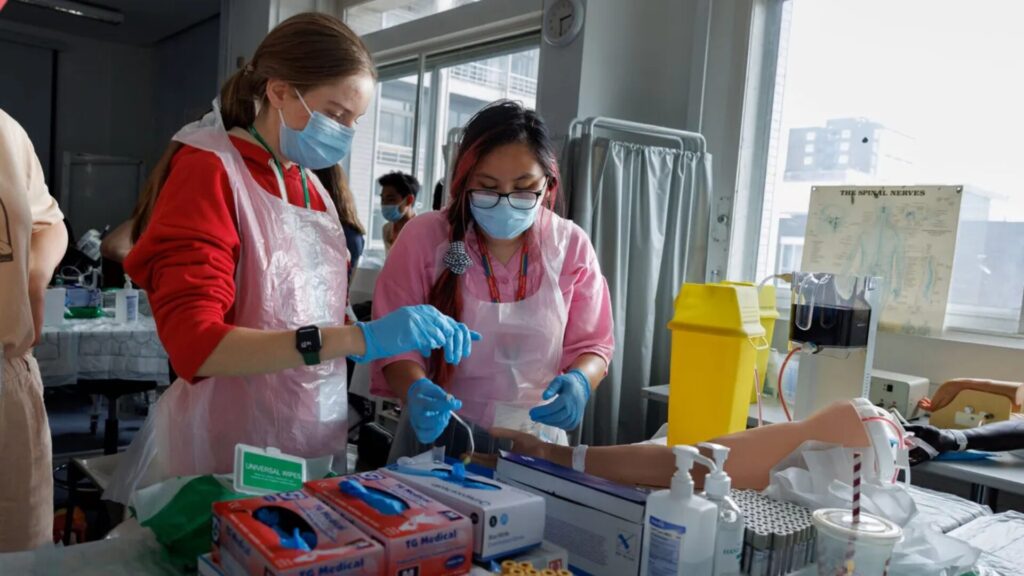
Instead of covering physics broadly, Imperial’s Physics track uses oscillations as a focused theme for deeper study. You analyze the topic through calculus, laboratory experiments, and computer simulation, which helps you see how physicists approach the same problem from different angles. The course also introduces Python for scientific data analysis, making it useful if you want to build computational skills alongside physics knowledge.
You collect and interpret experimental data, then use programming to model or simulate physical behavior. Group presentation work gives you practice explaining results clearly and confidently. The second-week Innovation Challenge adds a broader problem-solving component, allowing you to apply technical thinking across disciplines.
Why it stands out: You study oscillations through mathematics, experiments, and Python-based simulation, giving you a practical introduction to how university physics combines theory, data, and computation.
6. University of Oxford Department of Physics – Year 12 Physics Summer School
Location: University of Oxford, Oxford, UK
Cost/Stipend: None
Acceptance rate/cohort size: Selective
Dates: Last week of July
Application Deadline: Opens in Spring
Eligibility: Year 12 students attending non-fee-paying schools and living in Oxfordshire, Berkshire, or Buckinghamshire
This summer school gives you a department-level view of physics that goes beyond lectures and textbook problems. You work on a project while also attending sample lectures, touring facilities, and joining sessions on physics-related careers. Previous themes have included climate physics and particle physics, which show how the program can connect school concepts with current scientific questions.
You also learn about the wider ecosystem of a physics department, including technical, outreach, enterprise, and communications roles. The end-of-week poster presentation gives you a clear academic output and helps you practice explaining physics to an audience.
Why it stands out: You work on a physics project inside Oxford’s Department of Physics while also exploring research, technical roles, outreach, enterprise, and science communication.
7. University of York – Year 12 Physics and Engineering Work Experience
Location: University of York, York, UK; hybrid format with four online days and one in-person campus day
Cost/Stipend: None
Acceptance rate/cohort size: Limited places
Dates: July 20-24
Application Deadline: January 25th
Eligibility: Year 12 UK students aged 16-17
York’s work experience week is especially useful if you want a project-based introduction to physics, engineering, or both. You attend academic sessions led by university staff and work on a supervised project linked to a research topic that interests you. The format combines independent work with regular support, giving you a taste of how university study requires both initiative and guidance. You also learn how to organize your findings into a poster for presentation.
The online conference-style poster component gives the program a concrete academic outcome, while the in-person day adds hands-on value through physics experiments, engineering problem-solving, and tours of teaching and research spaces.
Why it stands out: You complete a supervised project, develop research skills, and present a university-style poster while also getting exposure to physics experiments and research facilities.
8. University of Leeds – Physics Work Experience Week
Location: School of Physics and Astronomy, University of Leeds, Leeds, UK
Cost/Stipend: None; lunch provided
Acceptance rate/cohort size: Selective
Dates: July 13-17
Application Deadline: Not specified
Eligibility: Local year 12 students studying Physics and Mathematics at A-level; must be over 16 and able to attend the full week
At Leeds, the focus is on helping you understand how physics and astronomy operate inside a research-based university. You take part in workshops, lectures, lab sessions, and a structured project connected to one of the School’s research areas. The project is central to the week, giving you a chance to investigate a topic and communicate your findings through a poster.
You work with another student and receive guidance from a postgraduate researcher, which adds a useful mentorship element. The conference-style poster event mirrors how researchers often share early-stage academic work. Lab sessions and problem-solving workshops help you build both practical and analytical skills.
Why it stands out: You work with a partner and a postgraduate researcher to create a conference-style poster linked to one of the School’s research areas.
9. Sutton Trust Summer School – Mathematics and Physics
Location: University of Sheffield, Sheffield, UK
Cost/Stipend: None
Acceptance rate/cohort size: 200 places across all programs
Dates: July 20-23
Application Deadline: March
Eligibility: Year 12 U.K. students; must be studying both Maths and Physics at A Level (or equivalent); Sutton Trust programs target high-achieving students from disadvantaged backgrounds
Sheffield’s Mathematics and Physics strand works well if you want to see how university physics depends on strong quantitative reasoning. You attend academic sessions that connect classroom knowledge to broader research questions about physical systems and the universe. Interactive activities give you a chance to apply ideas rather than only listen to lectures. The mathematics element strengthens the experience because it reflects how physics is studied at the degree level.
The end-of-week academic showcase gives you a structured opportunity to present what you have learned. Beyond the subject sessions, you also experience student accommodation, university facilities, and support designed to help with the transition into higher education.
Why it stands out: You explore physics alongside mathematics while experiencing university accommodation, academic sessions, and an end-of-week showcase.
10. European Space Camp
Location: Andøya Space, Andenes, Norway
Cost: Scholarship-based participation
Acceptance rate/cohort size: 24 participants
Dates: July 26th – August 2nd
Application Deadline: February 8th
Eligibility: Youth ages 17-20; strong high school-level physics and mathematics background; English proficiency required; international students can apply
European Space Camp brings a mission-based space science angle to the many physics summer programs in Europe available for high school students, with a real launch campaign as the central activity. You learn about space science, the northern lights, and rocket systems through lectures from scientists and engineers while seeing how physics, engineering, data, communication, and teamwork interact in a mission setting.
The program also connects you with research-related spaces such as the ALOMAR station. The launch campaign is the strongest feature because it turns physics concepts into a practical collaborative project. This option is best suited to students who already have a solid foundation in physics and mathematics.
Why it stands out: You take part in a real rocket campaign at Andøya Space, combining rocket physics, mission-style teamwork, lectures, and exposure to professional space science.
11. University of Porto – AstroCamp
Location: Portugal; coordinated by the Centre for Astrophysics of the University of Porto
Cost/Stipend: Free for Portuguese students
Acceptance rate/cohort size: Limited seats
Dates: July 30th – August 13th
Application Deadline: April 30th
Eligibility: Students may apply to the programme in their antepenultimate year of secondary education (typically 10th graders); international students are welcome to apply
AstroCamp offers an academically demanding astronomy and astrophysics route within this list of physics summer programs in Europe for high school students. Through structured courses, written assessments, and practical projects, you study astronomy, astrophysics, and related physics topics in English while applying ideas through practical work that may continue beyond the main summer school.
Observation sessions add another layer by connecting theory with telescopes, the night sky, and astronomical phenomena. A distinctive feature is the multi-year structure, where strong participants may continue into remote and in-person activities after the summer school. You also interact with astronomers and physicists working in different countries, which can broaden your understanding of research careers.
Why it stands out: AstroCamp combines advanced astronomy and physics coursework, exams, practical projects, observation sessions, and longer-term follow-up activities for selected students.
12. Imperial College London – Year 12 Work Experience Programme
Location: Imperial College, London, UK
Cost/Stipend: None
Acceptance rate/cohort size: Not specified
Dates: June 29th – July 3rd
Application Deadline: March 5th
Eligibility: Current Year 12 students at UK state schools who can commute daily to the London campus
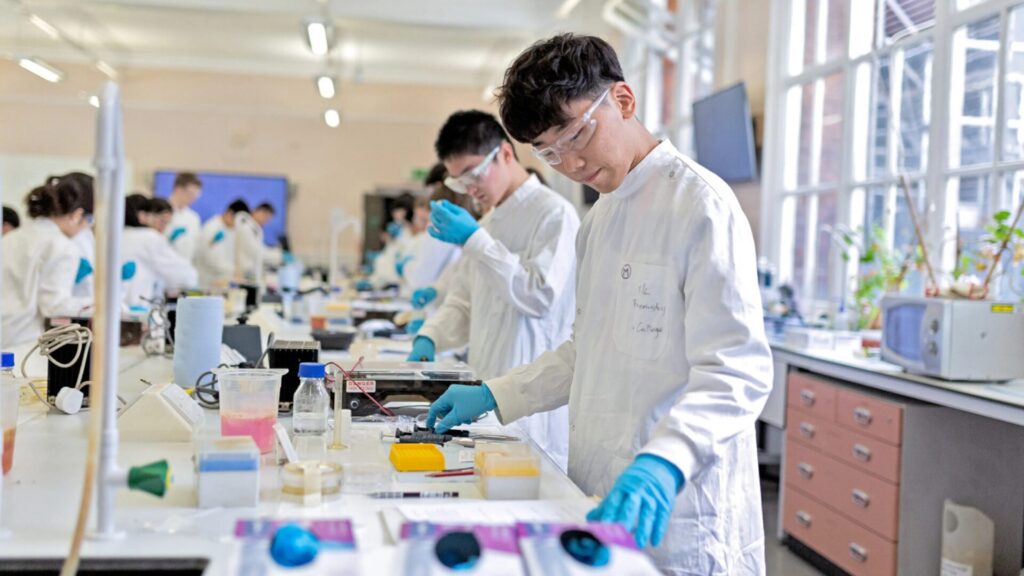
A week at Imperial can help you understand what research looks like as a daily working environment, not just as an abstract career idea. Depending on your department placement, you may join lab visits, workshops, department-led activities, and small research-focused tasks. The schedule is designed to show how researchers manage experiments, deadlines, technical spaces, and collaboration.
If your placement connects to physics, you can get a closer look at how physical science research is organized within a major university. You also receive guidance from student ambassadors on university applications and personal statements. The mini academic conference at the end gives you a chance to present your work in a formal setting.
Why it stands out: You spend time inside Imperial’s research environment, gaining a clearer view of physics-related academic careers, laboratory work, and the professional routines of university research.
13. Queen Mary University of London – Girls Into Physics Summer School
Location: Queen Mary University of London, London, UK
Cost/Stipend: None
Acceptance rate/cohort size: Limited spaces
Dates: July 22-24
Application Deadline: May 24th
Eligibility: Current Year 10 students who identify as female or non-binary; must be living locally
Queen Mary’s summer school is designed to make university physics feel more accessible at an earlier stage. You attend taster lectures on topics such as neutrinos, computational physics, and gravitational waves. Lab practicals introduce you to undergraduate-style experimental work, while the observatory visit adds a strong astronomy component.
You also speak with current students and external speakers, giving you a clearer view of physics degrees and career routes. The “Shattering Stereotypes” workshops are a useful part of the program because they address barriers students may face in science spaces. Group poster work helps you reflect on what you learned and present it to academic staff.
Why it stands out: The program gives female and non-binary students early exposure to university physics through lectures, lab practicals, observatory work, career sessions, and poster presentations.
14. Queen Mary University of London / St Paul’s School – Particle Physics Summer School
Location: St Paul’s School, London, UK (run in association with Queen Mary University of London)
Cost/Stipend: None; travel bursary offered
Acceptance rate/cohort size: Limited spaces; maximum 2 students from one school
Dates: July 10-12
Application Deadline: May 7th
Eligibility: High-achieving Year 10 students from UK state-maintained schools; must be on track for strong GCSE results in science and maths; student application plus teacher nomination required
For students already strong in physics and maths, this summer school offers an early look at one of the field’s most specialized areas. You explore how particle physics connects to questions across science, engineering, and computing. The course uses a mix of lectures and workshops, giving you both conceptual exposure and more interactive ways to engage with the material.
It is linked to Queen Mary’s Department of Physics and Astronomy, meaning the academic content is grounded in university-level expertise. The strongest element is the chance to encounter particle physics well before most students study it formally.
Why it stands out: You explore particle physics through workshops and lectures led by teachers and academic researchers, with a selective structure that includes school nomination.
15. CATS Cambridge Summer School – STEM and English
Location: Cambridge
Cost: £3,340 (2 weeks)
Acceptance rate/cohort size: 15 students
Dates: June 28th – July 12th
Application Deadline: Typically rolling, early registration recommended
Eligibility: Students worldwide aged 14-17 (upper intermediate B2 level recommended)
CATS Cambridge is broader than a pure physics program, but it can work well if you want STEM exposure alongside academic English development. You explore science, technology, engineering, and mathematics through lectures, workshops, and practical demonstrations. Physics-related sessions may include masterclasses, rockets and combustion activities, robotics, and coding-based problem-solving.
English for Science lessons help you build the vocabulary and communication skills needed to explain technical ideas clearly. The final project element stands out because it pushes you to present scientific work accurately and confidently in English. Visits to science-related sites add context by showing how STEM ideas connect to institutions, history, and real-world applications.
Why it stands out: The program combines STEM learning with scientific English, helping international students build technical vocabulary while exploring physics, robotics, coding, and lab-based problem-solving.
Take Your Physics Curiosity Beyond the Lab
Physics can feel even more exciting after you test ideas, handle data, and see how theories connect with real experiments, instruments, and research questions directly.
These 15 physics summer programs in Europe for high school students can introduce particle physics, astronomy, engineering, computation, laboratory work, and university-style scientific thinking abroad early.
After the programme, keep asking which topics stayed with you most, from quantum ideas and space science to energy, mechanics, or research methods in practice.
For your next step, explore our Physics Top Books Guide to deepen understanding, strengthen curiosity, and keep learning beyond summer labs and lectures with confidence.