
 Русский (RU)
 Українська (UK)
 Türkçe (TR)
 Italiano (IT)
 Français (FR)
 Português (PT)
 中文 (中国) (ZH)
 Español (ES)
 日本語 (JA)
 ไทย (TH)
 Deutsch (DE)
 Ελληνικά (EL)
 Polski (PL)
 Bahasa Indonesia (ID)
 Nederlands (NL)
 العربية (AR)
 한국어 (KO)

Chemistry is often called the central science because it connects fields as diverse as medicine, engineering, environmental science, and materials research. Chemistry summer programs in Europe for high school students can help you move beyond classroom theory and experience how chemistry is studied, tested, and applied in university-level settings.
Imagine synthesising compounds in a university laboratory, analysing samples using advanced spectroscopy techniques, or exploring how chemistry contributes to fields like healthcare, sustainability, and energy. Some programs focus on laboratory research and experimentation, while others combine chemistry with engineering, medicine, or interdisciplinary STEM challenges. Many also allow you to experience life at a leading European university while learning alongside students from around the world.
What kinds of chemistry summer programs in Europe are available for high school students?
Finding a chemistry summer program that matches your interests can be challenging. Some programs focus heavily on lectures, while others emphasise laboratory work, research, or interdisciplinary STEM learning. The best programs combine academic depth with opportunities to apply what you learn through experiments, projects, and collaboration.
Across Europe, universities and educational organisations offer chemistry-focused summer programs covering areas such as organic chemistry, physical chemistry, green chemistry, biochemistry, materials science, and chemical engineering. Depending on the program, you might conduct experiments in university laboratories, work on research projects, explore real-world applications of chemistry, or collaborate with peers on scientific challenges.
No matter which program you choose, you’ll be investing time and effort into developing your scientific knowledge and skills.
To make your search easier, we’ve compiled a list of 15 chemistry summer programs in Europe for high school students. These programs were selected for their academic quality, hands-on learning opportunities, and exposure to university-level chemistry.
For related options, consider the online chemistry program.
15 Chemistry Summer Programs in Europe for High School Students
1. Imperial College London Chemistry Summer School
Location: Imperial College London, South Kensington, London, United Kingdom
Cost: £7,695
Dates: June 29th – July 10th
Application Deadline: Rolling admissions
Eligibility: High school students ages 16 to 17 with high academic standing (majority A*/A grades or equivalent, minimum A in math and science) and English proficiency; open to international students
This program combines interactive teaching sessions, laboratory work, and research-focused activities that introduce you to topics ranging from molecular structure and spectroscopy to medicine, gastronomy, and interdisciplinary scientific research. You will synthesise and analyse molecules in Imperial’s chemistry laboratories, build instruments to collect spectroscopic data, and use computational tools to model chemical systems.
During the second week, you’ll collaborate with students from other academic disciplines in the Innovation Challenge, where you’ll work on real-world problems while developing presentation, communication, and teamwork skills. Alongside the academic program, students participate in social activities and engage with Imperial faculty and researchers.
Why it stands out: The program combines practical laboratory chemistry, computational modelling, and interdisciplinary innovation challenges within one of Europe’s leading science and engineering universities, allowing you to experience multiple dimensions of modern chemical research.
2. Immerse Education’s Chemistry Summer School
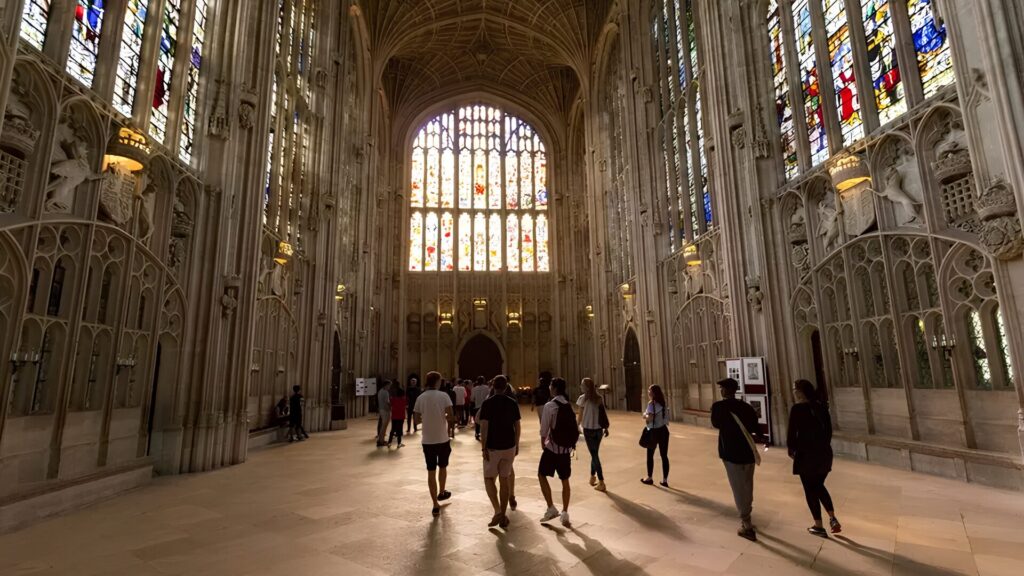
Location: Oxford and Cambridge
Cost: Varies by format; summer school scholarship available through our bursary programme
Application deadline: Multiple summer cohorts; rolling admissions
Dates: Two weeks during the summer
Eligibility: Students, ages 16-18; open to international students
Immerse Education’s programs let high school students experience university life firsthand. You will live on campus and study in small groups of 7–10, learning from tutors from top universities like Oxford and Cambridge. In the chemistry track, you will study physical chemistry, organic chemistry, and biochemistry to build a solid foundation for college.
Through theoretical analysis, lab experiments, and group projects, you will develop scientific skills, analytical thinking, and problem-solving abilities essential for STEM education. By the end of the program, you will complete a personal project, get written feedback, and receive a certificate of completion. You can find more details about the application here.
Why it stands out: You will study under expert academics, work with a university student mentor, complete a project you can show in future applications, and experience real university college life .
3. Constructor University Summer Camp (Chemistry & Research Track)
Location: Constructor University, Bremen, Germany
Cost: €4,600
Dates: July 24th – August 4th
Application Deadline: May 31st
Eligibility: High school students aged 16-18 from around the world
Constructor University’s Summer Camp adds a flexible international option to the various chemistry summer programs in Europe for high school students, combining academic coursework with a residential experience on a university campus in northern Germany. Students select two academic courses from a range of subjects, including the Chemistry & Research track, where you’ll explore atomic structure, bonding, materials science, biochemistry, and sustainability.
The chemistry curriculum connects core scientific concepts to real-world applications, helping you understand how chemistry contributes to areas ranging from materials development to environmental challenges. Beyond the classroom, you’ll participate in tutorials, team-based activities, excursions, sports, and cultural events alongside students from more than 40 nationalities. The program also includes visits to German cities and organisations, giving you exposure to both university life and industry.
Why it stands out: Unlike many subject-specific summer programs, Constructor University allows you to pair chemistry with a second academic field while living on campus and studying alongside an international cohort, creating a broader academic and cultural experience.
4. University of Oxford – UNIQ Chemistry
Location: Oxford, England, United Kingdom
Cost/Stipend: None
Dates: July 13-17
Application Deadline: January 13th
Eligibility: UK state school student in the first year of further education (Year 12 in England or Wales, Year 13 in Northern Ireland, or S5 in Scotland); studying Maths and Chemistry to A level or equivalent; a minimum of six GCSEs with one or more at grade 7/A or above, or six National 5s with one or more at grade A in Scotland; under 18 at the time of the residential and a settled UK or Islands resident eligible for home fees status; not open to international students
In this program, you step into the role of an Oxford Chemistry undergraduate through a one-week residential combining lectures, small-group tutorials, and hands-on laboratory work. Lectures span the breadth of the degree, with recent topics including crystal structures, chirality, hydrogen fuel cells, and quantum chemistry, while tutorials cover the physical, inorganic, and organic branches through group discussion and problem-solving.
You build on work completed before the residential and develop practical techniques alongside the award-winning Chemistry Teaching Laboratory team. An Ashmolean guided trail lets you examine how chemistry underpins the analysis of historical artefacts. Throughout, you experience Oxford’s distinctive tutorial system and gain skills and confidence you can carry into your A-level studies and future application.
Why it stands out: It is a completely free Oxford access residential for UK state school students that pairs authentic undergraduate Chemistry teaching with the University’s signature small-group tutorial system.
5. University of Oxford – UNIQ Materials Science
Location: Oxford, England
Cost/Stipend: Free program / No stipend
Acceptance Rate/Cohort Size: Selective; around 2,000 students across the entire UNIQ program
Dates: July 6-10
Application Deadline: January 13th
Eligibility: Enrolled in the first year of further education at a UK state school (Year 12 in England/Wales, Year 13 in Northern Ireland, or S5 in Scotland); studying Maths and Physics to A2 or equivalent, with Chemistry and/or Further Maths recommended; not open to international students
In this program, you explore the profound intersection of chemistry, physics, and engineering by experiencing life as an Oxford undergraduate. Through comprehensive lectures and small-group tutorials, you dive into the fundamental chemistry of matter to understand how atomic structures dictate material properties. You engage in hands-on, practical lab work, applying chemical principles to simulate authentic undergraduate experiments and materials testing.
Alongside academic staff, you participate in team-based group projects that challenge you to connect chemical theories with real-world engineering applications and industrial manufacturing processes. This rigorous coursework equips you with specialised analytical skills, foundational materials chemistry knowledge, and a realistic perspective on tackling interdisciplinary scientific challenges.
Why it stands out: It provides state-school students with a fully funded, immersive introduction to Oxford’s tutorial system while demonstrating how the chemistry of matter directly drives engineering and industrial innovation.
6. Imperial College London, Department of Chemistry – Outreach
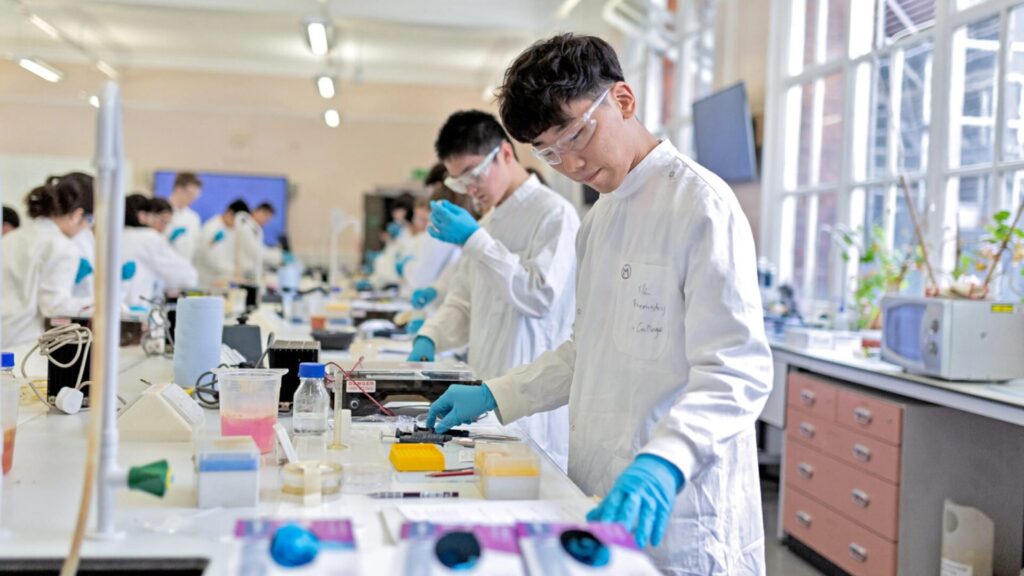
Location: South Kensington Campus and White City Campus (Molecular Sciences Research Hub), Imperial College London, London, UK; the Imperial Chemistry Scholars Summer School runs online/virtually
Cost/Stipend: None
Dates: Y10 and Y12 Taster Days on July 9-10; Chemistry Student Work Placement scheme June 29th – July 3rd; Y12 Sutton Trust Summer School July 21-24; Y10 Insights into Science & Engineering Summer School July 30; virtual Imperial Chemistry Scholars Summer School July 29-31
Application Deadline: March 23rd
Eligibility: Secondary school students broadly in Years 10-13, with specific activities targeted at particular year groups; several activities prioritise state school students from backgrounds under-represented at university and at Imperial; the virtual Imperial Chemistry Scholars programme is aimed at Year 12 students considering a chemistry degree; not open to international students
As a secondary school student, you engage with university-level chemistry through the Department of Chemistry’s outreach activities at Imperial College London. On a Y10 or Y12 Taster Day, you carry out hands-on practical work in the department’s teaching laboratories, attend a taster lecture from academic staff, and speak with undergraduate mentors about studying chemistry and the admissions process.
Through the Chemistry Student Work Placement scheme or a research-group placement at the Molecular Sciences Research Hub, you gain a direct insight into laboratory research and technical careers in higher education. The virtual Imperial Chemistry Scholars Summer School adds workshops, seminars, study tutorials, and mentor sessions over three days.
Why it stands out: It offers students who complete the Chemistry Scholars programme and later enrol in chemistry at Imperial a bursary for a UROP summer research internship.
7. Queen Mary Chemistry Residential Summer School
Location: Queen Mary University of London, Mile End Campus, London, United Kingdom
Cost: £350; limited funded places are available
Dates: June 22-24
Application Deadline: March
Eligibility: Year 12 students in the UK studying Chemistry at A Level or IB; not open to international students
This programme combines laboratory sessions, lectures, workshops, and problem-solving classes that introduce both experimental and theoretical aspects of modern chemistry. You’ll complete your own experiments in Queen Mary’s teaching laboratories while gaining hands-on experience with equipment and techniques commonly used in undergraduate chemistry courses.
Academic sessions cover topics such as NMR and IR spectroscopy, mass spectrometry, and scientific programming, giving you exposure to areas that extend beyond the typical school curriculum. Students also have opportunities to speak with researchers, current chemistry undergraduates, and admissions staff about degree options, careers, interviews, and personal statements.
Why it stands out: Students gain substantial laboratory experience while exploring advanced analytical techniques and university-level chemistry in just three days.
8. University of St Andrews / Sutton Trust – Sutton Trust Chemistry Summer School
Location: University of St Andrews, St Andrews, Scotland, United Kingdom (residential, University Halls)
Cost/Stipend: None
Dates: July 5-10
Application Deadline: March 5th
Eligibility: Students in S5 (Scotland), Year 12 (England and Wales), or Year 13 (Northern Ireland); typically five GCSEs at grades 9 to 6 including English and Maths (two at grades 9 to 7) or five A or B grades at National 5 including one A; for Chemistry, on track for three A Levels or four Highers including Chemistry plus one further subject from Biology, Computing Science, Economics, Geography, Mathematics, or Physics; attending and having always attended a non-fee-paying state-funded school or college in the UK and not yet having applied to university; not open to international students
In this program, you spend a week studying Chemistry as one of two chosen subjects, following a timetable modelled on a St Andrews first-year undergraduate’s. Led by academic staff, you attend lectures and hands-on practical workshops in the laboratory, exploring how chemistry underpins new materials, biological systems, medicines, and everyday food.
You build experimental technique, scientific reasoning, and an understanding of degree-level study while balancing demanding academic sessions with social events. Alongside the science, you join seminars on the UCAS process, personal statements, study skills, and student finance. You also experience residential university life through St Andrews traditions, sports, music nights, and the famous Sutton Trust ceilidh.
Why it stands out: It is a fully funded residential week in which you study chemistry at degree level through lectures and laboratory workshops led by St Andrews academics, paired with structured application support that the Sutton Trust’s own research links to a higher likelihood of receiving a university offer.
9. King’s College London – Discover Chemistry Summer School
Location: King’s College London, London, United Kingdom
Cost: None
Dates: July 6-10
Application Deadline: May 15th
Eligibility: Year 12 students who attend a non-fee-paying school, intend to study chemistry in Year 13, and have been unable to access similar opportunities elsewhere; not open to international students
This programme focuses on hands-on experimentation, allowing students to create their own sunscreen formulations while learning how chemists analyze materials using professional techniques. You’ll investigate the properties of your sunscreen using infrared (IR) and nuclear magnetic resonance (NMR) spectroscopy, while exploring how chemical structure influences UV absorption. Alongside laboratory work, you’ll develop research communication skills through sessions on scientific posters and presentations.
The programme concludes with a poster presentation competition where you’ll share your findings with fellow participants, King’s academics, chemistry students, teachers, and family members. Because the programme is entirely free and specifically supports students from underrepresented backgrounds, it offers accessible exposure to university chemistry and laboratory research.
Why it stands out: Students conduct a multi-day research project and present their findings using techniques commonly encountered in undergraduate chemistry courses.
10. University of Warwick – A Taste of Science and Engineering

Location: University of Warwick, Coventry, United Kingdom
Cost: £5,250 + £50 non-refundable application fee
Dates: July 14-24
Application Deadline: May 31st
Eligibility: High school students aged 15-17 who are considering applying to university; requires English language proficiency; open to international students
For students comparing chemistry summer programs in Europe for high school students with a broader STEM focus, Warwick’s A Taste of Science and Engineering offers insight into how science subjects are studied at degree level. You’ll learn from Warwick academics across multiple departments, explore different scientific fields, and think critically about potential university pathways in science and engineering.
Alongside the academic content, you’ll experience life at a leading UK university while meeting other students with similar interests in STEM subjects. The interdisciplinary structure allows you to explore chemistry alongside related scientific and engineering fields before committing to a specific area of study.
Why it stands out: The programme offers a broad introduction to multiple STEM disciplines rather than focusing on a single scientific subject.
11. University of Cambridge / Sutton Trust – Sutton Trust Biological Sciences: Biochemistry, Pathology and Pharmacology
Location: Cambridge, England, United Kingdom
Cost/Stipend: None
Dates: August 17-21
Application Deadline: February 12th
Eligibility: Year 12 in England or Wales, Year 13 in Northern Ireland, or S5 in Scotland; always attended a UK state-funded school; minimum GCSE grade 8 or National 5 grade A in Maths and a science, and currently studying at least two STEM subjects (Biology, Chemistry, Physics, Mathematics, or Further Mathematics) at A Level, IB Higher Level, Scottish Highers, or equivalent; also required to meet the Sutton Trust Online criteria; not open to international students
In this program, you join the University of Cambridge’s Biochemistry, Pathology and Pharmacology stream, exploring the chemical foundations of living systems alongside world-leading academics. Across the five-day residential period, you attend taster lectures spanning the molecular sciences, take part in practical, laboratory-based learning, and experience small-group supervision sessions with self-directed study beforehand.
You engage closely with biochemistry and pharmacology, examining how chemical processes underpin disease, drug action, and cellular function. The week builds your laboratory technique, scientific reasoning, and confidence with university-level chemical concepts, while showing you how a research laboratory operates day to day. You also receive structured guidance on the competitive Cambridge admissions process for the sciences.
Why it stands out: It is a fully funded, highly selective Cambridge residential that immerses state-school students in university-level chemical and biomedical science taught directly by Cambridge academics.
12. Selwyn College, University of Cambridge – Physical Natural Sciences Summer School
Location: Cambridge, UK
Cost/Stipend: None
Dates: July 6-8
Application Deadline: June 1st
Eligibility: Currently in Year 12 (England and Wales), S5 (Scotland), or Year 13 (Northern Ireland); attending a UK school; preference given to students meeting widening participation criteria; not open to international students
In this program, you experience university-level chemistry and other physical sciences through immersive academic sessions at Cambridge. You gain hands-on experience by completing practical laboratory investigations that go beyond the standard high school curriculum. During the program, you attend demonstration lectures led by academic experts to deepen your understanding of complex chemical principles and foundational mathematics.
You also develop technical laboratory skills by exploring advanced analytical tools like NMR spectroscopy. In addition to rigorous academic coursework, you connect with university students and academics to demystify the admissions process. Ultimately, you build the analytical problem-solving skills necessary to confidently pursue undergraduate studies in the natural sciences.
Why it stands out: It provides highly motivated state school students with fully funded residential access to Cambridge’s world-class science facilities and leading chemical researchers.
13. University of Bath – Discover Bath Science – Chemistry strand
Location: University of Bath, Claverton Down, Bath, BA2 7AY, United Kingdom
Cost/Stipend: None
Dates: August 5-7
Application Deadline: Typically closes in late winter to early spring
Eligibility: Year 12 (or equivalent) students; studying three A levels (or equivalent) including Chemistry A level plus one other science or mathematics subject; likely to meet the entry requirements for one of the Chemistry courses at Bath and meet the University’s widening participation criteria; cannot also be enrolled on Pathway to Bath; not open to international students
The University of Bath’s Chemistry strand gives chemistry summer programs in Europe for high school students a strong university-preparation focus. As a Year 12 student, you spend two nights in genuine undergraduate accommodation while studying a first-year-style chemistry course delivered by Bath lecturers, researchers, and current students, with laboratory practicals, hands-on experiments, and student-style projects.
Alongside the science, you receive support on writing a personal statement, navigating the UCAS process, and understanding student finance, while building research, independent-study, and teamwork skills. Social activities led by student ambassadors give you a realistic taste of campus life. Successfully attending can also make you eligible for a contextual offer or a guaranteed conditional offer to study at Bath.
Why it stands out: It pairs hands-on, degree-level chemistry lab work and practical projects with a fully funded two-night campus residential and a possible guaranteed conditional offer, offered exclusively to UK Year 12 students from widening-participation backgrounds.
14. University of Oxford – UNIQ Earth Sciences
Location: Oxford, United Kingdom
Cost/Stipend: None
Dates: July 13-17
Application Deadline: January 13th
Eligibility: Year 12 students; attending a UK state school; from backgrounds under-represented at Oxford; not open to international students
In this program at the University of Oxford, you explore how foundational sciences, particularly chemistry, explain our planet. You engage in university-level coursework and experiential learning that blends chemistry with geology and physics to investigate the Earth’s origin. Throughout the summer residential, you attend lectures, practical laboratory classes, and tutorials delivered by Oxford academics.
You apply chemical principles to topics like planetary compositions, geochemistry, and the formation of igneous rocks during volcanic processes. By handling geological specimens, you develop critical analytical skills essential for geosciences. This program provides a realistic preview of undergraduate study while expanding your knowledge of Earth chemistry.
Why it stands out: It provides an immersive, tuition-free opportunity for underrepresented students to experience Oxford’s unique tutorial teaching system while applying chemical principles to complex geological phenomena.
15. University of Warwick – A Taste of Health, Medical and Life Sciences
Location: University of Warwick campus, Coventry, England, United Kingdom
Cost/Stipend: £5,250 + £50 non-refundable application fee
Dates: July 14-24
Application Deadline: May 31st
Eligibility: 16-17 year old students; open to international students
In this program, you sample degree-level study across Warwick Medical School, Life Sciences, and Psychology, with the clearest chemistry thread running through the biochemistry strand. In one taster, you examine the long-standing problem of predicting protein tertiary structures from their primary sequences and the experimental techniques used to identify those structures.
You then explore how artificial intelligence and large language models are accelerating drug discovery pipelines and are likely to reshape the pharmaceutical industry. An Integrated Natural Sciences workshop has you investigate a gene’s sequence from molecular, evolutionary, and functional angles, touching on the chemical reactions inside cells. You build analytical reasoning and scientific study skills, finishing with a University of Warwick Certificate of Attendance.
Why it stands out: It immerses you in university-level biochemistry, from protein-structure prediction to AI-driven drug discovery, taught by Warwick researchers during a ten-night residential experience on a UK campus.
From Lab Work to Stronger University Applications
Lab work gives you evidence of how you think: observing carefully, testing ideas, handling uncertainty, and explaining results with accuracy under pressure too in practice.
These 15 chemistry summer programs in Europe for high school students can introduce university laboratories, research projects, spectroscopy, biochemistry, materials science, and practical experimentation abroad early.
Use each experiment, tutorial, or presentation to identify the chemistry topics you enjoy most and the academic strengths your application should highlight with confidence later.
For stronger next steps, explore our University Preparation blogs for personal statements, interviews, subject choices, admissions planning, and ways to present experience clearly.